
GIB Dr Anas Khan Chairman Department of Emergency
GIB Dr. Anas Khan Chairman, Department of Emergency Medicine 1/1/2022
1/1/2022
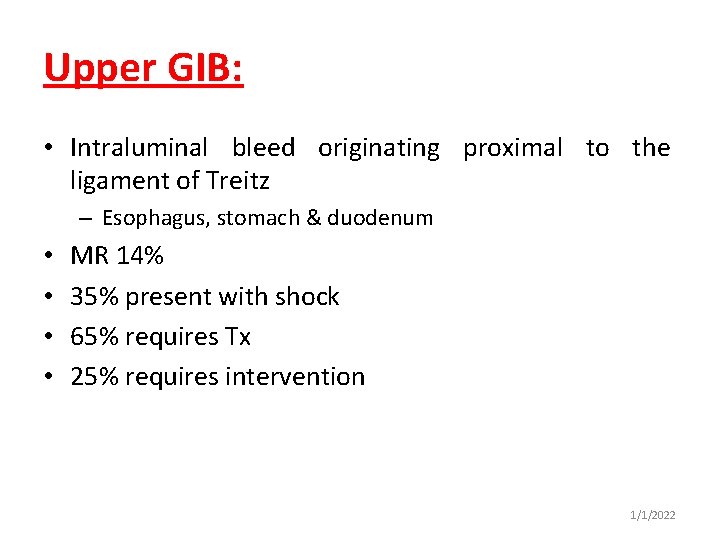
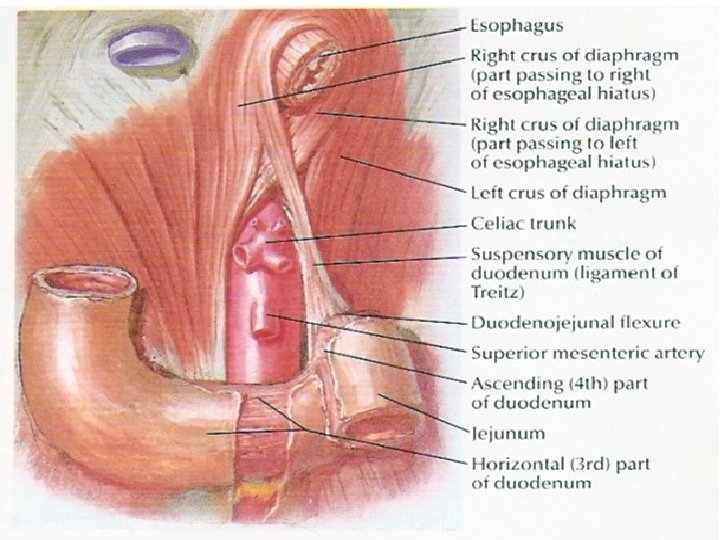
Upper GIB: • Intraluminal bleed originating proximal to the ligament of Treitz – Esophagus, stomach & duodenum • • MR 14% 35% present with shock 65% requires Tx 25% requires intervention 1/1/2022
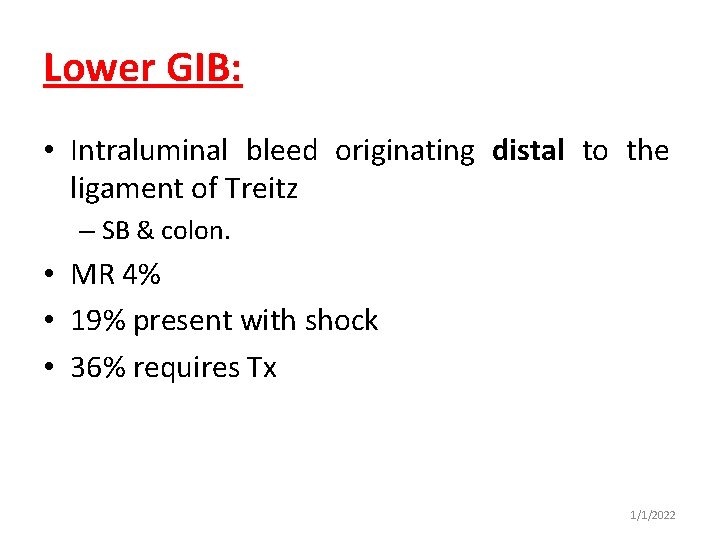
Lower GIB: • Intraluminal bleed originating distal to the ligament of Treitz – SB & colon. • MR 4% • 19% present with shock • 36% requires Tx 1/1/2022

Haematemesis: • Vomiting of blood from UGIT or after swallowing blood from the nasopharynx. • Bright red haematemesis active, risky. • Coffee-ground vomitus black material 1/1/2022
Melena: • Black tarry stools due to acute UGIB, or bleeding within the small bowel or right side of the colon. • > 200 m. L blood in stomach, or Up to 150 m. L blood in cecum). 1/1/2022
Hematochezia: • Passage of fresh or altered blood per rectum. • > 100 m. L blood in Lt colon, or > 150 m. L blood in Rt colon, or > 1 L upper bleed (orthostatic) • 76% colon • 11% UGIB • 9% small bowel • 6 % unknown 1/1/2022
Hematochezia: • Hematochezia: – Pain: – No pain + elderly: – Blood oozing w/o BM: 1/1/2022
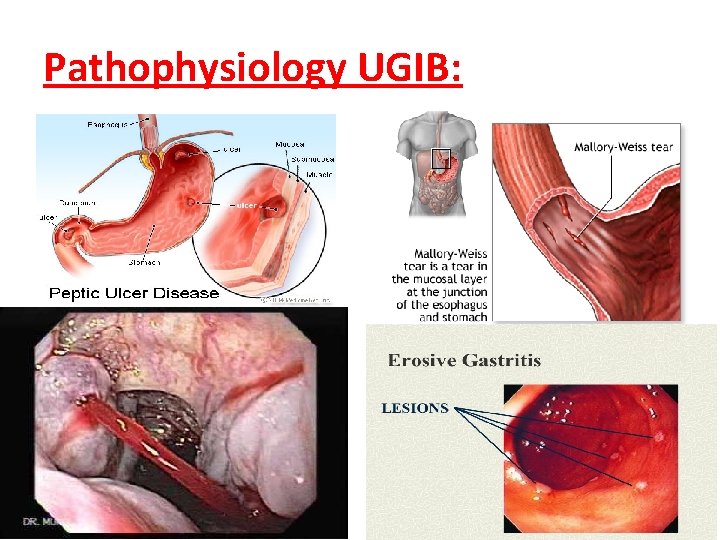
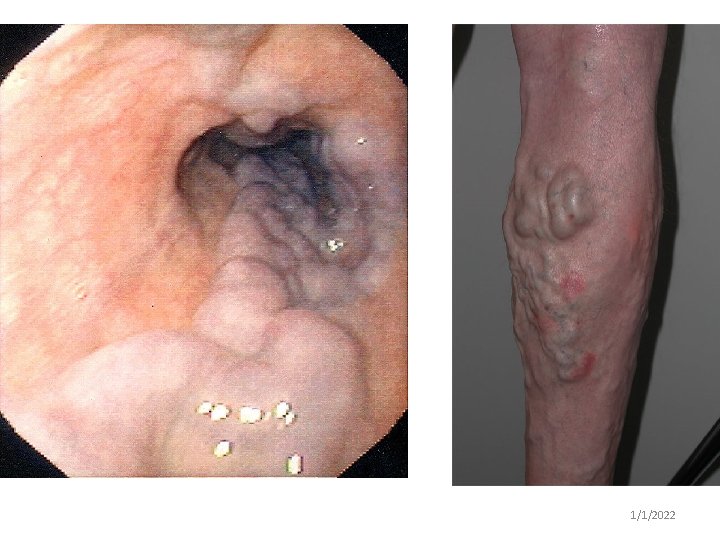
Pathophysiology UGIB: 1/1/2022
1/1/2022
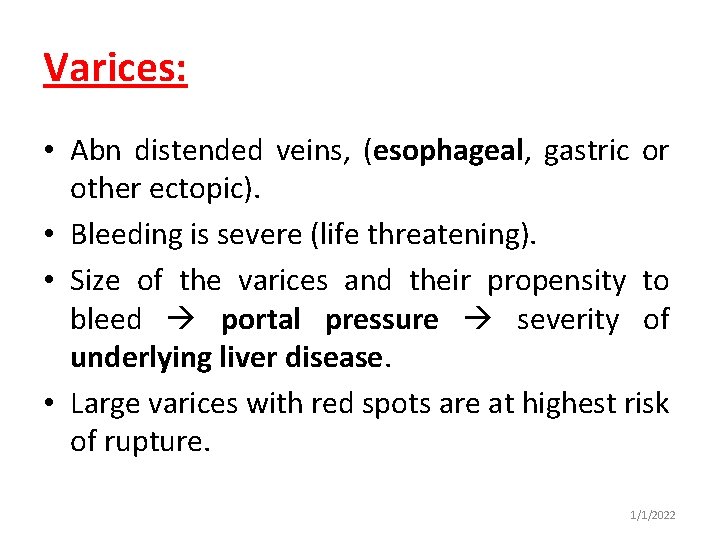
Varices: • Abn distended veins, (esophageal, gastric or other ectopic). • Bleeding is severe (life threatening). • Size of the varices and their propensity to bleed portal pressure severity of underlying liver disease. • Large varices with red spots are at highest risk of rupture. 1/1/2022
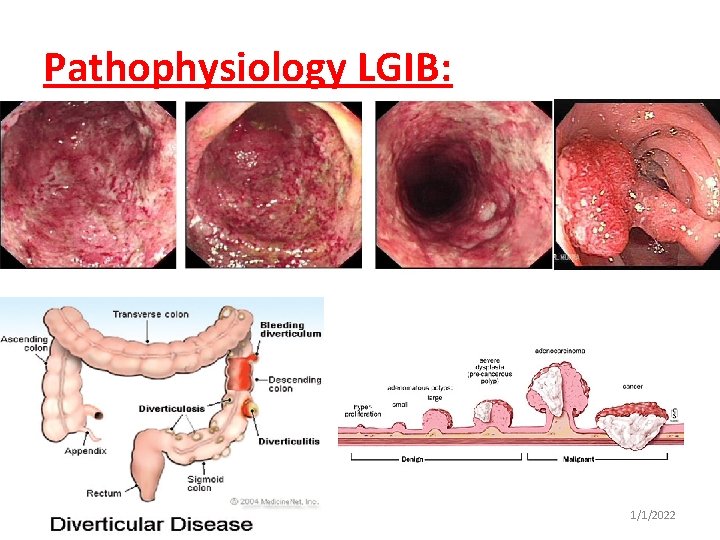
Pathophysiology LGIB: 1/1/2022
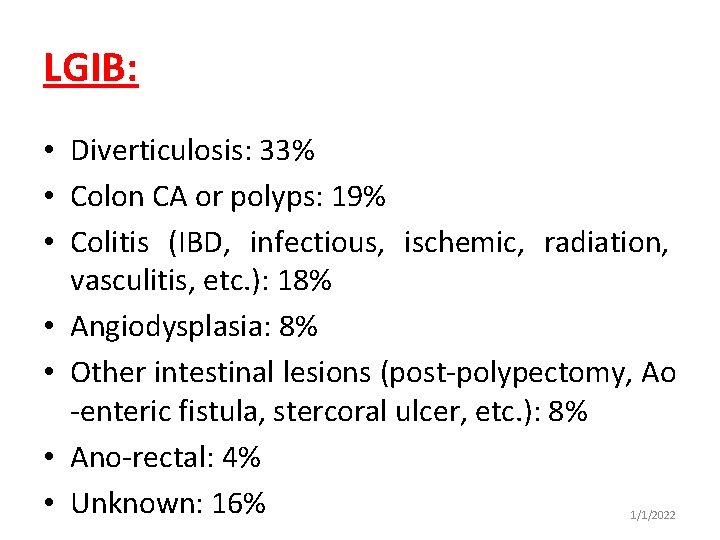
LGIB: • Diverticulosis: 33% • Colon CA or polyps: 19% • Colitis (IBD, infectious, ischemic, radiation, vasculitis, etc. ): 18% • Angiodysplasia: 8% • Other intestinal lesions (post-polypectomy, Ao -enteric fistula, stercoral ulcer, etc. ): 8% • Ano-rectal: 4% • Unknown: 16% 1/1/2022
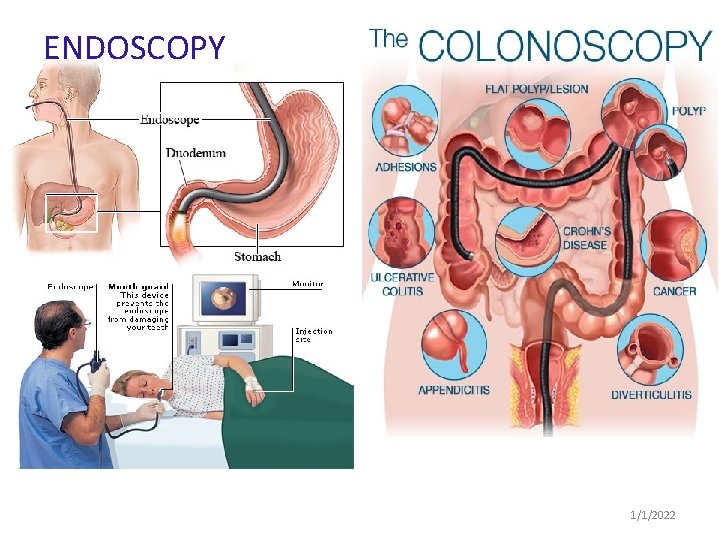
ENDOSCOPY 1/1/2022
Clinical: • If severe bleeding hypovolemic shock – TC, anxiety, confusion, tachypnea, cool clammy skin, oliguria, hypotension. • Orthostatic @ 3 min: BPs drop =/> 10 mm. Hg and/or HR increase > 20 bpm 20% bl loss. • Normotensive patient may still be shocked and require resuscitation. • Subtle: angina, dizziness, weakness. . 1/1/2022
Clinical: • V & retching, hematemesis Mallory-Weiss • Hx of aortic graft aorto-enteric fistula • Spider angiomata, palmer erythema, ascites, jaundice, gynecomastia liver disease • Wt loss, change in bowel habits CA 1/1/2022
Triage: • A system of initial assessment & Mx, whereby a group of patients is classified according to the seriousness of their injuries or illnesses so that treatment priorities can be allocated between them. 1/1/2022
Hx: • • • Amount Appearance RF Comorbidities Syncope 1/1/2022
1/1/2022
P/Ex: • • V/S Mental status Abd Ex PR Ex 1/1/2022
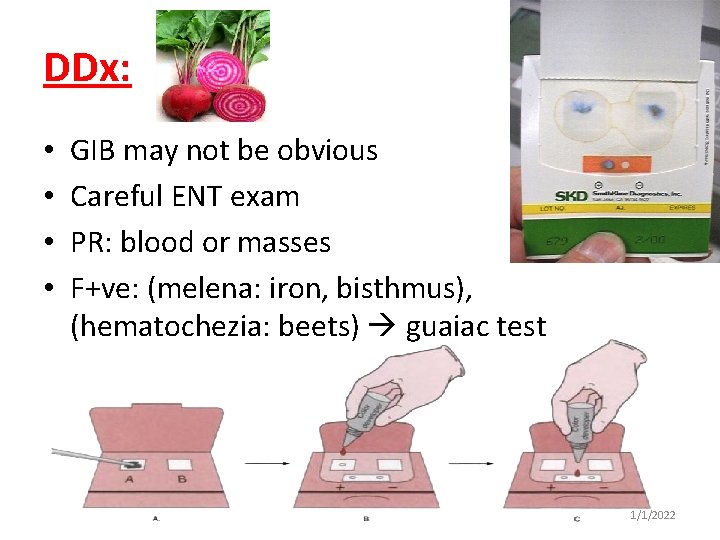
DDx: • • GIB may not be obvious Careful ENT exam PR: blood or masses F+ve: (melena: iron, bisthmus), (hematochezia: beets) guaiac test 1/1/2022
Tests: • • Severe: Blood type & cross-X CBC, U&E, coagulation, LFT, LA Initial Hct !!! Cardiac enz, ECG, XRs 1/1/2022
NGT: • 50% of duodenal bleeding have -ve aspirate. • Vs. endoscopy, NGT aspirate: 79% Sn & 55% Sp for active bleeding. • 14% with clear aspirate have high-risk lesions. • 42% with blood in aspirate, have “clean base” or “pigmented spot”. 1/1/2022
NGT: • Localize: – Dx, not Rx – R/I not R/O UGIB – No risk in varices • NGT aspiration does not change Mx (Dx, Px, Rx, or visualization). • Painful!! • Erythromycin 1/1/2022
Investigations: • UGI Endoscopy diagnostic study of choice • Angiography in severe LGIB: detects site & Mx (embolize or infuse vasoactive substances) • Scintography: localize bleeders in obscure hge • Timing of colonoscopy, multi-detector CT !! 1/1/2022
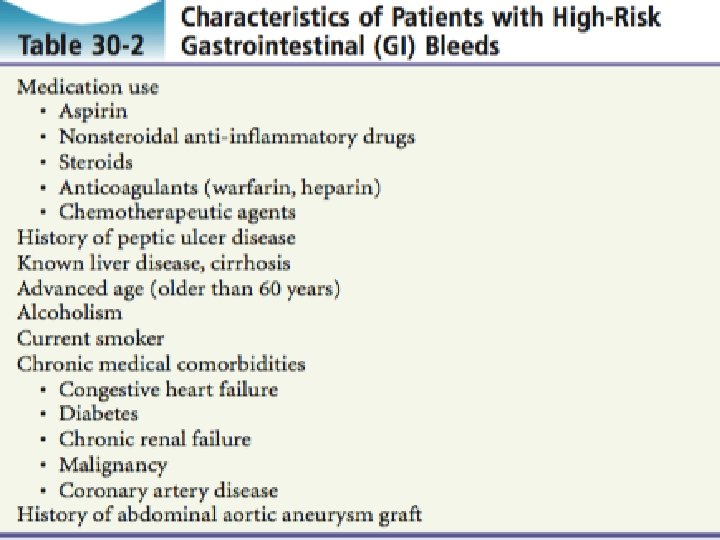
RF for Poor OC: • Age: 60 ys – 75 ys • Comorbidity: HF, CA, RF, varices, liver, drugs (Alcohol, ASA, NSAIDs, anticoag), inpatient • Initial Hct < 30%, high BUN • Initial shock (SBP < 100) • Continued bleeding • Active hematemesis or hematochezia, blood in NGT aspirate 1/1/2022
Management: • Early recognition & aggressive treatment • Monitored bed • Initial resuscitation: – Airway: secure – Breathing: oxygen – Circulation: IV lines, fluids, blood products 1/1/2022
Management: • FFP for coagulopathy (15 m. L/kg) • Platelet transfusion if platelets < 50 K (1 single donor unit, or 1 random pooled unit/ 10 kg) • Erythromycin 250 mg IV, 30 -120 min before EGD (clears stomach) • Reversal of anti-coagulant or anti-platelets agents: 1/1/2022
Medications: • PPIs • Octreotide: consider in uncontrolled UGIB, portal HTN: 25 -50 mcg IV, then 25 -50 mcg/h • H 2 B: not beneficial in acute GIB • If cirrhotic ABx 1/1/2022
Tx: • Restrictive (not liberal) • Reverse known or suspected Coagulopathy 1/1/2022
Management: • Endoscopy: Dx & Rx (injection, coaptive, clips, band ligation) • Immediate vs. Delayed 1/1/2022
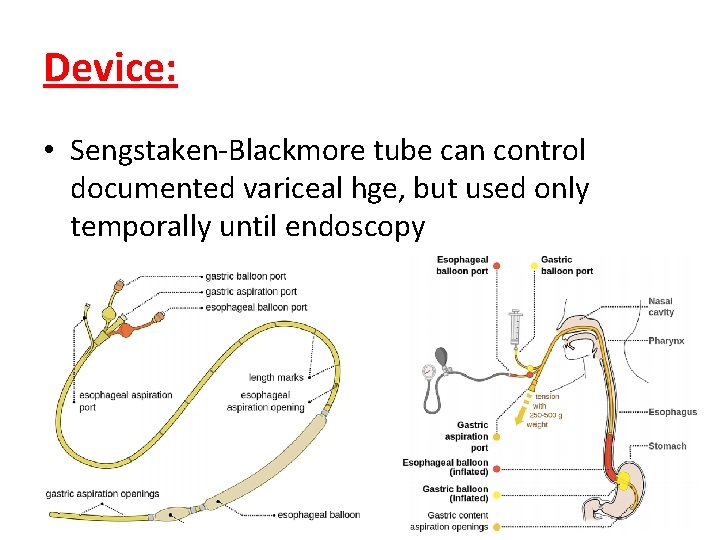
Device: • Sengstaken-Blackmore tube can control documented variceal hge, but used only temporally until endoscopy 1/1/2022
Surgical Intervention: • Despite medical and endoscopic Mx: – Active bleeding not controlled with endoscopy. – Recurrent hge after stabilization & endoscopies. – HD instability after resuscitation and 3 units of PRBC. – Recurrent bleed with shock. – Continuous slow bleed of > 3 units PRBC/day. 1/1/2022
Prognosis: • Shock • Re-bleeding: generally high, figure are variable, so many factors. • Infection: UTI (20 -25%), SBP (15 -20%), Respiratory (8%), Bacteremia (8%). • Tx complications 1/1/2022
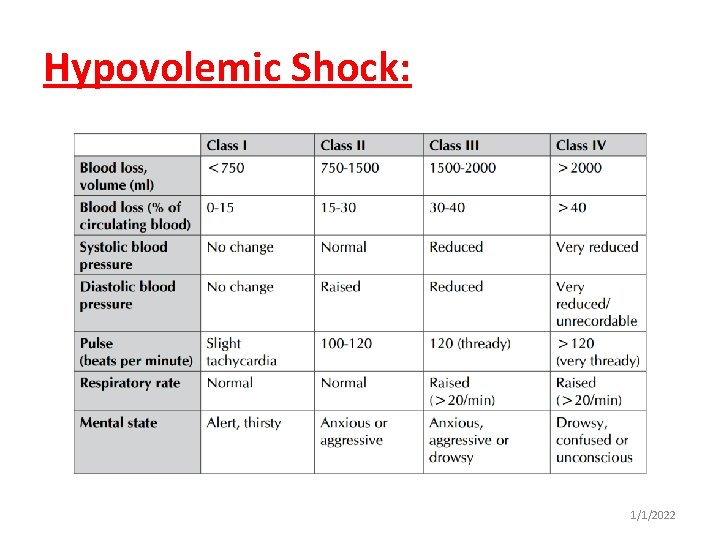
Hypovolemic Shock: 1/1/2022
Case 1: • 76 yo, F, HTN, brought unconscious • HR: 90, RR: 24, BP: 120/80 1/1/2022
Case 2: • 21 yo, M, severe epigastric pain, hematochezia • HR: 135, RR: 24, BP: 110/90 1/1/2022
Case 3: • 35 yo, M, 1 mo epigastric pain, melena? • HR: 90, RR: 18, • BP: 120/80 (orthostatic 100/65) 1/1/2022
Approach: • • Resuscitate Upper vs. Lower GIB Variceal vs. Non-variceal Definitive Rx 1/1/2022

1/1/2022
- Slides: 40