
GI lab 2 Small and large intestines Normal
GI lab 2 Small and large intestines
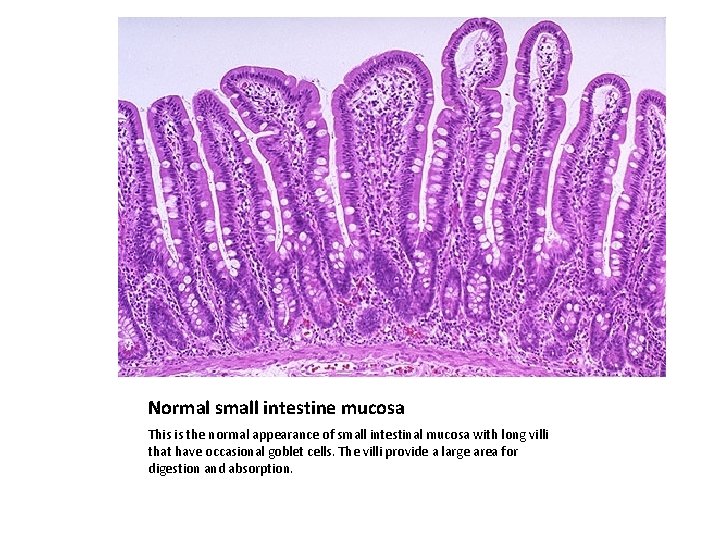
Normal small intestine mucosa This is the normal appearance of small intestinal mucosa with long villi that have occasional goblet cells. The villi provide a large area for digestion and absorption.
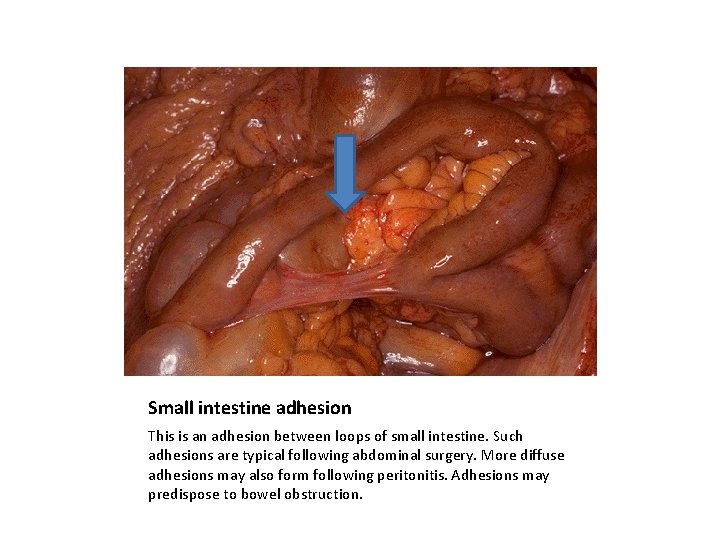
Small intestine adhesion This is an adhesion between loops of small intestine. Such adhesions are typical following abdominal surgery. More diffuse adhesions may also form following peritonitis. Adhesions may predispose to bowel obstruction.
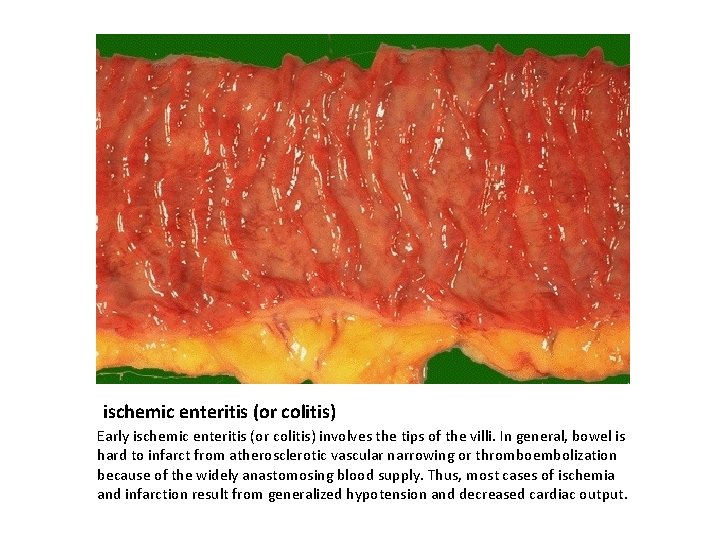
ischemic enteritis (or colitis) Early ischemic enteritis (or colitis) involves the tips of the villi. In general, bowel is hard to infarct from atherosclerotic vascular narrowing or thromboembolization because of the widely anastomosing blood supply. Thus, most cases of ischemia and infarction result from generalized hypotension and decreased cardiac output.
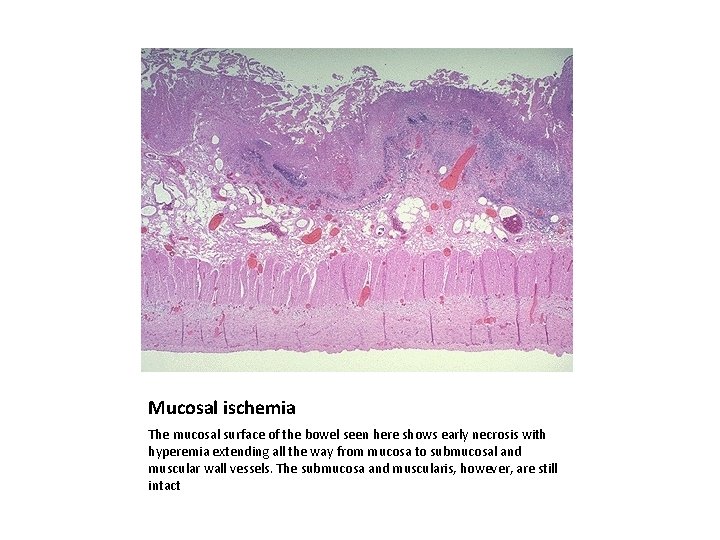
Mucosal ischemia The mucosal surface of the bowel seen here shows early necrosis with hyperemia extending all the way from mucosa to submucosal and muscular wall vessels. The submucosa and muscularis, however, are still intact
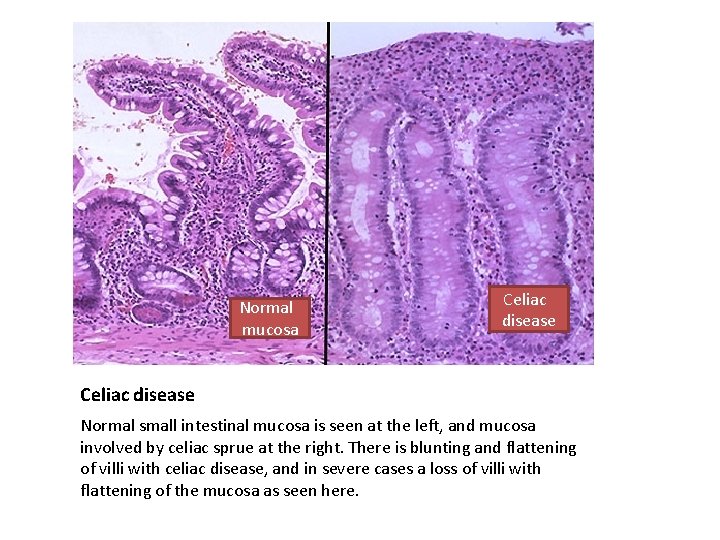
Normal mucosa Celiac disease Normal small intestinal mucosa is seen at the left, and mucosa involved by celiac sprue at the right. There is blunting and flattening of villi with celiac disease, and in severe cases a loss of villi with flattening of the mucosa as seen here.
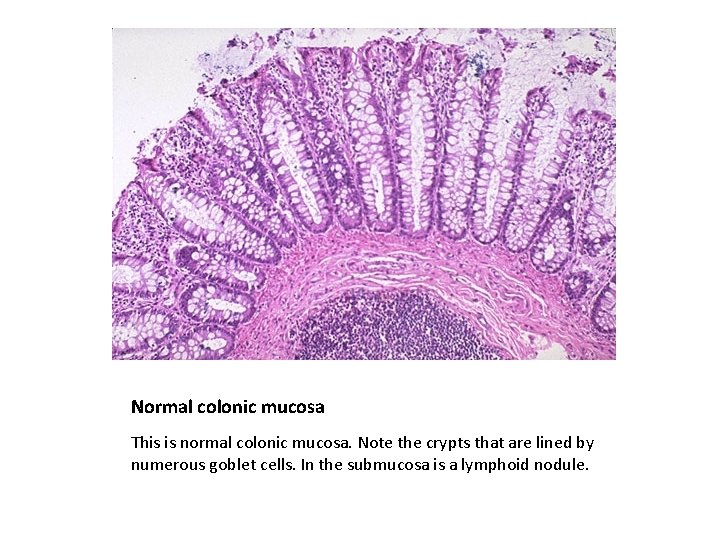
Normal colonic mucosa This is normal colonic mucosa. Note the crypts that are lined by numerous goblet cells. In the submucosa is a lymphoid nodule.
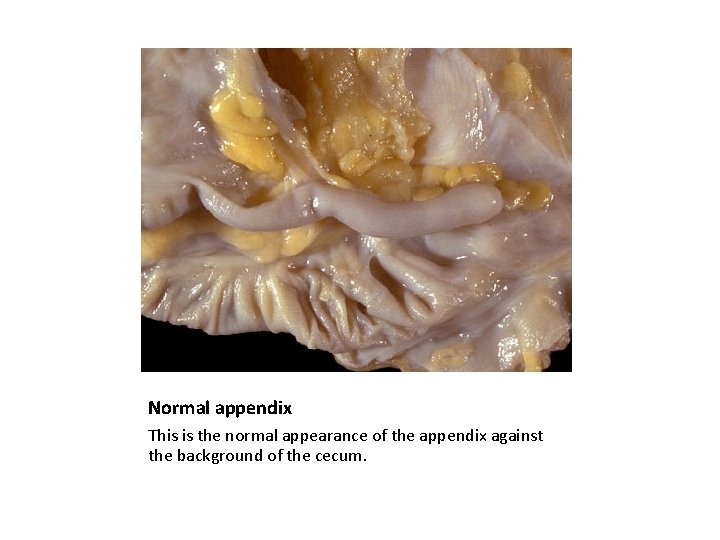
Normal appendix This is the normal appearance of the appendix against the background of the cecum.

Acute Appendicitis This appendix was removed surgically. The patient presented with abdominal pain that initially was generalized, but then localized to the right lower quadrant, and physical examination disclosed 4+ rebound tenderness in the right lower quadrant. The WBC count was elevated at 11, 500. Seen here is acute appendicitis with yellow to tan exudate and hyperemia, including the periappendiceal fat superiorly, rather than a smooth, glistening pale tan serosal surface.
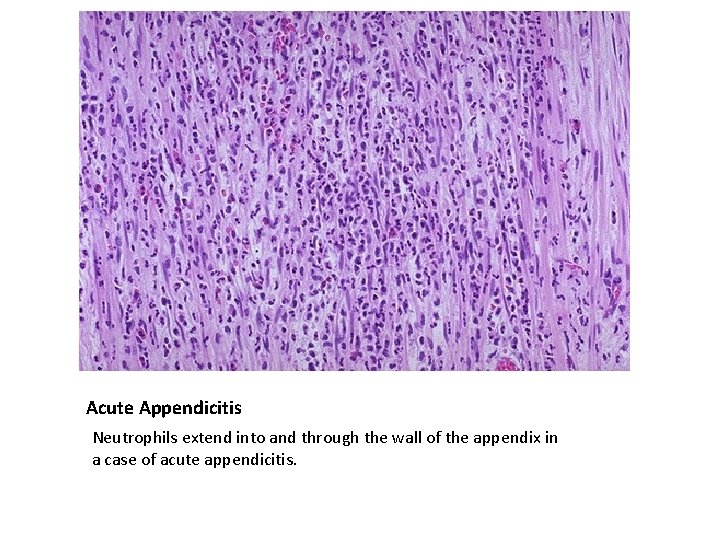
Acute Appendicitis Neutrophils extend into and through the wall of the appendix in a case of acute appendicitis.

Pedunculated adenomatous polyp
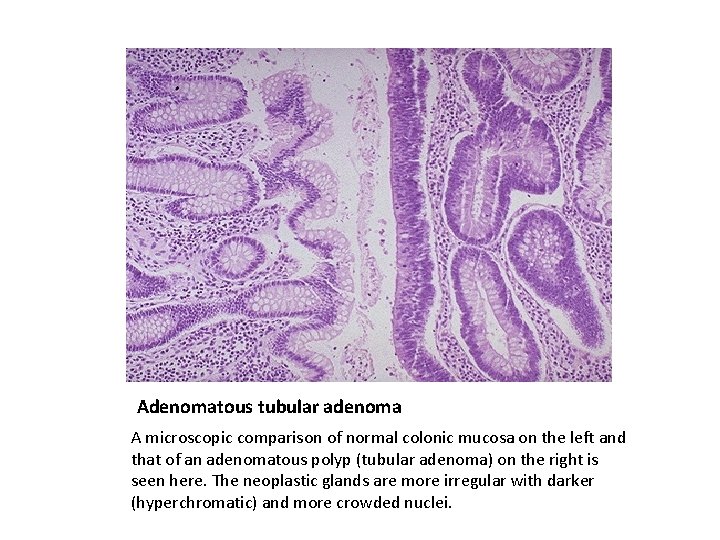
Adenomatous tubular adenoma A microscopic comparison of normal colonic mucosa on the left and that of an adenomatous polyp (tubular adenoma) on the right is seen here. The neoplastic glands are more irregular with darker (hyperchromatic) and more crowded nuclei.
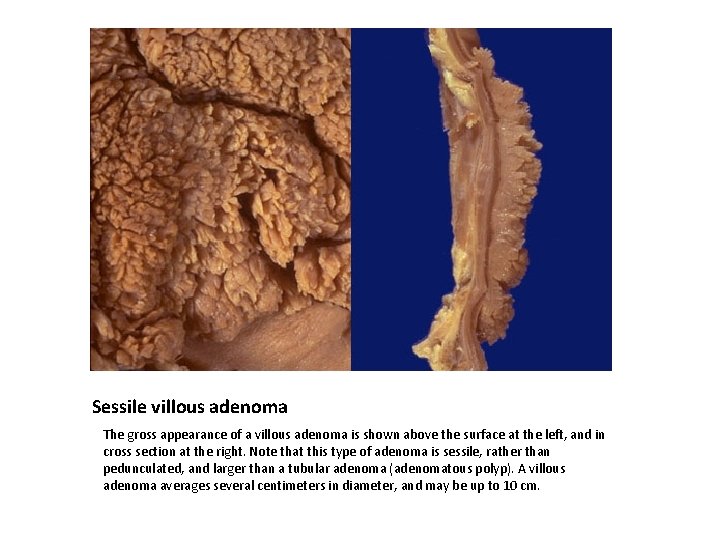
Sessile villous adenoma The gross appearance of a villous adenoma is shown above the surface at the left, and in cross section at the right. Note that this type of adenoma is sessile, rather than pedunculated, and larger than a tubular adenoma (adenomatous polyp). A villous adenoma averages several centimeters in diameter, and may be up to 10 cm.
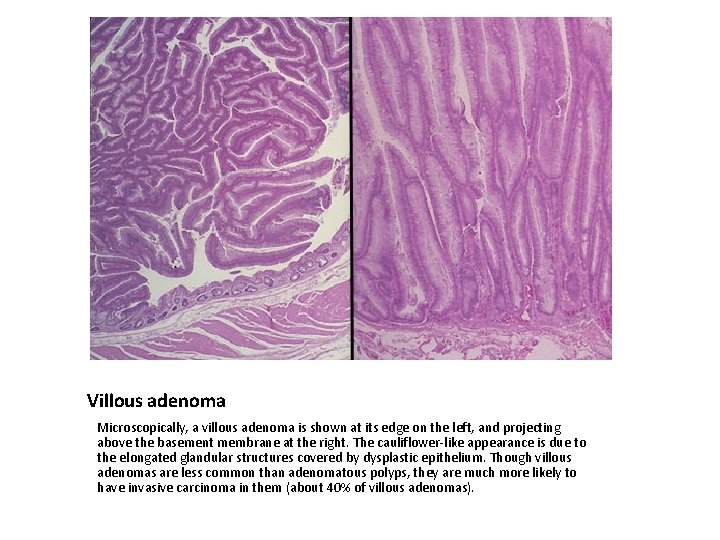
Villous adenoma Microscopically, a villous adenoma is shown at its edge on the left, and projecting above the basement membrane at the right. The cauliflower-like appearance is due to the elongated glandular structures covered by dysplastic epithelium. Though villous adenomas are less common than adenomatous polyps, they are much more likely to have invasive carcinoma in them (about 40% of villous adenomas).
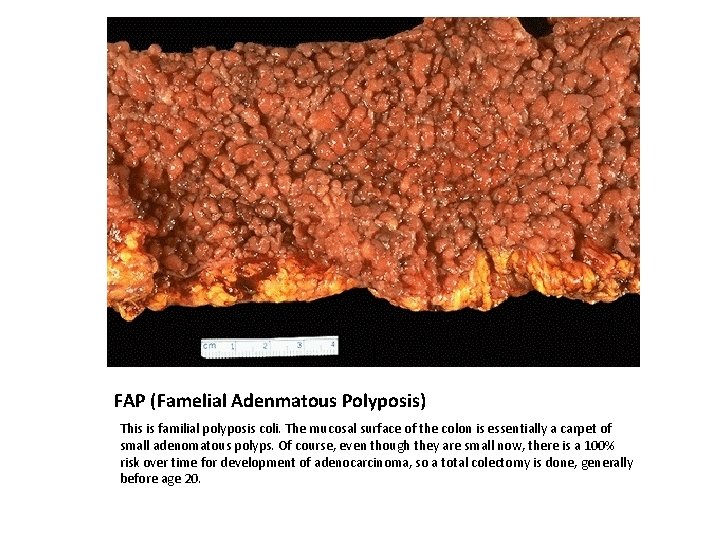
FAP (Famelial Adenmatous Polyposis) This is familial polyposis coli. The mucosal surface of the colon is essentially a carpet of small adenomatous polyps. Of course, even though they are small now, there is a 100% risk over time for development of adenocarcinoma, so a total colectomy is done, generally before age 20.
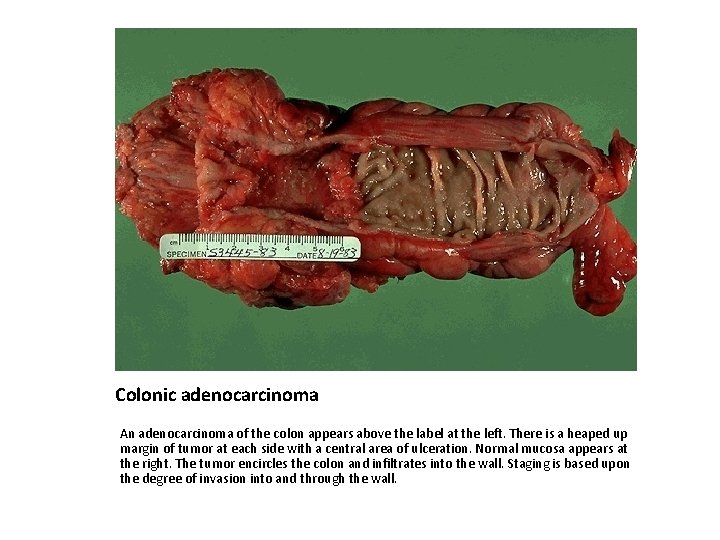
Colonic adenocarcinoma An adenocarcinoma of the colon appears above the label at the left. There is a heaped up margin of tumor at each side with a central area of ulceration. Normal mucosa appears at the right. The tumor encircles the colon and infiltrates into the wall. Staging is based upon the degree of invasion into and through the wall.
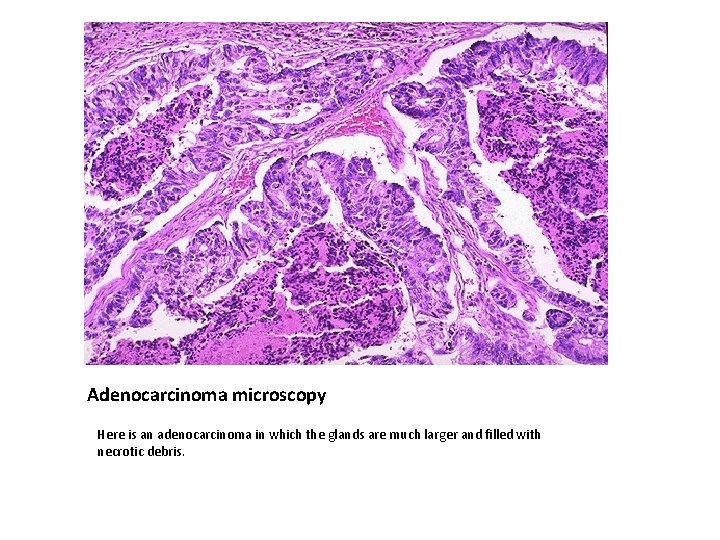
Adenocarcinoma microscopy Here is an adenocarcinoma in which the glands are much larger and filled with necrotic debris.
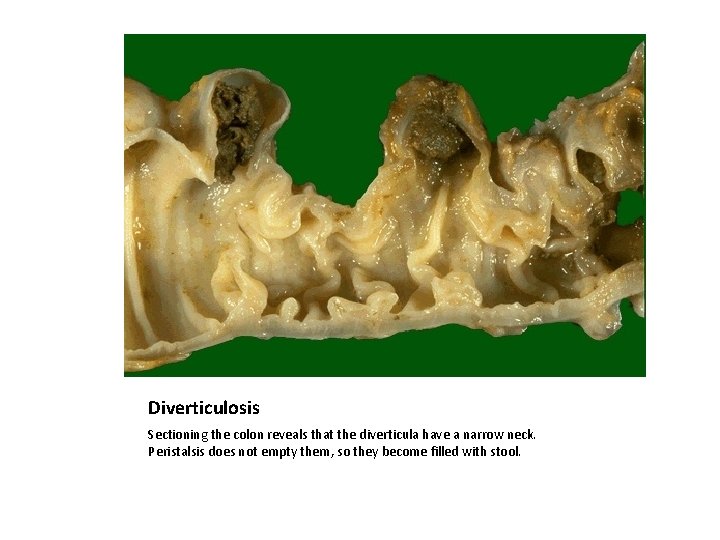
Diverticulosis Sectioning the colon reveals that the diverticula have a narrow neck. Peristalsis does not empty them, so they become filled with stool.
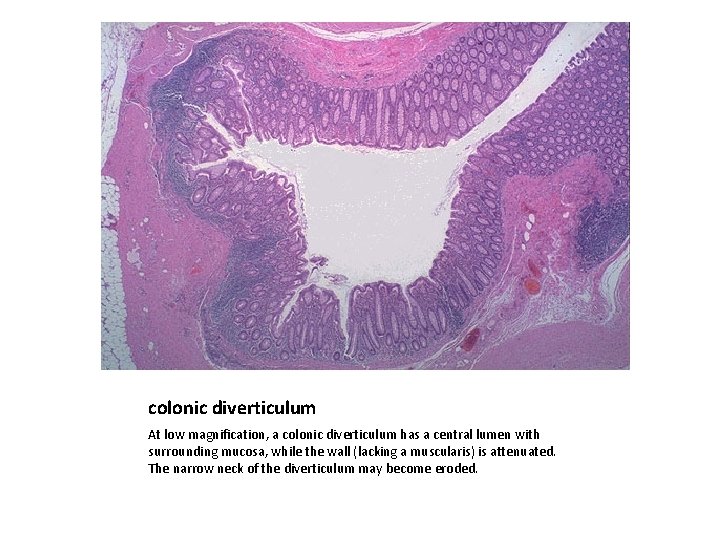
colonic diverticulum At low magnification, a colonic diverticulum has a central lumen with surrounding mucosa, while the wall (lacking a muscularis) is attenuated. The narrow neck of the diverticulum may become eroded.
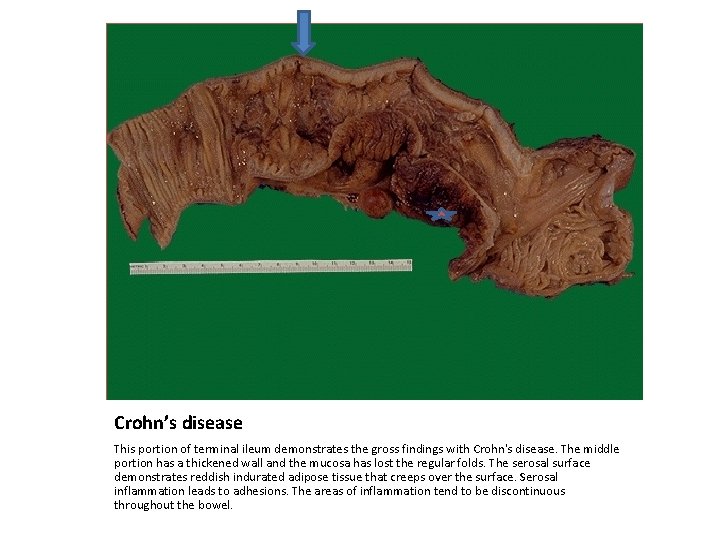
Crohn’s disease This portion of terminal ileum demonstrates the gross findings with Crohn's disease. The middle portion has a thickened wall and the mucosa has lost the regular folds. The serosal surface demonstrates reddish indurated adipose tissue that creeps over the surface. Serosal inflammation leads to adhesions. The areas of inflammation tend to be discontinuous throughout the bowel.
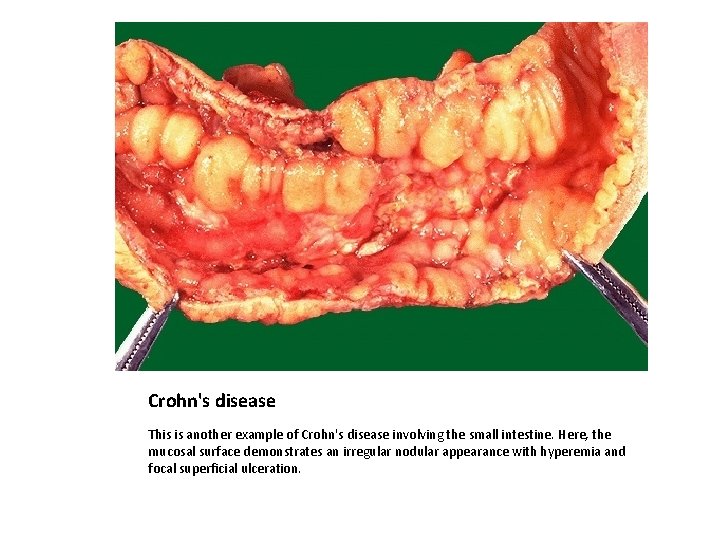
Crohn's disease This is another example of Crohn's disease involving the small intestine. Here, the mucosal surface demonstrates an irregular nodular appearance with hyperemia and focal superficial ulceration.
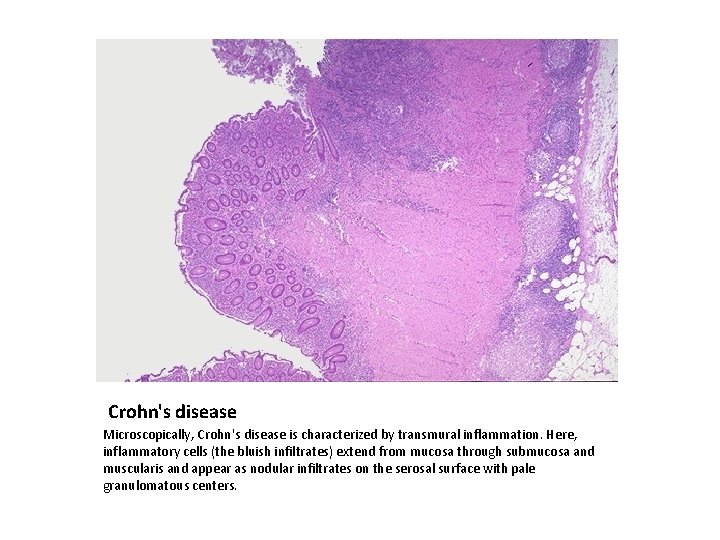
Crohn's disease Microscopically, Crohn's disease is characterized by transmural inflammation. Here, inflammatory cells (the bluish infiltrates) extend from mucosa through submucosa and muscularis and appear as nodular infiltrates on the serosal surface with pale granulomatous centers.
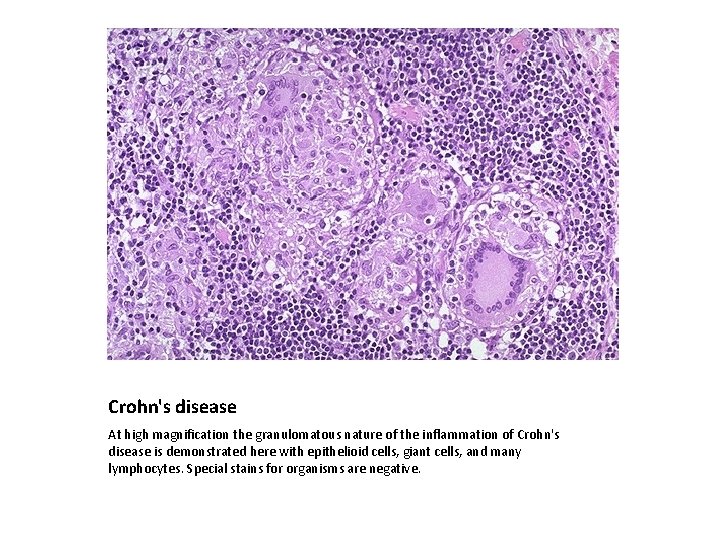
Crohn's disease At high magnification the granulomatous nature of the inflammation of Crohn's disease is demonstrated here with epithelioid cells, giant cells, and many lymphocytes. Special stains for organisms are negative.
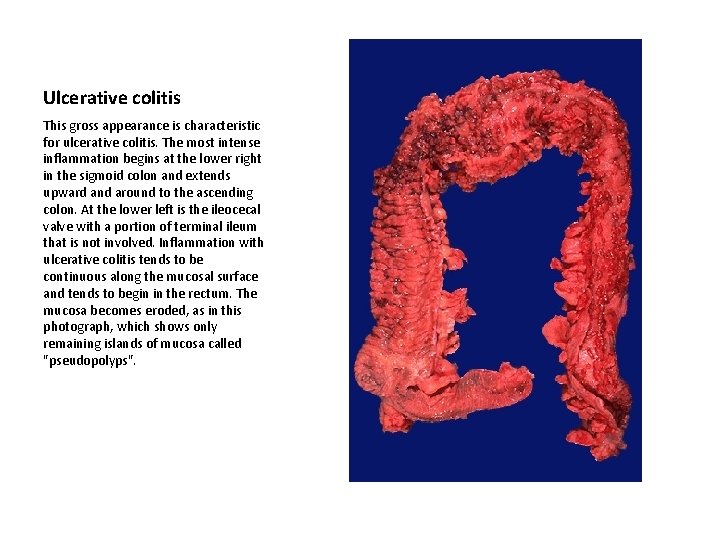
Ulcerative colitis This gross appearance is characteristic for ulcerative colitis. The most intense inflammation begins at the lower right in the sigmoid colon and extends upward and around to the ascending colon. At the lower left is the ileocecal valve with a portion of terminal ileum that is not involved. Inflammation with ulcerative colitis tends to be continuous along the mucosal surface and tends to begin in the rectum. The mucosa becomes eroded, as in this photograph, which shows only remaining islands of mucosa called "pseudopolyps".
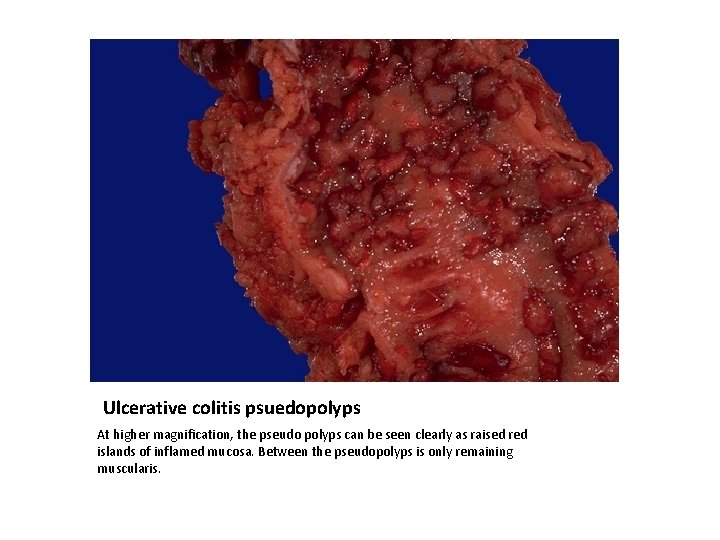
Ulcerative colitis psuedopolyps At higher magnification, the pseudo polyps can be seen clearly as raised red islands of inflamed mucosa. Between the pseudopolyps is only remaining muscularis.
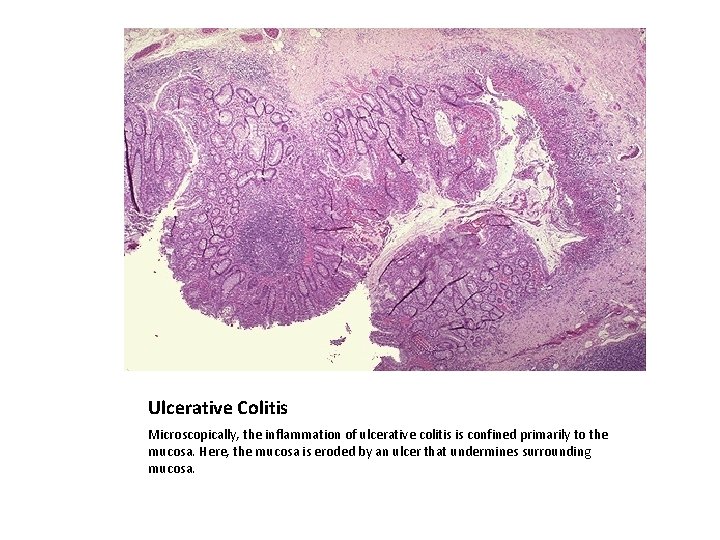
Ulcerative Colitis Microscopically, the inflammation of ulcerative colitis is confined primarily to the mucosa. Here, the mucosa is eroded by an ulcer that undermines surrounding mucosa.
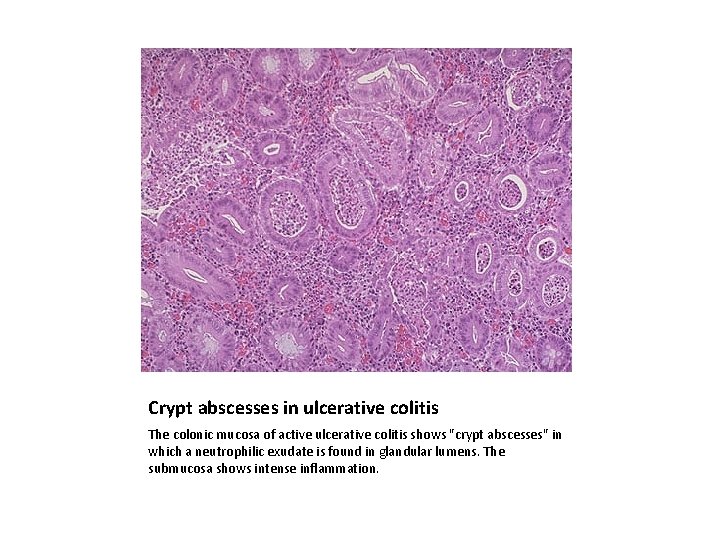
Crypt abscesses in ulcerative colitis The colonic mucosa of active ulcerative colitis shows "crypt abscesses" in which a neutrophilic exudate is found in glandular lumens. The submucosa shows intense inflammation.
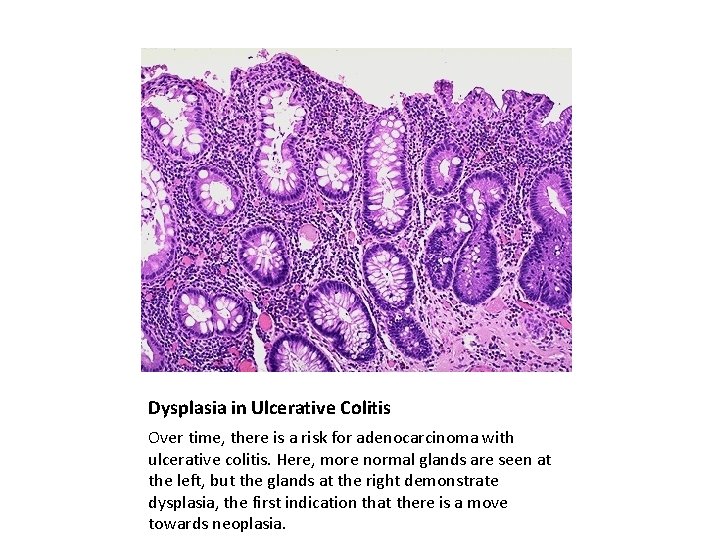
Dysplasia in Ulcerative Colitis Over time, there is a risk for adenocarcinoma with ulcerative colitis. Here, more normal glands are seen at the left, but the glands at the right demonstrate dysplasia, the first indication that there is a move towards neoplasia.

Thank you
- Slides: 29