
GI Foreign Body Food Bolus Overview Retrieval Management
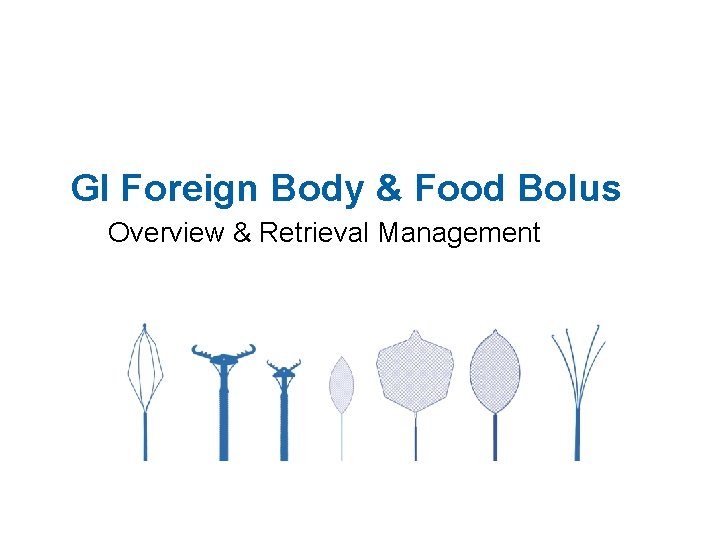
GI Foreign Body & Food Bolus Overview & Retrieval Management
EDUCATIONAL OBJECTIVES • Identify the patient populations • Describe the criteria for endoscopic intervention • Identifying symptoms, physiological risks, and complications • Available endoscopic equipment • Identify the risk factors
PEDIATRICS AND FOREIGN BODIES • • • 80% of all Foreign Body cases occur in children Age range: 6 mo. – 5 yrs. 90, 906 cases (Source: 2006 the American Association of Poison Control Centers) 98% unintentional Most common: • • • Buttons Pen or bottle caps Marbles Coins Disk batteries (i. e. used in watches and calculators)

TYPICAL PEDIATRIC FOREIGN BODIES
ADULTS &FOREIGN BODIES Unintentional • Compromised mental perception • Diminished mental capacity • Alcohol related • Elderly population • Partials or dentures • Bulimic population – “the purging tool”
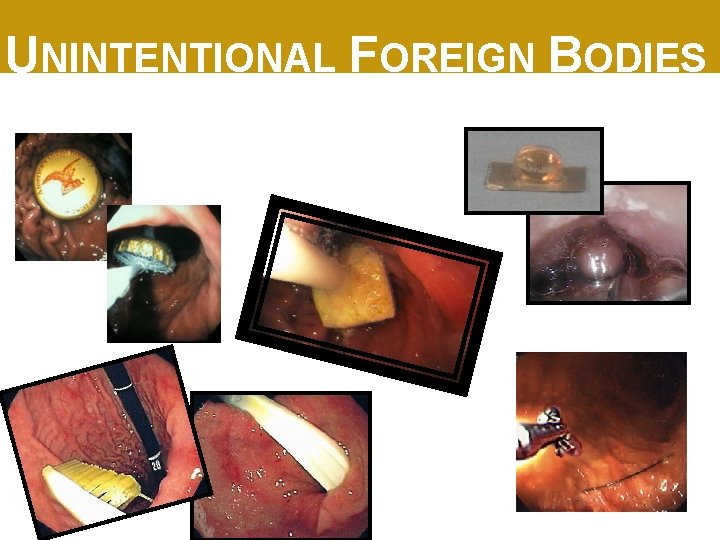
UNINTENTIONAL FOREIGN BODIES
ADULTS &FOREIGN BODIES Intentional • Psychiatric patients • Prisoners • Achieve several goals: • • • Excused from work detail Enjoy a change in environment Enjoys euphoria from narcotics Attention Typically repeat offenders

INTENTIONAL FOREIGN BODIES

FOOD BOLUS IMPACTION • • Can occur in children and adults A result of under chewing or not chewing food Underlying esophageal pathology common Adult study found 97% presenting with meat impaction had esophageal disease upon endoscopic examination • • • Anastomotic stricture Nissen fundoplication Partial esophagectomy Schatzki’s ring Peptic stricture Esophageal web Tumor Eosinophyllic esophagitis Achalasia

FOOD BOLUS IMPACTION • Typical Patients: • “Young and the Restless” • “Old and the Toothless” • Typical foods: • • Meat (steak, chicken, beef, pork, hotdogs, lamb) Some fruits and vegetables Fish/Fish bones Cocktails and hors-d’oeuvres
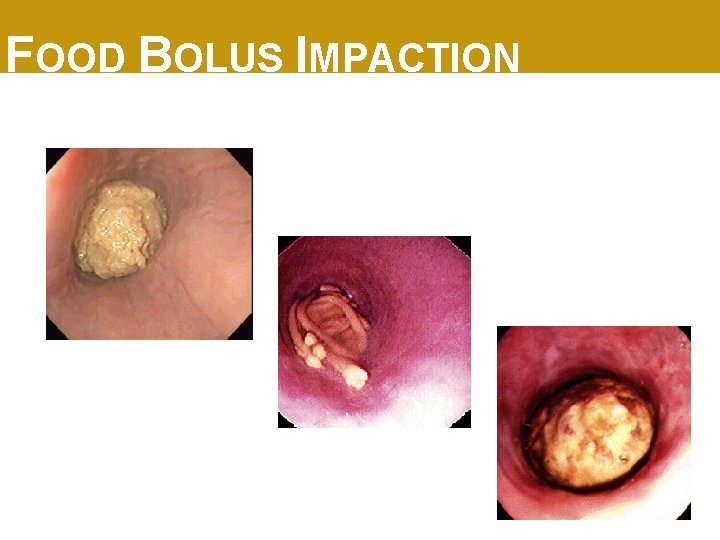
FOOD BOLUS IMPACTION
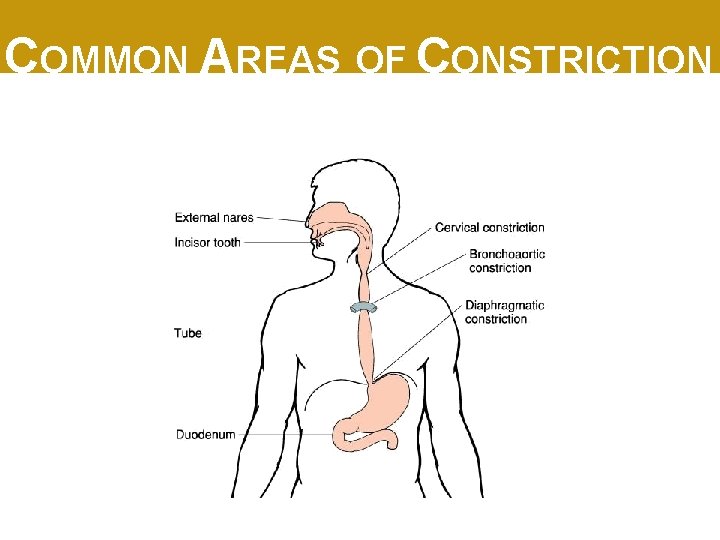
COMMON AREAS OF CONSTRICTION
DETERMINING THE NEED FOR ENDOSCOPIC INTERVENTION • • Presence or absence of symptoms When ingestion / impaction occurred? What is it? Where is it stuck? Patient size Perceived risk Known pathology Unknown pathology
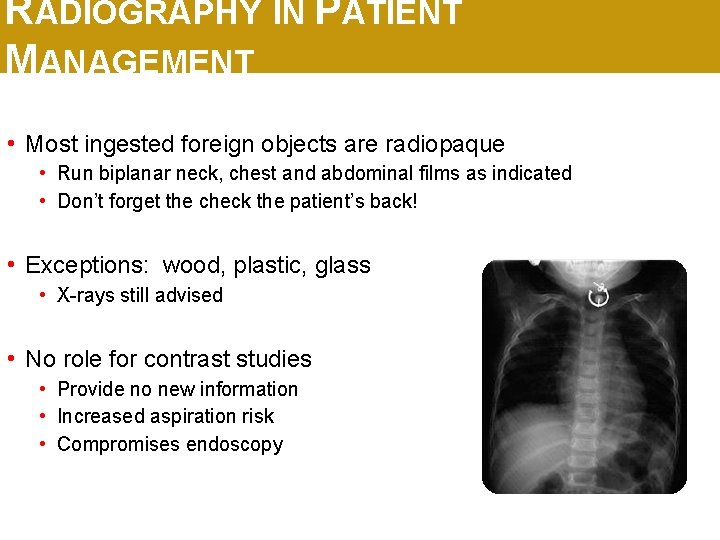
RADIOGRAPHY IN PATIENT MANAGEMENT • Most ingested foreign objects are radiopaque • Run biplanar neck, chest and abdominal films as indicated • Don’t forget the check the patient’s back! • Exceptions: wood, plastic, glass • X-rays still advised • No role for contrast studies • Provide no new information • Increased aspiration risk • Compromises endoscopy
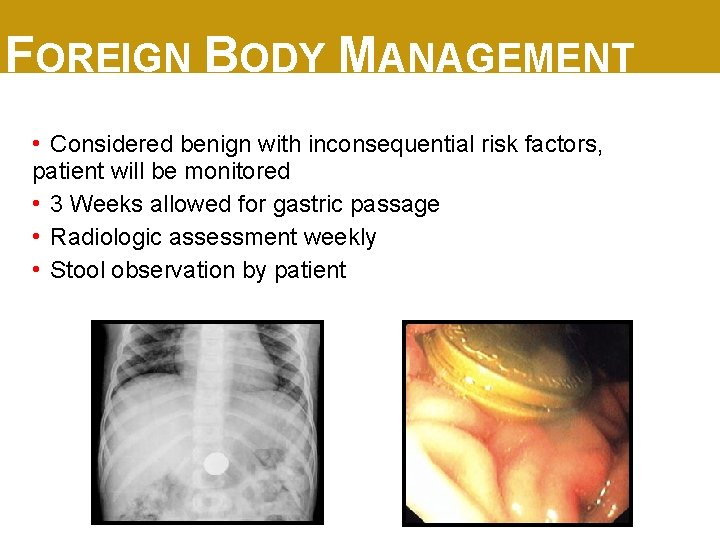
FOREIGN BODY MANAGEMENT • Considered benign with inconsequential risk factors, patient will be monitored • 3 Weeks allowed for gastric passage • Radiologic assessment weekly • Stool observation by patient
FOREIGN BODY MANAGEMENT • Adjunctive agents – not recommended • • Adolph’s meat tenderizer Carbonated beverages Promotility agents, i. e. Reglan Lubricating agents, i. e. mineral oil • Sedation selection • IV narcotic sedation vs. general anesthesia with endotracheal intubation • Consideration based on item being retrieved, patient age and patient condition • Experienced Endoscopist and nurse • Familiarity matters!
BENEFITS OF PREPARATION • Provide the highest level of care and safety to the patient • Decreased amount of time under anesthesia or sedation for the patient • Complications minimized • Staff frustration minimized • Time spent by staff performing the procedure minimized • Cost savings to facility
ASGE GUIDELINES • Standards of Practice Committee prepared a list of “equipment that should be readily available” • • • Retrieval net Overtubes in both esophageal and gastric lengths Retrieval basket Polypectomy snare Polyp grasper Rat tooth forceps Alligator forceps Dormier basket Foreign body protector hood
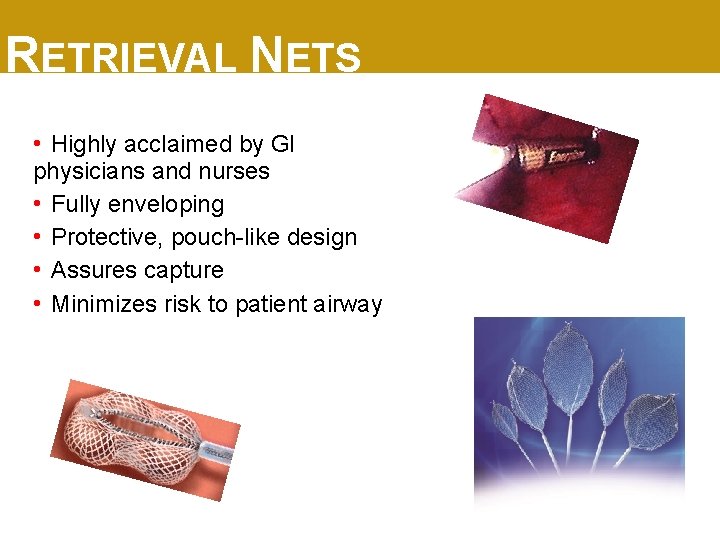
RETRIEVAL NETS • Highly acclaimed by GI physicians and nurses • Fully enveloping • Protective, pouch-like design • Assures capture • Minimizes risk to patient airway
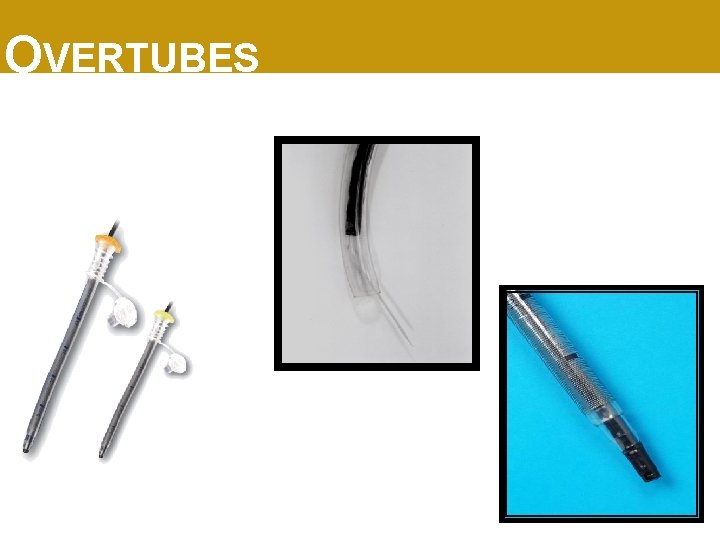
OVERTUBES
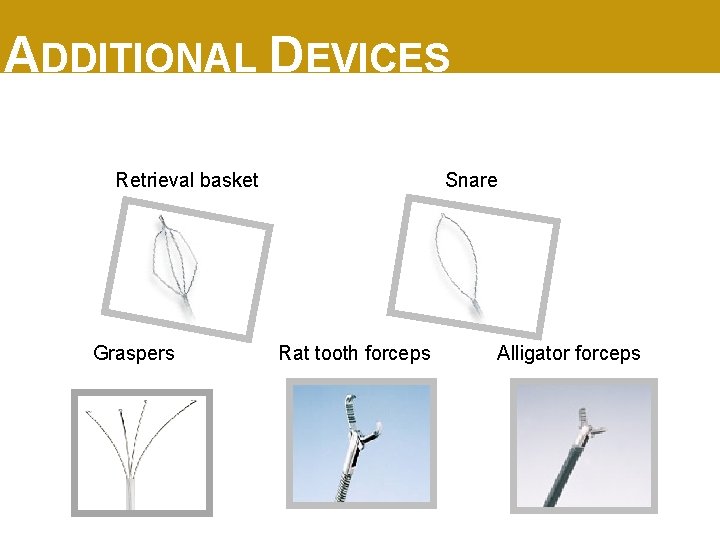
ADDITIONAL DEVICES Retrieval basket Graspers Snare Rat tooth forceps Alligator forceps

SHARP AND POINTED OBJECTS • Complication risks as high as 35% • Lodged in the esophagus a medical emergency • Immediate endoscopic removal • Visible in stomach or proximal duodenum with Xray • Endoscopic removal • Negative radiologic exam • Endoscopic evaluation • Jackson’s axiom “leading points puncture, trailing points do not” • Orient the pointed end so it is trailing distally during extraction • Remember to protect the esophagus • Foreign body hood • Overtube
RISKS AND COMPLICATIONS • Sedation related complications including allergic reactions • Aspiration • Losing the “specimen” • Device failure • Human error • Patient movement • Mucosal injury • Perforation
MINIMIZING THE RISK • Meticulous inspection of the volume, content, location, fixation • Clear secretions / airway protection • Relaxation and insufflation • Gentle advancement of scope and devices • Debulking / debriding needed in some food bolus cases • Suction in some cases • HAVE THE RIGHT ACCESSORIES
MINIMIZING THE RISK • • DO NOT push hard DO NOT advance dilators DO NOT blindly advance devices DO NOT persist excessively
SUMMARY • Endoscopic retrieval is a tricky business that it requires decision making & technical skill; if there is more experience around, use them • Foreign Body and Food Bolus removal can be incredibly nerve racking • Foreign Body and Food Bolus removal requires risk management • Protection of the patient’s airway is critical • Be prepared for “anything” • Practicing a “dry run” can be one of the keys to success • Stay abreast of latest technology in retrieval device choice and documented reports of retrieval device successes • Equip your facility with the retrieval devices necessary according to the ASGE guideline foreign body retrieval

GI Foreign Body & Food Bolus Overview and Retrieval Management Vantage Endoscopy: Mark Malinowski
- Slides: 27