GHANA AND THE SAMURAI 1000 1600 The Golden

- Slides: 45
GHANA AND THE SAMURAI
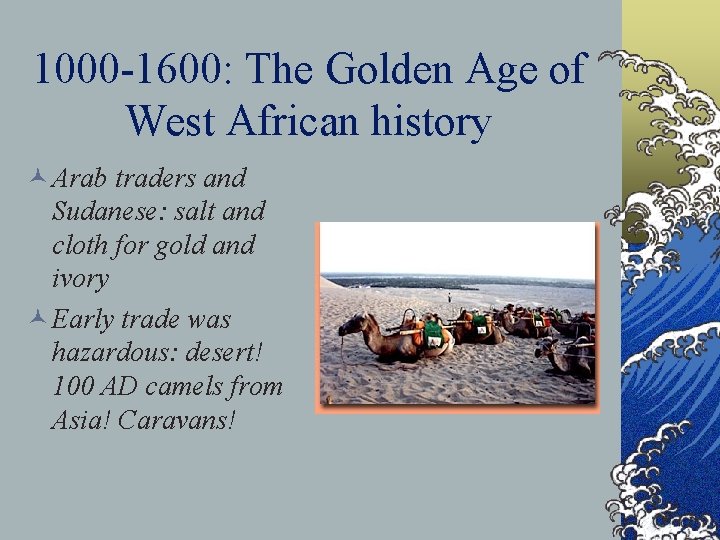
1000 -1600: The Golden Age of West African history © Arab traders and Sudanese: salt and cloth for gold and ivory © Early trade was hazardous: desert! 100 AD camels from Asia! Caravans!
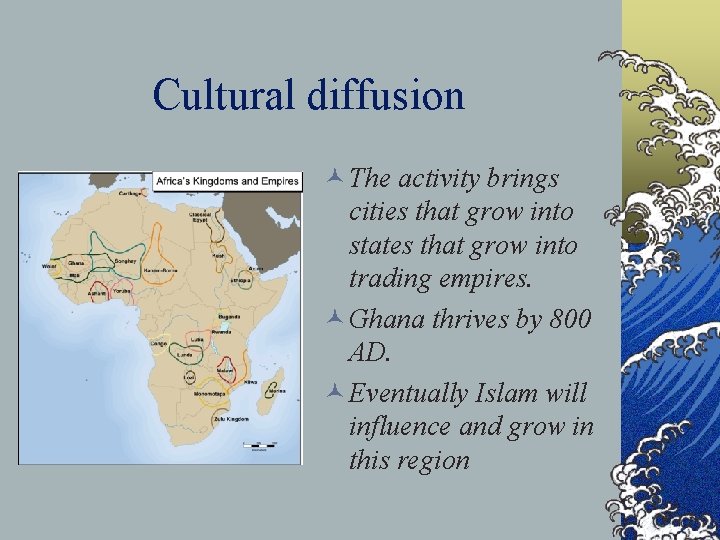
Cultural diffusion © The activity brings cities that grow into states that grow into trading empires. © Ghana thrives by 800 AD. © Eventually Islam will influence and grow in this region
Civilization! ©West African societies had all the attributes of “civilization” ©Organized government, religious beliefs and rituals, job specialization, social classes, arts and public works
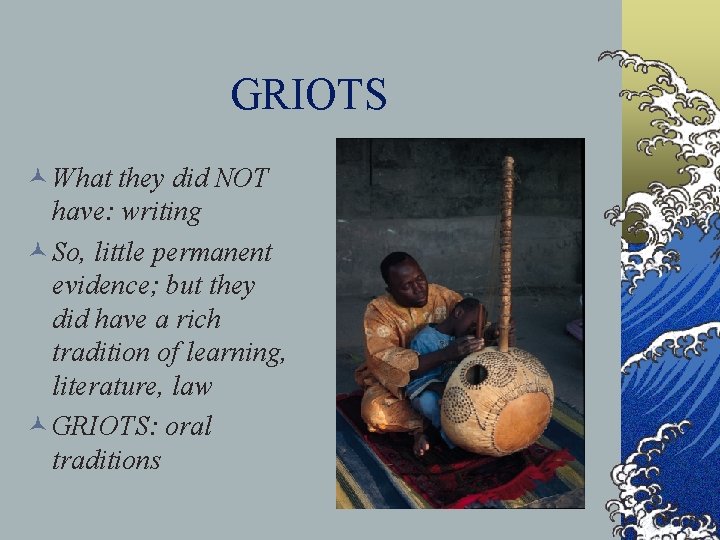
GRIOTS © What they did NOT have: writing © So, little permanent evidence; but they did have a rich tradition of learning, literature, law © GRIOTS: oral traditions
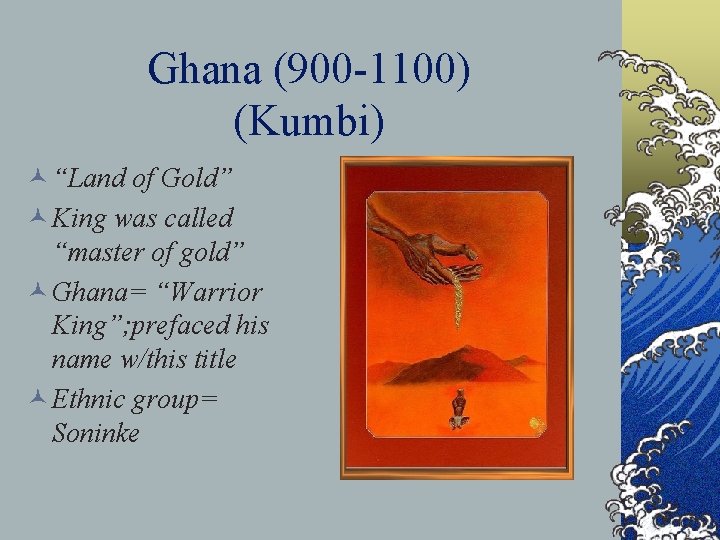
Ghana (900 -1100) (Kumbi) © “Land of Gold” © King was called “master of gold” © Ghana= “Warrior King”; prefaced his name w/this title © Ethnic group= Soninke
Al-Bakri writes history1067 © “The court of appeal is held in a domed pavilion around which stand ten horses with gold embroidered trappings. Behind the king stand ten pages holding shields and swords of gold…The governor of the city sits on the ground before the king…At the door of the pavilion are dogs of excellent pedigree guarding the king…round their necks they wear collars of gold and silver…”
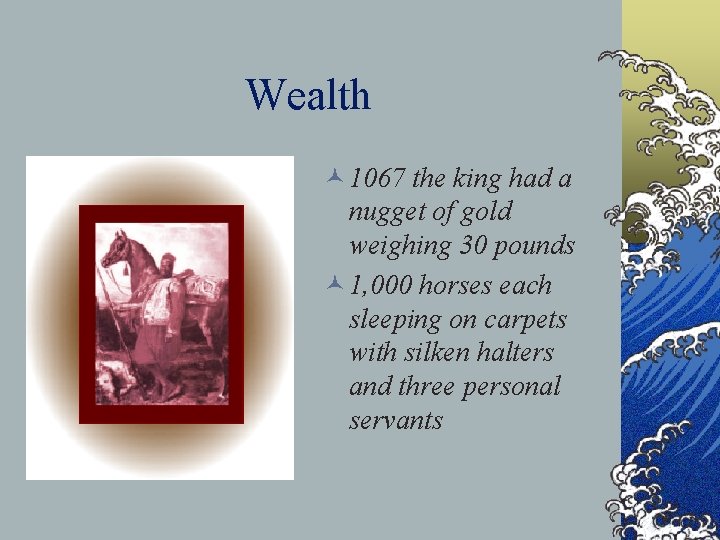
Wealth © 1067 the king had a nugget of gold weighing 30 pounds © 1, 000 horses each sleeping on carpets with silken halters and three personal servants
How Ghana develop such wealth? ©Never owned gold fields! ©Just controlled the trade!! ©The gold owners, Wangara, needed salt to survive ©So the salt came through Ghana ©It was, in part, fortuitous geographic position, but how did they take advantage of it?
“DUMB BARTER” ©Arabs: salt, silk, copper, metal pots…); piles along river, marked with ID, beat the drums, withdraw ©Wangara: sail up the river; gold and ivory, estimate worth, leave gold, withdraw ©Back and forth until all parties satisfied ©Ghana gets a cut
Ghana’s cut: Why? ©Ghana controlled the land ©Had built an intimidating military force ©“When the king of Ghana calls up his army he can put 200, 000 men in the field…” –Al-Bakri ©One of the largest armies in the world at the time
What did Ghana offer? © Maintained peace and safe trade © Maintained the value gold by limiting the amount that was traded © “The nuggets found in all the mines of this country are reserved for the king, only the gold dust being left for the people. Without this precaution , the people would accumulate gold until it had lost its value. ” –Al-Bakri
How did they initially become so successful? ©LEADERSHIP! ©Used diplomacy ©Tolerance of various religious beliefs (Islamic traders, various traditional beliefs…) ©Strong bureaucracy; strong justice system; iron weapons ©Fair taxation creating strong economy
Ghana is conquered ©By 11 th century Ghana’s rulers convert to Islam; most of the people do not © 1076, Muslim groups from North Africa finally conquer Ghana ©Salt and gold trade badly disrupted by extended war; Ghana cannot recover ©BUT, from its ashes MALI rises
Mali (1200 -1450) © 1235: Mali has emerged ©They were people from the south who had been under Ghana’s control; they begin to build their own gold trade ©Two great leaders: Sundiata and Mansa Musa
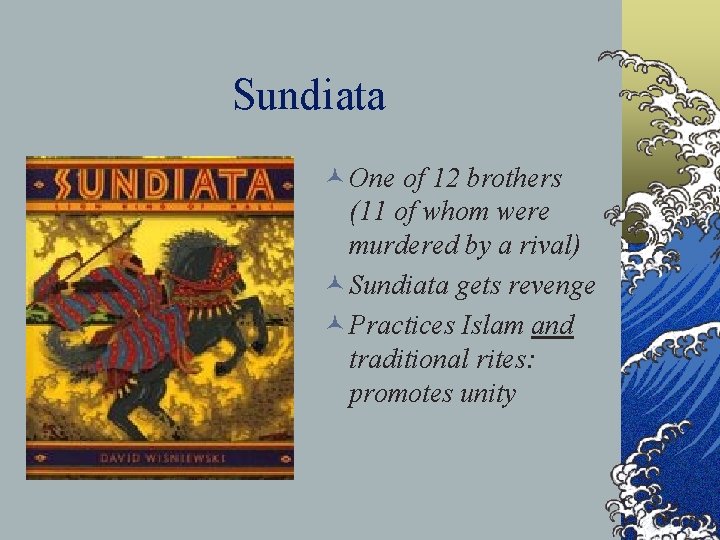
Sundiata © One of 12 brothers (11 of whom were murdered by a rival) © Sundiata gets revenge © Practices Islam and traditional rites: promotes unity
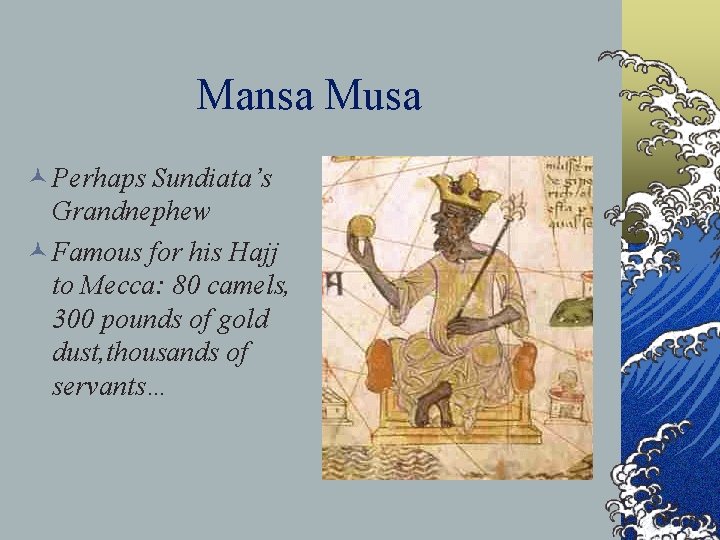
Mansa Musa © Perhaps Sundiata’s Grandnephew © Famous for his Hajj to Mecca: 80 camels, 300 pounds of gold dust, thousands of servants…
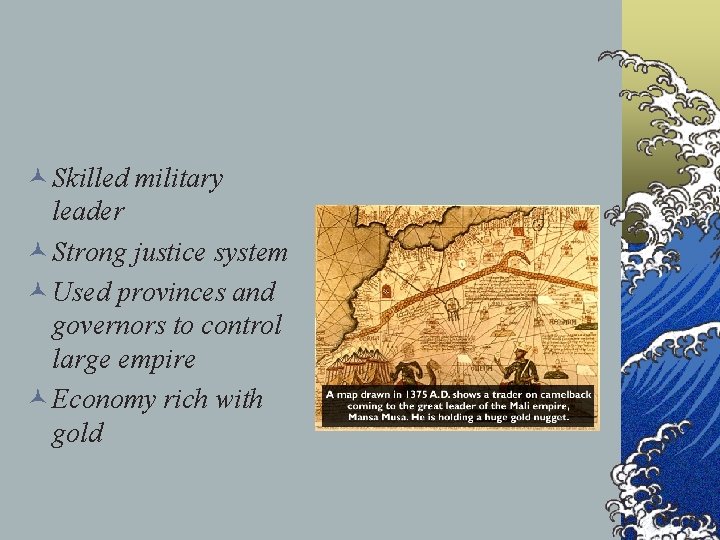
© Skilled military leader © Strong justice system © Used provinces and governors to control large empire © Economy rich with gold
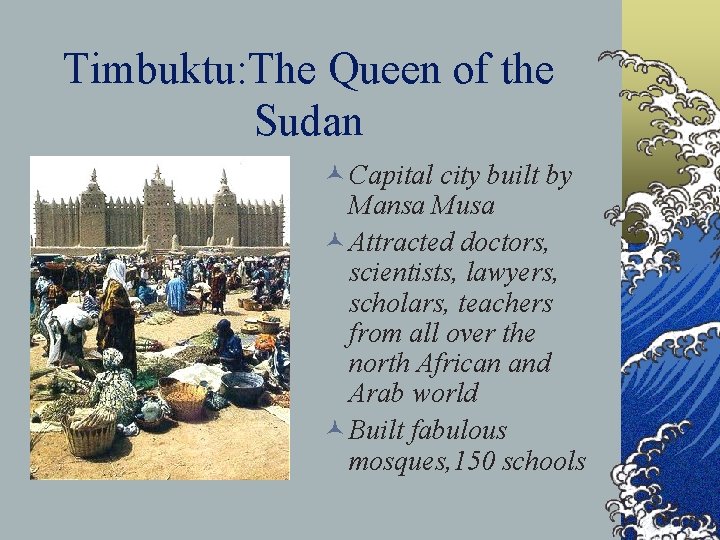
Timbuktu: The Queen of the Sudan © Capital city built by Mansa Musa © Attracted doctors, scientists, lawyers, scholars, teachers from all over the north African and Arab world © Built fabulous mosques, 150 schools
© 14 th-15 th centuries, Muslim intellectuals and Arab Traders married African women ©This diversity and blending created a need to get along and show tolerance ©Timbuktu was very sophisticated and cosmopolitan
Ibn Battuta: 1352 traveled to Mali ©“They are seldom unjust, and have a greater abhorrence of injustice than any other people. Their sultan shows no mercy to anyone who is guilty of the least act. There is complete security in their country. Neither inhabitant nor traveler has anything to fear from robbers. ”
Mali’s end ©New gold fields developed to the east of Mali; the people in this area began to take some of the trade that had been monopolized by Mali ©Mansa Musa’s successors were not as skilled as he and the empire began a decline
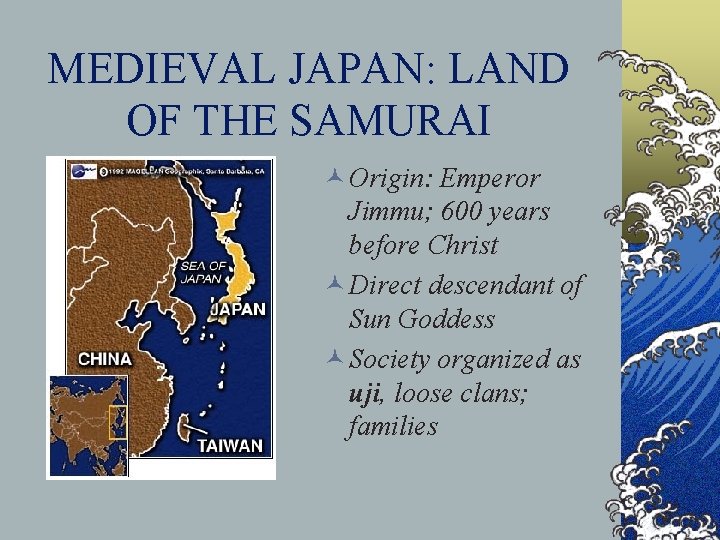
MEDIEVAL JAPAN: LAND OF THE SAMURAI © Origin: Emperor Jimmu; 600 years before Christ © Direct descendant of Sun Goddess © Society organized as uji, loose clans; families
UJI ©Chief (patriarchal) was head of clan ©Religious and political ©Vast majority were peasants who served the Chief ©Back-breaking toil; agriculture
Yamato clan © By third century, emerged as most powerful © Took title “mikoto” or “sovereign” © Authority symbols pass from emperor to emperor ©Mirror=see things as they are, fairness, justice ©Jewel= gentleness and piety ©Sword: firm, sharp decisions, wisdom
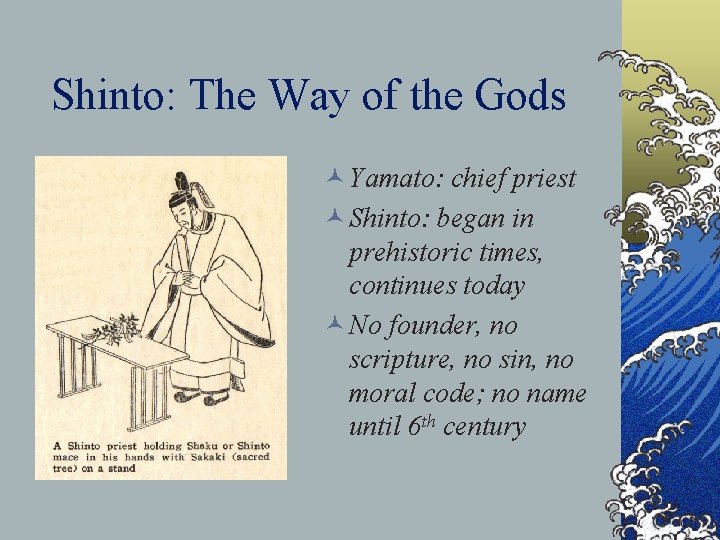
Shinto: The Way of the Gods © Yamato: chief priest © Shinto: began in prehistoric times, continues today © No founder, no scripture, no sin, no moral code; no name until 6 th century
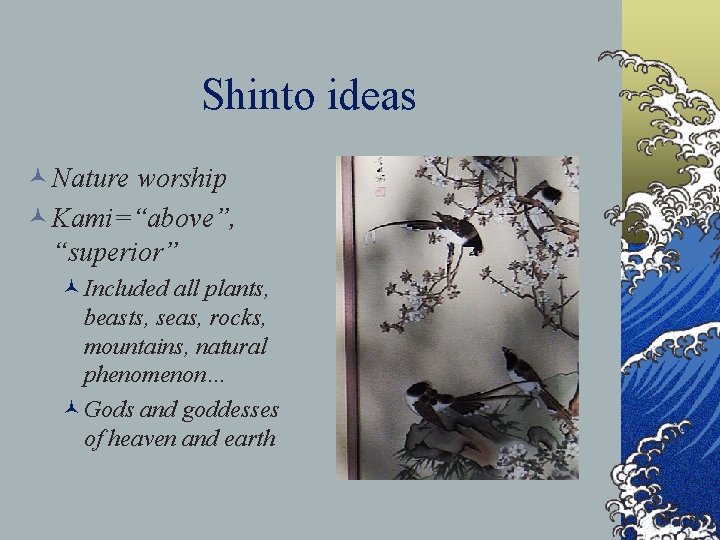
Shinto ideas © Nature worship © Kami=“above”, “superior” ©Included all plants, beasts, seas, rocks, mountains, natural phenomenon… ©Gods and goddesses of heaven and earth
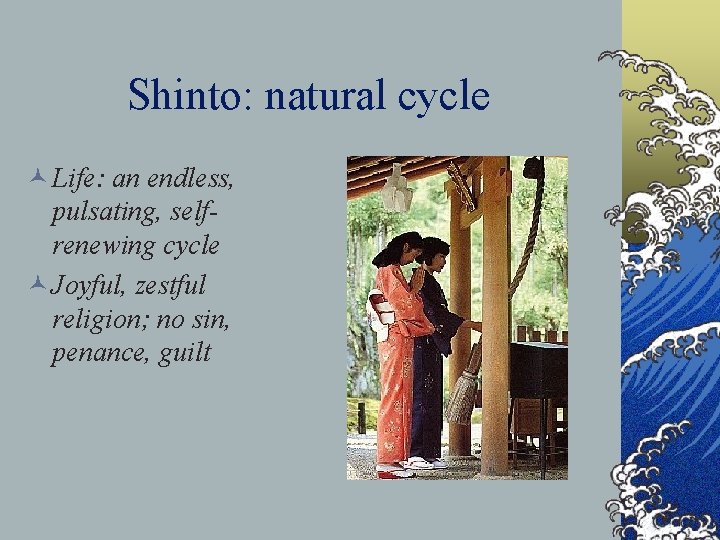
Shinto: natural cycle © Life: an endless, pulsating, selfrenewing cycle © Joyful, zestful religion; no sin, penance, guilt
Other influences in Japanese development ©Buddhism from China ©Confucianism from China (not taken on wholly, but inspired and blended with ideas of hierarchies, obedience, respect, and bureaucracy; rejected scholars over noble birth) ©Writing: used ideas of characters, but developed unique characters
Fujiwara Clan: 800’s to 1100’s ©Government develops: ©Emperor reigned, but did not rule ©Power was in hands of members of influential clan at court ©Emperors had little to do; retired early; usually boys on throne and dads in Buddhist monasteries
Fujiwara and competitors © 838 begin to close to outside © Focus off China, on internal development © Other clans grow, too © Warrior lords collect taxes © A version of feudalism grows
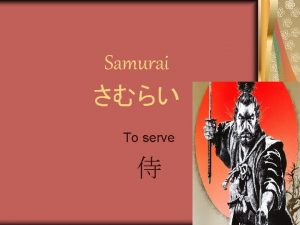
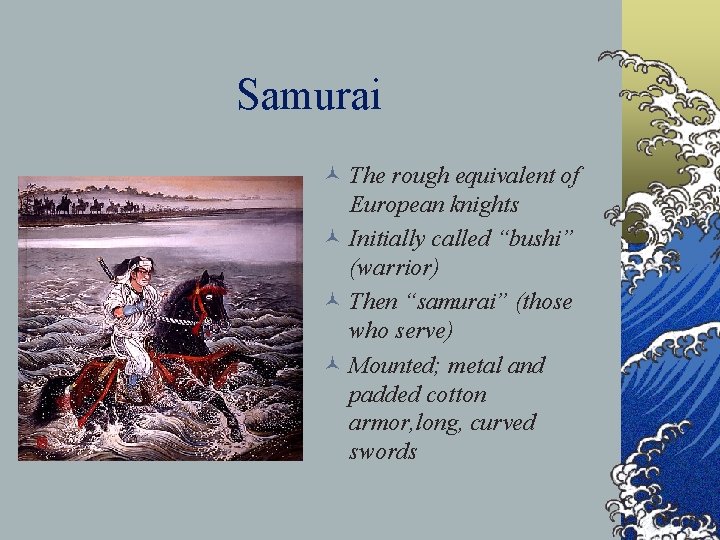
Samurai © The rough equivalent of European knights © Initially called “bushi” (warrior) © Then “samurai” (those who serve) © Mounted; metal and padded cotton armor, long, curved swords
Samurai culture ©Prized: Strength, gallantry, courage, honor, loyalty ©Code of honor: bushido; should guide one’s entire life ©Death for an unworthy cause: “a dog’s death” ©Zen Buddhism appealed; Stressed physical and mental discipline
Samurai “curriculum” ©Fencing, archery, horsemanship, use of the spear, battle tactics ©Calligraphy, ethics, literature, history ©“Rectitude is the power of deciding upon a certain course of conduct in accordance with reason, without wavering…to die when it is right to die, to strike when it is right to strike…”
“The samurai’s life was like the cherry blossom’s, beautiful and brief… © Etiquette harmonizes the entire being with himself and environment; expresses mastery of spirit over flesh. © Gracefulness represents an “economy of force and provides a reservoir of force…” © When young, sometimes sleep in graveyards and execution grounds to develop nerves of steel.
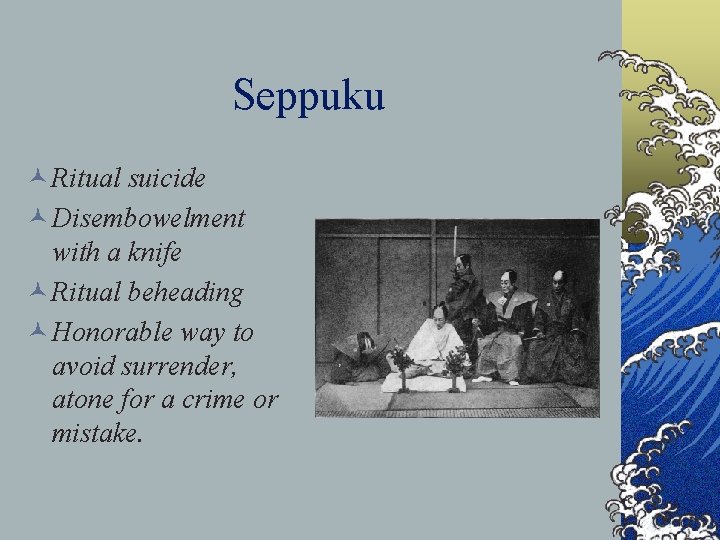
Seppuku © Ritual suicide © Disembowelment with a knife © Ritual beheading © Honorable way to avoid surrender, atone for a crime or mistake.
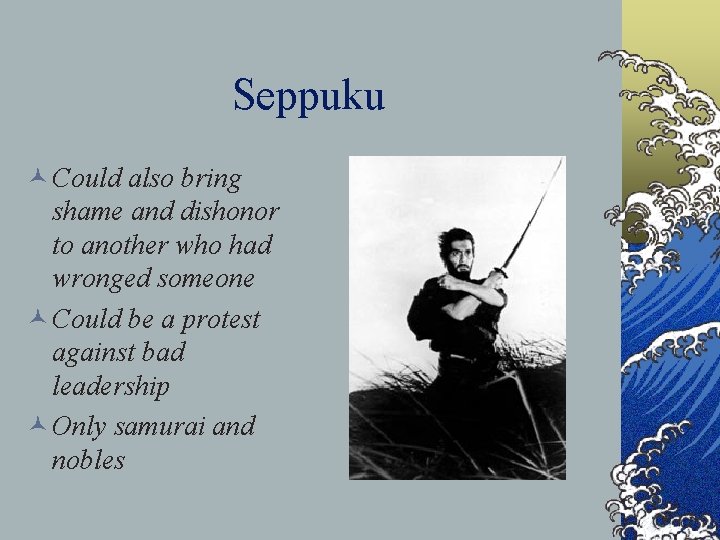
Seppuku © Could also bring shame and dishonor to another who had wronged someone © Could be a protest against bad leadership © Only samurai and nobles
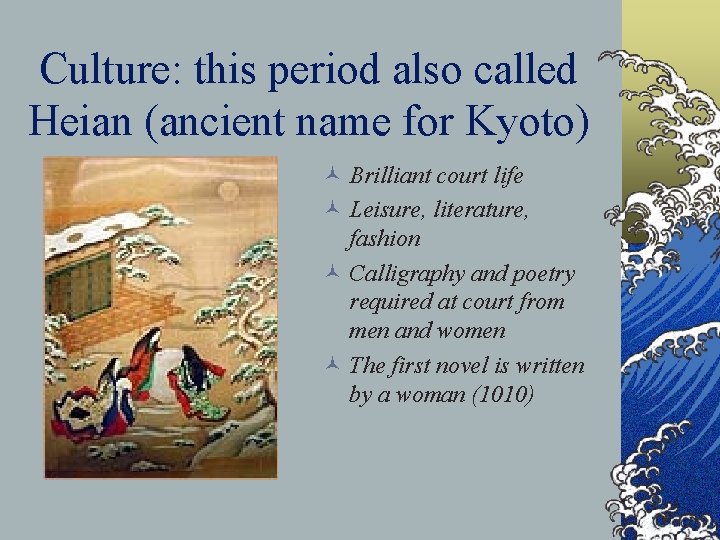
Culture: this period also called Heian (ancient name for Kyoto) © Brilliant court life © Leisure, literature, fashion © Calligraphy and poetry required at court from men and women © The first novel is written by a woman (1010)
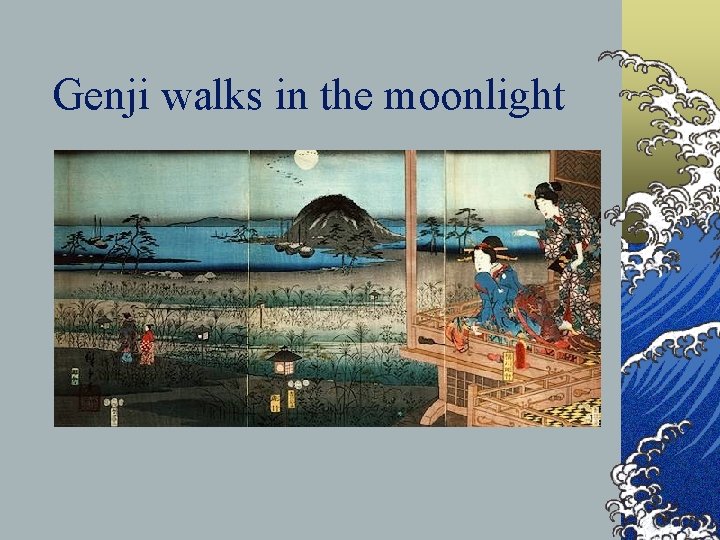
Genji walks in the moonlight
Fujiwara fades, Kamakura rises © Rise of warrior elite led to conflict; war 1156 © Minamoto triumphs and becomes the predominant clan; start Kamakura Shogunate (1185 -1333); Shogun takes control © Kamakuru = capital city (moved near Tokyo) © Moves headquarters “bafuku”; tent government © Emperor becomes figurehead, no power
Kamakura ©Had three “Boards” ©Administrative: drafted government policy ©Included military governors to maintain peace ©Personnel: regulated lords and samurai ©Inquiry: served as court ©Eventually family takes control and shogun is also figurehead
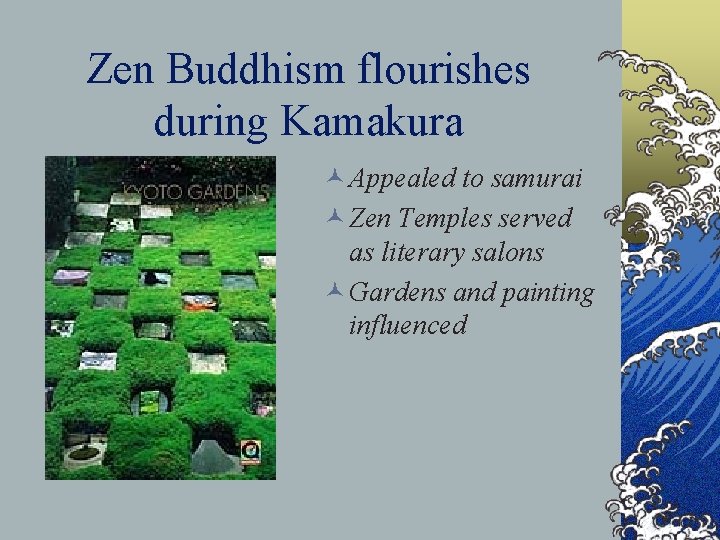
Zen Buddhism flourishes during Kamakura © Appealed to samurai © Zen Temples served as literary salons © Gardens and painting influenced
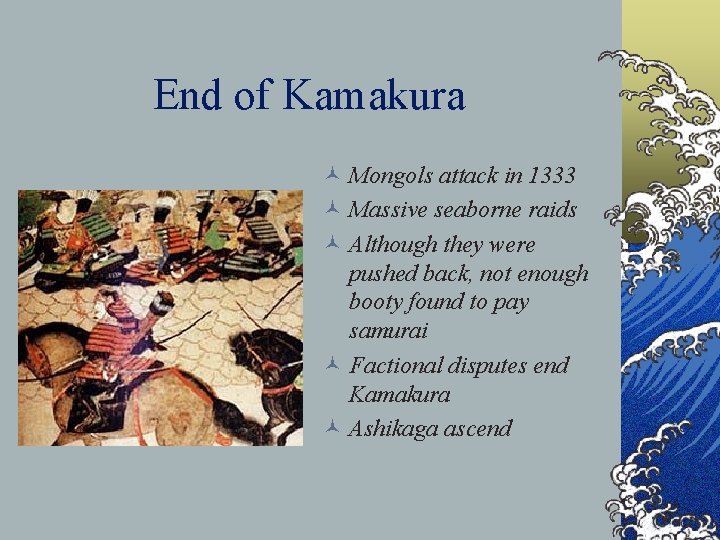
End of Kamakura © Mongols attack in 1333 © Massive seaborne raids © Although they were pushed back, not enough booty found to pay samurai © Factional disputes end Kamakura © Ashikaga ascend