
GFS and Global Models Global Forecast System GFS
GFS and Global Models
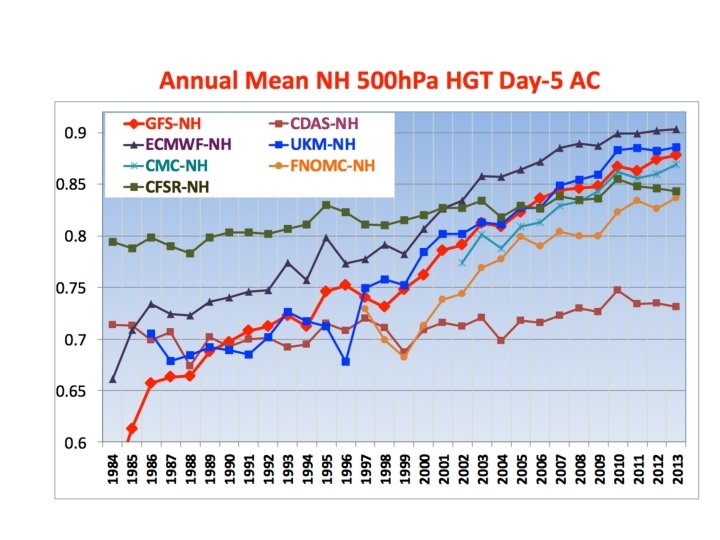
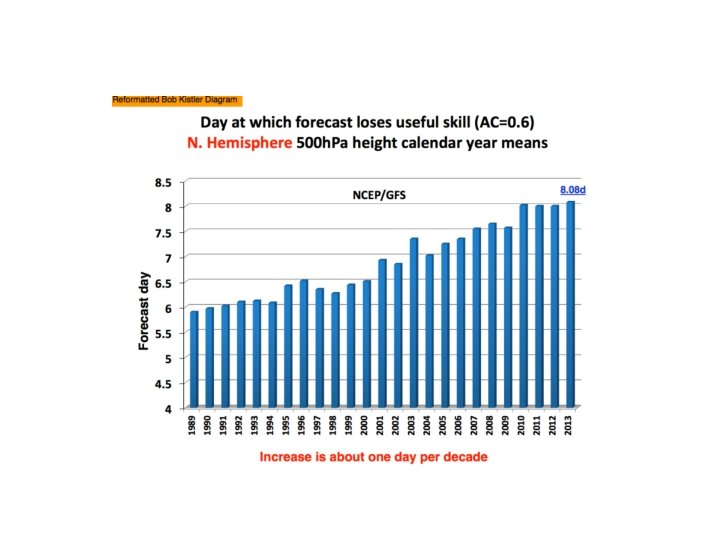
Global Forecast System (GFS) Model • Previous called the Aviation (AVN) and Medium Range Forecast (MRF) models. • Spectral global model and 64 levels • Relatively primitive microphysics. • Sophisticated surface physics and radiation • Run four times a day to 384 hr (16 days!). • Major increase in skill during past decades derived from using direct satellite radiance in the 3 DVAR analysis scheme and other satellite assets. • T 574 (~27 km) over the first 192 hours (8 days) of the model forecast and T 190 (70 km) for 180 through 384 hours--major implications for resolution change!
GFS • Vertical coordinates are hybrid sigma/pressure… sigma at low levels to pressure aloft.
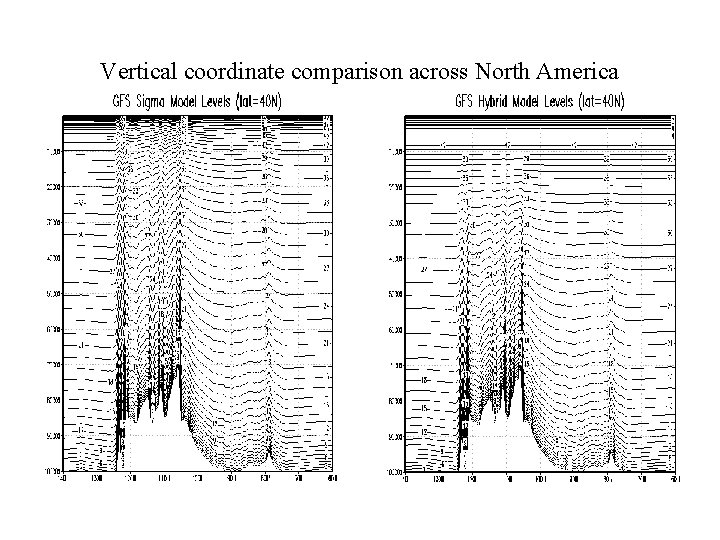
Vertical coordinate comparison across North America
GFS Data Assimilation (GDAS) • Has a later data cut-off time than the mesoscale models…and thus can get a higher percentage of data. • Uses much more satellite assets. . thus improve global analysis and forecasts. • Major gains in southern hemisphere • Hybrid Data assimilation based on 3 DVAR (they call it GSI) and GFE ensemble (next slide) • Every 6 hr.

GFS Hybrid Data Assimilation
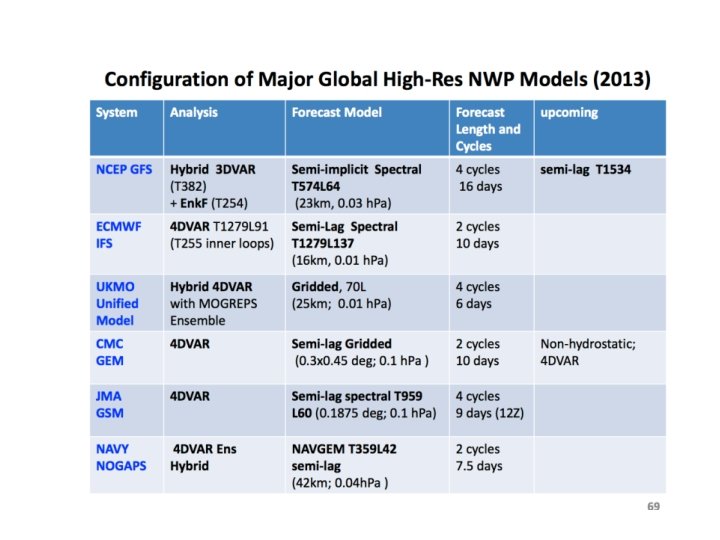
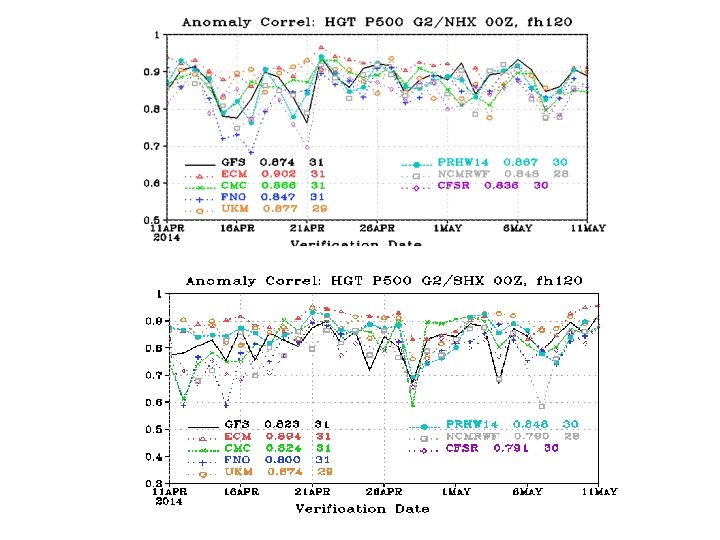
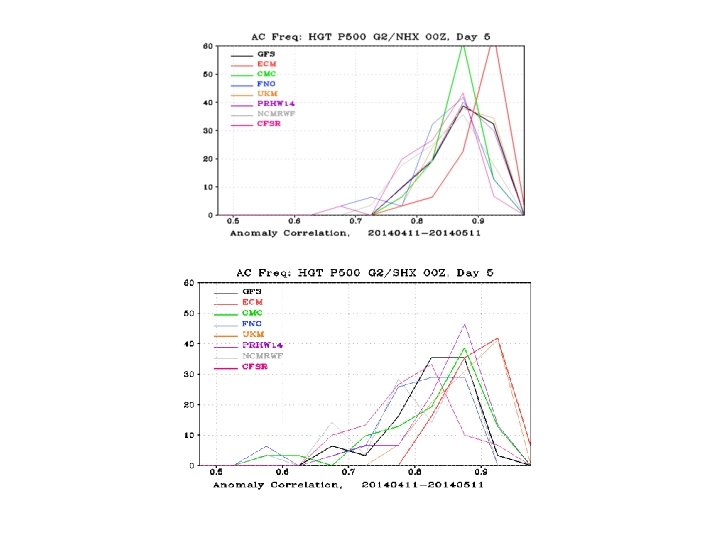
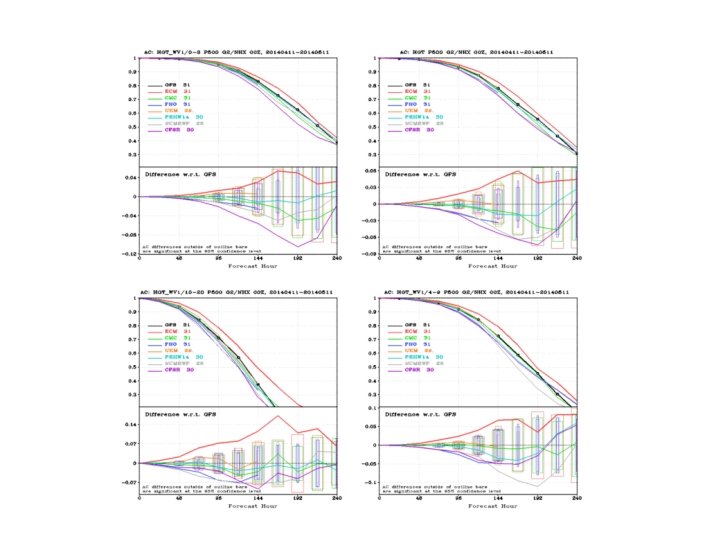
GFS is not the only global model and is not even the best
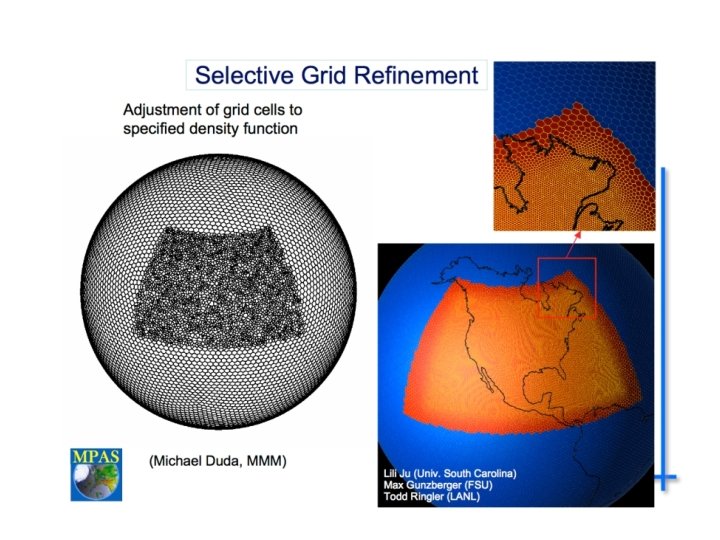
Next Generation Global Models Under Development! • Will use different geometries
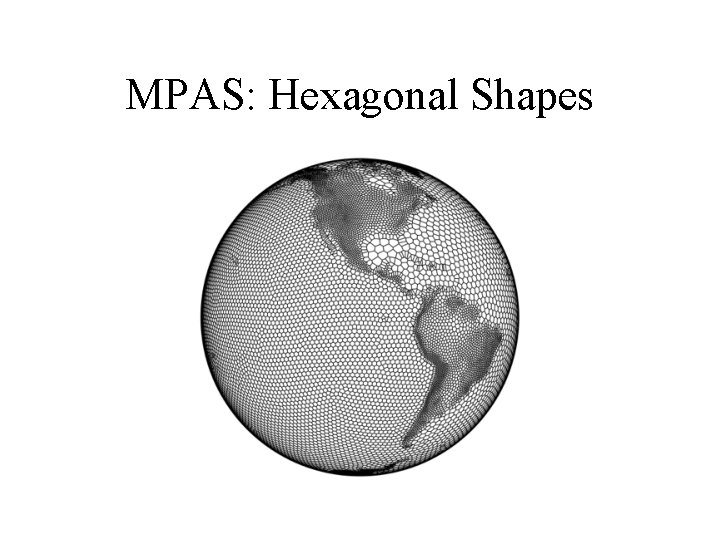
MPAS: Hexagonal Shapes
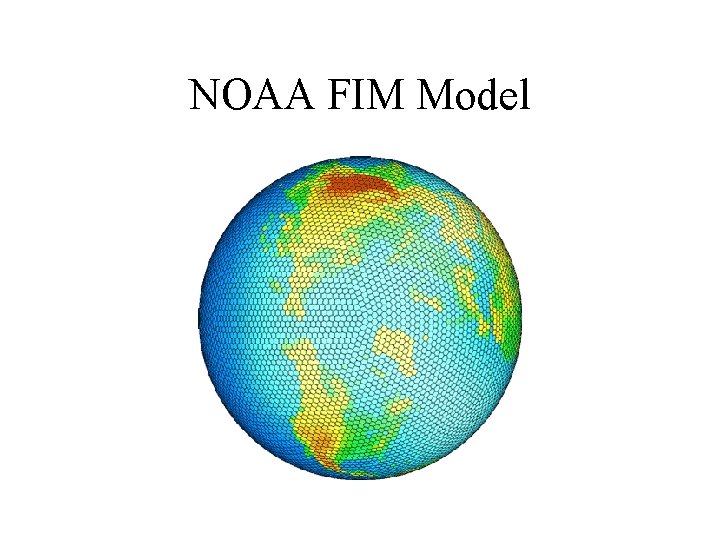
NOAA FIM Model
- Slides: 17