
Getty ImagesCorbis Psychopathology Scientific study of the origins
Getty Images/Corbis
Psychopathology: Scientific study of the origins, symptoms, and development of psychological disorders Getty Images/Corbis Psychological disorder or mental disorder: Pattern of behavioral and psychological symptoms that causes significant personal distress, impairs the ability to function in one or more important areas of life, or both
Understanding Psychological Disorders • The dividing line between normal and abnormal behavior often determined by social or cultural context. • Strong social stigma attached to suffering from a psychological disorder. Getty Images/Corbis • Pattern of behavioral or psychological symptoms must represent a serious departure from the prevailing social and cultural norms. • Standard descriptions of disorders from the DSM-5 must be used.
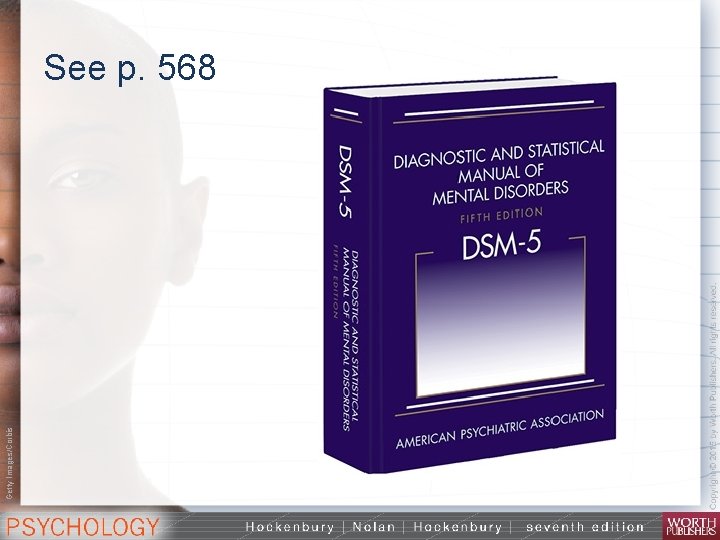
Diagnostic Classifications in DSM-5 • Diagnostic & Statistical Manual of Mental Disorders-5 • Describes more than 260 specific psychological disorders—provides a common language Getty Images/Corbis • Includes symptoms, criteria that must be met to make a diagnosis, and typical course for each mental disorder • Has increased in number of disorders classified over the years
Getty Images/Corbis See p. 568
Are People with a Mental Illness as Violent as the Media Portray Them? • People with a major mental illness belong to one of the most stigmatized groups and are more likely to be portrayed as violent. – Overall, former mental patients do not have a higher rate of violence. Getty Images/Corbis – Those with symptoms of substance use disorder were most likely to engage in violent behavior. – Those with severe mental disorder symptoms display slightly higher levels of violence.
Getty Images/Corbis How Prevalent Are Psychological Disorders? Psychological disorders are far more common than most people think. According to the National Comorbidity Survey Replication (NCS-R), about one in four American adults has experienced the symptoms of some type of psychological disorder during the previous year. However, most people who experience such symptoms do not receive treatment (Wang & others, 2005).
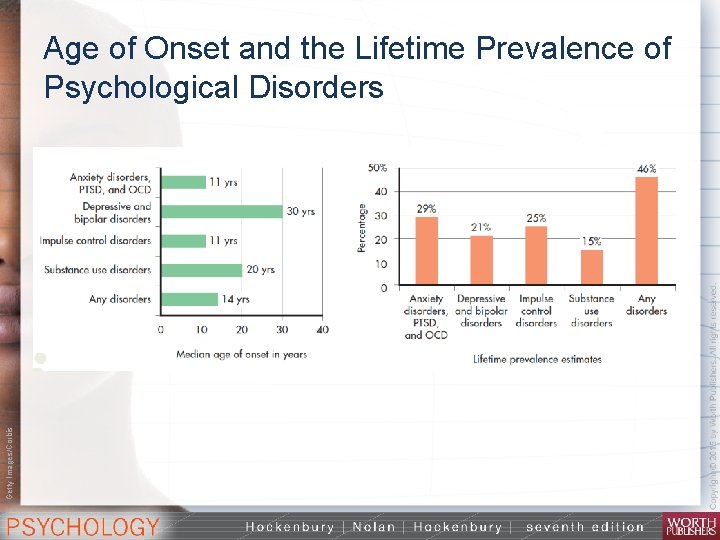
Getty Images/Corbis Age of Onset and the Lifetime Prevalence of Psychological Disorders
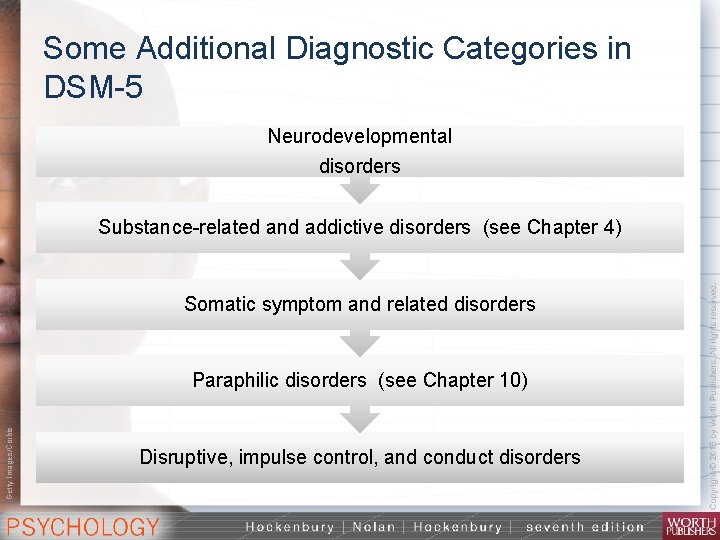
Some Additional Diagnostic Categories in DSM-5 Neurodevelopmental disorders Substance-related and addictive disorders (see Chapter 4) Somatic symptom and related disorders Getty Images/Corbis Paraphilic disorders (see Chapter 10) Disruptive, impulse control, and conduct disorders
**Somatoform Disorders** Getty Images/Corbis • • Body Dysmorphic Disorder Conversion Disorder Hypochondriasis Somatization Disorder
1. Anxiety Disorders • Anxiety: Unpleasant emotional state characterized by physical arousal and feelings of tension, apprehension, and worry. Getty Images/Corbis – Physically alert; mental alert • Anxiety disorders: Category of psychological disorders in which extreme anxiety is the main diagnostic feature and causes significant disruptions in the person’s cognitive, behavioral, or interpersonal functioning. – Irrational; uncontrollable; disruptive
Generalized Anxiety Disorder (GAD) Worrying About Anything and Everything • GAD: Anxiety disorder characterized by excessive, global, and persistent symptoms of anxiety; also called free-floating anxiety – When one source of worry is removed, another takes its place, more or less constant worry that interferes with functioning Getty Images/Corbis • Explaining Generalized Anxiety Disorder (GAD) – Environmental, psychological, genetic, and other biological factors, are probably involved in GAD. – Early stressful experiences may contribute. (hypervigilance)
Panic Attacks and Panic Disorders • Panic attack: Sudden episodes of extreme anxiety that rapidly accelerates in intensity Getty Images/Corbis • Panic attack disorder: Anxiety disorder in which person experiences frequent and unexpected panic attacks • Agoraphobia: Anxiety disorder involving extreme fear of experiencing a panic attack or other embarrassing or incapacitating symptoms in a public situation where escape is impossible and help is unavailable
Explaining Panic Disorders • Triple vulnerabilities model of panic (Barlow) – Biological predisposition toward anxiety – Low sense of control over potentially life-threatening events – Oversensitivity to physical sensations Getty Images/Corbis • Catastrophic cognitions theory (Hinton and others) – Oversensitive to physical sensations and also tend to catastrophize meaning of their experience
Phobias • Phobia: Persistent and irrational fear of a specific object, situation, or activity Getty Images/Corbis • Specific Phobia: Excessive, intense, and irrational fear of a specific object, situation, or activity that is actively avoided or endured with marked anxiety – Encountering feared situation or object can provoke a fullfledged panic attack – About 13 percent of the general population experiences a specific phobia – More than twice as many women as men suffer from specific phobia
Phobias Getty Images/Corbis Intense, irrational fears that may focus on: • Natural environment—heights, water, lightning • Situation—flying, tunnels, crowds, social gathering • Injury or blood—needles, blood, dentist, doctor • Animals or insects—insects, snakes, bats, dogs
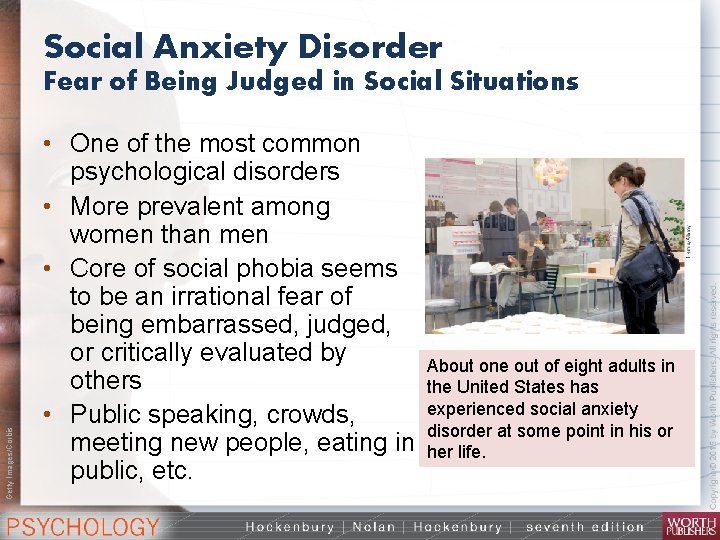
Social Anxiety Disorder Getty Images/Corbis Fear of Being Judged in Social Situations • One of the most common psychological disorders • More prevalent among women than men • Core of social phobia seems to be an irrational fear of being embarrassed, judged, or critically evaluated by others • Public speaking, crowds, meeting new people, eating in public, etc. About one out of eight adults in the United States has experienced social anxiety disorder at some point in his or her life.
Explaining Phobias Learning theories • Basic learning principles: Some phobias can be explained in terms of classical conditioning, operant conditioning and observational learning. Getty Images/Corbis • Biological Preparation: Certain fears, such as to spiders or heights, have an evolutionary history and may represent a fear of contamination.
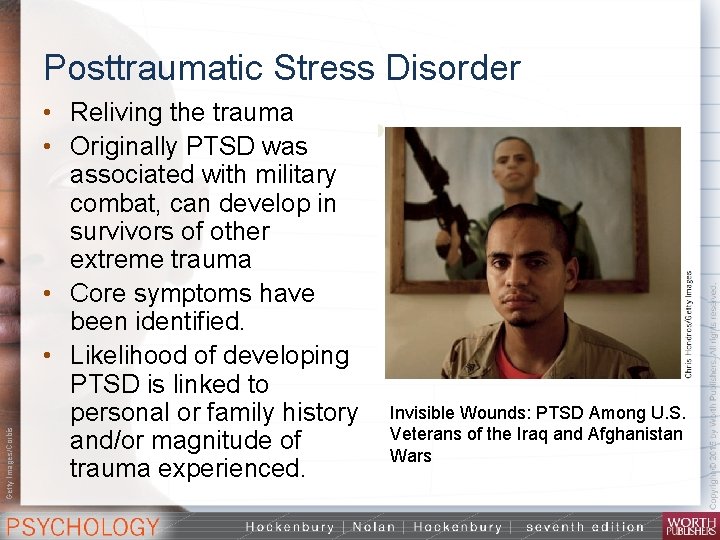
Getty Images/Corbis Posttraumatic Stress Disorder • Reliving the trauma • Originally PTSD was associated with military combat, can develop in survivors of other extreme trauma • Core symptoms have been identified. • Likelihood of developing PTSD is linked to personal or family history and/or magnitude of trauma experienced. Invisible Wounds: PTSD Among U. S. Veterans of the Iraq and Afghanistan Wars
Posttraumatic Stress Disorder (PTSD) Getty Images/Corbis • Follows events that produce intense horror or helplessness (traumatic episodes) • Core symptoms include: – Frequent recollection of traumatic event, often intrusive and interfering with normal thoughts – Avoidance of situations that trigger recall of the event – Increased physical arousal associated with stress
Obsessive-Compulsive Disorder (OCD) Checking It Again and Again • Disorder characterized by the presence of intrusive, repetitive, and unwanted thoughts (obsessions) and repetitive behaviors or mental acts that an individual feels driven to perform (compulsions). • Obsessions – Repeated, intrusive, and uncontrollable irrational thoughts or mental images that cause extreme anxiety – Common: Fear of dirt, germs; pathological doubt about having completed a task Getty Images/Corbis • Compulsions – Repetitive behaviors or mental acts tat a person feels driven to perform to prevent or reduce anxiety and distress, or to prevent a dreaded event or situation. – May be overt or covert
Explaining OCD • Deficiency in serotonin, norepinephrine implicated • Drugs that increase the availability of these neurotransmitters decrease symptoms • Dysfunction in specific brain areas • Areas involved in the fight-or-flight response Getty Images/Corbis • Frontal lobes, which play a key role in our ability to think and plan ahead • Heightened neural activity in caudate nucleus involved in regulating movements
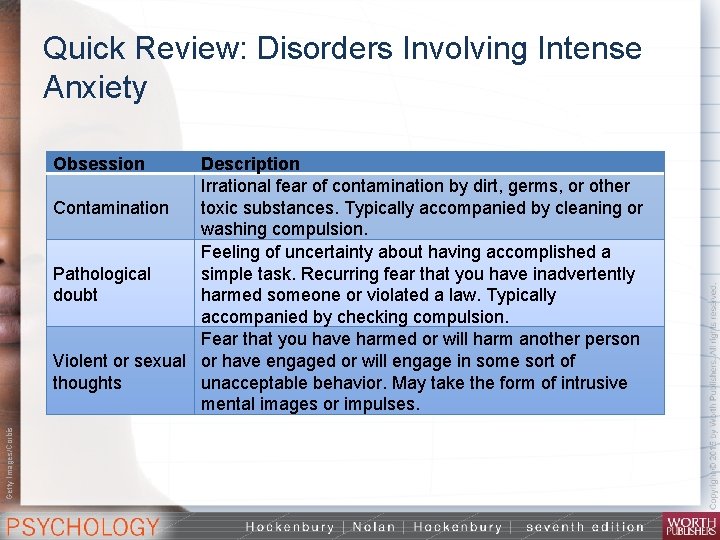
Quick Review: Disorders Involving Intense Anxiety Description Irrational fear of contamination by dirt, germs, or other Contamination toxic substances. Typically accompanied by cleaning or washing compulsion. Feeling of uncertainty about having accomplished a simple task. Recurring fear that you have inadvertently Pathological harmed someone or violated a law. Typically doubt accompanied by checking compulsion. Fear that you have harmed or will harm another person Violent or sexual or have engaged or will engage in some sort of unacceptable behavior. May take the form of intrusive thoughts mental images or impulses. Getty Images/Corbis Obsession
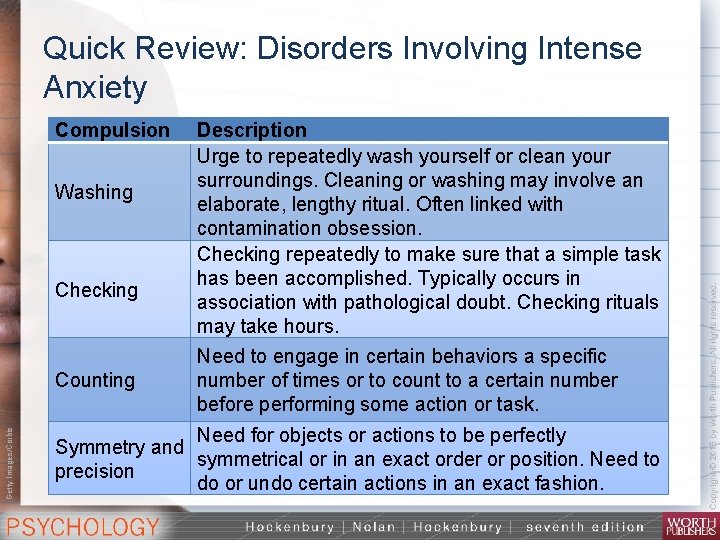
Quick Review: Disorders Involving Intense Anxiety Compulsion Washing Checking Getty Images/Corbis Counting Description Urge to repeatedly wash yourself or clean your surroundings. Cleaning or washing may involve an elaborate, lengthy ritual. Often linked with contamination obsession. Checking repeatedly to make sure that a simple task has been accomplished. Typically occurs in association with pathological doubt. Checking rituals may take hours. Need to engage in certain behaviors a specific number of times or to count to a certain number before performing some action or task. Need for objects or actions to be perfectly Symmetry and symmetrical or in an exact order or position. Need to precision do or undo certain actions in an exact fashion.
2. Depressive and Bipolar Disorders • Emotions violate criteria of normal moods in quality, intensity, and duration. • Also known as Mood Disorders or Affective Disorders Getty Images/Corbis • (Depressive disorders and bipolar disorders are given distinct DSM-5 categories. )
Major Depressive Disorder Getty Images/Corbis • Major depressive disorder is characterized by extreme and persistent feelings of despondency, worthlessness, and hopelessness, causing impaired emotional, cognitive, behavioral, and physical functioning.
Prevalence of Major Depressive Disorder • Prevalence: 6 percent to 7 percent of Americans are affected by major depression • Lifetime prevalence: About 15 percent of Americans at some point in their lives • Gender: Women are about twice as likely as men to be affected by major depression. Women more vulnerable because Getty Images/Corbis • Experience greater degree of chronic stress in daily life • Have lesser sense of personal control • More prone to dwell on their problems
Prevalence of Major Depressive Disorder • More than half of all people who have been through one episode of major depression can expect a relapse, usually within two years. • Symptoms tend to increase in severity and time between episodes decreases. • Left untreated, symptoms of major depression can easily last six months or longer and depression may recur and become progressively more severe. Getty Images/Corbis • Approximately 10% attempt suicide. • Women are twice as likely as men to be diagnosed with major depression
Major Depressive Disorder • In major depressive disorder, a person must display most symptoms described in DSM-5 for two weeks or longer. – – Global negativity and pessimism Very low self-esteem Sometimes restlessness, fidgeting Abnormal sleep patterns Getty Images/Corbis • Persistent depressive feelings may or may not be triggered by life events. – Bereavement – Seasonal affective disorder (SAD) – Persistent depressive disorder
Getty Images/Corbis Symptoms of Major Depression • Emotional—sadness, hopelessness, guilt, turning away from others • Behavioral—tearfulness, dejected facial expression, loss of interest in normal activities, slowed movements and gestures, withdrawal from social activities • Cognitive—difficulty thinking and concentrating, global negativity, preoccupation with death/suicide • Physical—appetite and weight changes, excess or diminished sleep, loss of energy, global anxiety, restlessness
Persistent Depressive Disorder Getty Images/Corbis • Chronic, low-grade depressed feelings that are not severe enough to be major depression • Sometimes called “dysthymia” • May develop in response to trauma, but does not decrease with time • Can have co-existing major depression – “double depression”
Seasonal Affective Disorder Getty Images/Corbis • Seasonal affective disorder (SAD)—onset with changing seasons • Cyclic severe depression and elevated mood • Seasonal regularity • More common in women & people who live in higher latitudes • Unique cluster of symptoms – – intense hunger gain weight in winter sleep more than usual depressed more in evening than morning
Bipolar Disorder: Symptoms Getty Images/Corbis Bipolar disorder • Person experiences extreme mood swings • Episodes of incapacitating depression alternate with shorter periods of extreme euphoria, called manic episodes • Usually manic episode immediately precedes or follows a bout with major depression • Small percentage of people experience only manic episodes • Involves abnormal moods at both ends of emotional spectrum Cyclothymic disorder (milder form of bipolar disorder) • People experience moderate but frequent mood swings for two years or longer • Mood swings are not severe enough to qualify as either bipolar disorder or major depression • People with it are perceived as being extremely moody, unpredictable, and inconsistent
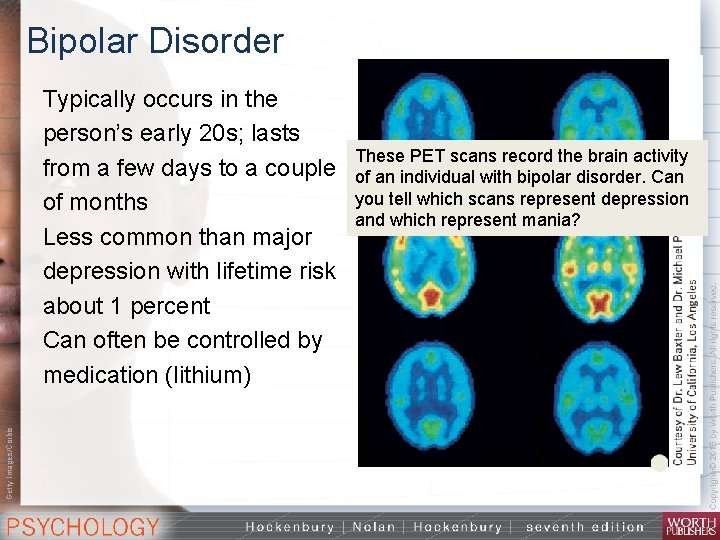
Bipolar Disorder Getty Images/Corbis Typically occurs in the person’s early 20 s; lasts from a few days to a couple of months Less common than major depression with lifetime risk about 1 percent Can often be controlled by medication (lithium) These PET scans record the brain activity of an individual with bipolar disorder. Can you tell which scans represent depression and which represent mania?
Bipolar Disorder • Cyclic disorder (manic-depressive disorder) • Mood levels swing from severe depression to extreme euphoria (mania) • Must have at least one manic episode Getty Images/Corbis – Supreme self-confidence – Grandiose ideas (delusions) and movements – Flight of ideas (easily distracted) Cyclothymic disorder—mood disorder characterized by moderate but frequent mood swings that are not severe enough to qualify as bipolar disorder
Explaining Depressive Disorders and Bipolar Disorders Getty Images/Corbis • • • Genetic predisposition Activation of brain structure differences Brain chemistry Stress Cigarette smoking and development of major depression
CRITICAL THINKING Does Smoking Cause Major Depressive Disorder and Other Psychological Disorders? • Lasser found that people with mental illness are twice as likely to smoke cigarettes as people with no mental illness. – 44%: Current mental disorder – 22%: General population Getty Images/Corbis • Do you know why?
3. Eating and Feeding Disorders • Eating disorders involve serious and maladaptive disturbances in eating behavior, including reducing food intake, severe overeating, obsessive concerns about body shape or weight Getty Images/Corbis • Ninety to 95 percent of the people who experience an eating disorder are female.
Anorexia Nervosa Life-Threatening Weight Loss Getty Images/Corbis Key Features • Refuses to maintain a minimally normal body weight • Intense fear of gaining weight or becoming fat • Distorted perception about the size of her body • Denies the seriousness of her weight loss BMI of 12 or below Those with severe cases may have soft, fine body hair (lanugo)
Bulimia Nervosa • Bingeing and Purging • Eating disorder characterized by binges of extreme overeating followed by self-induced vomiting, misuse of laxatives, or other inappropriate methods to purge the excessive food and prevent weight gain. Getty Images/Corbis • Key Features – – Fear gaining weight Stay within a normal weight range Recognize that they have an eating disorder Binges typically occur twice a week
Binge Eating Disorder Getty Images/Corbis • Only Binge, do not Purge
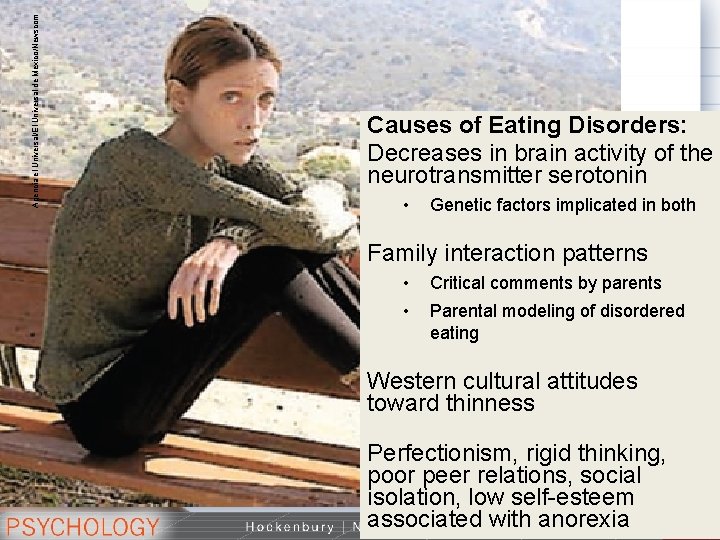
Agencia el Universal/El Universal de Mexico/Newscom Causes of Eating Disorders: Decreases in brain activity of the neurotransmitter serotonin • Genetic factors implicated in both Family interaction patterns • Critical comments by parents • Parental modeling of disordered eating Getty Images/Corbis Western cultural attitudes toward thinness Perfectionism, rigid thinking, poor peer relations, social isolation, low self-esteem associated with anorexia
CULTURE AND HUMAN BEHAVIOR Culture-Bound Syndromes • Some culture-specific disorders are found only in a single culture. • Hikkomori (Japan) Getty Images/Corbis – – Involves a pattern of extreme social withdrawal Primarily affects young males Includes more than a million young Japanese May be extreme reaction to pressure to succeed in school and conform to social expectations
4. Personality Disorders • Personality disorders Getty Images/Corbis – Inflexible, maladaptive pattern of thoughts, emotions, behaviors, and interpersonal functioning that are stable over time and across situations, and deviate from the expectations of the individual’s culture
Getty Images/Corbis Personality Disorders Odd, eccentric cluster • Paranoid personality disorder • Schizotypal personality disorder Dramatic, emotional, erratic cluster • Antisocial personality disorder • Borderline personality disorder • Histrionic personality disorder • Narcissistic personality disorder Anxious, fearful cluster • Avoidant personality disorder • Dependent personality disorder • Obsessive– compulsive personality disorder
Paranoid Personality Disorder Getty Images/Corbis • Pervasive mistrust and suspiciousness of others are the main characteristics • Distrustful even of close family and friends • Reluctant to form close relationships • Tend to blame others for their own shortcomings • Pathological jealousy seen in intimate relationships
Antisocial Personality Disorder • Central feature is a pattern of blatantly disregarding and violating the rights of others – Deceiving and manipulating others for their own personal gain – Seem to lack “conscience” – More prevalent in men than women – High rates of alcoholism and other forms of substance abuse Getty Images/Corbis • Evidence often seen in childhood (conduct disorder) • • Cruelty to animals Attacking or harming adults or other children Theft Setting fires and destroying property

Sociopath Versus Psychopath Getty Images/Corbis • Sociopath Versus Psychopath Anders Breivik (left), who murdered dozens of children at a summer camp in Norway, would be considered a sociopath, according to neuroscientist Jack Pemment (2013). The serial killer Israel Keyes (right), who buried weapons and shovels used to dispose of bodies all over the U. S. to facilitate his homicides, is likely a psychopath.
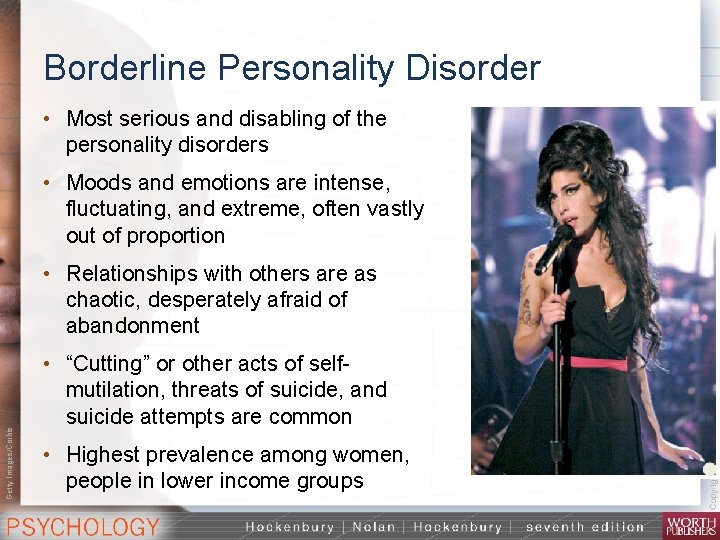
Borderline Personality Disorder • Most serious and disabling of the personality disorders • Moods and emotions are intense, fluctuating, and extreme, often vastly out of proportion Getty Images/Corbis • Relationships with others are as chaotic, desperately afraid of abandonment • “Cutting” or other acts of selfmutilation, threats of suicide, and suicide attempts are common • Highest prevalence among women, people in lower income groups
What Causes Borderline Personality Disorder? Biosocial developmental theory Early views Getty Images/Corbis • Disruption in attachment relationships in early childhood; neglect or physical, sexual, or emotional abuse in childhood • Combination of biological, psychological, and environmental factors • Biological temperament characterized by extreme emotional sensitivity, impulsivity, and tendency to experience negative emotions • Caregivers do not teach control of impulses or regulation of emotions • Parents or caregivers shape and reinforce pattern of frequent, intense emotional displays • History of abuse and neglect may be present but is not a necessary ingredient
Other Personality Disorders: p. 595 Getty Images/Corbis • • • Schizoid Schizotypal Histrionic Narcissistic Avoidant Dependent
5. Dissociative Disorders • Dissociative disorders are a category of psychological disorders in which extreme and frequent disruptions of awareness, memory, and personal identity impair the ability to function. Getty Images/Corbis • Three basic disorders – Dissociative amnesia – Dissociative fugue – Dissociative identity disorder
Getty Images/Corbis Dissociative Amnesia • Refers to partial or total inability to recall important information that is not due to a medical condition • Person develops amnesia for personal events and information, rather than for general knowledge or skills • Often selective loss surrounding traumatic events • Memory loss is the only symptom
Getty Images/Corbis Dissociative Fugue • Also known as psychogenic fugue • Global amnesia with identity replacement – leaves home – develops a new identity – apparently no recollection of former life – called a ‘fugue state’ • If fugue wears off – old identity recovers – new identity is totally forgotten
Dissociative Identity Disorder (DID) • Dissociative disorder involves extensive memory disruptions along with the presence of two or more distinct identities, or “personalities”; formerly called multiple personality disorder. Getty Images/Corbis • Not all mental health professionals are convinced that dissociative identity disorder is a genuine psychological disorder.
Dissociative Identity Disorder Getty Images/Corbis • Originally known as “multiple personality disorder” • 2 or more distinct personalities manifested by the same person at different times (alters) – “loses time”/doesn’t remember behavior during specific time periods – Alters embody different aspects of person’s primary personality. • VERY rare and controversial disorder
Getty Images/Corbis Explaining Dissociative Identity Disorder • Dissociative Identity Disorder is extreme form of dissociative coping. • High percentage of DID patients (90%) report having suffered extreme physical or sexual abuse. Child “dissociates” from it, creating alternate personalities to experience trauma. • Dissociative coping theory is difficult to test empirically. • Opposite effect occurs to most trauma victims.
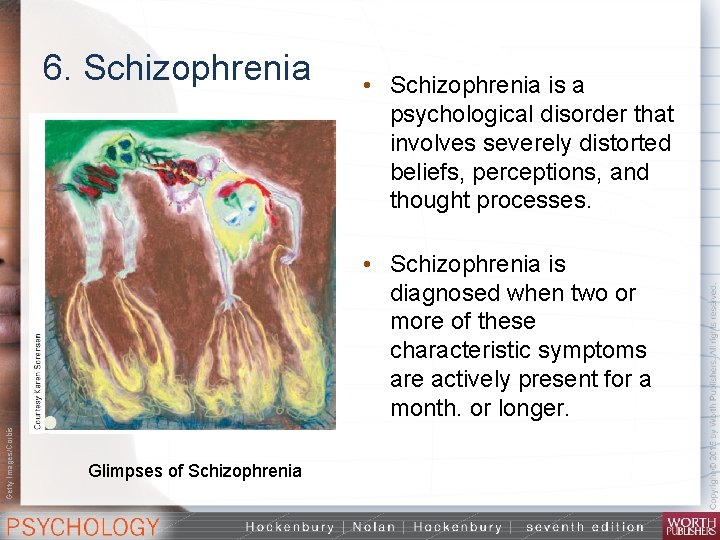
6. Schizophrenia • Schizophrenia is a psychological disorder that involves severely distorted beliefs, perceptions, and thought processes. Getty Images/Corbis • Schizophrenia is diagnosed when two or more of these characteristic symptoms are actively present for a month. or longer. Glimpses of Schizophrenia
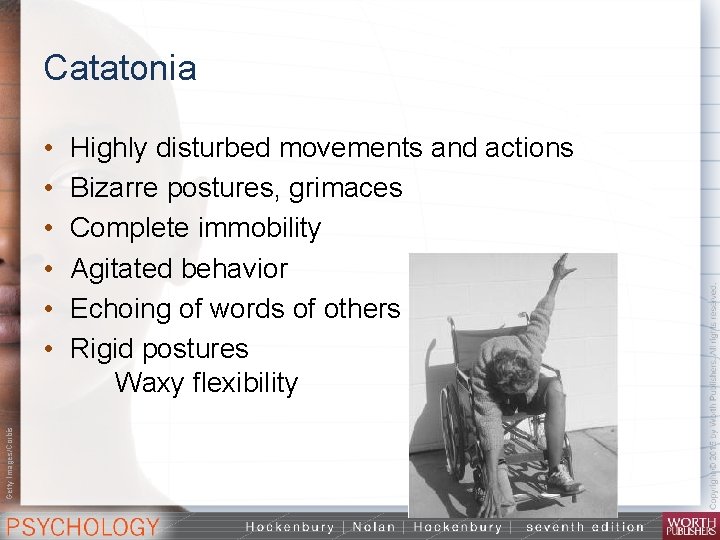
Catatonia Getty Images/Corbis • • • Highly disturbed movements and actions Bizarre postures, grimaces Complete immobility Agitated behavior Echoing of words of others Rigid postures Waxy flexibility
Positive Symptoms of Schizophrenia Getty Images/Corbis • Delusions, or false beliefs; can lead to dangerous behaviors • Hallucinations, or false perceptions; can be indistinguishable from reality • Severely disorganized thought processes, speech, and behavior
Getty Images/Corbis Delusions • Delusions of persecution – ‘they’re out to get me’ – paranoia • Delusions of grandeur – False belief that one is powerful, wealthy, etc. • Delusions of reference/being controlled (control) – False belief that other people’s behavior and ordinary events are directly connected to self – Advertisement has a cryptic message that only she can understand.
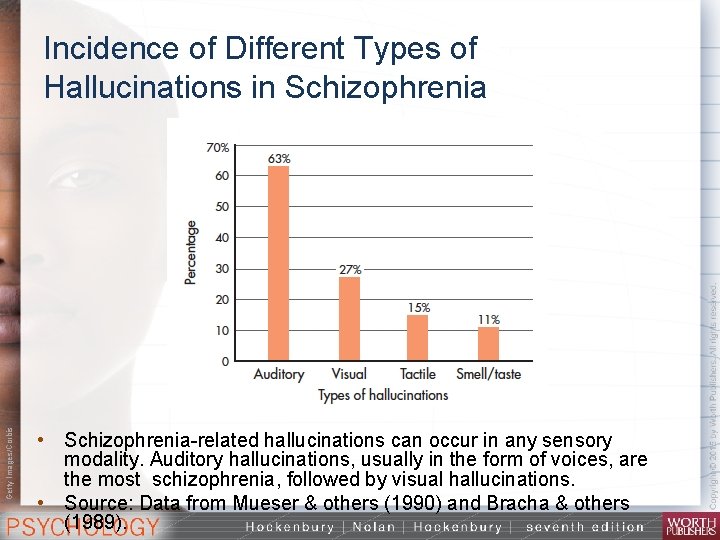
Getty Images/Corbis Incidence of Different Types of Hallucinations in Schizophrenia • Schizophrenia-related hallucinations can occur in any sensory modality. Auditory hallucinations, usually in the form of voices, are the most schizophrenia, followed by visual hallucinations. • Source: Data from Mueser & others (1990) and Bracha & others (1989).
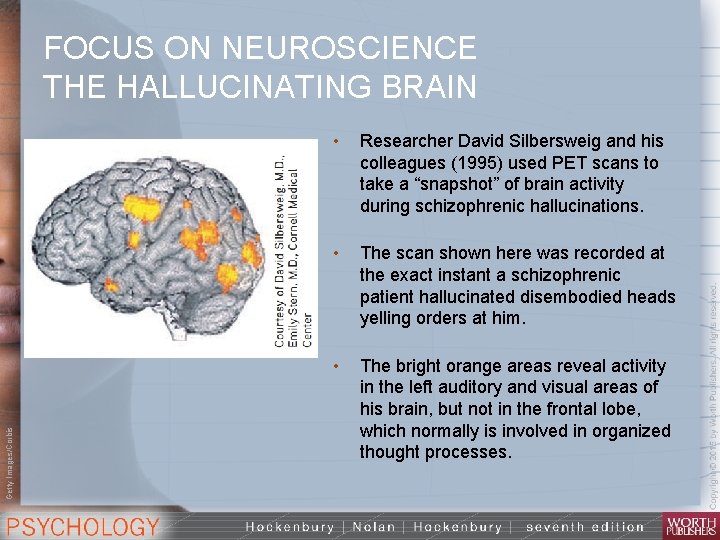
Getty Images/Corbis FOCUS ON NEUROSCIENCE THE HALLUCINATING BRAIN • Researcher David Silbersweig and his colleagues (1995) used PET scans to take a “snapshot” of brain activity during schizophrenic hallucinations. • The scan shown here was recorded at the exact instant a schizophrenic patient hallucinated disembodied heads yelling orders at him. • The bright orange areas reveal activity in the left auditory and visual areas of his brain, but not in the frontal lobe, which normally is involved in organized thought processes.
Disorganized Thoughts & Speech • Disorganized thoughts: Mind drifts from topic to topic, difficult to concentrate, difficult to remember Getty Images/Corbis • Disorganized speech: Illogical topics, ramblings, nonsensical, echolalia
Negative Symptoms of Schizophrenia Getty Images/Corbis • Consist of marked deficits or decreases in behavioral or emotional functioning. These symptoms can occur in combination and vary across cultures. – Flat affect: No emotion – Alogia: Slow, limited speech – Avolition: Apathy
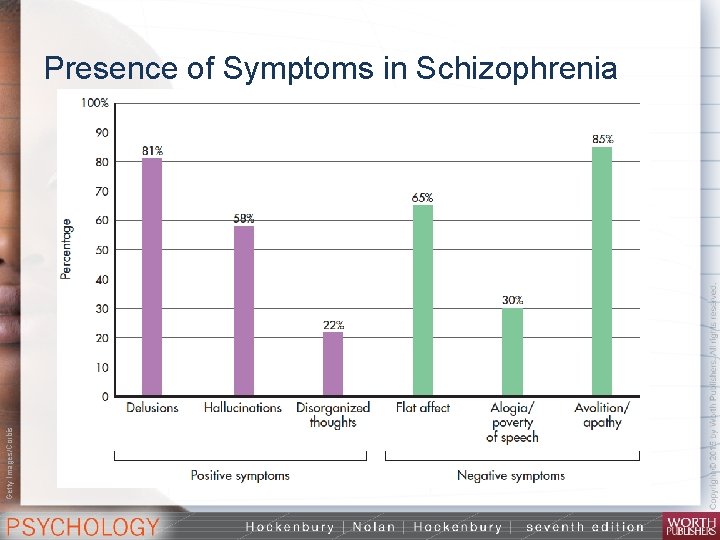
Getty Images/Corbis Presence of Symptoms in Schizophrenia
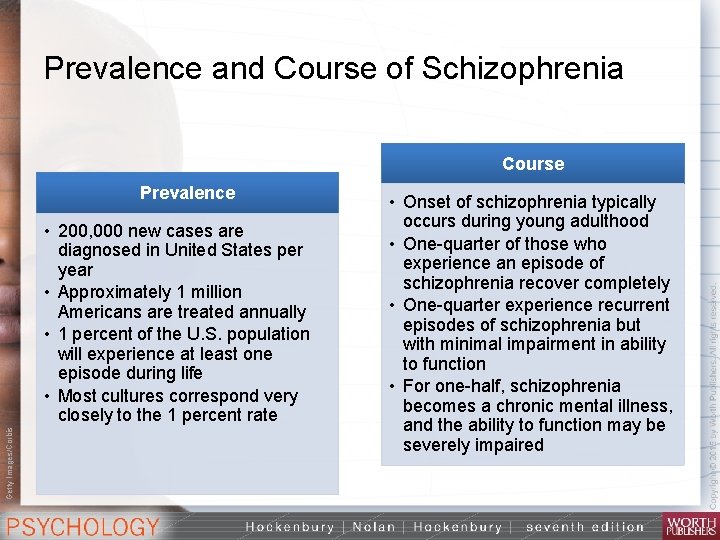
Prevalence and Course of Schizophrenia Course Prevalence Getty Images/Corbis • 200, 000 new cases are diagnosed in United States per year • Approximately 1 million Americans are treated annually • 1 percent of the U. S. population will experience at least one episode during life • Most cultures correspond very closely to the 1 percent rate • Onset of schizophrenia typically occurs during young adulthood • One-quarter of those who experience an episode of schizophrenia recover completely • One-quarter experience recurrent episodes of schizophrenia but with minimal impairment in ability to function • For one-half, schizophrenia becomes a chronic mental illness, and the ability to function may be severely impaired
Explaining Schizophrenia • Genetic factors: Family, twin, and adoption studies Getty Images/Corbis – Schizophrenia clusters in certain families – More closely related a person is to someone who has schizophrenia, the greater the risk of schizophrenia – Chromosome locations associated with genes that influence brain development, memory, and cognition seem related – No specific pattern of genetic variation can be identified as the genetic “cause” of schizophrenia. but presence of certain genetic variations increases susceptibility – If either biological parent of an adopted individual had schizophrenia, there is a greater risk to develop schizophrenia
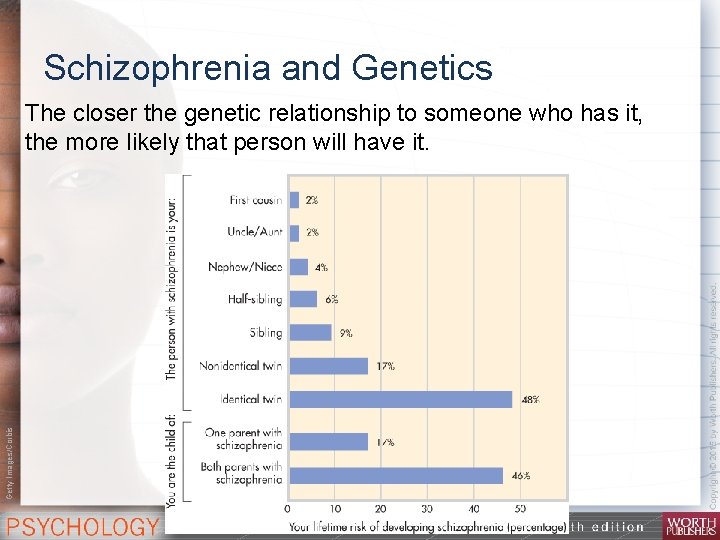
Schizophrenia and Genetics Getty Images/Corbis The closer the genetic relationship to someone who has it, the more likely that person will have it.
Explaining Schizophrenia • Paternal age – Schizophrenia caused by mutations in the sperm of fathers – Age increases the rate of mutation – Schizophrenia rate compared with fathers younger than 25 years • 45 to 49 years: twice as likely • 50+ years: three times as likely Getty Images/Corbis • Mother’s age made no difference
Explaining Schizophrenia Getty Images/Corbis • Immune system: Viral infection theory – Women exposed to flu virus during the first trimester had a sevenfold increased risk of a child who developed schizophrenia. – Mothers who were exposed to flu virus during the first or second trimester, show an increased rate of schizophrenia. – Schizophrenia occurs more often in those born in the winter and spring months, when upper respiratory infections are most common.
Explaining Schizophrenia Getty Images/Corbis • Abnormal brain structures – Evidence • 50 percent of people with schizophrenia show some type of brain structure abnormality • Most consistent finding: enlargement of the ventricles • Loss of gray matter tissue and lower overall volume of the brain – Not Conclusive • Some people with schizophrenia do not show brain structure abnormalities • Evidence is correlational • Brain abnormalities seen in other mental disorders
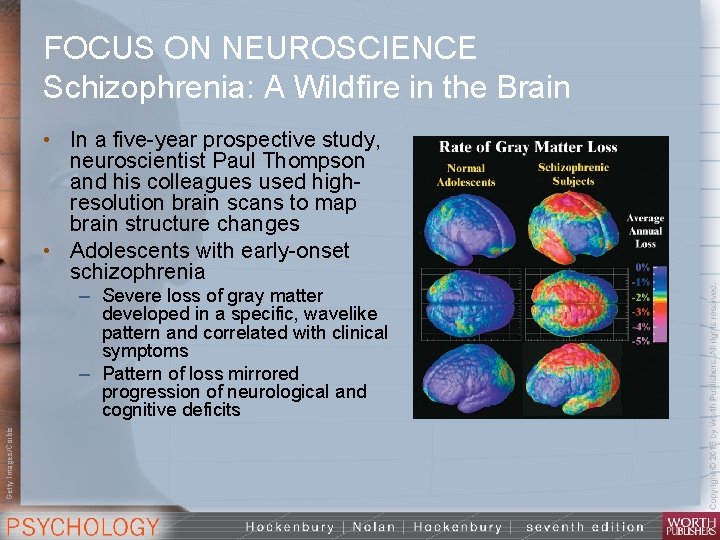
FOCUS ON NEUROSCIENCE Schizophrenia: A Wildfire in the Brain • In a five-year prospective study, neuroscientist Paul Thompson and his colleagues used highresolution brain scans to map brain structure changes • Adolescents with early-onset schizophrenia Getty Images/Corbis – Severe loss of gray matter developed in a specific, wavelike pattern and correlated with clinical symptoms – Pattern of loss mirrored progression of neurological and cognitive deficits
Getty Images/Corbis Abnormal Brain Chemistry Theory • Drugs that reduce dopamine reduce symptoms • Drugs that increase dopamine produce symptoms even in people without the disorder • Theory: Schizophrenia is caused by excess dopamine • Dopamine theory not enough; other neurotransmitters involved as well – Glutamate, adenosine
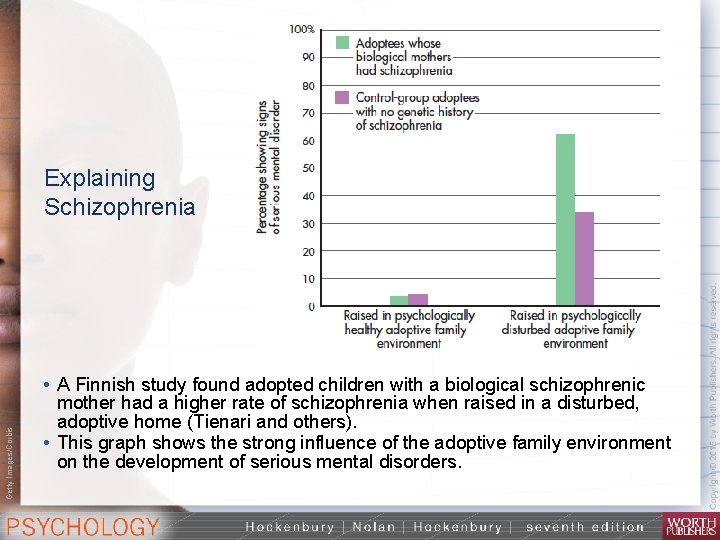
Getty Images/Corbis Explaining Schizophrenia • A Finnish study found adopted children with a biological schizophrenic mother had a higher rate of schizophrenia when raised in a disturbed, adoptive home (Tienari and others). • This graph shows the strong influence of the adoptive family environment on the development of serious mental disorders.
PSYCH FOR YOUR LIFE Understanding and Helping to Prevent Suicide p. 612 • Reasons for attempting or committing suicide – View of life becomes more pessimistic and negative – View of self-inflicted death become more acceptable and positive. – Suicide seen as escape from pain Getty Images/Corbis • Ways to help prevent suicide – – – Actively listen Do not deny or minimize person’s intentions Identify other potential solutions Ask person to delay decision Encourage person to seek professional help
- Slides: 76