
Getting to the Root of the Problem Tuesday

Getting to the Root of the Problem Tuesday, May 9, 2017 Pat Baird, MBA, MS Patient Safety Head of Global Software Standards Philips pat. baird@philips. com
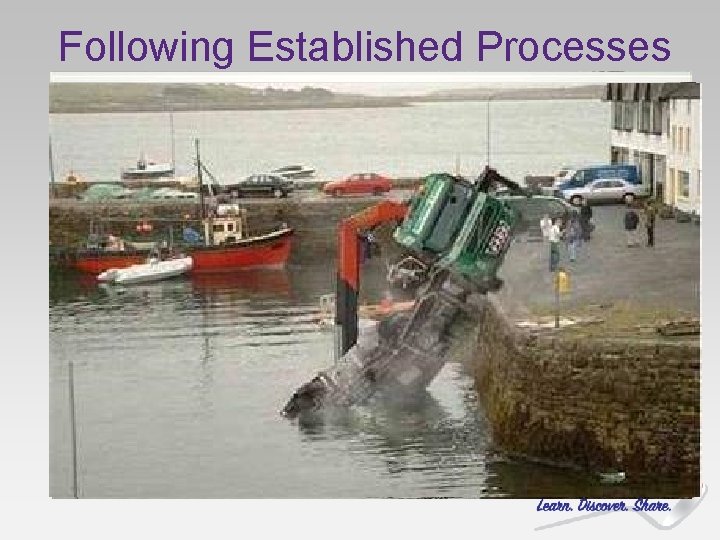
Following Established Processes
3 5 Rights of Medication Administration A long-standing mantra for patient safety is “the 5 Rights”: Right drug Right patient Right dose Right route Right time But as we strive to improve patient safety, I wonder about “the 4 Rights”…
The 4 Rights… Are we working on the Right Problems? Do we have the Right Plan? Do we have the Right Authority? Do we have the Right Tools ?
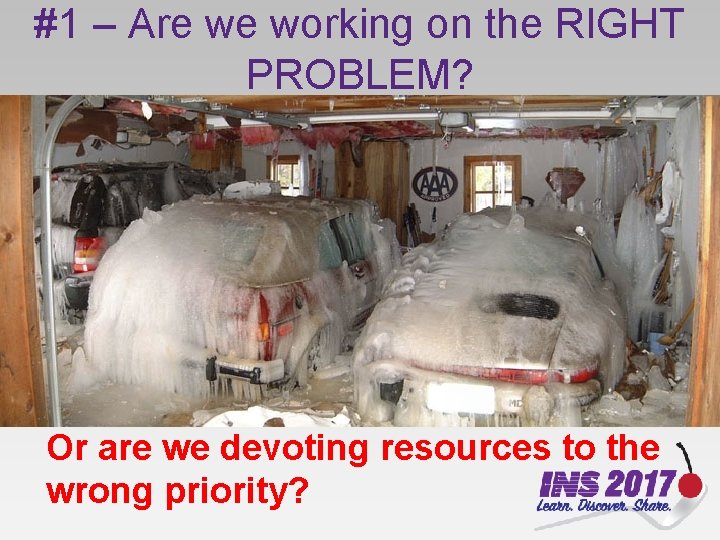
#1 – Are we working on the RIGHT PROBLEM? Or are we devoting resources to the wrong priority?
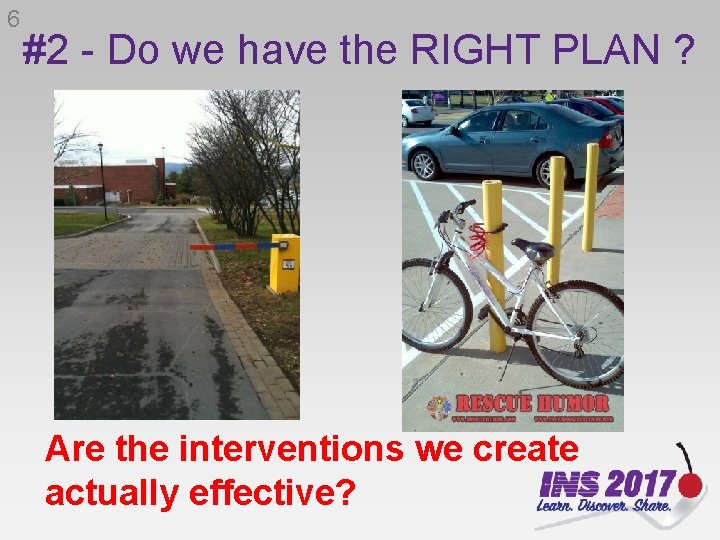
6 #2 - Do we have the RIGHT PLAN ? Are the interventions we create actually effective?
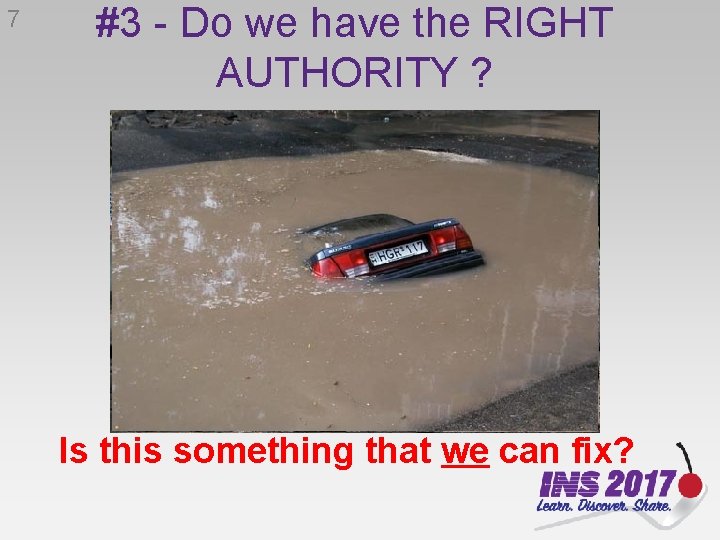
7 #3 - Do we have the RIGHT AUTHORITY ? Is this something that we can fix?
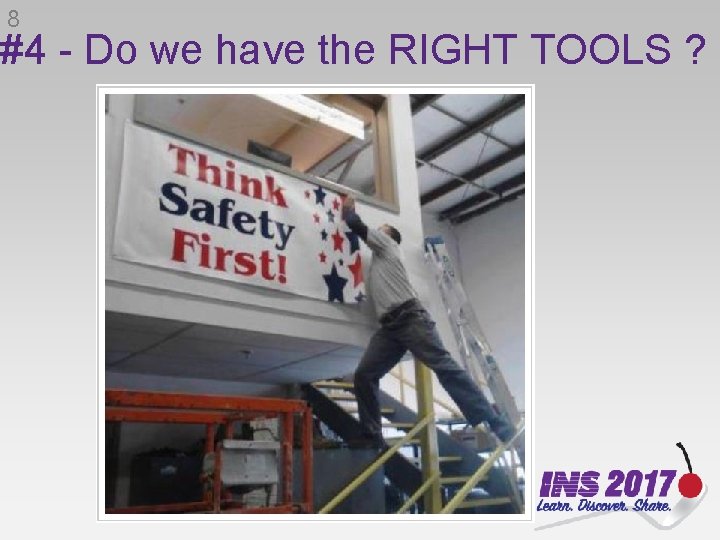
8 #4 - Do we have the RIGHT TOOLS ?
Agenda • Background • Common Root Cause Analysis Techniques • Implementation Advice
Agenda • Background • Common Root Cause Analysis Techniques • Implementation Advice
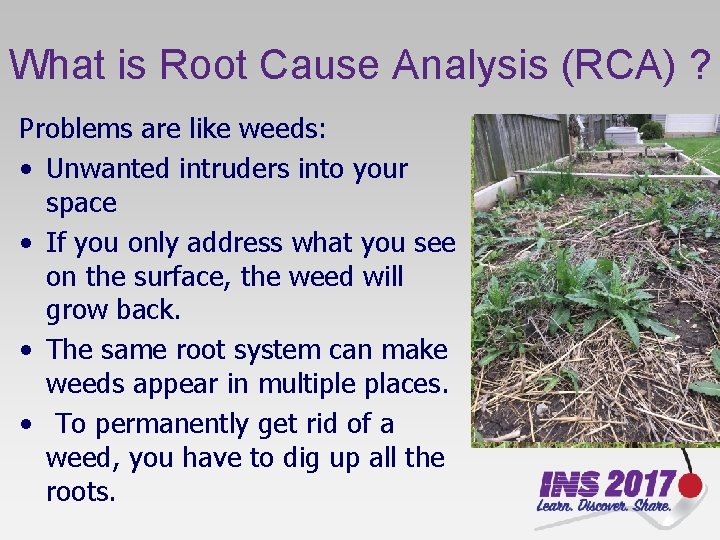
What is Root Cause Analysis (RCA) ? Problems are like weeds: • Unwanted intruders into your space • If you only address what you see on the surface, the weed will grow back. • The same root system can make weeds appear in multiple places. • To permanently get rid of a weed, you have to dig up all the roots.
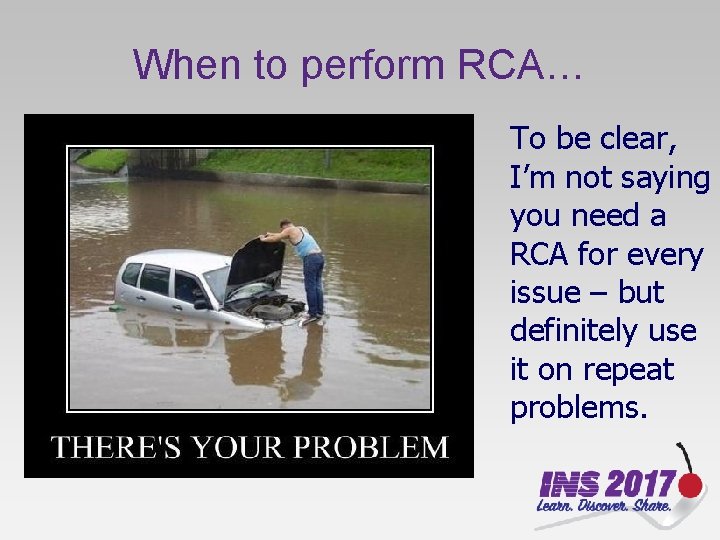
When to perform RCA… To be clear, I’m not saying you need a RCA for every issue – but definitely use it on repeat problems.
Agenda • Background • Common Root Cause Analysis Techniques • Implementation Advice
Technique: Brainstorming • One simple technique is to bring together a group of people to brainstorm about potential causes. • The trick to successful brainstorming is to enable and sustain a creative, openminded environment. People showing up with pre-conceived answers will stifle creativity and will short-circuit the process.
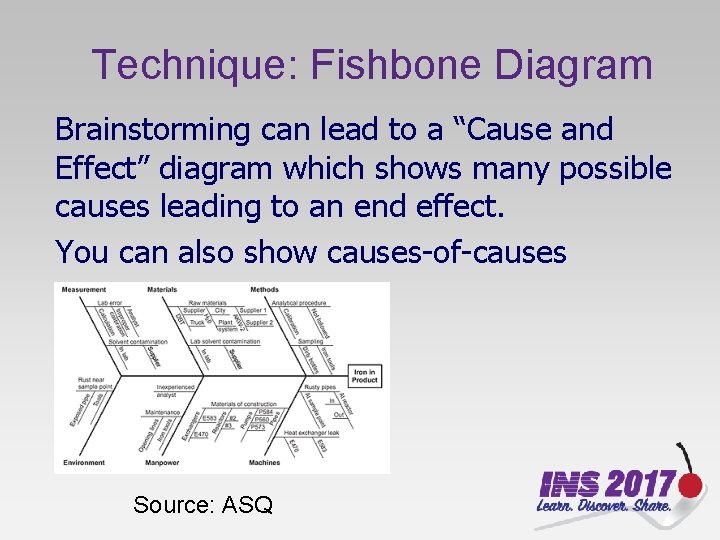
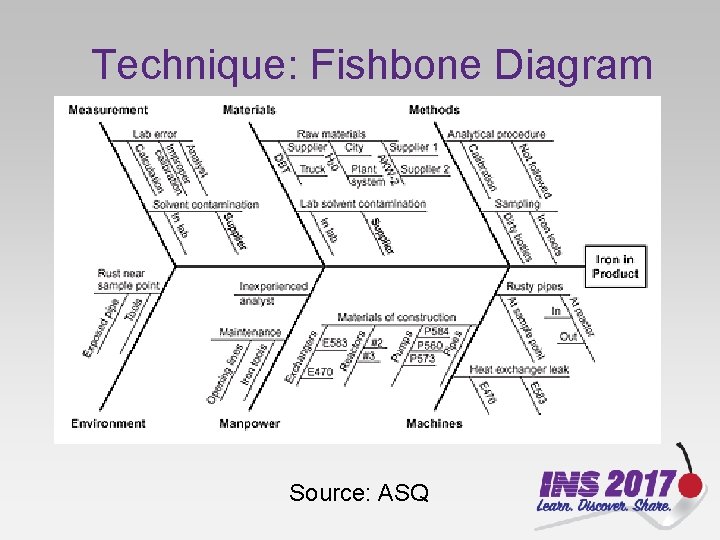
Technique: Fishbone Diagram Brainstorming can lead to a “Cause and Effect” diagram which shows many possible causes leading to an end effect. You can also show causes-of-causes Source: ASQ
Technique: Fishbone Diagram Source: ASQ
Technique: Fishbone Diagram One advantage to this technique is that it is guided brainstorming – ideas can be placed into categories such as methods (process), machines, environment (noise, stress), etc. This is much more productive than simply asking “what causes can you think of? ”
Technique: 5 Whys Anyone who has ever had a 4 yr old is familiar with the 5 Whys process. Many times, the problem we see on the surface is just a symptom of a deeper problem. “ 5 Whys” tells us to dig deeper, following a trail of symptoms until we have a cause that we can fix. Note: Sometimes you get there in 3 Whys; sometimes it takes 8. Go as deep as makes sense.
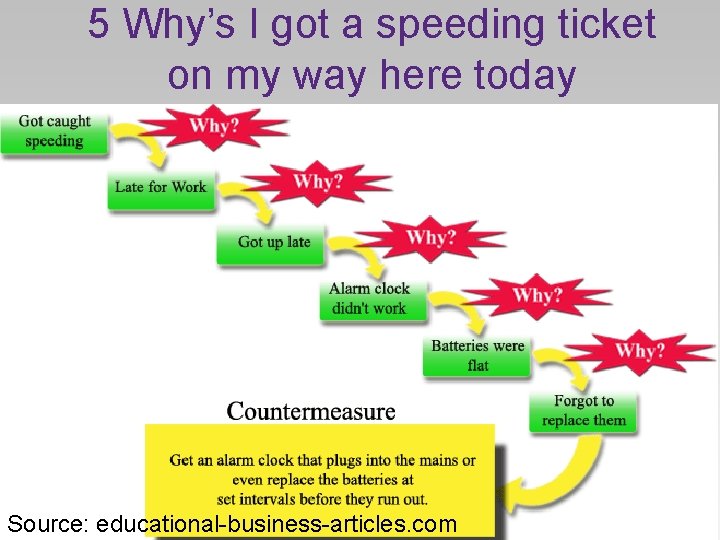
5 Why’s I got a speeding ticket on my way here today Source: educational-business-articles. com
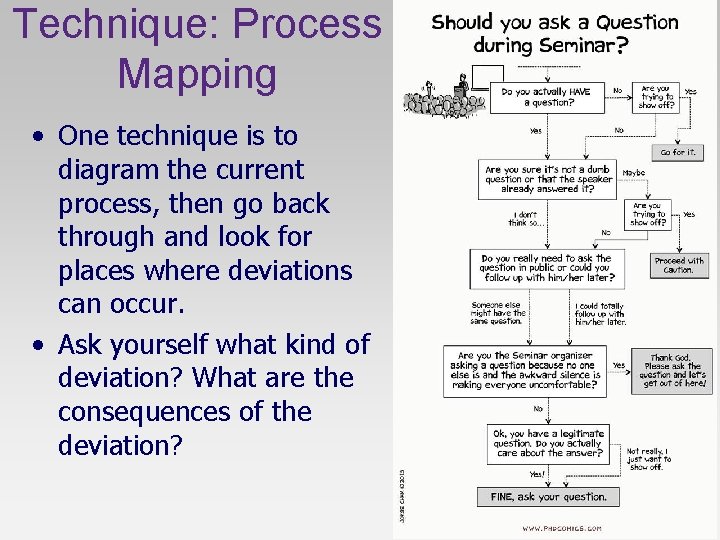
Technique: Process Mapping • One technique is to diagram the current process, then go back through and look for places where deviations can occur. • Ask yourself what kind of deviation? What are the consequences of the deviation?
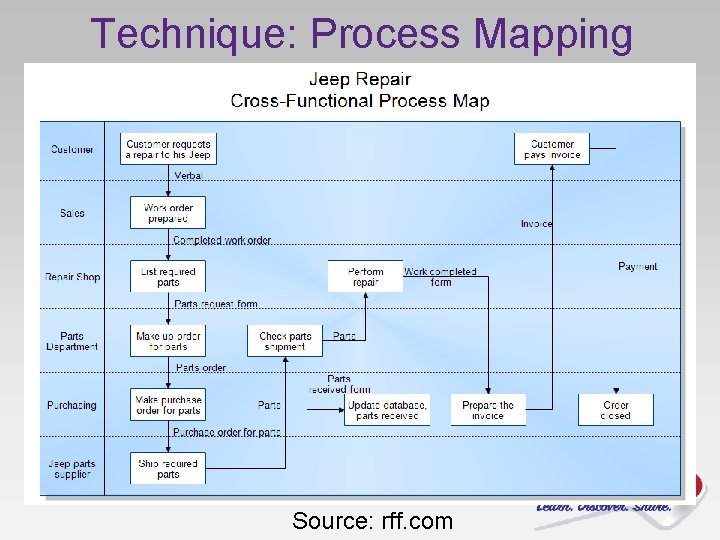
Technique: Process Mapping Source: rff. com
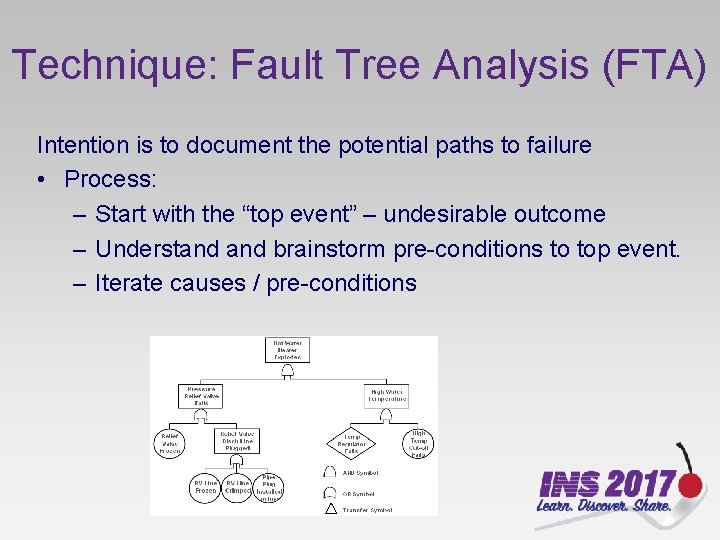
Technique: Fault Tree Analysis (FTA) Intention is to document the potential paths to failure • Process: – Start with the “top event” – undesirable outcome – Understand brainstorm pre-conditions to top event. – Iterate causes / pre-conditions
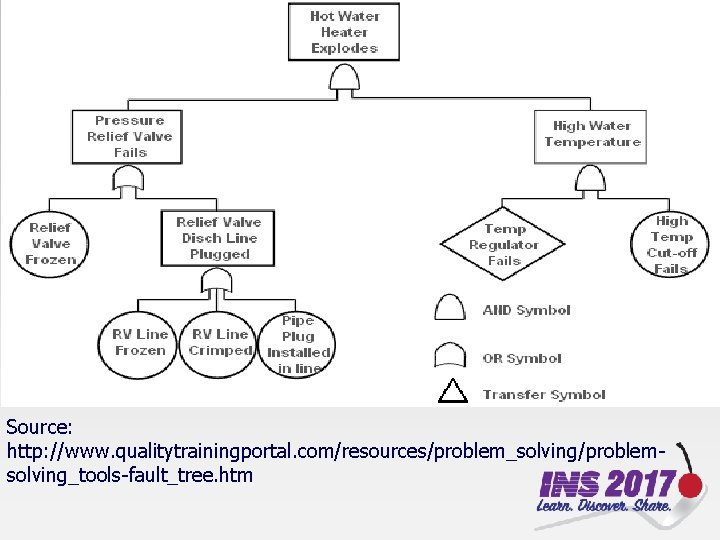
Source: http: //www. qualitytrainingportal. com/resources/problem_solving/problemsolving_tools-fault_tree. htm
FTA Tip – work in 3 stages: Capture, Correct, Clarify Capture: • Watch your ANDs and ORs. It’ easy to write down the wrong relationship. • Come to love ANDs. Hate ORs. ANDs are easy to defeat; ORs are hard. • Don’t be afraid to refactor / restructure as you think of new factors. Consider a using a whiteboard or post-its for the initial development of the FTA. • Don’t spend time making the FTA pretty until you are done. Correct: • When reviewing, verbalize the paths. It’s amazing the number of defects that your eyes won’t catch but your ear will… • Consider performing a walk-through with equipment & other people. Clarify: • Break the FTA into multiple diagrams when it grows too big to read easily.
Technique: Pareto A Pareto analysis is simply a bar graph, sorted by frequency. Think of it as a visual representation of the 80/20 rule. We can always think of a dozen different ways that things can go wrong; a Pareto is a great way to show where the most significant improvements can be made.
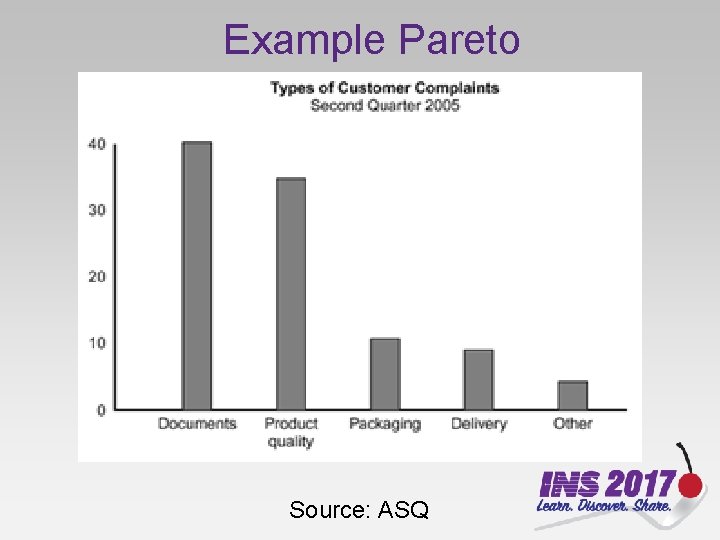
Example Pareto Source: ASQ
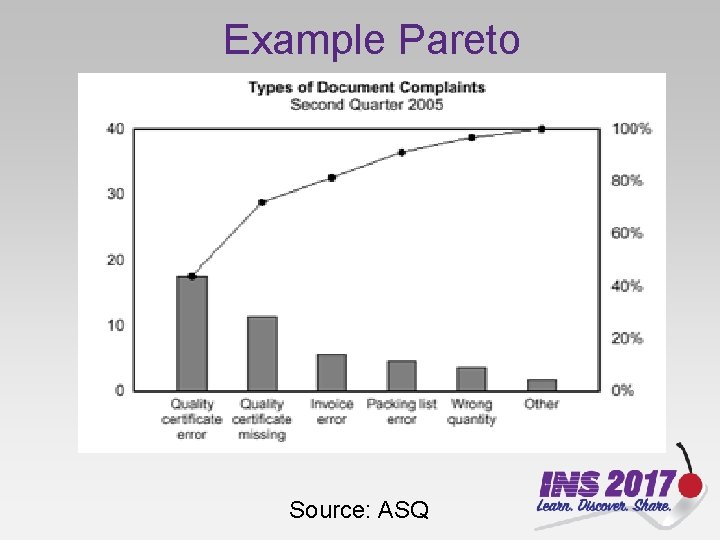
Example Pareto Source: ASQ
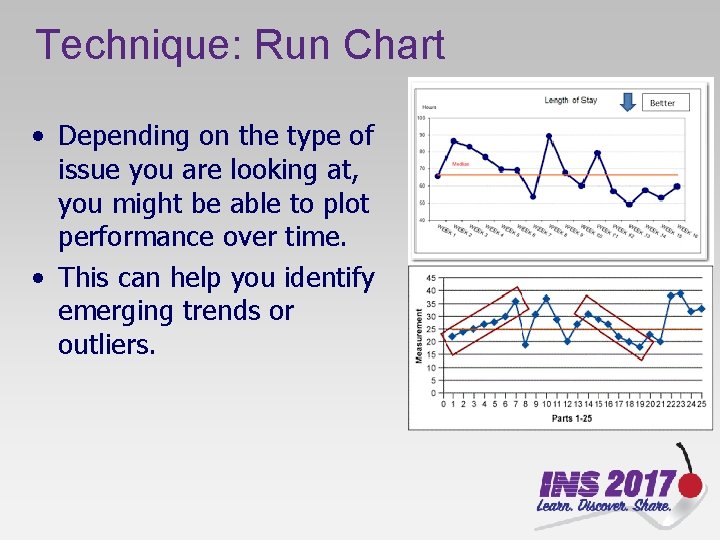
Technique: Run Chart • Depending on the type of issue you are looking at, you might be able to plot performance over time. • This can help you identify emerging trends or outliers.
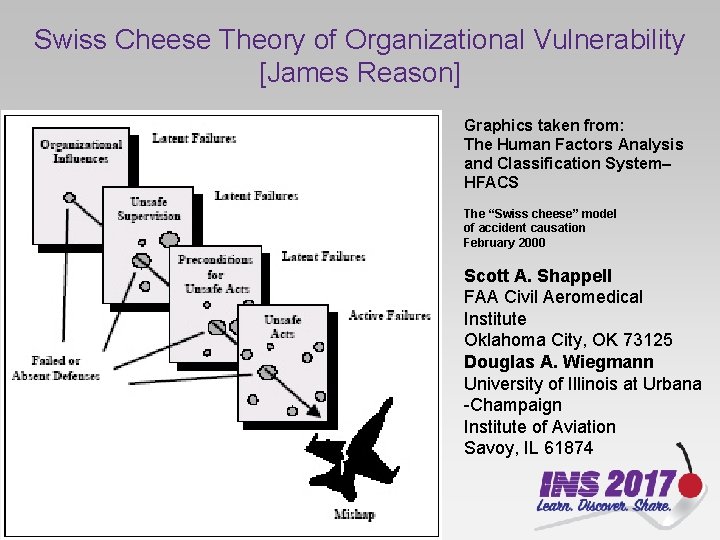
Swiss Cheese Theory of Organizational Vulnerability [James Reason] Graphics taken from: The Human Factors Analysis and Classification System– HFACS The “Swiss cheese” model of accident causation February 2000 Scott A. Shappell FAA Civil Aeromedical Institute Oklahoma City, OK 73125 Douglas A. Wiegmann University of Illinois at Urbana -Champaign Institute of Aviation Savoy, IL 61874
Agenda • Background • Common Root Cause Analysis Techniques • Implementation Advice
Fixing Things: Plan-Do-Check-Act Once you’ve identified the root cause, you want to fix it. However, when pulling weeds, we know that sometimes there’s roots that we didn’t get. A common mistake is to blindly implement a fix and trust that it works. Instead, implement a PDCA cycle…
Technique: Plan-Do-Check-Act Plan: Write down a plan for the intervention. Do: Do the intervention Check: Verify that the intervention is giving you the results you expected. Also make sure there aren’t any unintended consequences of the fix. Act: Don’t be surprised if things didn’t go as you expected; make corrections along the way.
Advice: PDCA • Often you will find multiple contributing factors – remember the Cheese! • Don’t stop at the first cause you find – keep digging. This is a weed after all. . • This allows you a variety of potential interventions, and you may even find common roots growing through the cheese – can solve multiple problems at once.
Challenges Sometimes people will do things. Sometimes there is no clear path forward. Or left, right, and back. Sometimes there isn’t a reliable data source to guide you.
There is a need to validate solutions 35
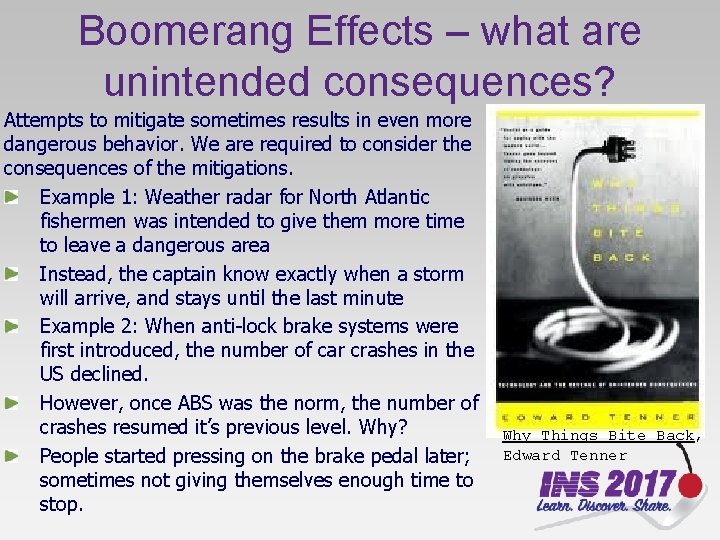
Boomerang Effects – what are unintended consequences? Attempts to mitigate sometimes results in even more dangerous behavior. We are required to consider the consequences of the mitigations. Example 1: Weather radar for North Atlantic fishermen was intended to give them more time to leave a dangerous area Instead, the captain know exactly when a storm will arrive, and stays until the last minute Example 2: When anti-lock brake systems were first introduced, the number of car crashes in the US declined. However, once ABS was the norm, the number of crashes resumed it’s previous level. Why? People started pressing on the brake pedal later; sometimes not giving themselves enough time to stop. Why Things Bite Back, Edward Tenner
Bonus Material {aka “Don’t be afraid to invent your own techniques”} “ 4 Ps of Safety” Theory Concentration Diagrams & “Path. Map”
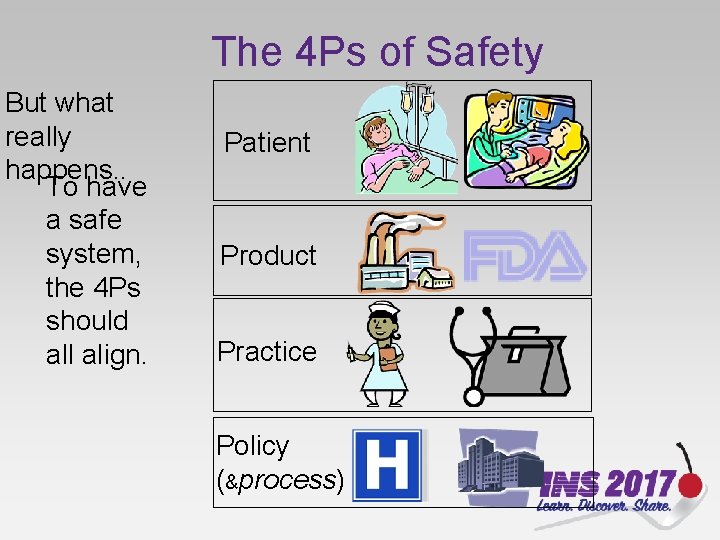
The 4 Ps of Safety But what really happens. . To have a safe system, the 4 Ps should all align. Patient Product Practice Policy (&process)
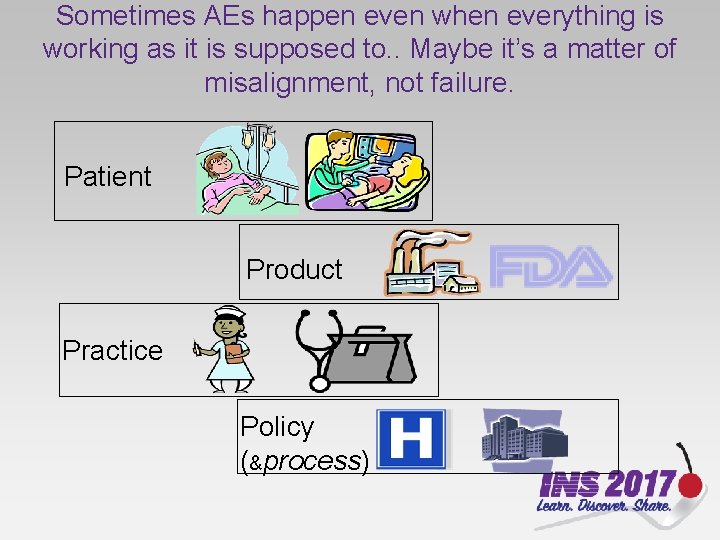
Sometimes AEs happen even when everything is working as it is supposed to. . Maybe it’s a matter of misalignment, not failure. Patient Product Practice Policy (&process)
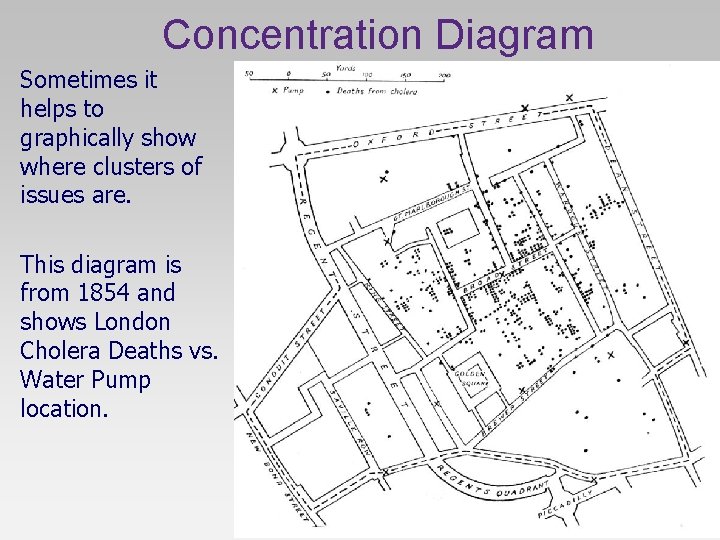
Concentration Diagram Sometimes it helps to graphically show where clusters of issues are. This diagram is from 1854 and shows London Cholera Deaths vs. Water Pump location.
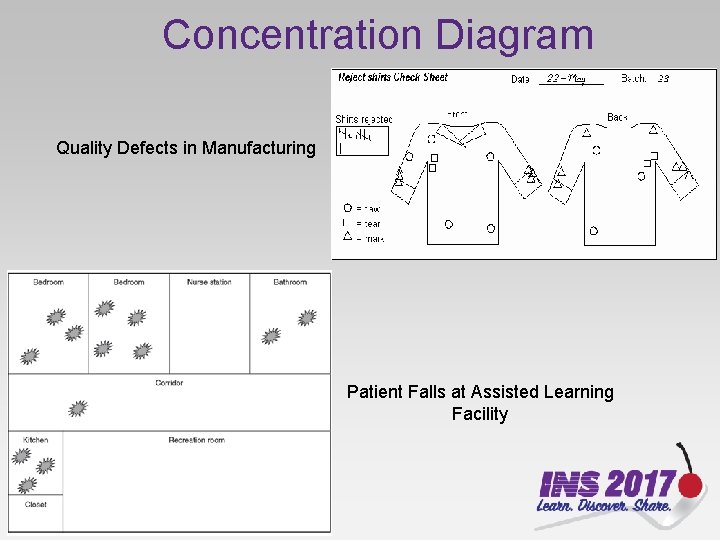
Concentration Diagram Quality Defects in Manufacturing Patient Falls at Assisted Learning Facility
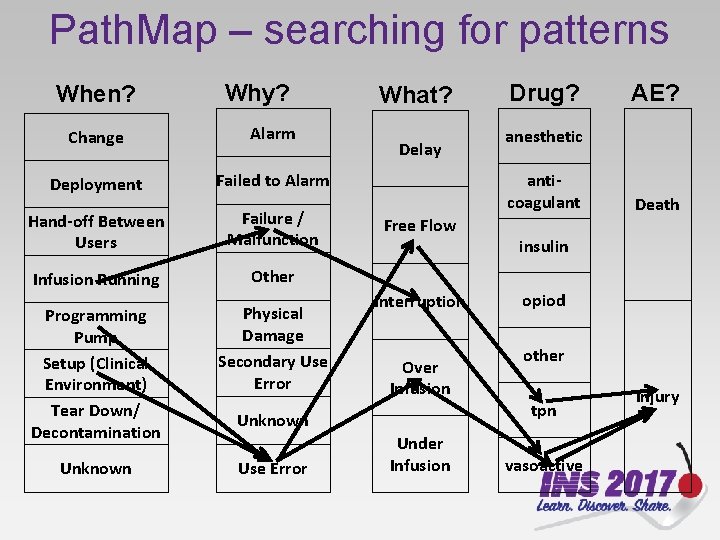
Path. Map – searching for patterns When? Why? Change Alarm Deployment Failed to Alarm Hand-off Between Users Failure / Malfunction Infusion Running Other Programming Pump Setup (Clinical Environment) Tear Down/ Decontamination Physical Damage Secondary Use Error Unknown Use Error What? Delay Drug? anesthetic anticoagulant Free Flow Interruption Over Infusion Unknown Under Infusion AE? Death insulin opiod other tpn vasoactive Injury
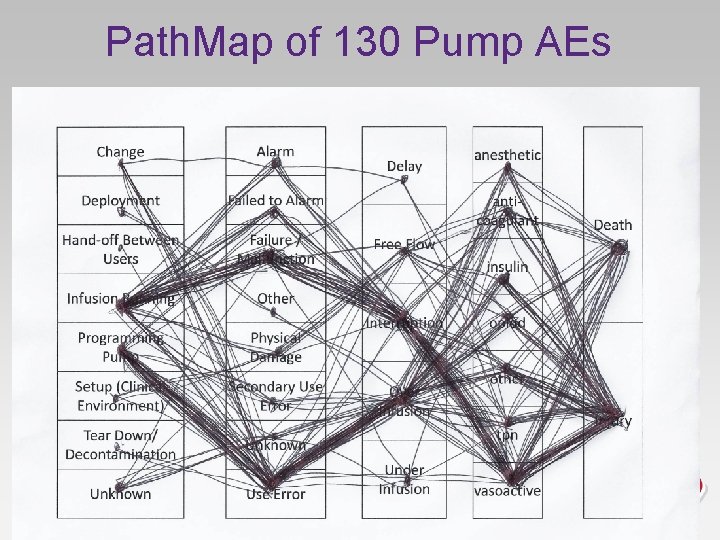
Path. Map of 130 Pump AEs
Parting Thoughts – Learning from Other Industries…

What can we learn from fur traders in the 1800 s?

4 7
- Slides: 47