
Getting to Know Rock Pocket Mice Desert SouthwestMexico
- Slides: 21
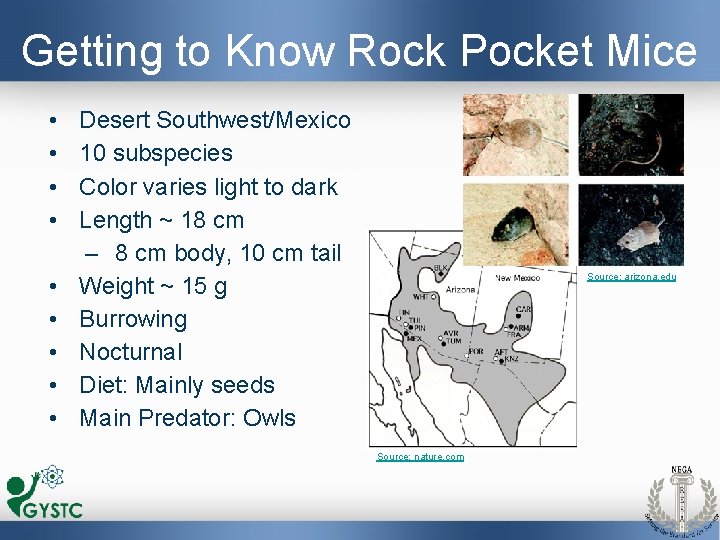
Getting to Know Rock Pocket Mice • • • Desert Southwest/Mexico 10 subspecies Color varies light to dark Length ~ 18 cm – 8 cm body, 10 cm tail Weight ~ 15 g Burrowing Nocturnal Diet: Mainly seeds Main Predator: Owls Source: arizona. edu Source: nature. com
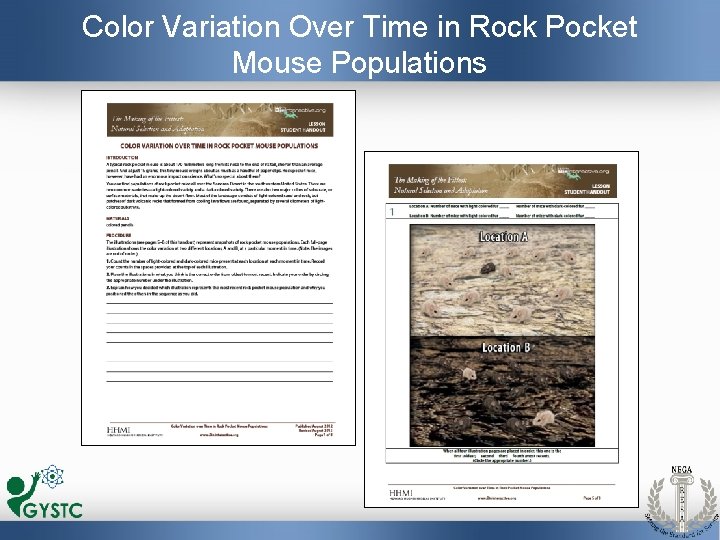
Color Variation Over Time in Rock Pocket Mouse Populations
Driving Question Board Overall Question: How and why has rock pocket mouse population changed over time? • What have we observed? • What do we need to know? • What do we think is happening?
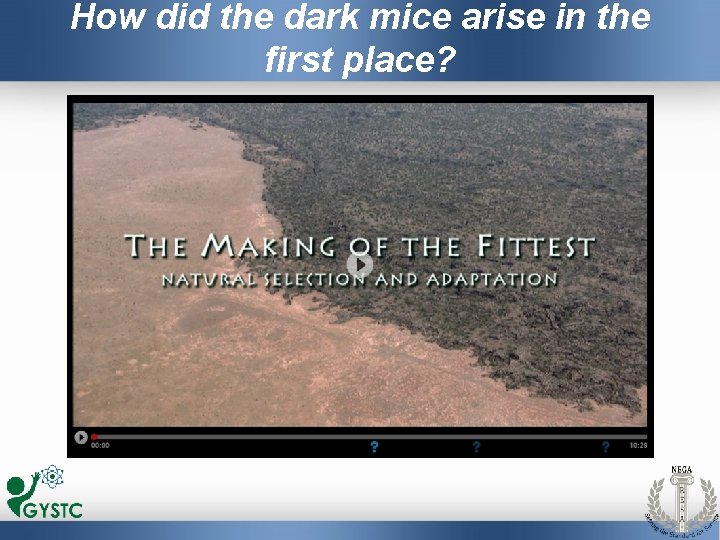
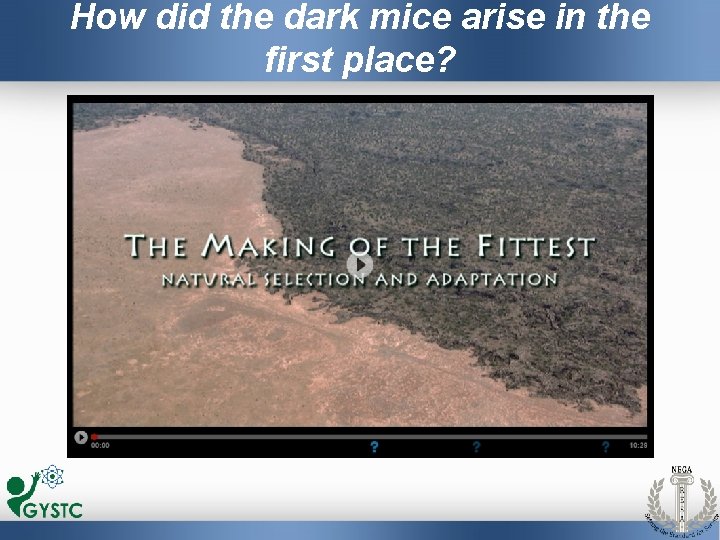
How did the dark mice arise in the first place?
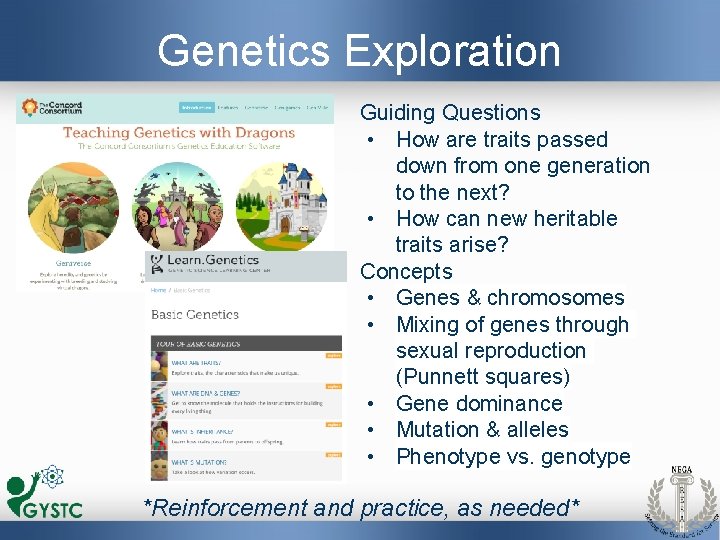
Genetics Exploration Guiding Questions • How are traits passed down from one generation to the next? • How can new heritable traits arise? Concepts • Genes & chromosomes • Mixing of genes through sexual reproduction (Punnett squares) • Gene dominance • Mutation & alleles • Phenotype vs. genotype *Reinforcement and practice, as needed*
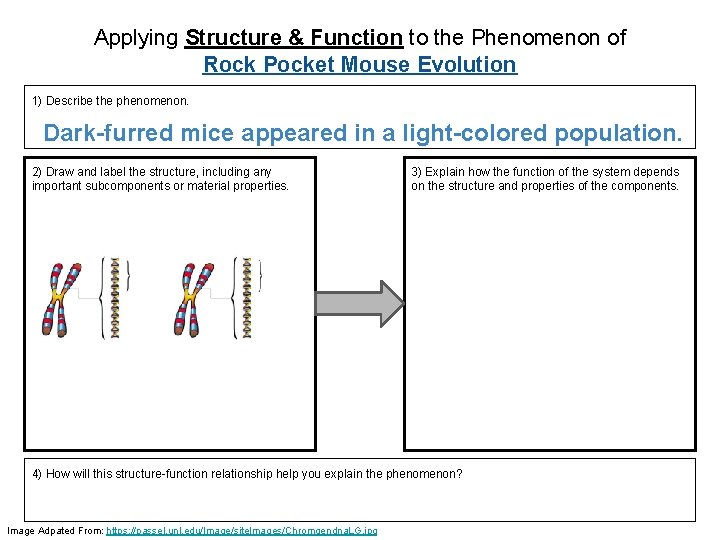
Applying Structure & Function to the Phenomenon of Rock Pocket Mouse Evolution 1) Describe the phenomenon. Dark-furred mice appeared in a light-colored population. 2) Draw and label the structure, including any important subcomponents or material properties. 3) Explain how the function of the system depends on the structure and properties of the components. 4) How will this structure-function relationship help you explain the phenomenon? Image Adpated From: https: //passel. unl. edu/Image/site. Images/Chromgendna. LG. jpg
Driving Question Board Overall Question: How and why has rock pocket mouse population changed over time? • What have we observed? • What do we need to know? • What do we think is happening?
How did the dark mice arise in the first place?
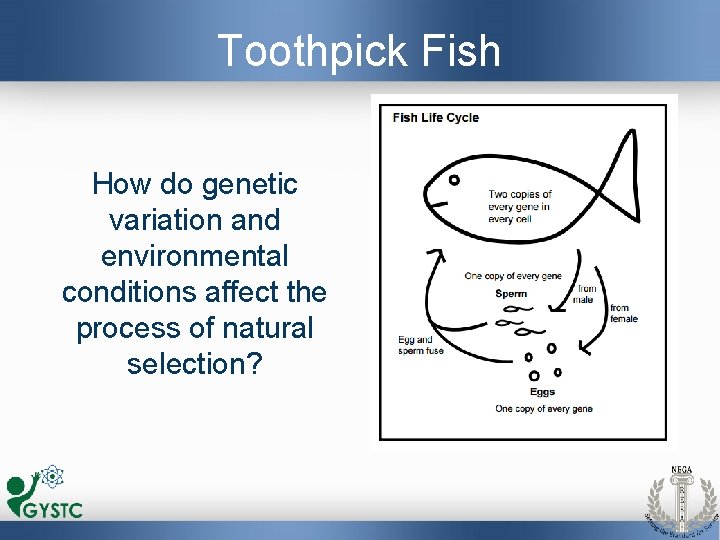
Toothpick Fish How do genetic variation and environmental conditions affect the process of natural selection?
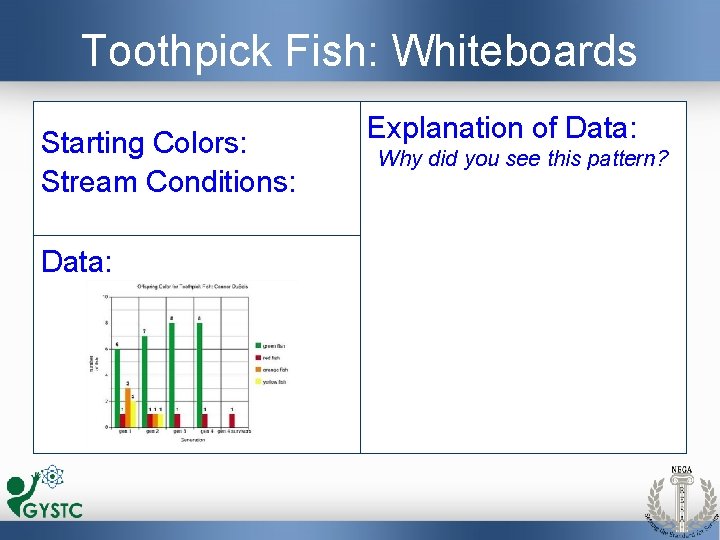
Toothpick Fish: Whiteboards Starting Colors: Stream Conditions: Data: Explanation of Data: Why did you see this pattern?
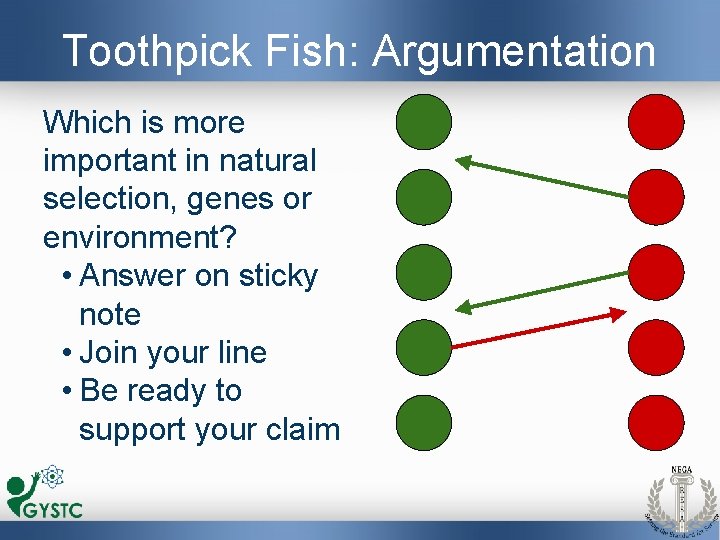
Toothpick Fish: Argumentation Which is more important in natural selection, genes or environment? • Answer on sticky note • Join your line • Be ready to support your claim
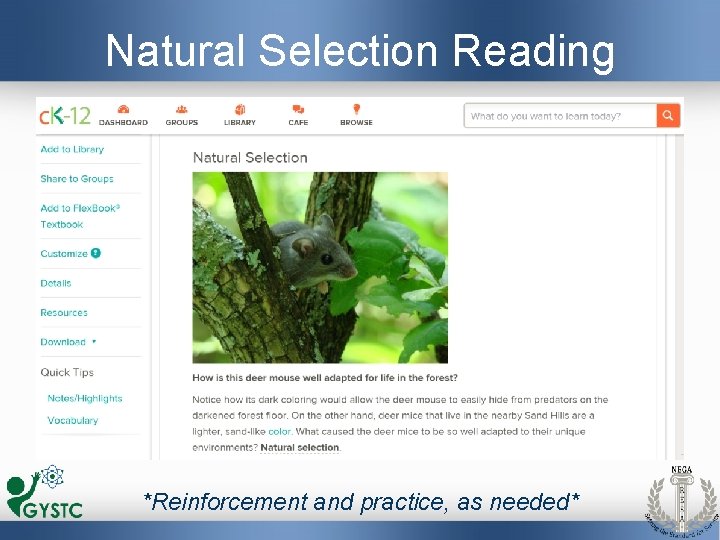
Natural Selection Reading *Reinforcement and practice, as needed*
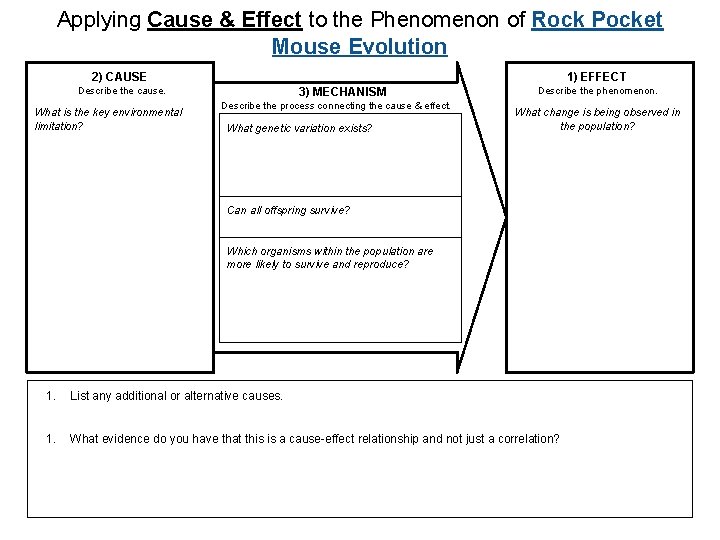
Applying Cause & Effect to the Phenomenon of Rock Pocket Mouse Evolution 2) CAUSE 1) EFFECT Describe the cause. Describe the phenomenon. What is the key environmental limitation? 3) MECHANISM Describe the process connecting the cause & effect. What genetic variation exists? What change is being observed in the population? Can all offspring survive? Which organisms within the population are more likely to survive and reproduce? 1. List any additional or alternative causes. 1. What evidence do you have that this is a cause-effect relationship and not just a correlation?
Driving Question Board Overall Question: How and why has rock pocket mouse population changed over time? • What have we observed? • What do we need to know? • What do we think is happening?
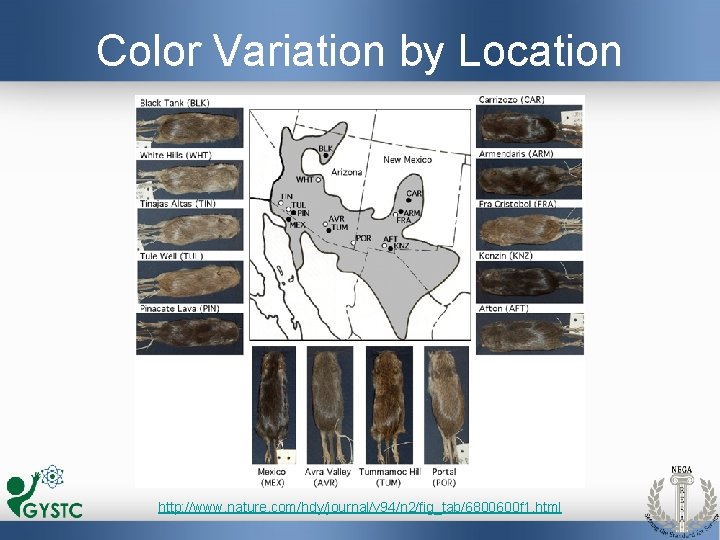
Color Variation by Location http: //www. nature. com/hdy/journal/v 94/n 2/fig_tab/6800600 f 1. html
How did the dark mice arise in the first place?
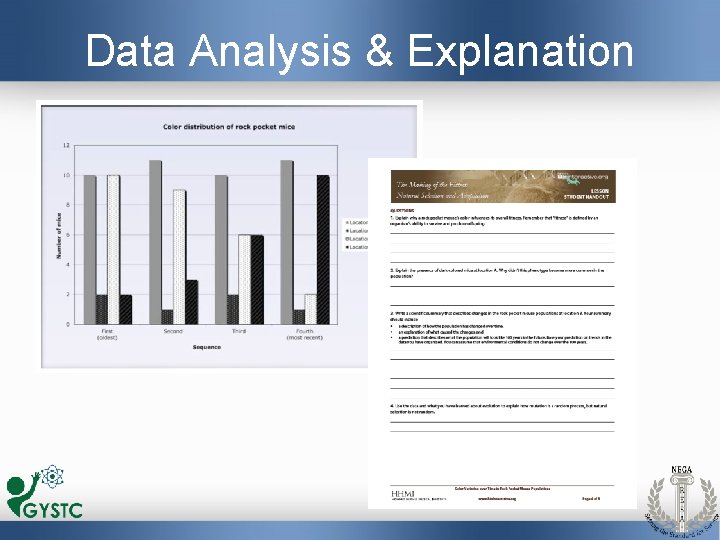
Data Analysis & Explanation
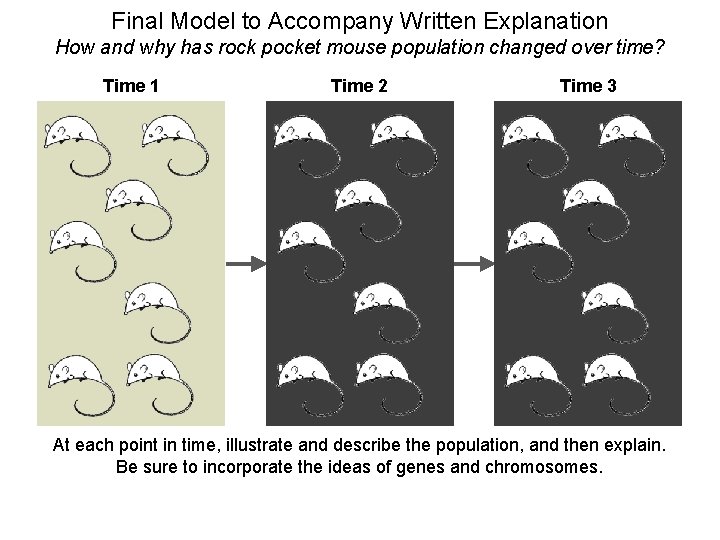
Final Model to Accompany Written Explanation How and why has rock pocket mouse population changed over time? Time 1 Time 2 Time 3 At each point in time, illustrate and describe the population, and then explain. Be sure to incorporate the ideas of genes and chromosomes.
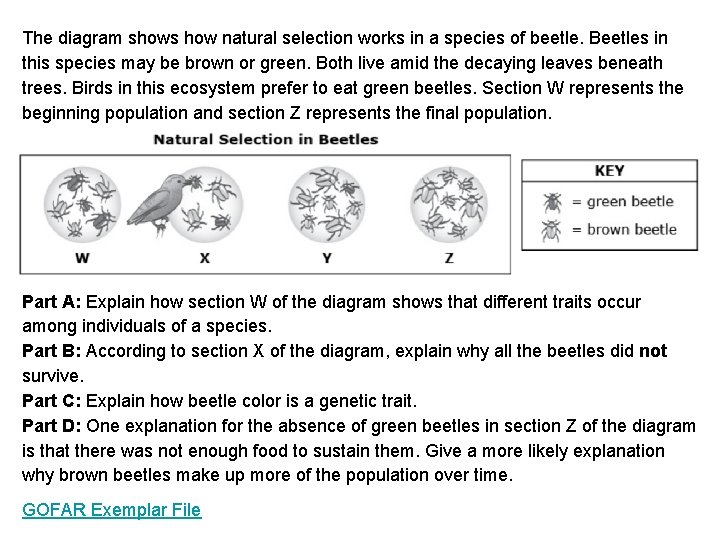
The diagram shows how natural selection works in a species of beetle. Beetles in this species may be brown or green. Both live amid the decaying leaves beneath trees. Birds in this ecosystem prefer to eat green beetles. Section W represents the beginning population and section Z represents the final population. Part A: Explain how section W of the diagram shows that different traits occur among individuals of a species. Part B: According to section X of the diagram, explain why all the beetles did not survive. Part C: Explain how beetle color is a genetic trait. Part D: One explanation for the absence of green beetles in section Z of the diagram is that there was not enough food to sustain them. Give a more likely explanation why brown beetles make up more of the population over time. GOFAR Exemplar File
Standards Addressed S 7 L 3. Obtain, evaluate, and communicate information to explain how organisms reproduce either sexually or asexually and transfer genetic information to determine the traits of their offspring. a. Construct an explanation supported with scientific evidence of the role of genes and chromosomes in the process of inheriting a specific trait. b. Develop and use a model to describe how asexual reproduction can result in offspring with identical genetic information while sexual reproduction results in genetic variation. S 7 L 5. Obtain, evaluate, and communicate information from multiple sources to explain theory of evolution of living organisms through inherited characteristics. a. Use mathematical representations to evaluate explanations of how natural selection leads to changes in specific traits of populations over successive generations. b. Construct an explanation based on evidence that describes how genetic variation and environmental factors influence the probability of survival and reproduction of a species.
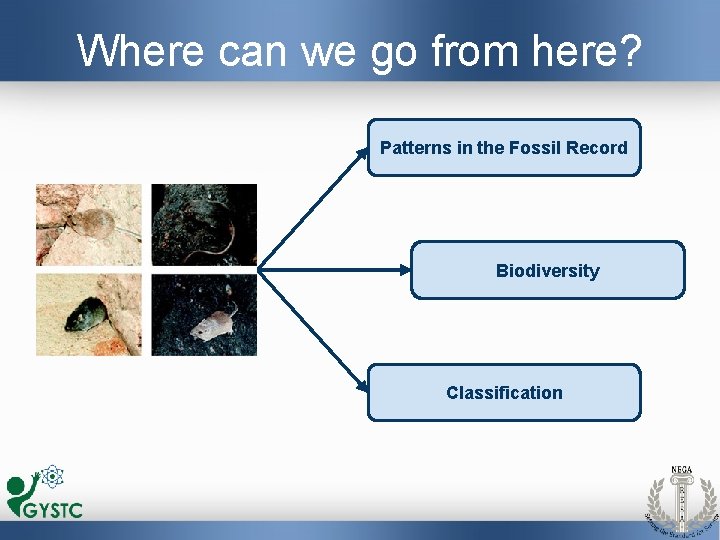
Where can we go from here? Patterns in the Fossil Record Biodiversity Classification