
Getting to Know Me Supporting people with dementia
- Slides: 16
“Getting to Know Me” Supporting people with dementia in general hospitals Part 1: Dementia: an introduction © University of Manchester/Greater Manchester West Mental Health NHS Foundation Trust/Royal Bolton Hospital NHS Foundation Trust 1. 1 1
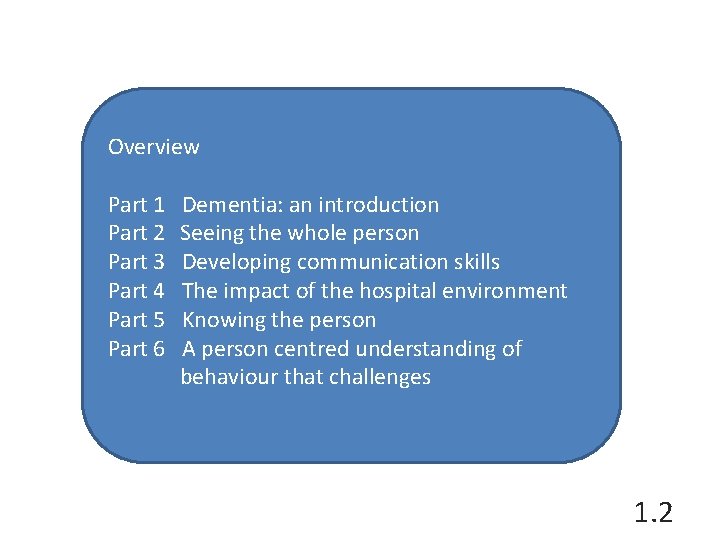
Overview Part 1 Part 2 Part 3 Part 4 Part 5 Part 6 Dementia: an introduction Seeing the whole person Developing communication skills The impact of the hospital environment Knowing the person A person centred understanding of behaviour that challenges 1. 2
Over the course of the training you will view video clips showing Ann and Mike who have a diagnosis of dementia, and Brian who cared for his wife who had dementia. Ann, Mike and Brian live in the Greater Manchester region. In the video clips they share their experiences of living with dementia and reflect on care for people with dementia in hospitals. 1. 3
Aims To reflect on the lived experience of having dementia in the hospital setting To be aware of the main types of dementia and the key features of these To consider detection/diagnosis of dementia in hospital 1. 4
Imagine. . . 1. 5
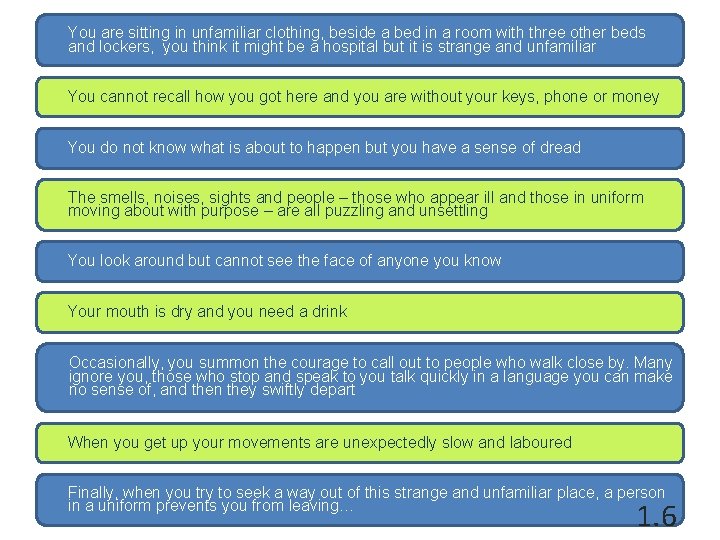
You are sitting in unfamiliar clothing, beside a bed in a room with three other beds and lockers, you think it might be a hospital but it is strange and unfamiliar You cannot recall how you got here and you are without your keys, phone or money You do not know what is about to happen but you have a sense of dread The smells, noises, sights and people – those who appear ill and those in uniform moving about with purpose – are all puzzling and unsettling You look around but cannot see the face of anyone you know Your mouth is dry and you need a drink Occasionally, you summon the courage to call out to people who walk close by. Many ignore you, those who stop and speak to you talk quickly in a language you can make no sense of, and then they swiftly depart When you get up your movements are unexpectedly slow and laboured Finally, when you try to seek a way out of this strange and unfamiliar place, a person in a uniform prevents you from leaving… 1. 6
What might you be thinking? What might you be feeling? What might you want to happen? What might you do? 1. 7
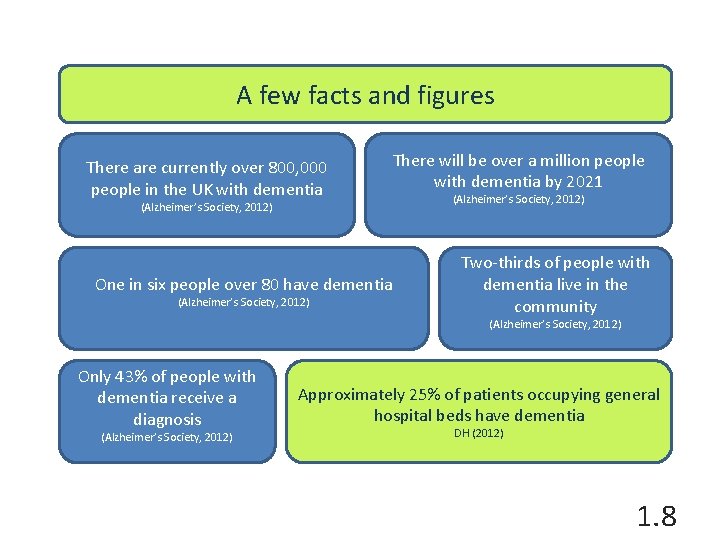
A few facts and figures There are currently over 800, 000 people in the UK with dementia (Alzheimer’s Society, 2012) One in six people over 80 have dementia (Alzheimer’s Society, 2012) There will be over a million people with dementia by 2021 (Alzheimer’s Society, 2012) Two-thirds of people with dementia live in the community (Alzheimer’s Society, 2012) Only 43% of people with dementia receive a diagnosis (Alzheimer’s Society, 2012) Approximately 25% of patients occupying general hospital beds have dementia DH (2012) 1. 8
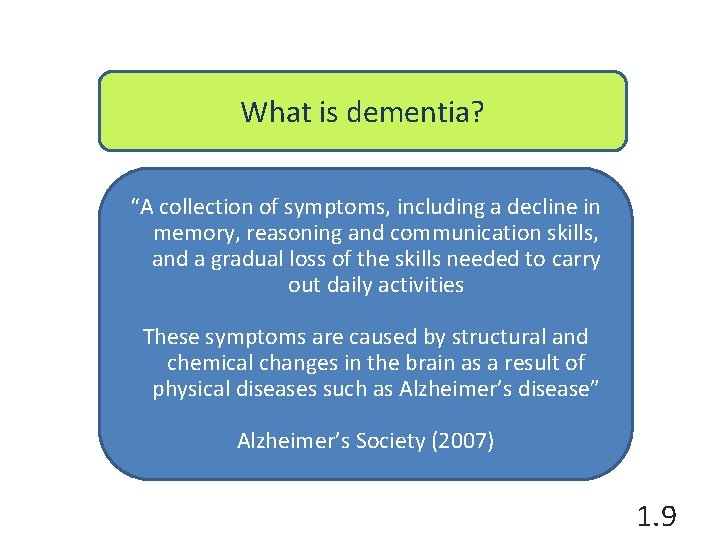
What is dementia? “A collection of symptoms, including a decline in memory, reasoning and communication skills, and a gradual loss of the skills needed to carry out daily activities These symptoms are caused by structural and chemical changes in the brain as a result of physical diseases such as Alzheimer’s disease” Alzheimer’s Society (2007) 1. 9
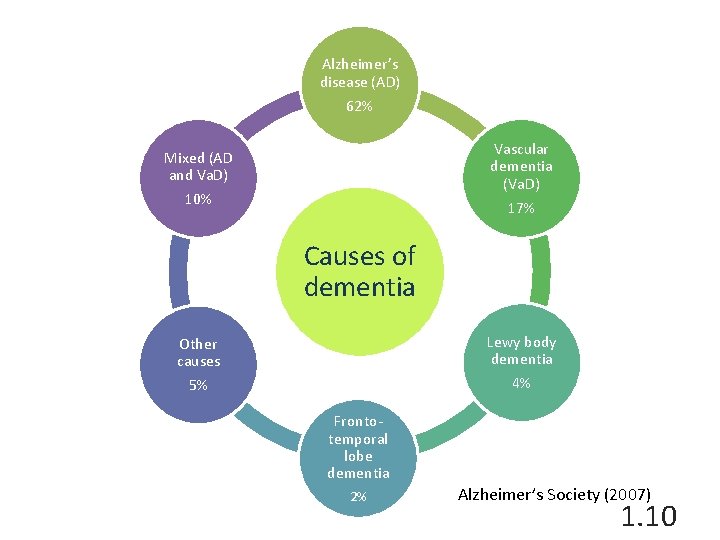
Alzheimer’s disease (AD) 62% Vascular dementia (Va. D) Mixed (AD and Va. D) 10% 17% Causes of dementia Lewy body dementia 4% Other causes 5% Frontotemporal lobe dementia 2% Alzheimer’s Society (2007) 1. 10
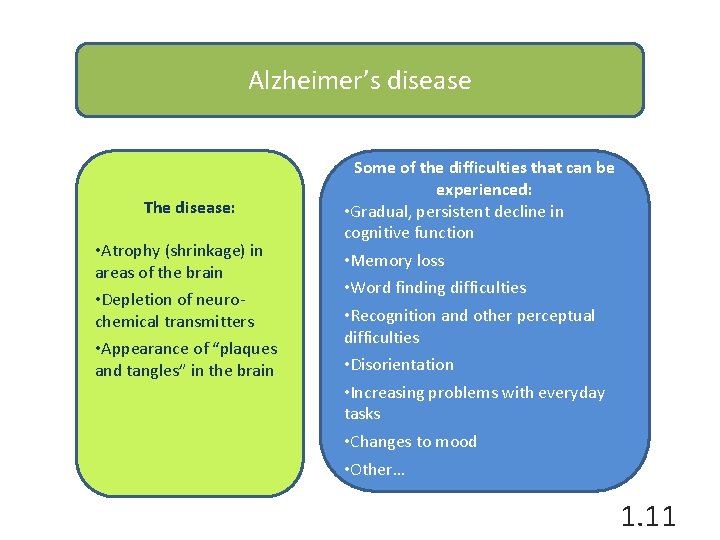
Alzheimer’s disease The disease: • Atrophy (shrinkage) in areas of the brain • Depletion of neurochemical transmitters • Appearance of “plaques and tangles” in the brain Some of the difficulties that can be experienced: • Gradual, persistent decline in cognitive function • Memory loss • Word finding difficulties • Recognition and other perceptual difficulties • Disorientation • Increasing problems with everyday tasks • Changes to mood • Other… 1. 11
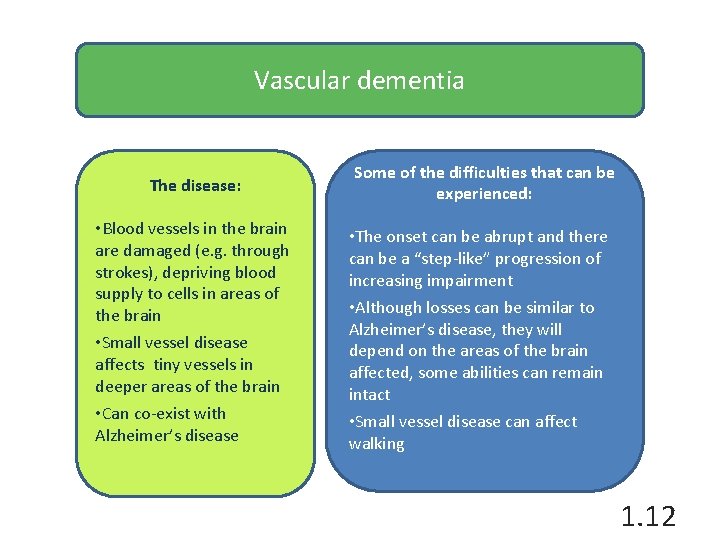
Vascular dementia The disease: • Blood vessels in the brain are damaged (e. g. through strokes), depriving blood supply to cells in areas of the brain • Small vessel disease affects tiny vessels in deeper areas of the brain • Can co-exist with Alzheimer’s disease Some of the difficulties that can be experienced: • The onset can be abrupt and there can be a “step-like” progression of increasing impairment • Although losses can be similar to Alzheimer’s disease, they will depend on the areas of the brain affected, some abilities can remain intact • Small vessel disease can affect walking 1. 12
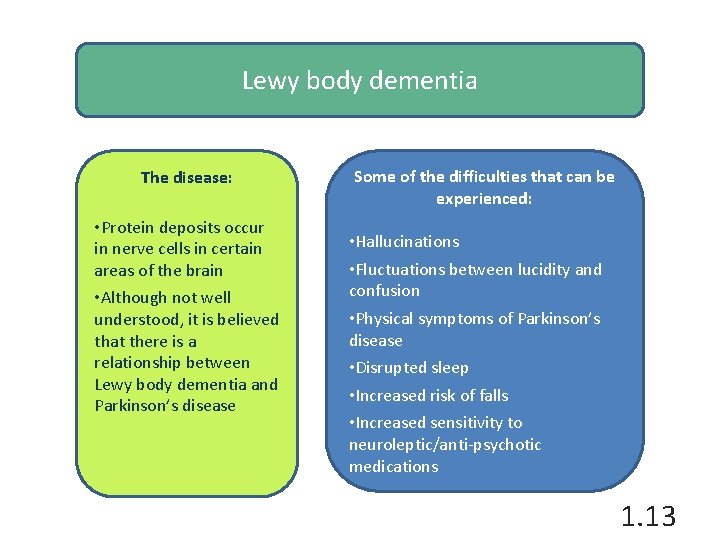
Lewy body dementia The disease: • Protein deposits occur in nerve cells in certain areas of the brain • Although not well understood, it is believed that there is a relationship between Lewy body dementia and Parkinson’s disease Some of the difficulties that can be experienced: • Hallucinations • Fluctuations between lucidity and confusion • Physical symptoms of Parkinson’s disease • Disrupted sleep • Increased risk of falls • Increased sensitivity to neuroleptic/anti-psychotic medications 1. 13
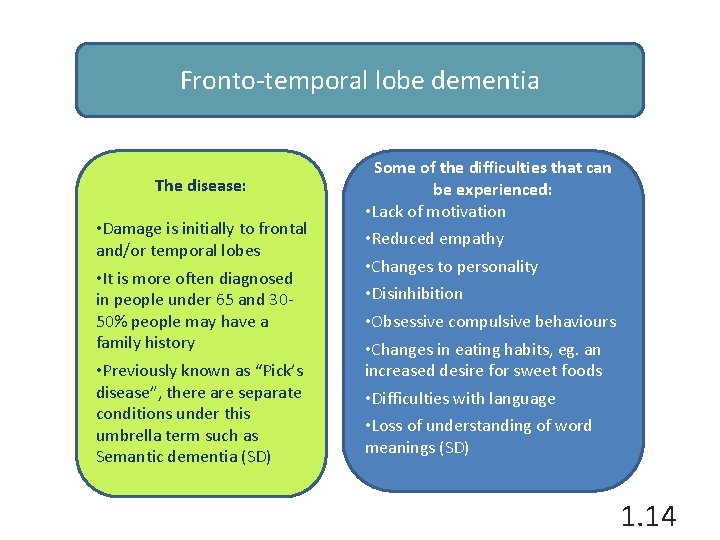
Fronto-temporal lobe dementia The disease: • Damage is initially to frontal and/or temporal lobes • It is more often diagnosed in people under 65 and 3050% people may have a family history • Previously known as “Pick’s disease”, there are separate conditions under this umbrella term such as Semantic dementia (SD) Some of the difficulties that can be experienced: • Lack of motivation • Reduced empathy • Changes to personality • Disinhibition • Obsessive compulsive behaviours • Changes in eating habits, eg. an increased desire for sweet foods • Difficulties with language • Loss of understanding of word meanings (SD) 1. 14
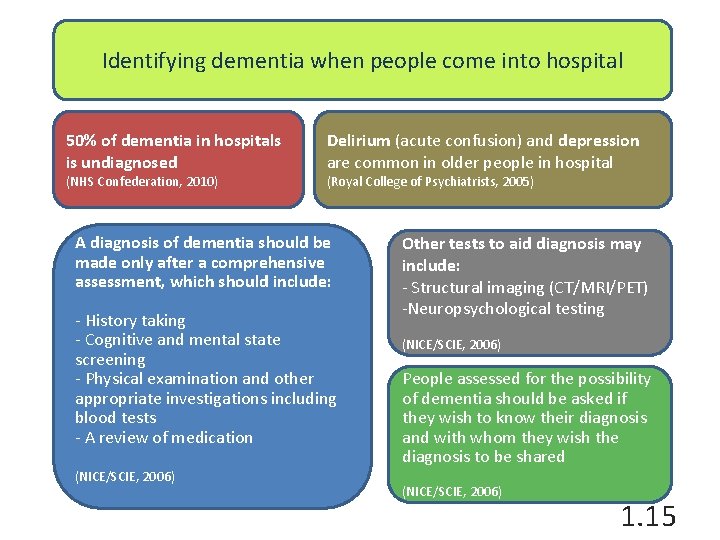
Identifying dementia when people come into hospital 50% of dementia in hospitals is undiagnosed (NHS Confederation, 2010) Delirium (acute confusion) and depression are common in older people in hospital (Royal College of Psychiatrists, 2005) A diagnosis of dementia should be made only after a comprehensive assessment, which should include: - History taking - Cognitive and mental state screening - Physical examination and other appropriate investigations including blood tests - A review of medication (NICE/SCIE, 2006) Other tests to aid diagnosis may include: - Structural imaging (CT/MRI/PET) -Neuropsychological testing (NICE/SCIE, 2006) People assessed for the possibility of dementia should be asked if they wish to know their diagnosis and with whom they wish the diagnosis to be shared (NICE/SCIE, 2006) 1. 15
Any Questions? 1. 16