
Getting the Dirt on Soils Structure Dr David
- Slides: 20
Getting the Dirt on Soils: Structure Dr. David Lindbo Emeritus Professor, NC State University Director Soil Science Division, USDA-NRCS lindbo@ncsu. edu david. lindbo@usda. gov
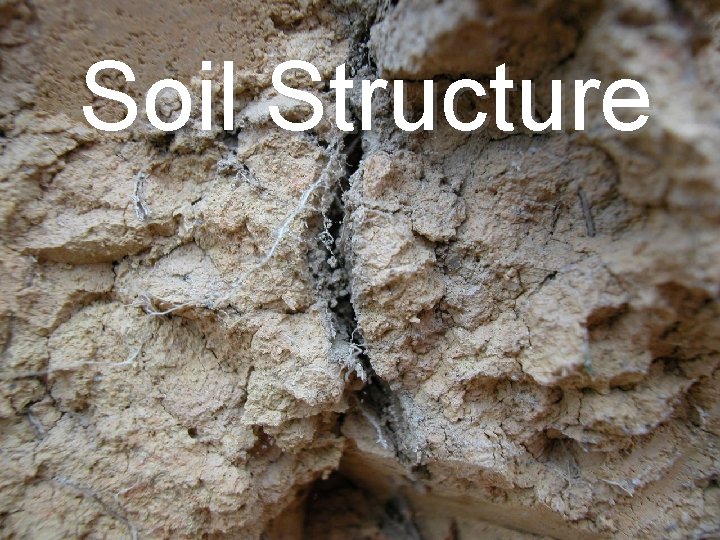
Soil Structure
Soil Structure The grouping or arrangement of individual soil particles into a larger grouping. (Also called aggregate, ped)
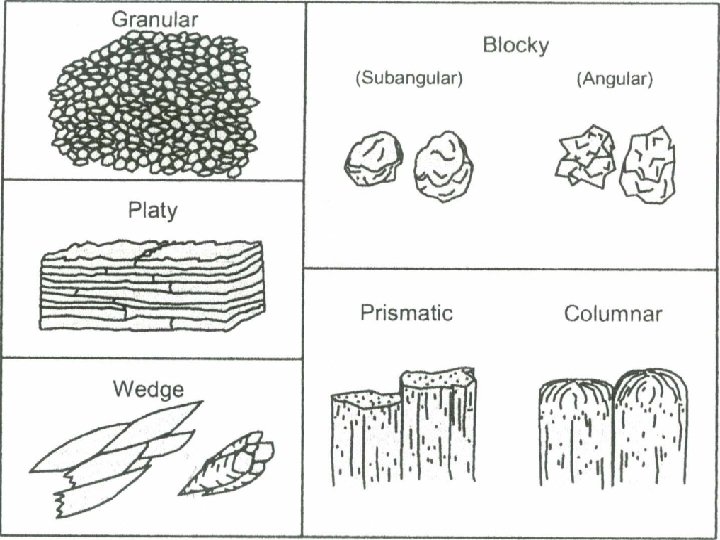
Natural Soil Structural Units (Types) • • Granular Angular Blocky Subangular Blocky Platy Wedge Prismatic Columnar
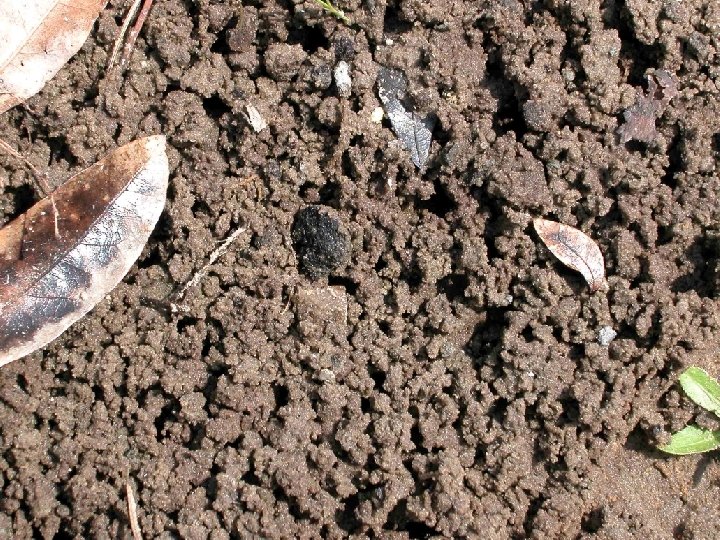
Granular – Small polyhedrals, with curved or very irregular faces
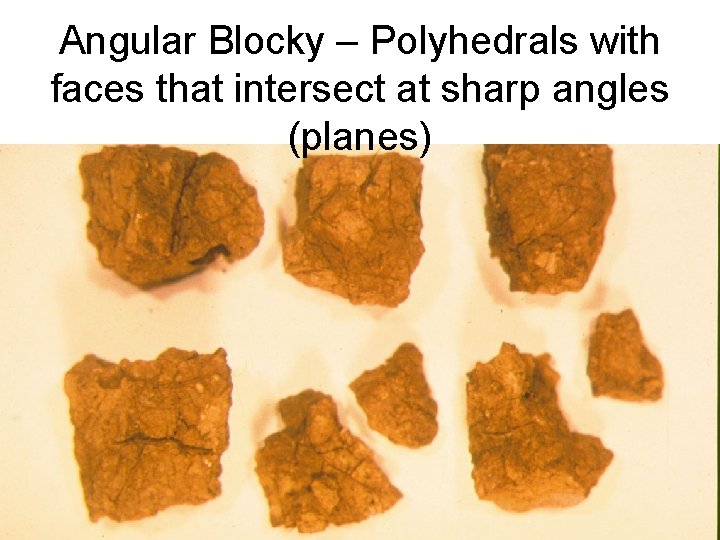
Angular Blocky – Polyhedrals with faces that intersect at sharp angles (planes)
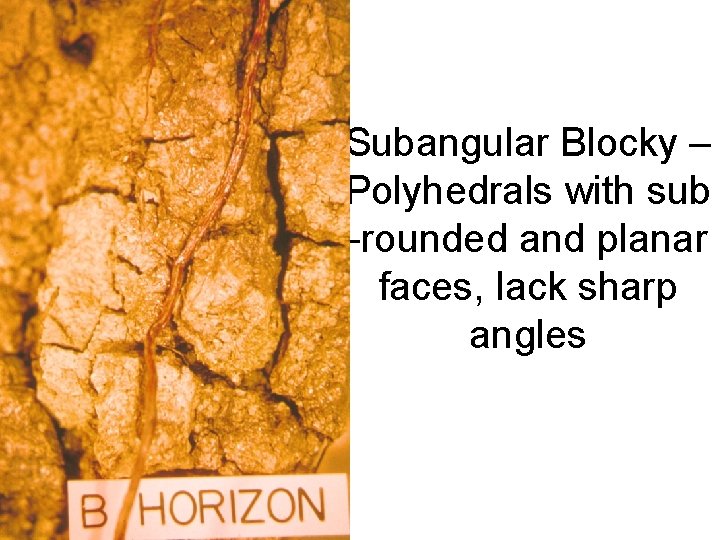
Subangular Blocky – Polyhedrals with sub -rounded and planar faces, lack sharp angles
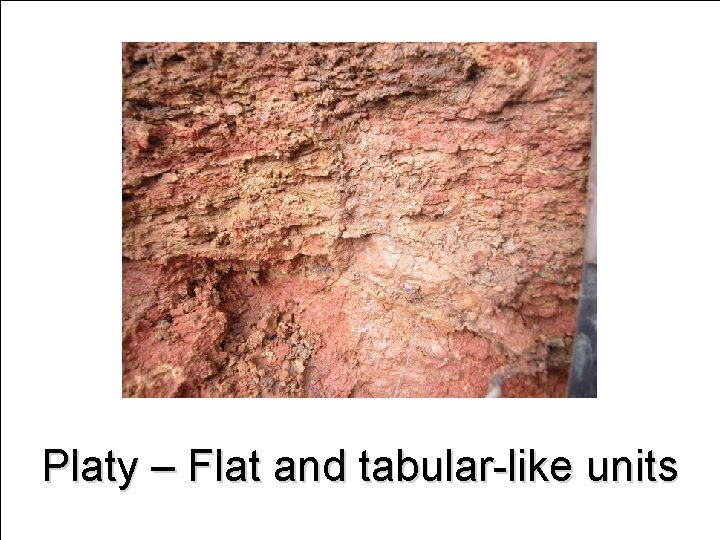
Platy – Flat and tabular-like units
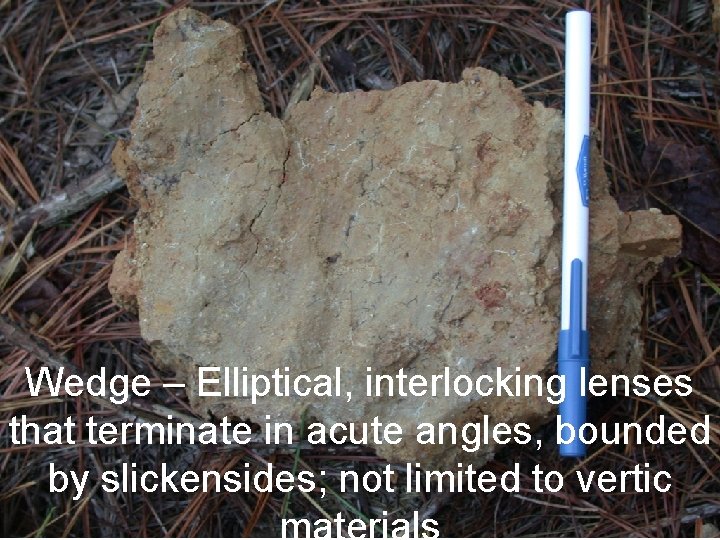
Wedge – Elliptical, interlocking lenses that terminate in acute angles, bounded by slickensides; not limited to vertic materials
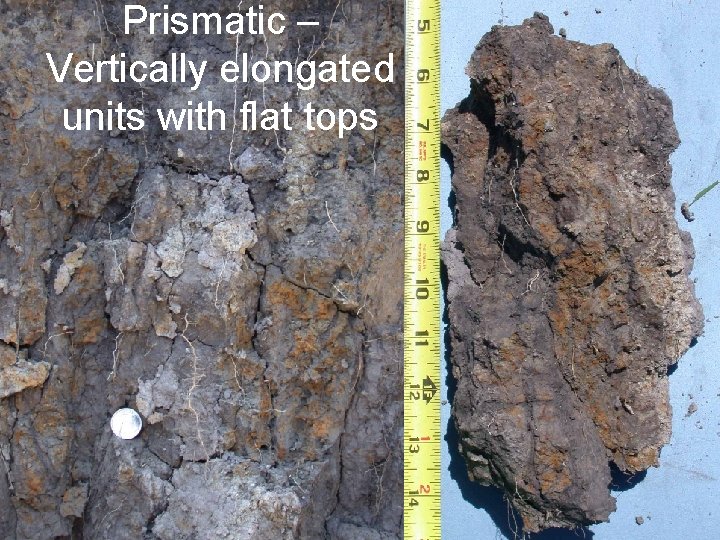
Prismatic – Vertically elongated units with flat tops
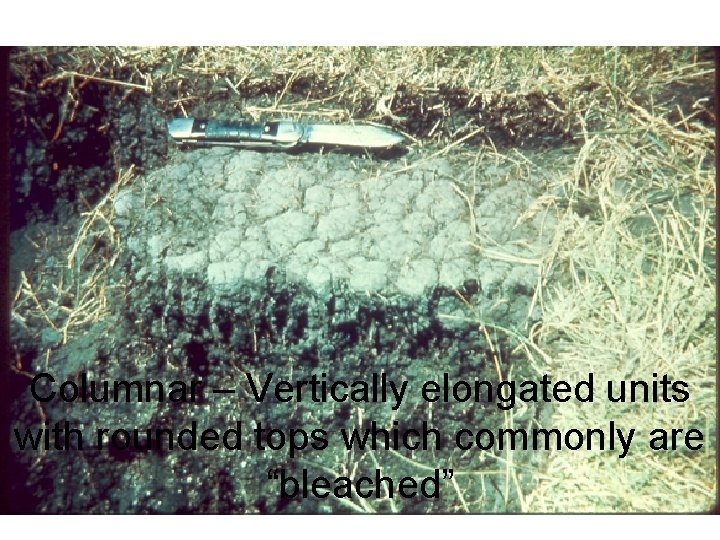
Columnar – Vertically elongated units with rounded tops which commonly are “bleached”
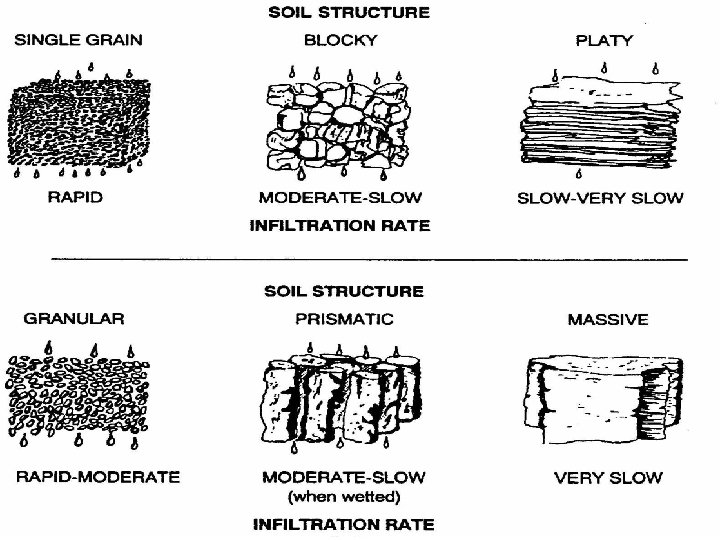
Structureless • Single Grain (non-coherent) • Massive (coherent) • Massive - Rock Controlled Fabric
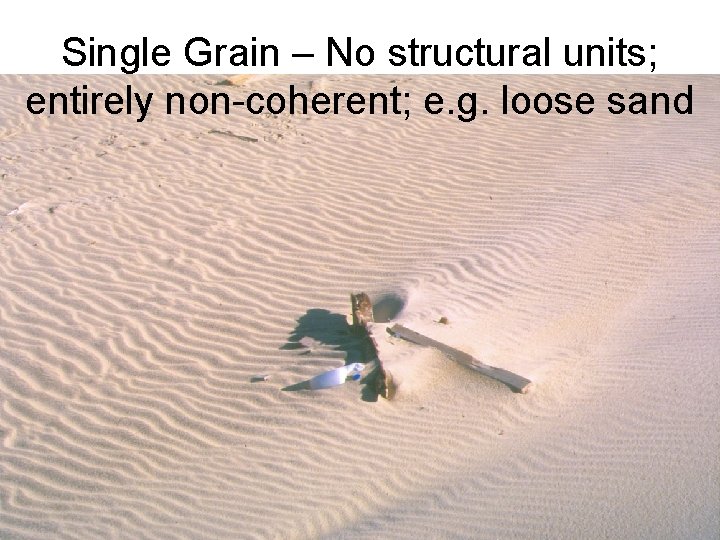
Single Grain – No structural units; entirely non-coherent; e. g. loose sand
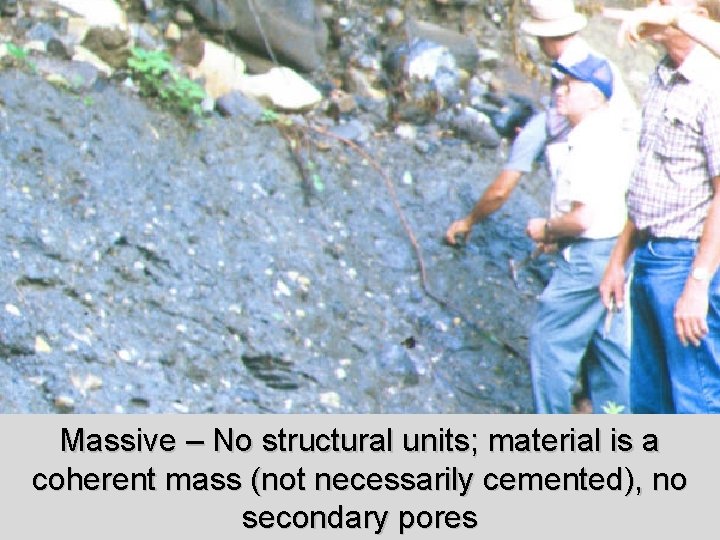
Massive – No structural units; material is a coherent mass (not necessarily cemented), no secondary pores
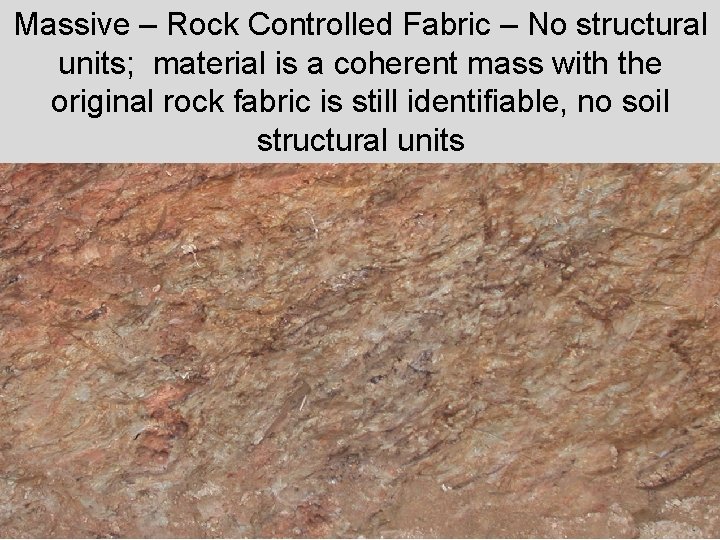
Massive – Rock Controlled Fabric – No structural units; material is a coherent mass with the original rock fabric is still identifiable, no soil structural units
Texture Plays a Major Role with Micropores. Structure Plays a Major Role with Macropores.
Questions?