
Get out Mitosis Flipbook Cell Cycle Quiz Meiosis
Get out Mitosis Flipbook • Cell Cycle Quiz • Meiosis notes • Meiosis Activity
MEIOSIS Learning Goal: Understand how meiosis causes genetic variation
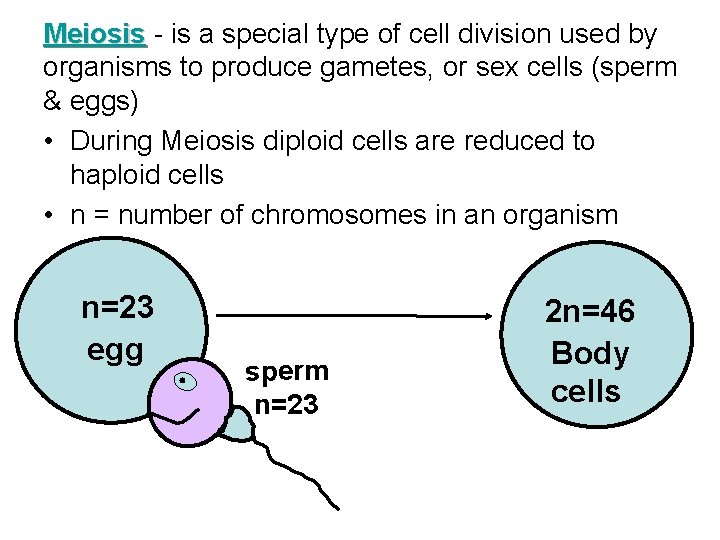
Meiosis - is a special type of cell division used by organisms to produce gametes, or sex cells (sperm & eggs) • During Meiosis diploid cells are reduced to haploid cells • n = number of chromosomes in an organism n=23 egg sperm n=23 2 n=46 Body cells
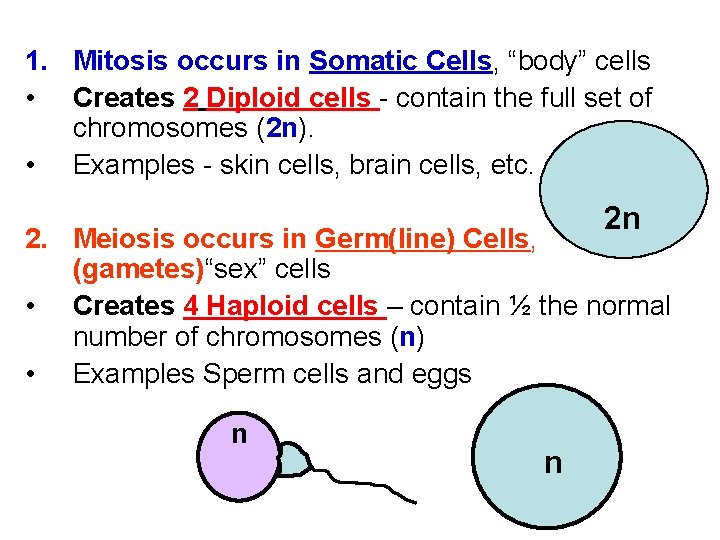
1. Mitosis occurs in Somatic Cells, “body” cells • Creates 2 Diploid cells - contain the full set of chromosomes (2 n). • Examples - skin cells, brain cells, etc. 2 n 2. Meiosis occurs in Germ(line) Cells, (gametes)“sex” cells • Creates 4 Haploid cells – contain ½ the normal number of chromosomes (n) • Examples Sperm cells and eggs n n
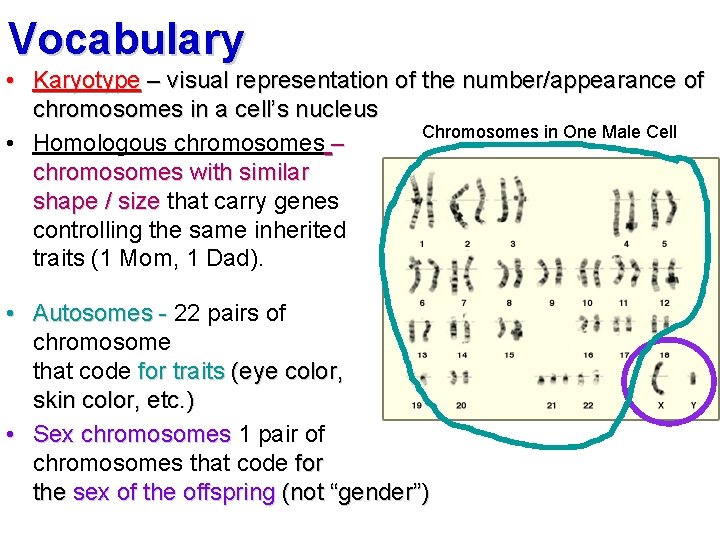
Vocabulary • Karyotype – visual representation of the number/appearance of chromosomes in a cell’s nucleus Chromosomes in One Male Cell • Homologous chromosomes – chromosomes with similar shape / size that carry genes controlling the same inherited traits (1 Mom, 1 Dad). • Autosomes - 22 pairs of chromosome that code for traits (eye color, skin color, etc. ) • Sex chromosomes 1 pair of chromosomes that code for the sex of the offspring (not “gender”)
Karyotype Diagram
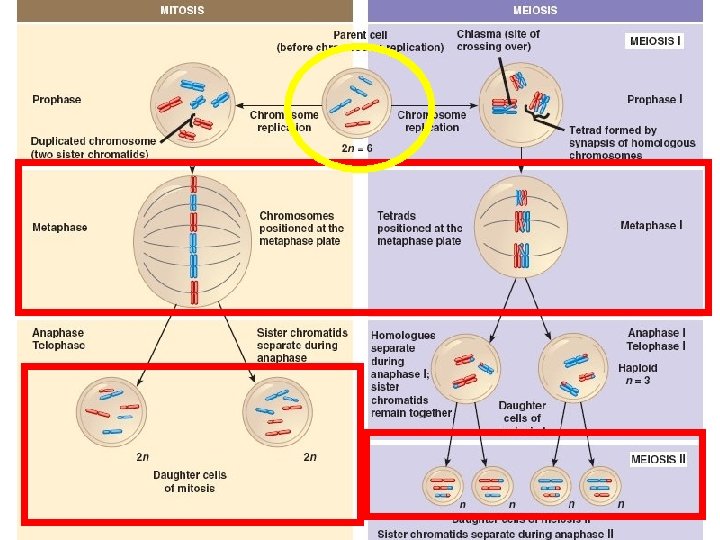
Stages of Meiosis I Prophase I, Meta I, Ana I, Telo I **** In Prophase I Crossing Over occurs***** Crossing-Over is the exchange of genes between two homologous chromosomes, resulting in non-identical chromatids Meiosis II Prophase II, Meta II, Ana II, Telo II
Meiosis Diagram

Mitosis Meiosis Venn Diagram
Stop
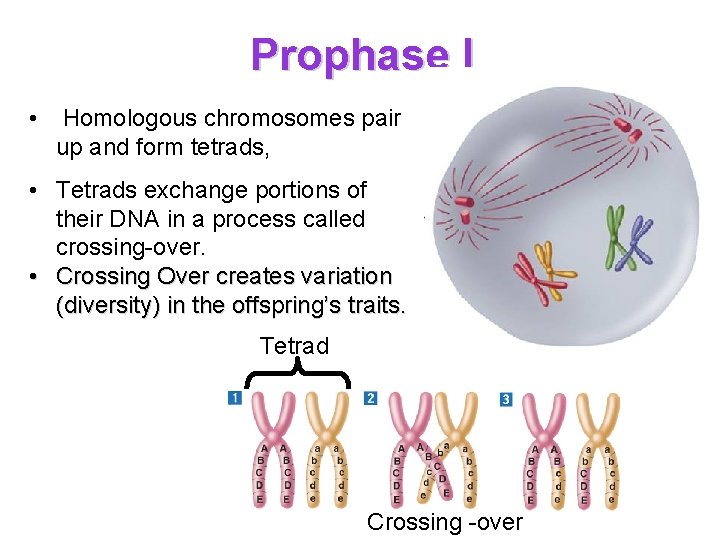
Prophase I • Homologous chromosomes pair up and form tetrads, • Tetrads exchange portions of their DNA in a process called crossing-over. • Crossing Over creates variation (diversity) in the offspring’s traits. Tetrad Crossing -over
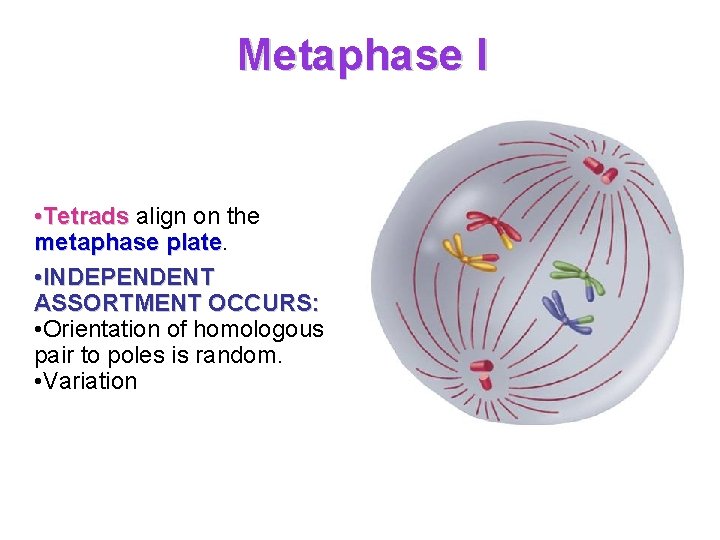
Metaphase I • Tetrads align on the metaphase plate • INDEPENDENT ASSORTMENT OCCURS: • Orientation of homologous pair to poles is random. • Variation
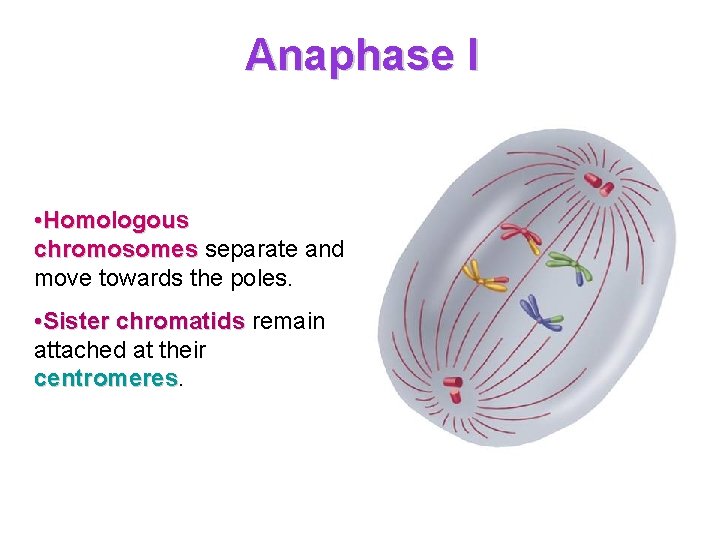
Anaphase I • Homologous chromosomes separate and move towards the poles. • Sister chromatids remain attached at their centromeres
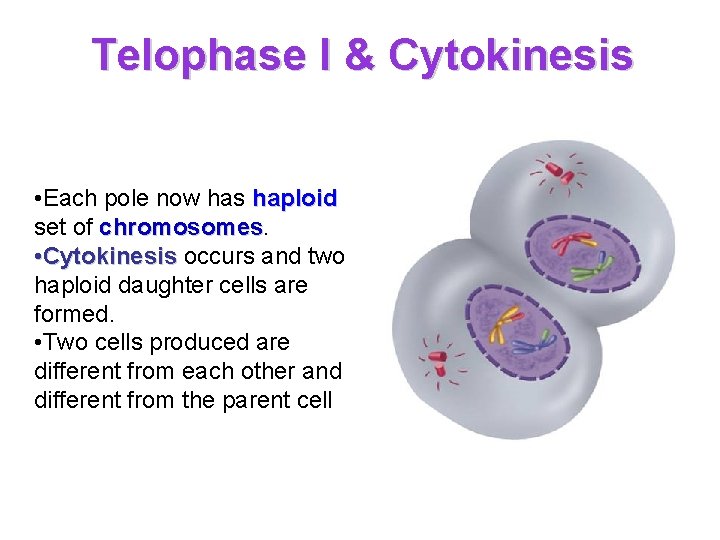
Telophase I & Cytokinesis • Each pole now has haploid set of chromosomes • Cytokinesis occurs and two haploid daughter cells are formed. • Two cells produced are different from each other and different from the parent cell
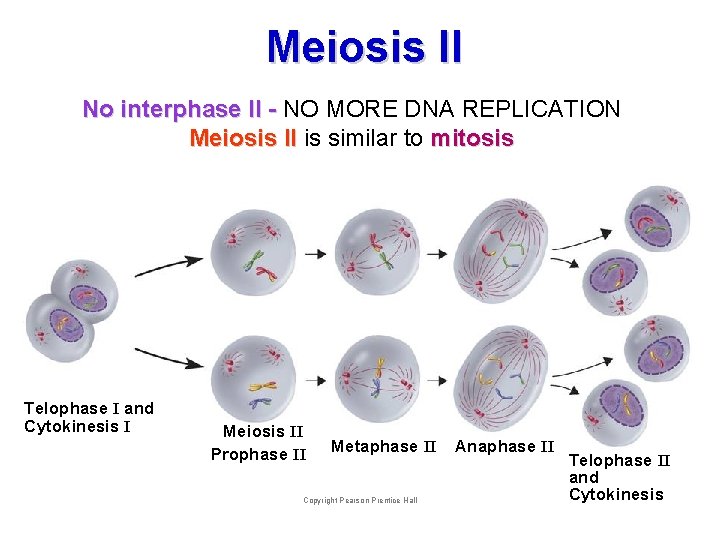
Meiosis II No interphase II - NO MORE DNA REPLICATION Meiosis II is similar to mitosis Telophase I and Cytokinesis I Meiosis II Prophase II Metaphase II Copyright Pearson Prentice Hall Anaphase II Telophase II and Cytokinesis

Prophase II • same as prophase in mitosis
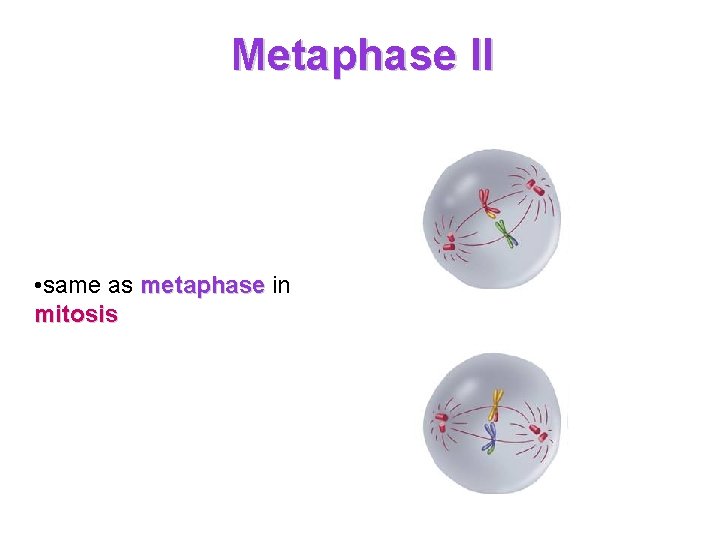
Metaphase II • same as metaphase in mitosis
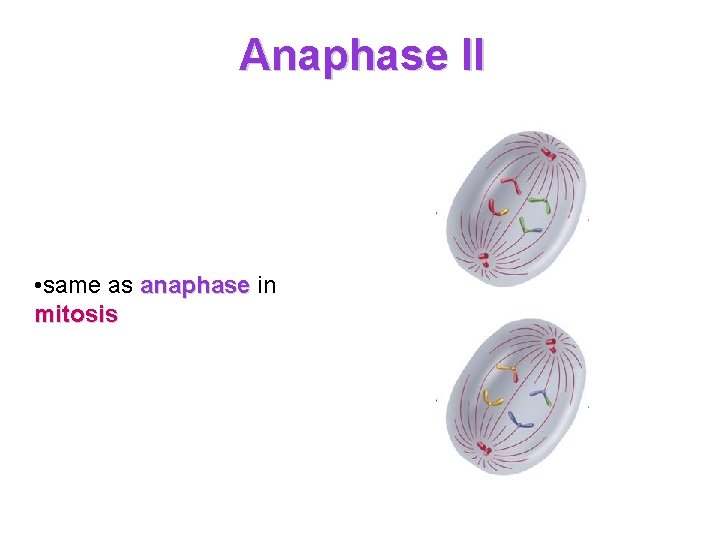
Anaphase II • same as anaphase in mitosis
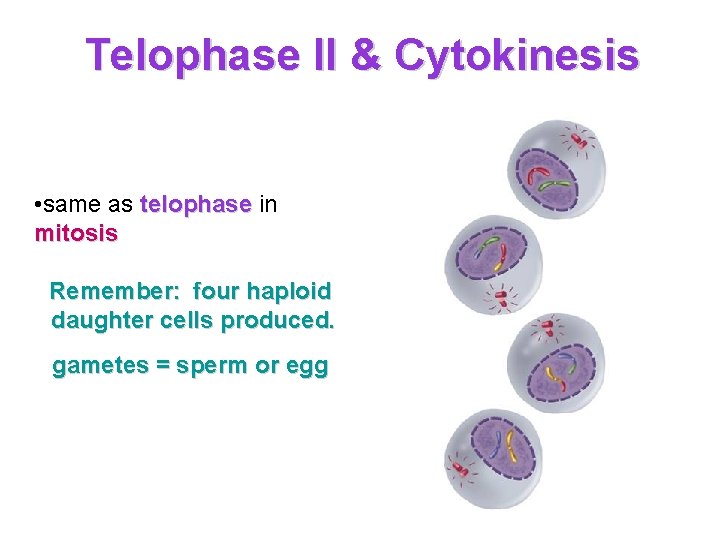
Telophase II & Cytokinesis • same as telophase in mitosis Remember: four haploid daughter cells produced. gametes = sperm or egg
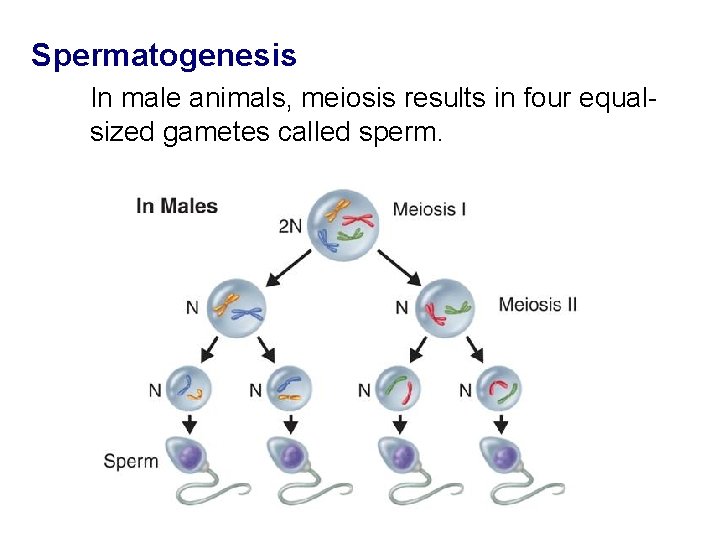
Spermatogenesis In male animals, meiosis results in four equalsized gametes called sperm. Copyright Pearson Prentice Hall
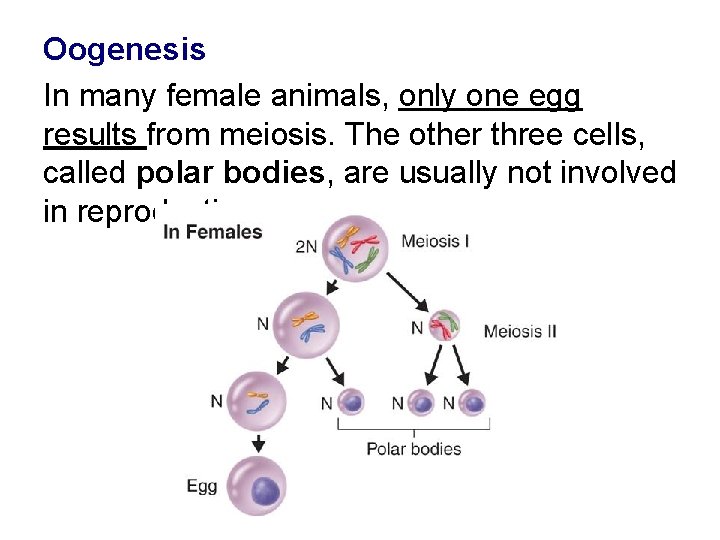
Oogenesis In many female animals, only one egg results from meiosis. The other three cells, called polar bodies, are usually not involved in reproduction. Copyright Pearson Prentice Hall
Karyotypes • photograph of one’s chromosomes, grouped in pairs of homologous chromosomes by size • Humans have 1 pair of sex chromosomes (XX or XY) and 22 pairs of autosomes (chromosomes that are not sex chromosomes).
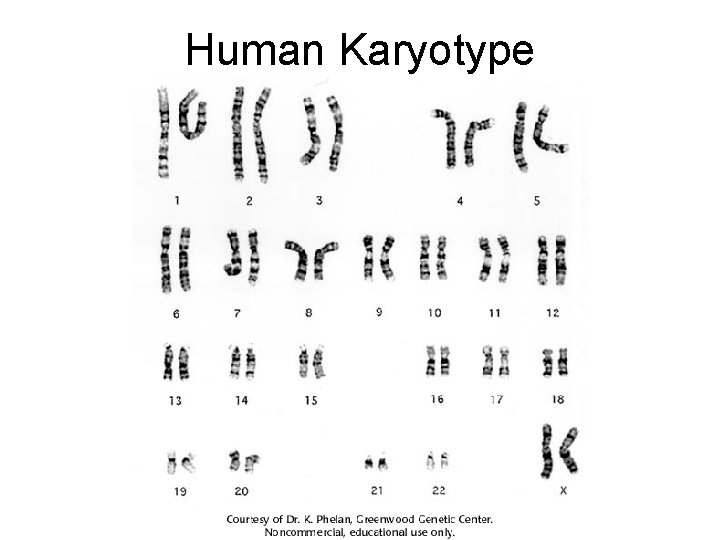
Human Karyotype
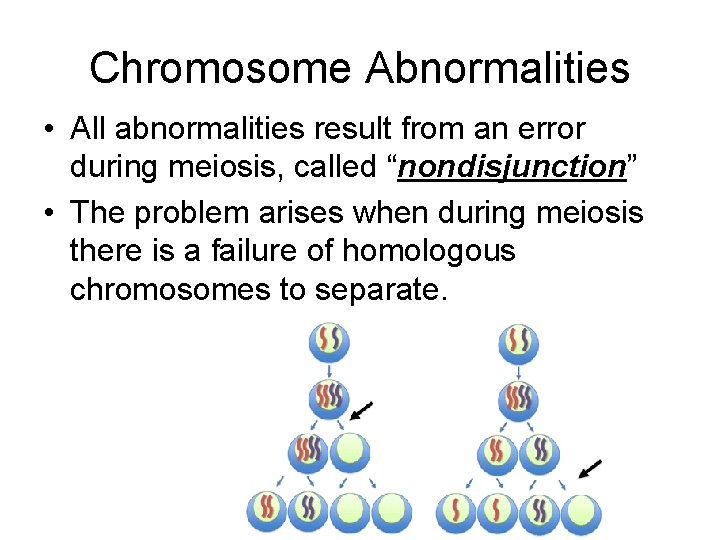
Chromosome Abnormalities • All abnormalities result from an error during meiosis, called “nondisjunction” • The problem arises when during meiosis there is a failure of homologous chromosomes to separate.
Common Non-disjunction Disorders • • Down’s Syndrome – Trisomy 21 Turner’s Syndrome – Monosomy 23 (X) Kleinfelter’s Syndrome – Trisomy 23 (XXY) Edward’s Syndrome – Trisomy 18
Non-disjunction is one of the Two major occurrences of Meiosis (The other is Crossing Over) • Non-disjunction is the failure of homologous chromosomes, or sister chromatids, to separate during meiosis. • Non-disjunction results with the production of zygotes with abnormal chromosome numbers…… remember…. An abnormal chromosome number (abnormal amount of DNA) is damaging to the offspring.
Non-disjunctions usually occur in one of two fashions. • The first is called Monosomy, the second is called Trisomy. If an organism has Trisomy 18 it has three chromosomes in the 18 th set, Trisomy 21…. Three chromosomes in the 21 st set. If an organism has Monosomy 23 it has only one chromosome in the 23 rd set.
Amniocentesis • An Amniocentesis is a prrocedure a pregnant woman can have in order to detect some genetics disorders…. . such as non-disjunction.
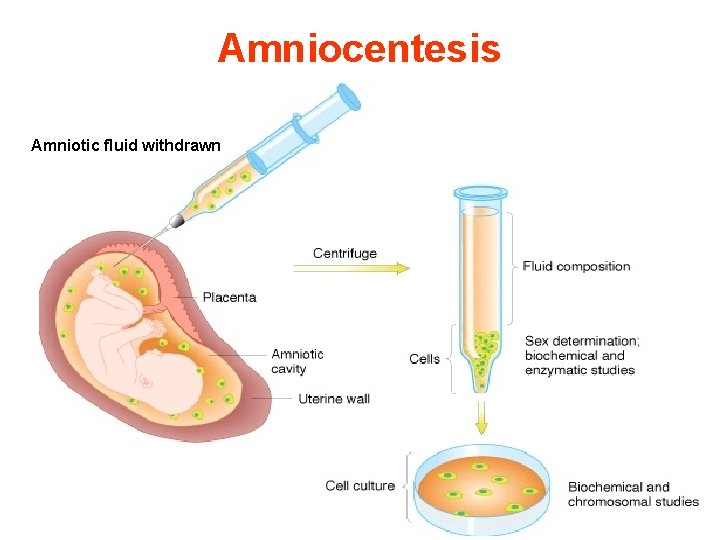
Amniocentesis Amniotic fluid withdrawn
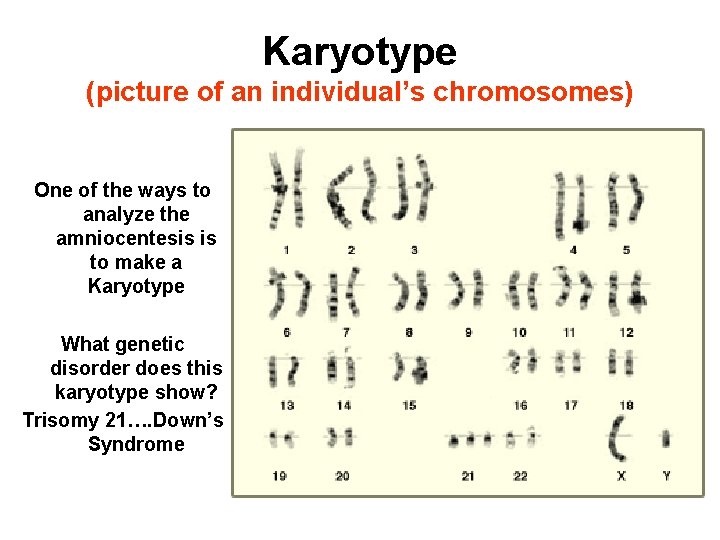
Karyotype (picture of an individual’s chromosomes) One of the ways to analyze the amniocentesis is to make a Karyotype What genetic disorder does this karyotype show? Trisomy 21…. Down’s Syndrome
- Slides: 31