
GESTATIONAL DIABETES MELLITUS Definition GDM is a carbohydrate
GESTATIONAL DIABETES MELLITUS

Definition �GDM is a carbohydrate intolerance of variable severity that develops or first recognised during pregnancy �Develop in the late second trimester or in the third trimester
Risk Group �Positive family history �Previous birth of an over weight baby 4 kg or more �Previous still birth with pancreatic islet hyperplasia revealed on autopsy �Unexplained perinatal loss �Presence of polyhydramnios �Recurrent vaginal candidiasis �Persistent glycosuria �Age over 30 �Obesity
Screening GCT �Between 24 and 28 week �Fasting is not necessary �No pretest dietary instruction �Women ingest 50 gm of oral glucose solution � 1 hour later blood sample is taken �Plasma concentration 140 mg% is a cut off for 100 gm GTT

GTT � Golden standard for diagnosing GDM � Fast from midnight on the day of the test � Fasting plasma glucose level is determined � The women should ingest 100 gm of oral glucose solution � Plasma glucose level is determined 1 hr, 2 hr and 3 hr Criteria for glucose tolerance test � The maximum blood glucose values during pregnancy: � - fasting 90 mg/ dl, � - one hour 165 mg/dl, � - 2 hours 145 mg/dl, � - 3 hours 125 mg/dl. � If any 2 or more of these values are elevated, the patient is considered to have an impaired glucose tolerance test.
Hazzards �Perinatal loss �Macrosomia �Tendency to develop overt diabetes �Polyhydramnios �Birth trauma � Recurrence of GDM in subsequent pregnancies
Management �Antenatal supervision �Restriction of diet �Human insulin if FBS level exceeds 90 mg/dl and PPBS greater than 120 mg/dl �Abnormal weight gain is to be checked � Diet 2000 -2500 Kcal for normal weight women and restriction of 1200 -1800 Kcal for over weight women � Exercise �Early hospitalisation
DEFINITION – OVERT DIABETES �A patient with abnormal GTT with or with out symptoms and a raised fasting blood glucose level is called overt diabetic. �Pre – existing or detected for the first time during pregnancy.
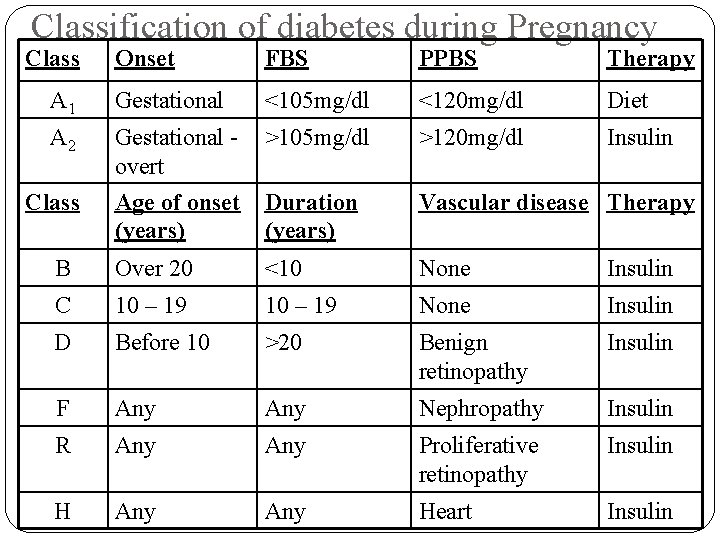
Classification of diabetes during Pregnancy Class Onset FBS PPBS Therapy A 1 Gestational <105 mg/dl <120 mg/dl Diet A 2 Gestational overt >105 mg/dl >120 mg/dl Insulin Class Age of onset (years) Duration (years) Vascular disease Therapy B Over 20 <10 None Insulin C 10 – 19 None Insulin D Before 10 >20 Benign retinopathy Insulin F Any Nephropathy Insulin R Any Proliferative retinopathy Insulin H Any Heart Insulin

White’s classification of GDM CLASS ONSET AGE DURATION A Gestational B Overt DM age 20 10 years C Overt DM age 20 10 – 19 years D Overt DM, benign retinopathy age 10 20 years E Calcified pelvic vessels F Diabetic nephropathy with proteinuria R Malignant diabetic
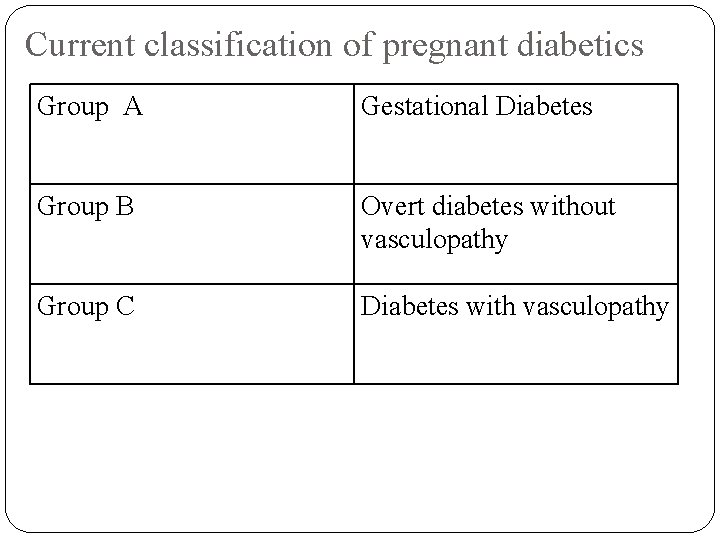
Current classification of pregnant diabetics Group A Gestational Diabetes Group B Overt diabetes without vasculopathy Group C Diabetes with vasculopathy
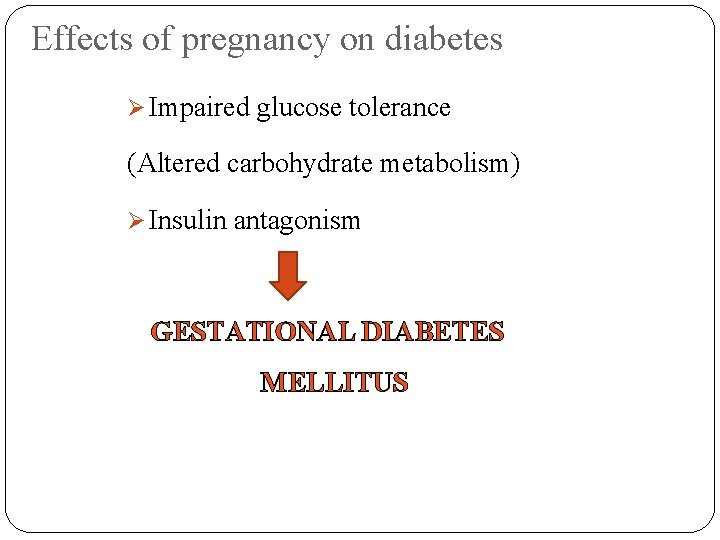
Effects of pregnancy on diabetes Ø Impaired glucose tolerance (Altered carbohydrate metabolism) Ø Insulin antagonism GESTATIONAL DIABETES MELLITUS
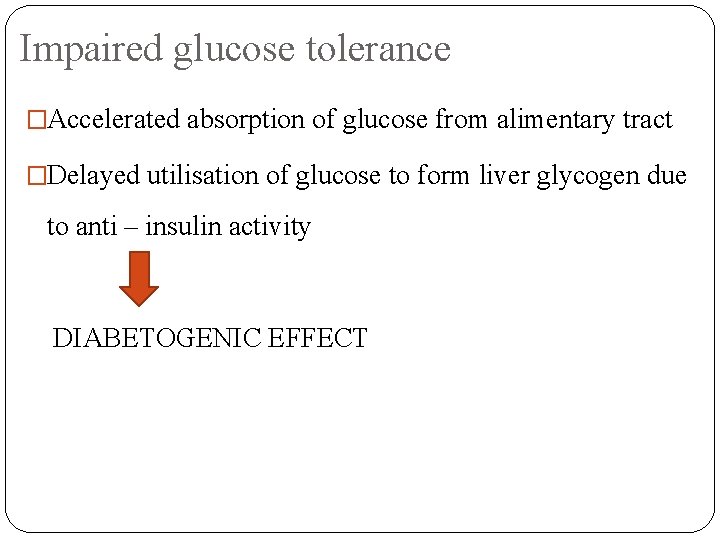
Impaired glucose tolerance �Accelerated absorption of glucose from alimentary tract �Delayed utilisation of glucose to form liver glycogen due to anti – insulin activity DIABETOGENIC EFFECT
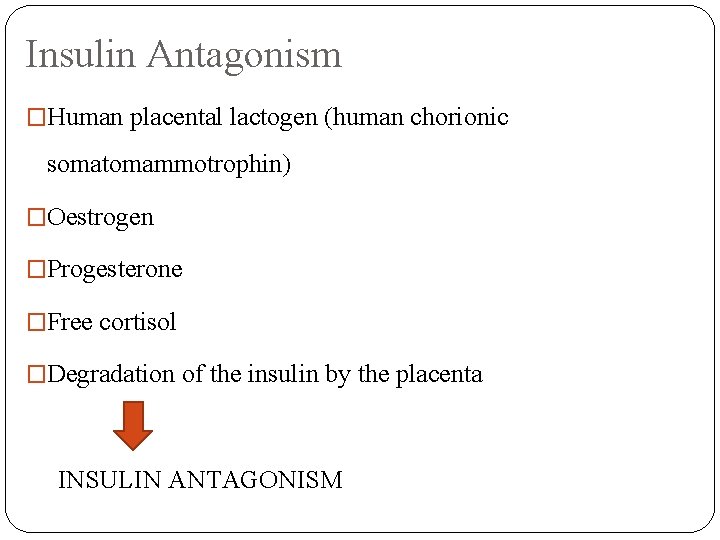
Insulin Antagonism �Human placental lactogen (human chorionic somatomammotrophin) �Oestrogen �Progesterone �Free cortisol �Degradation of the insulin by the placenta INSULIN ANTAGONISM
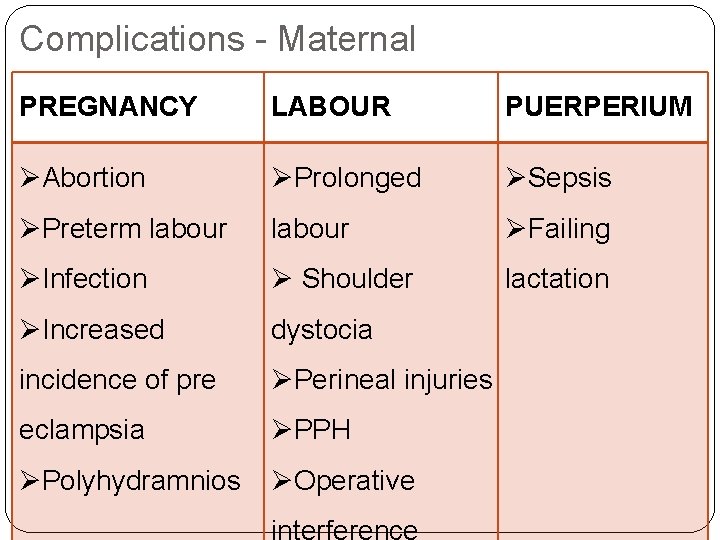
Complications - Maternal PREGNANCY LABOUR PUERPERIUM ØAbortion ØProlonged ØSepsis ØPreterm labour ØFailing ØInfection Ø Shoulder lactation ØIncreased dystocia incidence of pre ØPerineal injuries eclampsia ØPPH ØPolyhydramnios ØOperative
Complication - Fetal Ø Fetal macrosomia �Maternal hyperglycemia �Elevation of maternal free fatty acid Ø Congenital malformation �Cardiac abnormalities �Neural tube defect �Birth injuries �Unexplained fetal death �Neonatal complications
Management Goals: 1) Preconceptual counselling 2) To achieve a metabolic control similar to that in normal pregnancy 3) Careful fetal surveillance to avoid occurrence of sudden IUD and prematurity 4) To eliminate any maternal complications 5) Patient education 6) Optimal time and mode of delivery 7) Arragement for care of neonate
Diet Ø Provision of adequate calories and nutrients (30 -35 Kcal/Kg body weight + 200 Kcal for fetus) Ø Non caloric sweeteners may be used in moderation Ø Four meals and several snacks is used for most patients Ø Dietary composition should be : � 50 to 60 percent carbohydrate � 20 percent protein � 25 to 30 percent fat Ø Fiber containing diet
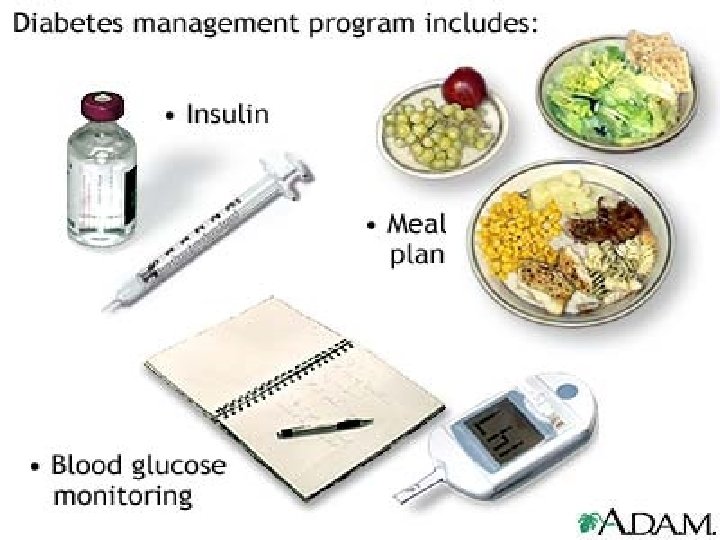
Insulin Therapy � When diabetes is first detected during pregnancy and cannot be controlled by diet alone � A PPBS level of more than 140 mg% even on diet control is an indication of insulin therapy � Glycemic goal should be around 90 mg/d. L before meal and 120 mg/d. L 2 hours after meal � As pregnancy advances a double mixed regime may be employed
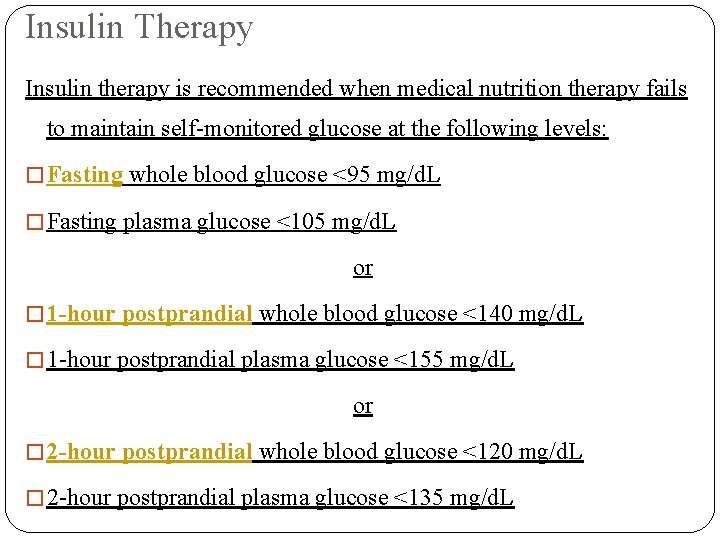
Insulin Therapy Insulin therapy is recommended when medical nutrition therapy fails to maintain self-monitored glucose at the following levels: � Fasting whole blood glucose <95 mg/d. L � Fasting plasma glucose <105 mg/d. L or � 1 -hour postprandial whole blood glucose <140 mg/d. L � 1 -hour postprandial plasma glucose <155 mg/d. L or � 2 -hour postprandial whole blood glucose <120 mg/d. L � 2 -hour postprandial plasma glucose <135 mg/d. L
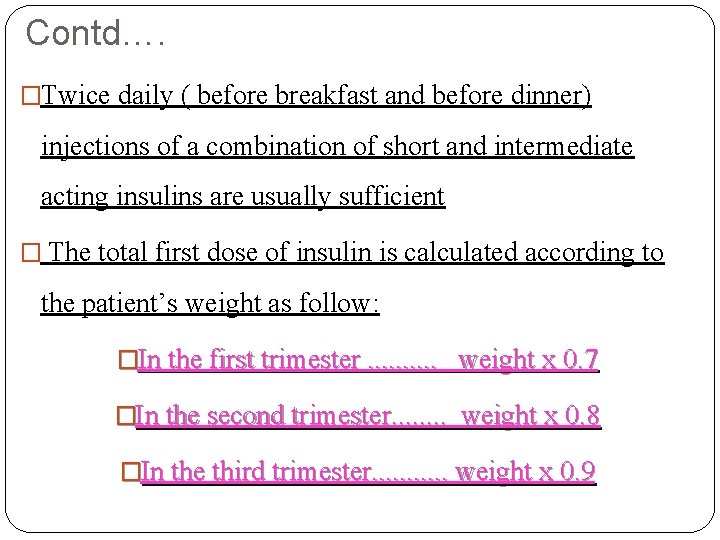
Contd…. �Twice daily ( before breakfast and before dinner) injections of a combination of short and intermediate acting insulins are usually sufficient � The total first dose of insulin is calculated according to the patient’s weight as follow: �In the first trimester. . weight x 0. 7 �In the second trimester. . . . weight x 0. 8 �In the third trimester. . . weight x 0. 9
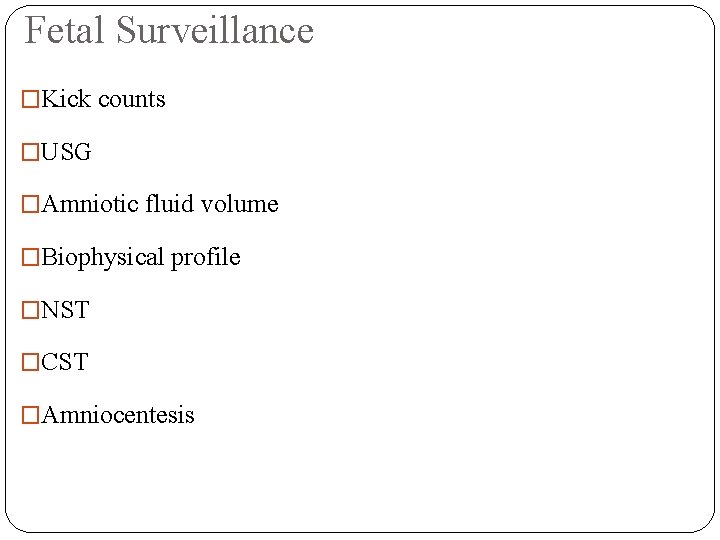
Fetal Surveillance �Kick counts �USG �Amniotic fluid volume �Biophysical profile �NST �CST �Amniocentesis
Maternal surveillance � Blood pressure �Urine protein
Admission to hospital Ø When antepartum testing suggests fetal compromise, delivery must be considered. Ø Delivery by cesarean section usually is favored when fetal distress has been suggested by antepartum heart rate monitoring. Ø If a patient reaches 38 weeks' gestation with a mature fetal lung profile and is at significant risk for intrauterine demise because of poor control or a history of a prior stillbirth, an elective delivery is planned.
Contd…. �During labor, continuous fetal heart rate monitoring is mandatory. �Labor is allowed to progress as long as normal rates of cervical dilatation and descent are documented. � Arrest of dilatation or descent despite adequate labor should alert the physician to the possibility of cephalopelvic disproportion.
Indications for induction of labour � GDM with control on insulin therapy and completed 38 wks � Women with vascular complications after 37 wks
Indications for induction of LSCS � Elderly primigravida � Multigravida with bad obstetric history � Diabetes with complications or difficult to control � Obstetrical complications
Insulin Management during Labor and Delivery � Usual dose of intermediate-acting insulin is given at bedtime. � Morning dose of insulin and breakfast is withheld. � Intravenous infusion of normal saline is begun. � Once active labor begins or glucose levels fall below 70 mg/dl, the infusion is changed from saline to 5% dextrose � Glucose levels are checked hourly using a portable meter allowing for adjustment in the infusion rate. � Regular (short-acting) insulin in administered by intravenous infusion if glucose levels exceed 140 mg/dl.
Neonatal Care q. Neonatologist should be present q. Neonatal intensive care unit for 48 hours q. Asphyxia q. Congenital malformations identification q. Blood glucose checked within 2 hours of birth q 1 mg Vitamin K IM q. Breast feeding within ½ hour to 1 hour
Neonatal Complications q. Hypoglycaemia q. Respiratory distress syndrome q. Hyperbilirubinaemia q. Polycythemia q. Hypocalcaemia q. Hypomagnesemia q. Cardiomyopathy
Puerperium q Antibiotics q Insulin dose revert to pregnant level q A fresh blood glucose level after 24 hours q Breast feeding q Additional 500 Kcal in daily diet for lactating women q Lactating women insulin dose is lower
- Slides: 32