
Gestalt Psychology 4006 Introduction Gestalt is a German
- Slides: 10
Gestalt Psychology 4006
Introduction • Gestalt is a German word, and there is no real translation for it. • It is sort of ‘the whole is more than the sum of its pats’ kinda • It also sort of means ‘shape’ • Oh and look, the Germans are back!
Origins • It is basically the first ’cognitive psychology’ we can talk about • Kant’s a priori perceptual and cognitive categories, plus the rationalism/empiricism balance • Christian von Ehrenfels used the term “Gestalt” when defining the whole as more than the sum of its parts. • “the radical view that the whole is psychologically, epistemologically, and ontologically prior to its parts. A whole is not only more than the sum of its parts, it is entirely different from a sum of its parts. ” • Carl Stumpf • Mentor to the gestalists
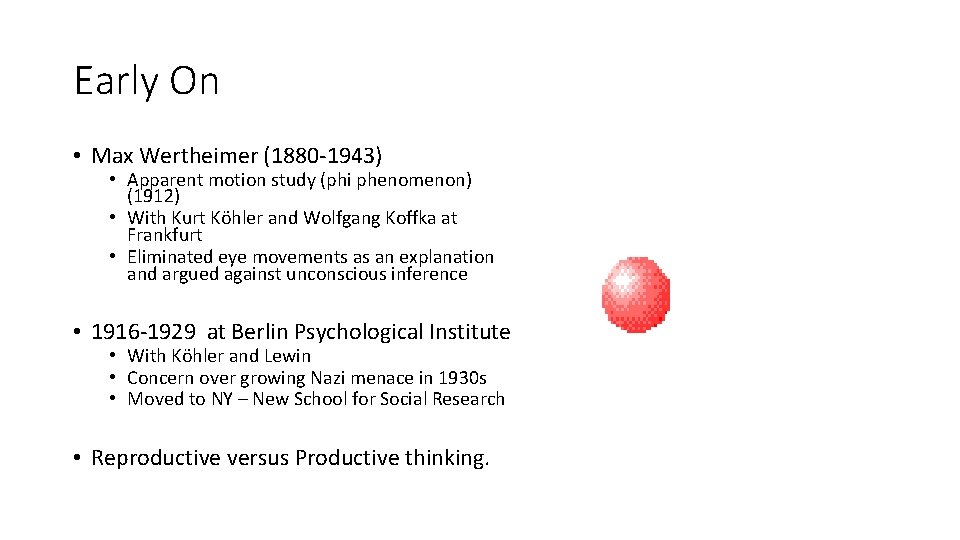
Early On • Max Wertheimer (1880 -1943) • Apparent motion study (phi phenomenon) (1912) • With Kurt Köhler and Wolfgang Koffka at Frankfurt • Eliminated eye movements as an explanation and argued against unconscious inference • 1916 -1929 at Berlin Psychological Institute • With Köhler and Lewin • Concern over growing Nazi menace in 1930 s • Moved to NY – New School for Social Research • Reproductive versus Productive thinking.
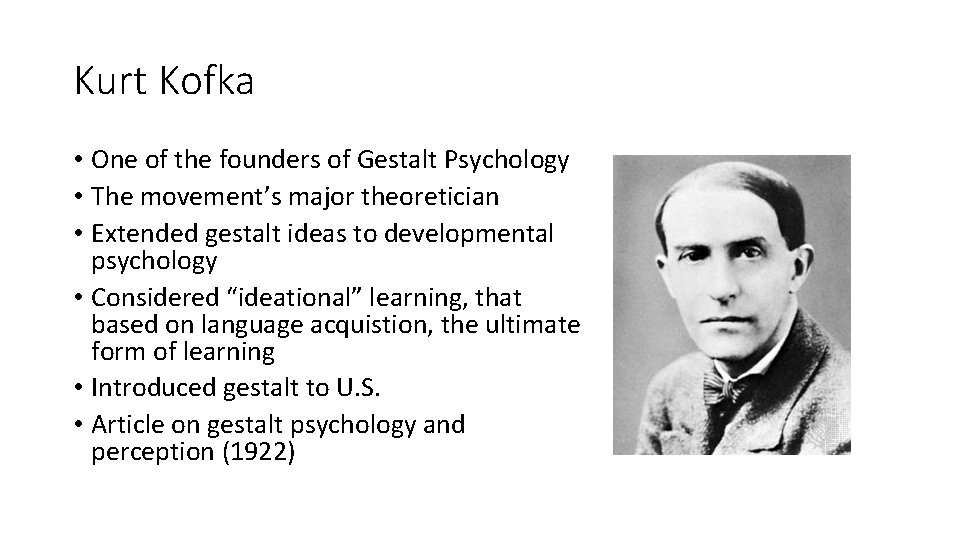
Kurt Kofka • One of the founders of Gestalt Psychology • The movement’s major theoretician • Extended gestalt ideas to developmental psychology • Considered “ideational” learning, that based on language acquistion, the ultimate form of learning • Introduced gestalt to U. S. • Article on gestalt psychology and perception (1922)
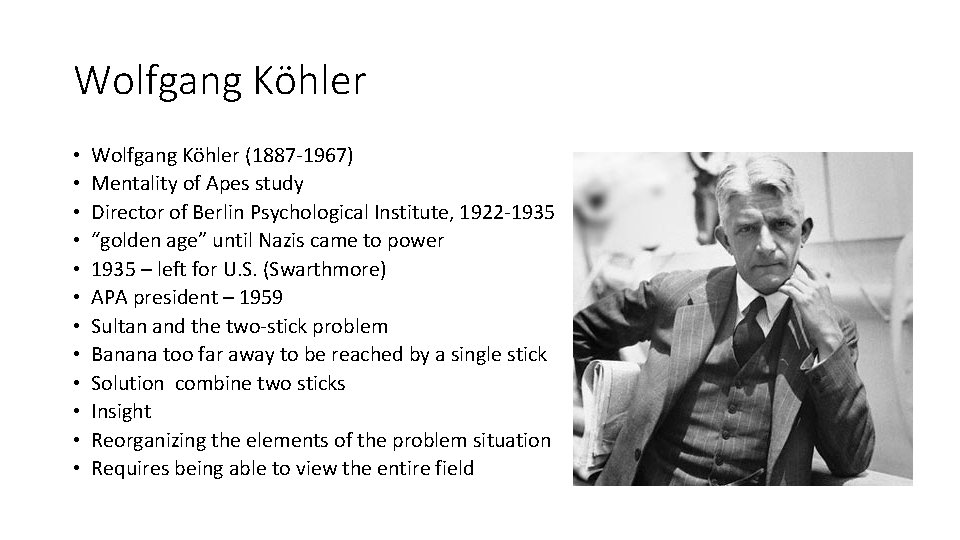
Wolfgang Köhler • • • Wolfgang Köhler (1887 -1967) Mentality of Apes study Director of Berlin Psychological Institute, 1922 -1935 “golden age” until Nazis came to power 1935 – left for U. S. (Swarthmore) APA president – 1959 Sultan and the two-stick problem Banana too far away to be reached by a single stick Solution combine two sticks Insight Reorganizing the elements of the problem situation Requires being able to view the entire field
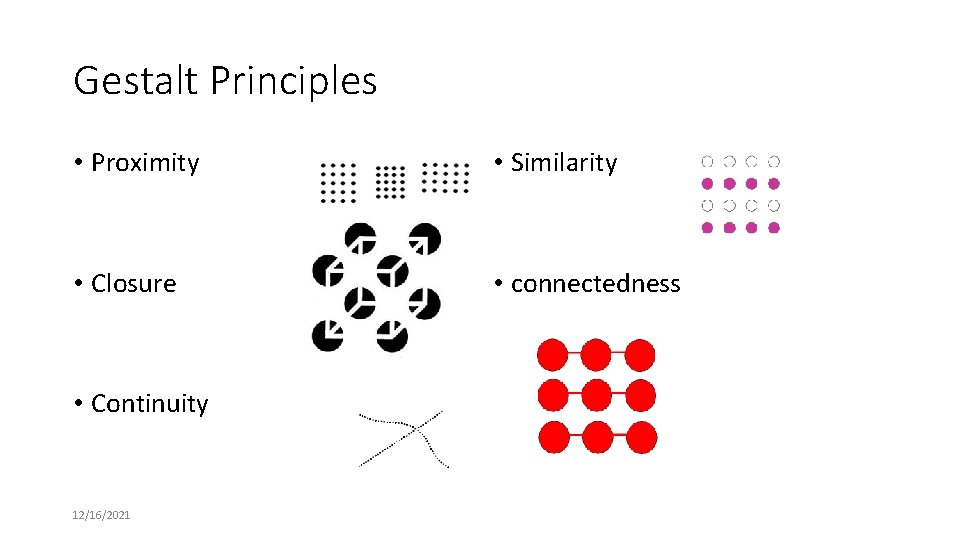
Gestalt Principles • Proximity • Similarity • Closure • connectedness • Continuity 12/16/2021
The Gestaltists and Perception • Behavioral vs. geographical environment • Lake of Constance story • Behavioral : seemed like a snow-covered plain • Geographical: was actually a snow-covered frozen lake • Psychophysical isomorphism • Parallel organization for mind & body • Map metaphor
Other Gestaltists • Solomon Asch • Conformity studies • Stanley Milgram • Obedience to authority • Musafar Sheriff • Autokinetic effect • Robber’s Cave study
Conclusions • These people resisted the behaviourist tide • They kept thinking about thinking alive • They helped usher in the cognitive revolution