
Gerunds A gerund is a noun formed from



- Slides: 14
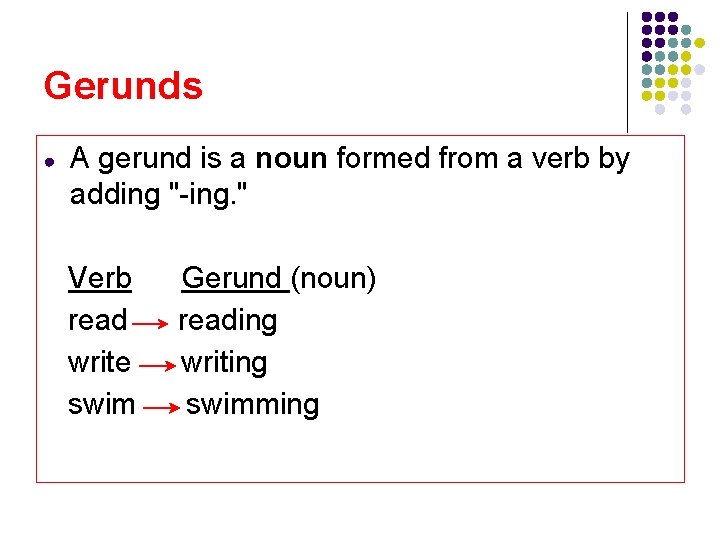
Gerunds ● A gerund is a noun formed from a verb by adding "-ing. " Verb read write swim Gerund (noun) reading writing swimming
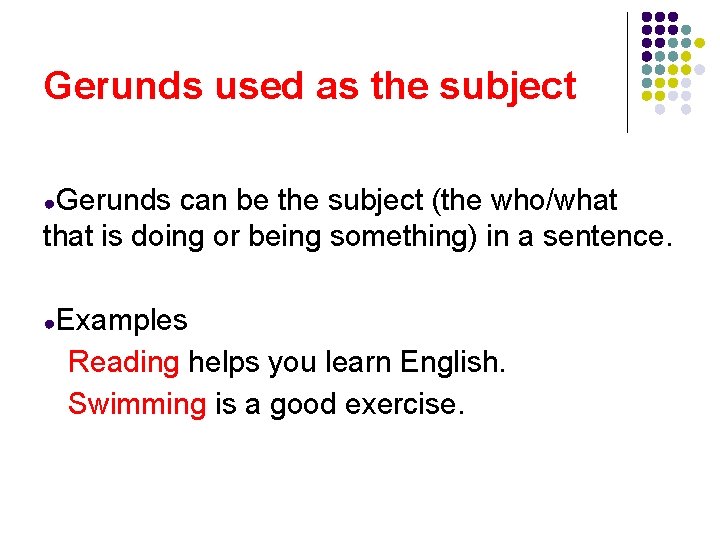
Gerunds used as the subject ●Gerunds can be the subject (the who/what that is doing or being something) in a sentence. ●Examples Reading helps you learn English. Swimming is a good exercise.
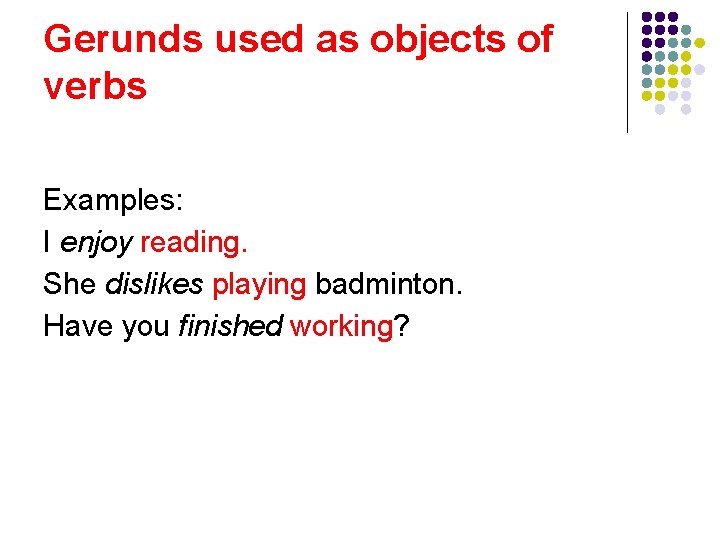
Gerunds used as objects of verbs Examples: I enjoy reading. She dislikes playing badminton. Have you finished working?
Gerunds are used after prepositions Examples: Before leaving the house, she checked all windows. She was tired from running away.
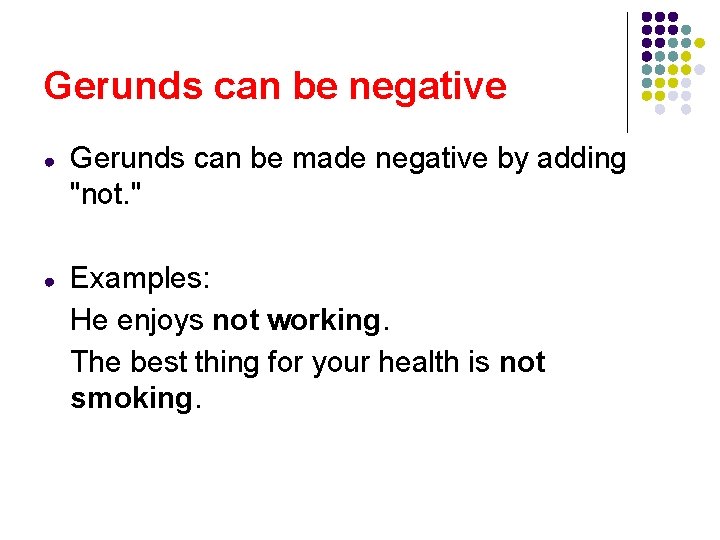
Gerunds can be negative ● Gerunds can be made negative by adding "not. " ● Examples: He enjoys not working. The best thing for your health is not smoking.
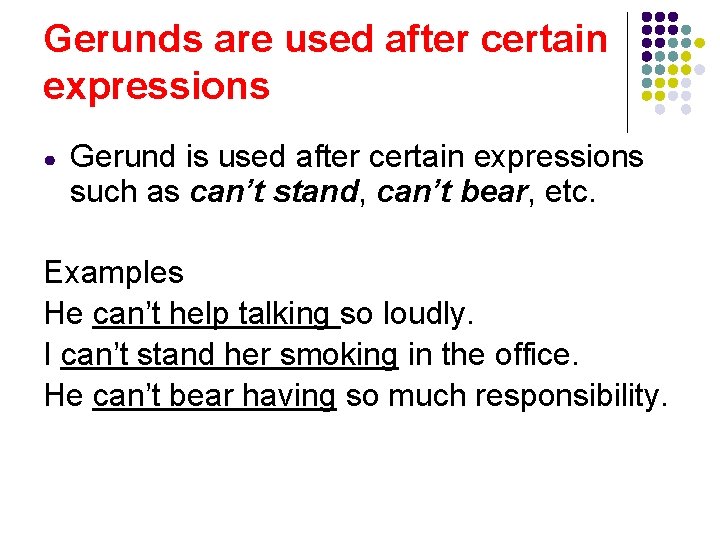
Gerunds are used after certain expressions ● Gerund is used after certain expressions such as can’t stand, can’t bear, etc. Examples He can’t help talking so loudly. I can’t stand her smoking in the office. He can’t bear having so much responsibility.
Infinitives ● ● Infinitives are the "to" form of the verb. learn give to learn to give Examples: He wants to go now. They want to learn. ●
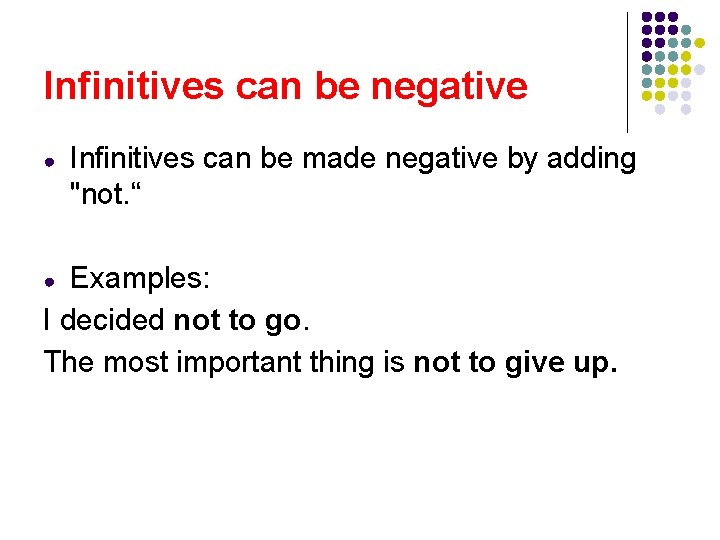
Infinitives can be negative ● Infinitives can be made negative by adding "not. “ Examples: I decided not to go. The most important thing is not to give up. ●
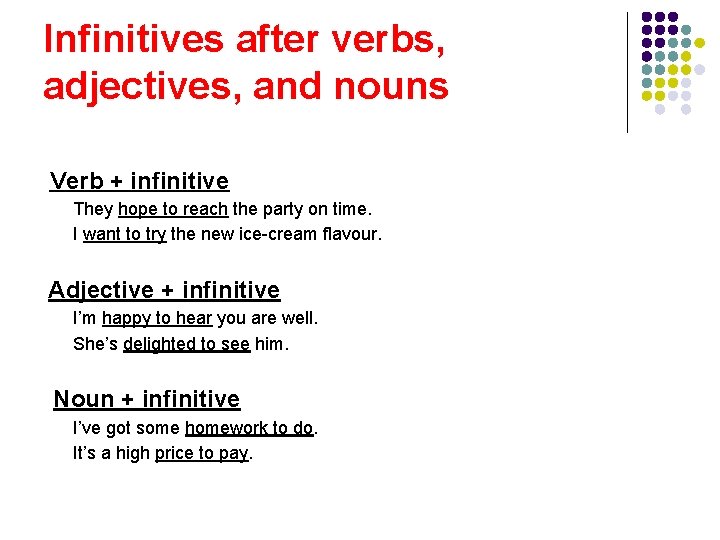
Infinitives after verbs, adjectives, and nouns Verb + infinitive They hope to reach the party on time. I want to try the new ice-cream flavour. Adjective + infinitive I’m happy to hear you are well. She’s delighted to see him. Noun + infinitive I’ve got some homework to do. It’s a high price to pay.
Infinitives used to express a purpose Examples: I got up early to do homework. I have some letters to write.
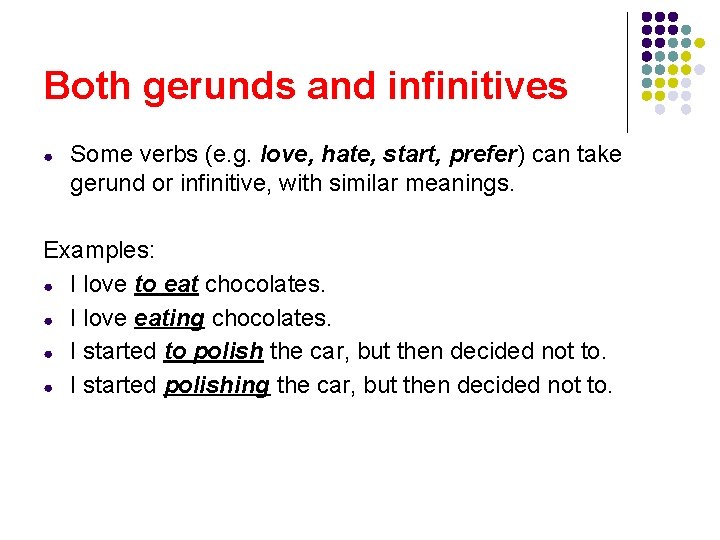
Both gerunds and infinitives ● Some verbs (e. g. love, hate, start, prefer) can take gerund or infinitive, with similar meanings. Examples: ● I love to eat chocolates. ● I love eating chocolates. ● I started to polish the car, but then decided not to. ● I started polishing the car, but then decided not to.
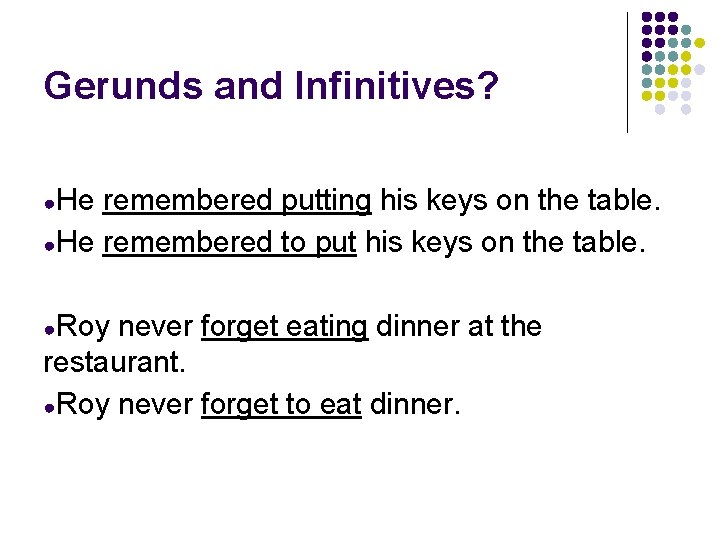
Gerunds and Infinitives? ●He remembered putting his keys on the table. ●He remembered to put his keys on the table. ●Roy never forget eating dinner at the restaurant. ●Roy never forget to eat dinner.
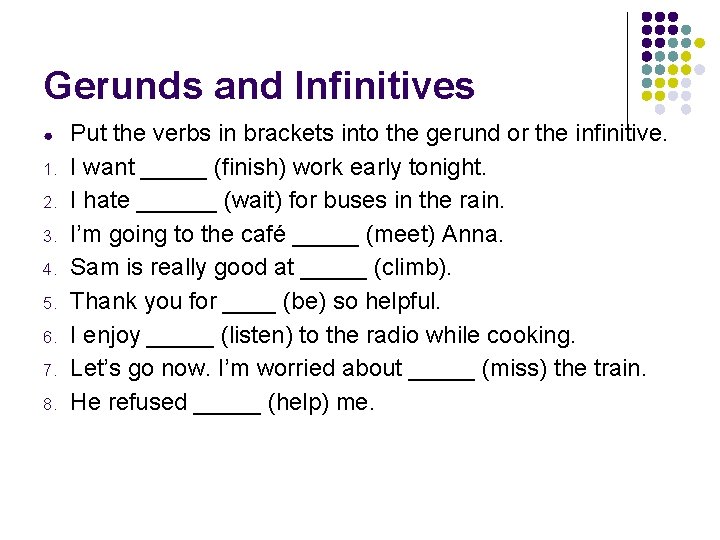
Gerunds and Infinitives ● 1. 2. 3. 4. 5. 6. 7. 8. Put the verbs in brackets into the gerund or the infinitive. I want _____ (finish) work early tonight. I hate ______ (wait) for buses in the rain. I’m going to the café _____ (meet) Anna. Sam is really good at _____ (climb). Thank you for ____ (be) so helpful. I enjoy _____ (listen) to the radio while cooking. Let’s go now. I’m worried about _____ (miss) the train. He refused _____ (help) me.
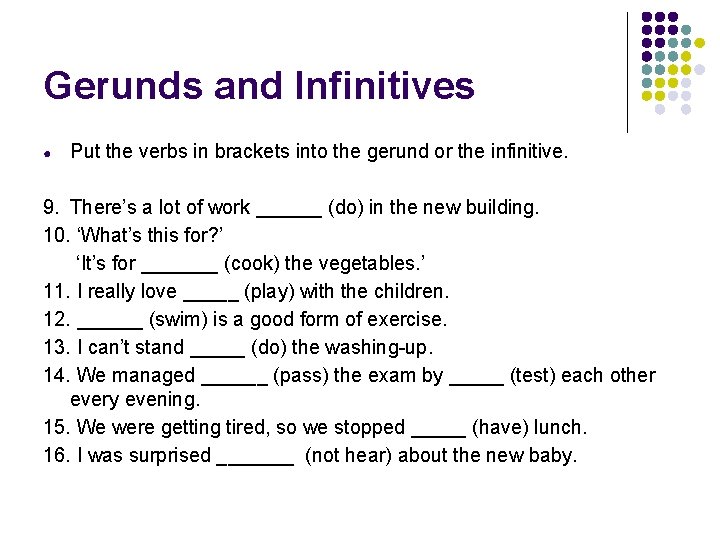
Gerunds and Infinitives ● Put the verbs in brackets into the gerund or the infinitive. 9. There’s a lot of work ______ (do) in the new building. 10. ‘What’s this for? ’ ‘It’s for _______ (cook) the vegetables. ’ 11. I really love _____ (play) with the children. 12. ______ (swim) is a good form of exercise. 13. I can’t stand _____ (do) the washing-up. 14. We managed ______ (pass) the exam by _____ (test) each other every evening. 15. We were getting tired, so we stopped _____ (have) lunch. 16. I was surprised _______ (not hear) about the new baby.