
Germanys Physical Geography South Alps Mountains Center Plateaus
- Slides: 17
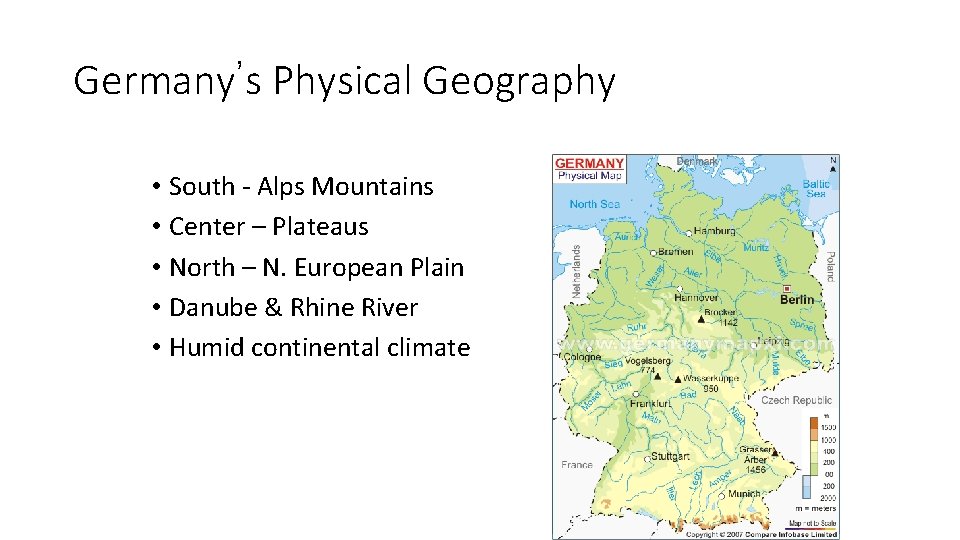
Germany’s Physical Geography • South - Alps Mountains • Center – Plateaus • North – N. European Plain • Danube & Rhine River • Humid continental climate
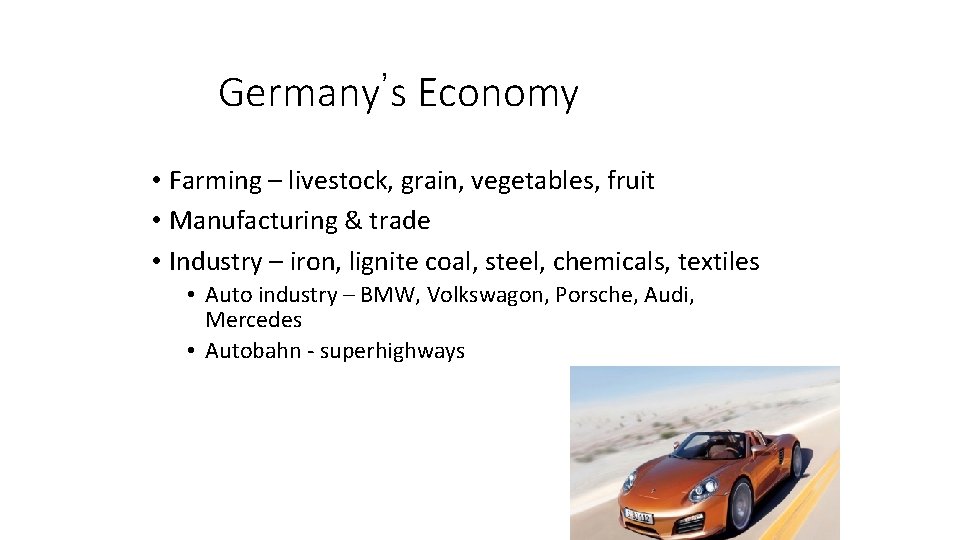
Germany’s Economy • Farming – livestock, grain, vegetables, fruit • Manufacturing & trade • Industry – iron, lignite coal, steel, chemicals, textiles • Auto industry – BMW, Volkswagon, Porsche, Audi, Mercedes • Autobahn - superhighways
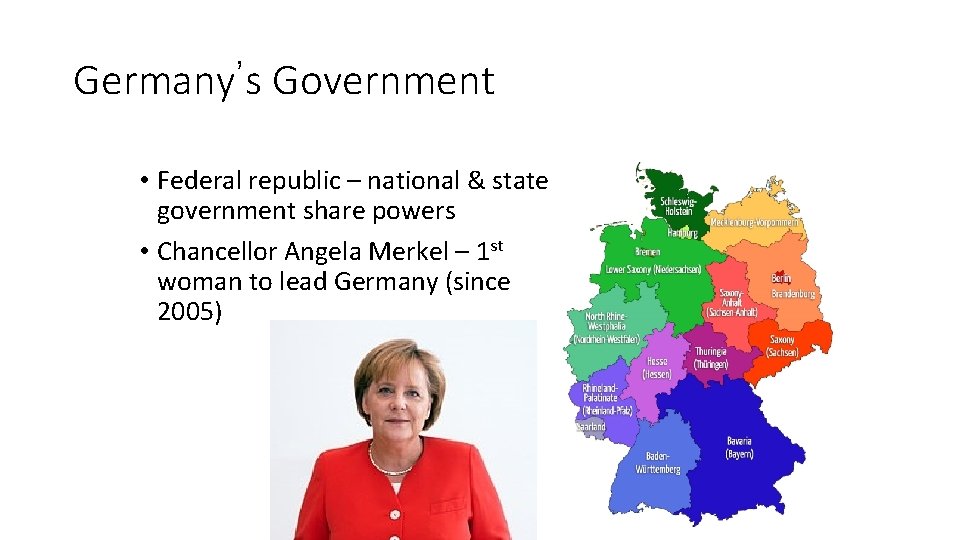
Germany’s Government • Federal republic – national & state government share powers • Chancellor Angela Merkel – 1 st woman to lead Germany (since 2005)
Germany’s Culture • Language: German • Population: 80 million • Food: Sausage, rye bread, beer • Religion: half Catholic, half Protestant • Famous musicians: • Johann Sebastian Bach • Ludwig van Beethoven
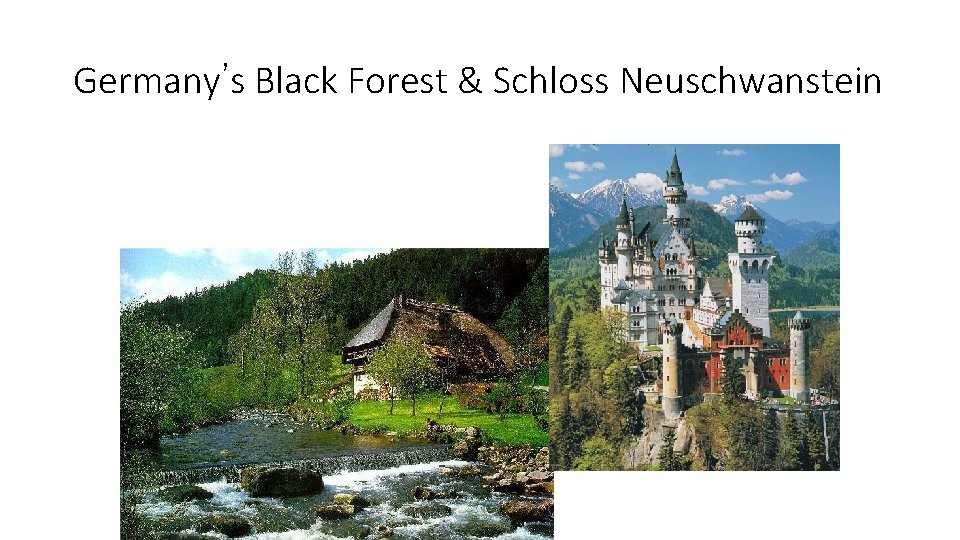
Germany’s Black Forest & Schloss Neuschwanstein
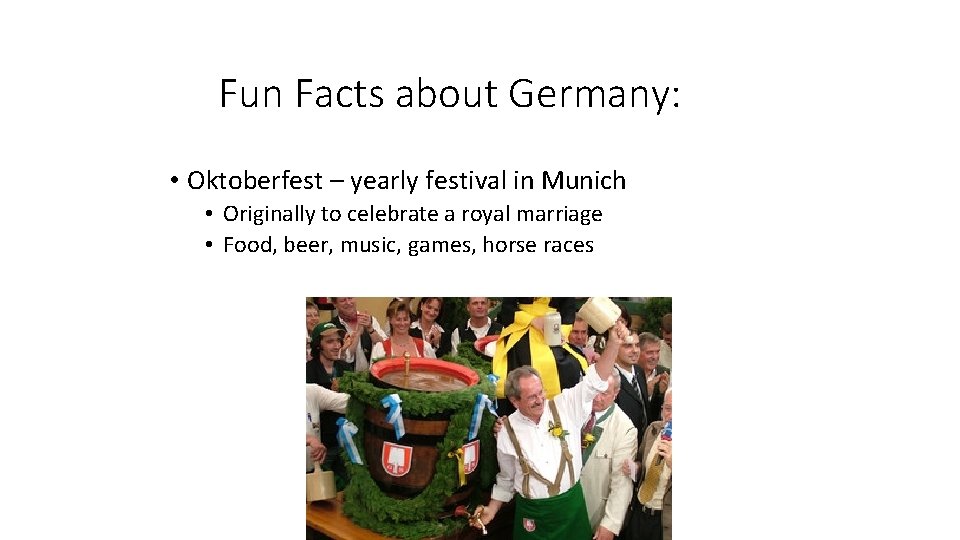
Fun Facts about Germany: • Oktoberfest – yearly festival in Munich • Originally to celebrate a royal marriage • Food, beer, music, games, horse races
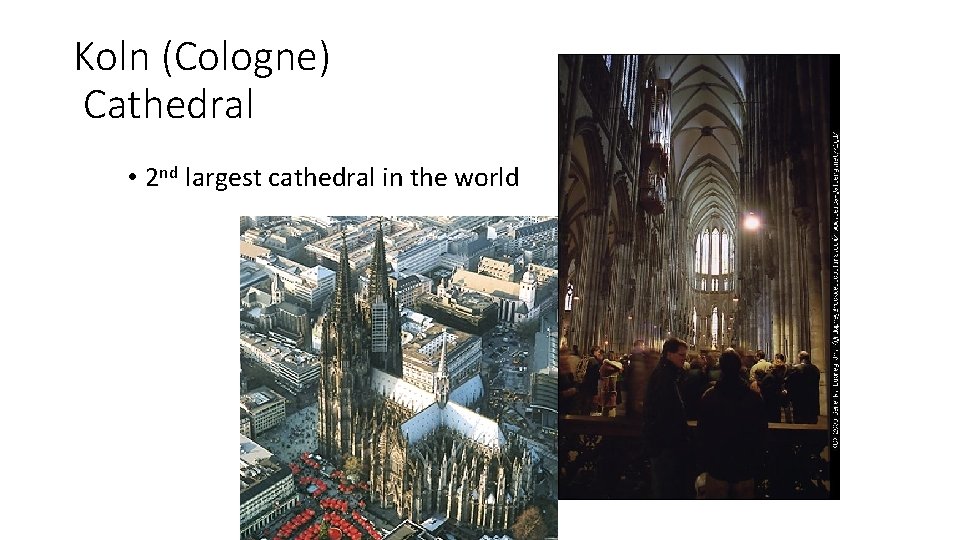
Koln (Cologne) Cathedral • 2 nd largest cathedral in the world
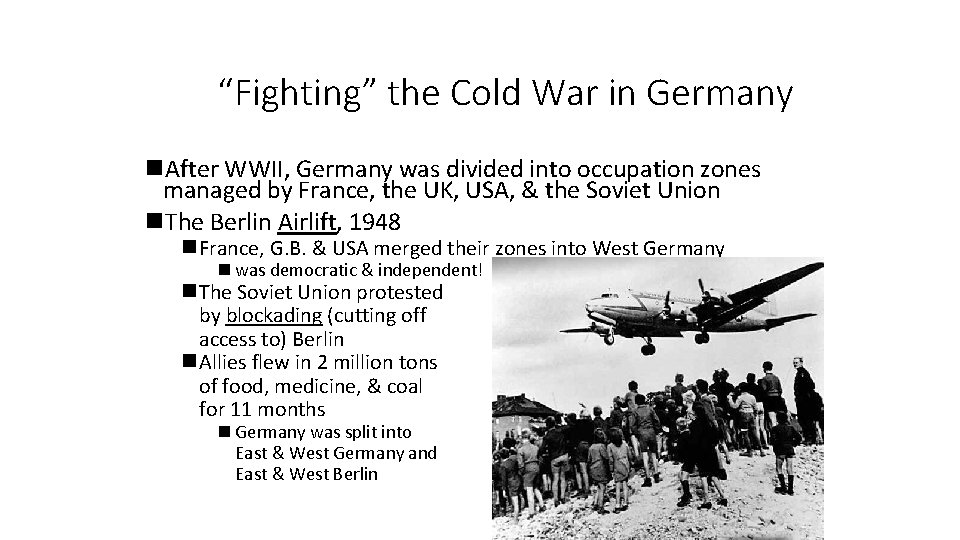
“Fighting” the Cold War in Germany n. After WWII, Germany was divided into occupation zones managed by France, the UK, USA, & the Soviet Union n. The Berlin Airlift, 1948 n France, G. B. & USA merged their zones into West Germany n was democratic & independent! n The Soviet Union protested by blockading (cutting off access to) Berlin n Allies flew in 2 million tons of food, medicine, & coal for 11 months n Germany was split into East & West Germany and East & West Berlin
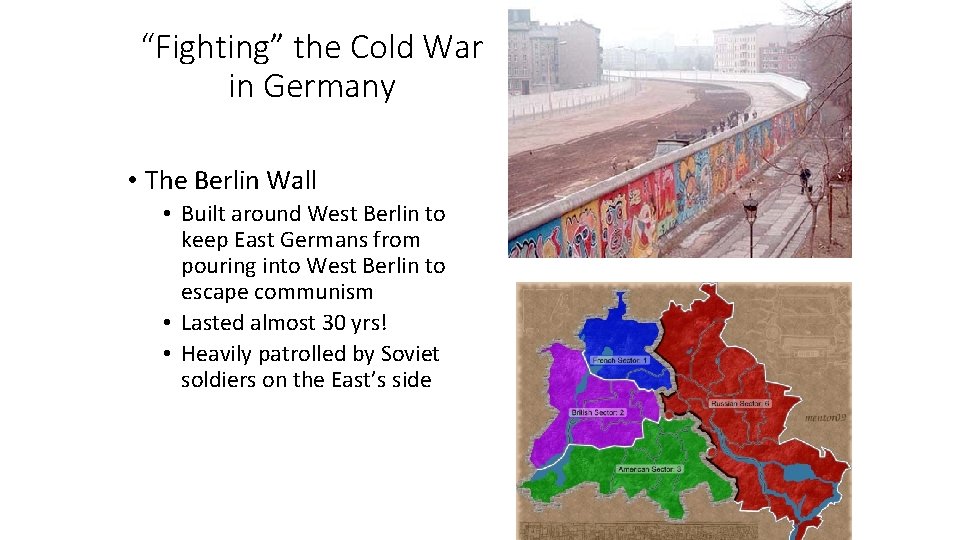
“Fighting” the Cold War in Germany • The Berlin Wall • Built around West Berlin to keep East Germans from pouring into West Berlin to escape communism • Lasted almost 30 yrs! • Heavily patrolled by Soviet soldiers on the East’s side
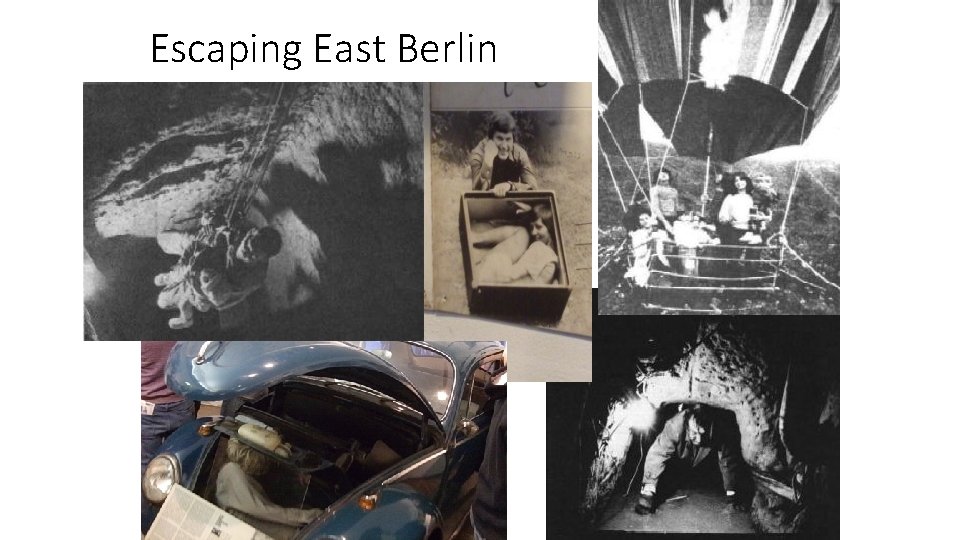
Escaping East Berlin
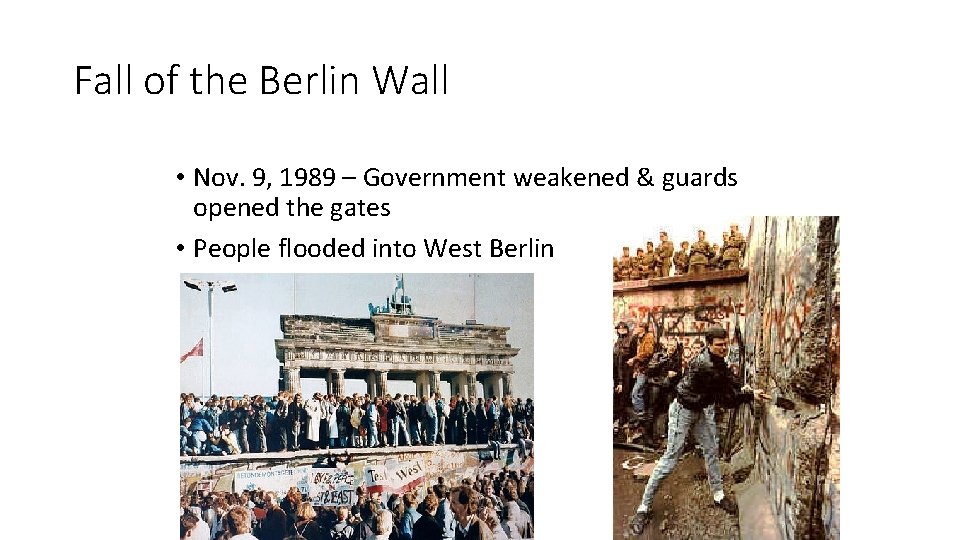
Fall of the Berlin Wall • Nov. 9, 1989 – Government weakened & guards opened the gates • People flooded into West Berlin
What effect did the division of Germany have on the country?
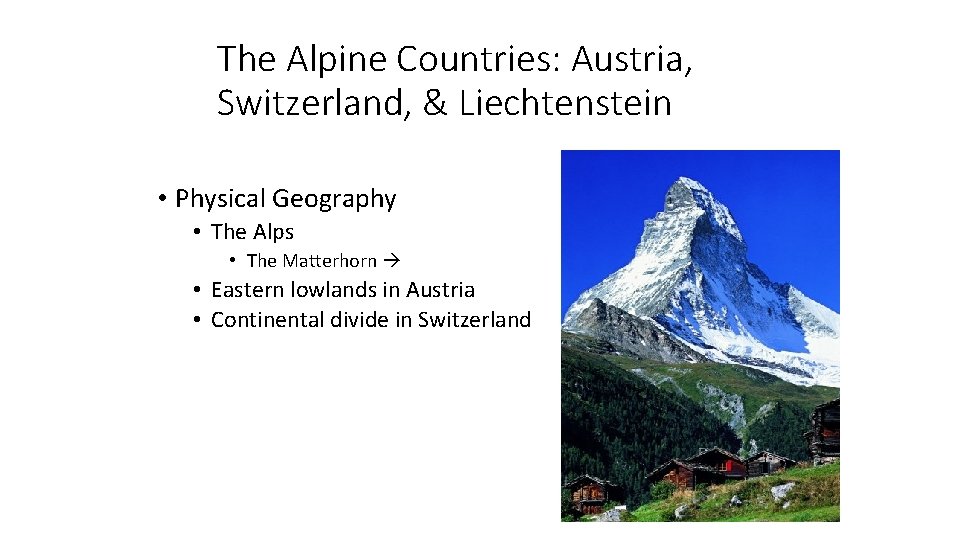
The Alpine Countries: Austria, Switzerland, & Liechtenstein • Physical Geography • The Alps • The Matterhorn • Eastern lowlands in Austria • Continental divide in Switzerland
Switzerland • A stable democratic government for 700 years • made up of 26 cantons (states) • Has been neutral during all wars since 1515 • Geneva & Zurich - important international cities • Capital: Bern • Population: 8 million • 4 national languages! • German, French, Italian, & Romansch
Switzerland’s Economy • Hydroelectric power • Very few natural resources, so imports raw materials to make high-quality products • cheese, chocolate, clocks, jewelry, microscopes • Banking & finance • Tourism – skiing & hiking in the Alps
Austria’s Economy • Hydroelectric power • Lumber • Tourism in the Alps • Agriculture • Some natural resources • Strip mining – strip away the earth’s surface to get at resources
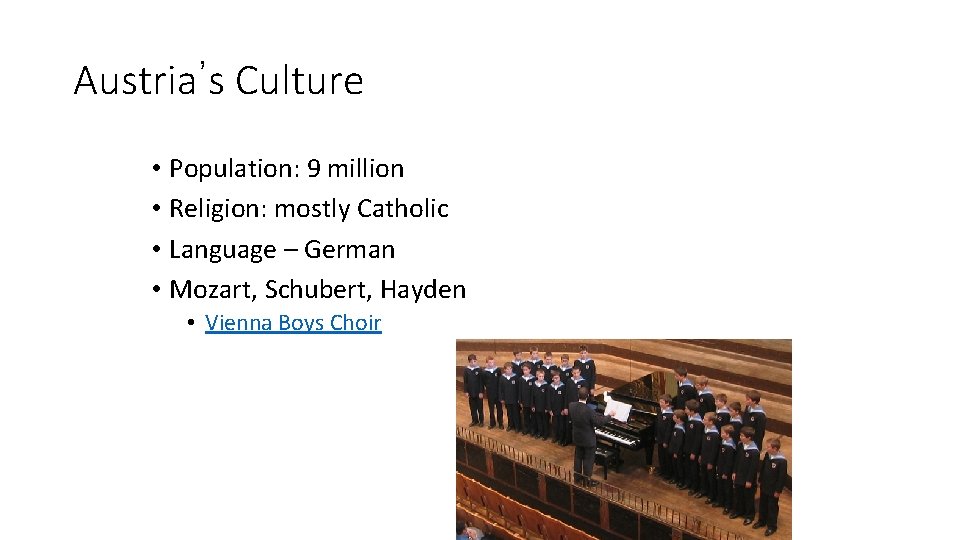
Austria’s Culture • Population: 9 million • Religion: mostly Catholic • Language – German • Mozart, Schubert, Hayden • Vienna Boys Choir