
Germany used blitzkrieg tactics to dominate Eastern and
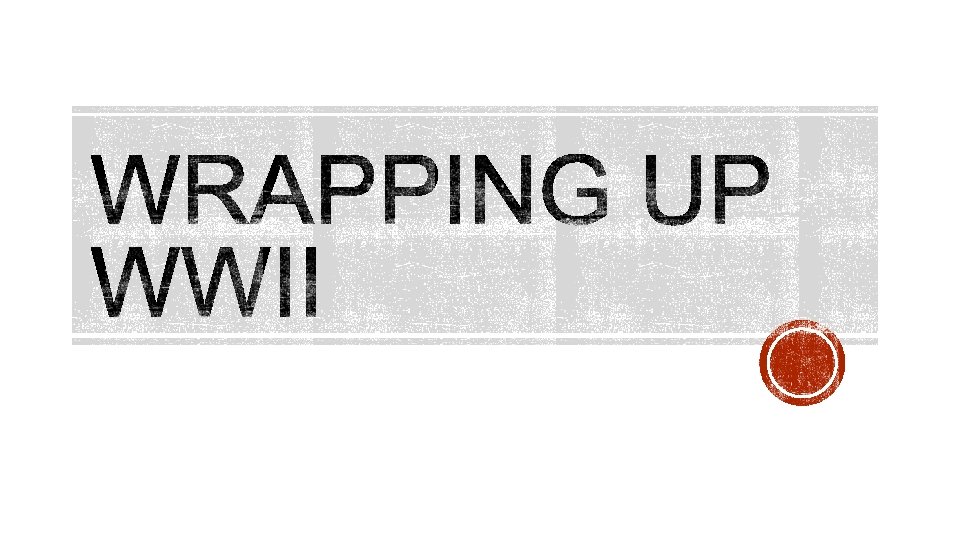
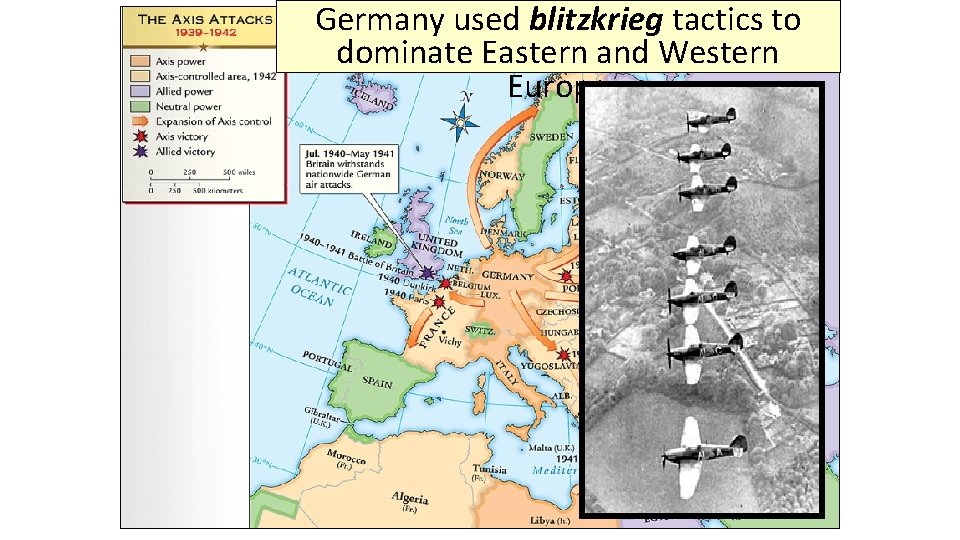
Germany used blitzkrieg tactics to dominate Eastern and Western Europe
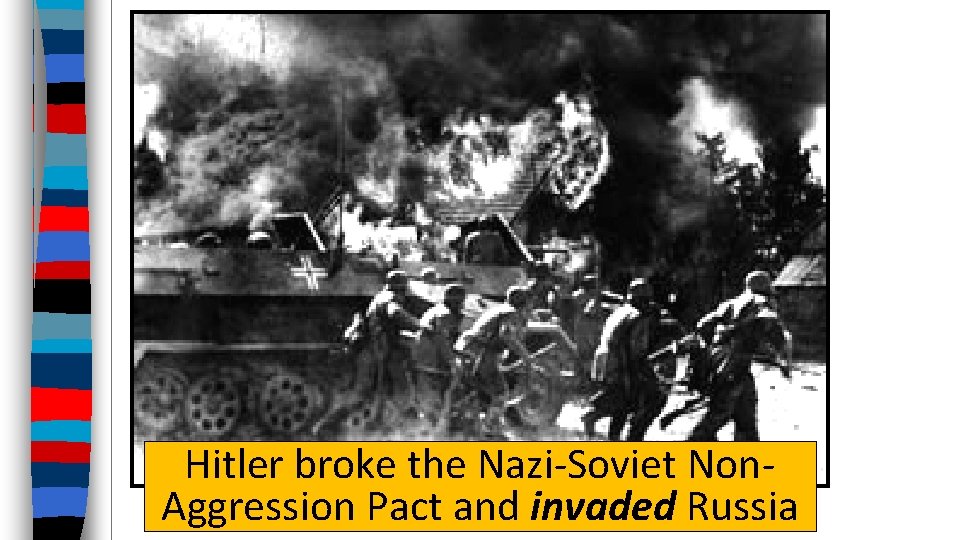
Hitler broke the Nazi-Soviet Non. Aggression Pact and invaded Russia
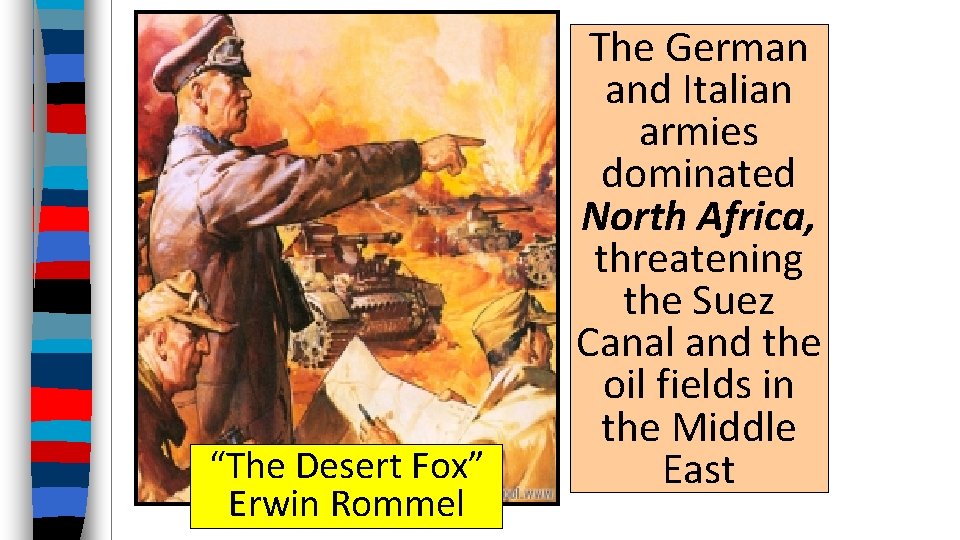
“The Desert Fox” Erwin Rommel The German and Italian armies dominated North Africa, threatening the Suez Canal and the oil fields in the Middle East
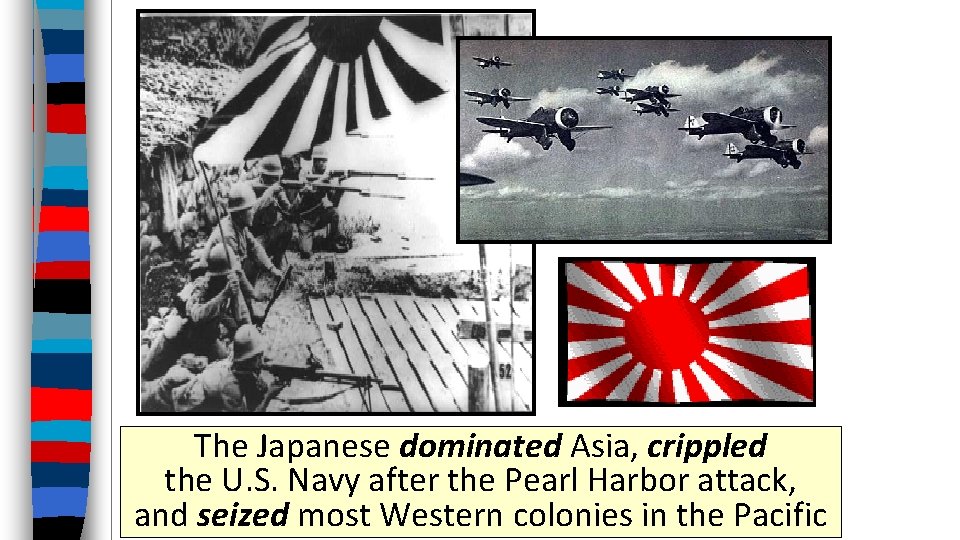
The Japanese dominated Asia, crippled the U. S. Navy after the Pearl Harbor attack, and seized most Western colonies in the Pacific
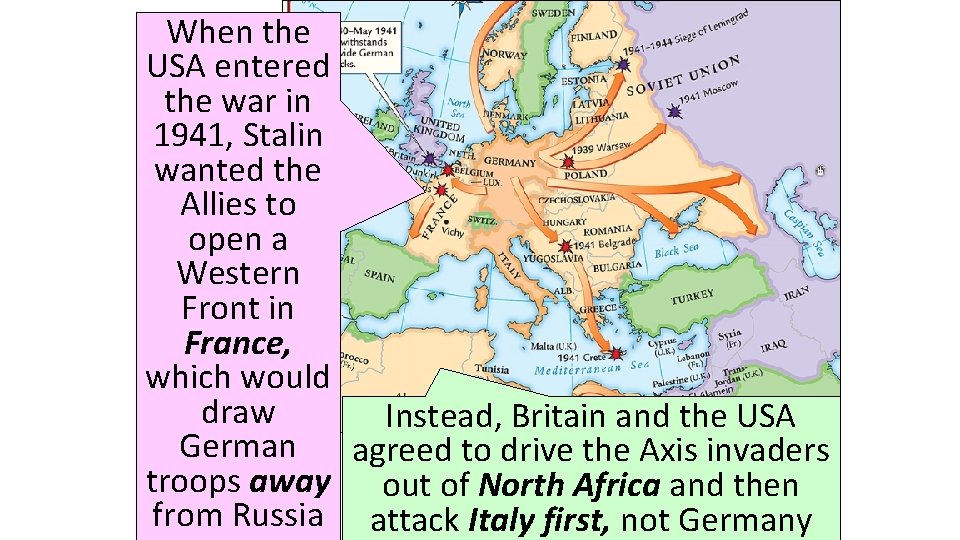
When the USA entered the war in 1941, Stalin wanted the Allies to open a Western Front in France, which would draw Instead, Britain and the USA German agreed to drive the Axis invaders troops away out of North Africa and then from Russia attack Italy first, not Germany
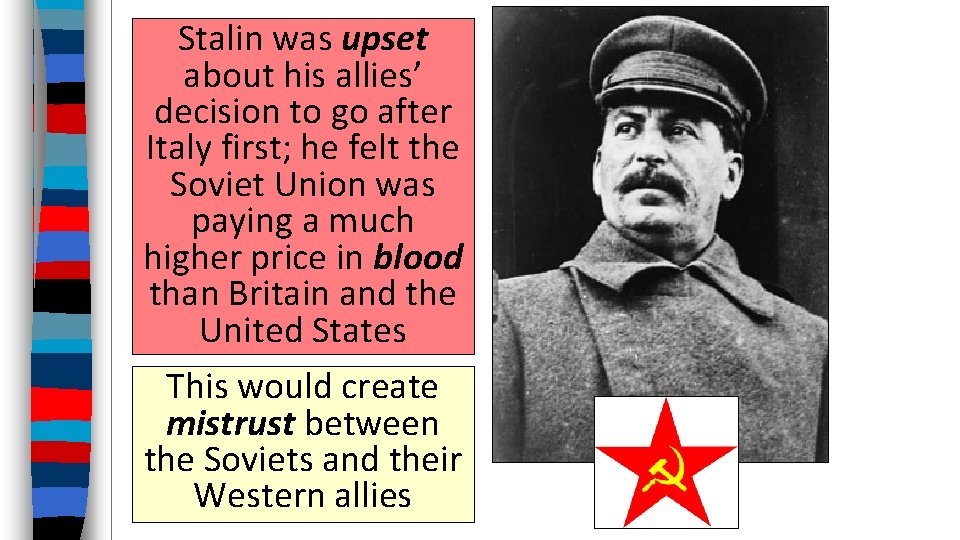
Stalin was upset about his allies’ decision to go after Italy first; he felt the Soviet Union was paying a much higher price in blood than Britain and the United States This would create mistrust between the Soviets and their Western allies
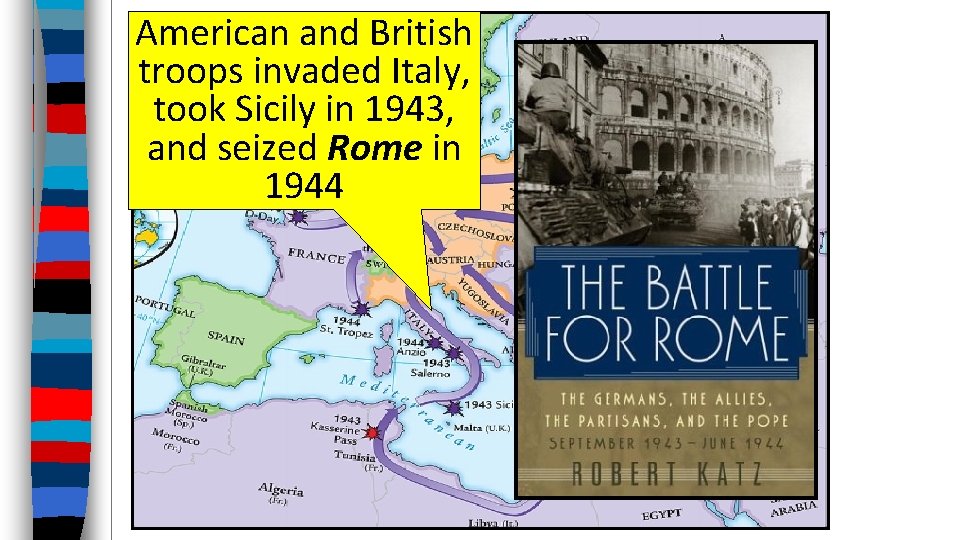
American and British troops invaded Italy, took Sicily in 1943, and seized Rome in 1944
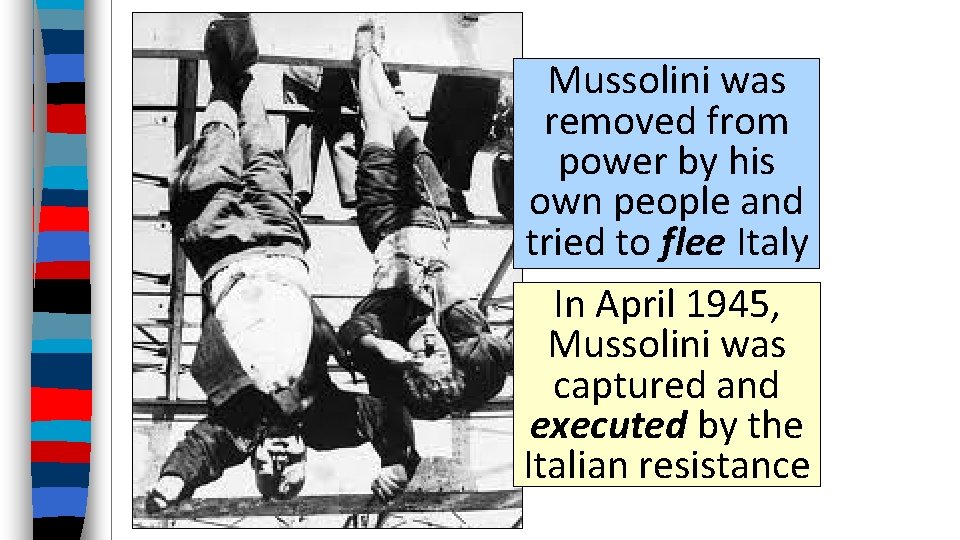
Mussolini was removed from power by his own people and tried to flee Italy In April 1945, Mussolini was captured and executed by the Italian resistance
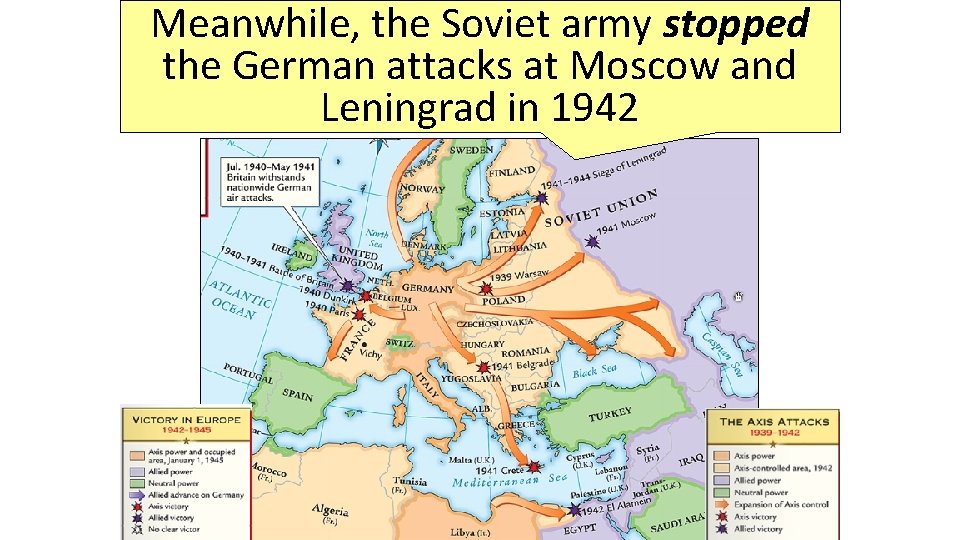
Meanwhile, the Soviet army stopped the German attacks at Moscow and Leningrad in 1942
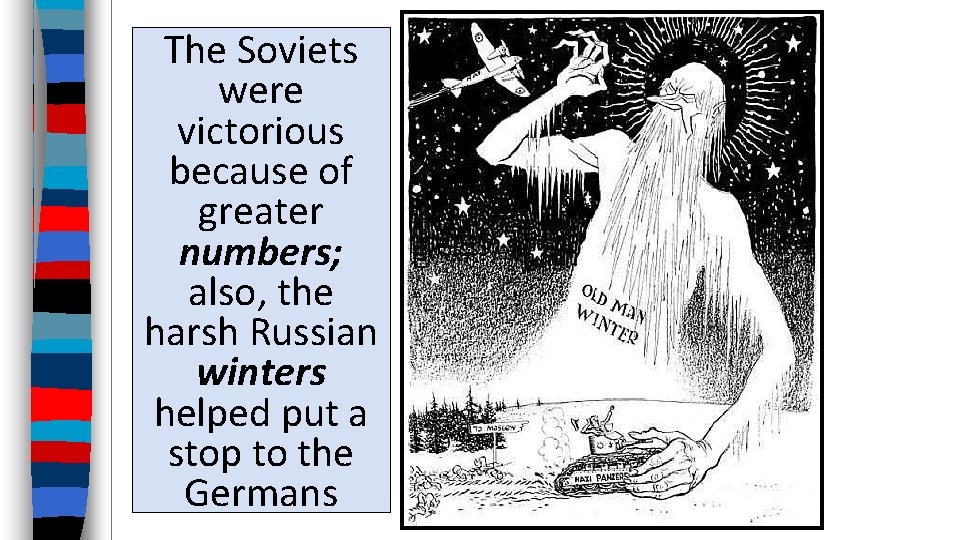
The Soviets were victorious because of greater numbers; also, the harsh Russian winters helped put a stop to the Germans
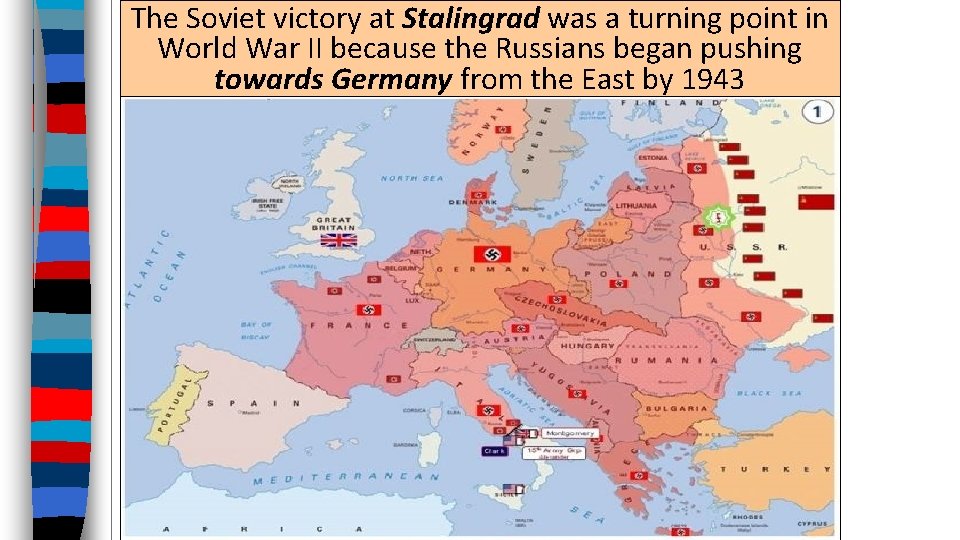
The Soviet victory at Stalingrad was a turning point in World War II because the Russians began pushing towards Germany from the East by 1943
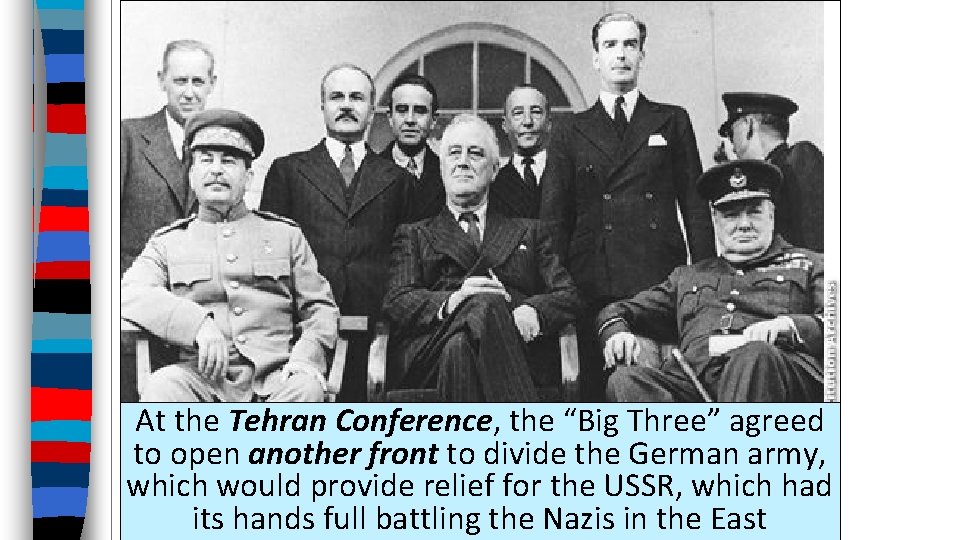
At the Tehran Conference, the “Big Three” agreed to open another front to divide the German army, which would provide relief for the USSR, which had its hands full battling the Nazis in the East
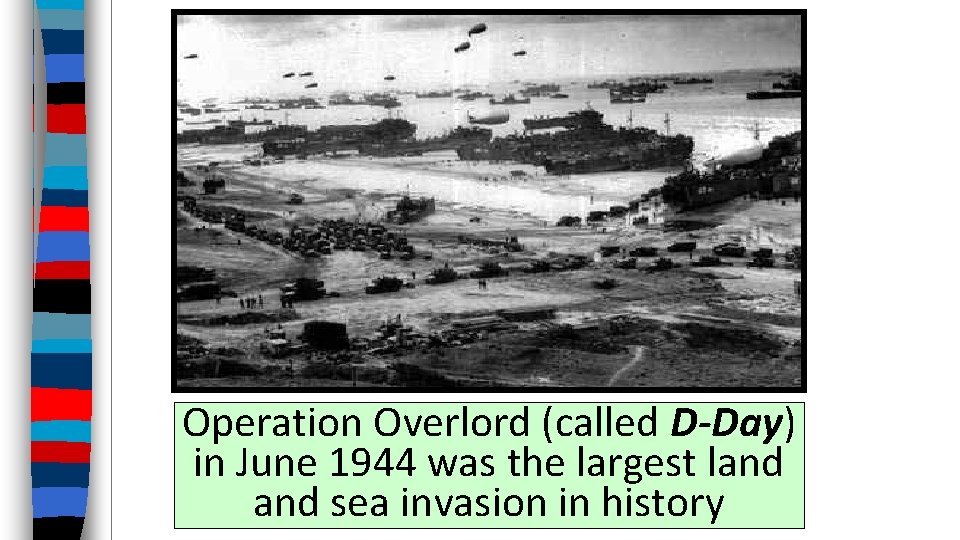
Operation Overlord (called D-Day) in June 1944 was the largest land sea invasion in history
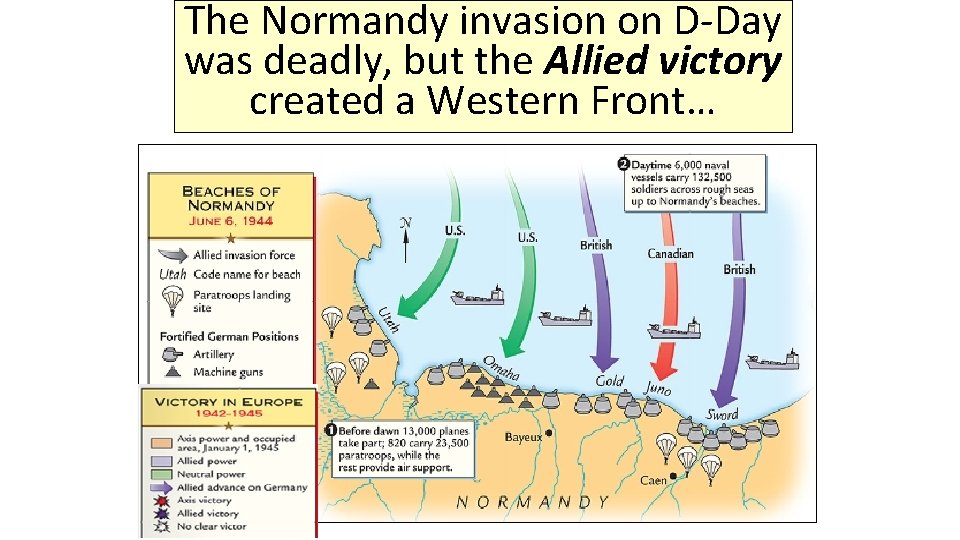
The Normandy invasion on D-Day was deadly, but the Allied victory created a Western Front…
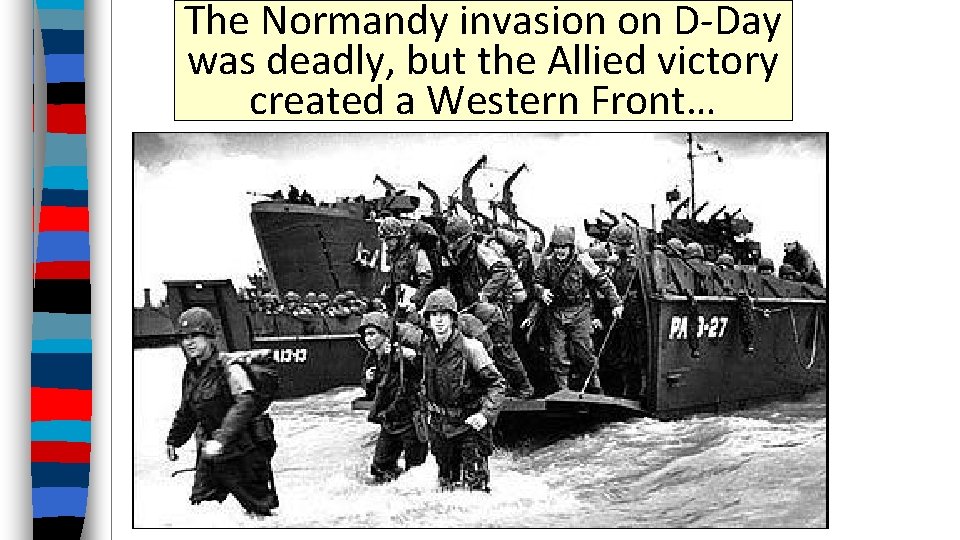
The Normandy invasion on D-Day was deadly, but the Allied victory created a Western Front…
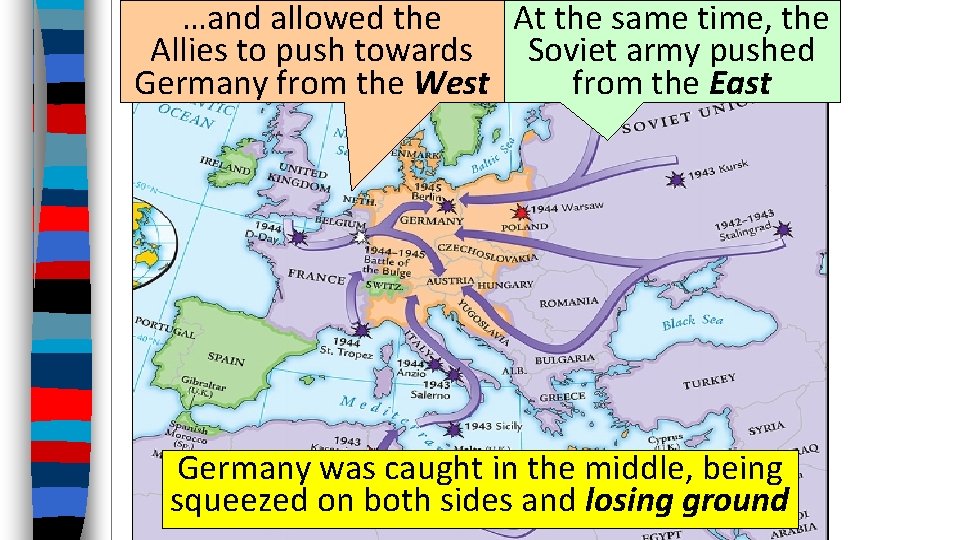
…and allowed the At the same time, the Allies to push towards Soviet army pushed Germany from the West from the East Germany was caught in the middle, being squeezed on both sides and losing ground
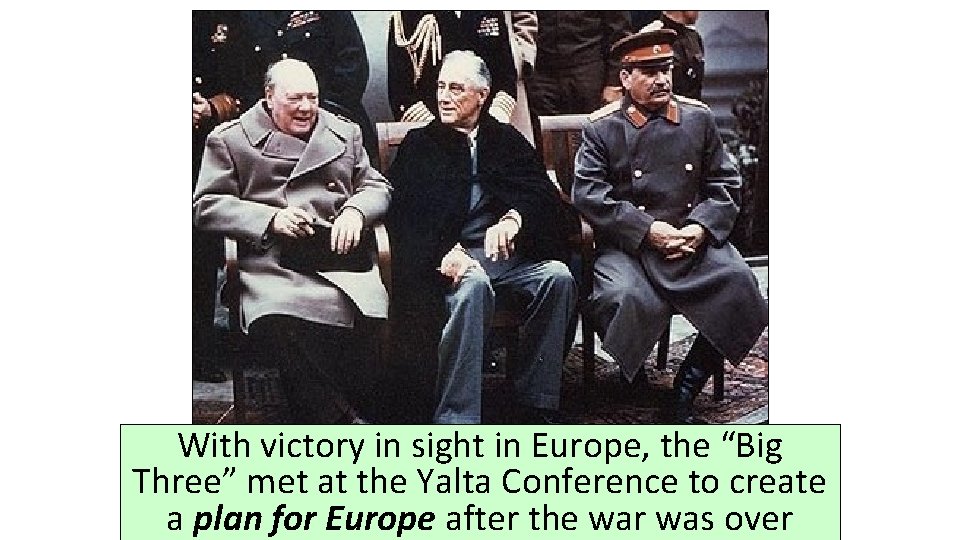
With victory in sight in Europe, the “Big Three” met at the Yalta Conference to create a plan for Europe after the war was over
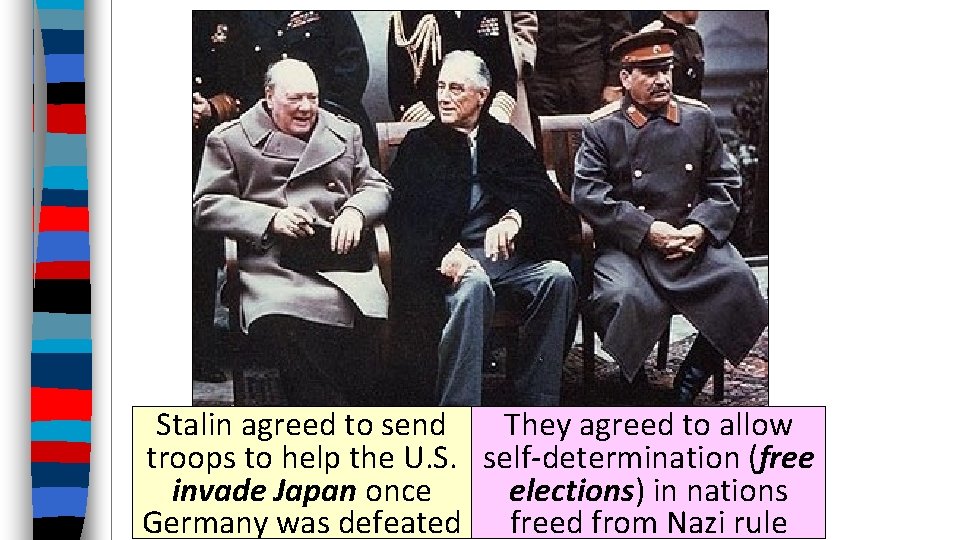
Stalin agreed to send They agreed to allow troops to help the U. S. self-determination (free invade Japan once elections) in nations Germany was defeated freed from Nazi rule
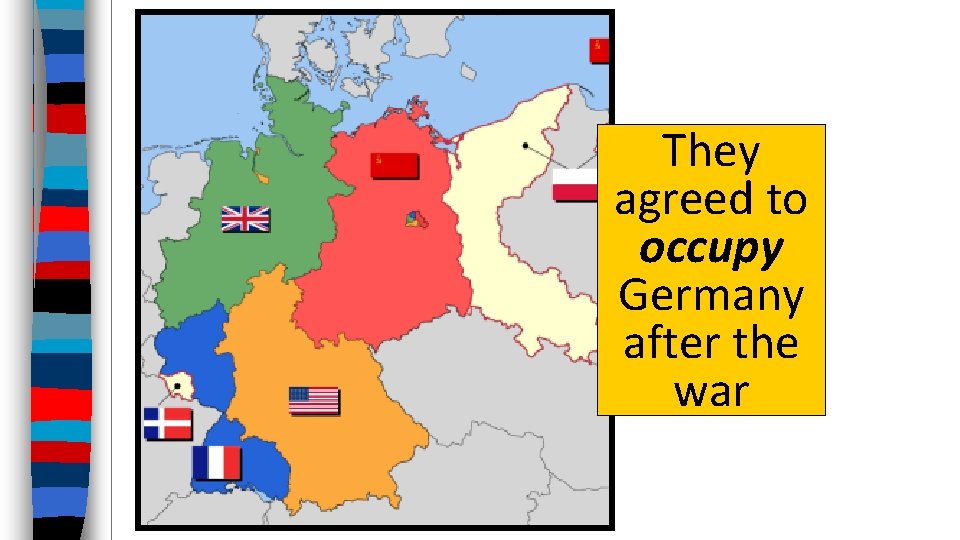
They agreed to occupy Germany after the war
They agreed to create and join a United Nations
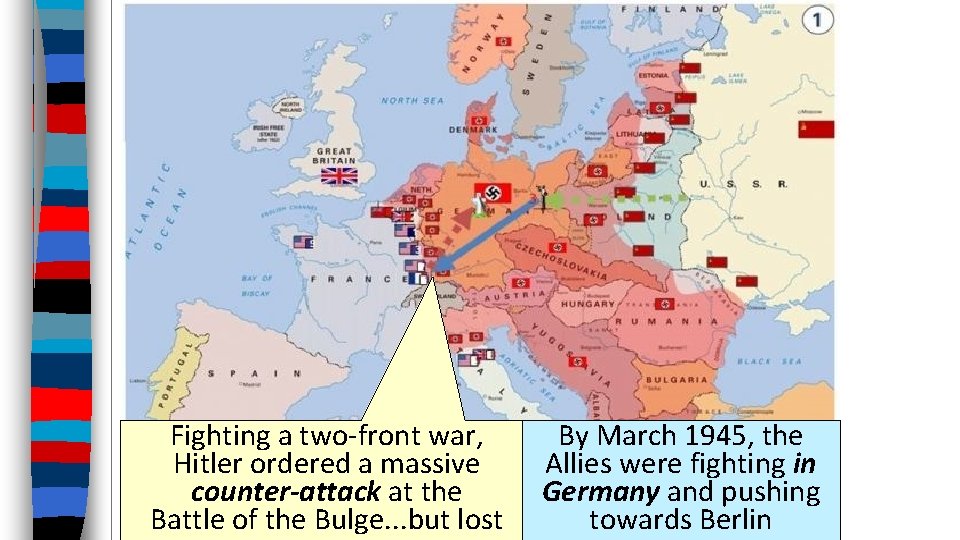
Fighting a two-front war, Hitler ordered a massive counter-attack at the Battle of the Bulge. . . but lost By March 1945, the Allies were fighting in Germany and pushing towards Berlin
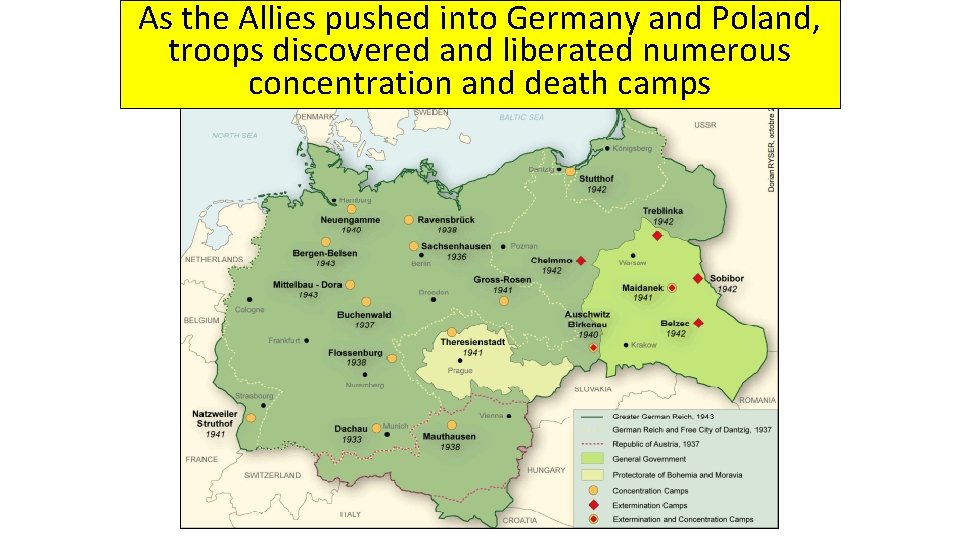
As the Allies pushed into Germany and Poland, troops discovered and liberated numerous concentration and death camps
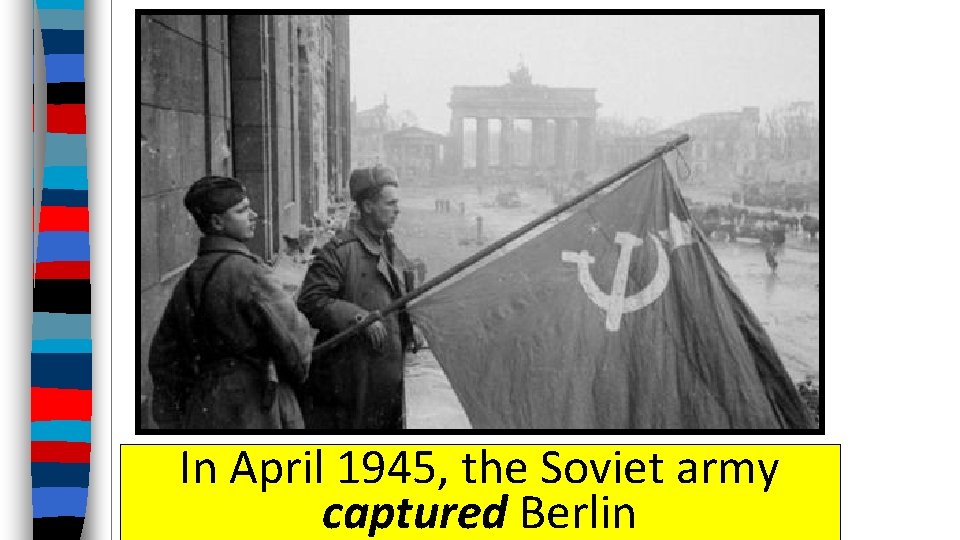
In April 1945, the Soviet army captured Berlin
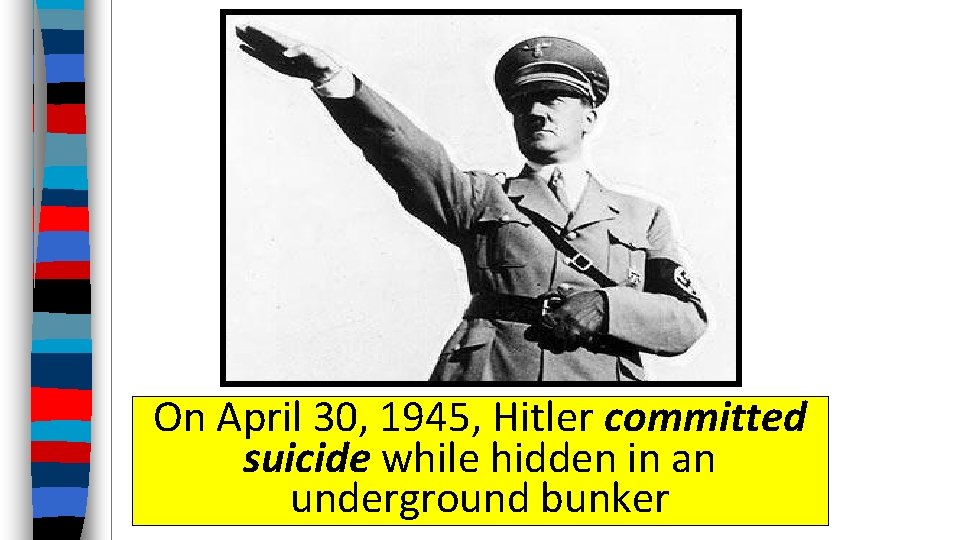
On April 30, 1945, Hitler committed suicide while hidden in an underground bunker
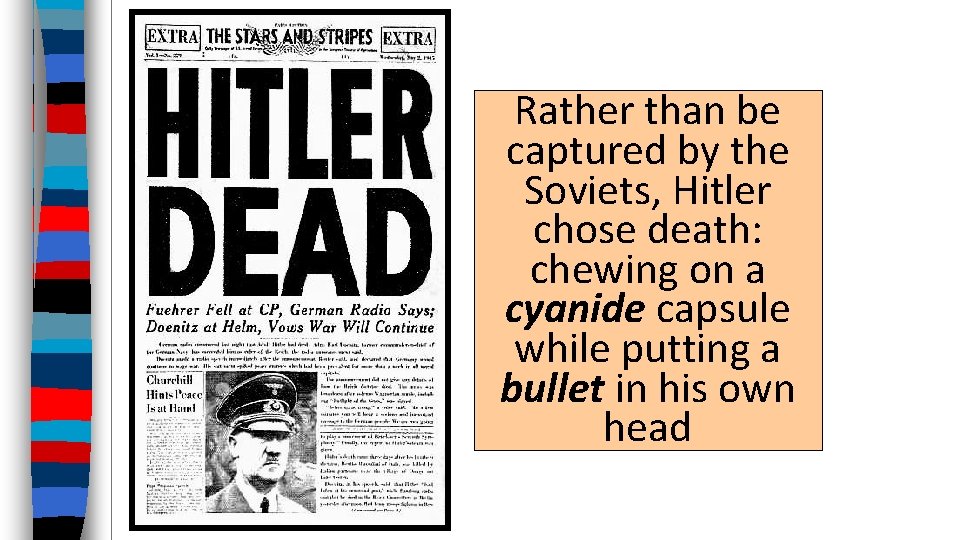
Rather than be captured by the Soviets, Hitler chose death: chewing on a cyanide capsule while putting a bullet in his own head
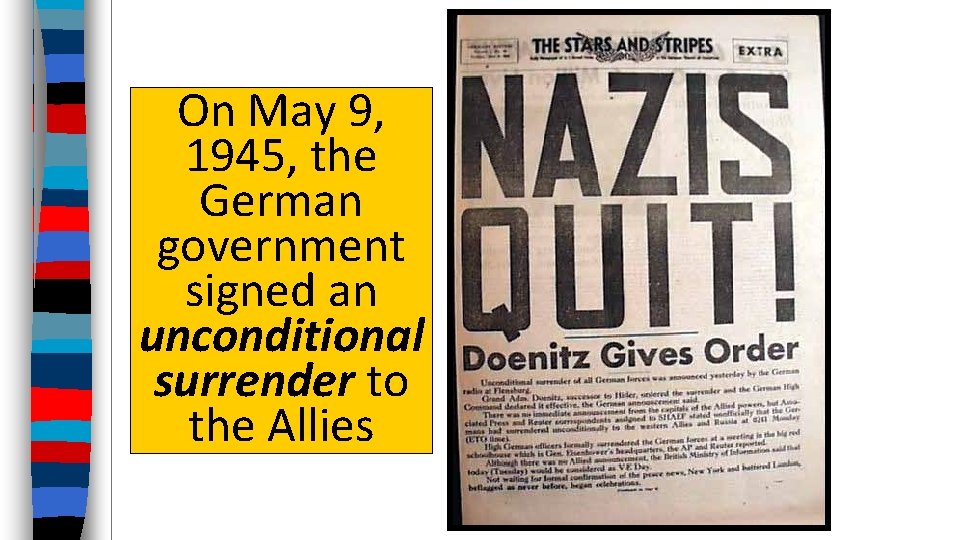
On May 9, 1945, the German government signed an unconditional surrender to the Allies
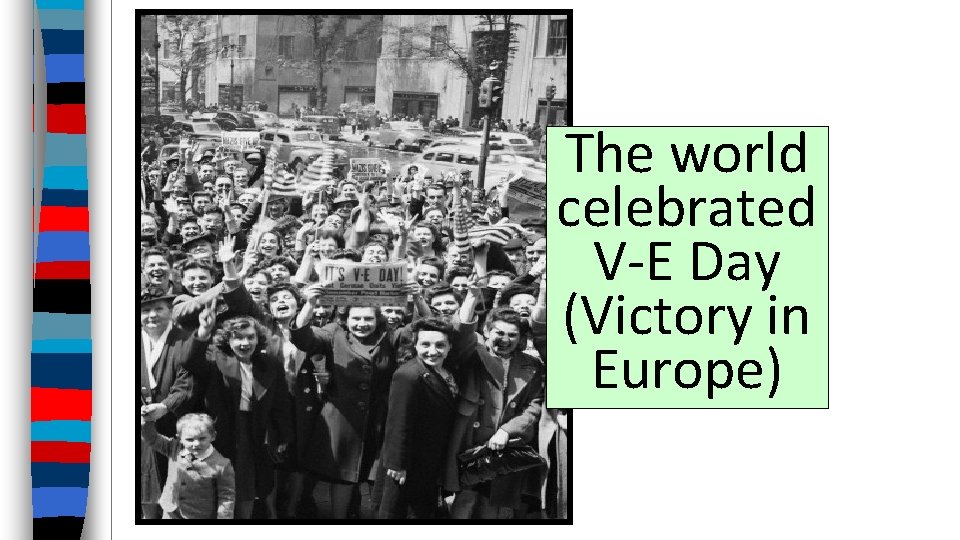
The world celebrated V-E Day (Victory in Europe)
- Slides: 29