
German Unification Nationalism Nationalism Is the belief that
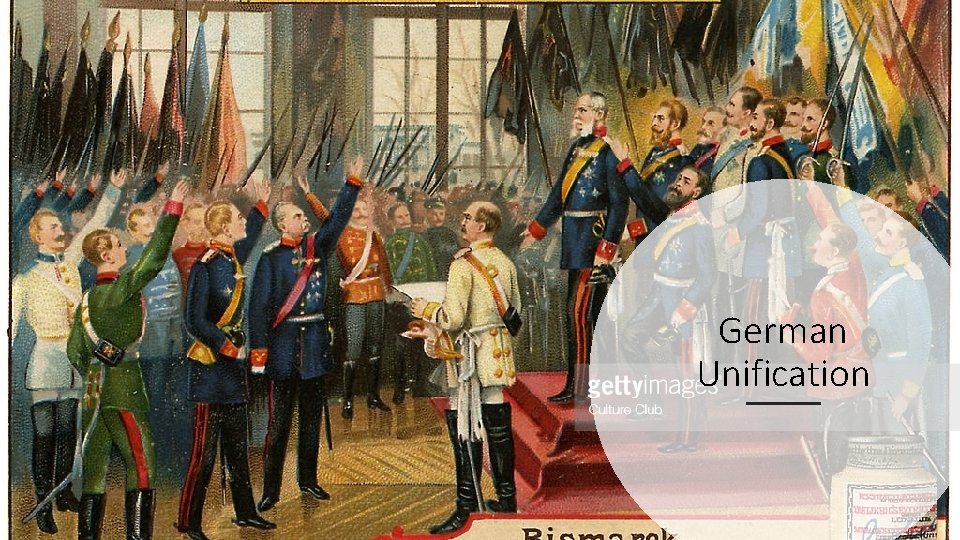
German Unification
Nationalism • Nationalism- Is the belief that one’s greatest loyalty should not be to a king or an empire but to a nation of people who share a common culture and history. When it also has its own independent government, it became a nationstate.
Bonds that Create a Nation State (1800’s Context) Nationality: A belief in a common ethnic ancestry. Language: Different dialects (forms) of one language; one dialect chosen as the “national language”. History: A common past, common experiences. Religion: A religion shared by all or most of the people. Territory: A certain territory that belongs to the ethnic group; its “land”.
Nationalism through a critical point of view • Nationalism- Is the belief that one’s greatest loyalty should not be to a king or an empire but to a nation of people who share a common culture and history. When it also has its own independent government, it became a nation-state. • Is Nationalism the same as patriotism? • https: //www. youtube. com/watch? v=blig. ZZeh. UQA • Nationalism has not always been seen as a positive influence, in fact there are both positive and negative elements to nationalism. • Do you see any problems with nationalism? Do you see any benefits? In small groups please come up with some positive effects and negative effects of nationalism.
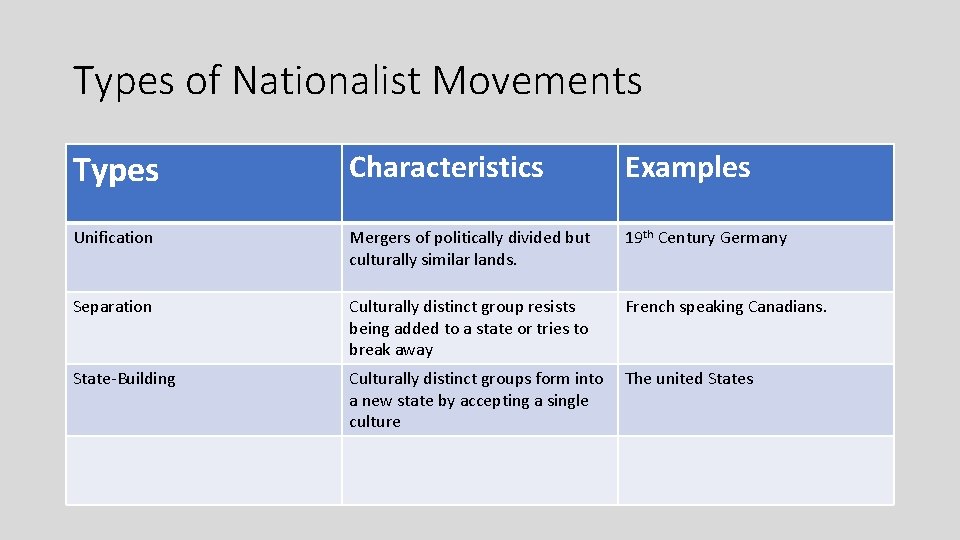
Types of Nationalist Movements Types Characteristics Examples Unification Mergers of politically divided but culturally similar lands. 19 th Century Germany Separation Culturally distinct group resists being added to a state or tries to break away French speaking Canadians. State-Building Culturally distinct groups form into a new state by accepting a single culture The united States

Nationalism a Force of Disunity • In the 1800’s a growing sense of nationalism challenges three old empires: • 1. Russia • 2. Austrian Empire • 3. Ottoman Empire • All three of these would eventually collapse.
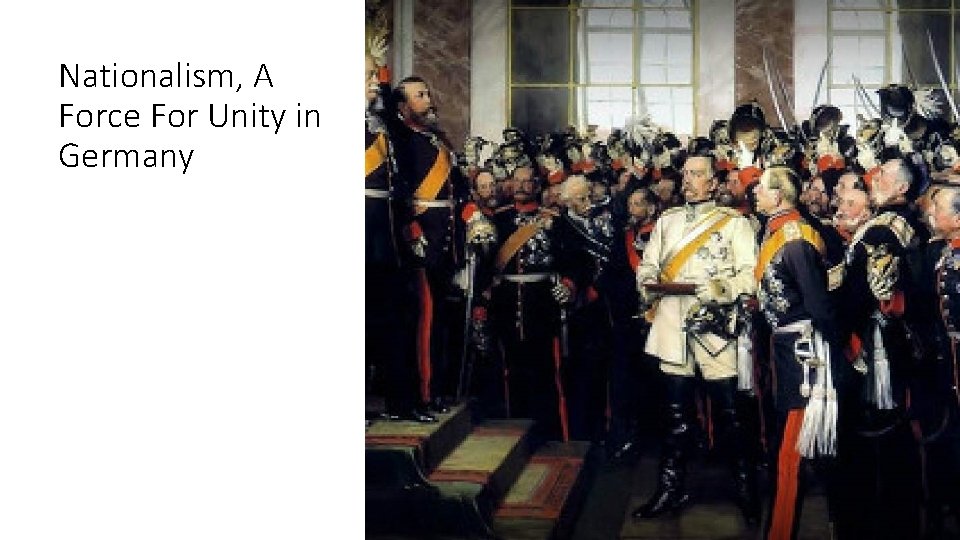
Nationalism, A Force For Unity in Germany

German Confederation • Formed in 1815 at the Congress of Vienna, replacing the Holy Roman Empire. • Result- A loose confederation/ political association of 39 states. • The two largest states dominate the confederation: • 1. Prussia. • 2. Austro-Hungarian Empire/ Austrian Empire.
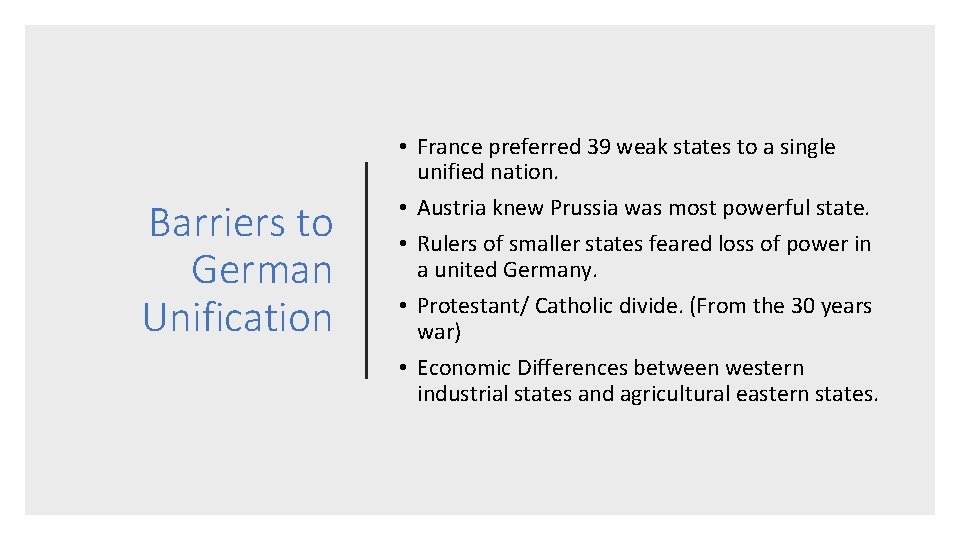
Barriers to German Unification • France preferred 39 weak states to a single unified nation. • Austria knew Prussia was most powerful state. • Rulers of smaller states feared loss of power in a united Germany. • Protestant/ Catholic divide. (From the 30 years war) • Economic Differences between western industrial states and agricultural eastern states.
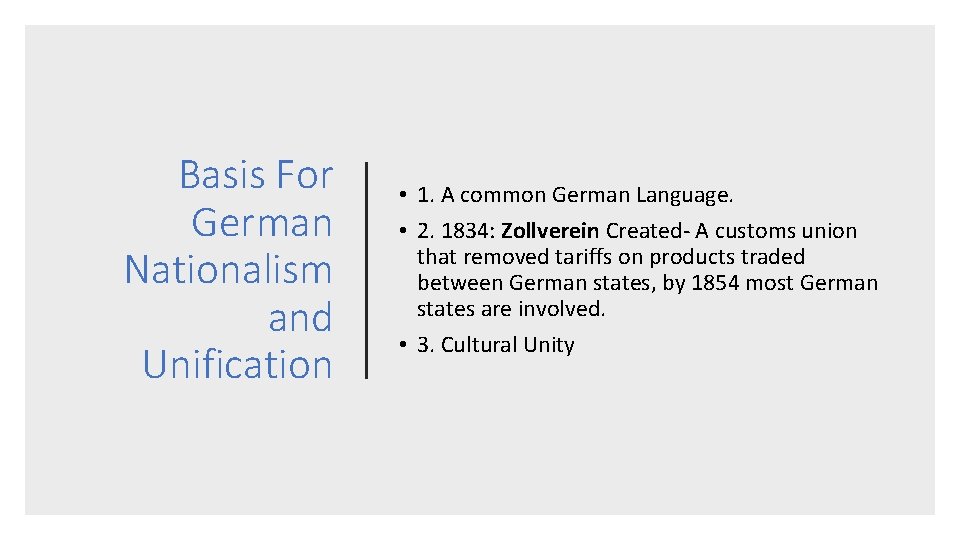
Basis For German Nationalism and Unification • 1. A common German Language. • 2. 1834: Zollverein Created- A customs union that removed tariffs on products traded between German states, by 1854 most German states are involved. • 3. Cultural Unity
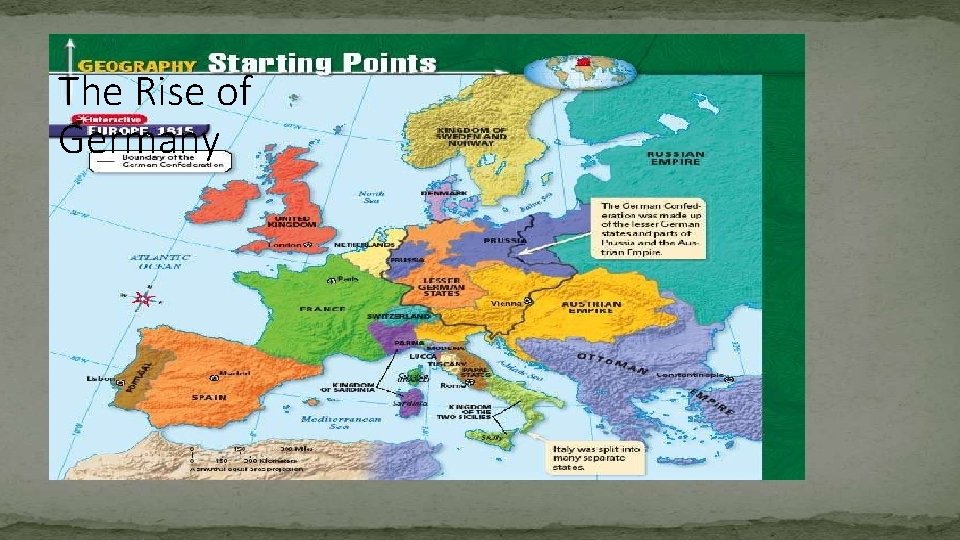
The Rise of Germany
Frankfurt Assembly 1848 • Liberal rioters in Berlin. • Result! The Frankfurt Parliament • Desire for a unified Germany is growing. • Austria opposes centralized government in Germany • Prussian king offered crown of a unified Germany. Democratic reforms do not extend to Prussia
Germany: Leaders of Unification King Wilhelm I (King of Prussia) - Very Authoritarian - This Prussian king had a very strong hold over both: • 1. Military • 2. Government Then! He attempts to enlarge the Prussian military but meets opposition from the Prussian Parliament. Result! Appoints new Prime Minister, Otto von Bismarck to get what he wants.
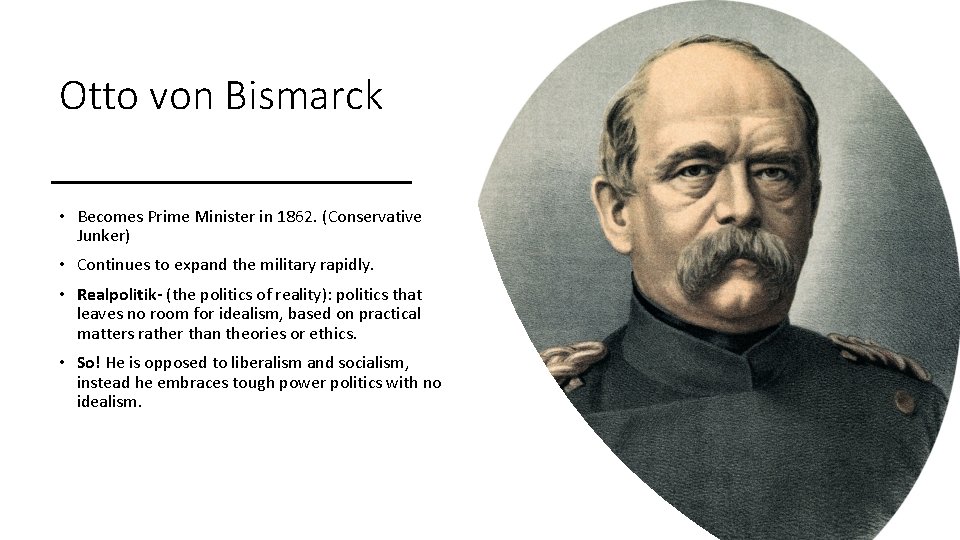
Otto von Bismarck • Becomes Prime Minister in 1862. (Conservative Junker) • Continues to expand the military rapidly. • Realpolitik- (the politics of reality): politics that leaves no room for idealism, based on practical matters rather than theories or ethics. • So! He is opposed to liberalism and socialism, instead he embraces tough power politics with no idealism.
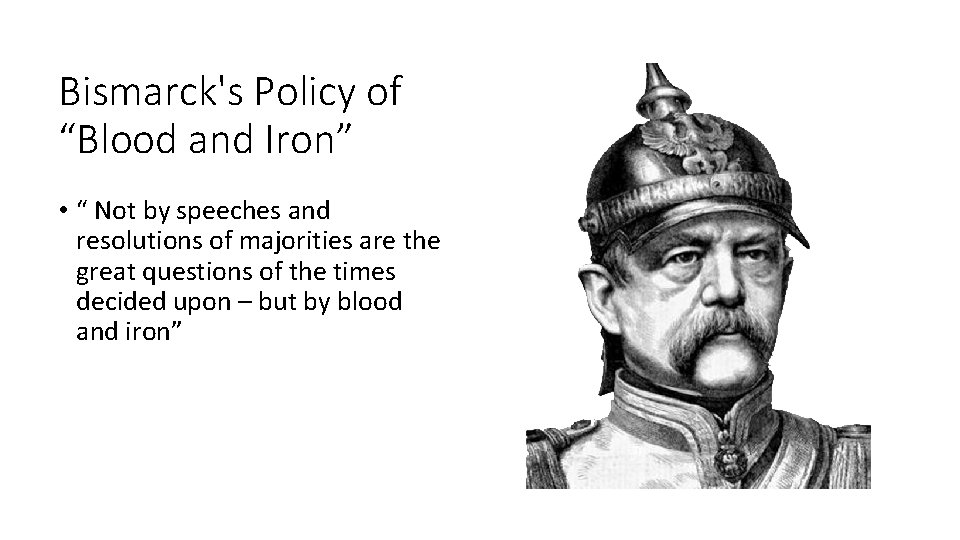
Bismarck's Policy of “Blood and Iron” • “ Not by speeches and resolutions of majorities are the great questions of the times decided upon – but by blood and iron”
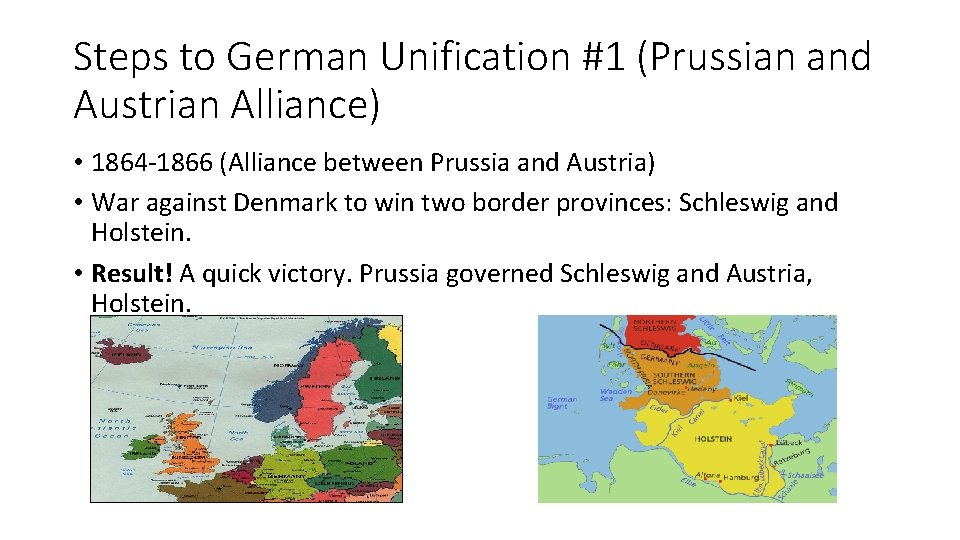
Steps to German Unification #1 (Prussian and Austrian Alliance) • 1864 -1866 (Alliance between Prussia and Austria) • War against Denmark to win two border provinces: Schleswig and Holstein. • Result! A quick victory. Prussia governed Schleswig and Austria, Holstein.
Steps toward German Unification #2 Seven Weeks War • 1866 -1867 Seven Weeks War • Bismarck (Prussia) purposely stirred up border conflicts with Austria over Schleswig and Holstein. • Result! Austria declares war on Prussia in 1866. • Prussia humiliates Austria and takes its Northern states joining the North German Confederation.
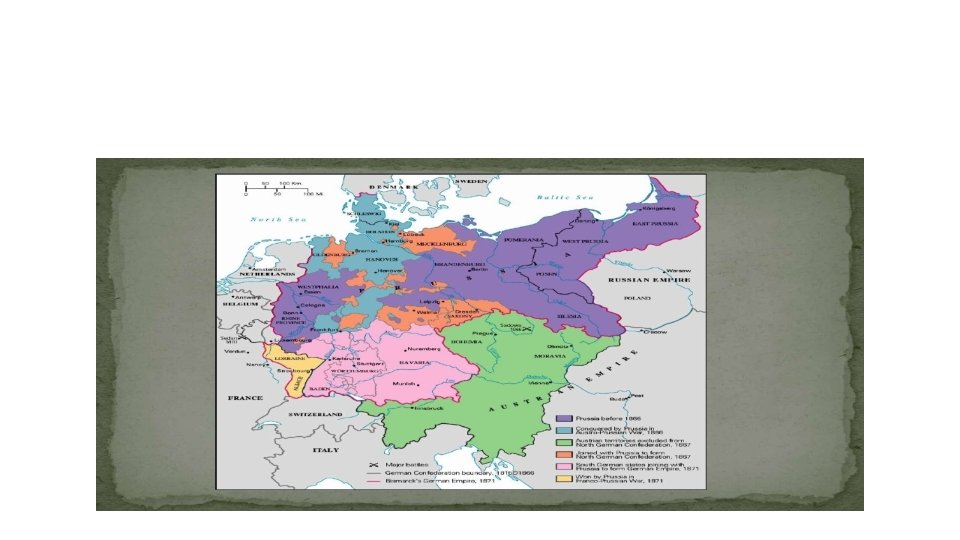
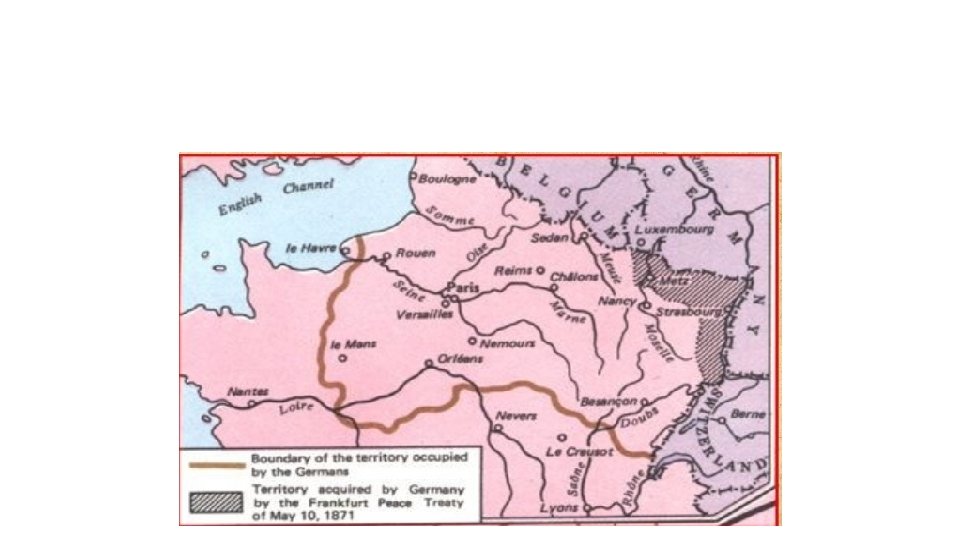
1870 -1871: The Franco. Prussian War • Bismarck realizes that the French would never be content with a strong German state to its east. (security threat) • So! - Prussia declares war on France, July 19, 1870 and invade France. • Result- On September 2 nd 1870, Prussia defeats the French forces aided by southern German states. • Gains- The Prussians gain the French territories of Alsace and Lorraine.
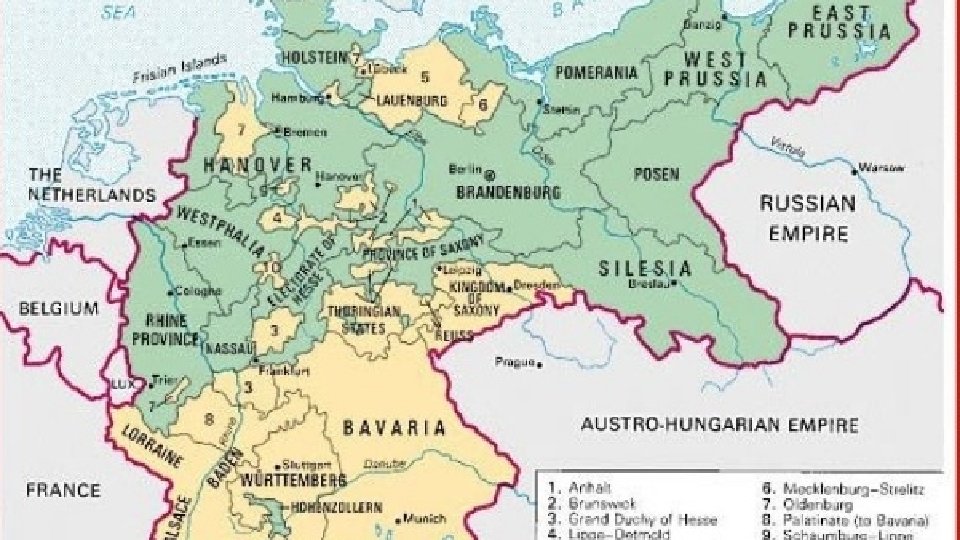
German Unification • Even before the end of the war the Southern German states agreed to enter the Northern German Confederation. • Wilhelm I is crowned Kaiser (Emperor) at the palace of Versailles. • Result! This unites all the German territories into the Second German empire.
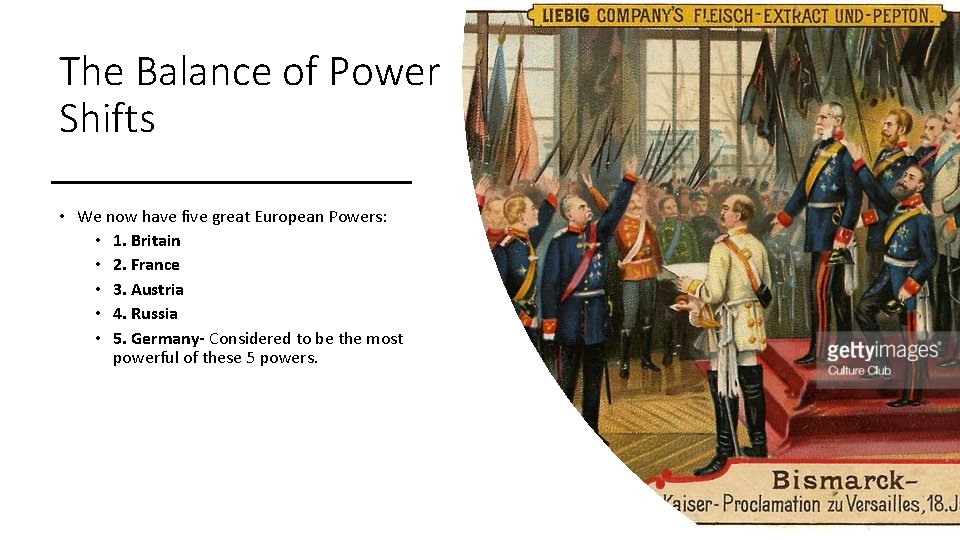
The Balance of Power Shifts • We now have five great European Powers: • 1. Britain • 2. France • 3. Austria • 4. Russia • 5. Germany- Considered to be the most powerful of these 5 powers.
Unification of Germany Work Sheet

• http: //jonesworldhistory. weebly. com/unit-7 -19 th-century-industryimperialism--nationalism. html
- Slides: 25