
German Unification 1815 1871 Steps to Unity w

- Slides: 13
German Unification 1815 -1871
Steps to Unity w Congress of Vienna created German Confederation in 1815 to buffer French expansion w United by a diet (assembly) which met at Frankfurt, Austria was the chair w Austria dominated Confederation w Prussia wanted to dominate (brought them into conflict with Austria) w Austria and smaller states did not want unification (Austria feared competition, smaller states feared domination by Prussia)
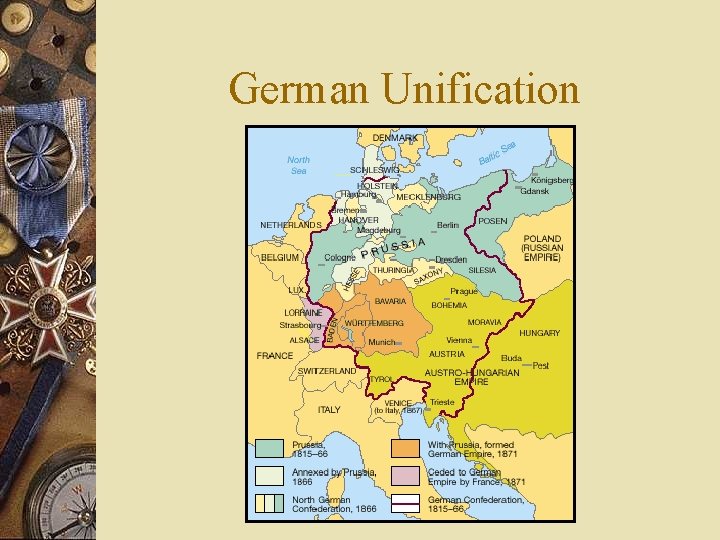
German Unification
Factors Hindering Unification w German differences: Protestant north, Catholic south w Austria feared German competition w Lesser German states feared losing authority w France afraid of German power
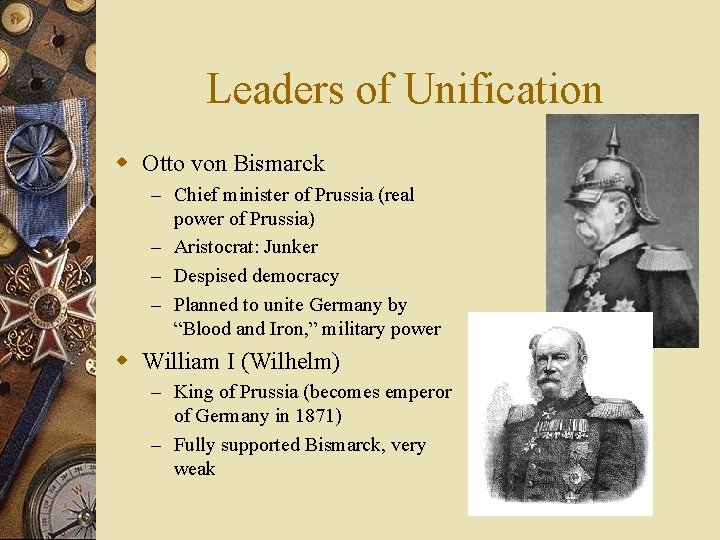
Leaders of Unification w Otto von Bismarck – Chief minister of Prussia (real power of Prussia) – Aristocrat: Junker – Despised democracy – Planned to unite Germany by “Blood and Iron, ” military power w William I (Wilhelm) – King of Prussia (becomes emperor of Germany in 1871) – Fully supported Bismarck, very weak
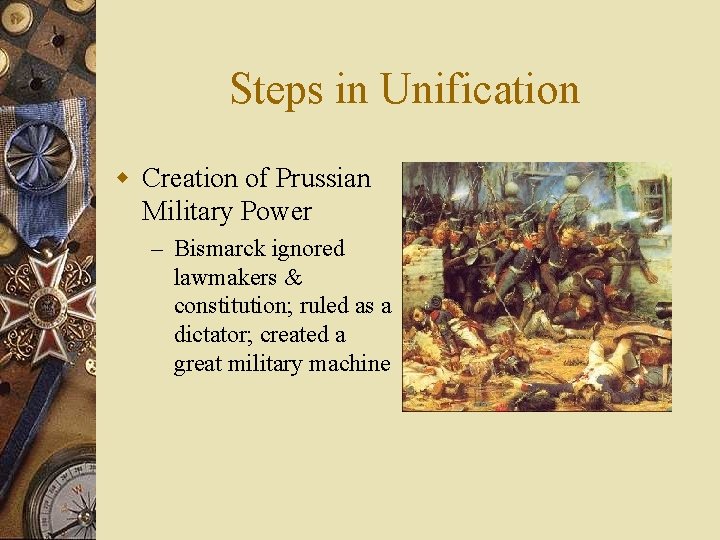
Steps in Unification w Creation of Prussian Military Power – Bismarck ignored lawmakers & constitution; ruled as a dictator; created a great military machine
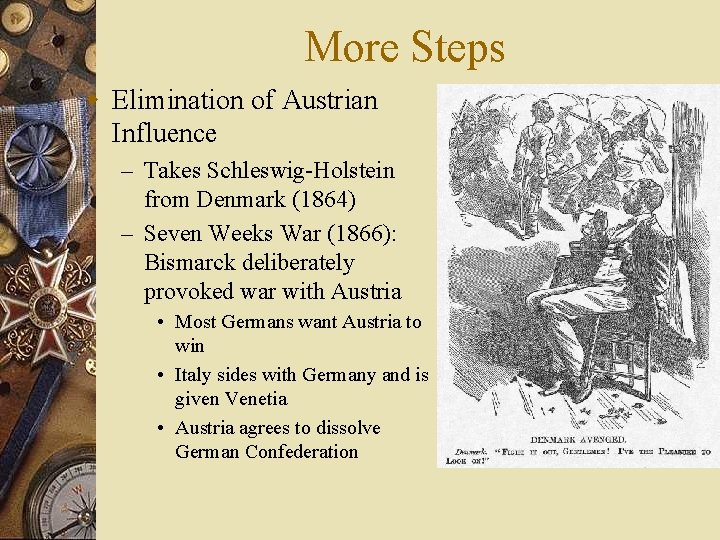
More Steps w Elimination of Austrian Influence – Takes Schleswig-Holstein from Denmark (1864) – Seven Weeks War (1866): Bismarck deliberately provoked war with Austria • Most Germans want Austria to win • Italy sides with Germany and is given Venetia • Austria agrees to dissolve German Confederation
Even More Steps w Forms Prussian Dominated North German Confederation (1867) (four south German states did not join) w Franco-Prussia War (1870 -1): Bismarck provokes a war with France so that south Germans would fight and experience nationalism and join German Confederation • Prussia wanted a Prussian Hohenzollern for the Spanish throne, Napoleon III wrote a letter denying this, Bismarck rewrote the letter and had it published in Germany, angering most Germans. Napoleon III declared war on Germany. – South German states joined Confederation – France ceded land of Alsace-Lorraine – Agreed to pay Germany indemnity, German military presence in France w Seeds of WWI planted
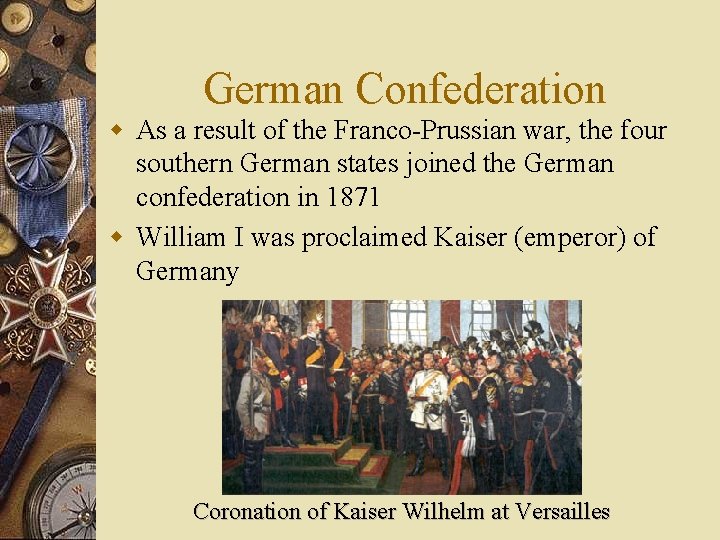
German Confederation w As a result of the Franco-Prussian war, the four southern German states joined the German confederation in 1871 w William I was proclaimed Kaiser (emperor) of Germany Coronation of Kaiser Wilhelm at Versailles
German Empire w Autocracy-Kaiser controlled major decisions; Chancellor (Prime Minister) Bismarck reported to Kaiser not Legislature w Prussian domination-King of Prussia automatically became emperor of Germany. Prussia could block most legislation
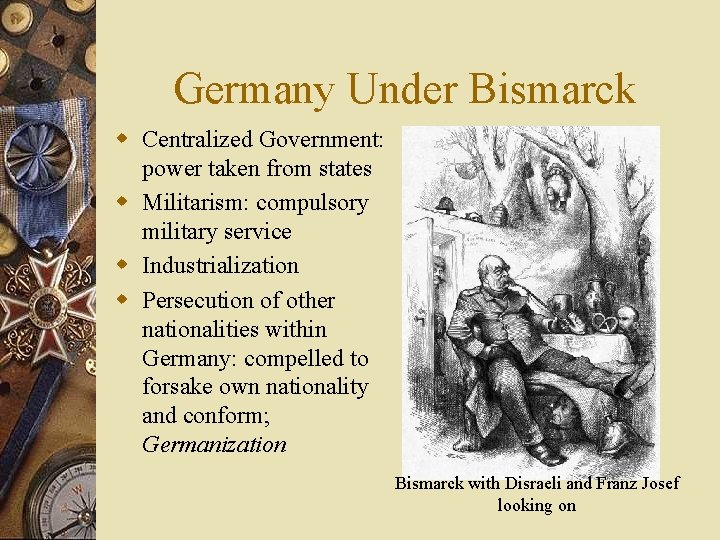
Germany Under Bismarck w Centralized Government: power taken from states w Militarism: compulsory military service w Industrialization w Persecution of other nationalities within Germany: compelled to forsake own nationality and conform; Germanization Bismarck with Disraeli and Franz Josef looking on
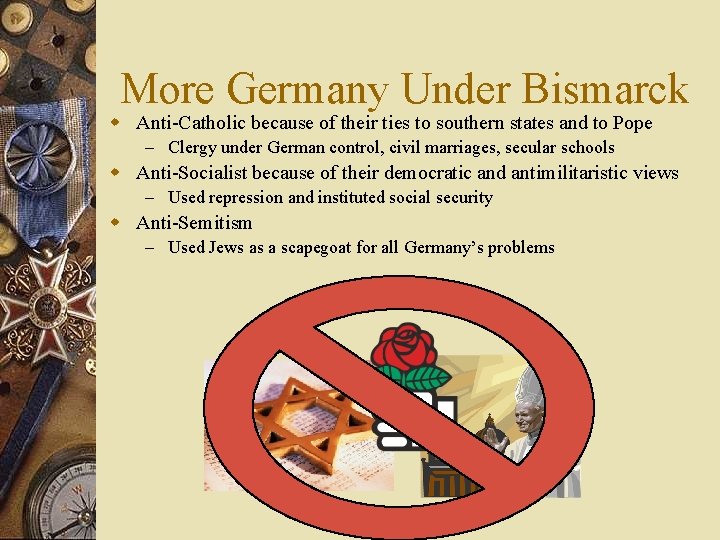
More Germany Under Bismarck w Anti-Catholic because of their ties to southern states and to Pope – Clergy under German control, civil marriages, secular schools w Anti-Socialist because of their democratic and antimilitaristic views – Used repression and instituted social security w Anti-Semitism – Used Jews as a scapegoat for all Germany’s problems
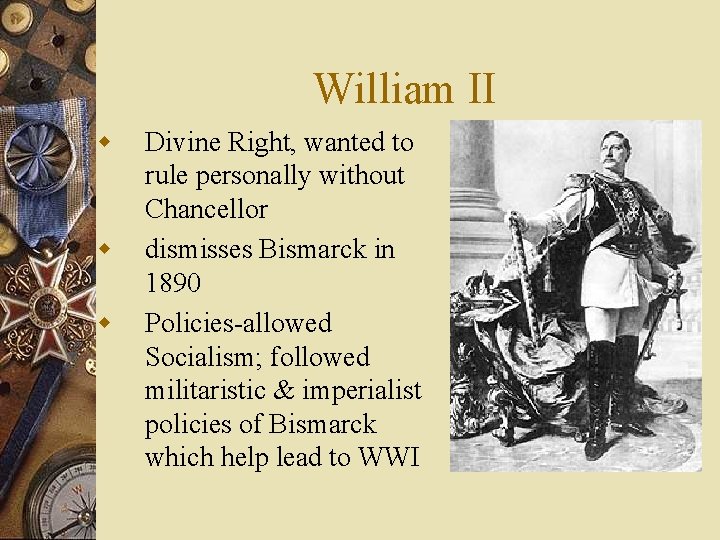
William II w w w Divine Right, wanted to rule personally without Chancellor dismisses Bismarck in 1890 Policies-allowed Socialism; followed militaristic & imperialist policies of Bismarck which help lead to WWI