
German Cuisine Germany Facts Geography Borders 9 countries
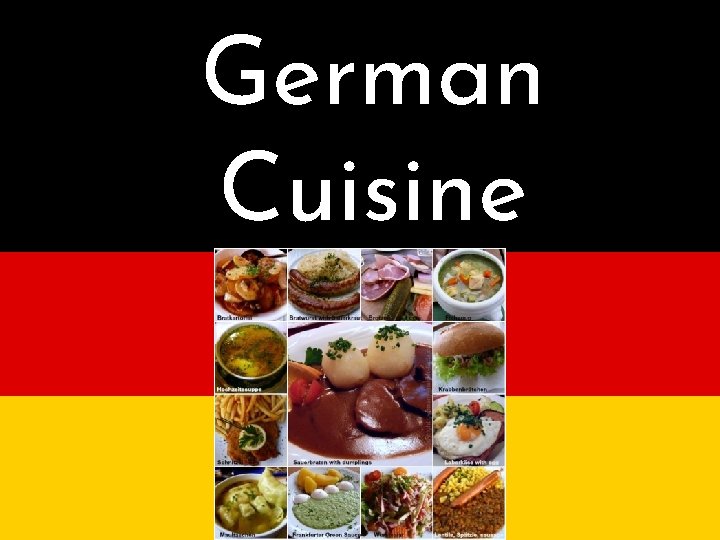
German Cuisine
Germany Facts
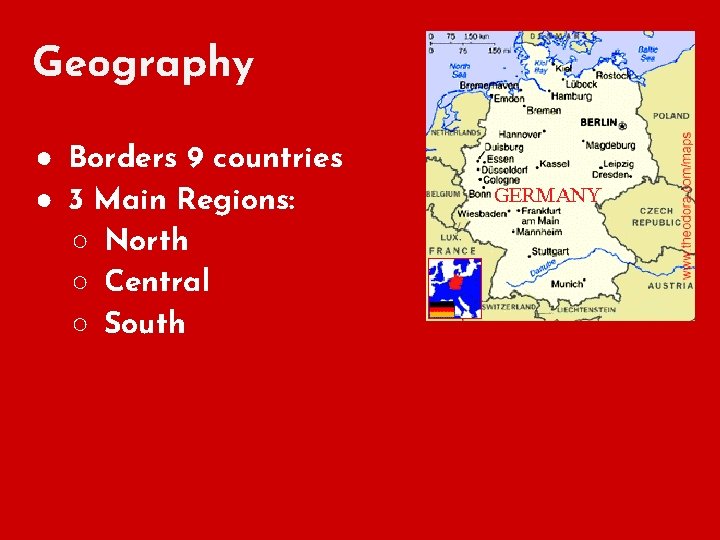
Geography ● Borders 9 countries ● 3 Main Regions: ○ North ○ Central ○ South
Geography & Relation to Cuisine ● Consists mostly of fertile land with many rivers ● Land supports ample agriculture for crops and animals that provide dairy and beef ● Forests have numerous varieties of mushrooms and berries
Germany’s History Related to Cuisine Renaissance ● Brought awareness of luxury, including food & dining ○ Upper class- Table settings/food decoration used to serve lavish food ○ Lower class (peasants)- Grains, gruel, sauerkraut, dumplings, and bacon
Germany’s History Related to Cuisine Later History ● In 1814, the rule of Napoleon of France fell dividing Germany into 39 states and Germany did not become one sovereign until 1871 Great differences between each region’s culinary specialties ○ Result:
Germany’s History Related to Cuisine World Wars 1 and 2 ● Both left Germany devastated and divided ● Borders changed & European countries fought over control ● Left much overlap in foods and cuisine with Belgium, France, Austria, the Czech Republic, and Poland

Religions in Germany ● Roman Catholicism and Lutheran-Protestantism are the two major religions ● Communist regime of the former DDR (German Democratic Republic) frowned upon religion in Germany’s eastern parts until the reunification in 1990. ○ % atheists is particularly high
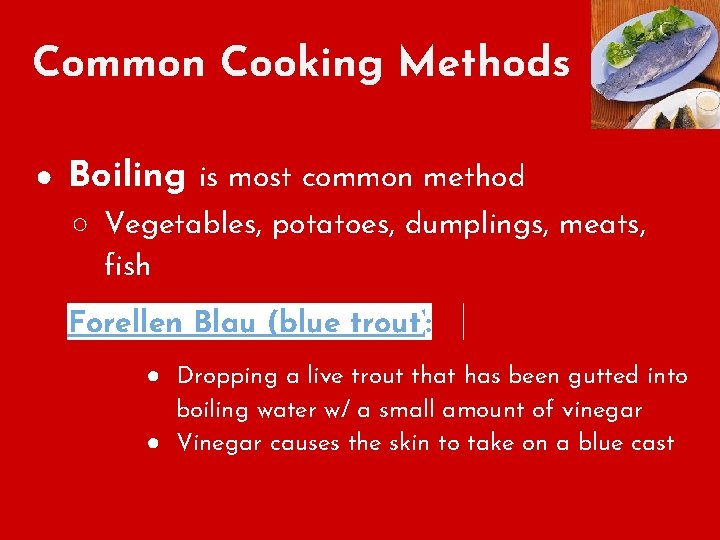
Common Cooking Methods ● Boiling is most common method ○ Vegetables, potatoes, dumplings, meats, fish Forellen Blau (blue trout): ● Dropping a live trout that has been gutted into boiling water w/ a small amount of vinegar ● Vinegar causes the skin to take on a blue cast
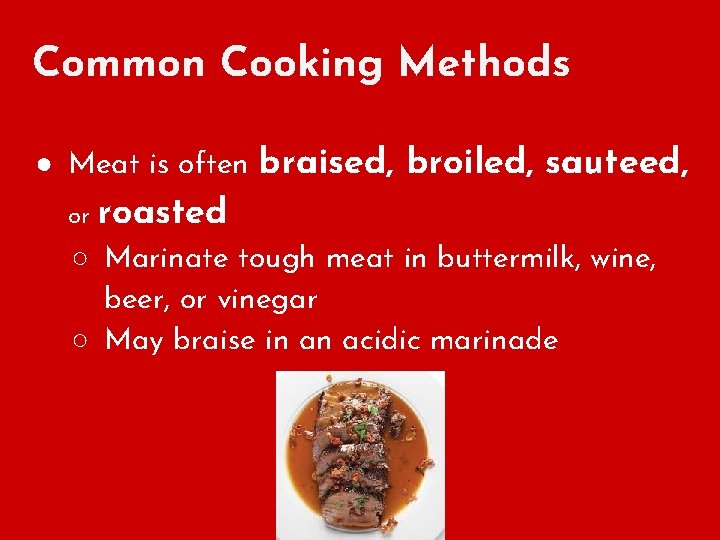
Common Cooking Methods ● Meat is often or roasted braised, broiled, sauteed, ○ Marinate tough meat in buttermilk, wine, beer, or vinegar ○ May braise in an acidic marinade
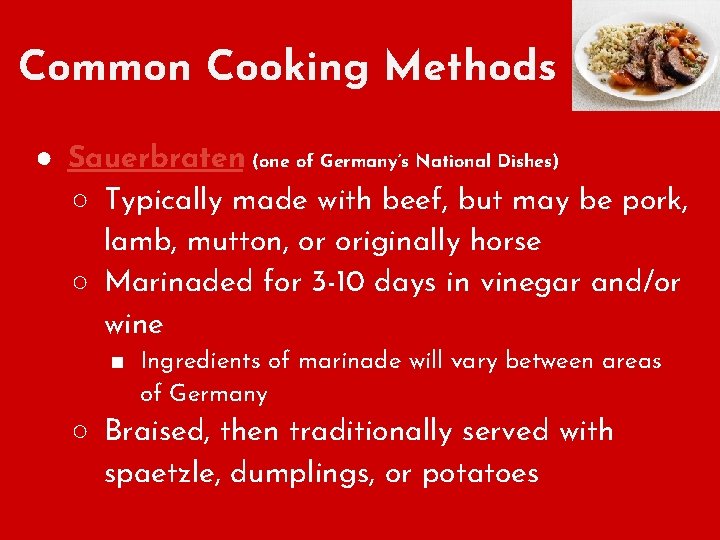
Common Cooking Methods ● Sauerbraten (one of Germany’s National Dishes) ○ Typically made with beef, but may be pork, lamb, mutton, or originally horse ○ Marinaded for 3 -10 days in vinegar and/or wine ■ Ingredients of marinade will vary between areas of Germany ○ Braised, then traditionally served with spaetzle, dumplings, or potatoes
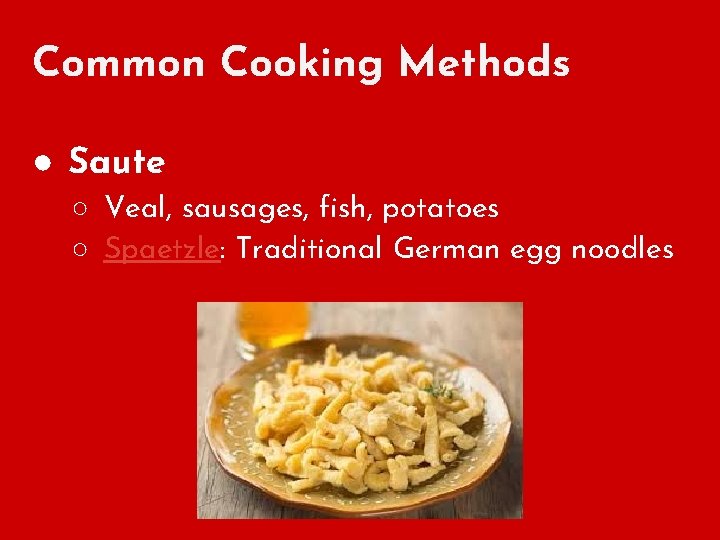
Common Cooking Methods ● Saute ○ Veal, sausages, fish, potatoes ○ Spaetzle: Traditional German egg noodles
Common Cooking Methods ● Smoke & Pickle ○ Meats, fish, and vegetables ○ Used originally to preserve, prevent spoilage, and provide sustenance for long winters ○ Now used to help with short growing seasons
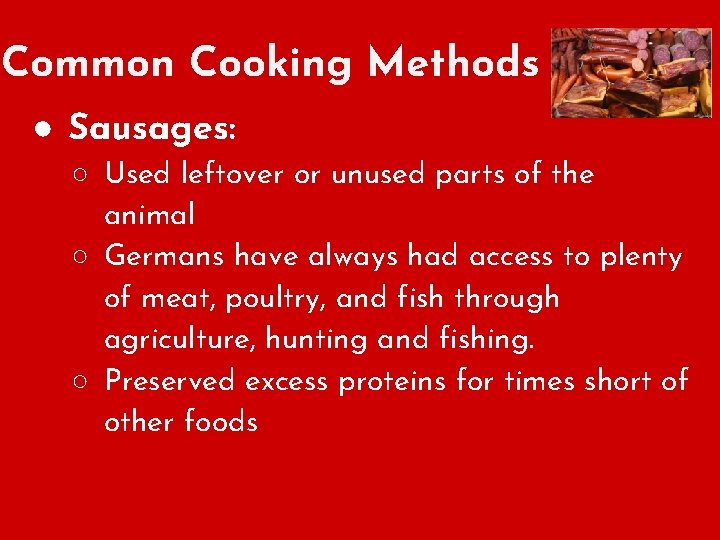
Common Cooking Methods ● Sausages: ○ Used leftover or unused parts of the animal ○ Germans have always had access to plenty of meat, poultry, and fish through agriculture, hunting and fishing. ○ Preserved excess proteins for times short of other foods
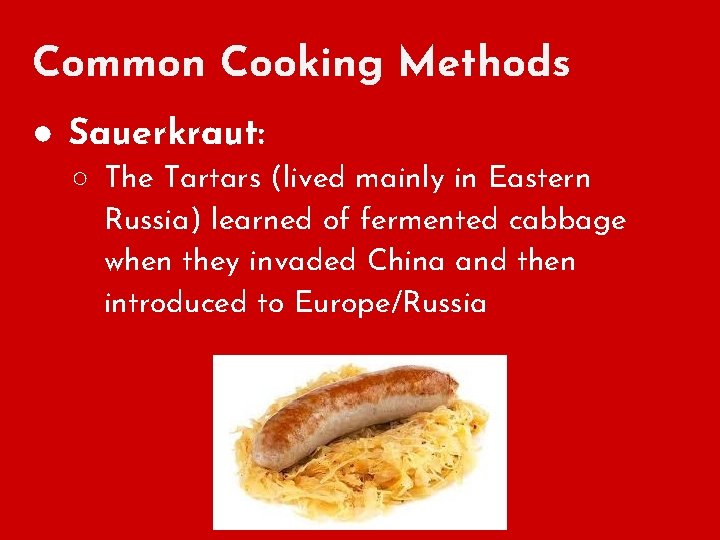
Common Cooking Methods ● Sauerkraut: ○ The Tartars (lived mainly in Eastern Russia) learned of fermented cabbage when they invaded China and then introduced to Europe/Russia
Meal Customs ● Breakfast: ○ ● Snack or Second Breakfast: ○ ● Main meal of the day served around 12/1 p. m. Kaffeestunde: ○ ● Typically a sandwich for farmers or school children (late morning) Mittagessen: ○ ● Simple meal of coffee and bread w/butter or jam Coffee Hour (coffee and pastry) Light Evening Meal: ○ Sausages, cold cuts, cheese, bread, and often salad
Common Foods In addition to previously mentioned items: Rye bread Cabbage Lentils & split peas Brussels sprouts Kohlrabi Cauliflower Beets Carrots White asparagus Vinegar Juniper berries Caraway seeds Fruits (apples, cherries, plums, apricots) Nuts
Common Foods ● Potatoes ○ Starch of choice ○ Consumed daily and appear in every part of the menu from appetizers to desserts ○ Over 150 varieties grown in Germany
Common Foods & Cuisine: North Germany ● Meats frequently cooked with fruit and vegetables ● Many sweet and sour dishes ● Bacon and bacon grease flavor many dishes ● Pickled and Smoked Seafood: ○ Eel & herring are favorites ● Many soups and stews
Common Foods & Cuisine: Central Germany ● Hearty foods like pork, breads, cheese, butter, sausages ● City of Frankfurt: ○ Origin of named Frankfurters (hot dogs) ● Onions prominent ● Fruits from orchards and berries in forests ○ Wine festivals
Common Foods & Cuisine: South Germany ● Dumplings, sausage, beer consumed in large quantities ● Blends cooking traits between Germany and France ● Most meals include at least 1 type of salad ● “Beer Country” ○ Observe stringent government controlled standards to ensure high quality
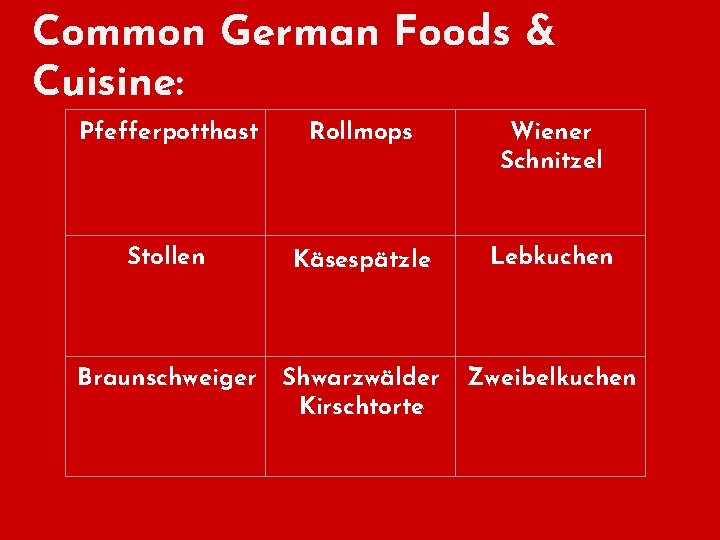
Common German Foods & Cuisine: Pfefferpotthast Rollmops Wiener Schnitzel Stollen Käsespätzle Lebkuchen Braunschweiger Shwarzwälder Kirschtorte Zweibelkuchen
- Slides: 22