
Geriatric Case Study Patient Centered Care Meet the



- Slides: 18
Geriatric Case Study Patient Centered Care
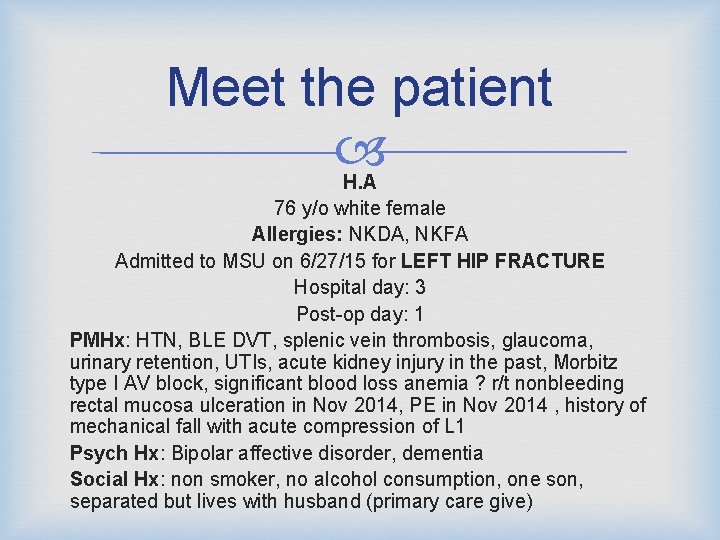
Meet the patient H. A 76 y/o white female Allergies: NKDA, NKFA Admitted to MSU on 6/27/15 for LEFT HIP FRACTURE Hospital day: 3 Post-op day: 1 PMHx: HTN, BLE DVT, splenic vein thrombosis, glaucoma, urinary retention, UTIs, acute kidney injury in the past, Morbitz type I AV block, significant blood loss anemia ? r/t nonbleeding rectal mucosa ulceration in Nov 2014, PE in Nov 2014 , history of mechanical fall with acute compression of L 1 Psych Hx: Bipolar affective disorder, dementia Social Hx: non smoker, no alcohol consumption, one son, separated but lives with husband (primary care give)
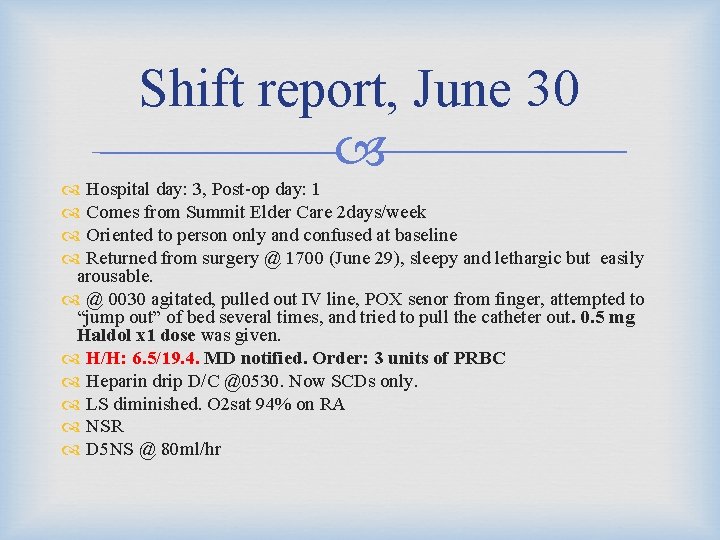
Shift report, June 30 Hospital day: 3, Post-op day: 1 Comes from Summit Elder Care 2 days/week Oriented to person only and confused at baseline Returned from surgery @ 1700 (June 29), sleepy and lethargic but easily arousable. @ 0030 agitated, pulled out IV line, POX senor from finger, attempted to “jump out” of bed several times, and tried to pull the catheter out. 0. 5 mg Haldol x 1 dose was given. H/H: 6. 5/19. 4. MD notified. Order: 3 units of PRBC Heparin drip D/C @0530. Now SCDs only. LS diminished. O 2 sat 94% on RA NSR D 5 NS @ 80 ml/hr
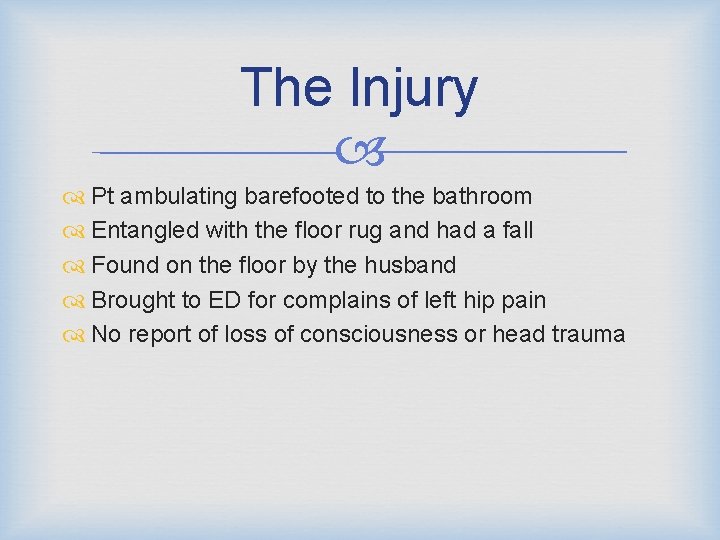
The Injury Pt ambulating barefooted to the bathroom Entangled with the floor rug and had a fall Found on the floor by the husband Brought to ED for complains of left hip pain No report of loss of consciousness or head trauma
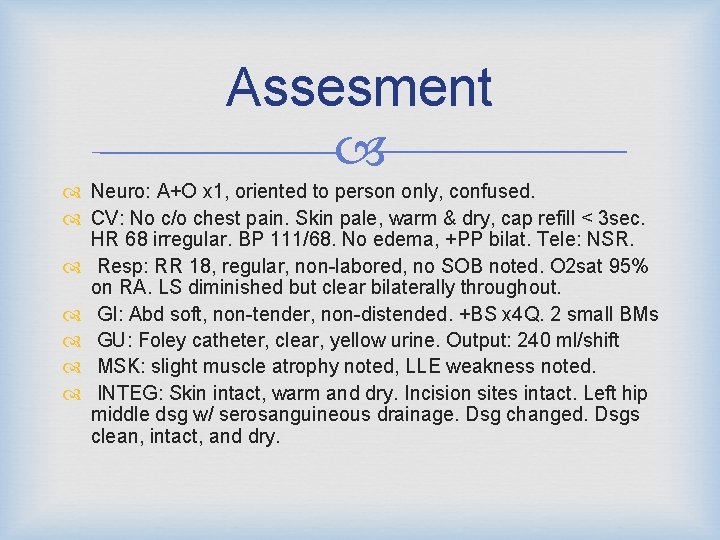
Assesment Neuro: A+O x 1, oriented to person only, confused. CV: No c/o chest pain. Skin pale, warm & dry, cap refill < 3 sec. HR 68 irregular. BP 111/68. No edema, +PP bilat. Tele: NSR. Resp: RR 18, regular, non-labored, no SOB noted. O 2 sat 95% on RA. LS diminished but clear bilaterally throughout. GI: Abd soft, non-tender, non-distended. +BS x 4 Q. 2 small BMs GU: Foley catheter, clear, yellow urine. Output: 240 ml/shift MSK: slight muscle atrophy noted, LLE weakness noted. INTEG: Skin intact, warm and dry. Incision sites intact. Left hip middle dsg w/ serosanguineous drainage. Dsg changed. Dsgs clean, intact, and dry.
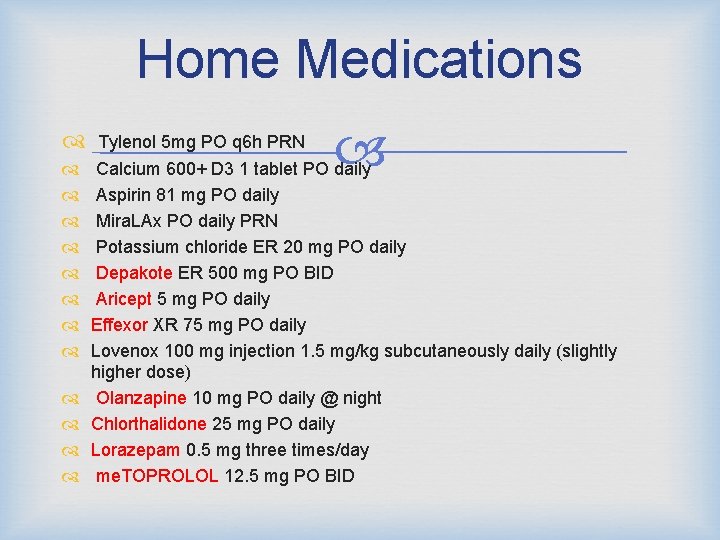
Home Medications Tylenol 5 mg PO q 6 h PRN Calcium 600+ D 3 1 tablet PO daily Aspirin 81 mg PO daily Mira. LAx PO daily PRN Potassium chloride ER 20 mg PO daily Depakote ER 500 mg PO BID Aricept 5 mg PO daily Effexor XR 75 mg PO daily Lovenox 100 mg injection 1. 5 mg/kg subcutaneously daily (slightly higher dose) Olanzapine 10 mg PO daily @ night Chlorthalidone 25 mg PO daily Lorazepam 0. 5 mg three times/day me. TOPROLOL 12. 5 mg PO BID
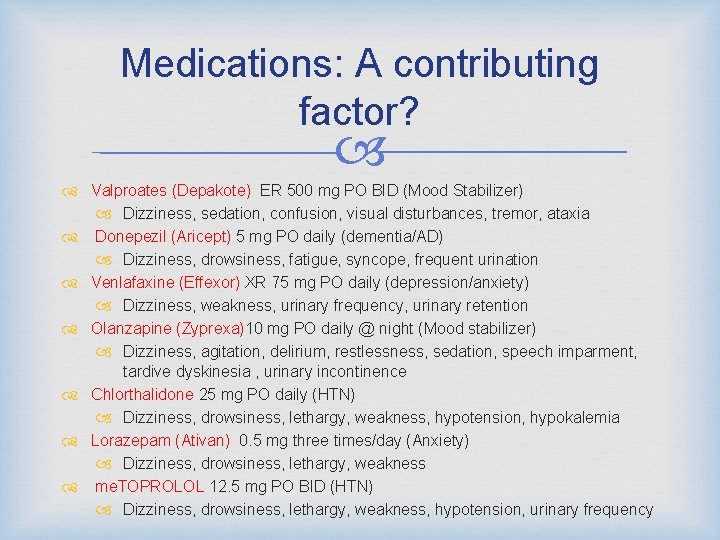
Medications: A contributing factor? Valproates (Depakote) ER 500 mg PO BID (Mood Stabilizer) Dizziness, sedation, confusion, visual disturbances, tremor, ataxia Donepezil (Aricept) 5 mg PO daily (dementia/AD) Dizziness, drowsiness, fatigue, syncope, frequent urination Venlafaxine (Effexor) XR 75 mg PO daily (depression/anxiety) Dizziness, weakness, urinary frequency, urinary retention Olanzapine (Zyprexa)10 mg PO daily @ night (Mood stabilizer) Dizziness, agitation, delirium, restlessness, sedation, speech imparment, tardive dyskinesia , urinary incontinence Chlorthalidone 25 mg PO daily (HTN) Dizziness, drowsiness, lethargy, weakness, hypotension, hypokalemia Lorazepam (Ativan) 0. 5 mg three times/day (Anxiety) Dizziness, drowsiness, lethargy, weakness me. TOPROLOL 12. 5 mg PO BID (HTN) Dizziness, drowsiness, lethargy, weakness, hypotension, urinary frequency
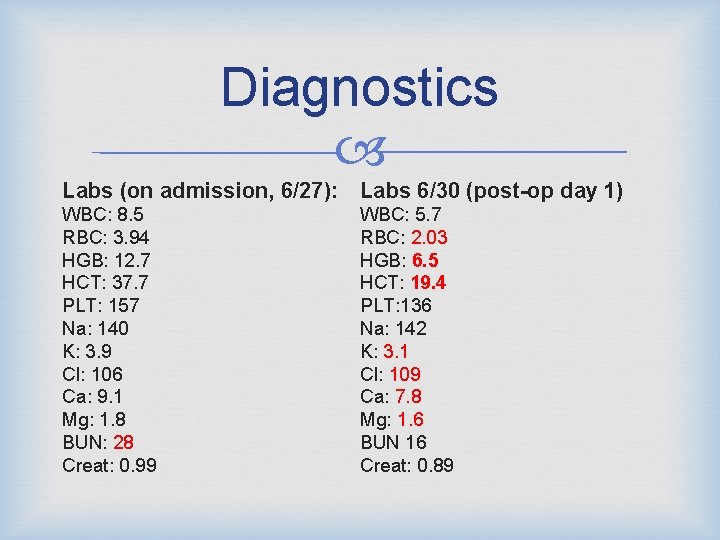
Diagnostics Labs (on admission, 6/27): Labs 6/30 (post-op day 1) WBC: 8. 5 RBC: 3. 94 HGB: 12. 7 HCT: 37. 7 PLT: 157 Na: 140 K: 3. 9 Cl: 106 Ca: 9. 1 Mg: 1. 8 BUN: 28 Creat: 0. 99 WBC: 5. 7 RBC: 2. 03 HGB: 6. 5 HCT: 19. 4 PLT: 136 Na: 142 K: 3. 1 Cl: 109 Ca: 7. 8 Mg: 1. 6 BUN 16 Creat: 0. 89
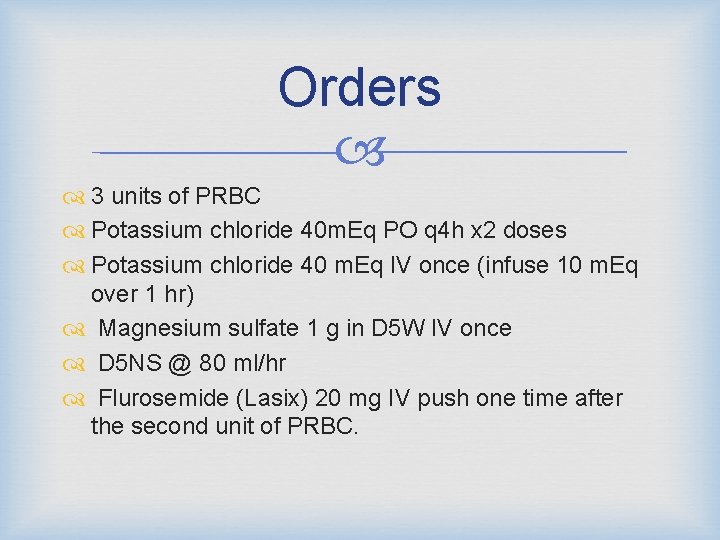
Orders 3 units of PRBC Potassium chloride 40 m. Eq PO q 4 h x 2 doses Potassium chloride 40 m. Eq IV once (infuse 10 m. Eq over 1 hr) Magnesium sulfate 1 g in D 5 W IV once D 5 NS @ 80 ml/hr Flurosemide (Lasix) 20 mg IV push one time after the second unit of PRBC.
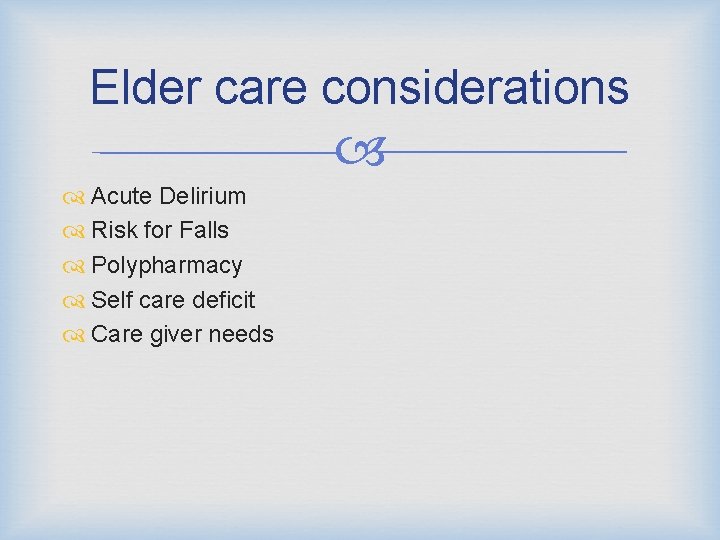
Elder care considerations Acute Delirium Risk for Falls Polypharmacy Self care deficit Care giver needs
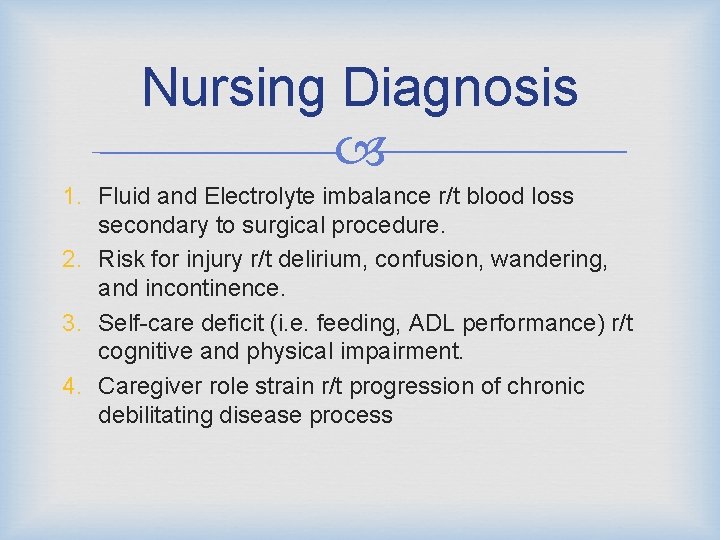
Nursing Diagnosis 1. Fluid and Electrolyte imbalance r/t blood loss secondary to surgical procedure. 2. Risk for injury r/t delirium, confusion, wandering, and incontinence. 3. Self-care deficit (i. e. feeding, ADL performance) r/t cognitive and physical impairment. 4. Caregiver role strain r/t progression of chronic debilitating disease process
NCLEX QUESTIONS
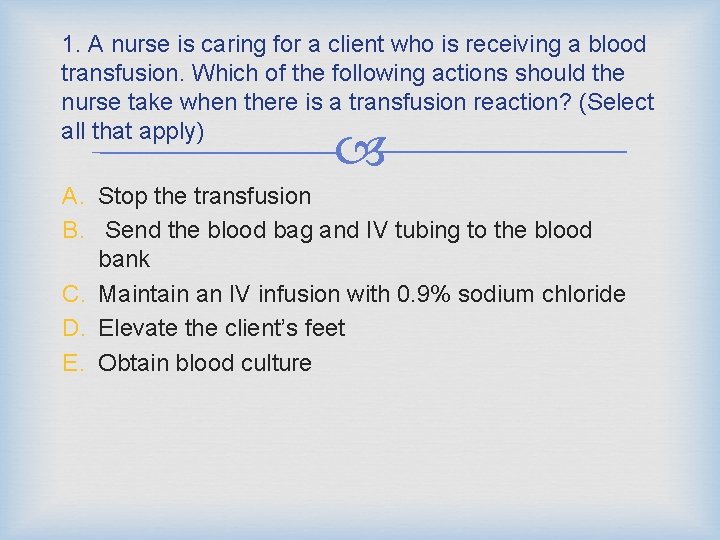
1. A nurse is caring for a client who is receiving a blood transfusion. Which of the following actions should the nurse take when there is a transfusion reaction? (Select all that apply) A. Stop the transfusion B. Send the blood bag and IV tubing to the blood bank C. Maintain an IV infusion with 0. 9% sodium chloride D. Elevate the client’s feet E. Obtain blood culture
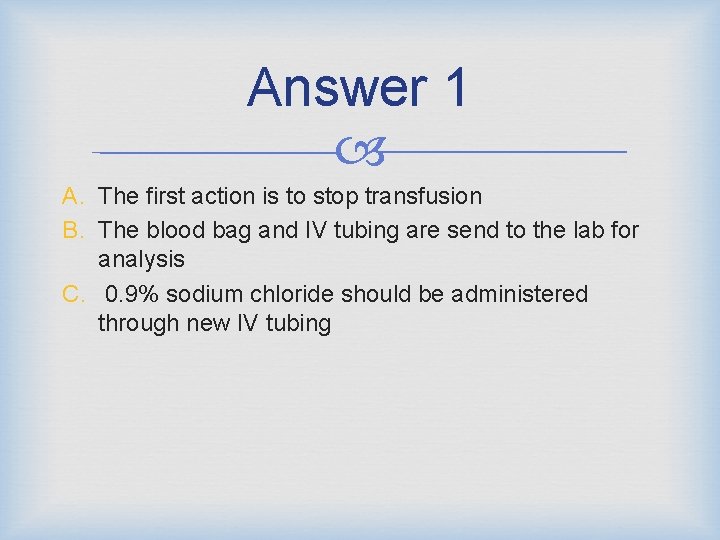
Answer 1 A. The first action is to stop transfusion B. The blood bag and IV tubing are send to the lab for analysis C. 0. 9% sodium chloride should be administered through new IV tubing
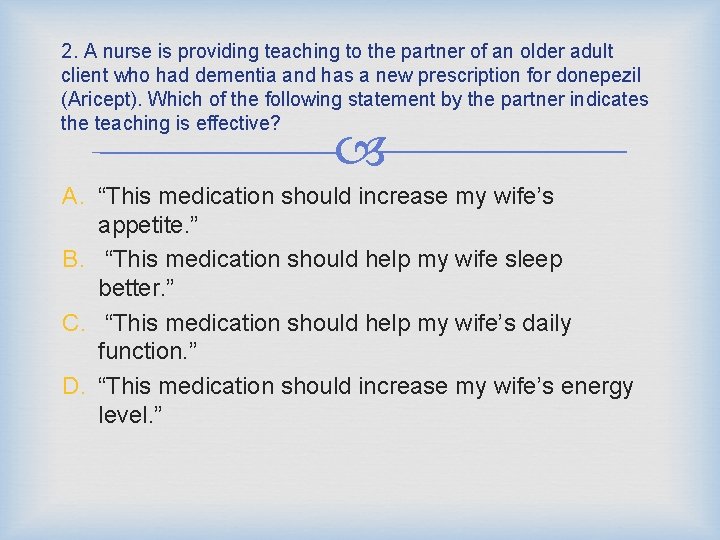
2. A nurse is providing teaching to the partner of an older adult client who had dementia and has a new prescription for donepezil (Aricept). Which of the following statement by the partner indicates the teaching is effective? A. “This medication should increase my wife’s appetite. ” B. “This medication should help my wife sleep better. ” C. “This medication should help my wife’s daily function. ” D. “This medication should increase my wife’s energy level. ”
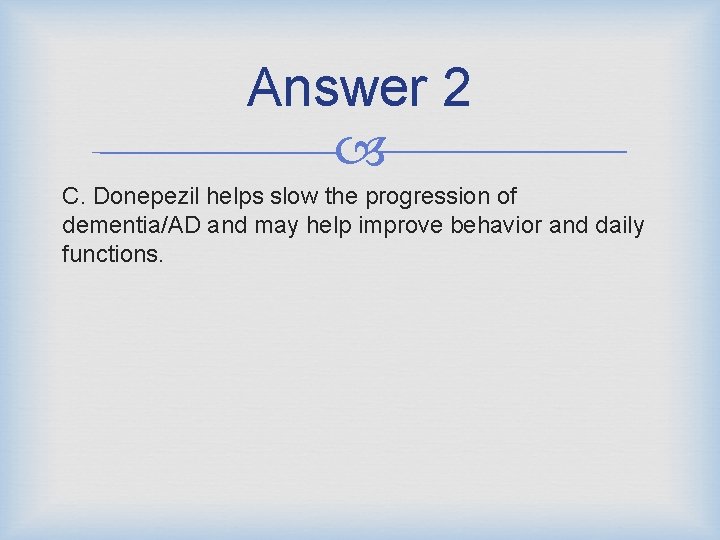
Answer 2 C. Donepezil helps slow the progression of dementia/AD and may help improve behavior and daily functions.
3. A nurse is making a home visit to a client who has dementia. The client’s husband states that the client is often disoriented to time and place, is unsteady on her feet, and has a history of wandering. Which of the following safety measures should the nurse review with him? (Select all that apply) A. B. C. D. E. Remove floor rugs. Have door locks that are easily opened. Provide increased lighting in stairwells. Install handrails in the bathroom. Place the mattress on the floor.
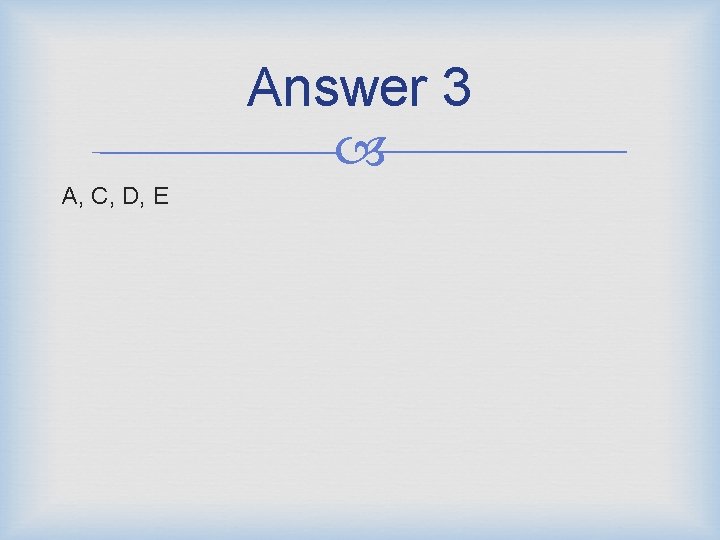
Answer 3 A, C, D, E