
GERERAL ANESTHESIA AND PHARMACOLOGY OF GENERAL ANESTHETICS Amir



- Slides: 55
GERERAL ANESTHESIA AND PHARMACOLOGY OF GENERAL ANESTHETICS Amir B. Channa FFARCS, DA(ENG) Department of Anesthesia & Intensive Care King Khalid University Hospital Riyadh
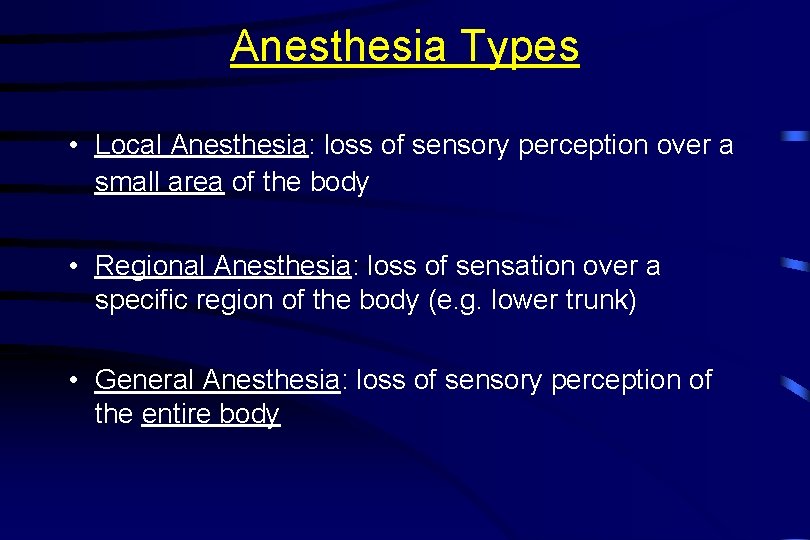
Anesthesia Types • Local Anesthesia: loss of sensory perception over a small area of the body • Regional Anesthesia: loss of sensation over a specific region of the body (e. g. lower trunk) • General Anesthesia: loss of sensory perception of the entire body
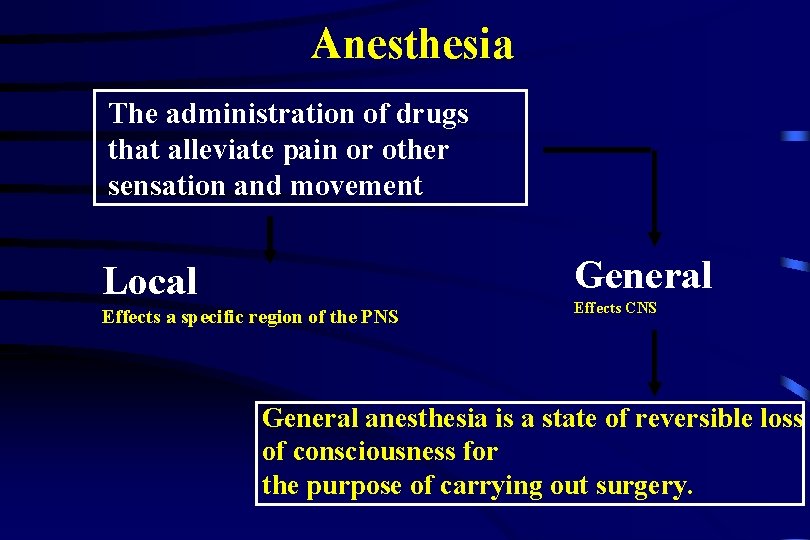
Anesthesia The administration of drugs that alleviate pain or other sensation and movement General Local Effects a specific region of the PNS Effects CNS General anesthesia is a state of reversible loss of consciousness for the purpose of carrying out surgery.
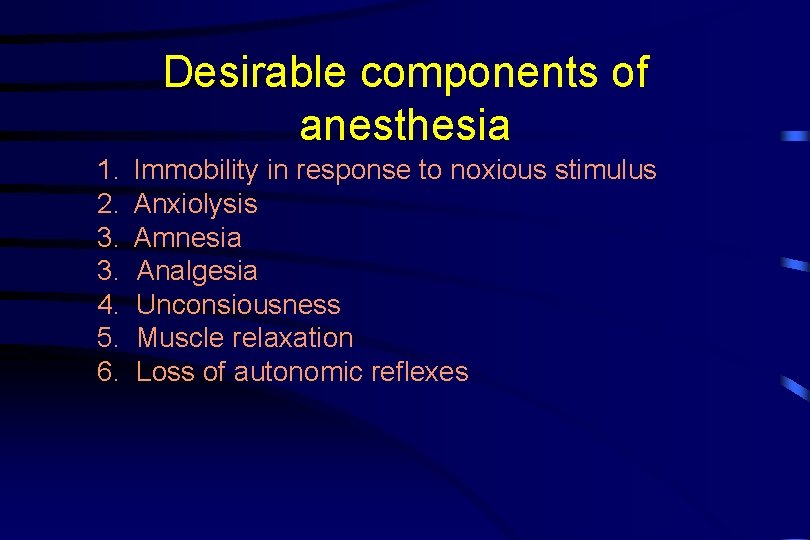
Desirable components of anesthesia 1. 2. 3. 3. 4. 5. 6. Immobility in response to noxious stimulus Anxiolysis Amnesia Analgesia Unconsiousness Muscle relaxation Loss of autonomic reflexes
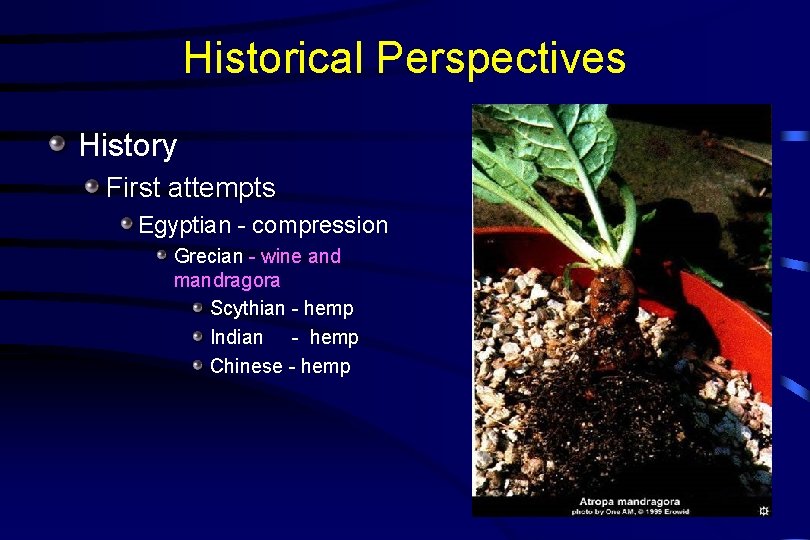
Historical Perspectives History First attempts Egyptian - compression Grecian - wine and mandragora Scythian - hemp Indian - hemp Chinese - hemp
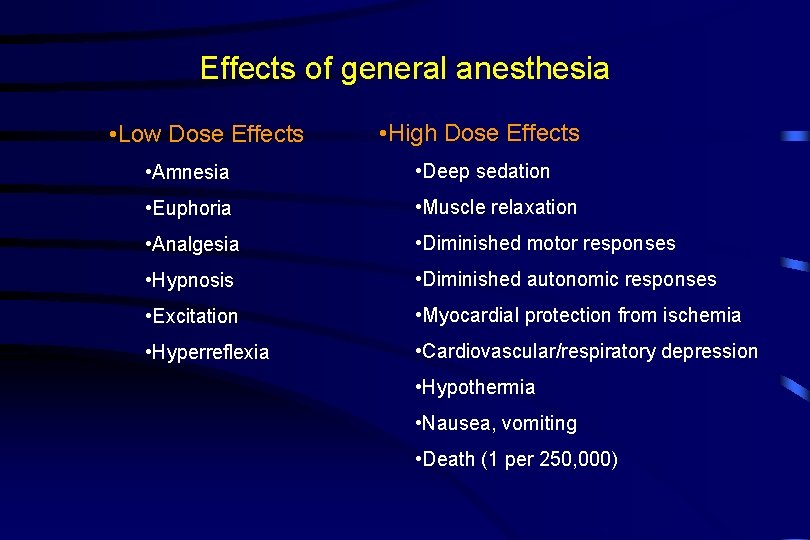
Effects of general anesthesia • Low Dose Effects • High Dose Effects • Amnesia • Deep sedation • Euphoria • Muscle relaxation • Analgesia • Diminished motor responses • Hypnosis • Diminished autonomic responses • Excitation • Myocardial protection from ischemia • Hyperreflexia • Cardiovascular/respiratory depression • Hypothermia • Nausea, vomiting • Death (1 per 250, 000)
Before Anesthesia • Surgery uncommon • Aseptic technique unknown • Surgical pain relief • alcohol, • hashih, • opium • physical methods (ice, ischemia) • unconsiousness (blow to head, strangulation) • simple restraint most common
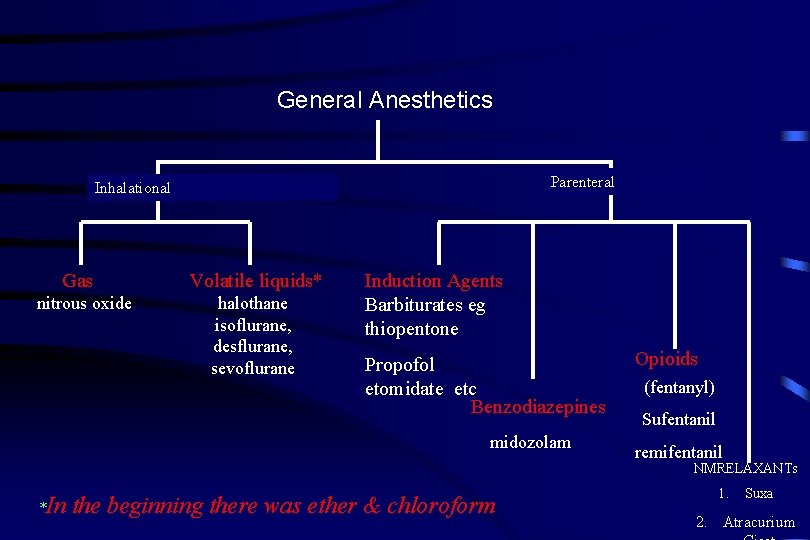
General Anesthetics Parenteral Inhalational Gas nitrous oxide Volatile liquids* halothane isoflurane, desflurane, sevoflurane Induction Agents Barbiturates eg thiopentone Propofol etomidate etc Benzodiazepines midozolam Opioids (fentanyl) Sufentanil remifentanil NMRELAXANTs *In the beginning there was ether & chloroform 1. Suxa 2. Atracurium
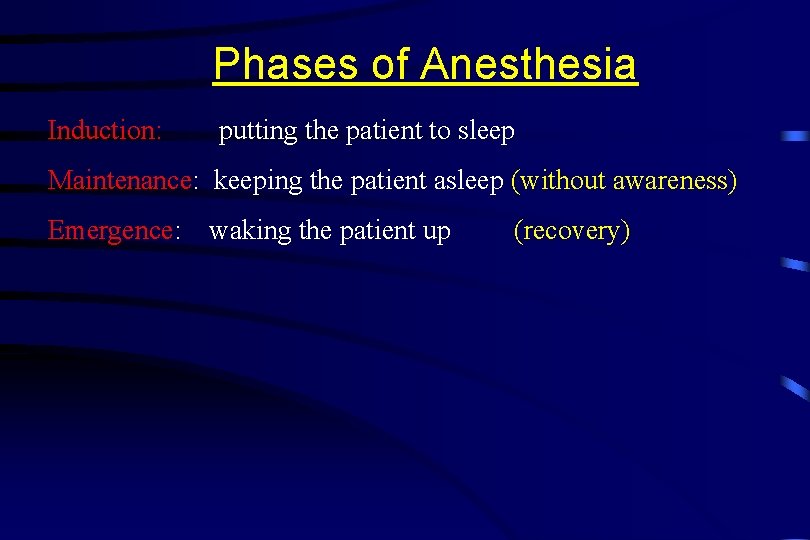
Phases of Anesthesia Induction: putting the patient to sleep Maintenance: keeping the patient asleep (without awareness) Emergence: waking the patient up (recovery)
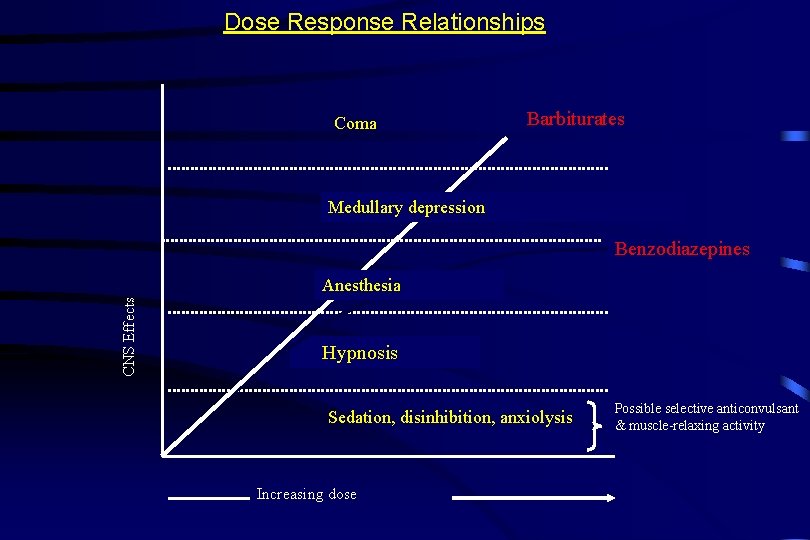
Dose Response Relationships Coma Barbiturates Medullary depression Benzodiazepines CNS Effects Anesthesia Hypnosis Sedation, disinhibition, anxiolysis Increasing dose Possible selective anticonvulsant & muscle-relaxing activity
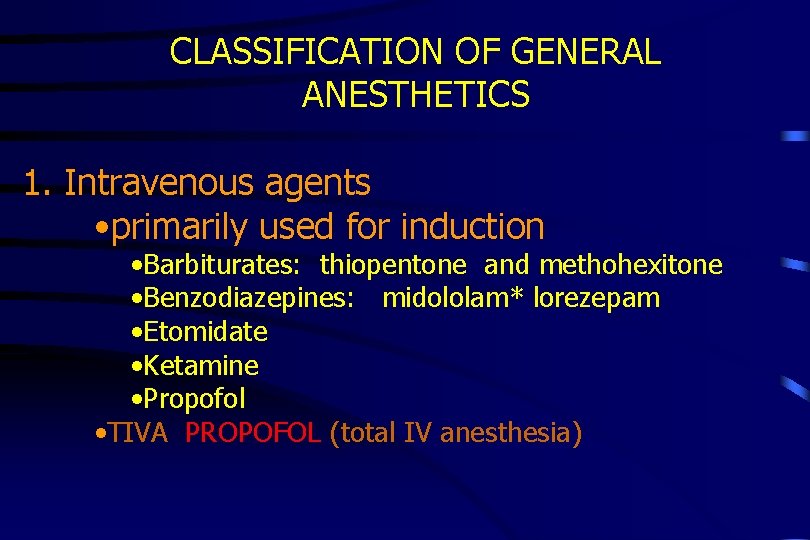
CLASSIFICATION OF GENERAL ANESTHETICS 1. Intravenous agents • primarily used for induction • Barbiturates: thiopentone and methohexitone • Benzodiazepines: midololam* lorezepam • Etomidate • Ketamine • Propofol • TIVA PROPOFOL (total IV anesthesia)
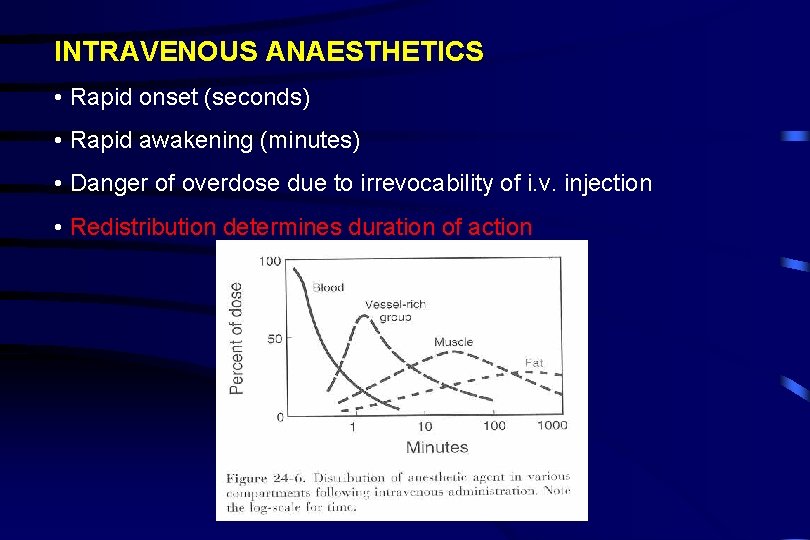
INTRAVENOUS ANAESTHETICS • Rapid onset (seconds) • Rapid awakening (minutes) • Danger of overdose due to irrevocability of i. v. injection • Redistribution determines duration of action
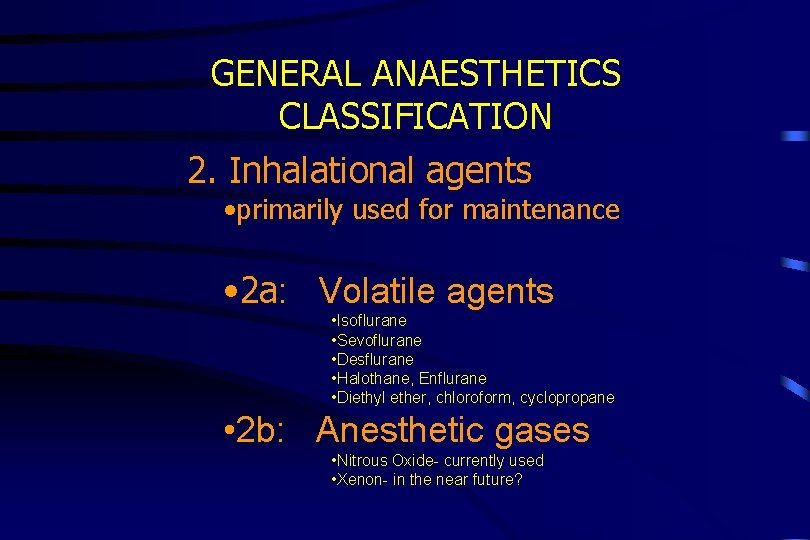
GENERAL ANAESTHETICS CLASSIFICATION 2. Inhalational agents • primarily used for maintenance • 2 a: Volatile agents • Isoflurane • Sevoflurane • Desflurane • Halothane, Enflurane • Diethyl ether, chloroform, cyclopropane • 2 b: Anesthetic gases • Nitrous Oxide- currently used • Xenon- in the near future?
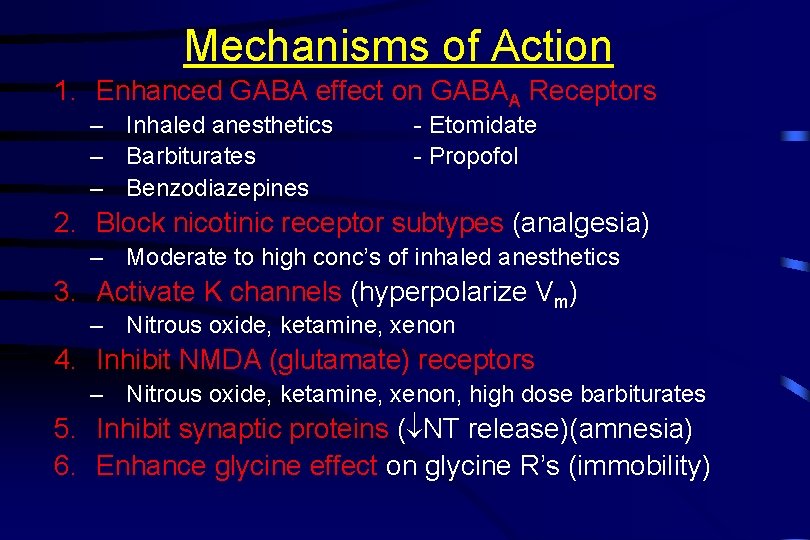
Mechanisms of Action 1. Enhanced GABA effect on GABAA Receptors – Inhaled anesthetics – Barbiturates – Benzodiazepines - Etomidate - Propofol 2. Block nicotinic receptor subtypes (analgesia) – Moderate to high conc’s of inhaled anesthetics 3. Activate K channels (hyperpolarize Vm) – Nitrous oxide, ketamine, xenon 4. Inhibit NMDA (glutamate) receptors – Nitrous oxide, ketamine, xenon, high dose barbiturates 5. Inhibit synaptic proteins ( NT release)(amnesia) 6. Enhance glycine effect on glycine R’s (immobility)
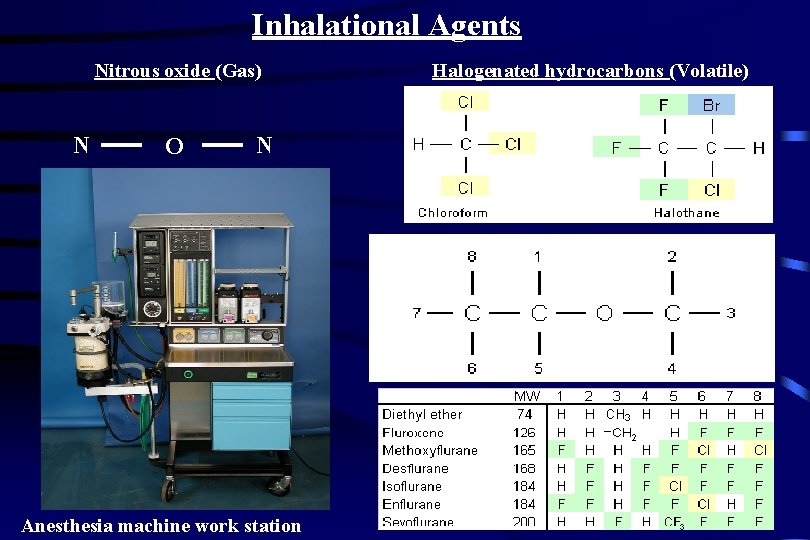
Inhalational Agents Nitrous oxide (Gas) N O N Anesthesia machine work station Halogenated hydrocarbons (Volatile)
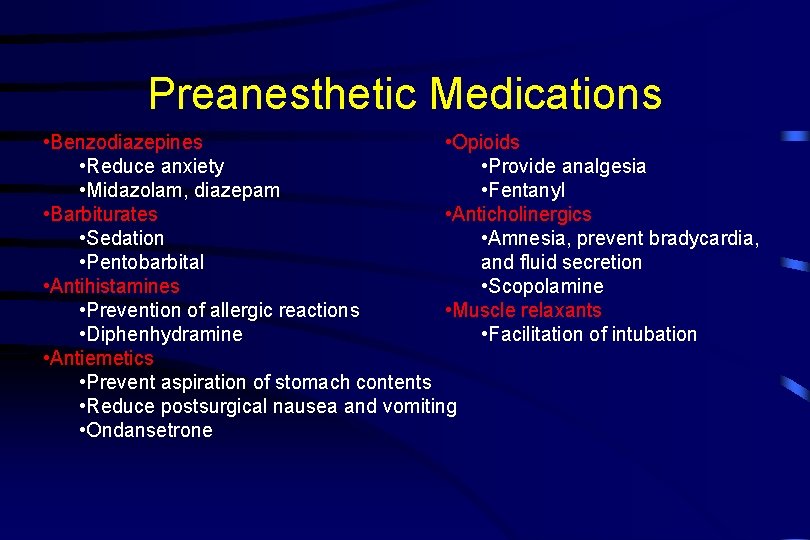
Preanesthetic Medications • Benzodiazepines • Opioids • Reduce anxiety • Provide analgesia • Midazolam, diazepam • Fentanyl • Barbiturates • Anticholinergics • Sedation • Amnesia, prevent bradycardia, • Pentobarbital and fluid secretion • Antihistamines • Scopolamine • Prevention of allergic reactions • Muscle relaxants • Diphenhydramine • Facilitation of intubation • Antiemetics • Prevent aspiration of stomach contents • Reduce postsurgical nausea and vomiting • Ondansetrone
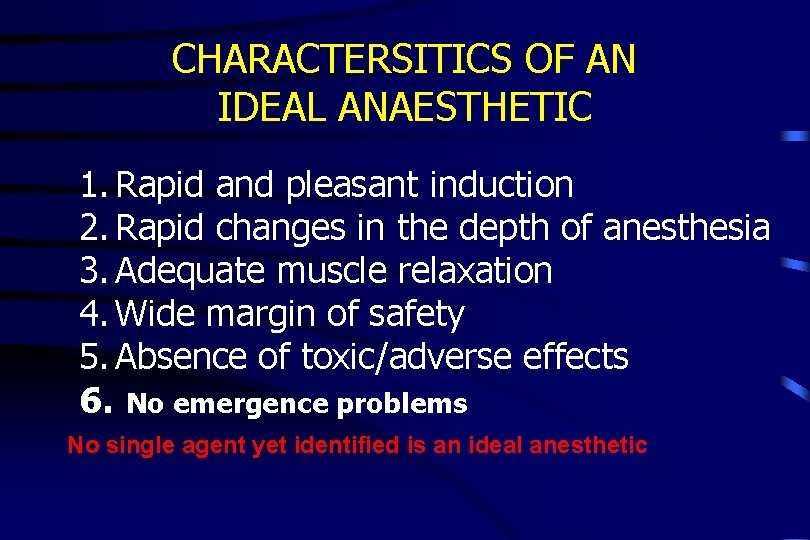
CHARACTERSITICS OF AN IDEAL ANAESTHETIC 1. Rapid and pleasant induction 2. Rapid changes in the depth of anesthesia 3. Adequate muscle relaxation 4. Wide margin of safety 5. Absence of toxic/adverse effects 6. No emergence problems No single agent yet identified is an ideal anesthetic
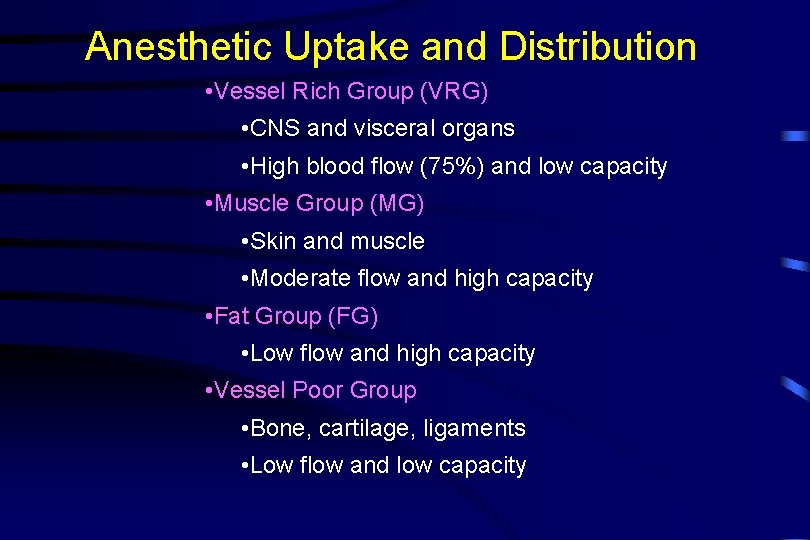
Anesthetic Uptake and Distribution • Vessel Rich Group (VRG) • CNS and visceral organs • High blood flow (75%) and low capacity • Muscle Group (MG) • Skin and muscle • Moderate flow and high capacity • Fat Group (FG) • Low flow and high capacity • Vessel Poor Group • Bone, cartilage, ligaments • Low flow and low capacity
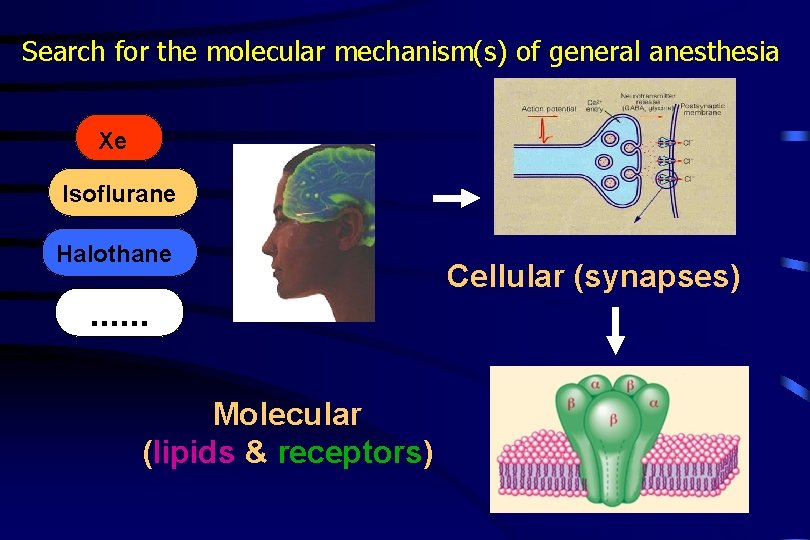
Search for the molecular mechanism(s) of general anesthesia Xe Isoflurane Halothane . . . Molecular (lipids & receptors) Cellular (synapses)
Mechanism of action: Intravenous Anesthetics • Cause anesthesia via GABAa receptors • Specific selective targets • Specific sites for specific effects • Different anesthetics have different mechanisms
Anesthetic of the Future: Xenon • Rare gas extracted from air • Very expensive to produce • Close to ideal anesthetic • Low blood and tissue solubility • (rapid induction/recovery) • Potent • Not metabolized (totatally inert) • Nonflammable • Minimal side effects
THERAPEUTIC GASES: Oxygen • Administered to prevent hypoxic injury • Hypoxia can result from: • Hypoxemia (problem with lungs) • Inadequate delivery to tissues • Impaired utilization • Can have toxic effects • Due to free radical generation
THERAPEUTIC GASES: Nitric Oxide • Important cell signalling molecule • Can selectively dilate pulmonary vasculature • Administered to newborns with persistent pulmonary hypertension • Under investigation for many disease states • Can have toxic effects
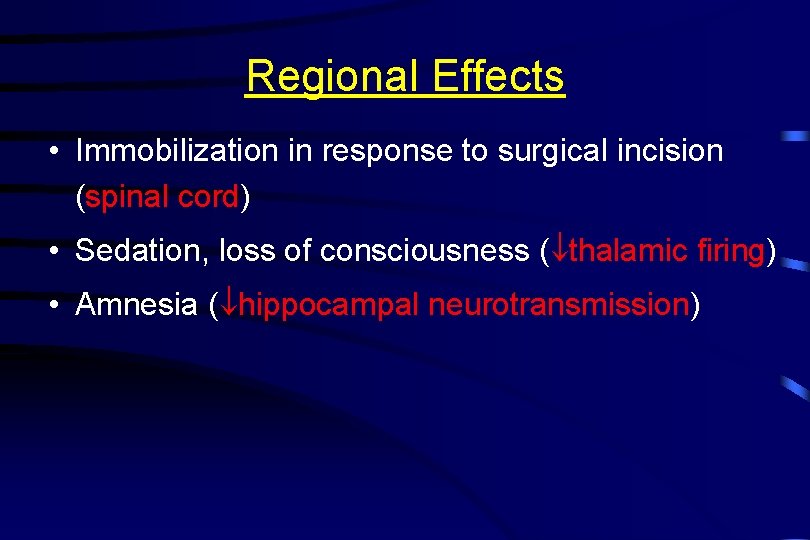
Regional Effects • Immobilization in response to surgical incision (spinal cord) • Sedation, loss of consciousness ( thalamic firing) • Amnesia ( hippocampal neurotransmission)
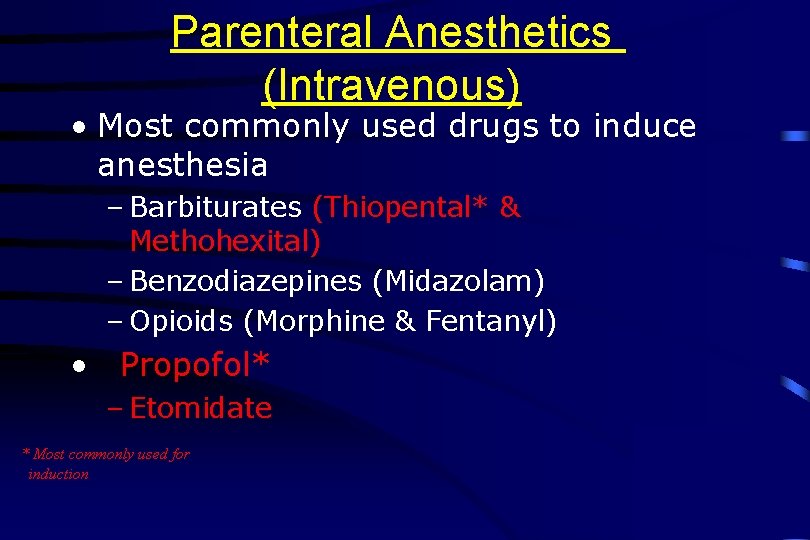
Parenteral Anesthetics (Intravenous) • Most commonly used drugs to induce anesthesia – Barbiturates (Thiopental* & Methohexital) – Benzodiazepines (Midazolam) – Opioids (Morphine & Fentanyl) • Propofol* – Etomidate * Most commonly used for induction
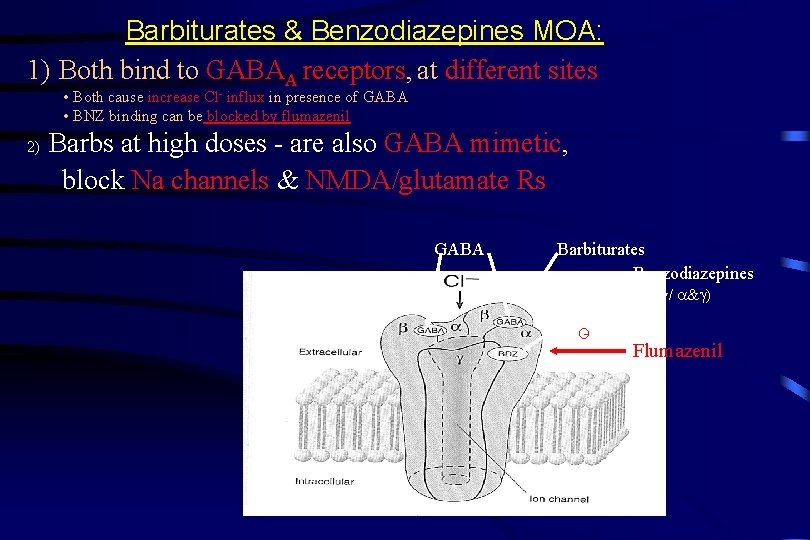
Barbiturates & Benzodiazepines MOA: 1) Both bind to GABAA receptors, at different sites • Both cause increase Cl- influx in presence of GABA • BNZ binding can be blocked by flumazenil 2) Barbs at high doses - are also GABA mimetic, block Na channels & NMDA/glutamate Rs GABA Barbiturates Benzodiazepines (w/ & ) O- Flumazenil
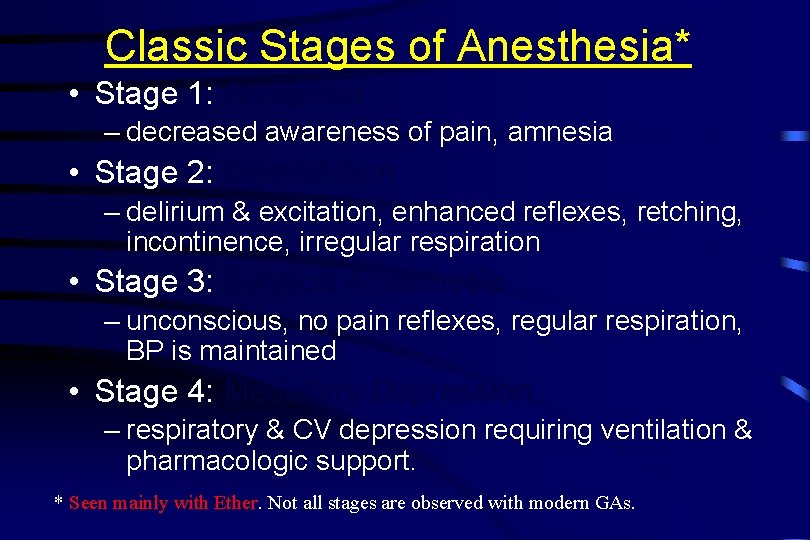
Classic Stages of Anesthesia* • Stage 1: Analgesia – decreased awareness of pain, amnesia • Stage 2: Disinhibition – delirium & excitation, enhanced reflexes, retching, incontinence, irregular respiration • Stage 3: Surgical Anesthesia – unconscious, no pain reflexes, regular respiration, BP is maintained • Stage 4: Medullary Depression – respiratory & CV depression requiring ventilation & pharmacologic support. * Seen mainly with Ether. Not all stages are observed with modern GAs.
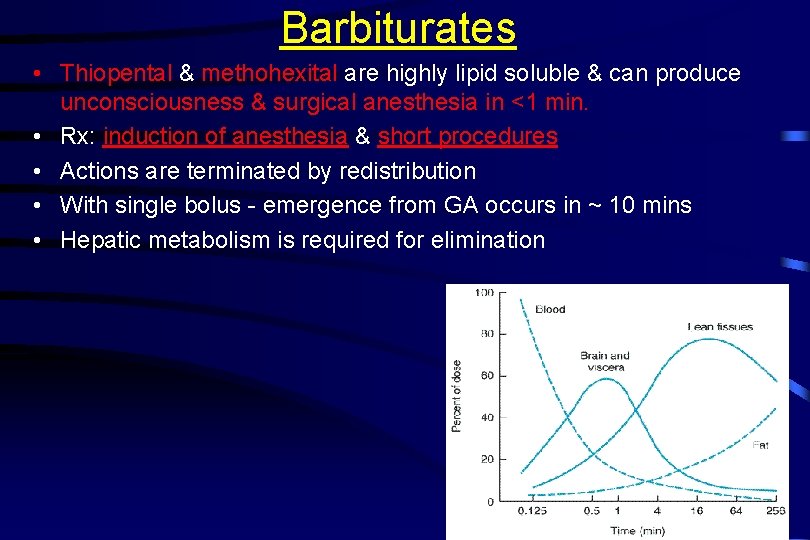
Barbiturates • Thiopental & methohexital are highly lipid soluble & can produce unconsciousness & surgical anesthesia in <1 min. • Rx: induction of anesthesia & short procedures • Actions are terminated by redistribution • With single bolus - emergence from GA occurs in ~ 10 mins • Hepatic metabolism is required for elimination
Thiopental (Pentothal ®): • Barbs are respiratory & circulatory depressants (Contraindicated: hypovolemia, cardiomyopathy, betablockade, etc. ) • Psychomotor impairment may last for days after use of a single high dose • Taste of garlic prior to anesthesia • Potentially fatal attacks of porphyria in pts with a history of acute or intermittent porphyria. • Delay giving other drugs (e. g. NMJ blockers) until barb has cleared the i. v. line to avoid precipitation.
Propofol (Diprivan ®) • Produces anesthesia as rapidly as i. v. barb’s & but recovery is more rapid than w/ barb’s. • Recovery is not delayed after prolonged infusion (due to more rapid clearance). ** • Patients are able to ambulate sooner & patients “feel better” in the post-op period compared to other i. v. anesthetics. • Antiemetic effects (pts w/ risk of nausea) • Can cause marked hypotension (>barbs) • Commonly used as component of “balanced anesthesia” for maintenance of anesthesia following induction of anesthesia. ** More rapid discharge from the recovery room
Etomidate (Amidate ®) • Rapid induction (~1 min) • Used as a supplement with nitrous oxide for short surgical procedures • Short duration of action (3 -5 mins) • Hypnotic, but not analgesic • Little effect on CV & Respiration • Can cause post-op nausea & decrease cortisol production w/ long term infusion*. • Primarily used in pts w/ limited cardiac or respiratory reserve (safer than barbs or propofol in pts w/ coronary artery dx. , cardiomyopathy, etc. ) * increased mortality
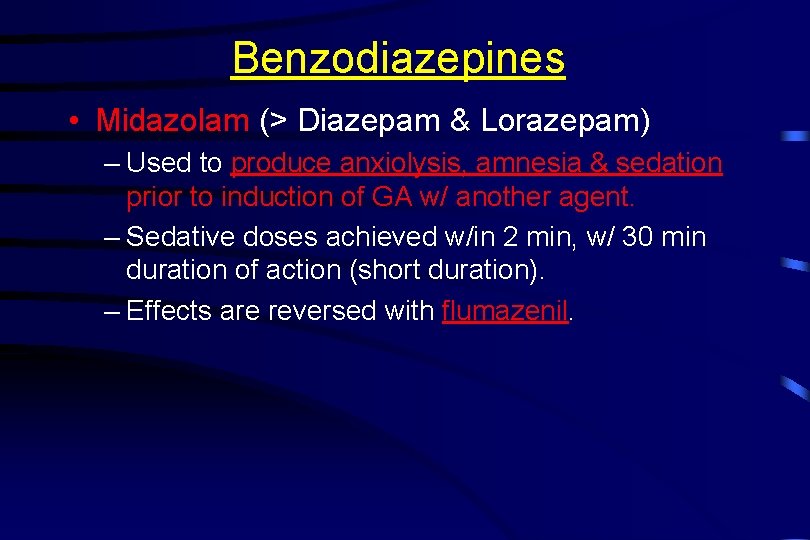
Benzodiazepines • Midazolam (> Diazepam & Lorazepam) – Used to produce anxiolysis, amnesia & sedation prior to induction of GA w/ another agent. – Sedative doses achieved w/in 2 min, w/ 30 min duration of action (short duration). – Effects are reversed with flumazenil.
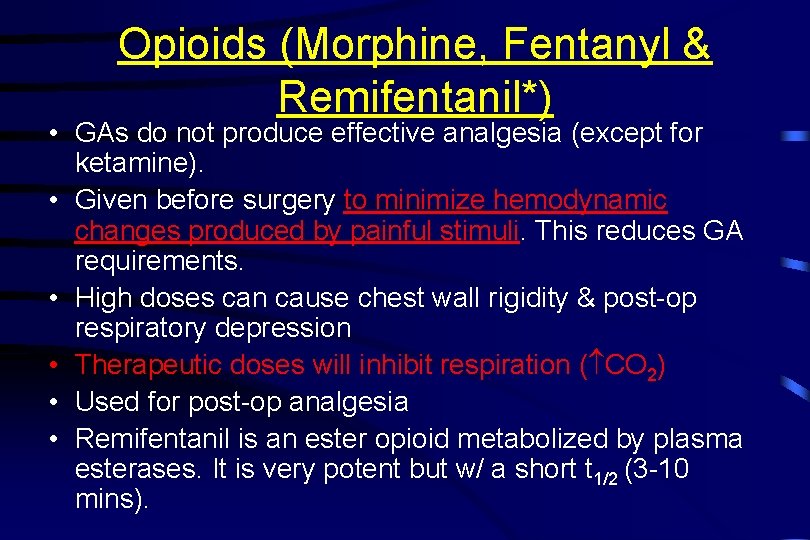
Opioids (Morphine, Fentanyl & Remifentanil*) • GAs do not produce effective analgesia (except for ketamine). • Given before surgery to minimize hemodynamic changes produced by painful stimuli. This reduces GA requirements. • High doses can cause chest wall rigidity & post-op respiratory depression • Therapeutic doses will inhibit respiration ( CO 2) • Used for post-op analgesia • Remifentanil is an ester opioid metabolized by plasma esterases. It is very potent but w/ a short t 1/2 (3 -10 mins).
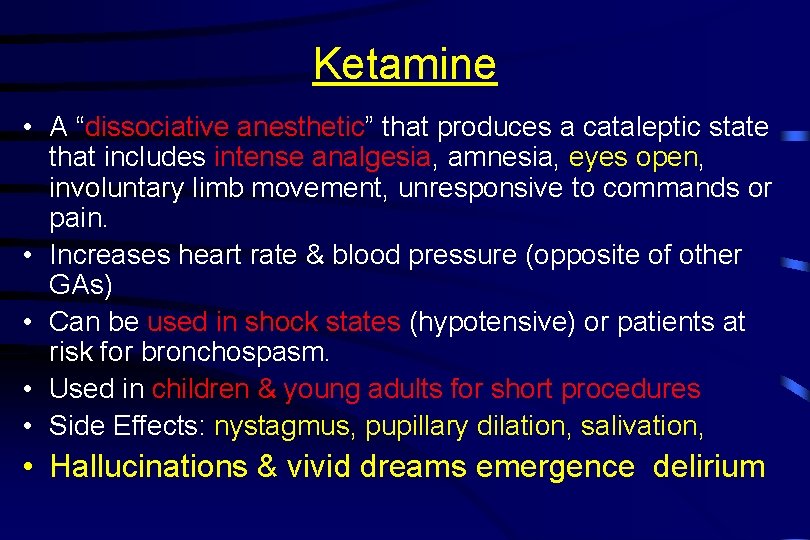
Ketamine • A “dissociative anesthetic” that produces a cataleptic state that includes intense analgesia, amnesia, eyes open, involuntary limb movement, unresponsive to commands or pain. • Increases heart rate & blood pressure (opposite of other GAs) • Can be used in shock states (hypotensive) or patients at risk for bronchospasm. • Used in children & young adults for short procedures • Side Effects: nystagmus, pupillary dilation, salivation, • Hallucinations & vivid dreams emergence delirium
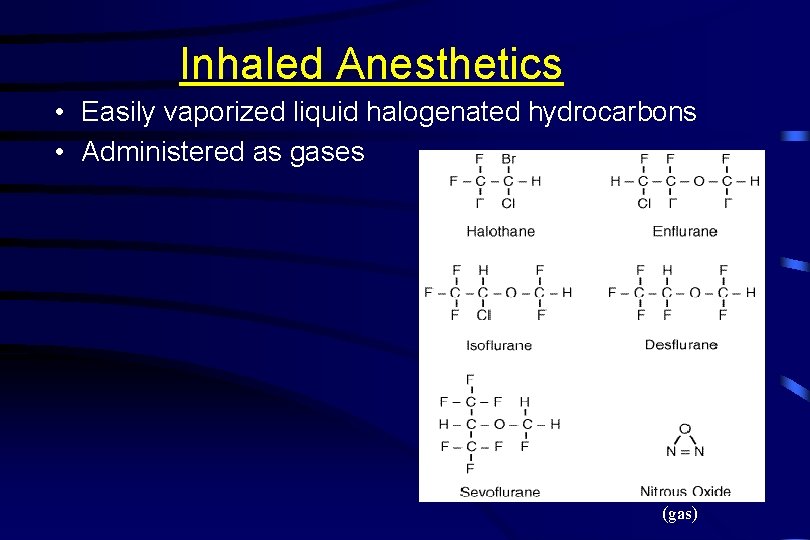
Inhaled Anesthetics • Easily vaporized liquid halogenated hydrocarbons • Administered as gases (gas)
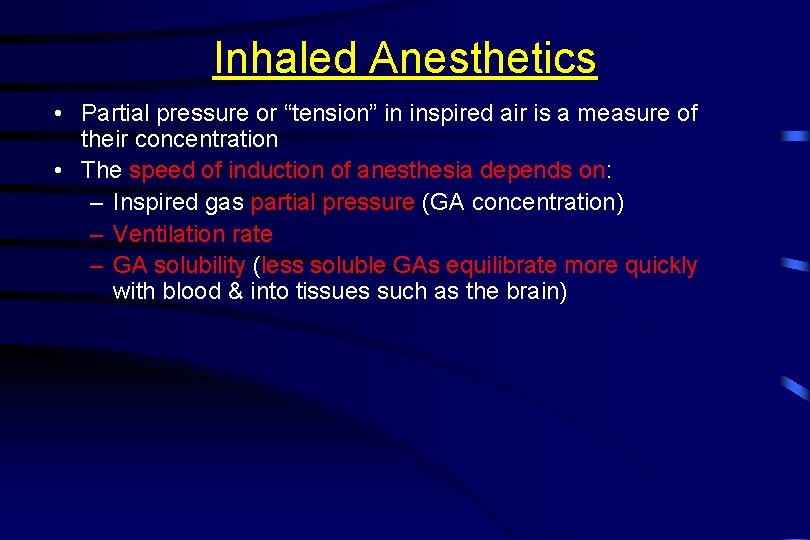
Inhaled Anesthetics • Partial pressure or “tension” in inspired air is a measure of their concentration • The speed of induction of anesthesia depends on: – Inspired gas partial pressure (GA concentration) – Ventilation rate – GA solubility (less soluble GAs equilibrate more quickly with blood & into tissues such as the brain)
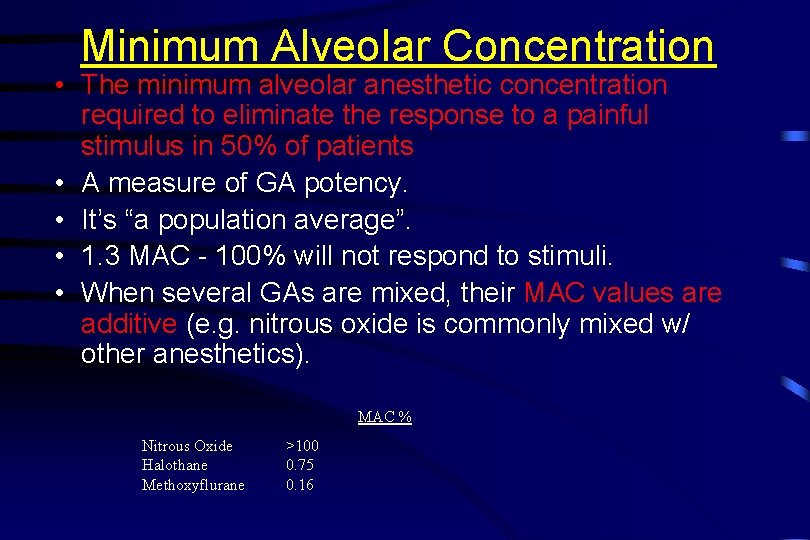
Minimum Alveolar Concentration • The minimum alveolar anesthetic concentration required to eliminate the response to a painful stimulus in 50% of patients • A measure of GA potency. • It’s “a population average”. • 1. 3 MAC - 100% will not respond to stimuli. • When several GAs are mixed, their MAC values are additive (e. g. nitrous oxide is commonly mixed w/ other anesthetics). MAC % Nitrous Oxide Halothane Methoxyflurane >100 0. 75 0. 16
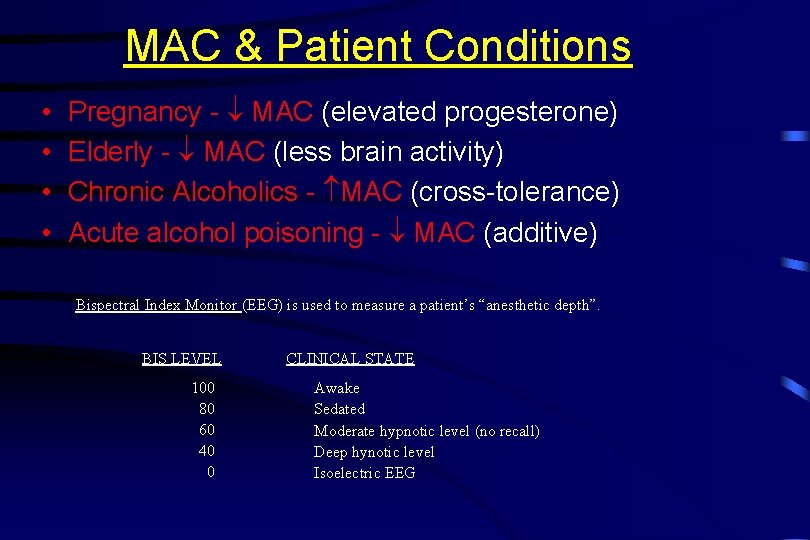
MAC & Patient Conditions • • Pregnancy - MAC (elevated progesterone) Elderly - MAC (less brain activity) Chronic Alcoholics - MAC (cross-tolerance) Acute alcohol poisoning - MAC (additive) Bispectral Index Monitor (EEG) is used to measure a patient’s “anesthetic depth”. BIS LEVEL 100 80 60 40 0 CLINICAL STATE Awake Sedated Moderate hypnotic level (no recall) Deep hynotic level Isoelectric EEG
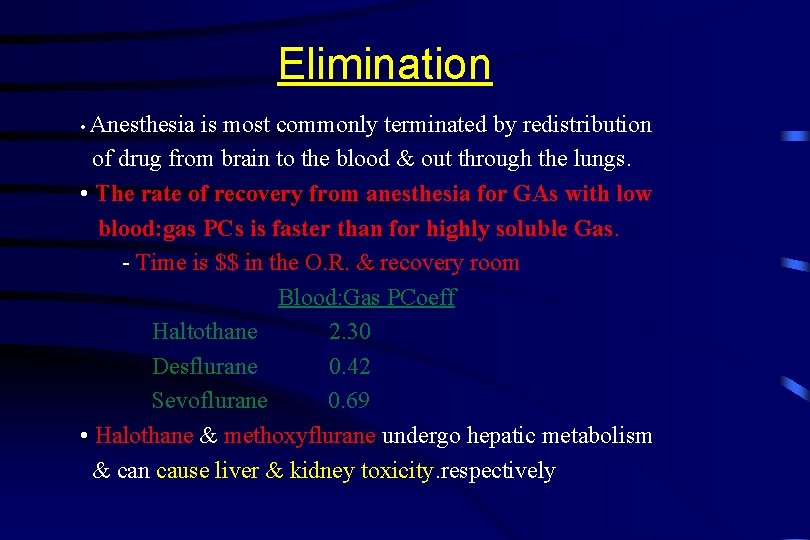
Elimination • Anesthesia is most commonly terminated by redistribution of drug from brain to the blood & out through the lungs. • The rate of recovery from anesthesia for GAs with low blood: gas PCs is faster than for highly soluble Gas. - Time is $$ in the O. R. & recovery room Blood: Gas PCoeff Haltothane 2. 30 Desflurane 0. 42 Sevoflurane 0. 69 • Halothane & methoxyflurane undergo hepatic metabolism & can cause liver & kidney toxicity. respectively
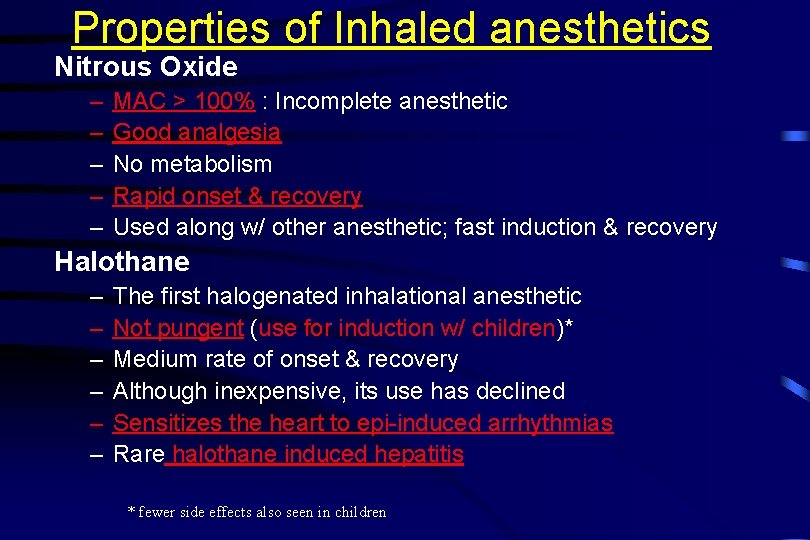
Properties of Inhaled anesthetics Nitrous Oxide – – – MAC > 100% : Incomplete anesthetic Good analgesia No metabolism Rapid onset & recovery Used along w/ other anesthetic; fast induction & recovery Halothane – – – The first halogenated inhalational anesthetic Not pungent (use for induction w/ children)* Medium rate of onset & recovery Although inexpensive, its use has declined Sensitizes the heart to epi-induced arrhythmias Rare halothane induced hepatitis * fewer side effects also seen in children
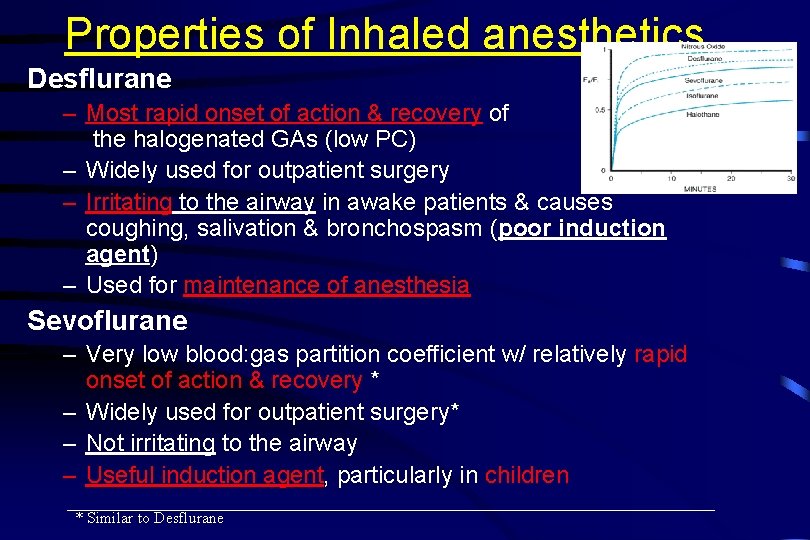
Properties of Inhaled anesthetics Desflurane – Most rapid onset of action & recovery of the halogenated GAs (low PC) – Widely used for outpatient surgery – Irritating to the airway in awake patients & causes coughing, salivation & bronchospasm (poor induction agent) – Used for maintenance of anesthesia Sevoflurane – Very low blood: gas partition coefficient w/ relatively rapid onset of action & recovery * – Widely used for outpatient surgery* – Not irritating to the airway – Useful induction agent, particularly in children * Similar to Desflurane
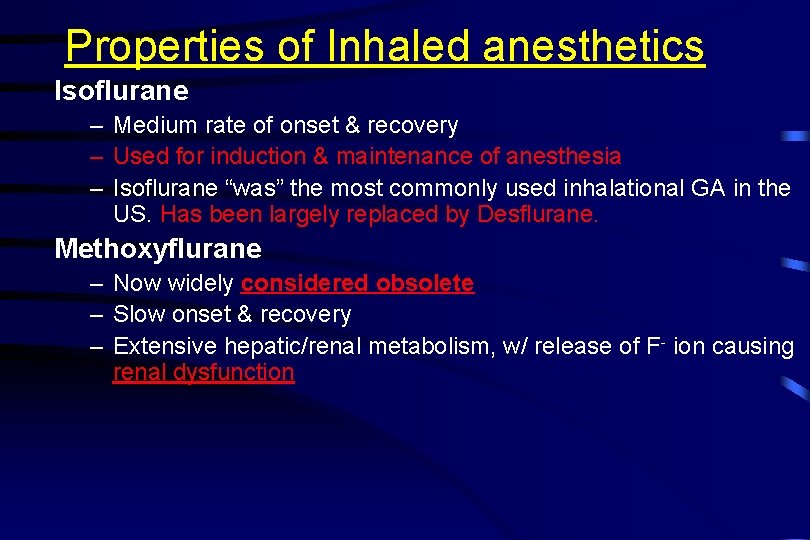
Properties of Inhaled anesthetics Isoflurane – Medium rate of onset & recovery – Used for induction & maintenance of anesthesia – Isoflurane “was” the most commonly used inhalational GA in the US. Has been largely replaced by Desflurane. Methoxyflurane – Now widely considered obsolete – Slow onset & recovery – Extensive hepatic/renal metabolism, w/ release of F- ion causing renal dysfunction
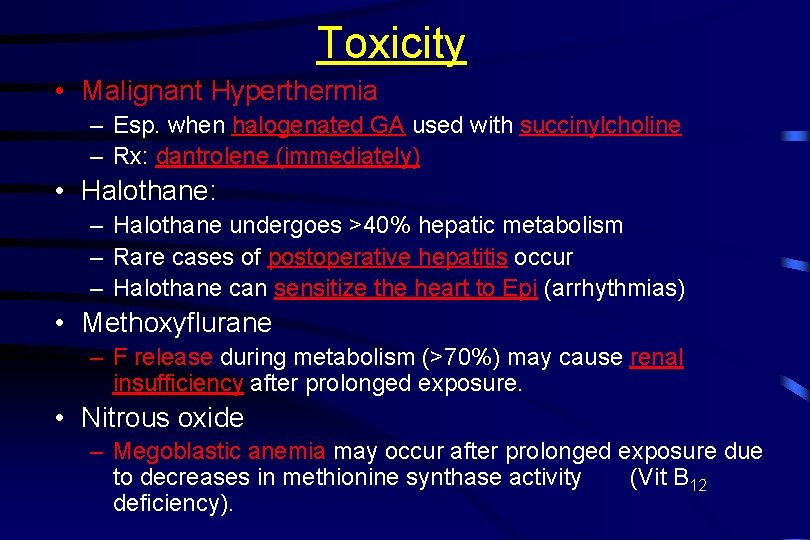
Toxicity • Malignant Hyperthermia – Esp. when halogenated GA used with succinylcholine – Rx: dantrolene (immediately) • Halothane: – Halothane undergoes >40% hepatic metabolism – Rare cases of postoperative hepatitis occur – Halothane can sensitize the heart to Epi (arrhythmias) • Methoxyflurane – F release during metabolism (>70%) may cause renal insufficiency after prolonged exposure. • Nitrous oxide – Megoblastic anemia may occur after prolonged exposure due to decreases in methionine synthase activity (Vit B 12 deficiency).
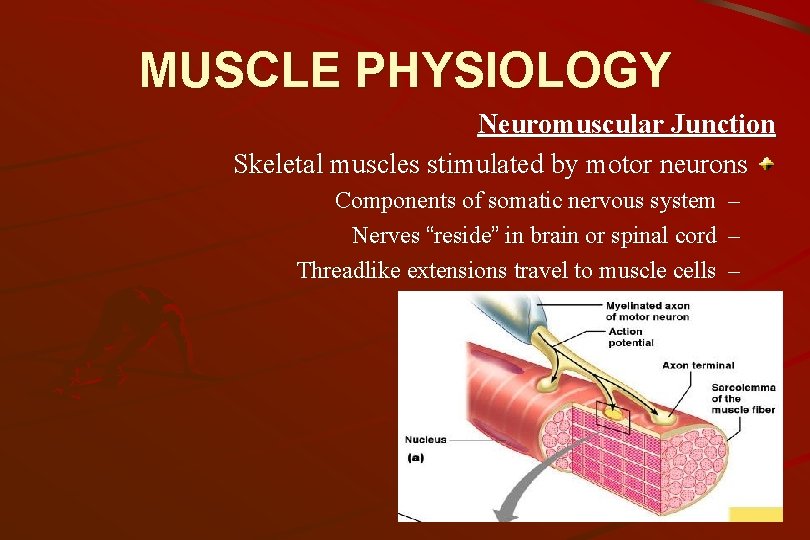
MUSCLE PHYSIOLOGY Neuromuscular Junction Skeletal muscles stimulated by motor neurons Components of somatic nervous system Nerves “reside” in brain or spinal cord Threadlike extensions travel to muscle cells “Axon” Divides profusely as it enters the muscle Each axonal ending forms branching neuromuscular junction with a single muscle fiber Only one neuromuscular – junction per muscle fiber – – –
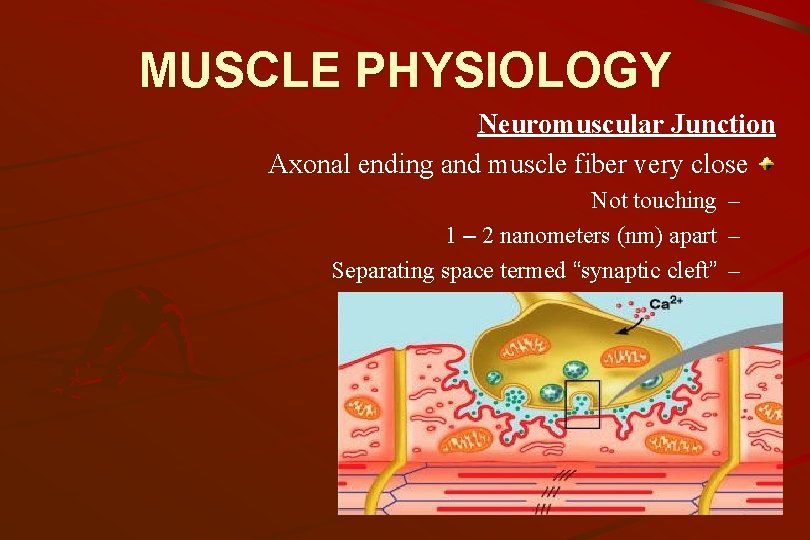
MUSCLE PHYSIOLOGY Neuromuscular Junction Axonal ending and muscle fiber very close Not touching 1 – 2 nanometers (nm) apart Separating space termed “synaptic cleft” Gel-like extracellular substance rich in glycoproteins – – –
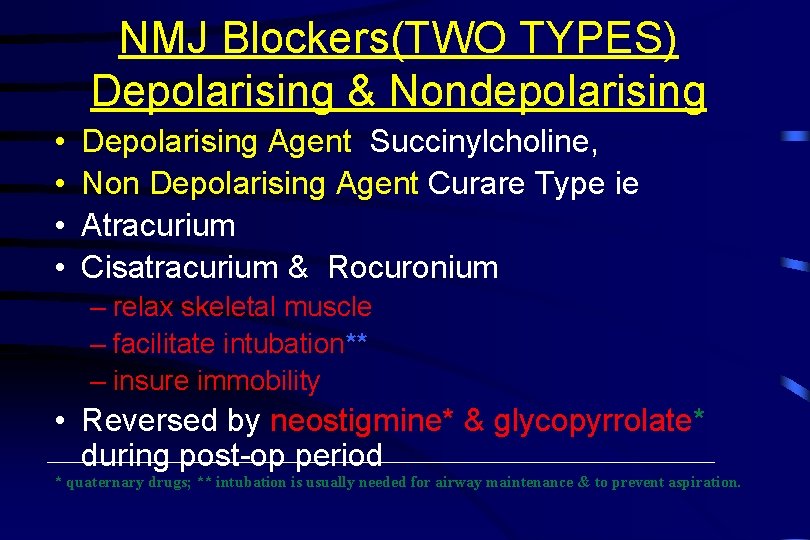
NMJ Blockers(TWO TYPES) Depolarising & Nondepolarising • • Depolarising Agent Succinylcholine, Non Depolarising Agent Curare Type ie Atracurium Cisatracurium & Rocuronium – relax skeletal muscle – facilitate intubation** – insure immobility • Reversed by neostigmine* & glycopyrrolate* during post-op period * quaternary drugs; ** intubation is usually needed for airway maintenance & to prevent aspiration.
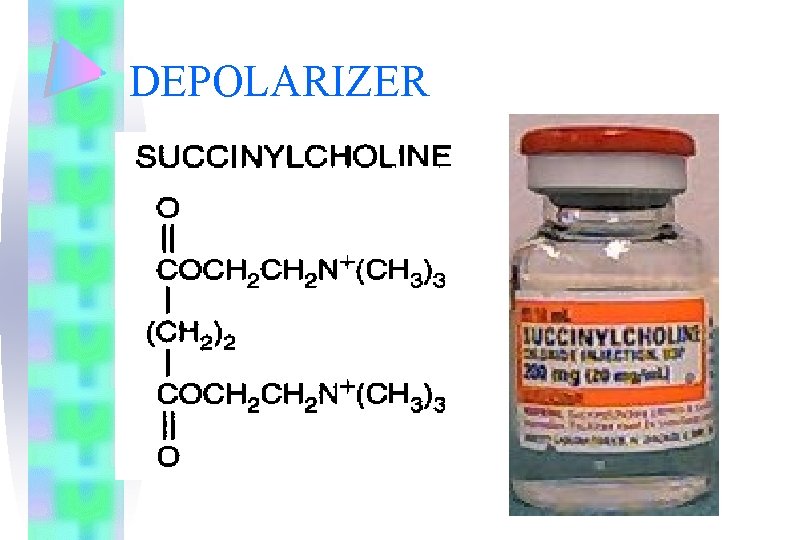
DEPOLARIZER
NON-DEPOLARIZERS
NON-DEPOLARIZERS Reversal • NEOSTIGMINE AND ARTROOINE • OR NEOSTIGMINE AND • GLYCOPYROLATE
Dantrolene • Interfers with the release of calcium from the sarcoplasmic reticulum through the SR calcium channel complex. • Used to prevent or reverse malignant hyperthermia (which is otherwise fatal in ~50% of cases w/o dantrolene). • Given by i. v. push at the onset of symptoms (e. g. an unexpected rise in CO 2 levels) • Supportive measures & 100% O 2 are also used to treat malignant hyperthermia
Nausea & Vomiting • General anesthetics effect the chemoreceptor trigger zone & brainstem vomiting center (cause nausea & vomiting) • Rx: - Ondansetron (5 -HT 3 antagonist) to prevent - Avoidance of N 2 O - Propofol for induction - Keterolac vs. opioid for analgesia - Droperidol, metaclopromide & dexamethasone
The End