
Geothermal Applications for Buildings and Infrastructure GABI an
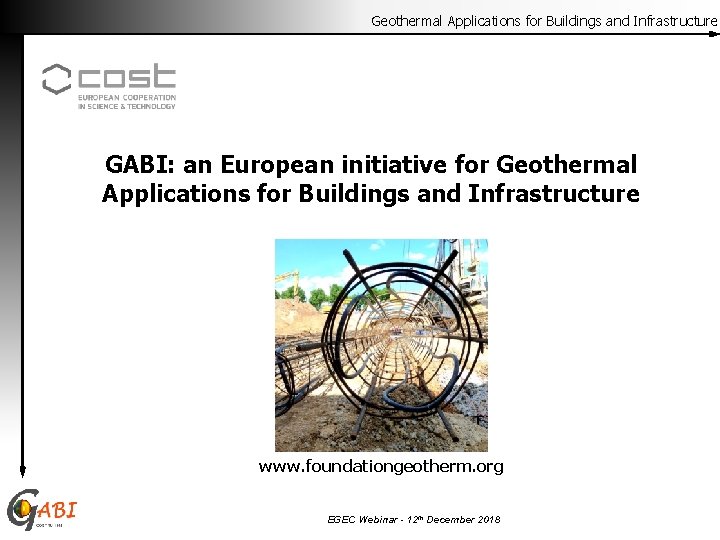
Geothermal Applications for Buildings and Infrastructure GABI: an European initiative for Geothermal Applications for Buildings and Infrastructure www. foundationgeotherm. org EGEC Webinar - 12 th December 2018
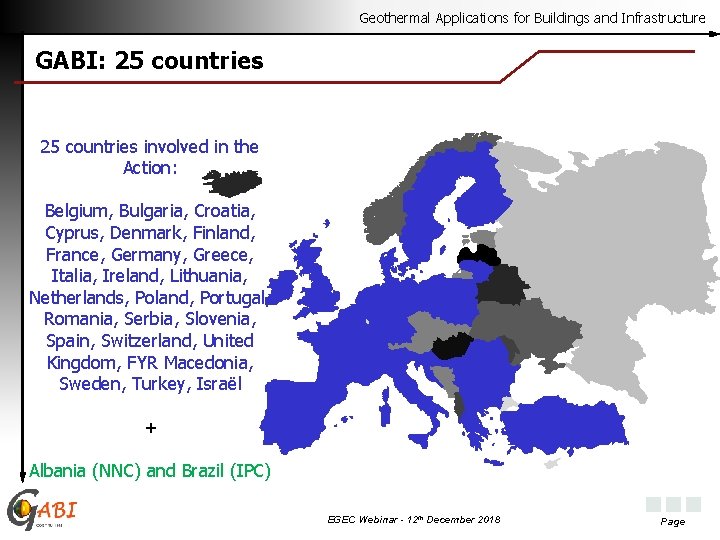
Geothermal Applications for Buildings and Infrastructure GABI: 25 countries involved in the Action: Belgium, Bulgaria, Croatia, Cyprus, Denmark, Finland, France, Germany, Greece, Italia, Ireland, Lithuania, Netherlands, Poland, Portugal, Romania, Serbia, Slovenia, Spain, Switzerland, United Kingdom, FYR Macedonia, Sweden, Turkey, Israël + Albania (NNC) and Brazil (IPC) EGEC Webinar - 12 th December 2018 Page

Geothermal Applications for Buildings and Infrastructure Thermoactive structures Piles Diaphragm walls Tunnels EGEC Webinar - 12 th December 2018 Page
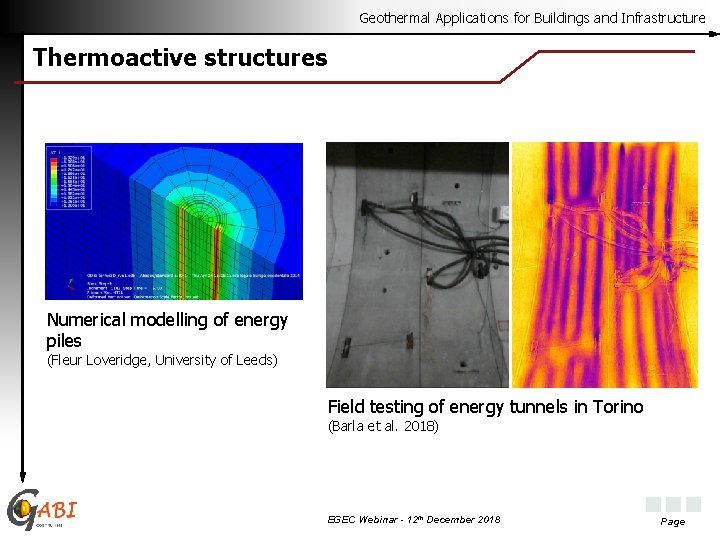
Geothermal Applications for Buildings and Infrastructure Thermoactive structures Numerical modelling of energy piles (Fleur Loveridge, University of Leeds) Field testing of energy tunnels in Torino (Barla et al. 2018) EGEC Webinar - 12 th December 2018 Page
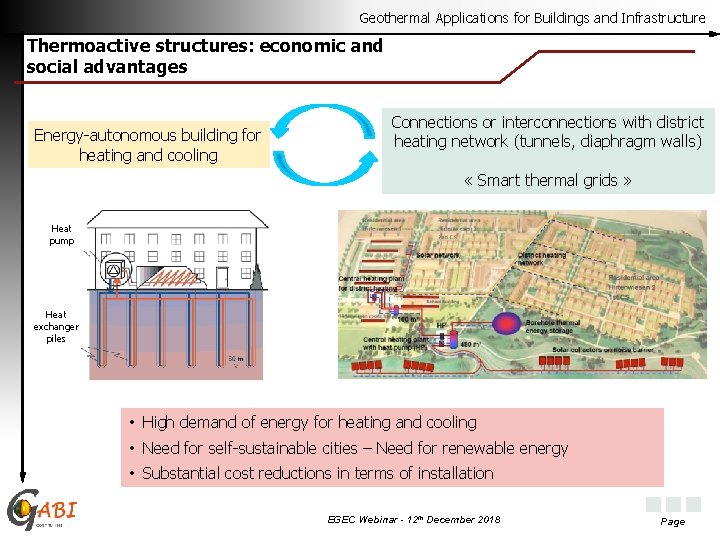
Geothermal Applications for Buildings and Infrastructure Thermoactive structures: economic and social advantages Energy-autonomous building for heating and cooling Connections or interconnections with district heating network (tunnels, diaphragm walls) « Smart thermal grids » Heat pump Heat exchanger piles • High demand of energy for heating and cooling • Need for self-sustainable cities – Need for renewable energy • Substantial cost reductions in terms of installation EGEC Webinar - 12 th December 2018 Page
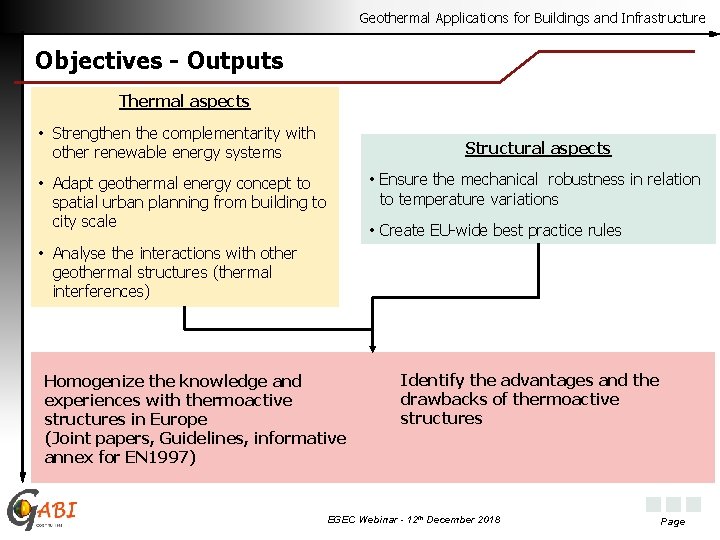
Geothermal Applications for Buildings and Infrastructure Objectives - Outputs Thermal aspects • Strengthen the complementarity with other renewable energy systems Structural aspects • Adapt geothermal energy concept to spatial urban planning from building to city scale • Ensure the mechanical robustness in relation to temperature variations • Create EU-wide best practice rules • Analyse the interactions with other geothermal structures (thermal interferences) Homogenize the knowledge and experiences with thermoactive structures in Europe (Joint papers, Guidelines, informative annex for EN 1997) Identify the advantages and the drawbacks of thermoactive structures EGEC Webinar - 12 th December 2018 Page
- Slides: 6