
GEOTECHNICAL ENGINEERING The Leaning Tower of Pisa Why
- Slides: 35
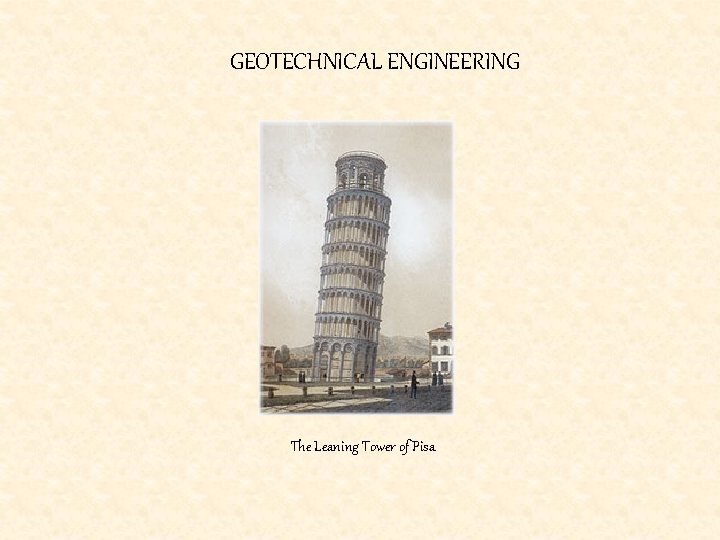
GEOTECHNICAL ENGINEERING The Leaning Tower of Pisa
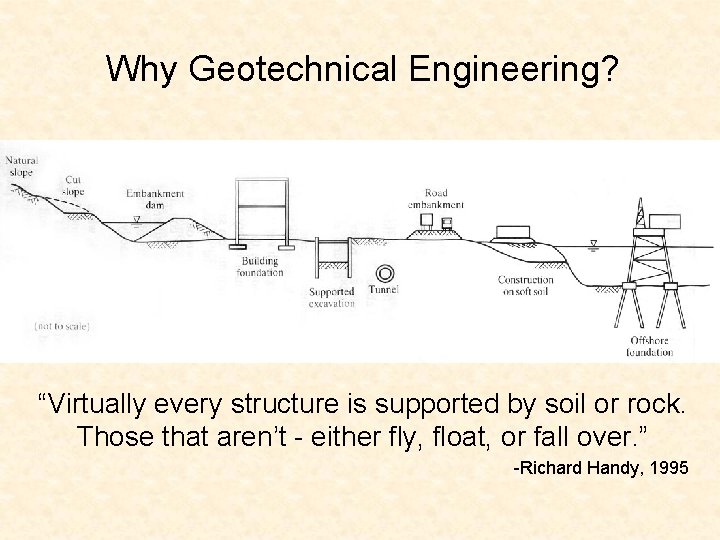
Why Geotechnical Engineering? “Virtually every structure is supported by soil or rock. Those that aren’t - either fly, float, or fall over. ” -Richard Handy, 1995
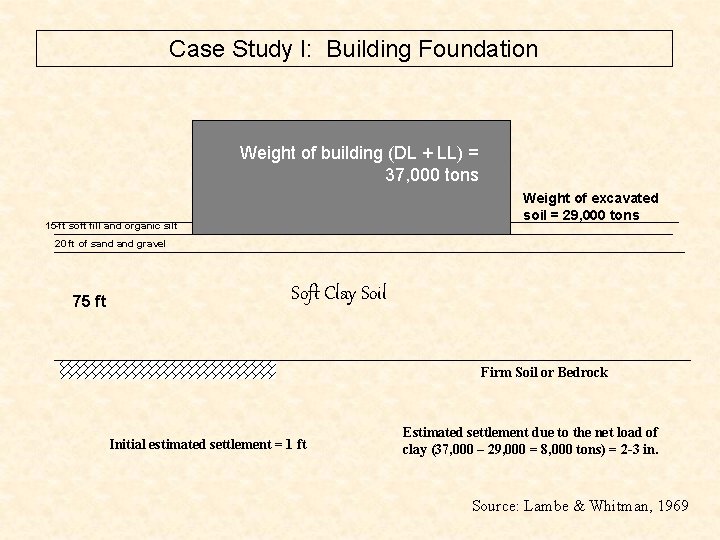
Case Study I: Building Foundation Weight of building (DL + LL) = 37, 000 tons Weight of excavated soil = 29, 000 tons 15 -ft soft fill and organic silt 20 ft of sand gravel 75 ft Soft Clay Soil Firm Soil or Bedrock Initial estimated settlement = 1 ft Estimated settlement due to the net load of clay (37, 000 – 29, 000 = 8, 000 tons) = 2 -3 in. Source: Lambe & Whitman, 1969
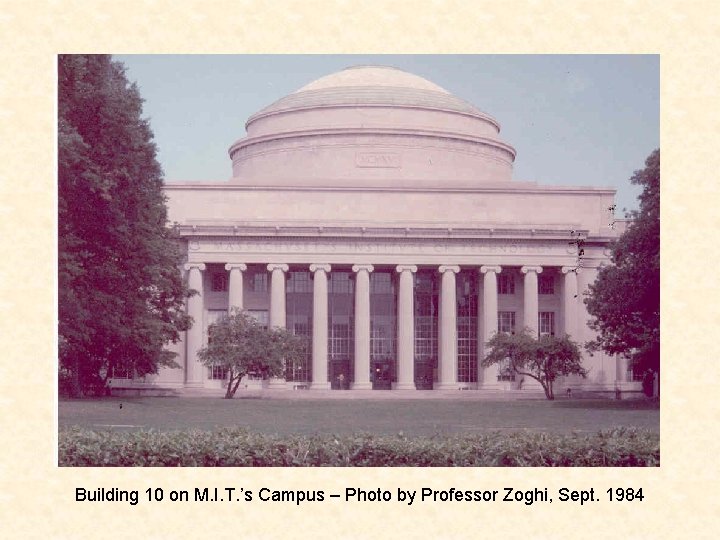
Building 10 on M. I. T. ’s Campus – Photo by Professor Zoghi, Sept. 1984
Design and Construction Issues • How deep? • Size of the footing (mat foundation)? • Groundwater table? • Dewatering? • Braced excavation? • Damage to adjacent buildings? • Quantity and rate of the estimated settlement? • Stress distribution? • Design bearing capacity?
Alternative Foundations • Pile type? • How deep? • Spacing? • Maximum allowable load? • Pile efficiency? • Driving/drilling? • Optimum sequence of driving piles? • How much variation from vertical? • Adjacent buildings?
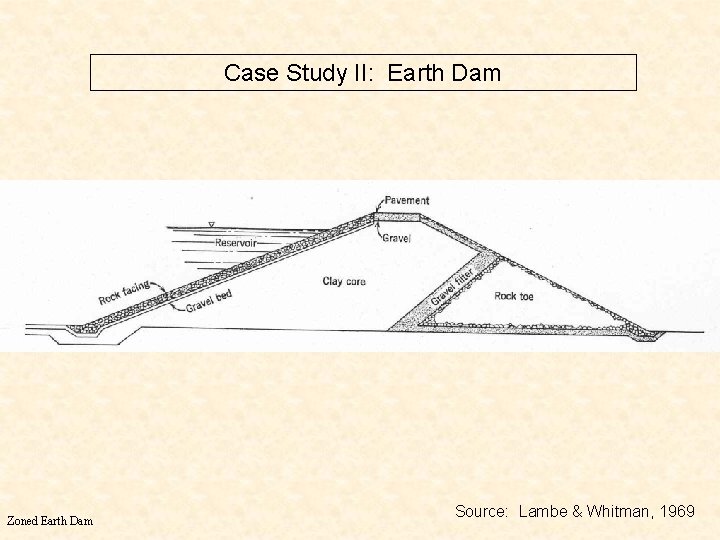
Case Study II: Earth Dam Zoned Earth Dam Source: Lambe & Whitman, 1969
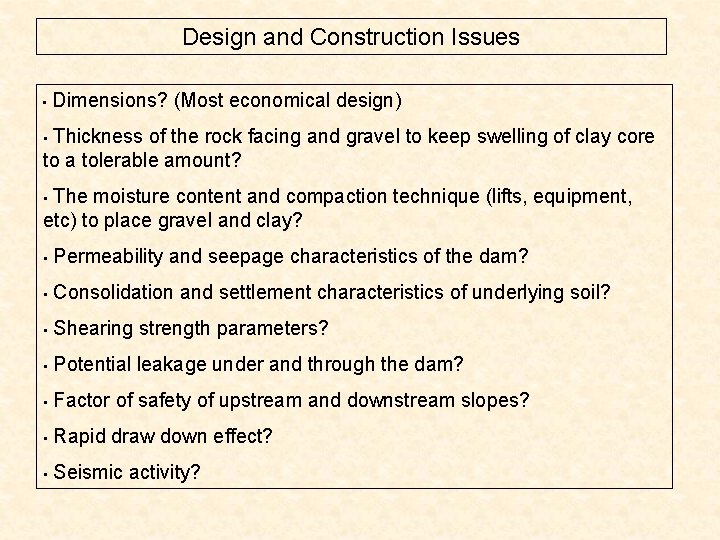
Design and Construction Issues • Dimensions? (Most economical design) Thickness of the rock facing and gravel to keep swelling of clay core to a tolerable amount? • The moisture content and compaction technique (lifts, equipment, etc) to place gravel and clay? • • Permeability and seepage characteristics of the dam? • Consolidation and settlement characteristics of underlying soil? • Shearing strength parameters? • Potential leakage under and through the dam? • Factor of safety of upstream and downstream slopes? • Rapid draw down effect? • Seismic activity?
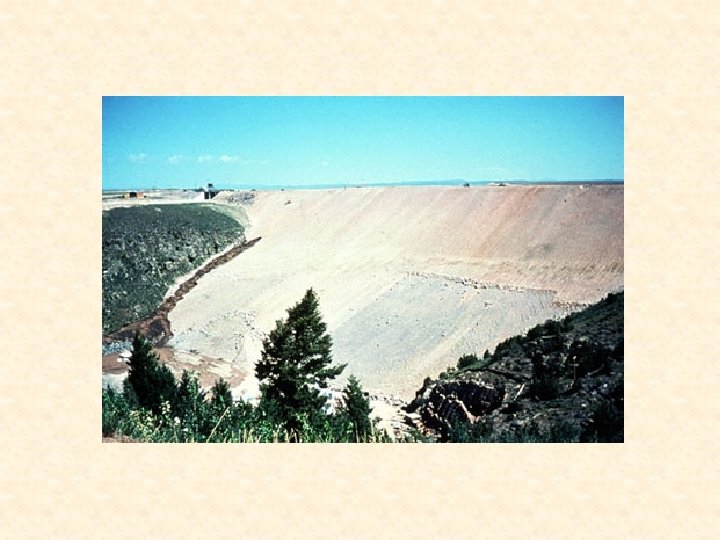
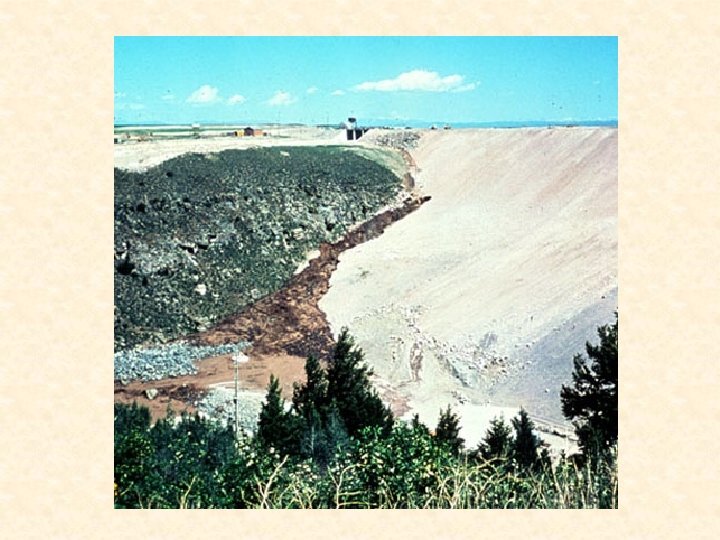
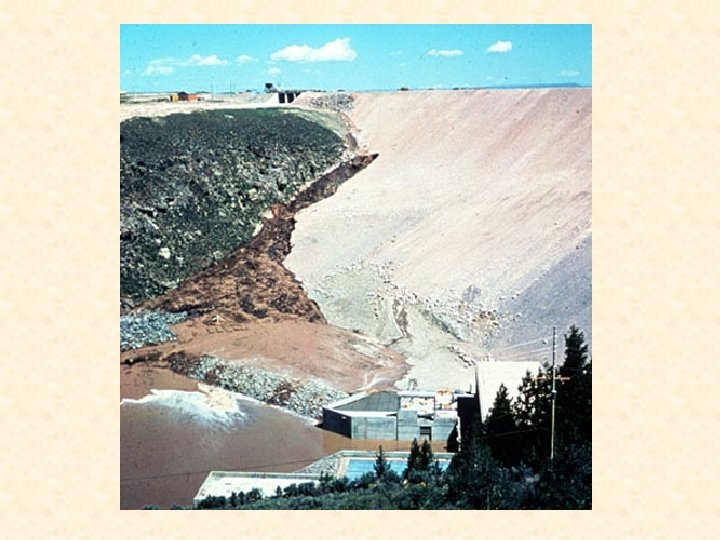
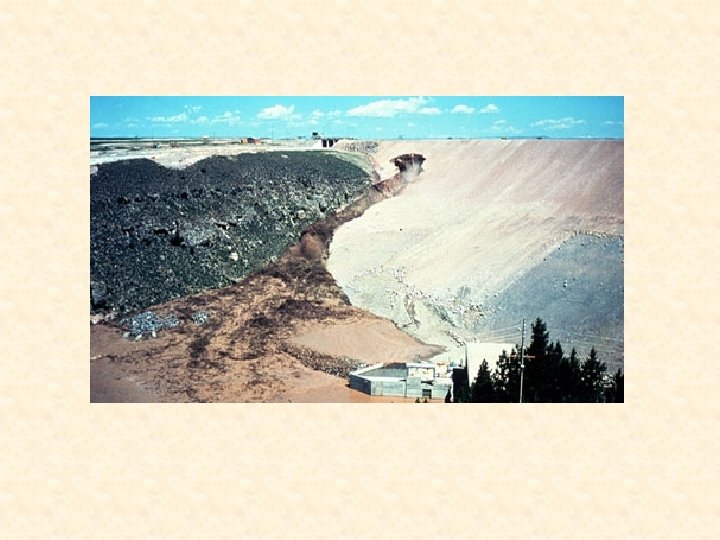
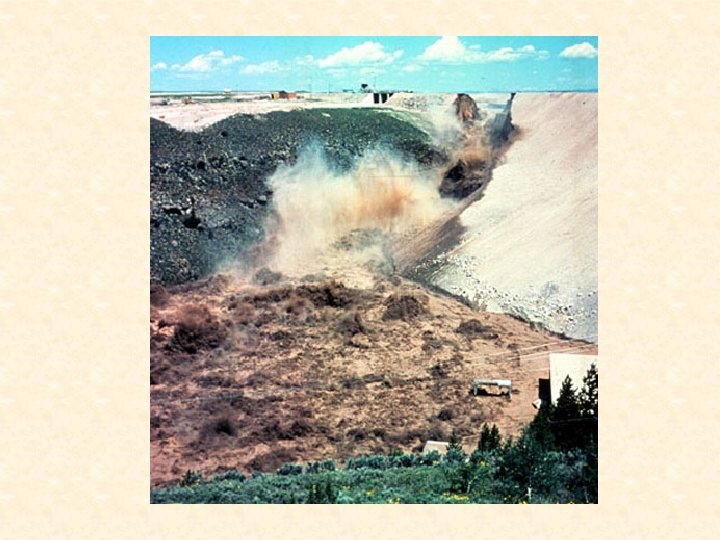
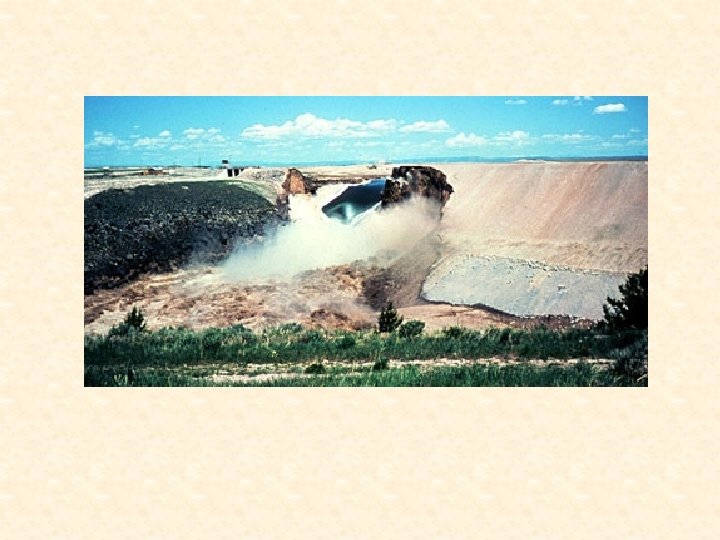
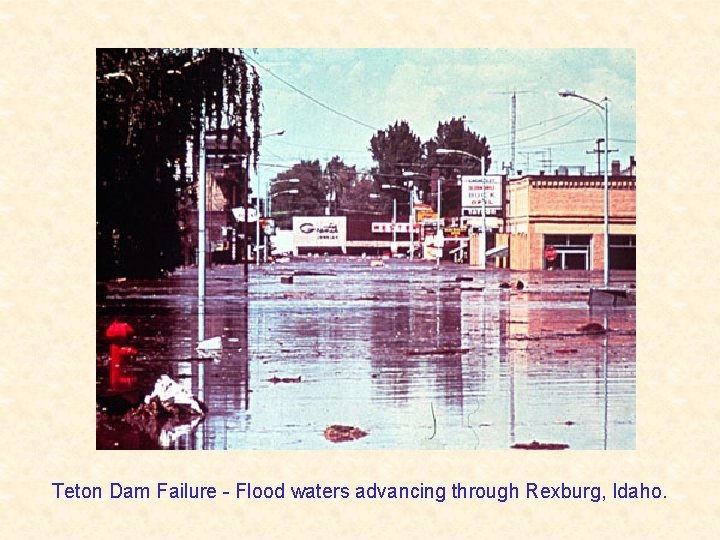
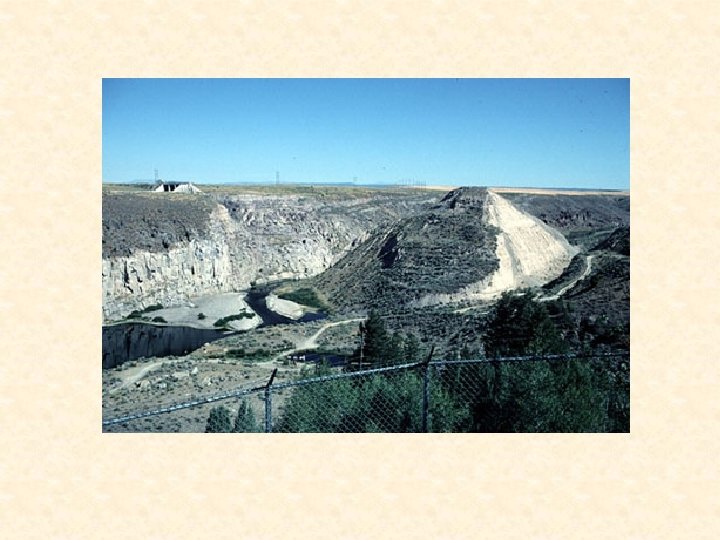
TETON DAM The Teton Dam, 44 miles northeast of Idaho Falls in southeastern Idaho, failed abruptly on June 5, 1976. It released nearly 300, 000 acre feet of water, then flooded farmland towns downstream with the eventual loss of 14 lives, directly or indirectly, and with a cost estimated to be nearly $1 billion. http: //www. geol. ucsb. edu/~arthur/Teton%20 Dam/welcome_dam. html
Teton Dam Failure - Flood waters advancing through Rexburg, Idaho.
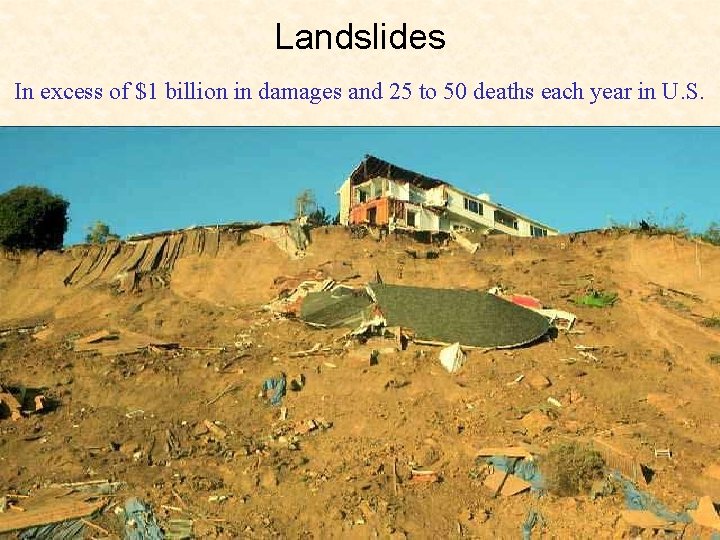
Landslides In excess of $1 billion in damages and 25 to 50 deaths each year in U. S.
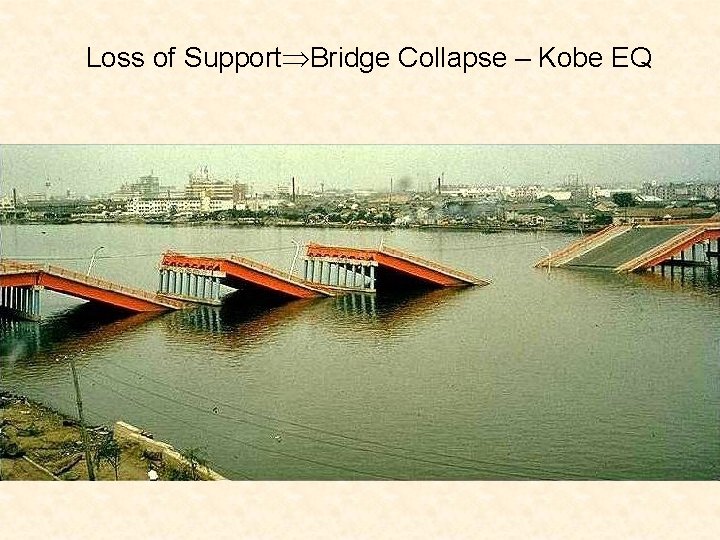
Loss of Support Bridge Collapse – Kobe EQ
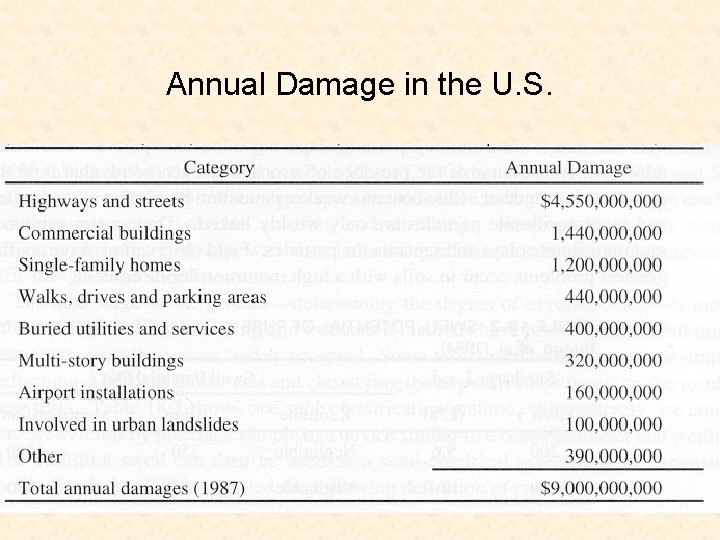
Annual Damage in the U. S.
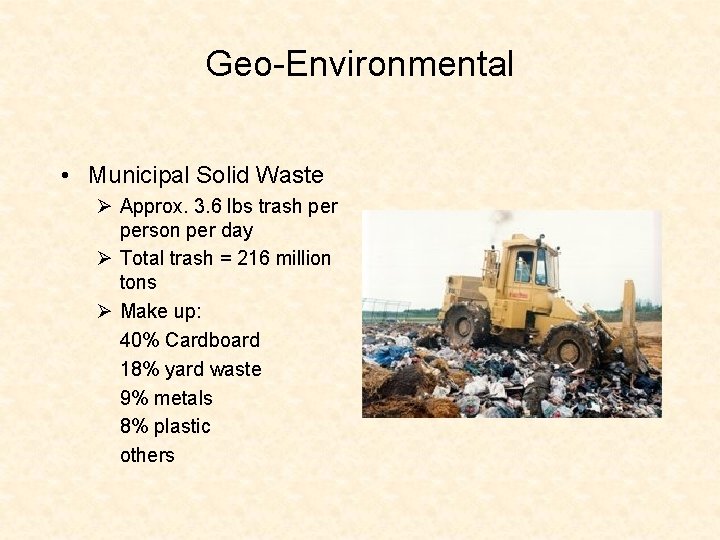
Geo-Environmental • Municipal Solid Waste Ø Approx. 3. 6 lbs trash person per day Ø Total trash = 216 million tons Ø Make up: 40% Cardboard 18% yard waste 9% metals 8% plastic others
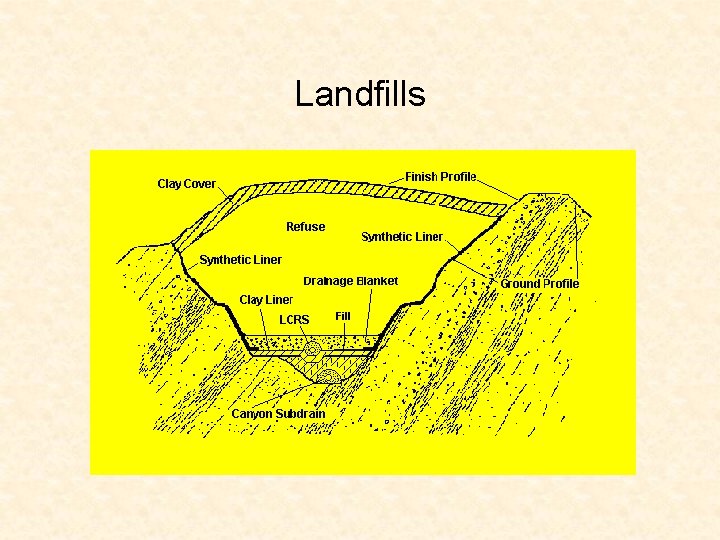
Landfills
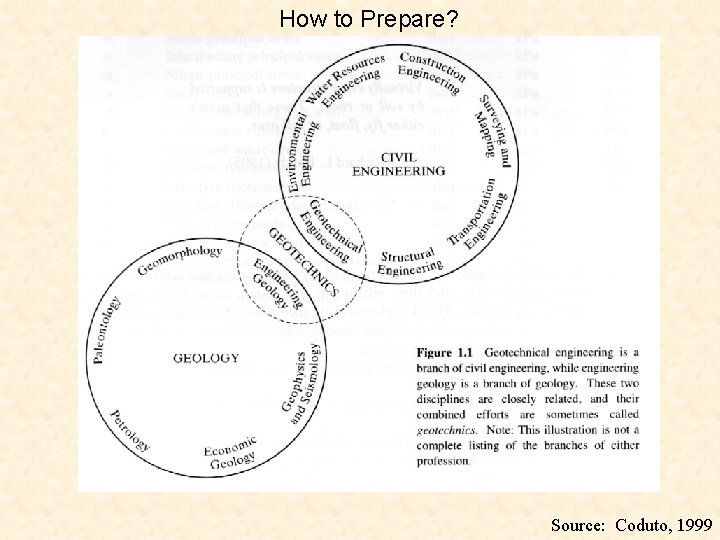
How to Prepare? Source: Coduto, 1999
Historical Perspective Geotechnical Hall of Fame: http: //www. ejge. com/People/Hall. Fame. htm
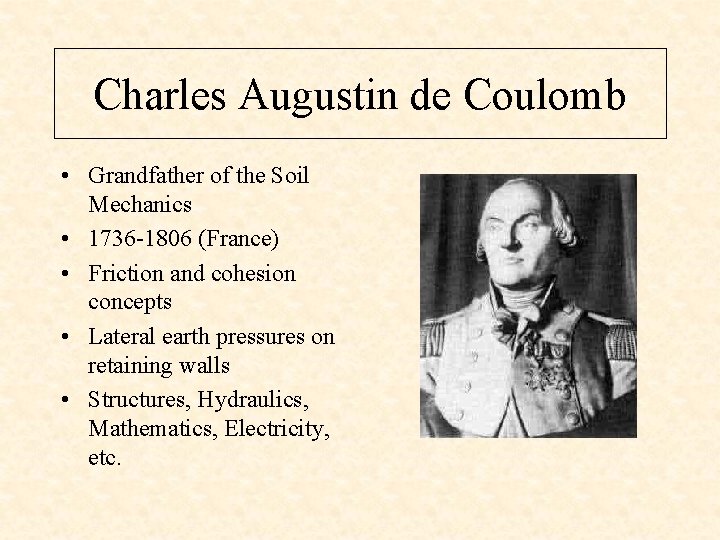
Charles Augustin de Coulomb • Grandfather of the Soil Mechanics • 1736 -1806 (France) • Friction and cohesion concepts • Lateral earth pressures on retaining walls • Structures, Hydraulics, Mathematics, Electricity, etc.
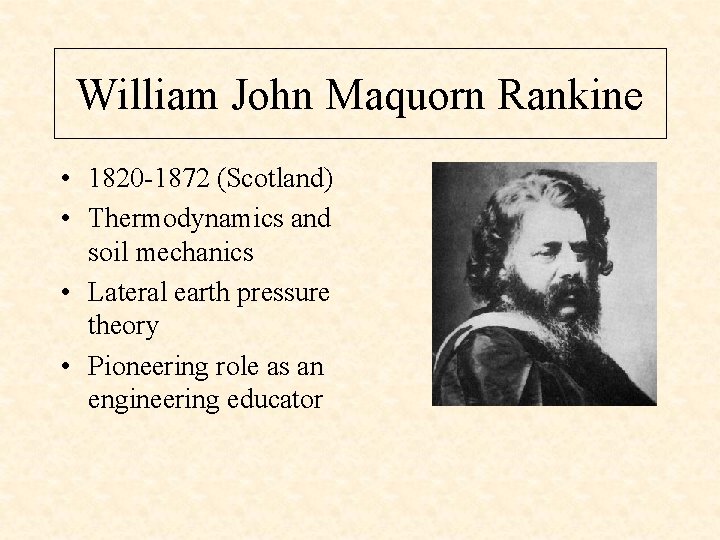
William John Maquorn Rankine • 1820 -1872 (Scotland) • Thermodynamics and soil mechanics • Lateral earth pressure theory • Pioneering role as an engineering educator
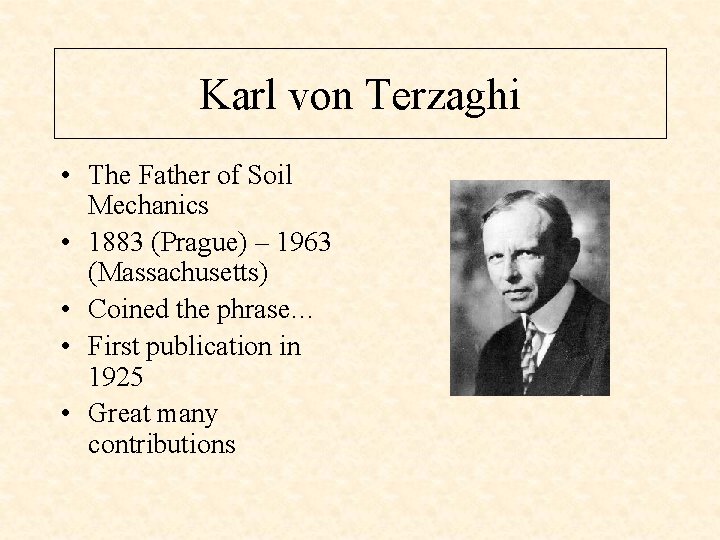
Karl von Terzaghi • The Father of Soil Mechanics • 1883 (Prague) – 1963 (Massachusetts) • Coined the phrase… • First publication in 1925 • Great many contributions
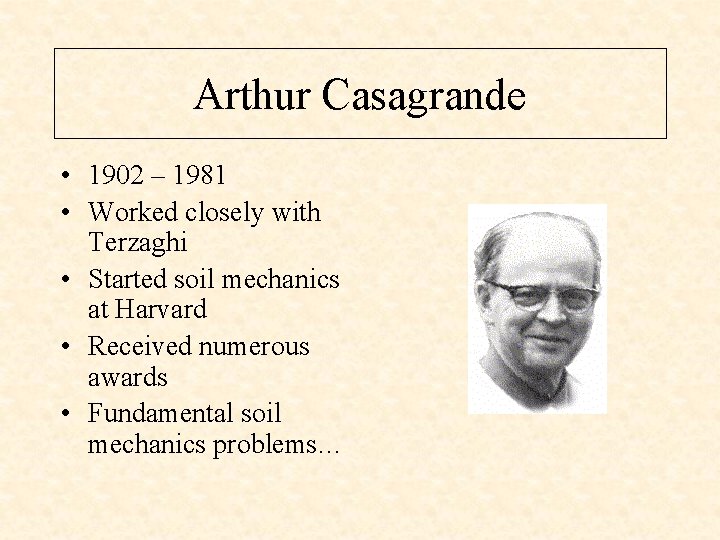
Arthur Casagrande • 1902 – 1981 • Worked closely with Terzaghi • Started soil mechanics at Harvard • Received numerous awards • Fundamental soil mechanics problems…
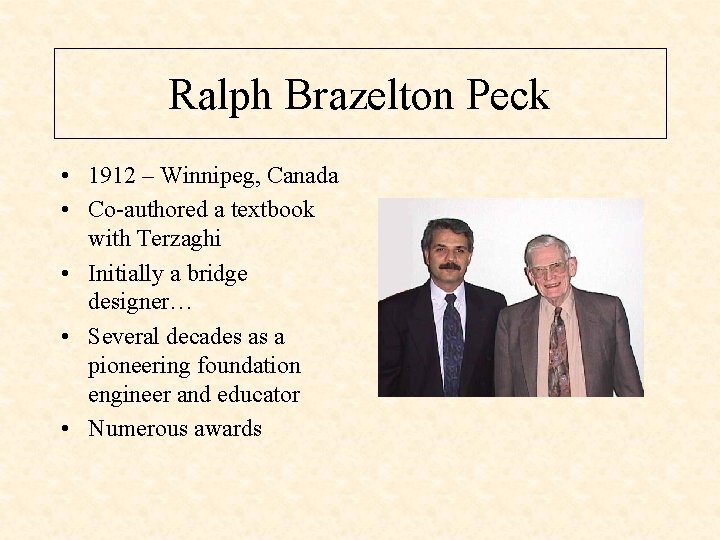
Ralph Brazelton Peck • 1912 – Winnipeg, Canada • Co-authored a textbook with Terzaghi • Initially a bridge designer… • Several decades as a pioneering foundation engineer and educator • Numerous awards
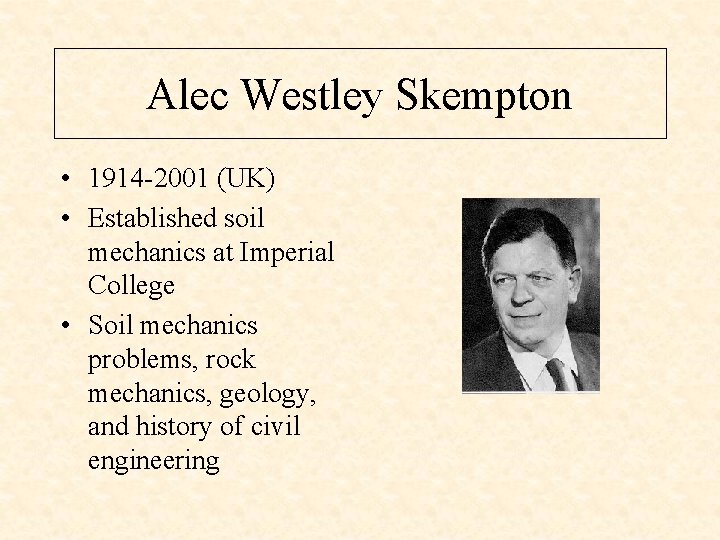
Alec Westley Skempton • 1914 -2001 (UK) • Established soil mechanics at Imperial College • Soil mechanics problems, rock mechanics, geology, and history of civil engineering
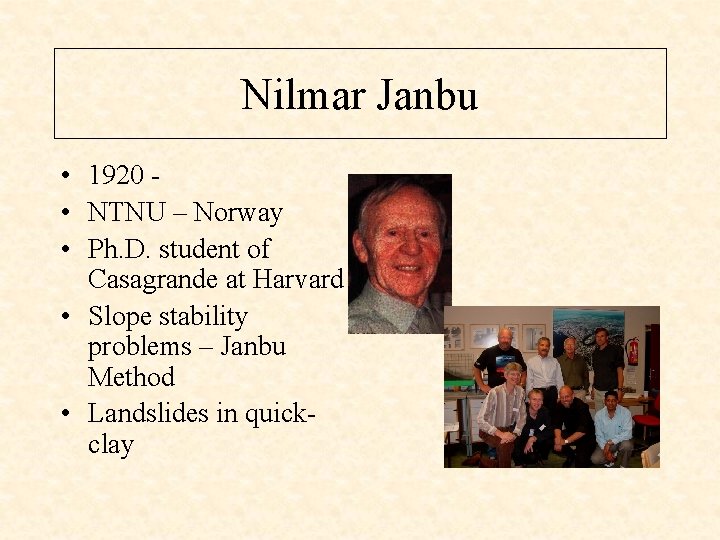
Nilmar Janbu • 1920 • NTNU – Norway • Ph. D. student of Casagrande at Harvard • Slope stability problems – Janbu Method • Landslides in quickclay
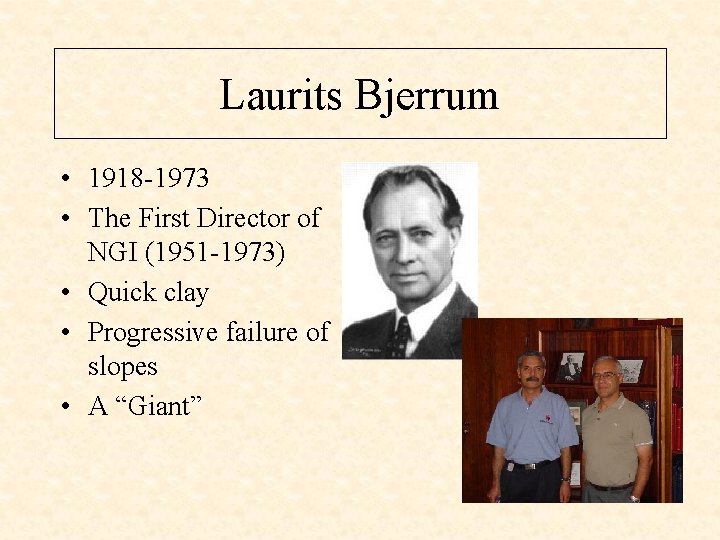
Laurits Bjerrum • 1918 -1973 • The First Director of NGI (1951 -1973) • Quick clay • Progressive failure of slopes • A “Giant”
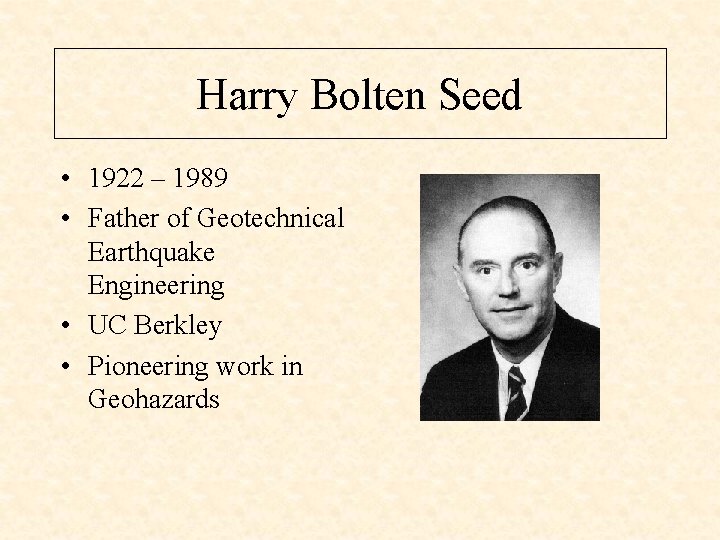
Harry Bolten Seed • 1922 – 1989 • Father of Geotechnical Earthquake Engineering • UC Berkley • Pioneering work in Geohazards