
Georgias Role in the CIVIL WAR Brain Wrinkles
Georgia’s Role in the CIVIL WAR © Brain Wrinkles
• Confederacy After Abraham Lincoln was elected president in 1860, seven Southern states seceded from the Union. • Lincoln was firmly against the spread of slavery, and Southerners were worried that he would eventually destroy their livelihood. • The Southern states formed the Confederate States of America and elected Jefferson Davis as president of the Confederacy. © Brain Wrinkles
Lincoln • Abraham Lincoln was inaugurated as the U. S. ’ 16 th president on March 4, 1861. • Lincoln’s goal was to “preserve the Union” and he asked the Southern states to consider rejoining. • He addressed the slavery issue by stating that he would not “interfere with the institution of slavery in the states where it exists. ” • It was not enough, though, and the Civil War officially began when Confederate troops opened fire on Fort Sumter on April 12, 1861. © Brain Wrinkles
Fort Sumter • Fort Sumter was a Union fort that protected the harbor of Charleston, South Carolina. • The Union forces inside Fort Sumter were already low on ammunition and food, so they surrendered the next day. • Nobody was killed during the actual battle; however, one person was killed in a 50 -gun salute to the flag. © Brain Wrinkles

Fort Sumter (before the Civil War) © Brain Wrinkles
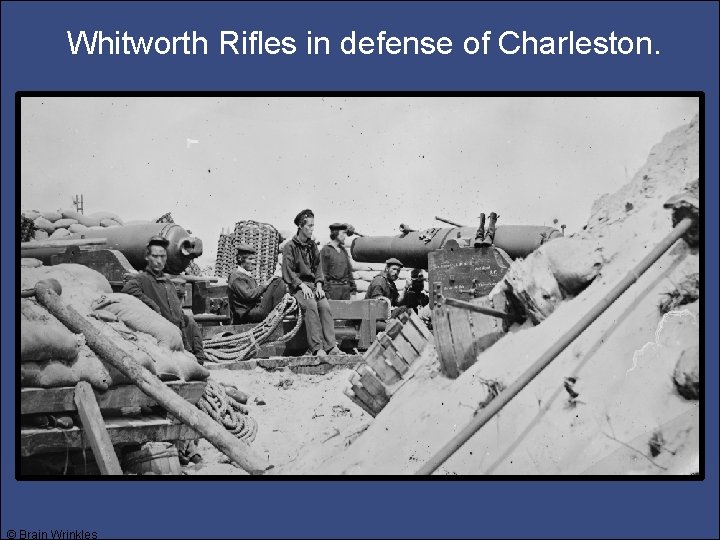
Whitworth Rifles in defense of Charleston. © Brain Wrinkles
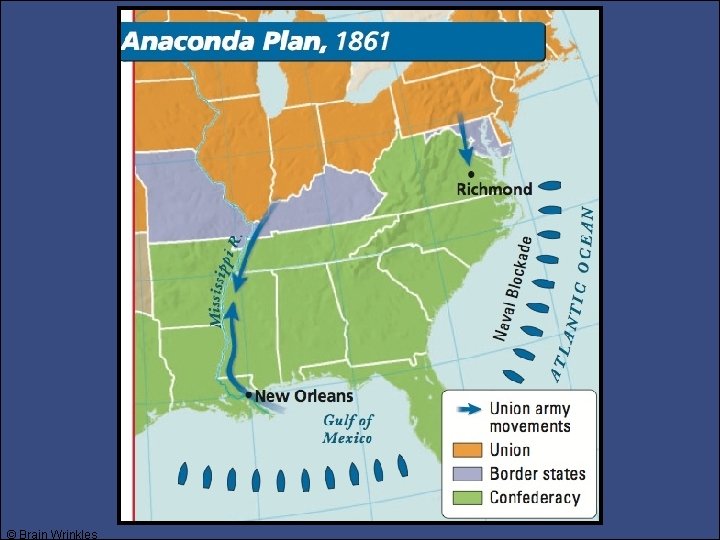
Blockade • In response, Union leaders quickly set up a blockade of Southern ports in order to cutoff Confederate commerce and weaken the South. • Union ships lined the southern coast and would not let any Confederate ships in or out. • Occasionally, blockade runners snuck through and were able to make it to Europe to trade for supplies. © Brain Wrinkles
© Brain Wrinkles
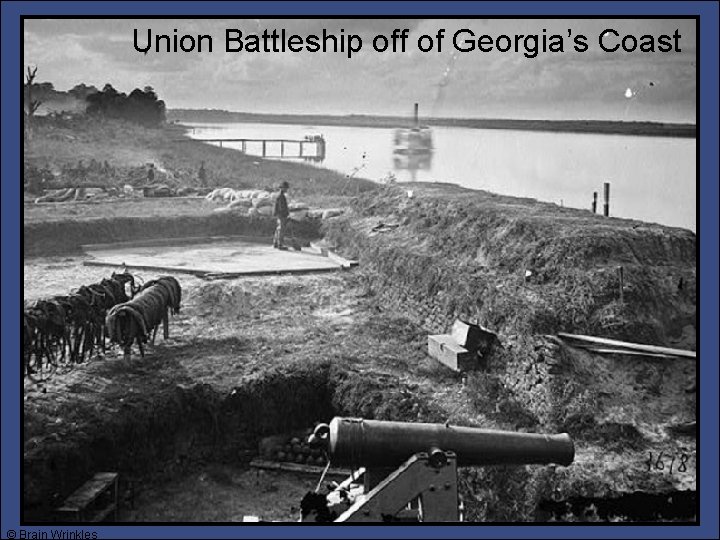
Union Battleship off of Georgia’s Coast © Brain Wrinkles
Blockade • In April 1862, Union soldiers landed on Tybee Island captured Fort Pulaski, the fort protecting Savannah. • Once the brick fort was obliterated, the North was able to blockade the important port of Savannah. • Hardly any Confederate ships could make it in or out of Georgia. © Brain Wrinkles
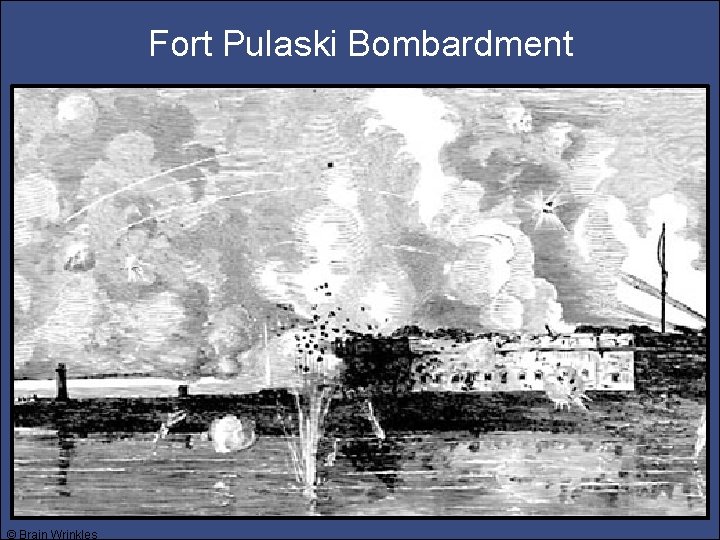
Fort Pulaski Bombardment © Brain Wrinkles
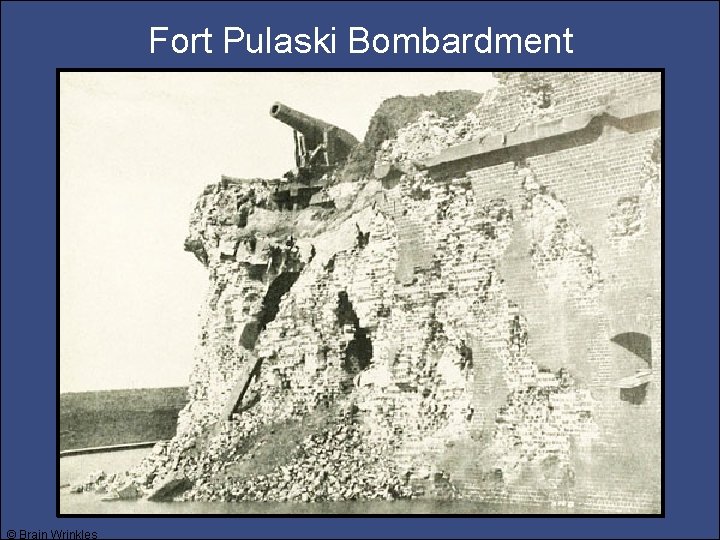
Fort Pulaski Bombardment © Brain Wrinkles
Emancipation • Five days after the Union victory in the Battle of Antietam, President Lincoln issued the Emancipation Proclamation. • This freed all slaves in states fighting against the Union. • Lincoln’s proclamation shifted the focus of the Civil War from preserving the Union to freeing the slaves. © Brain Wrinkles

© Brain Wrinkles
Emancipation • For Southerners, the Emancipation Proclamation was final proof that the North would destroy the southern way of life. • Northern abolitionists saw the emancipation of slaves as a great victory, and now had a valuable reason to fight. • With the proclamation, President Lincoln made it clear that the Union’s purpose was now to free the slaves. © Brain Wrinkles

© Brain Wrinkles
Emancipation • The Emancipation Proclamation also invited former slaves to join the Union army. • Many African Americans enlisted and fought bravely, aware that they were fighting for the freedom of their people. • As the Union Army freed slaves, an estimated 3, 500 black Georgians joined the Union against the Confederates. © Brain Wrinkles
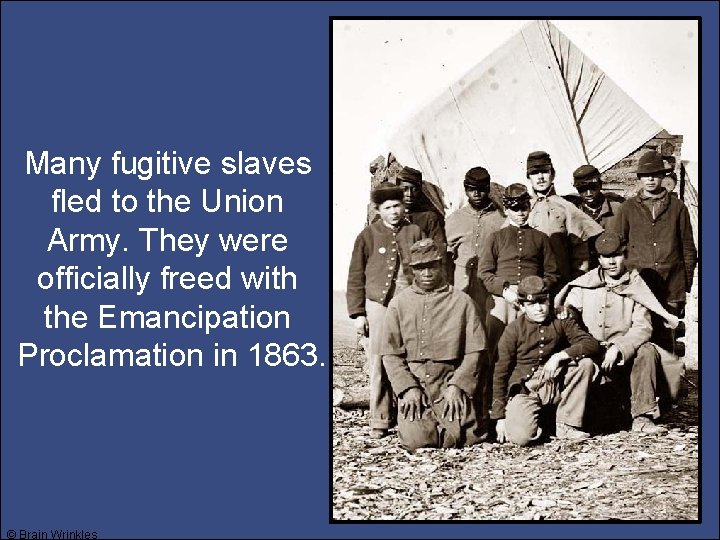
Many fugitive slaves fled to the Union Army. They were officially freed with the Emancipation Proclamation in 1863. © Brain Wrinkles
Georgia • Georgia was free from major battles during the first two years of the Civil War. • The Union soon realized that destroying Atlanta would mean defeat for the Confederacy. • In 1863, Georgia became a target for the Union. © Brain Wrinkles

Chickamauga • After capturing Chattanooga, a railroad center in Tennessee, 58, 000 Union troops marched south into Georgia on September 18, 1863. • 66, 000 Confederates fought against the Union soldiers along Chickamauga Creek for two days. © Brain Wrinkles

© Brain Wrinkles
Chickamauga • After 16, 000 men were killed from both sides, the Union army retreated back to Tennessee. • The Battle of Chickamauga was a very important Confederate victory and it became the largest Union defeat. © Brain Wrinkles
Atlanta Campaign • In 1864, General William Tecumseh Sherman moved his Union Army south from Tennessee to Atlanta. • They fought Confederate soldiers along the way, leaving a path of destruction and chaos. © Brain Wrinkles
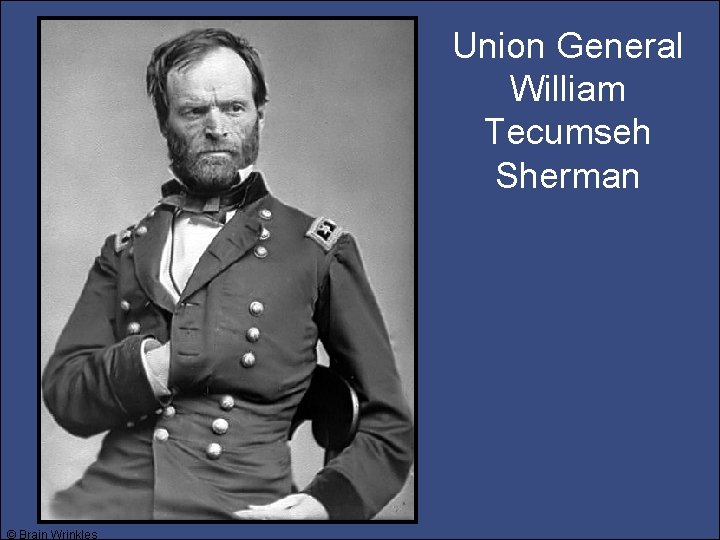
Union General William Tecumseh Sherman © Brain Wrinkles
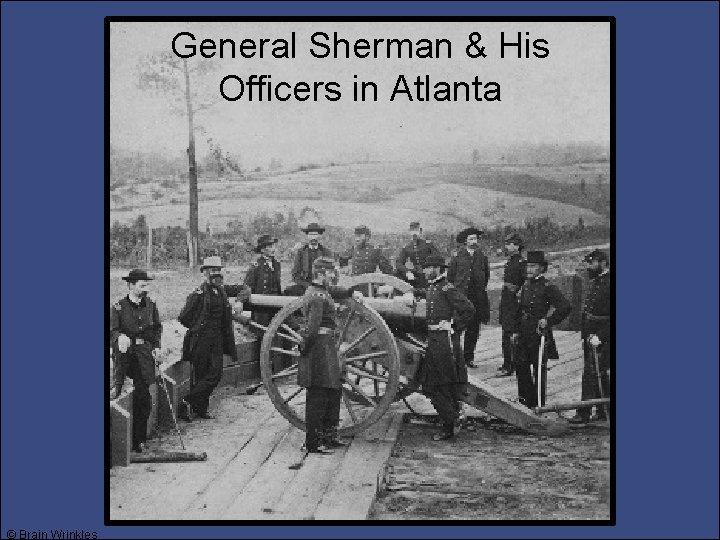
General Sherman & His Officers in Atlanta © Brain Wrinkles
Atlanta Campaign • On September 2, 1864, Sherman’s troops captured Atlanta and set the city on fire. • Sherman’s Atlanta Campaign marked the beginning of the end of the Civil War. © Brain Wrinkles
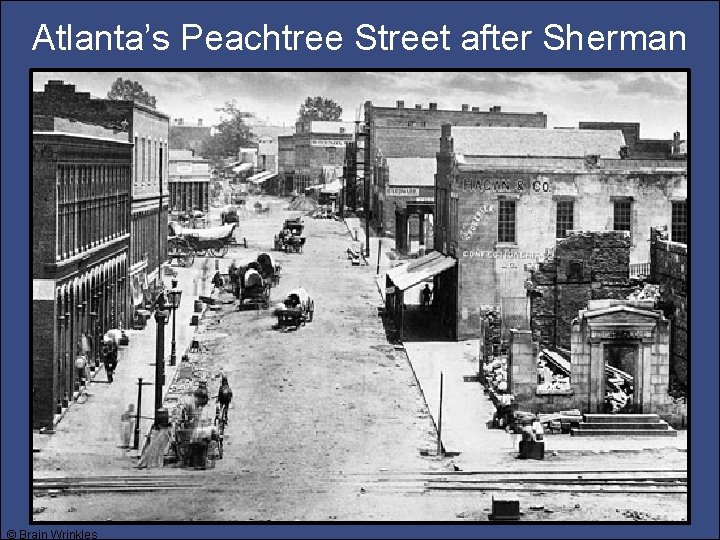
Atlanta’s Peachtree Street after Sherman © Brain Wrinkles
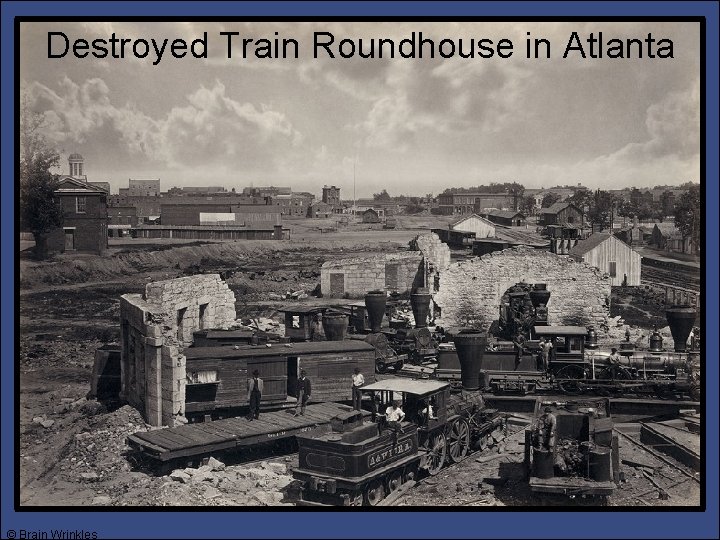
Destroyed Train Roundhouse in Atlanta © Brain Wrinkles
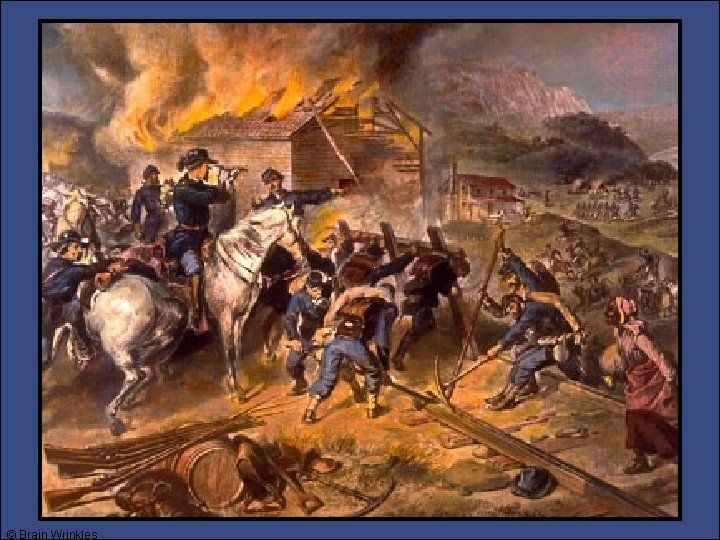
March to the Sea • The next day, Sherman split his army in two and continued his “March to the Sea” from Atlanta to Savannah. • Sherman instructed his soldiers to destroy any towns and plantations along the way in order to crush the remaining fighting spirit in the South. © Brain Wrinkles
© Brain Wrinkles
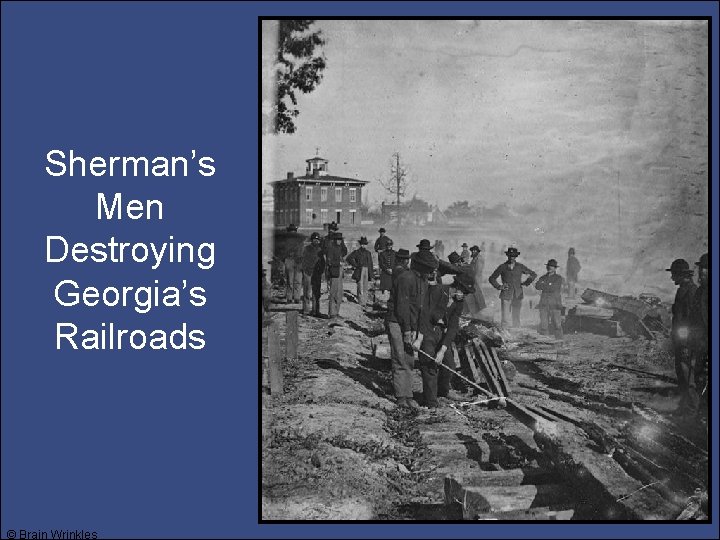
Sherman’s Men Destroying Georgia’s Railroads © Brain Wrinkles
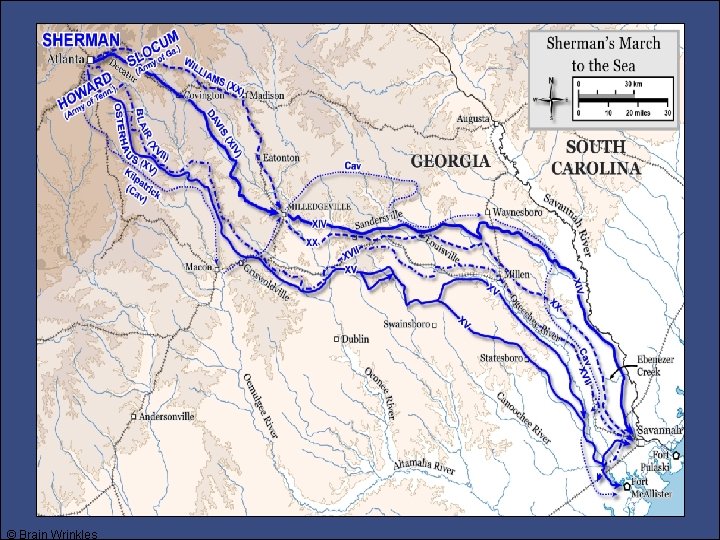
March to the Sea • Half of Sherman’s army marched through Decatur, Covington, Eatonton, and Milledgeville, while the other half traveled through Jonesboro and Gordon. • The two groups met in Sandersville and headed on to Savannah. © Brain Wrinkles
© Brain Wrinkles
March to the Sea • Sherman’s march cut Confederate supply lines and crushed the spirit of the Confederate army. • Union troops captured Savannah on December 21, 1864, and Sherman presented the city of Savannah to Abraham Lincoln as a Christmas gift. • The Confederacy surrendered in April 1865. © Brain Wrinkles
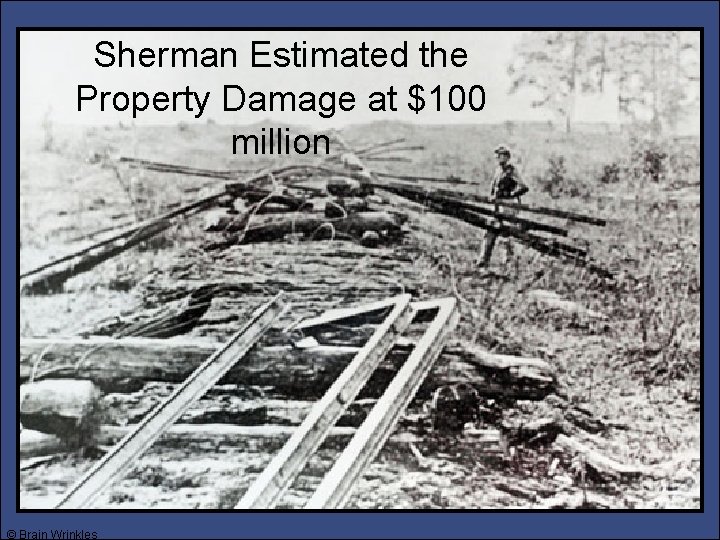
Sherman Estimated the Property Damage at $100 million © Brain Wrinkles
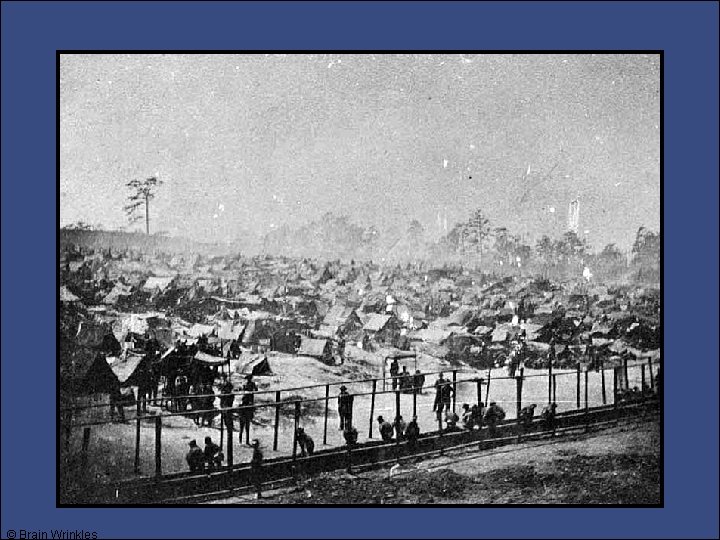
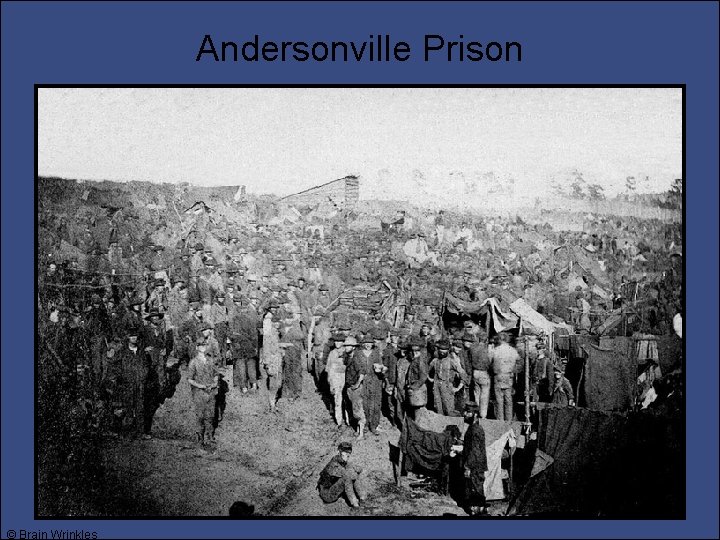
Andersonville • One of the most notorious sites of the Civil War was the Confederate prison camp in Andersonville, Georgia. • More than 45, 000 captured Union soldiers were sent to the overcrowded camp. © Brain Wrinkles
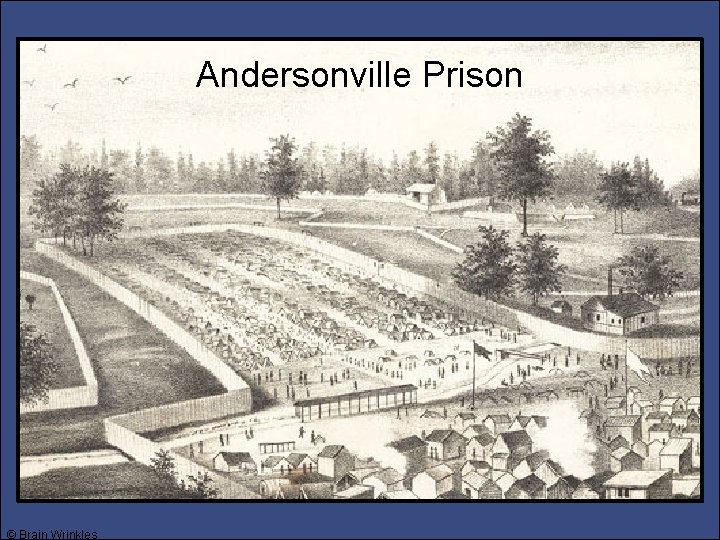
Andersonville Prison © Brain Wrinkles
Conditions • Inside the prison, there was barely any food to eat and the only water source was a filthy stream that flowed through the camp. • Prisoners lived outside with few clothes and had to construct their own shelters made from sticks, cloth scraps, and mud. • Living conditions were terrible and many suffered from starvation, disease, and insect attacks. © Brain Wrinkles
© Brain Wrinkles
Prison Camp • The prison was overcrowded and unsanitary, and over 13, 000 of the captives died of disease and starvation. • Prisoners lacked life’s basic necessities inside Andersonville’s walls. • The camp had the highest death rate of any Civil War prison. • After the war, the Union executed the prison’s commander, Major Henry Wirz. © Brain Wrinkles
Andersonville Prison © Brain Wrinkles
- Slides: 41