Georgia Trustee and Royal Colony SS 8 H

- Slides: 16
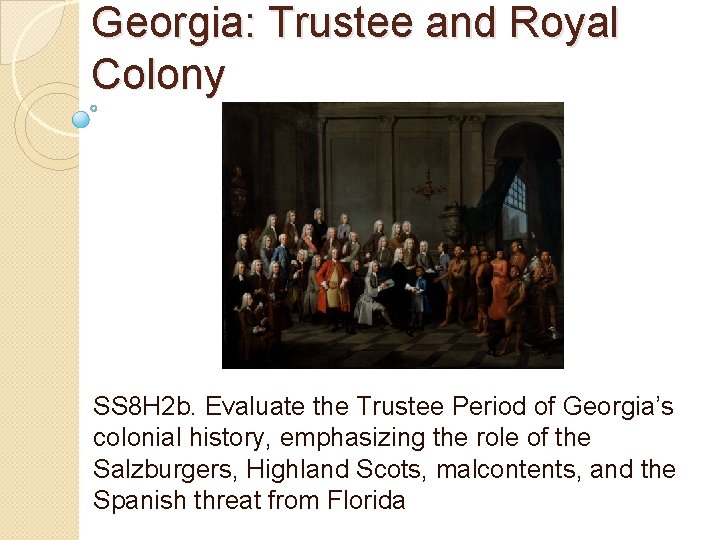
Georgia: Trustee and Royal Colony SS 8 H 2 b. Evaluate the Trustee Period of Georgia’s colonial history, emphasizing the role of the Salzburgers, Highland Scots, malcontents, and the Spanish threat from Florida
Essential Question �How did the Trustee period impact Georgia’s colonial history?
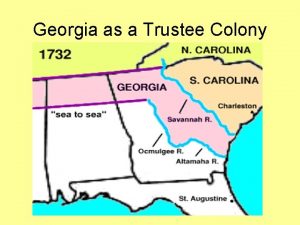
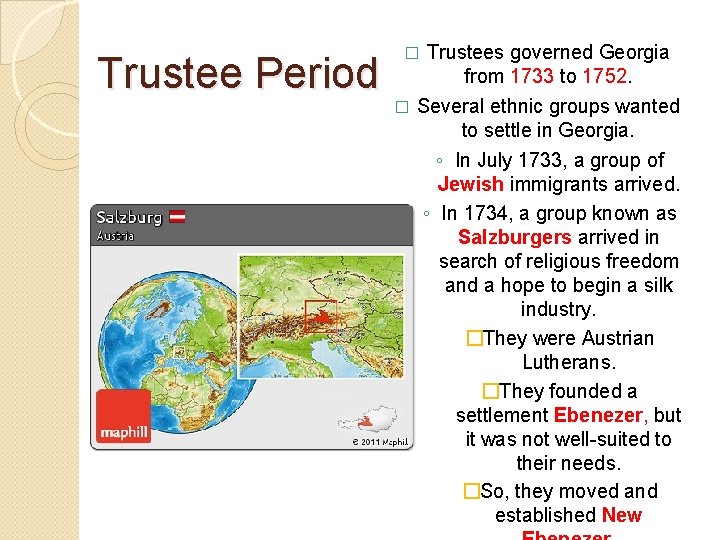
Trustee Period � � Trustees governed Georgia from 1733 to 1752. Several ethnic groups wanted to settle in Georgia. ◦ In July 1733, a group of Jewish immigrants arrived. ◦ In 1734, a group known as Salzburgers arrived in search of religious freedom and a hope to begin a silk industry. �They were Austrian Lutherans. �They founded a settlement Ebenezer, but it was not well-suited to their needs. �So, they moved and established New
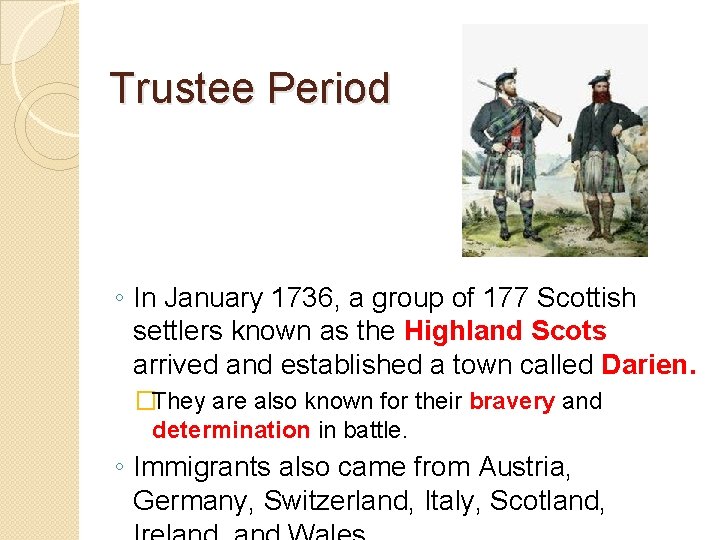
Trustee Period ◦ In January 1736, a group of 177 Scottish settlers known as the Highland Scots arrived and established a town called Darien. �They are also known for their bravery and determination in battle. ◦ Immigrants also came from Austria, Germany, Switzerland, Italy, Scotland,
Discussion Question �Why would Georgia want/not want the immigrants to come settle here?
Writing Prompt �Oglethorpe was so pleased with his model society that he asked his secretary (you) to write a glowing letter to King George II about the state of the colony during the current Trustee period. You describe the importance of contributions of two prominent men: Alexander, an Austrian “Salzburger” and Camden, a Highland Scot. Be sure to use evidence from your notes to support your answer.
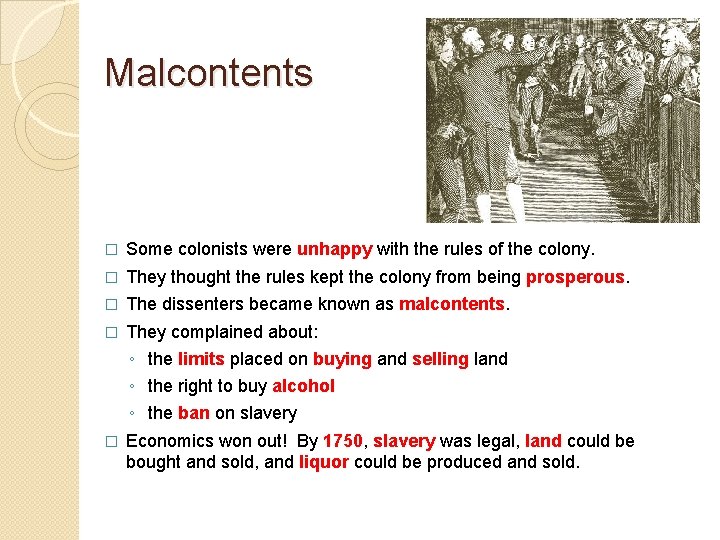
Malcontents � Some colonists were unhappy with the rules of the colony. � They thought the rules kept the colony from being prosperous. � The dissenters became known as malcontents. � They complained about: ◦ the limits placed on buying and selling land ◦ the right to buy alcohol ◦ the ban on slavery � Economics won out! By 1750, slavery was legal, land could be bought and sold, and liquor could be produced and sold.
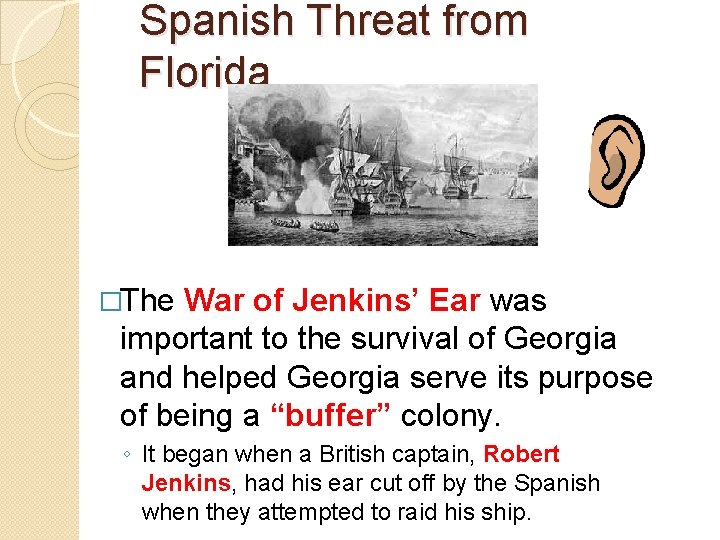
Spanish Threat from Florida �The War of Jenkins’ Ear was important to the survival of Georgia and helped Georgia serve its purpose of being a “buffer” colony. ◦ It began when a British captain, Robert Jenkins, had his ear cut off by the Spanish when they attempted to raid his ship.
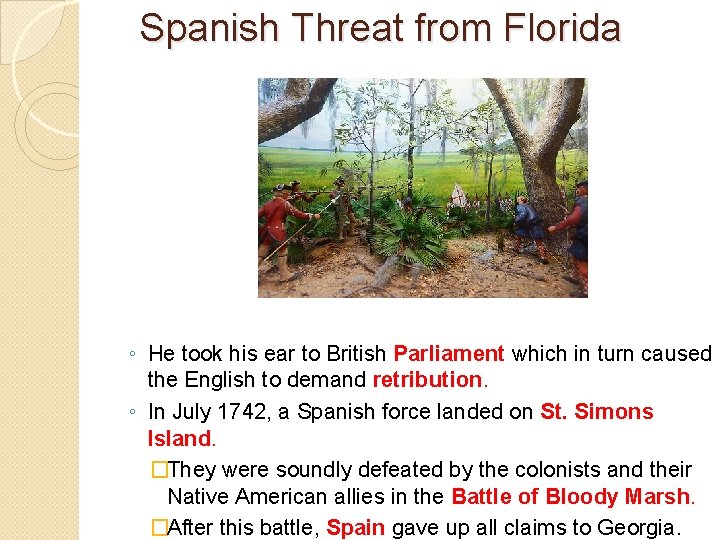
Spanish Threat from Florida ◦ He took his ear to British Parliament which in turn caused the English to demand retribution. ◦ In July 1742, a Spanish force landed on St. Simons Island. �They were soundly defeated by the colonists and their Native American allies in the Battle of Bloody Marsh. �After this battle, Spain gave up all claims to Georgia.
Ticket out the Door �Fill out your learning target form in Google Classroom!
Essential Question �How did the Royal Period impact Georgia’s colonial history?
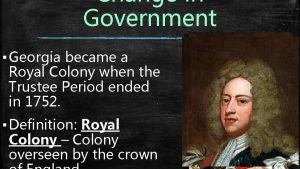
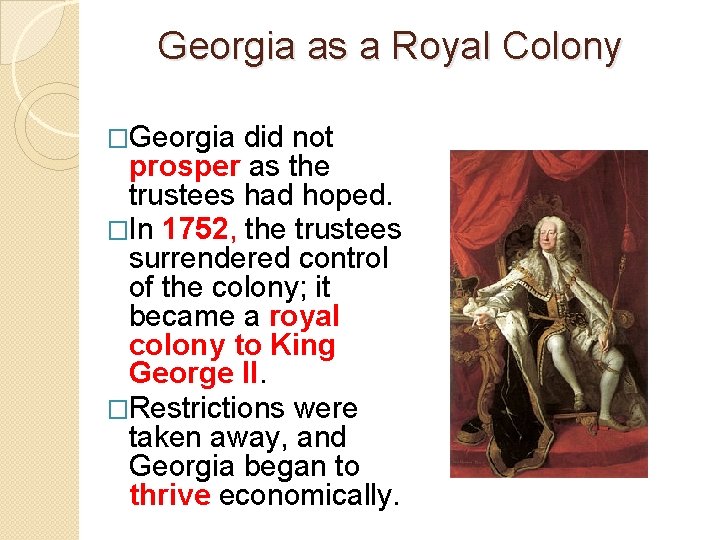
Georgia as a Royal Colony �Georgia did not prosper as the trustees had hoped. �In 1752, the trustees surrendered control of the colony; it became a royal colony to King George II. �Restrictions were taken away, and Georgia began to thrive economically.
Discussion �Who is now in charge of Georgia? Why?
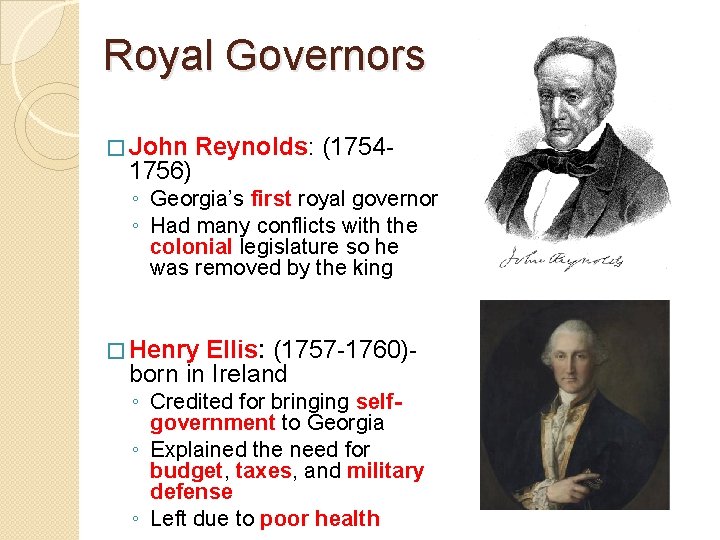
Royal Governors � John 1756) Reynolds: (1754 - ◦ Georgia’s first royal governor ◦ Had many conflicts with the colonial legislature so he was removed by the king � Henry Ellis: (1757 -1760)born in Ireland ◦ Credited for bringing selfgovernment to Georgia ◦ Explained the need for budget, taxes, and military defense ◦ Left due to poor health
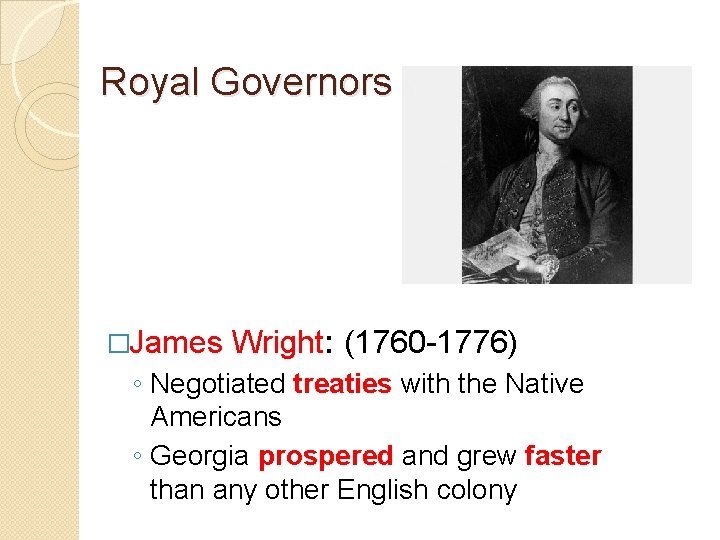
Royal Governors �James Wright: (1760 -1776) ◦ Negotiated treaties with the Native Americans ◦ Georgia prospered and grew faster than any other English colony
Ticket out the Door �Which royal governor was the most successful? Why? ◦ Use evidence from your notes to support your answer.