
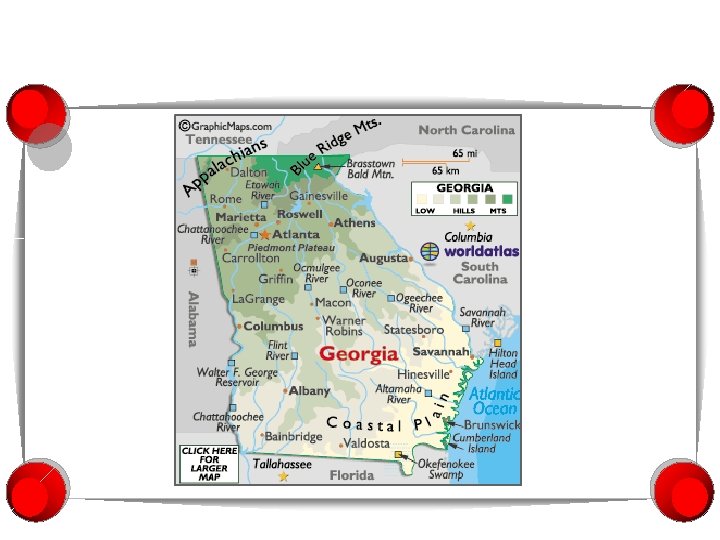
Georgia Studies CRCT REVIEW FIVE GEOGRAPHIC REGIONS Blue
Georgia Studies CRCT REVIEW
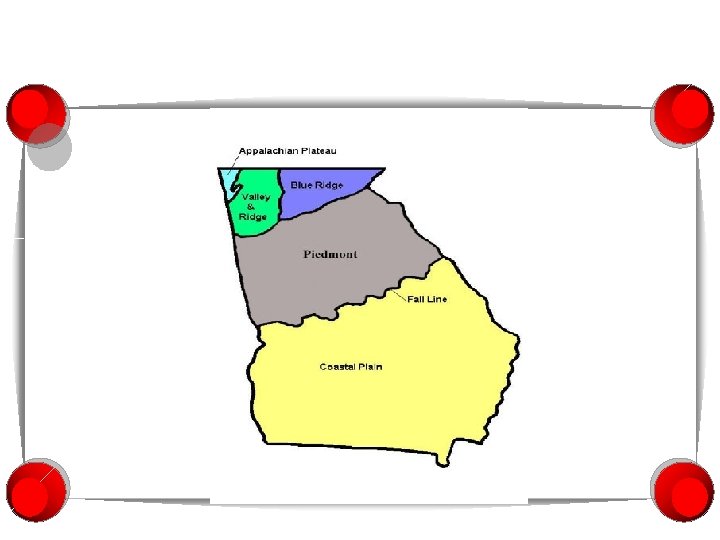
FIVE GEOGRAPHIC REGIONS § § § Blue Ridge Mountains Ridge and Valley Appalachian Plateau Piedmont Coastal Plain
Importance of key physical features on the development of Georgia § § § Fall Line Okefenokee Swamp Appalachian Mountains Chattahoochee River Savannah River Barrier islands
Prehistoric Native American Cultures § Paleo - atlatl § Archaic - horticulture; pottery § Woodland - tribes lived in villages; bow and arrow; improved pottery; coneshaped burial mounds § Mississippian - Temple Mound Builders, very religious; cultivated crops, tobacco; painted and tattooed their bodies
Colonial Georgia § § § James Oglethorpe Charter of 1732 Georgia founded in 1733 (Savannah) Tomochichi, Mary Musgrove Reasons for settlement • Charity • Economics—mercantilism • Defense
Trustee period § Proprietary Colony • Board of Trustees included 21 men who were responsible for governing Georgia on behalf of the king § Slavery was illegal in Georgia § Malcontents - colonists who became discontented with the many regulations; no liquor and no slaves
Royal Colony in 1752 § Ruled directly by the king § First Royal governor appointed - John Reynolds • 2 nd was Henry Ellis, 3 rd was James Wright § 1754 the French and Indian War began in a dispute over land § Proclamation of 1763 • Moved Georgia’s southern boundary to the St. Mary’s River • Forbade colonists to settle west of the Appalachian Mountains
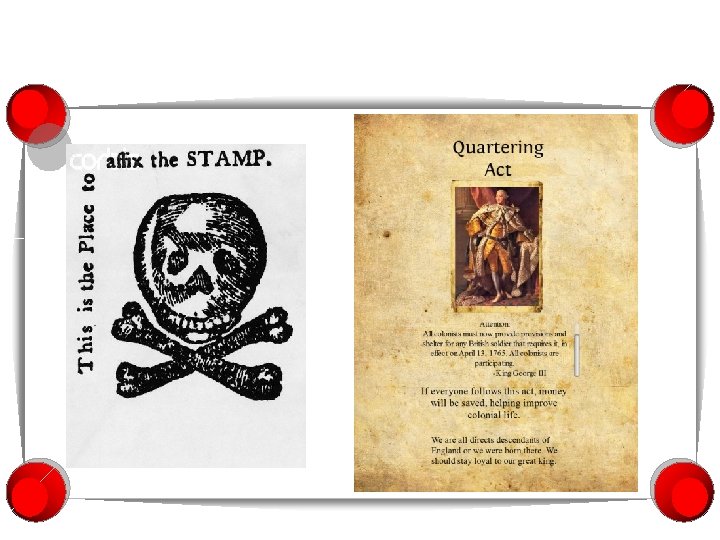
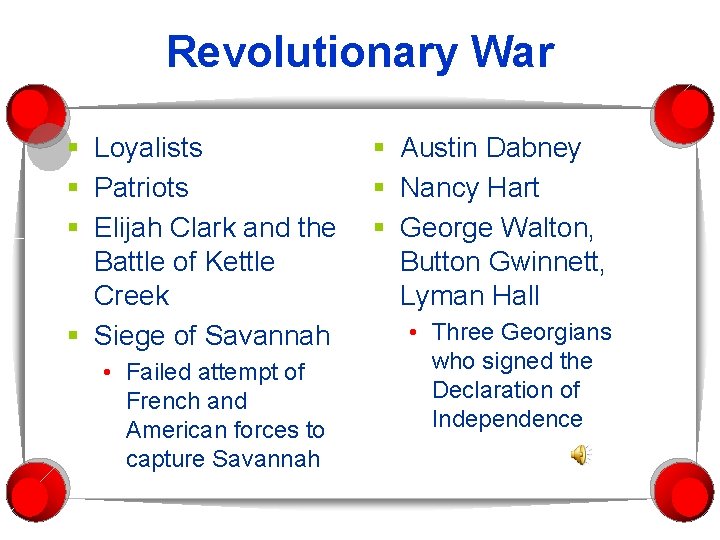
Causes of the American Revolution § Stamp Act • Tax placed on newspapers, legal documents, and licenses § Intolerable Acts • Closed port of Boston until Massachusetts paid for tea • No town meeting without governor’s permission or presence of military • Any British official committing a capital crime would be tried in Great Britain • Quartering Act § Declaration of Independence
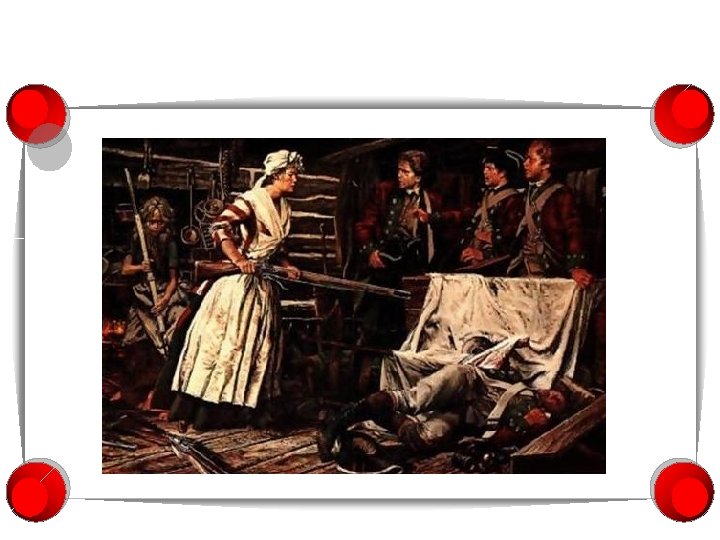
Revolutionary War § Loyalists § Patriots § Elijah Clark and the Battle of Kettle Creek § Siege of Savannah • Failed attempt of French and American forces to capture Savannah § Austin Dabney § Nancy Hart § George Walton, Button Gwinnett, Lyman Hall • Three Georgians who signed the Declaration of Independence
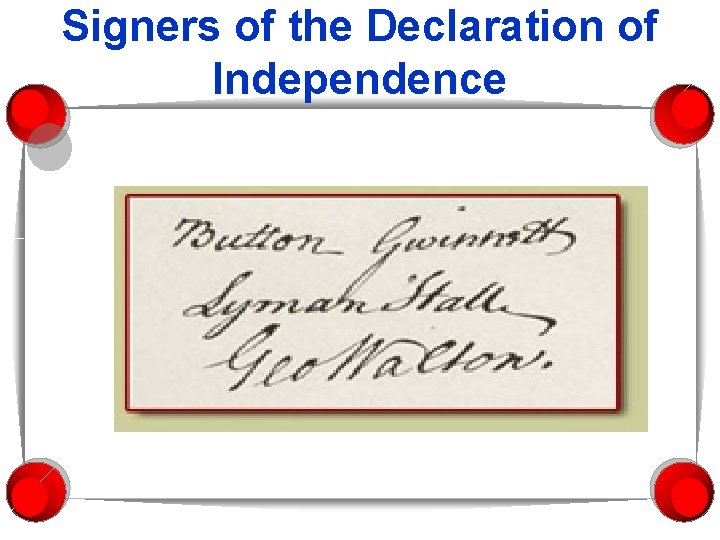
Signers of the Declaration of Independence
Land Policies in Georgia § Headright system • White male—head of household was given up to 1000 acres § Land lotteries • Replaced headright system § Yazoo Land Fraud
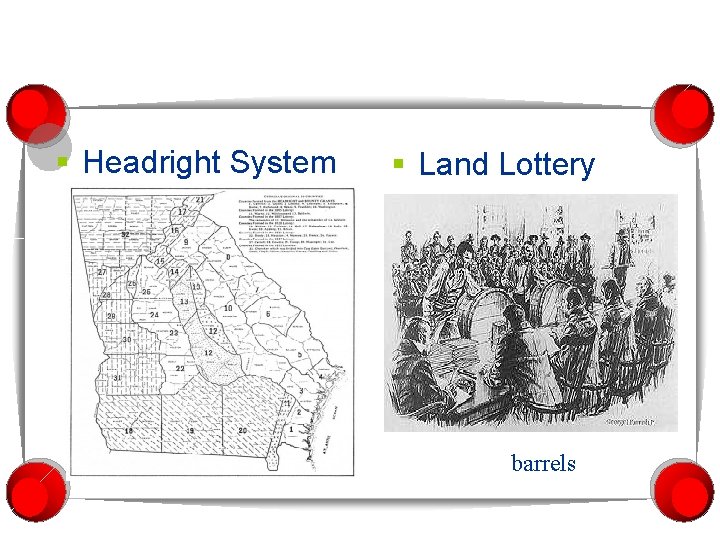
§ Headright System § Land Lottery barrels
Economic Growth 1780 -1840 § After the Revolutionary War rice and indigo plantations were ruined. § Georgia began growing cotton and tobacco. § In 1793 Eli Whitney invented the cotton gin. § Cyrus Mc. Cormick invented the mechanical reaper.
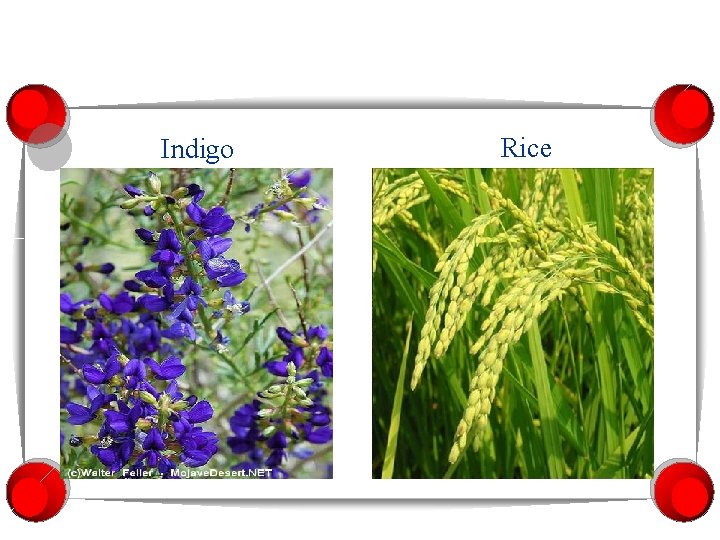
Indigo Rice
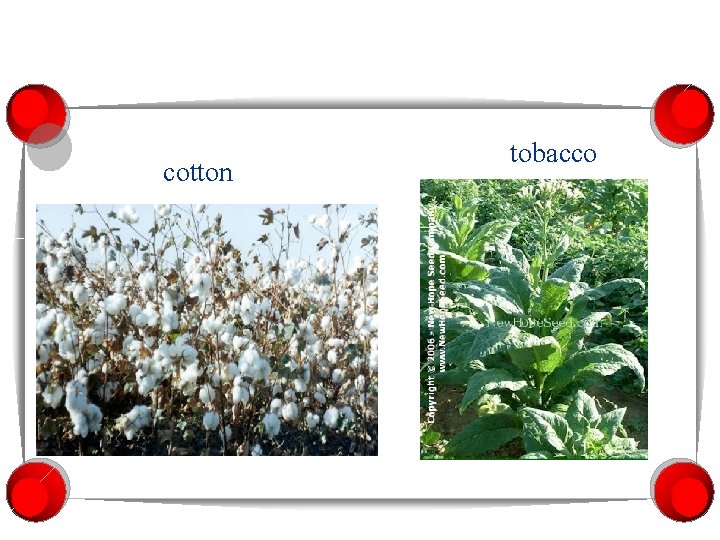
cotton tobacco
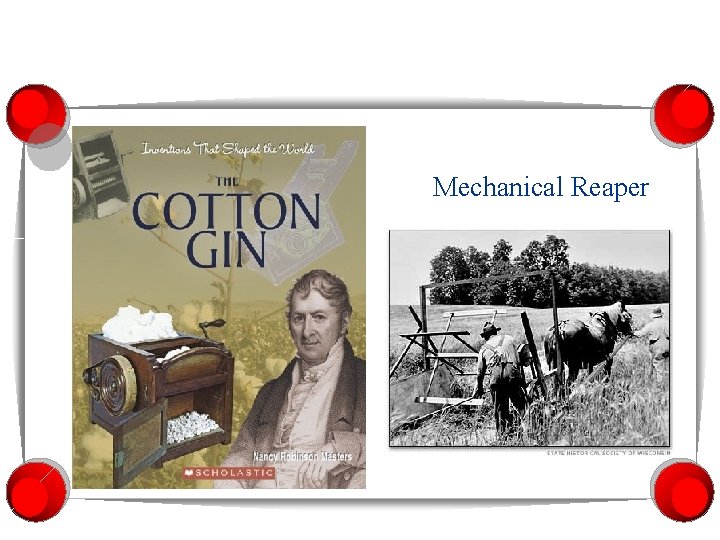
Mechanical Reaper
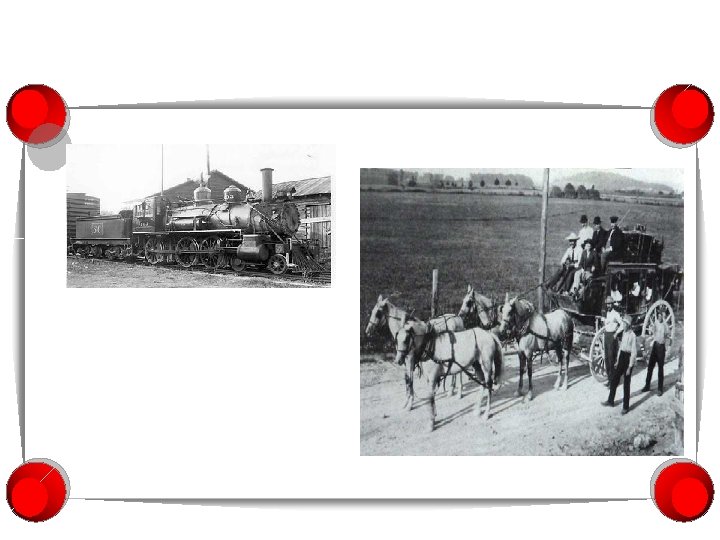
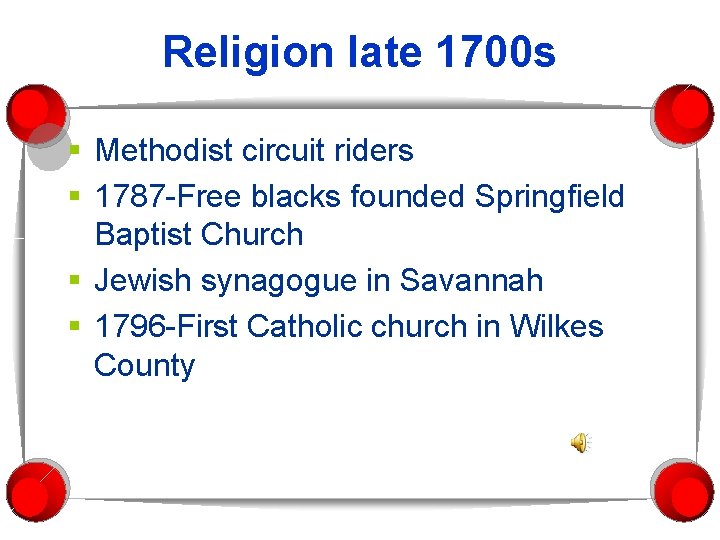
Transportation in early 1800 s § Railroads § Turnpikes § Ferries
Religion late 1700 s § Methodist circuit riders § 1787 -Free blacks founded Springfield Baptist Church § Jewish synagogue in Savannah § 1796 -First Catholic church in Wilkes County
Education § 1785 -University of Georgia was chartered • First land grant university in the United States • Opened for classes in 1801 • Often referred to as Franklin College
War of 1812 § Benefits to U. S. • U. S. showed willingness to fight • Separate states began to feel united in one nation • Unable to get goods during the war, Americans were forced to become selfsufficient. • Battle of New Orleans
Indian Removal § Alexander Mc. Gillivray (Treaty of New York) § William Mc. Intosh—murdered (Treaty of Indian Springs) § Sequoyah (syllabary) § John Ross (Cherokee chief) § Dahlonega Gold Rush § Worcester v. Georgia § Andrew Jackson § John Marshall § Trail of Tears— 1838
Issues and Events leading to the Civil War § Slavery § States’ rights - state’s interests more important than that of the national government § Nullification - to declare invalid § Missouri compromise - Maine entered the Union as a free state and Missouri entered as a slave state (balance of power)
Causes and events continued… § Compromise of 1850 • California entered as free state • Slave trading ended in Washington D. C. • Slave owners in D. C. could keep their slaves • Fugitive Slave Act
More causes and events… § Kansas-Nebraska Act • Popular Sovereignty - They could vote on whether they wanted to become a free state or a slave state § Dred Scott case (slaves were not citizens) § Lincoln elected in 1860 § Alexander Stephens against secession (vice president of the Confederacy)
Civil War § § § § § Union blockade of coast Ft. Pulaski and Tybee—first 2 battles in GA Antietam—bloodiest one day battle Emancipation Proclamation (Jan. 1, 1863) Gettysburg—bloodiest 3 days of fighting Chickamauga Sherman’s Atlanta Campaign Sherman’s March to the Sea Andersonville POW camp
Reconstruction § Freedmen’s Bureau § Sharecropping and tenant farming § Amendments • 13 th abolish slavery (freedom) • 14 th freed slaves are citizens • 15 th right to vote for all males § Ku Klux Klan
Redemption § § § § Bourbon Triumvirate Henry Grady International Cotton Exposition Tom Watson and the Populists Rebecca Latimer Felton 1906 Atlanta Race Riot Leo Frank case County unit system
Progressive Era § § § § Prison Reform Labor Reform Temperance Movement Women’s suffrage Jim Crow laws Plessy v. Ferguson Cummings v. Richmond County Board of Education
Important African Americans § Booker T. Washington • Atlanta Compromise Speech (1895) § W. E. B. Dubois § John Hope
Causes of World War I § Extreme nationalism in Europe § Conflict over economic opportunities in Africa § Assassination of Arch Duke Franz Ferdinand of Austria-Hungary
Georgia’s Contributions to WWI § 85, 000 -100, 000 Georgians serve in the military § Military training posts: Camp Benning, Fort Mc. Pherson (POW), and Camp Gordon § Textile mills made fabric for uniforms § Railroads transported supplies to ports § “Victory Gardens”
Great Depression § § § Borrowed too much money Factories produced too many goods Farmers overproduced U. S. and other nations enacted tariffs Speculation in stock market • Paid only a portion of price—as stocks prices increased—sold stock—paid off—forced prices higher than the stock’s worth § Banks had purchased large amounts of stock —lost lots of $$$ after crash § Laissez-faire
New Deal § CCC—Civilian Conservation Corps § AAA—Agricultural Adjustment Act • Farm subsidies for land owners § Rural Electrification § SSA—Social Security Administration • No income for farm and household workers § TVA—Tennessee Valley Authority • Lake Blue Ridge • Lake Chatuge • Lake Nottely
Eugene Talmadge § White supremacist § Disliked the New Deal programs § Reduced property taxes, utility rates, and some license fees
New Deal Governors § Richard Russell, Jr. • Combined 102 state offices into 17 agencies • Board of Regents of the University System § Eugene Talmadge § Eurith Rivers • Health services, 7 -month school year • homestead exemptions for taxes § Ellis Arnall • 18 -year olds the right to vote
WW II § Causes • Economic chaos in Europe—worldwide depression • Germany’s high war debt • Inflation • Massive unemployment • Political instability • Rise of fascism—total power given to a dictator • Invasion of Poland
America in WW II § 1941 Lend-Lease Act—U. S. leased weapons, supplies, and equipment if involved U. S. security § Air bases in Greenland Iceland tracked German subs § U. S. Navy escort British ships § Increased tensions with Japan—due aggression toward China, Indochina, Thailand
“A Day That Will Live in Infamy” § December 7, 1941— 8: 00 a. m. § Japanese attack Pearl Harbor § All 8 battleships are destroyed or severely damaged § 180 U. S. planes destroyed § Over 2, 000 killed and 1, 000 wounded § December 8, 1941 Congress declared war on Japan—Days later Germany and Italy declared war on U. S.
Tuskegee Airmen § Trained in Tuskegee, Alabama § Airman escorted allied bombers § In over 200 missions, never lost a single bomber they were escorting § Shot down or damaged over 4, 000 enemy planes § By end of the war they had flown 1, 500 and lost 98 pilots § Led the way to integration of the armed forces
Women in WW II § 330, 000 served as nurses, clerks, aides, drivers § WASP—Women’s Air Force Service Pilots § Delivered planes from factories to airfields § Served as test pilots § Flew target planes
GA in WW II § 320, 000 served in military § 7, 388 died in battle § Military bases: • • • Fort Benning—Columbus Camp Gordon—Augusta Fort Stewart—Savannah Hunter Air Field—Savannah Warner Robbins—Macon Fort Mc. Pherson—Atlanta
WW II Economic Boom in GA § Military bases § Liberty ships at Brunswick and Savannah § Bell Aircraft • • Employed 30, 000 built B-29 bombers Produced military vehicles and uniforms Atlanta airport became an air base Farmers produced peanuts, vegetables, cotton, livestock – 1944 annual farm income $424, 3 times greater than in 1940.
Industries Move into GA § Heating costs are low § Summer heat was a drawback—Rich’s first air-conditioned building in Atlanta • Most homes and automobiles were not airconditioned until the 1970 s and early 1980 s § Low business and individual tax rates § Non-union state—lower wages
Entrepreneurs in GA § § Coca-cola Delta Airlines Georgia-Pacific Home Depot
Postwar GA § GI Bill—helped veterans pay for college and buy homes § College enrollment soared § Suburbs § “Baby Boom” § Strong economy § Polio vaccine—Dr. Jonas Salk § Super glue, Saran wrap, Velcro, TV
An Atlanta Tragedy § December 7, 1946: Winecoff Hotel fire § Hotel was Atlanta’s tallest at 15 floors § There were nearly 300 guests; 119 killed § 1948: Georgia enacted stricter fire codes for hotels and other businesses
Three Governors Episode § Newly re-elected governor Eugene Talmadge died before taking office § The previous governor, Ellis Arnall, the Lieutenant Governor, and Talmadge’s son, Herman, fought over who would govern § The Georgia Supreme Court ruled that a special election must be held and said Thompson was governor until then § Herman Talmadge was elected
Georgia Leaders § Governor Melvin Thomas: purchased Jekyll Island to build a state-owned resort; established UGA Veterinary School § Governor Herman Talmadge: Minimum Foundation Program for Education Act – established 9 -month school year raised standards for schools § Senator Richard B Russell: 1946 National School Lunch Act
Georgia Leaders § Gov. Carl Sanders: elected in 1962; worked to diffuse racial violence; increased spending on education; used television ads to campaign § Gov. Lester Maddox: elected 1967; surprise winner; appointed more African Americans to state office than all other governors combined; integrated the State Patrol; “People’s Days” – any Georgian could visit and talk with the governor
“One Person, One Vote” § The concept that each citizen’s vote should equal every other citizen’s vote § County-unit system was declared unconstitutional in 1962 § This change caused more representatives to come from urban areas § General Assembly had to reapportion (redraw) voting districts to ensure districts of equal population size
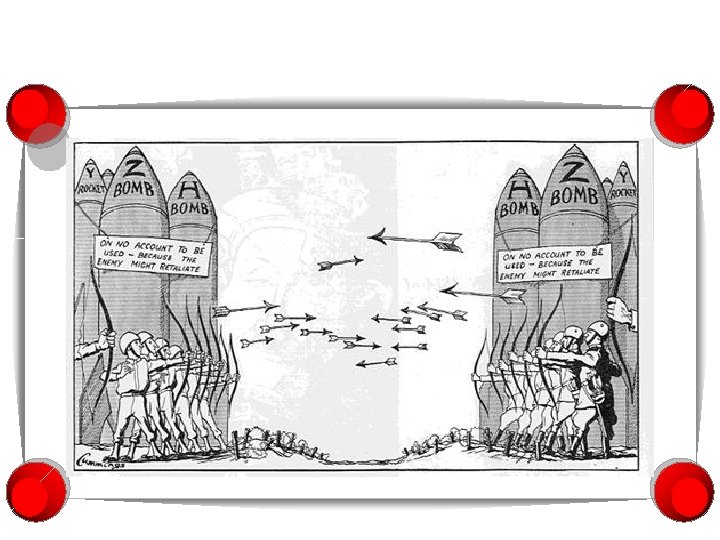
Cold War § U. S. and Soviet Union—fought mainly with words and diplomacy (nuclear arms race) § Communism § Containment—foreign policy to prevent the Soviet Union from expanding communism in other countries (led U. S. into Korean and Vietnam)
The Korean War § § Korea divided along the 38 th parallel 1950 North Korea invaded South Korea China came to the aid of North Korea U. N. forces including U. S. sent troops to aid South Korea § Ended in 1953 § 2, 500, 000 killed or wounded— 25, 000 Americans killed including 500 Georgians
Civil Rights Movement § What people do I need to know? • • Martin Luther King, Jr. Charlayne Hunter & Hamilton Holmes Ivan Allen Andrew Young
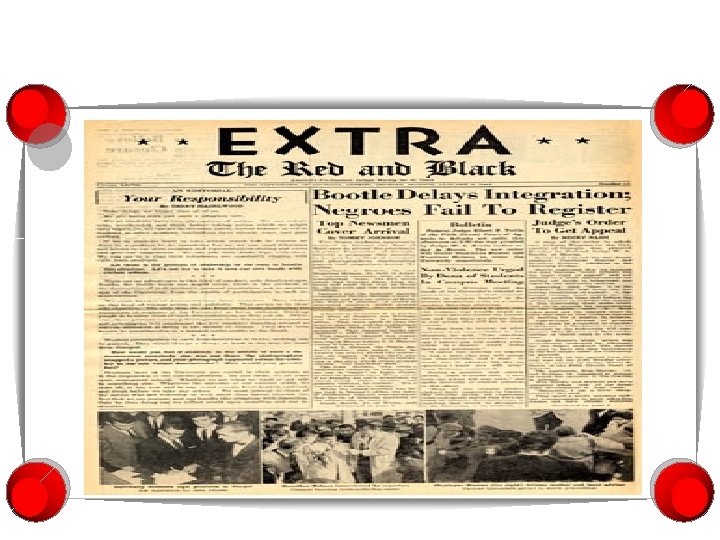
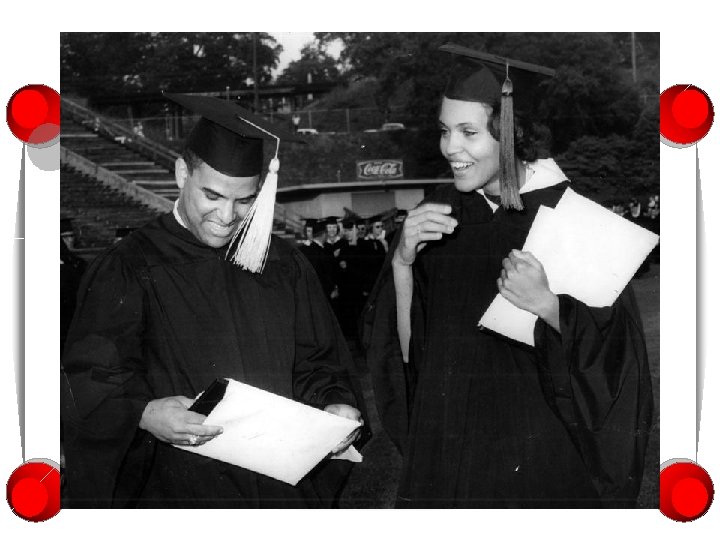
Civil Rights Movement § 1948: racial integration ordered in armed forces § 1950: Brown v. Board of Education – case struck down “separate but equal” concept; schools were to be integrated § 1960: Sibley Commission: found that most Georgians would rather close schools than integrate § More private schools opened § 1961: Charlayne Hunter and Hamilton Holmes first African American students at UGA § 1971: All Georgia public schools integrated
A Nonviolent Movement is Born § Martin Luther King, Jr. of Atlanta § Developed a nonviolent approach to social change § Four-prong approach: • • direct, nonviolent actions legal remedies ballots economic boycotts § SCLC: Southern Christian Leadership Conference – civil rights group led by Dr. King § Sit-in: Dr. King’s strategy to people refuse to leave a public building until their demands are met
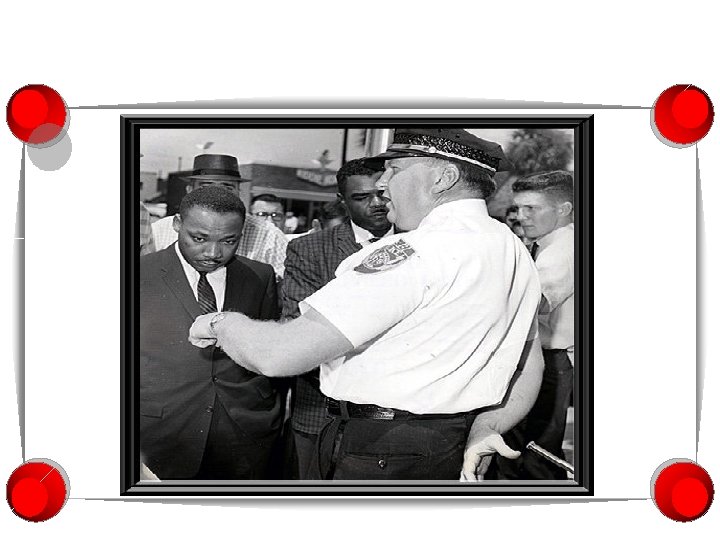
The Albany Movement § 1961: Albany, GA becomes center of civil rights activity • 40% African American • 6 yrs. after Brown v. Board schools still segregated • Small number of African Americans allowed to register to vote § Nearly 500 people jailed including Martin Luther King, Jr. —protesting segregated bus transportation • National press was there to see the protests and arrests.
Vietnam Divides America § North Vietnam: communist § South Vietnam: democratic § USA began support South Vietnam against the North § 1968: Over 500, 000 Americans involved in Vietnam War § Protests against the war increased § 1973: war ended with no clear victor – Vietnam is now united and communist
Watergate § 1972: Group of men arrested for breaking into the Watergate building in Washington, DC to “bug” Democratic National Committee offices § Evidence supported that President Nixon knew of the burglary and tried to cover it up § Nixon resigned and Vice-President Gerald Ford became president
The Energy Crisis § 1973: US supports Israel in its war with Egypt § Arab nations stop selling oil to the US § Price of gas went up and there were shortages § Georgians began to drive less and purchase fuel-efficient cars § Prudhoe Bay, Alaska: Alaskan Pipeline brought oil to the “lower 48” states
- Slides: 68