
Georgia Geography Unit 2 Our units Georgia Performance

- Slides: 38
Georgia Geography Unit 2
Our unit’s Georgia Performance Standards SS 8 G 1 The student will describe Georgia with regard to physical features and location. a. Locate Georgia in relation to region, nation, continent, and hemispheres. b. Describe the five geographic regions of Georgia; include the Blue Ridge Mountains, Valley and Ridge, Appalachian Plateau, Piedmont, and Coastal Plain. c. Locate and evaluate the importance of key physical features on the development of Georgia; include the Fall Line, Okefenokee Swamp, Appalachian Mountains, Chattahoochee and Savannah Rivers, and barrier islands. d. Evaluate the impact of climate on Georgia’s development.
Essential Question • Where is Georgia in terms of hemisphere, continent, nation, and region?
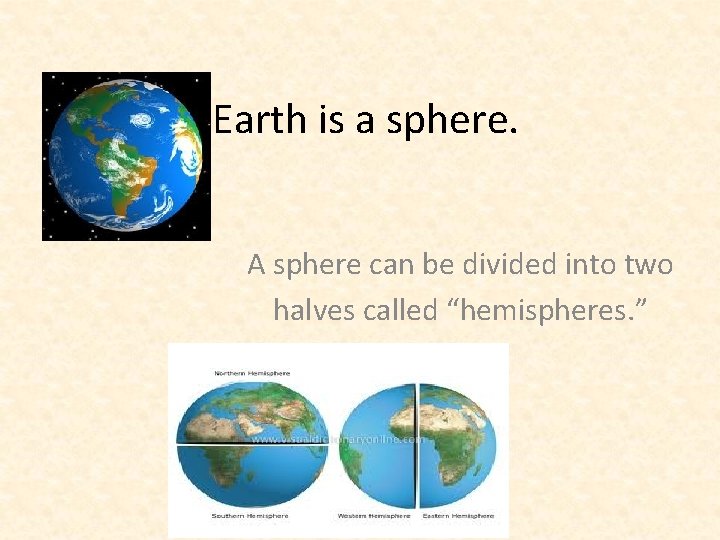
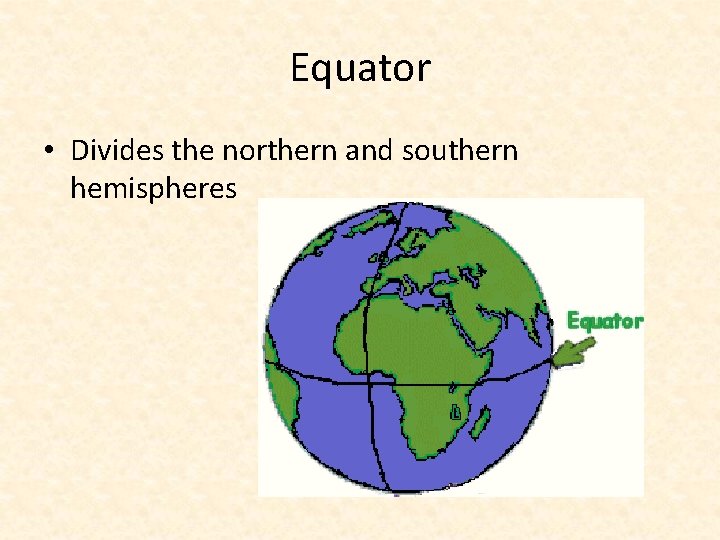
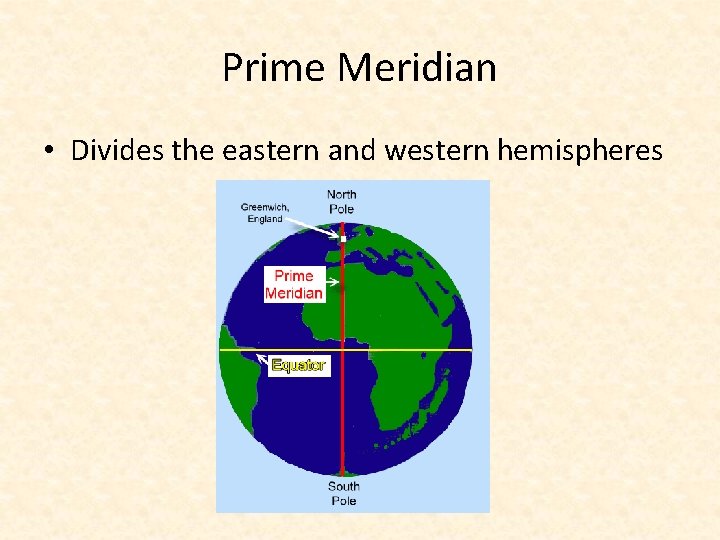
Earth is a sphere. A sphere can be divided into two halves called “hemispheres. ”
Equator • Divides the northern and southern hemispheres
Prime Meridian • Divides the eastern and western hemispheres
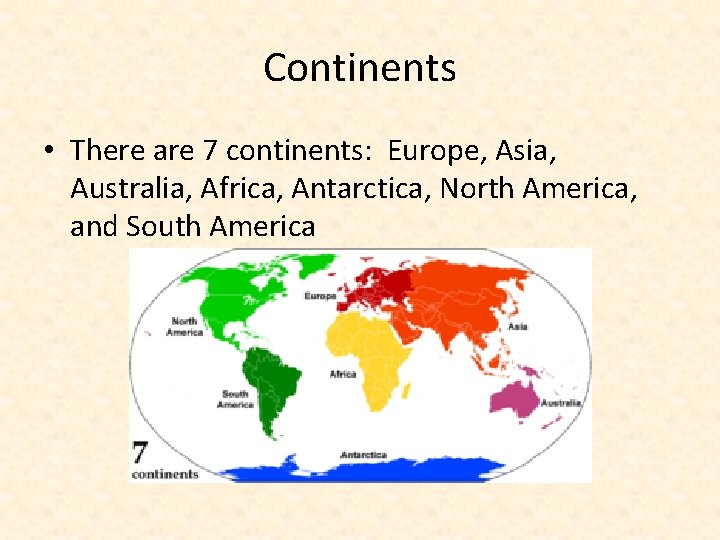
Continents • There are 7 continents: Europe, Asia, Australia, Africa, Antarctica, North America, and South America
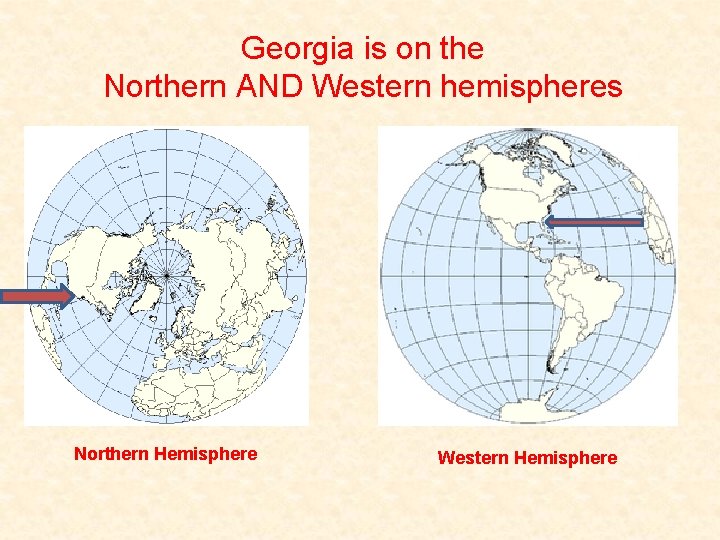
Georgia is on the Northern AND Western hemispheres Northern Hemisphere Western Hemisphere
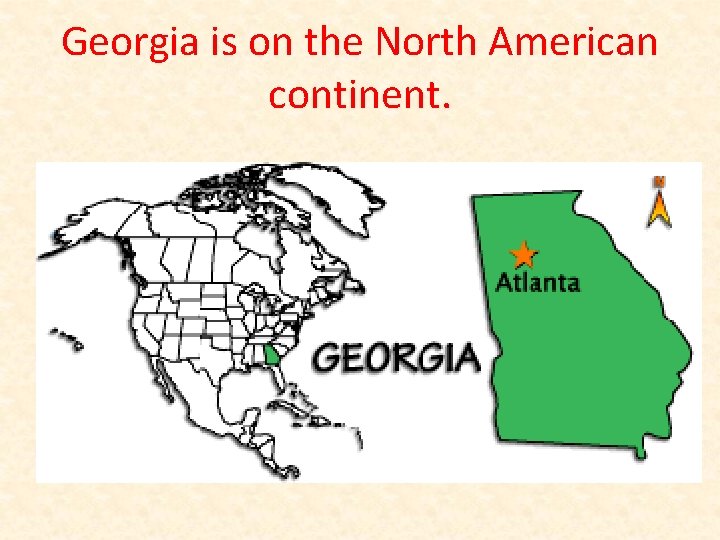
Georgia is on the North American continent.
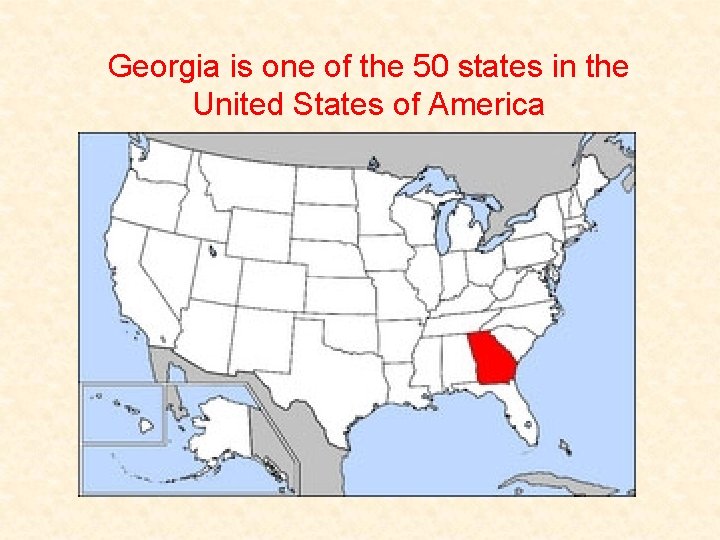
Georgia is one of the 50 states in the United States of America
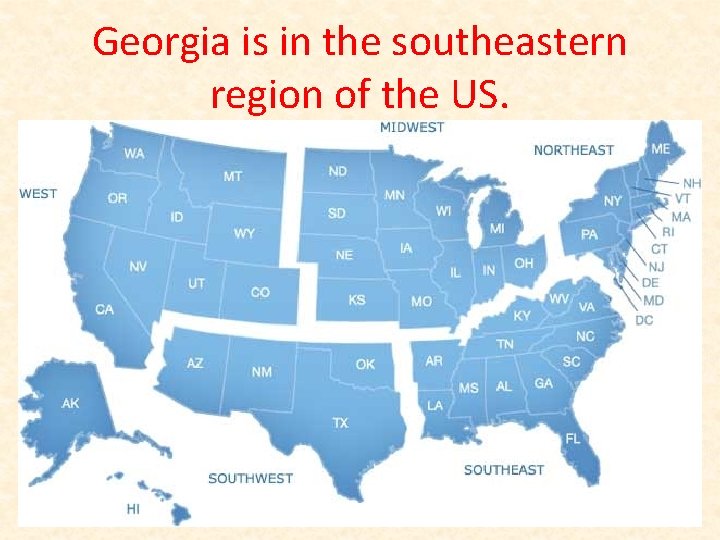
Georgia is in the southeastern region of the US.
Essential Questions • Which North American physiographic regions are found in Georgia and what are some distinguishing characteristics of each? • What is the relative location of these physiographic regions within the boundaries of the State?
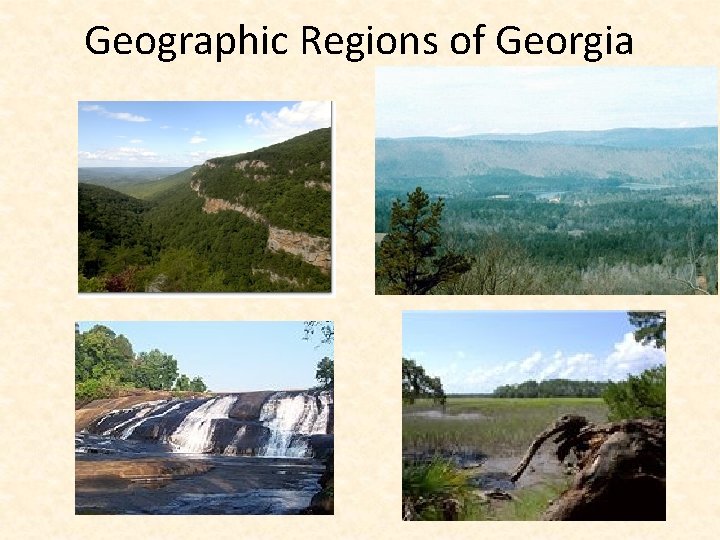
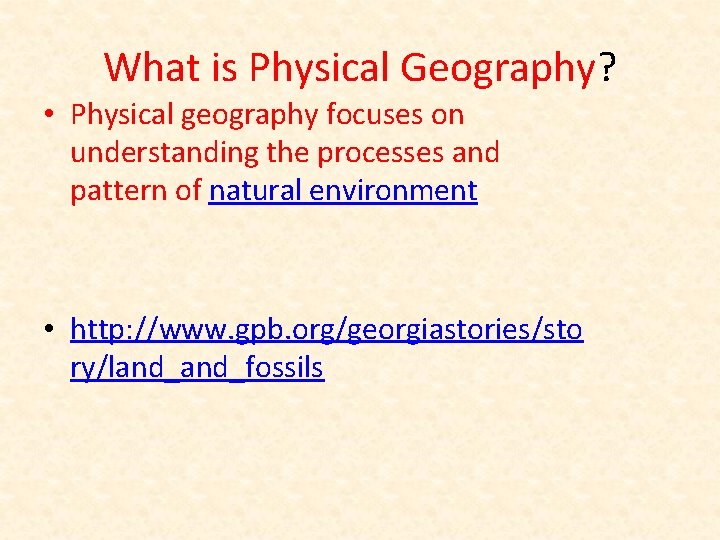
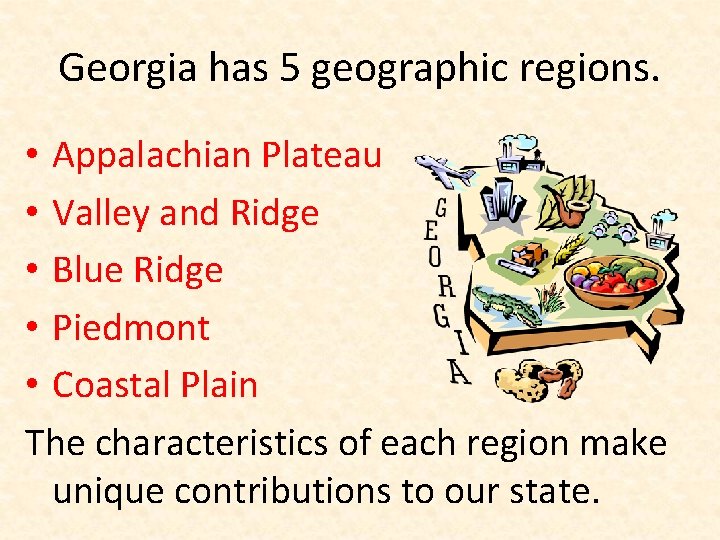
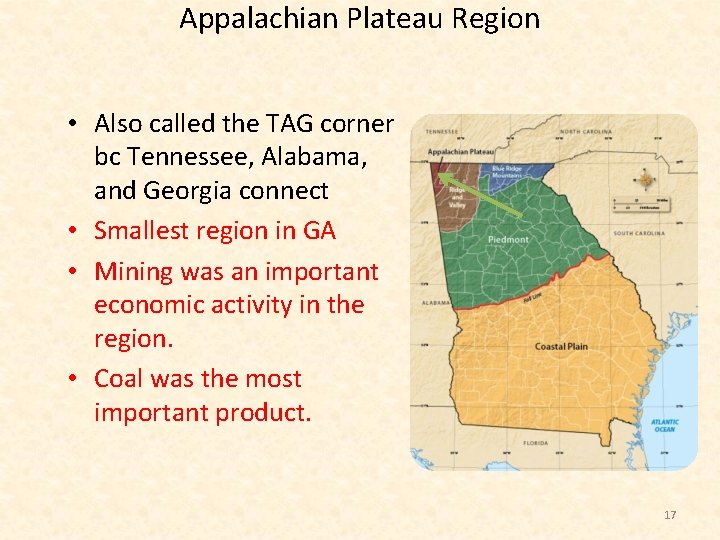
Geographic Regions of Georgia
What is Physical Geography? • Physical geography focuses on understanding the processes and pattern of natural environment • http: //www. gpb. org/georgiastories/sto ry/land_fossils
Time for “Max News” http: //www. youtube. com/watch? v=jh 0 B_Gb. ZT 8 M
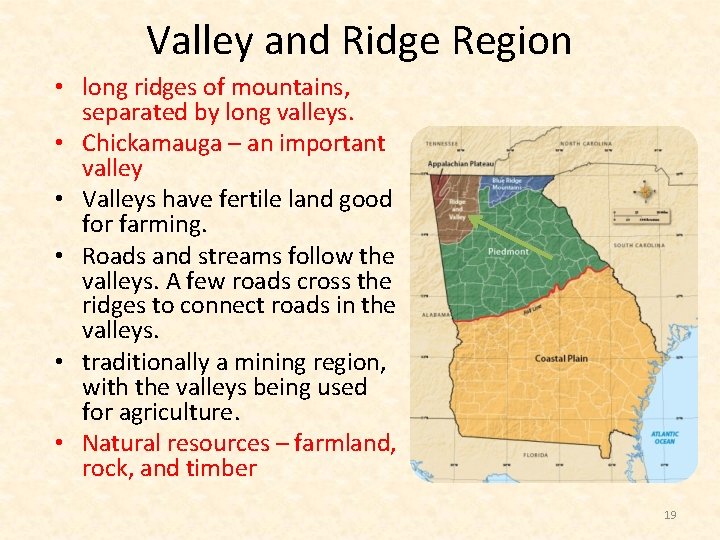
Georgia has 5 geographic regions. • Appalachian Plateau • Valley and Ridge • Blue Ridge • Piedmont • Coastal Plain The characteristics of each region make unique contributions to our state.
Appalachian Plateau Region • Also called the TAG corner bc Tennessee, Alabama, and Georgia connect • Smallest region in GA • Mining was an important economic activity in the region. • Coal was the most important product. 17
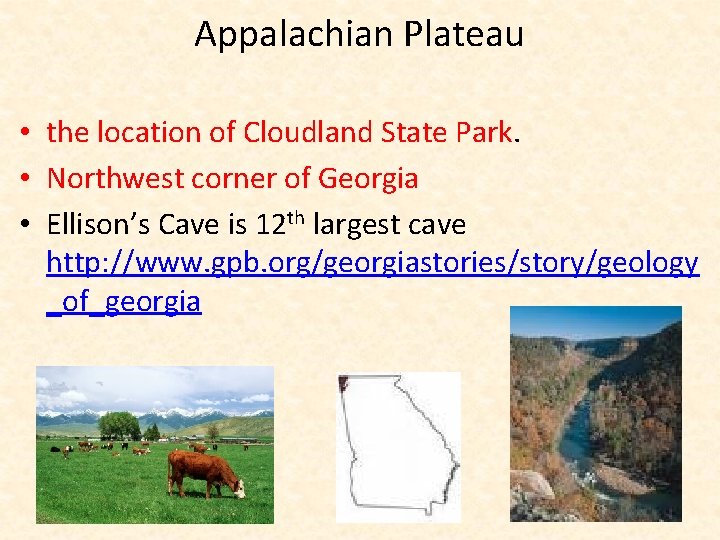
Appalachian Plateau • the location of Cloudland State Park. • Northwest corner of Georgia • Ellison’s Cave is 12 th largest cave http: //www. gpb. org/georgiastories/story/geology _of_georgia
Valley and Ridge Region • long ridges of mountains, separated by long valleys. • Chickamauga – an important valley • Valleys have fertile land good for farming. • Roads and streams follow the valleys. A few roads cross the ridges to connect roads in the valleys. • traditionally a mining region, with the valleys being used for agriculture. • Natural resources – farmland, rock, and timber 19
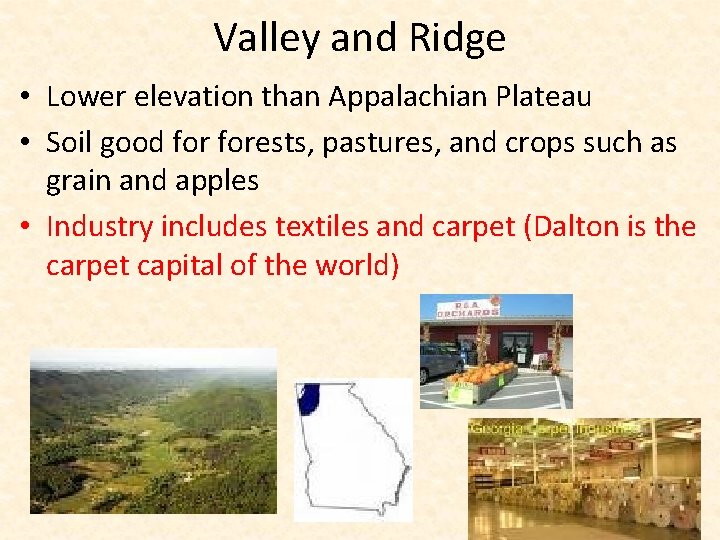
Valley and Ridge • Lower elevation than Appalachian Plateau • Soil good forests, pastures, and crops such as grain and apples • Industry includes textiles and carpet (Dalton is the carpet capital of the world)
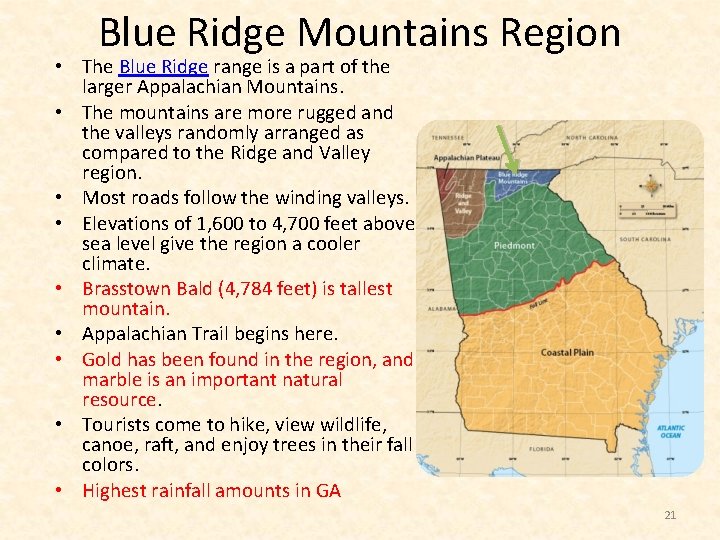
Blue Ridge Mountains Region • The Blue Ridge range is a part of the larger Appalachian Mountains. • The mountains are more rugged and the valleys randomly arranged as compared to the Ridge and Valley region. • Most roads follow the winding valleys. • Elevations of 1, 600 to 4, 700 feet above sea level give the region a cooler climate. • Brasstown Bald (4, 784 feet) is tallest mountain. • Appalachian Trail begins here. • Gold has been found in the region, and marble is an important natural resource. • Tourists come to hike, view wildlife, canoe, raft, and enjoy trees in their fall colors. • Highest rainfall amounts in GA 21
Blue Ridge • Highest mts. in the state. • Provides water for the entire state through precipitation from trapping warm moist Gulf air • Sandy loam and clay soil good for hardwoods, vegetable farming and apples • home to Amicalola Falls, Tallulah Gorge, and Helen • 1800’s gold was found – first goldrush in US • Cherokee Indians lived here until forced off their land
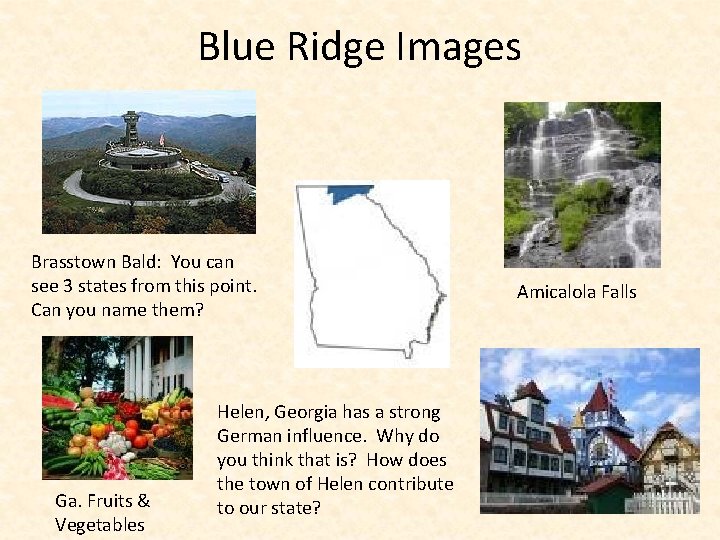
Blue Ridge Images Brasstown Bald: You can see 3 states from this point. Can you name them? Ga. Fruits & Vegetables Helen, Georgia has a strong German influence. Why do you think that is? How does the town of Helen contribute to our state? Amicalola Falls
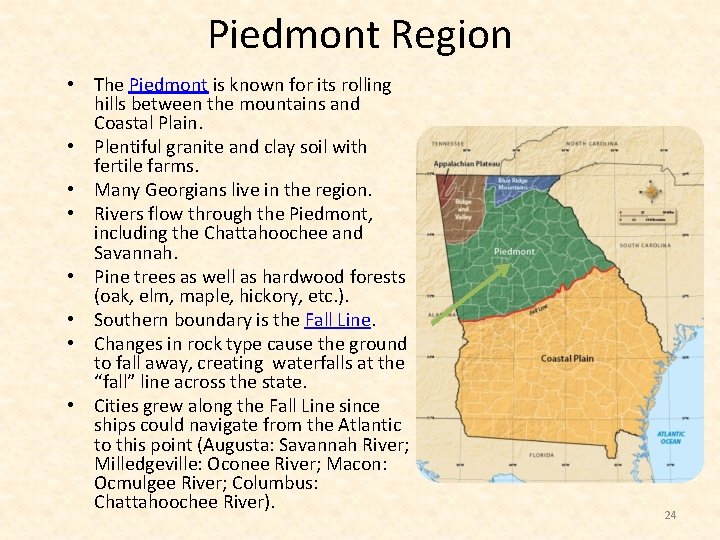
Piedmont Region • The Piedmont is known for its rolling hills between the mountains and Coastal Plain. • Plentiful granite and clay soil with fertile farms. • Many Georgians live in the region. • Rivers flow through the Piedmont, including the Chattahoochee and Savannah. • Pine trees as well as hardwood forests (oak, elm, maple, hickory, etc. ). • Southern boundary is the Fall Line. • Changes in rock type cause the ground to fall away, creating waterfalls at the “fall” line across the state. • Cities grew along the Fall Line since ships could navigate from the Atlantic to this point (Augusta: Savannah River; Milledgeville: Oconee River; Macon: Ocmulgee River; Columbus: Chattahoochee River). 24
Piedmont • Piedmont means “foot of the mountain” • Begins in the mountain foothills of N. Georgia and goes to the central part of the state. • Rolling farmland • Soil is sandy loam and red clay suitable for growing hardwoods, pine, and agriculture. • Granite mining and cotton production important in region • Cotton belt before the Civil War, now wheat, soybeans, corn, poultry, and cattle. • Some of the most densely populated cities and crossed by Chattahoochee, Flint, Ocmulgee, and Oconee rivers.
Piedmont • • • Largest populated region Rolling Hills Chattahoochee River flows through this region Stone Mountain is located in this region Atlanta is located in this region
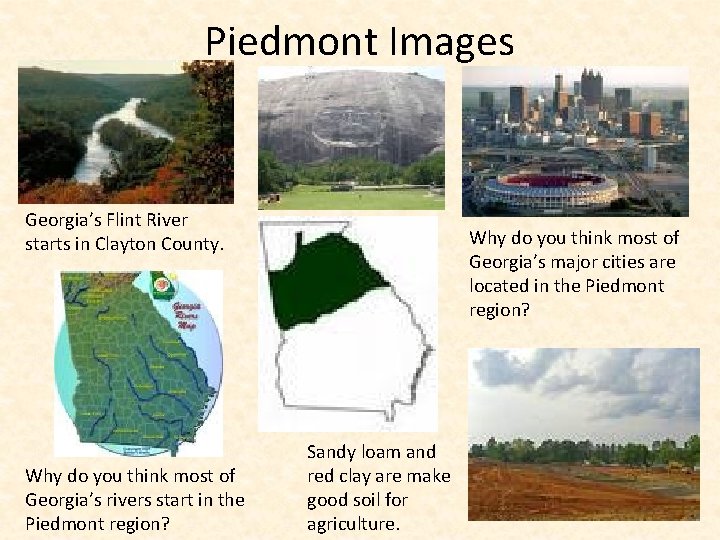
Piedmont Images Georgia’s Flint River starts in Clayton County. Why do you think most of Georgia’s rivers start in the Piedmont region? Why do you think most of Georgia’s major cities are located in the Piedmont region? Sandy loam and red clay are make good soil for agriculture.
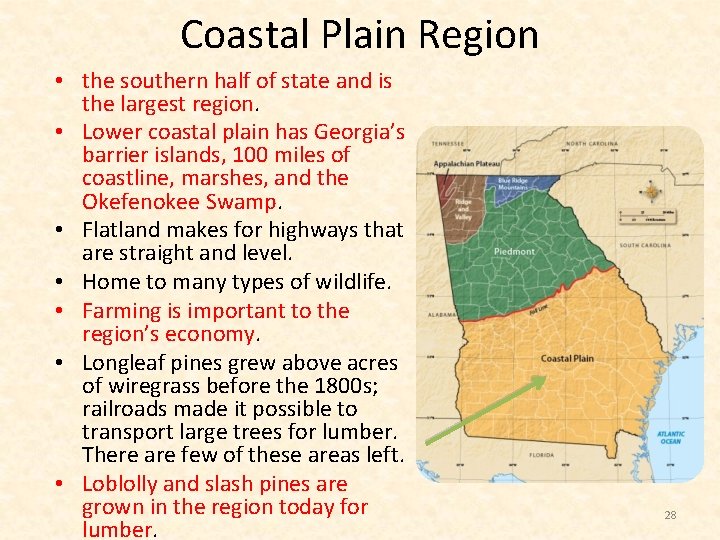
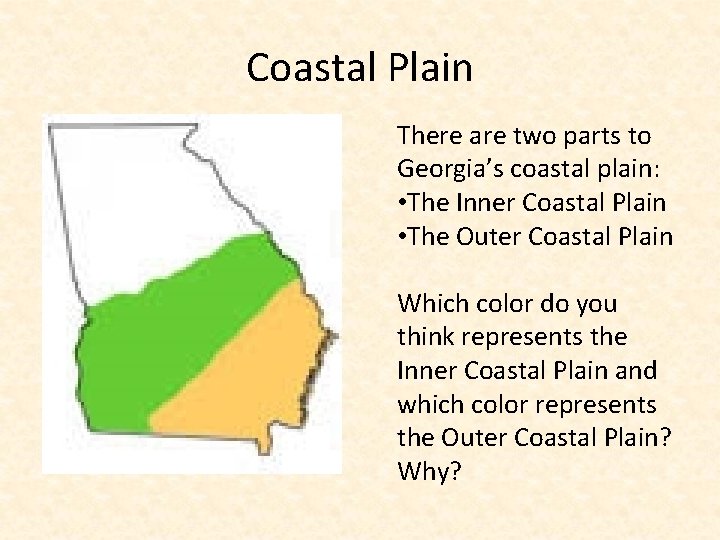
Coastal Plain Region • the southern half of state and is the largest region. • Lower coastal plain has Georgia’s barrier islands, 100 miles of coastline, marshes, and the Okefenokee Swamp. • Flatland makes for highways that are straight and level. • Home to many types of wildlife. • Farming is important to the region’s economy. • Longleaf pines grew above acres of wiregrass before the 1800 s; railroads made it possible to transport large trees for lumber. There are few of these areas left. • Loblolly and slash pines are grown in the region today for lumber. 28
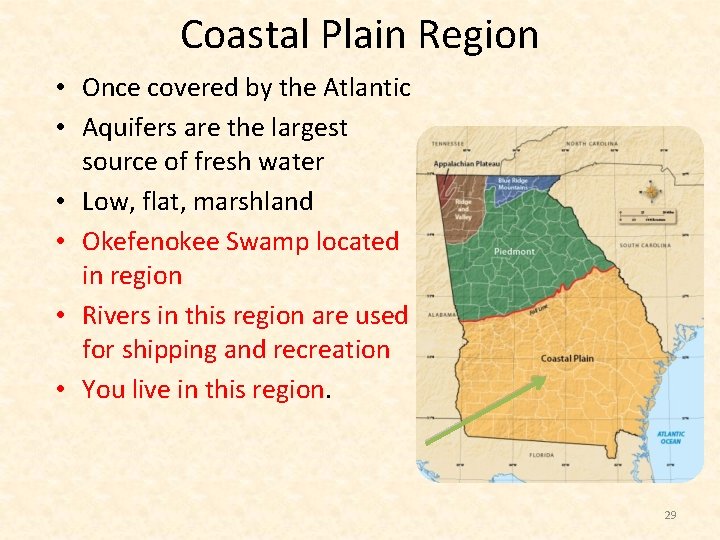
Coastal Plain Region • Once covered by the Atlantic • Aquifers are the largest source of fresh water • Low, flat, marshland • Okefenokee Swamp located in region • Rivers in this region are used for shipping and recreation • You live in this region. 29
Coastal Plain There are two parts to Georgia’s coastal plain: • The Inner Coastal Plain • The Outer Coastal Plain Which color do you think represents the Inner Coastal Plain and which color represents the Outer Coastal Plain? Why?
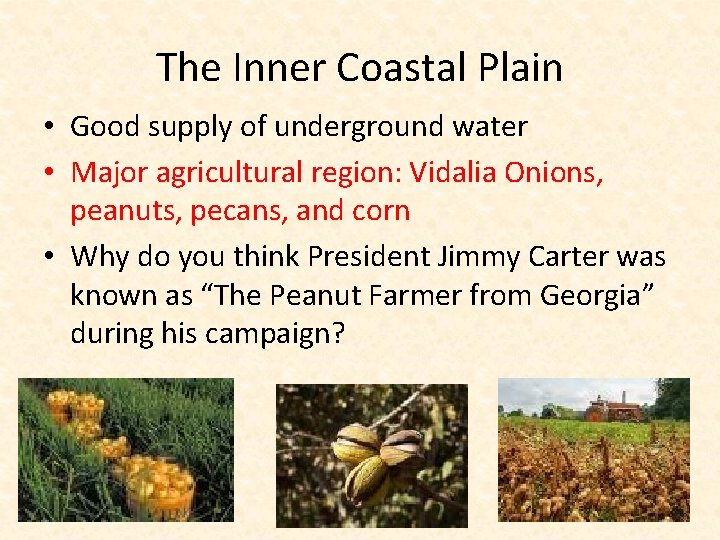
The Inner Coastal Plain • Good supply of underground water • Major agricultural region: Vidalia Onions, peanuts, pecans, and corn • Why do you think President Jimmy Carter was known as “The Peanut Farmer from Georgia” during his campaign?
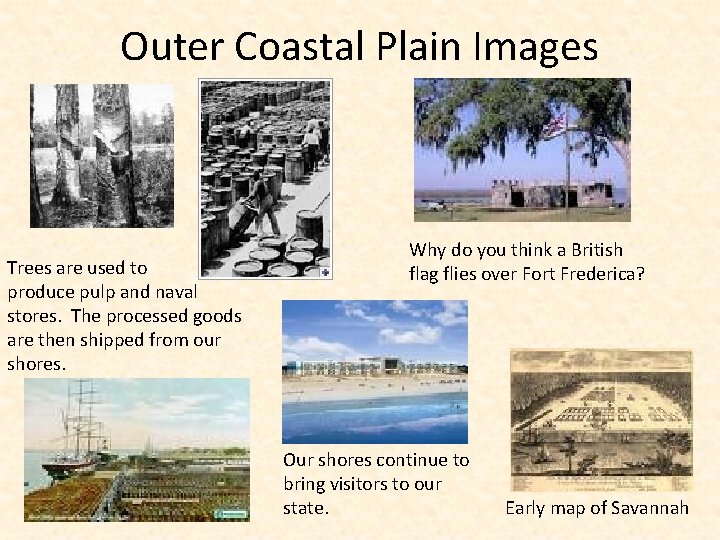
The Outer Coastal Plain • Soil not good for agriculture but trees provide naval stores and pulp production • Deep harbors and barrier islands also provide for tourism/recreation, fishing industry, and ports for importing/exporting goods. • Location of the earliest visits by explorers, first forts for protection, and Georgia’s first settlements.
Outer Coastal Plain Images Trees are used to produce pulp and naval stores. The processed goods are then shipped from our shores. Why do you think a British flag flies over Fort Frederica? Our shores continue to bring visitors to our state. Early map of Savannah
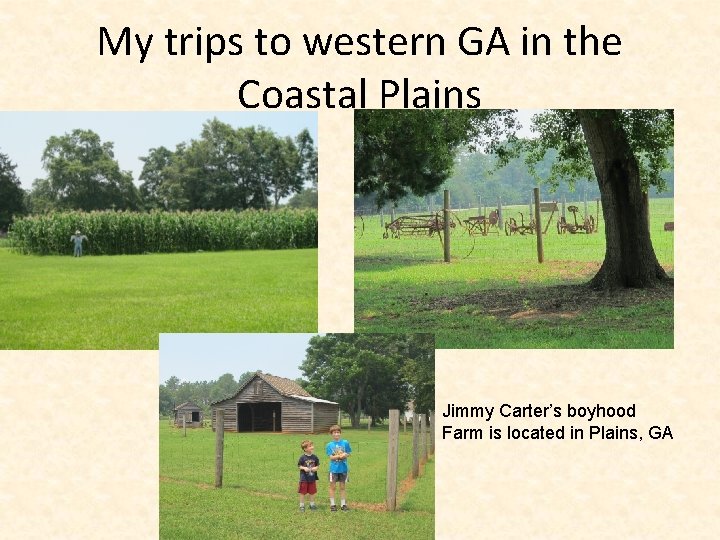
My trips to western GA in the Coastal Plains Jimmy Carter’s boyhood Farm is located in Plains, GA
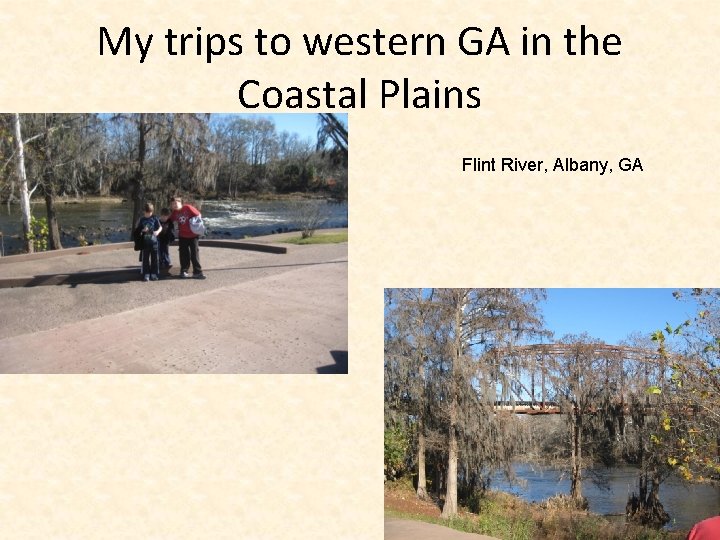
My trips to western GA in the Coastal Plains Flint River, Albany, GA
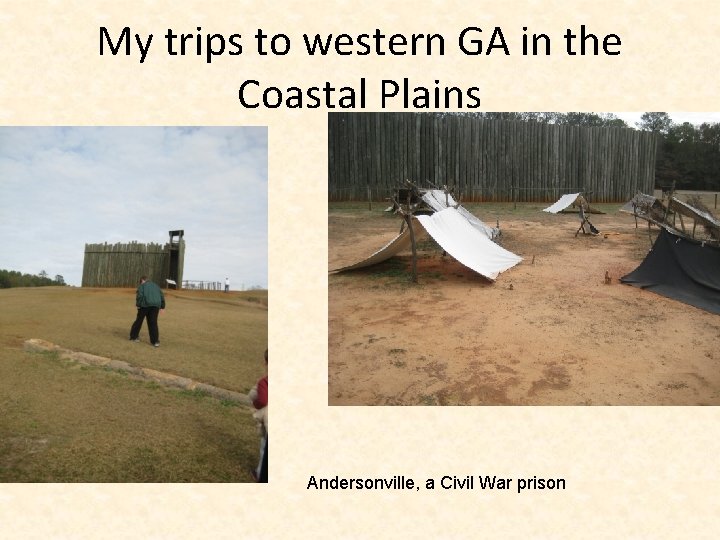
My trips to western GA in the Coastal Plains Andersonville, a Civil War prison
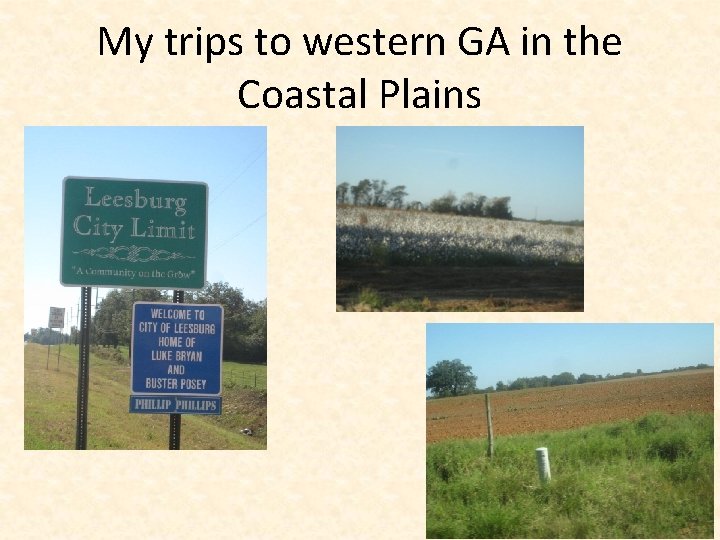
My trips to western GA in the Coastal Plains
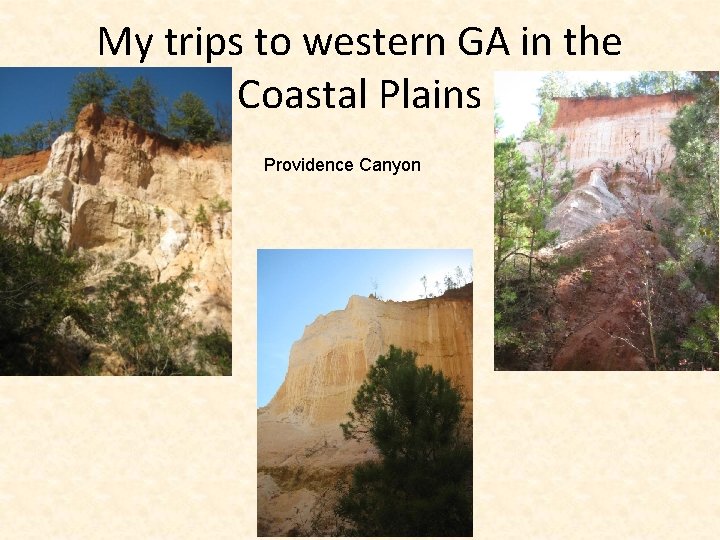
My trips to western GA in the Coastal Plains Providence Canyon