
George Segal George Segal 1924 2000 Parents had
- Slides: 14
George Segal
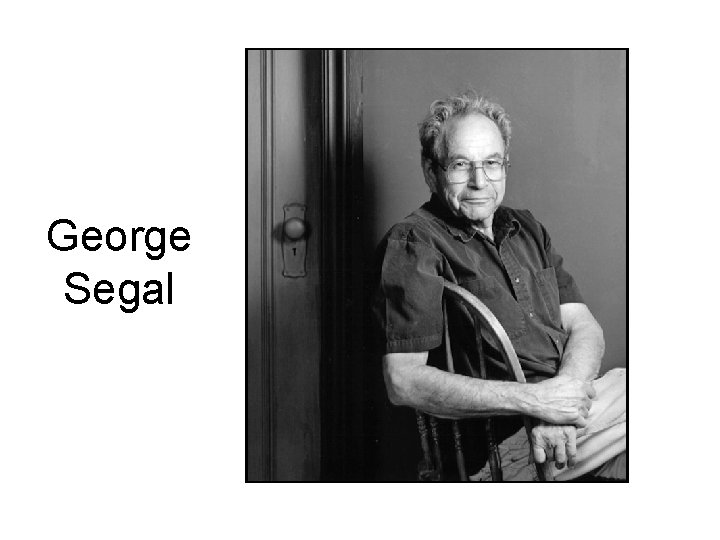
George Segal (1924 - 2000) • Parents had migrated from Eastern Europe, Segal’s family were the archetypal proletariats. • Segal received is BFA in ‘ 46 and pursued a teaching career in ‘ 49. Conferred with an MA in ‘ 63 and earned a myriad of Honourary Doctorates in the following years. Studied under Hans Hoffman (same teacher of Pollock). • Experimented with Ab Ex but ultimately feels that abstractionism is not his shtick. • Both a 2 D and 3 D artist, Segal’s sculpture is his greatest contribution --> major influence on Hanson and de Andrea • Labeled a Pop Artist by many because he depicted popular culture, though he is one of the fore-fathers of Photo-Realism (though not a ‘true’ Photo-Realist)
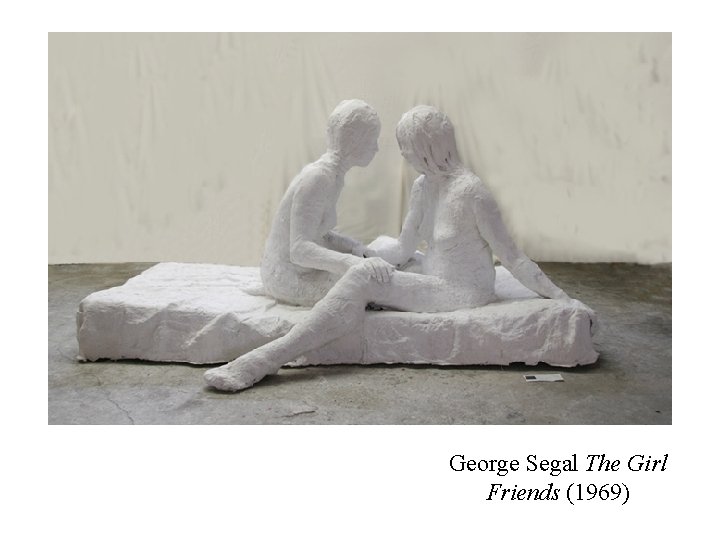
George Segal The Girl Friends (1969)
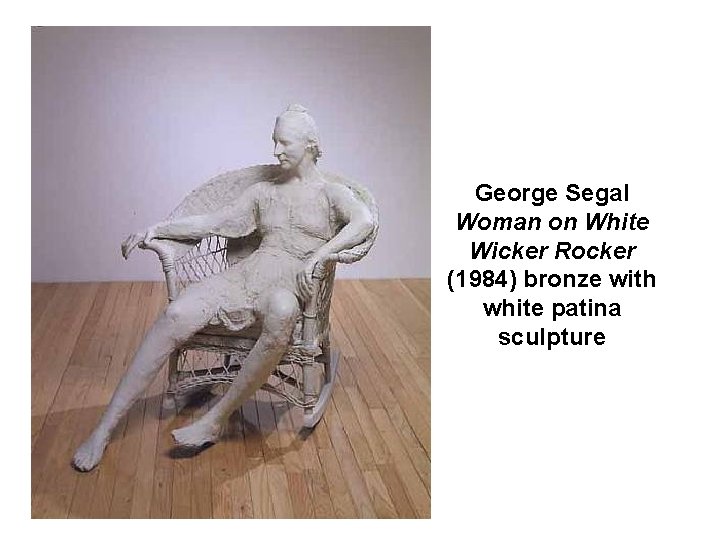
George Segal Woman on White Wicker Rocker (1984) bronze with white patina sculpture
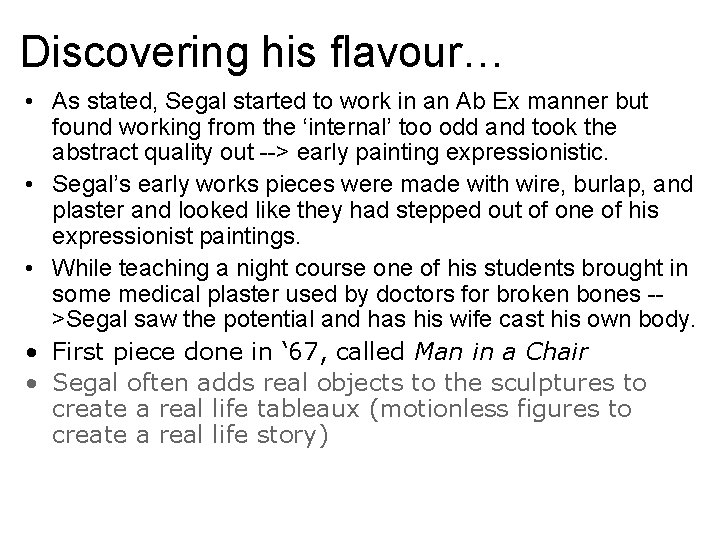
Discovering his flavour… • As stated, Segal started to work in an Ab Ex manner but found working from the ‘internal’ too odd and took the abstract quality out --> early painting expressionistic. • Segal’s early works pieces were made with wire, burlap, and plaster and looked like they had stepped out of one of his expressionist paintings. • While teaching a night course one of his students brought in some medical plaster used by doctors for broken bones ->Segal saw the potential and has his wife cast his own body. • First piece done in ‘ 67, called Man in a Chair • Segal often adds real objects to the sculptures to create a real life tableaux (motionless figures to create a real life story)
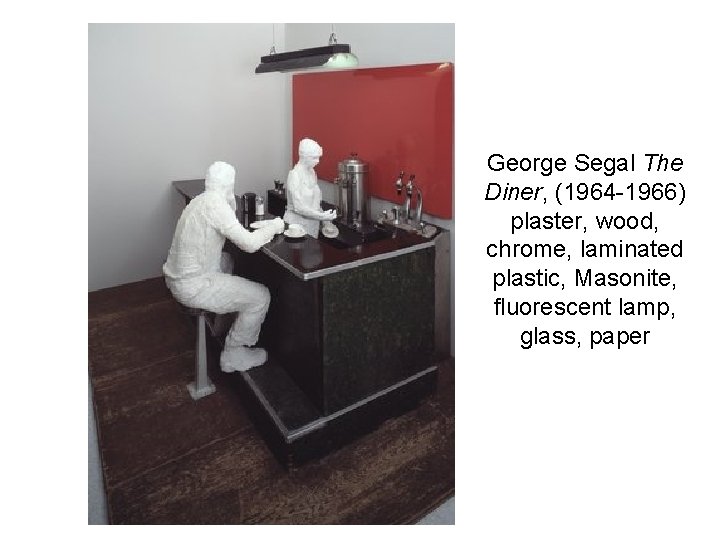
George Segal The Diner, (1964 -1966) plaster, wood, chrome, laminated plastic, Masonite, fluorescent lamp, glass, paper
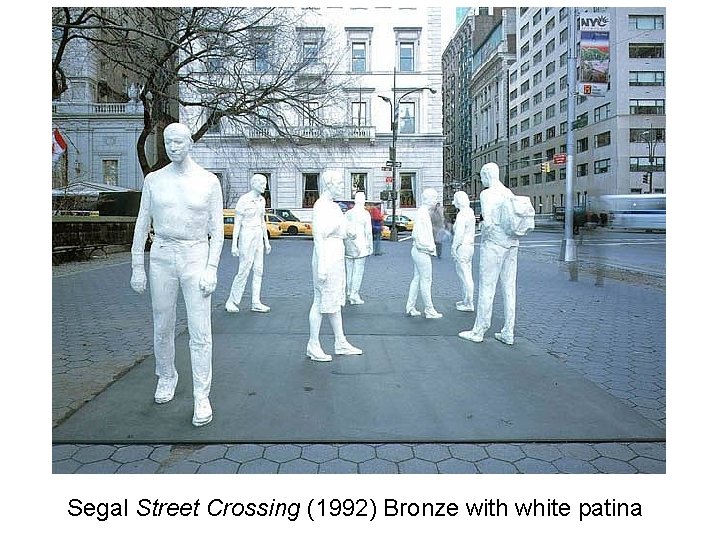
Segal Street Crossing (1992) Bronze with white patina
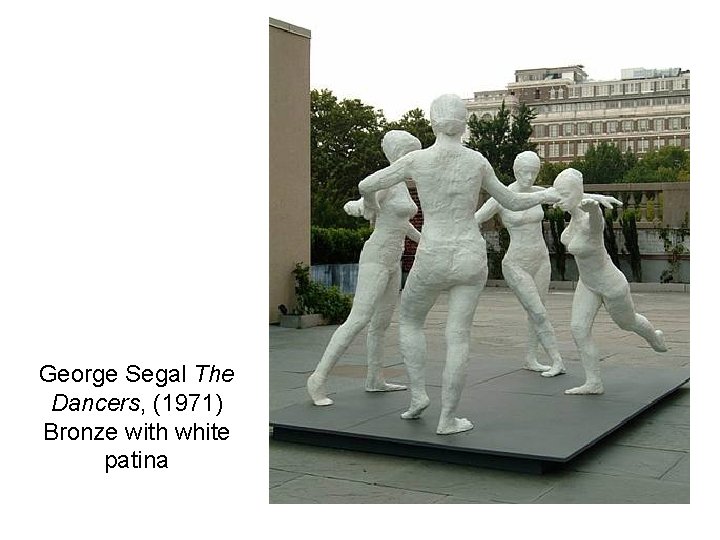
George Segal The Dancers, (1971) Bronze with white patina
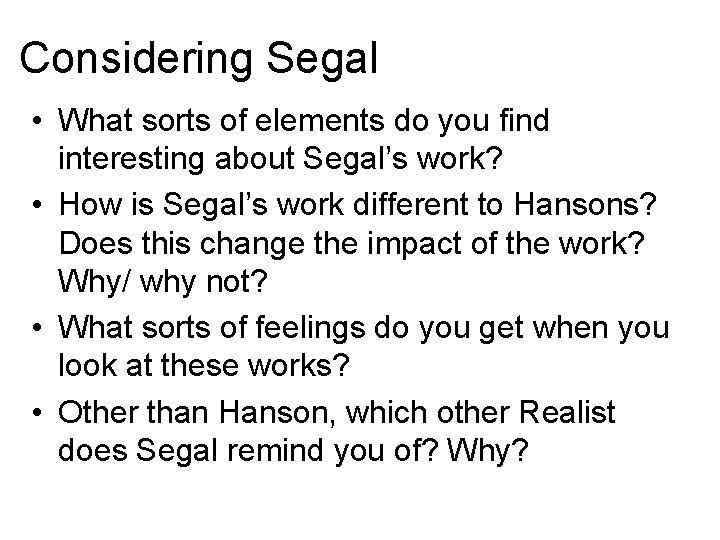
Considering Segal • What sorts of elements do you find interesting about Segal’s work? • How is Segal’s work different to Hansons? Does this change the impact of the work? Why/ why not? • What sorts of feelings do you get when you look at these works? • Other than Hanson, which other Realist does Segal remind you of? Why?
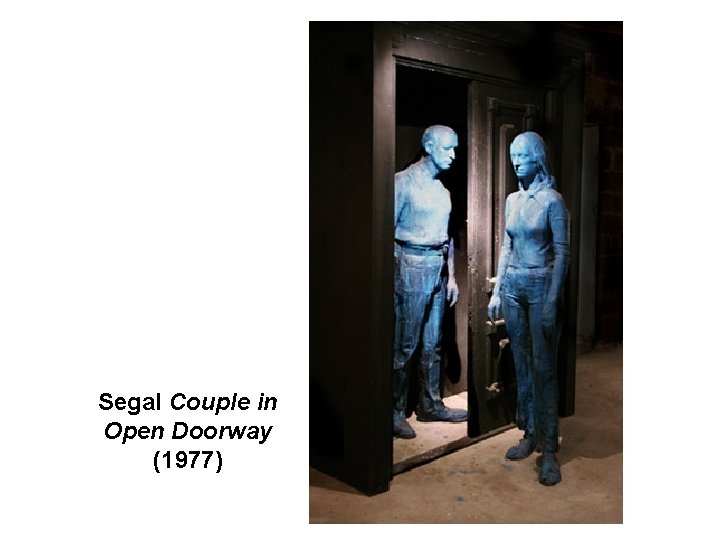
Segal Couple in Open Doorway (1977)
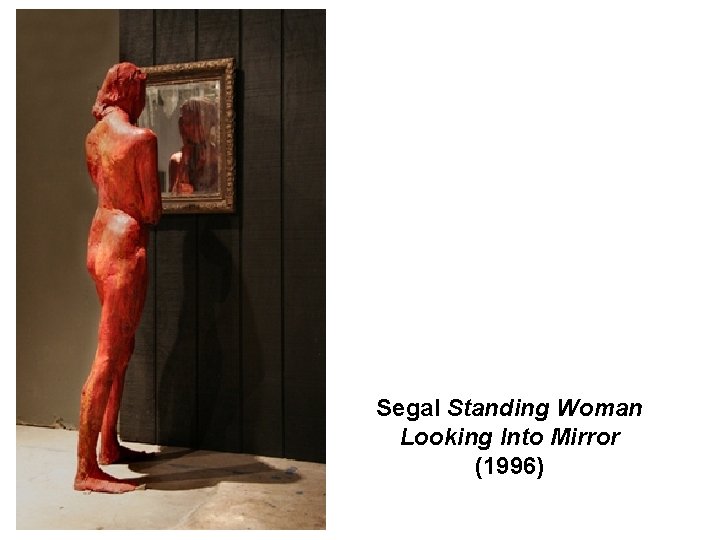
Segal Standing Woman Looking Into Mirror (1996)
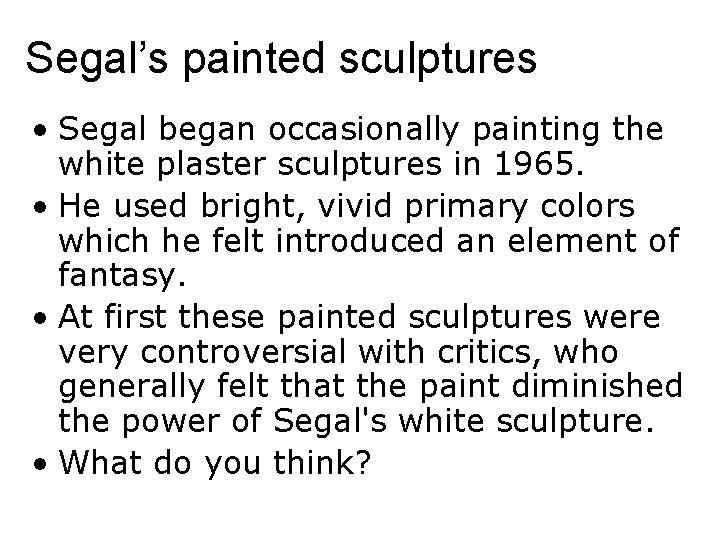
Segal’s painted sculptures • Segal began occasionally painting the white plaster sculptures in 1965. • He used bright, vivid primary colors which he felt introduced an element of fantasy. • At first these painted sculptures were very controversial with critics, who generally felt that the paint diminished the power of Segal's white sculpture. • What do you think?
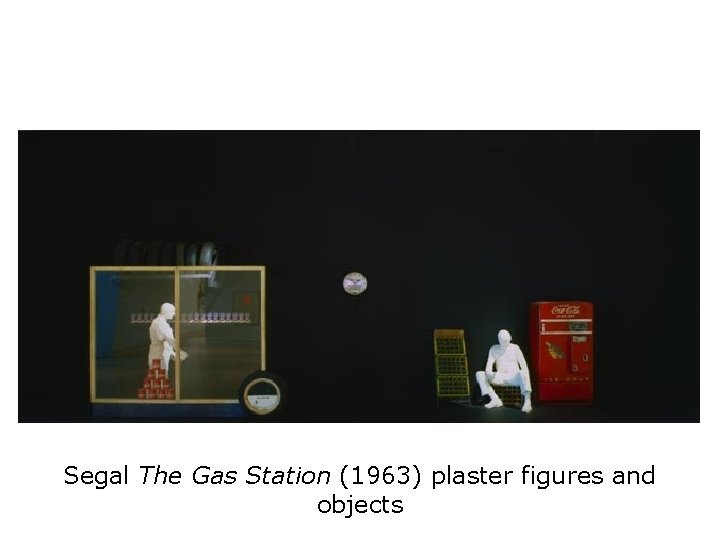
Segal The Gas Station (1963) plaster figures and objects
The Gas Station • "I was more concerned with how it felt to be in and pass by gas stations. The piece is twenty-five feet of darkness punctuated by abrupt geometric forms that resemble tires, oil cans, and coke machine. I'm interested in the colours, the lights, the tired young man, the energetic older man, how long it takes me to walk the long corridor. ” -George Segal