
George J Stigler THEORY OF ECONOMIC REGULATION Introduction
- Slides: 14
George J. Stigler THEORY OF ECONOMIC REGULATION
Introduction � The state is a potential resource or threat to every industry in the society. �Power to prohibit or compel, to take or to give. �Can and does selectively help or hurt a vast number of industries.
Unique Power � The state has the power to coerce. �Can seize money by the only method which is permitted by the laws of a civilized society: Taxation. �Can order the physical movement of resources. �Can determine the economic decisions of households and firms without their consent.
Central Tasks of Theory of Economic Regulation � Who will receive the benefits or burdens of regulation. � What form the regulation will take. � The effects of regulation upon the allocation of resources.
Central Thesis � Regulation is acquired by an industry and is designed and operated primarily for its benefit. � Assumption: Political systems are rationally devised and rationally employed.
Alternative Views � Regulation is instituted primarily for the protection and benefit of the public at large or some large subclass of it. � The political process defies rational explanation.
What Benefits Can The State Provide an Industry? � Subsidies � Barriers to entry � Manipulation � Price of substitutes and complements controls
Quest For Legislation � Industry which seeks political power must go to the appropriate seller, the political party. � The political party has costs of: �Operation �Maintaining an organization �Competing in elections
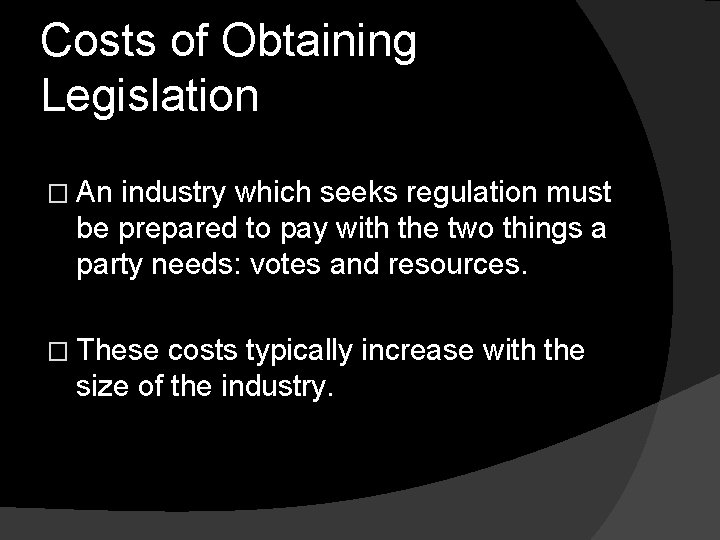
Costs of Obtaining Legislation � An industry which seeks regulation must be prepared to pay with the two things a party needs: votes and resources. � These costs typically increase with the size of the industry.
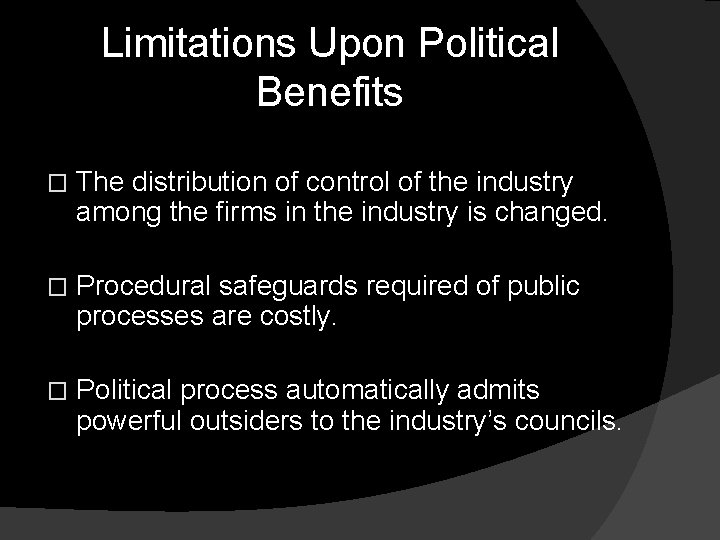
Limitations Upon Political Benefits � The distribution of control of the industry among the firms in the industry is changed. � Procedural safeguards required of public processes are costly. � Political process automatically admits powerful outsiders to the industry’s councils.
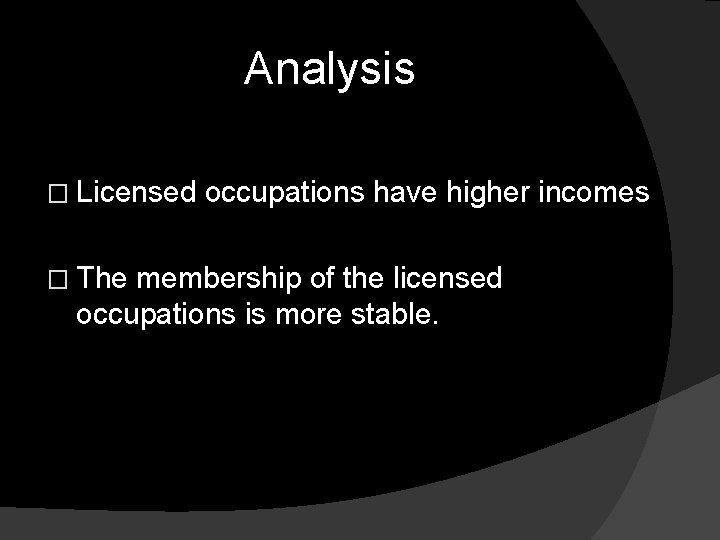
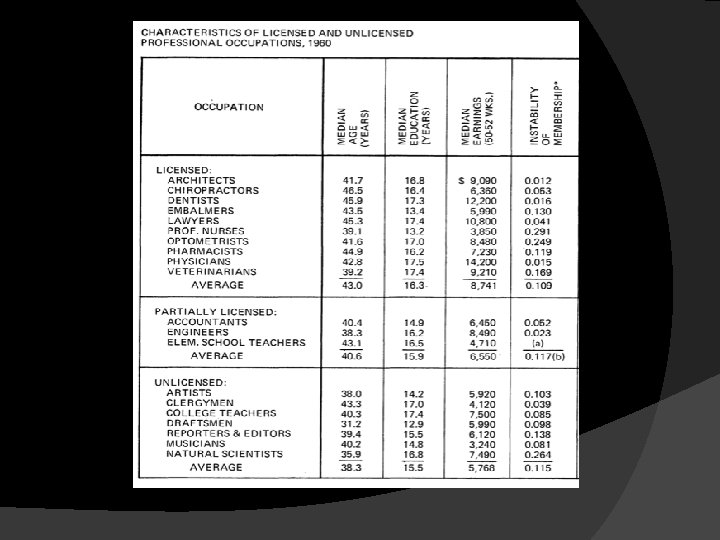
Analysis � Licensed � The occupations have higher incomes membership of the licensed occupations is more stable.
Conclusion � The preceding analysis of licensed and unlicensed occupations coincides with the central thesis of this paper. �Regulation is sought by an industry primarily for its benefit.
References Stigler, George J. “The theory of economic regulation. ” The Bell journal of economics and management science (1971): 3 -21.