
Georeferencing with Paper Maps Map Basics How to
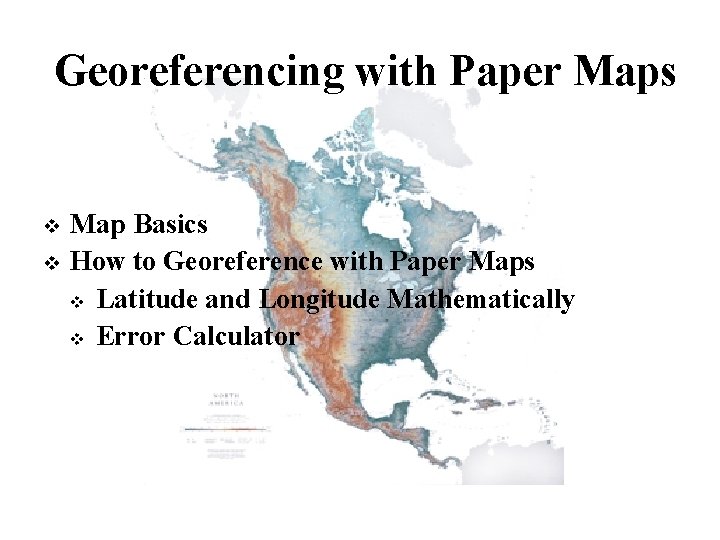
Georeferencing with Paper Maps Map Basics How to Georeference with Paper Maps Latitude and Longitude Mathematically Error Calculator
Pros and Cons of Paper Maps Pros Some features, such as topographic contours may only be found on printed maps. Old paper maps may be the only option for obtaining coordinates for historic localities Expedition maps may be annotated with exact locations of events. Some areas of the world may only be well-mapped on paper maps. Cons Time-consuming Good quality paper maps may be hard to find Map printing errors (sometimes intentional)
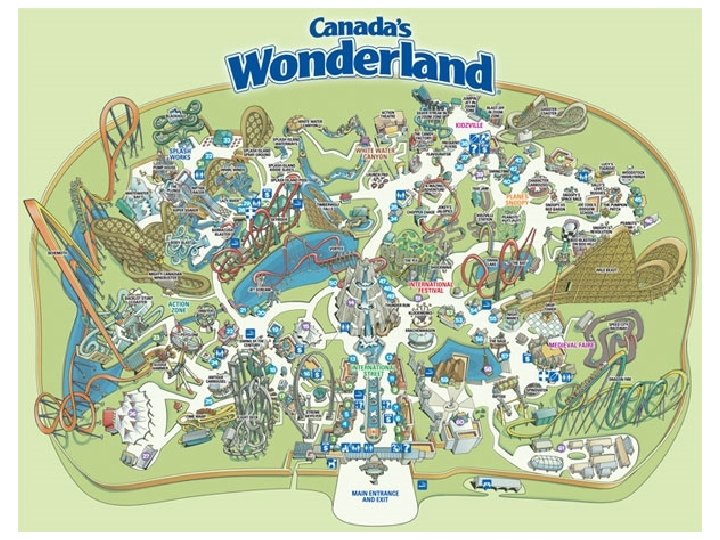
Map of Canada’s Wonderland, N of Toronto, Canada
Map Basics Projection (See Geographic Concepts) Map Anatomy Scale Grid Datum Citing Map as Georeferencing Source
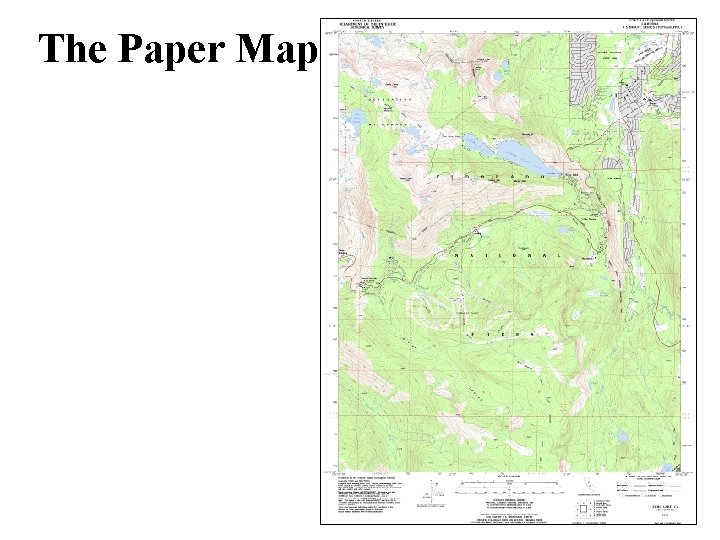
The Paper Map
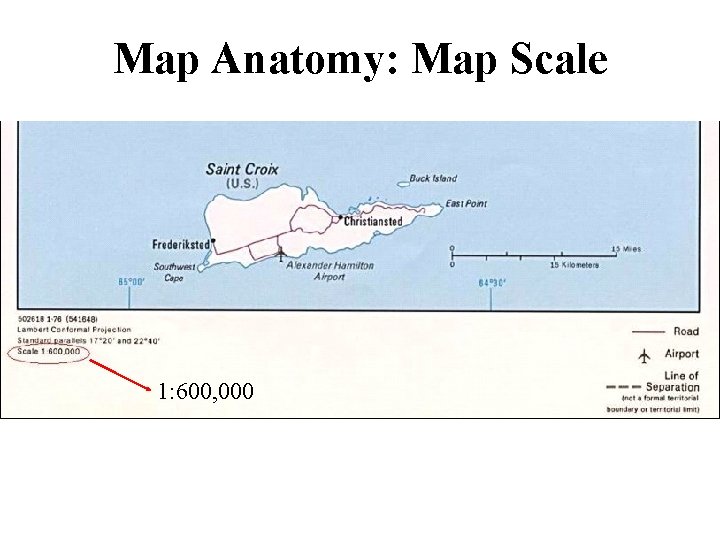
Map Anatomy: Map Scale 1: 600, 000
Map Anatomy: Map Scale Usually recorded as a ratio, such as 1: 100, 000, or a fraction, such as 1/100, 000 Large scale maps, such as 1/10, 000, show finer detail, less area Small scale maps, such as 1/500, 000, show less detail, greater area Think of large and small scale as how big the fraction is. Example 1/10, 000 > 1/500, 000
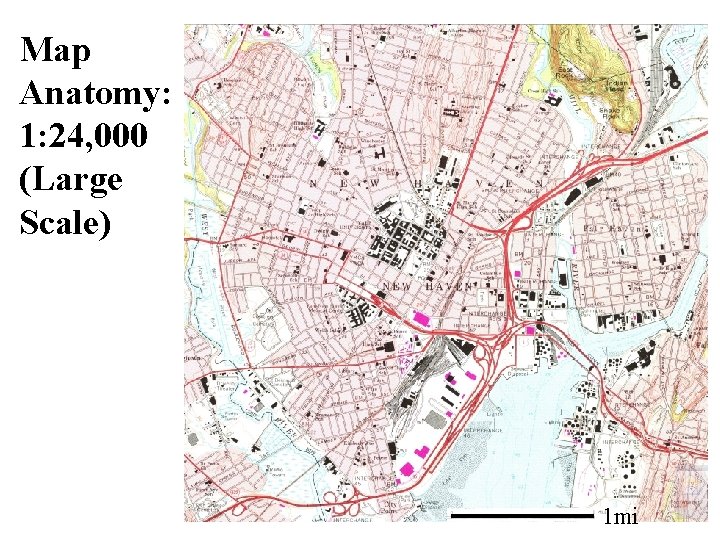
Map Anatomy: 1: 24, 000 (Large Scale) 1 mi
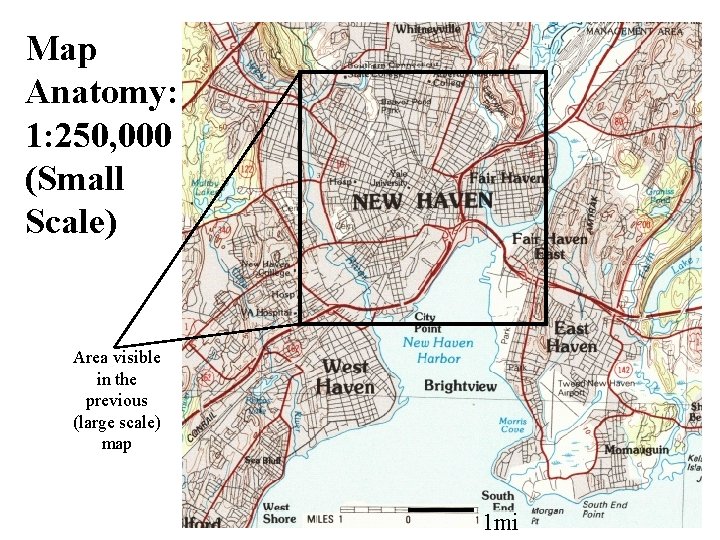
Map Anatomy: 1: 250, 000 (Small Scale) Area visible in the previous (large scale) map 1 mi
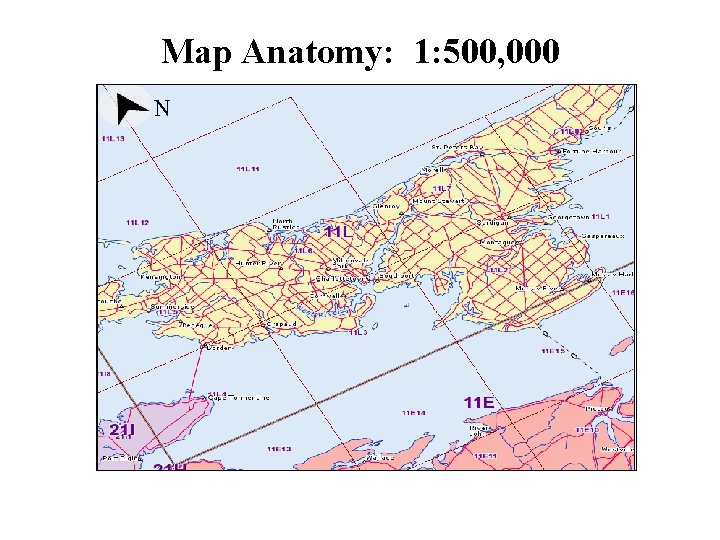
Map Anatomy: 1: 500, 000 N
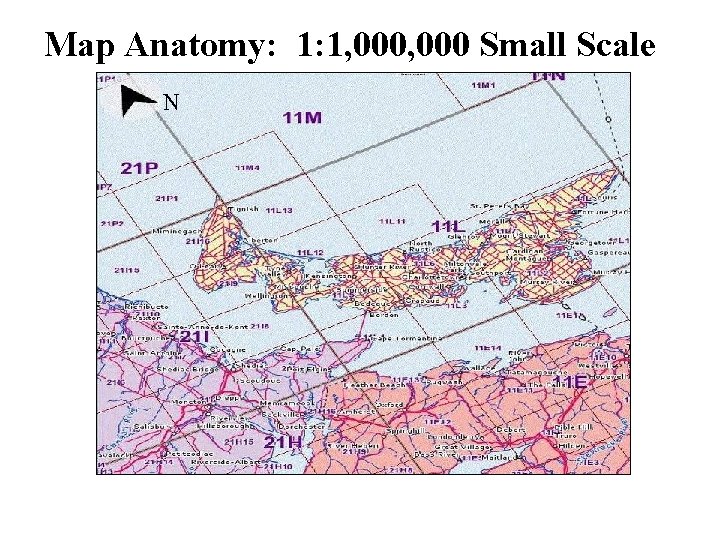
Map Anatomy: 1: 1, 000 Small Scale N

Map Anatomy: Grid
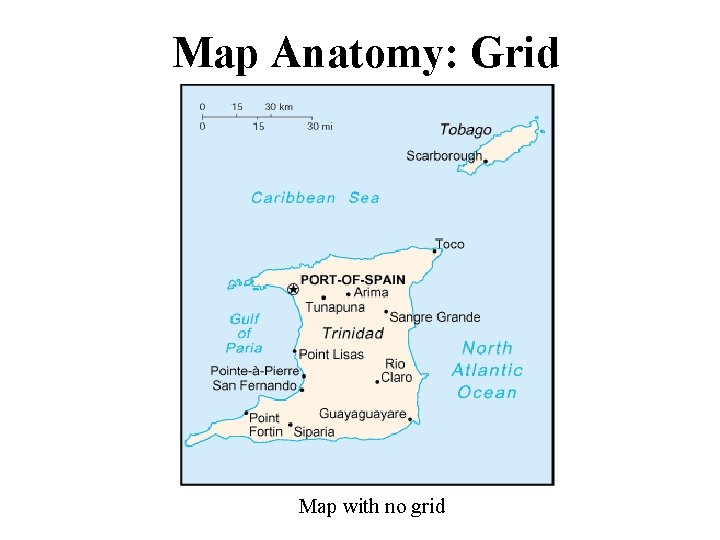
Map Anatomy: Grid Map with no grid
Map Anatomy: Grid Can have more than one grid system on a map (e. g. , UTM, and latitude and longitude) Shows placement of parallels and meridians Maps without grids cannot be used to determine coordinates – only extents
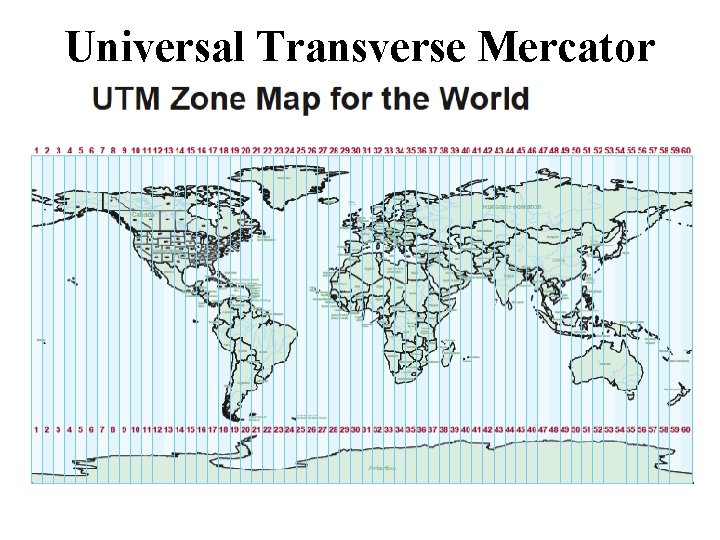
Universal Transverse Mercator
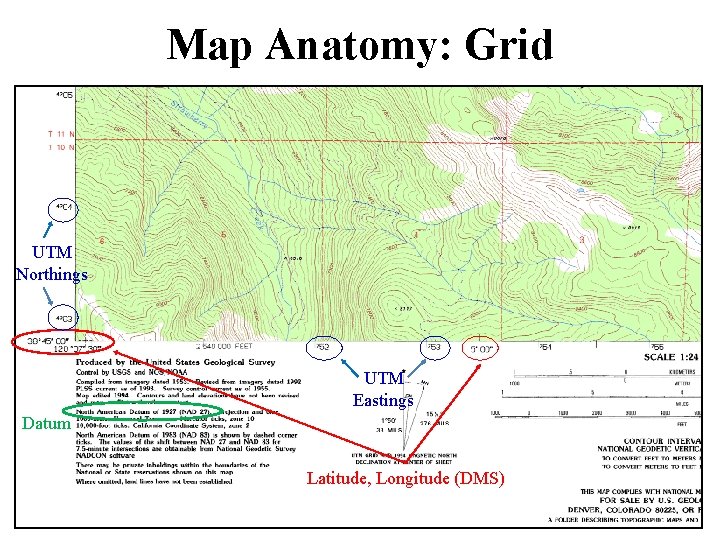
Map Anatomy: Grid UTM Northings UTM Eastings Datum Latitude, Longitude (DMS)
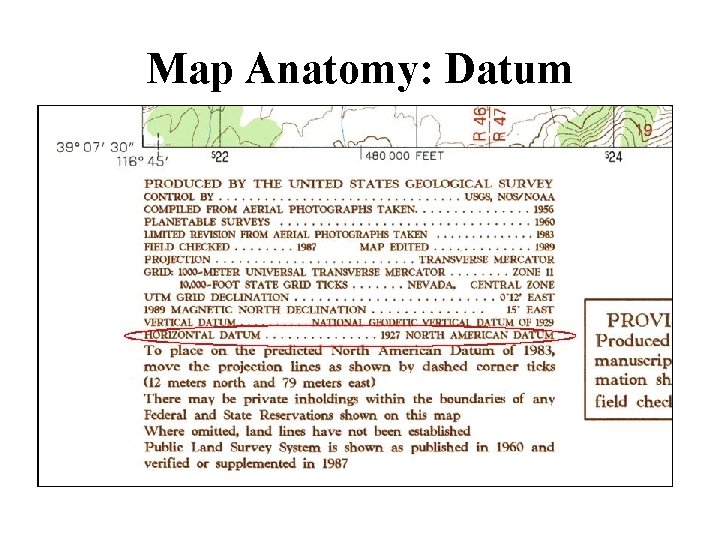
Map Anatomy: Datum Map with no grid labeled
Map Anatomy: Datum Usually found near the map scale or publisher’s name Use Horizontal Datum, not Vertical Datum If ellipsoid is given instead of a datum, then one can choose a comparable datum using the pdf document found at http: //earthinfo. nga. mil/Gand. G/publications/tr 8350. 2/wgs 84 fin. pdf (Use Appendix B)
Georeferencing Source Data For georeferencing, sources should include: Publisher Map Date Map Scale Map Name Examples: USGS 15’ Topographic Series Boone 1956 USGS Topo quad 1: 24000 Key West 1962
Paper Maps Paper often have more detail than other sources Especially useful for distances by roads and topographic features like rivers and mountain ranges Pay special attention to the grid lines and the hemisphere when reporting in decimal degrees
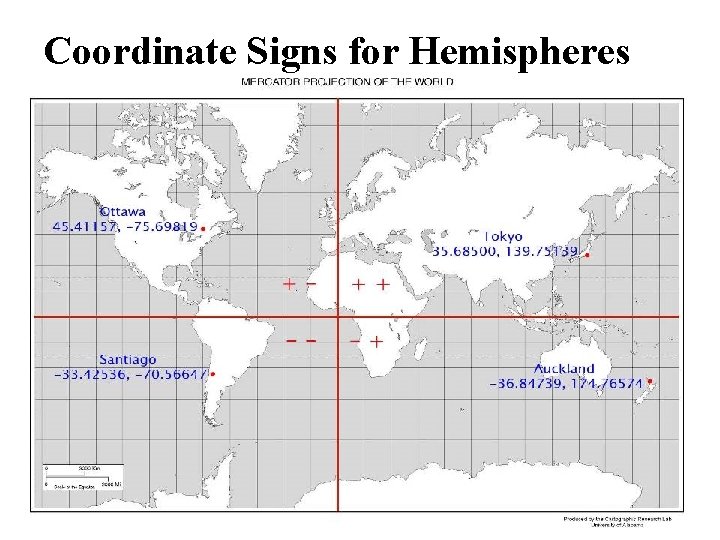
Coordinate Signs for Hemispheres

Determining Coordinates from Paper Maps: Ye Olde Method This is the point were you all thank John, Carol, David, and Nelson for developing the Georeferencing Calculator and GEOLocate. Nauru Island, Pacific Islands Geographic Society, 1960 1: 12, 000
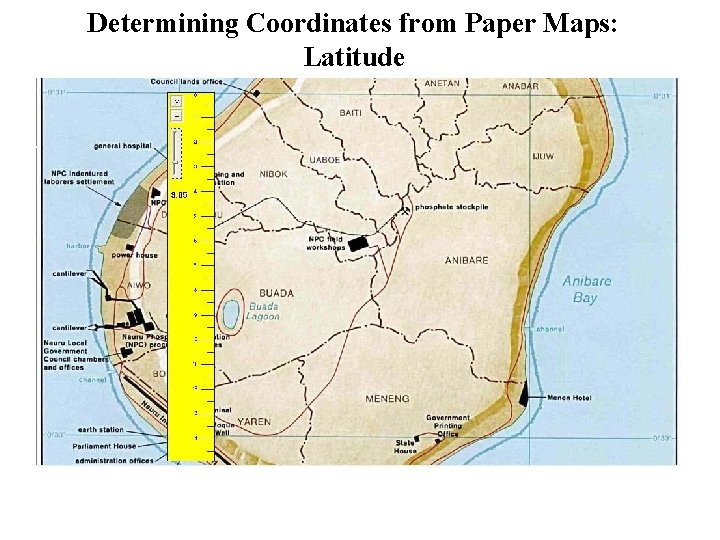
Determining Coordinates from Paper Maps: Latitude

Determining Coordinates from Paper Maps: Latitude S
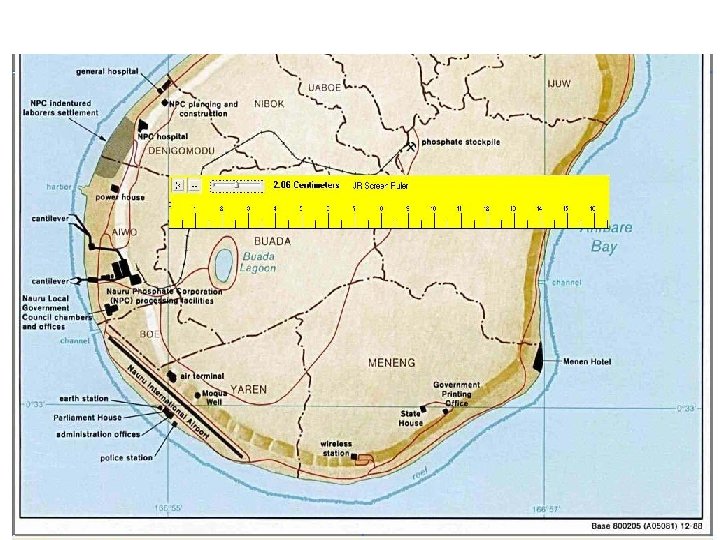
Determining Coordinates from Paper Maps: Longitude
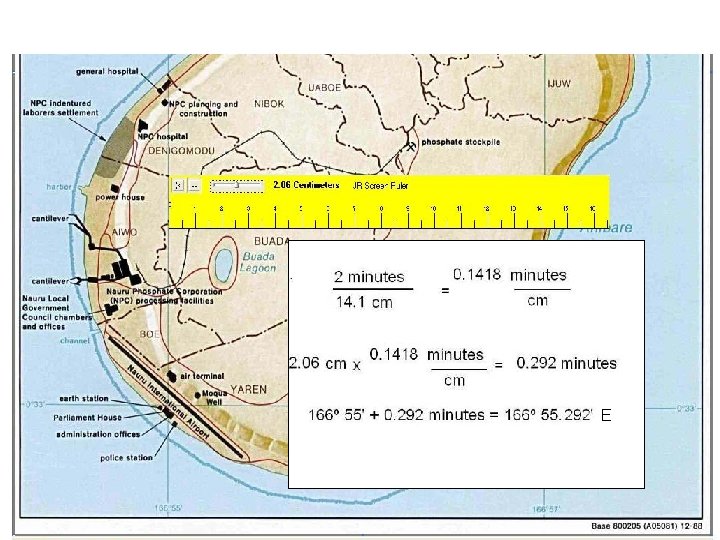
Determining Coordinates from Paper Maps: Longitude E

Determining Coordinate Precision for the Georeferencing Calculator: The smallest measurement using our rulers is 1 mm ( = 0. 1 cm), therefore we need to convert millimeters to minutes: 0. 1 cm x (2 minutes/14 cm) = 0. 014 min Choose the next largest fraction of a minute on the calculator. For 0. 014 minutes, select 0. 1 minutes.

Determining Coordinates from Paper Maps: Error Calculation
Determining Coordinates from Paper Maps: The Georeferencing Calculator Method Locality Description: Bebedero We need: One set of known coordinates (can be found in the corner of the map) Measuring tool (such as a ruler)
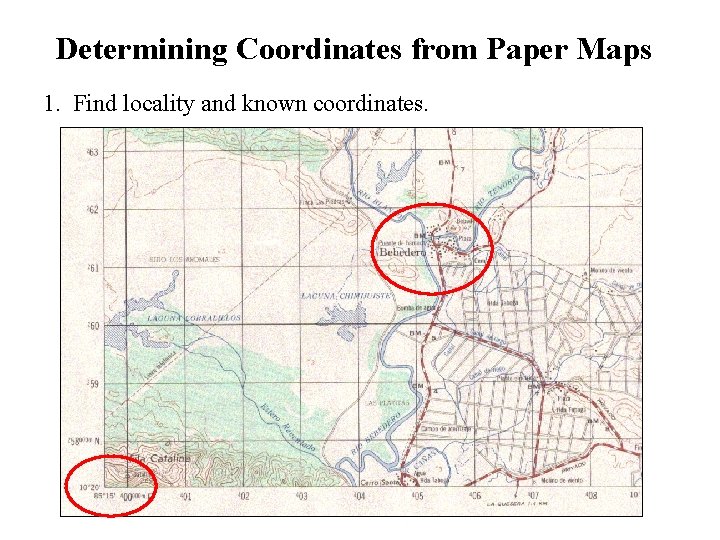
Determining Coordinates from Paper Maps 1. Find locality and known coordinates.
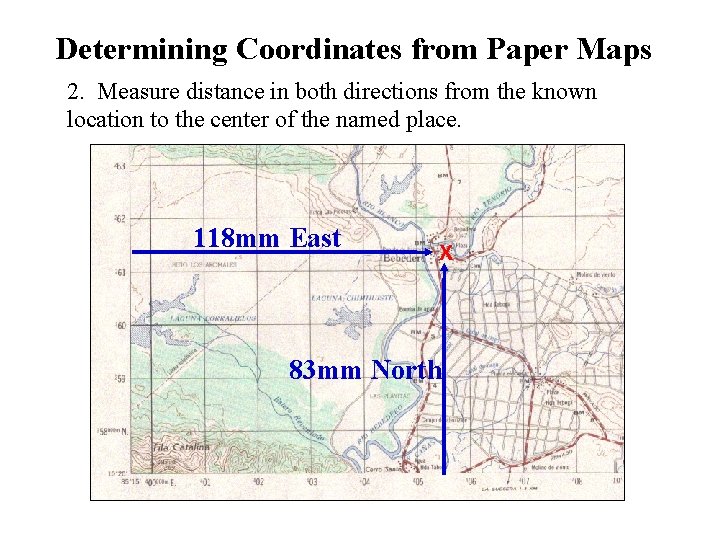
Determining Coordinates from Paper Maps 2. Measure distance in both directions from the known location to the center of the named place. 118 mm East X 83 mm North
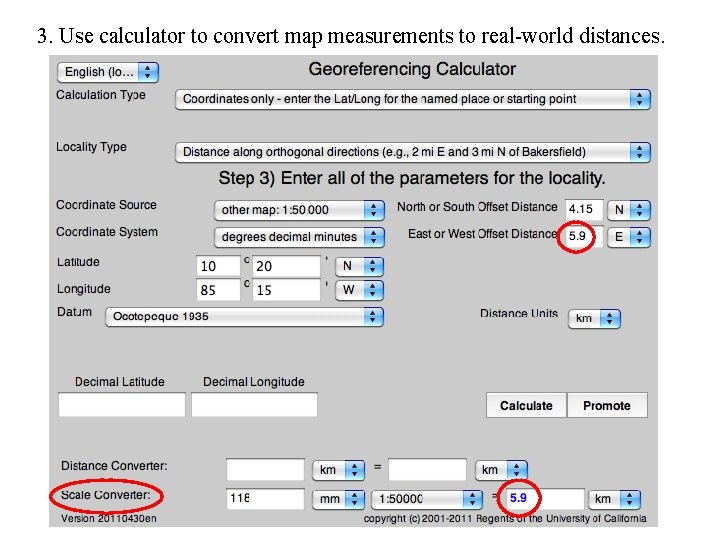
3. Use calculator to convert map measurements to real-world distances.
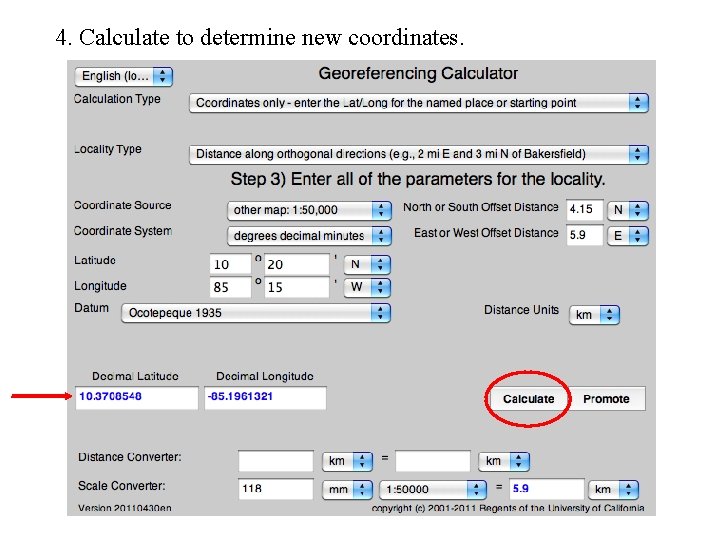
4. Calculate to determine new coordinates.
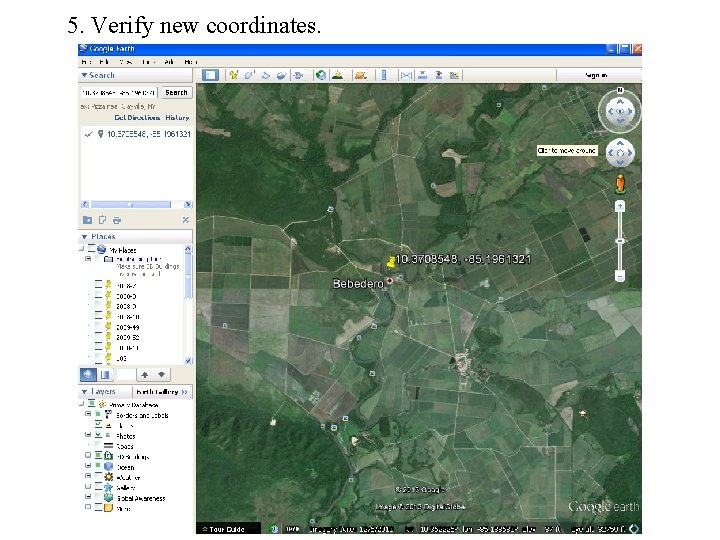
5. Verify new coordinates.
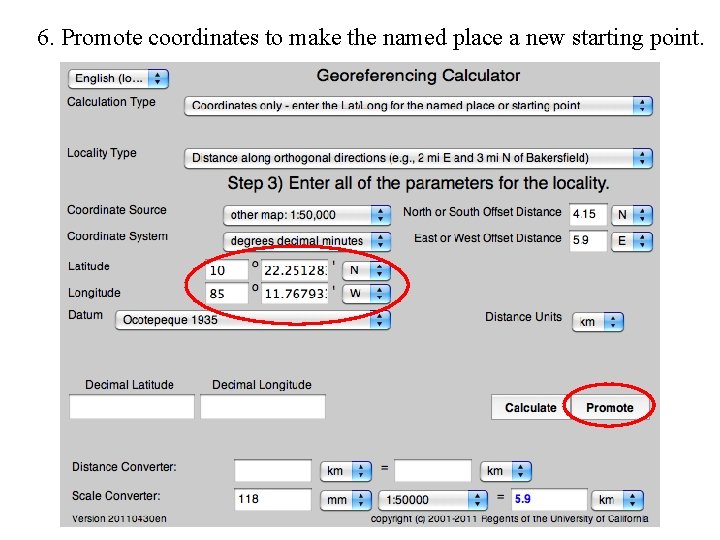
6. Promote coordinates to make the named place a new starting point.
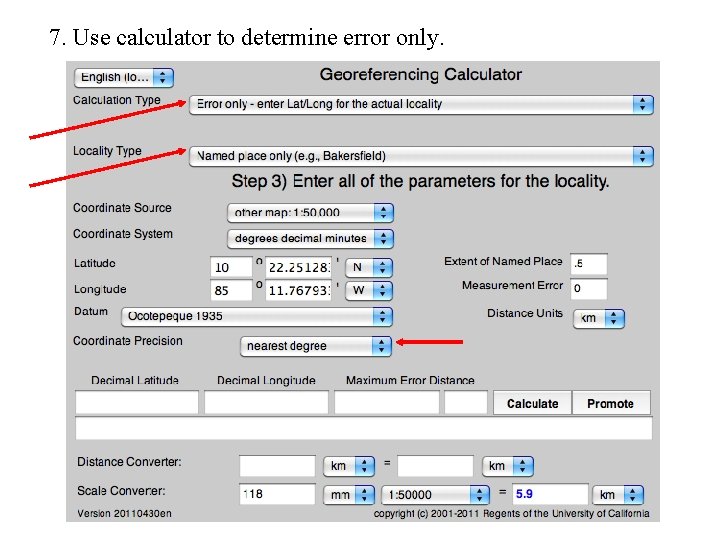
7. Use calculator to determine error only.
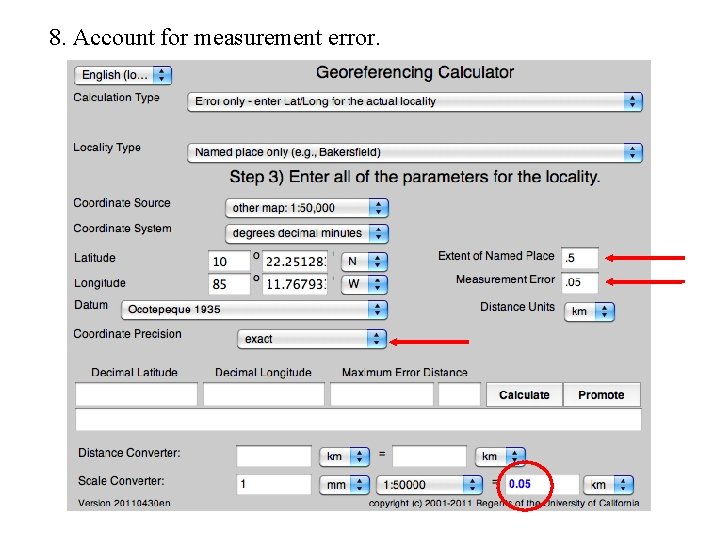
8. Account for measurement error.
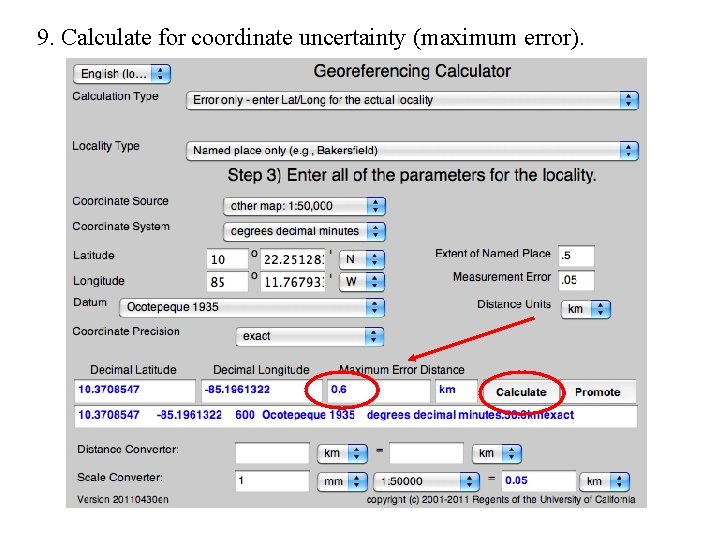
9. Calculate for coordinate uncertainty (maximum error).
In Conclusion Pay attention to cardinal directions and hemispheres. Measure from the center to the edge of the feature to get the extent of the feature. Plot your coordinates to double-check your work. Explain any decisions you had to make in the georeference. Remarks field. Explain any errors in the locality description in the locality errors field.
For Georeferencing Source be sure to include the following: Publisher name Map date Map scale Map name Example: United States Geological Society (USGS) Topographic Map California, 1956, map scale 1: 24, 000, map name “Boone” Leave bread crumbs! No one can recreate what you did without knowing what you did. It’s like showing your work in math class. If your final answer is wrong, knowing how you got that answer can help you fix the problem. Record what tools you used, when you used them, and any assumptions you made.
- Slides: 41