
Georeferencing for Research Use GRU Innovative geospatial training
![Participant comments • “Cross disciplinary group [is] great - learn more that way. ”](https://slidetodoc.com/presentation_image_h2/794c6216b41387197e554a8a8b8ec602/image-13.jpg "Participant comments • “Cross disciplinary group [is] great - learn more that way. ”")
- Slides: 16
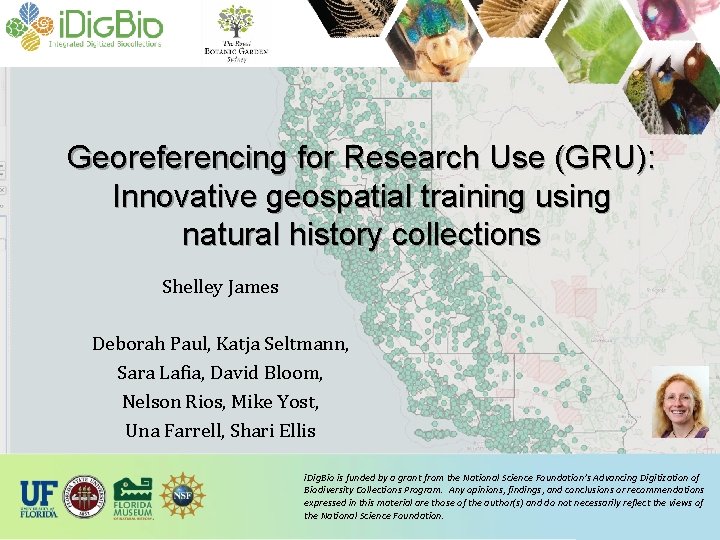
Georeferencing for Research Use (GRU): Innovative geospatial training using natural history collections Shelley James Deborah Paul, Katja Seltmann, Sara Lafia, David Bloom, Nelson Rios, Mike Yost, Una Farrell, Shari Ellis i. Dig. Bio is funded by a grant from the National Science Foundation’s Advancing Digitization of Biodiversity Collections Program. Any opinions, findings, and conclusions or recommendations expressed in this material are those of the author(s) and do not necessarily reflect the views of the National Science Foundation.
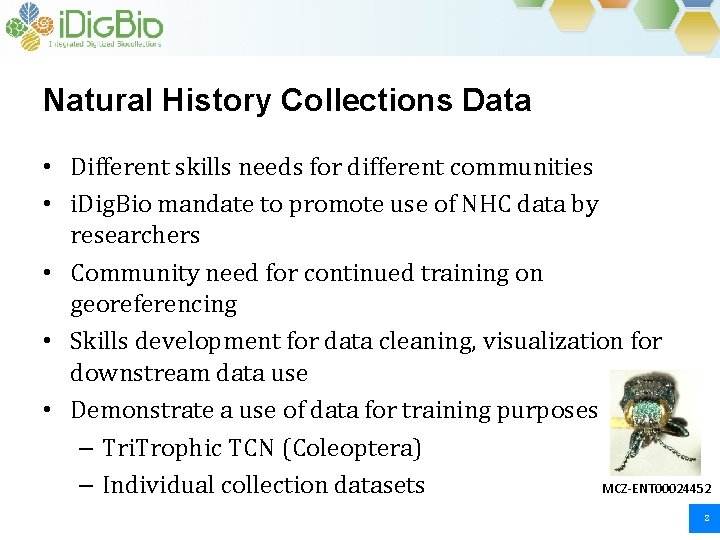
Natural History Collections Data • Different skills needs for different communities • i. Dig. Bio mandate to promote use of NHC data by researchers • Community need for continued training on georeferencing • Skills development for data cleaning, visualization for downstream data use • Demonstrate a use of data for training purposes – Tri. Trophic TCN (Coleoptera) – Individual collection datasets MCZ-ENT 00024452 2
Georeferencing for Research Use (GRU): Innovative geospatial training using natural history collections A collaborative effort: GWG working group 3
Georeferencing for Research Use (GRU): Innovative geospatial training using natural history collections A collaborative effort National Center for Ecological Analysis and Synthesis 4
Georeferencing for Research Use (GRU): Innovative geospatial training using natural history collections A collaborative effort Cheadle Center for Biodiversity and Ecological Restoration 5
Georeferencing for Research Use (GRU): Innovative geospatial training using natural history collections A collaborative effort New York Botanical Garden 6
Georeferencing for Research Use (GRU): Innovative geospatial training using natural history collections A collaborative effort Stanford University 7
Georeferencing for Research Use (GRU): Innovative geospatial training using natural history collections Tulane University Biodiversity Research Institute A collaborative effort 8
Georeferencing for Research Use (GRU): Innovative geospatial training using natural history collections A collaborative effort: GWG working group Participants: 22 collections staff, data managers, spatial analysts, students & researchers October 2016, Santa Barbara 9
Goals of workshop Georeferencing & visualization Born digital data best practice Understanding uncertainty & polygons Best practices for aggregated data use & tools for cleaning for research • Sharing needs & skills between different communities • • 10
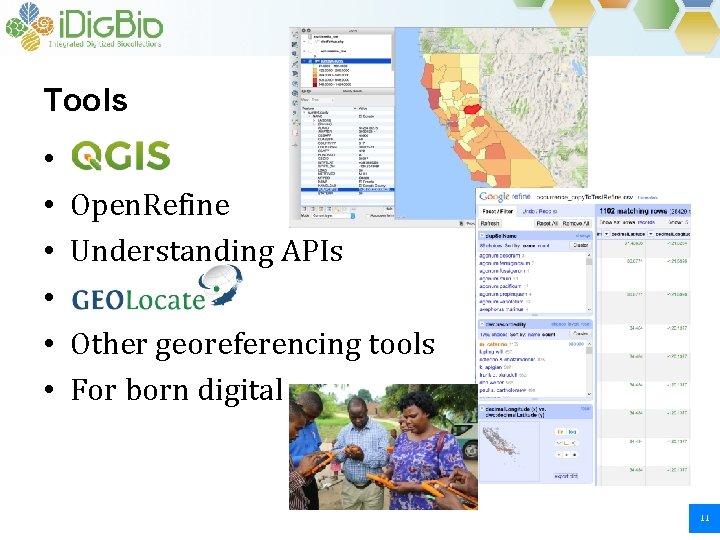
Tools • • • Open. Refine Understanding APIs Other georeferencing tools For born digital 11
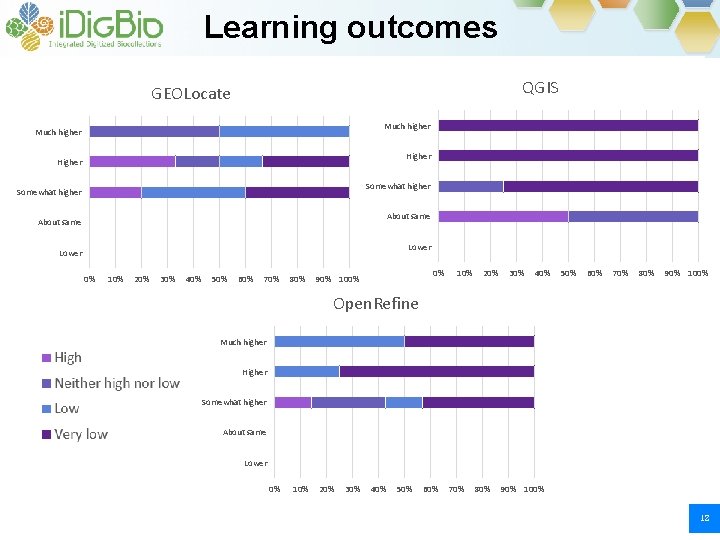
Learning outcomes QGIS GEOLocate Much higher Higher Somewhat higher About same Lower 0% 10% 20% 30% 40% 50% 60% 70% 80% 0% 90% 10% 20% 30% 40% 50% 60% 70% 80% 90% 100% Open. Refine Much higher Higher Somewhat higher About same Lower 0% 10% 20% 30% 40% 50% 60% 70% 80% 90% 100% 12
Participant comments • “Cross disciplinary group [is] great - learn more that way. ” • “Conceptualizing what we all thought was a community need, and then seeing it come to life. ” • “Using GEOLocate to study elevations and QGIS to visualize elevations - increased research dataset by 20%. ” • “Would like to take workshop again!” 13
More information! • Wiki: https: //www. idigbio. org/wiki/index. php/G eoreferencing_for_Research_Use • Blog: https: //www. idigbio. org/content/georefere ncing-and-visualizing-biodiversity-dataresearch 14
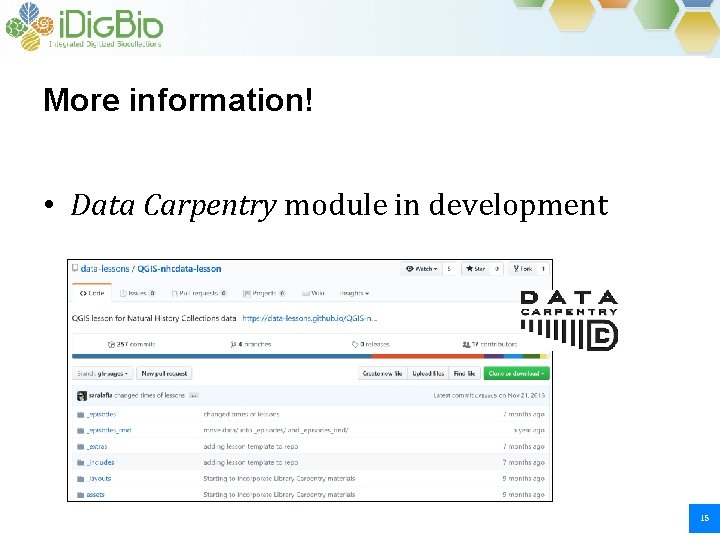
More information! • Data Carpentry module in development 15
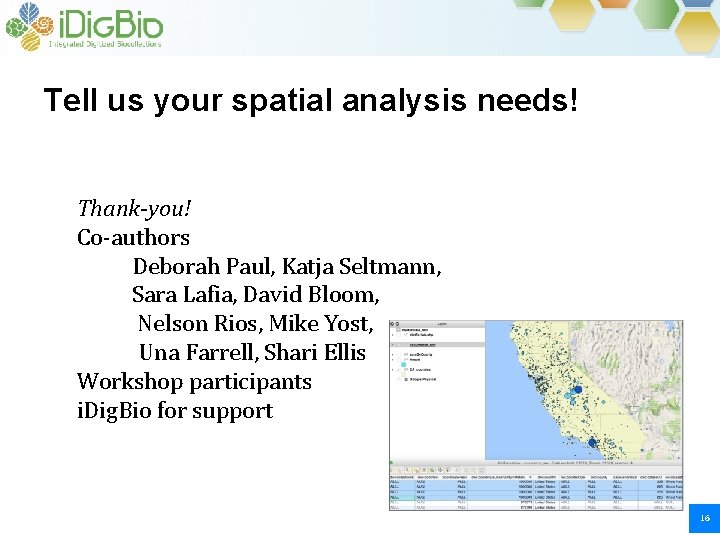
Tell us your spatial analysis needs! Thank-you! Co-authors Deborah Paul, Katja Seltmann, Sara Lafia, David Bloom, Nelson Rios, Mike Yost, Una Farrell, Shari Ellis Workshop participants i. Dig. Bio for support 16