
GEOPOLYMERS Alkali activated materials AAM or geopolymers GP
- Slides: 10
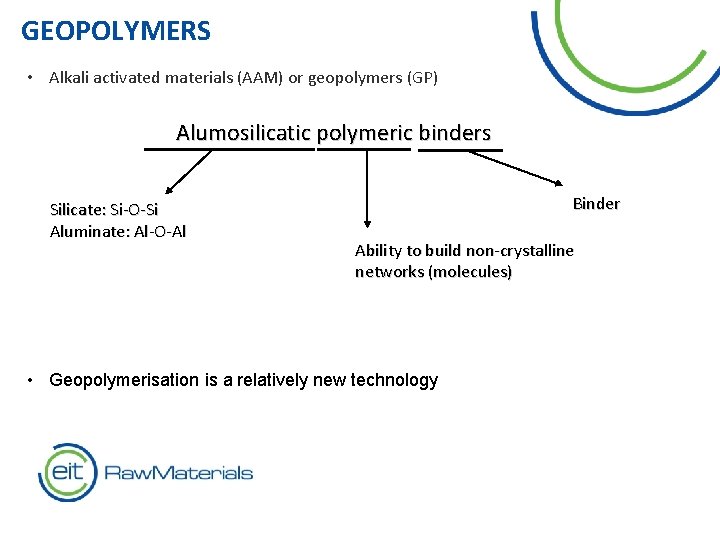
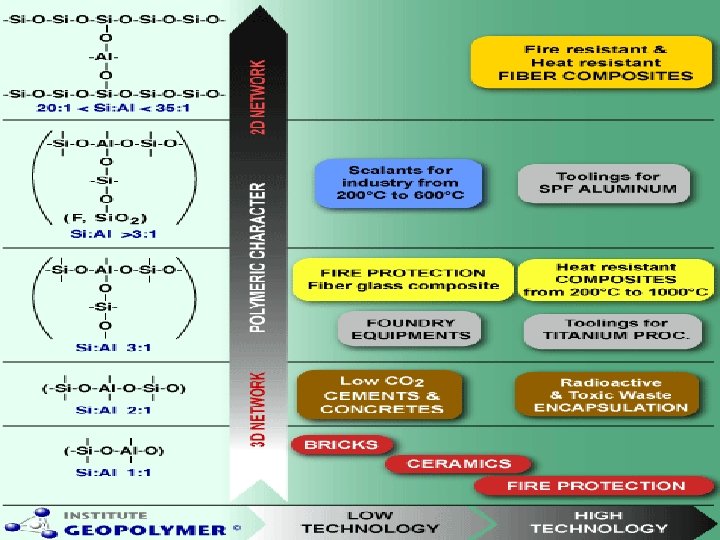
GEOPOLYMERS • Alkali activated materials (AAM) or geopolymers (GP) Alumosilicatic polymeric binders Silicate: Si-O-Si Aluminate: Al-O-Al Binder Ability to build non-crystalline networks (molecules) • Geopolymerisation is a relatively new technology
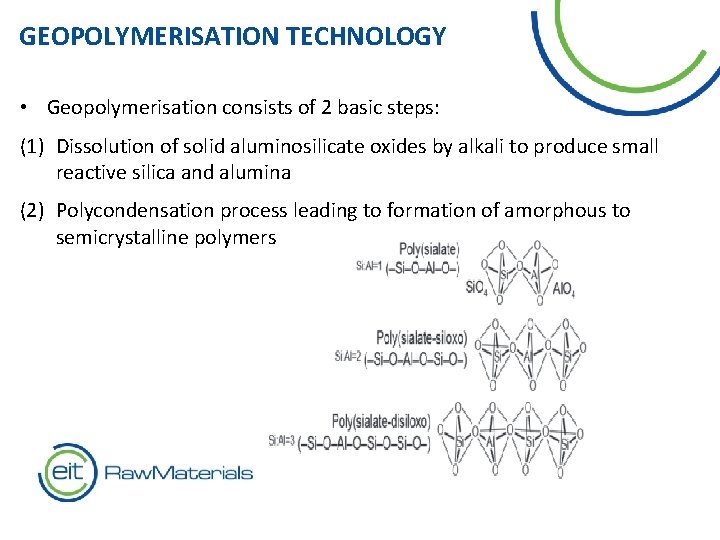
GEOPOLYMERISATION TECHNOLOGY • Geopolymerisation consists of 2 basic steps: (1) Dissolution of solid aluminosilicate oxides by alkali to produce small reactive silica and alumina (2) Polycondensation process leading to formation of amorphous to semicrystalline polymers
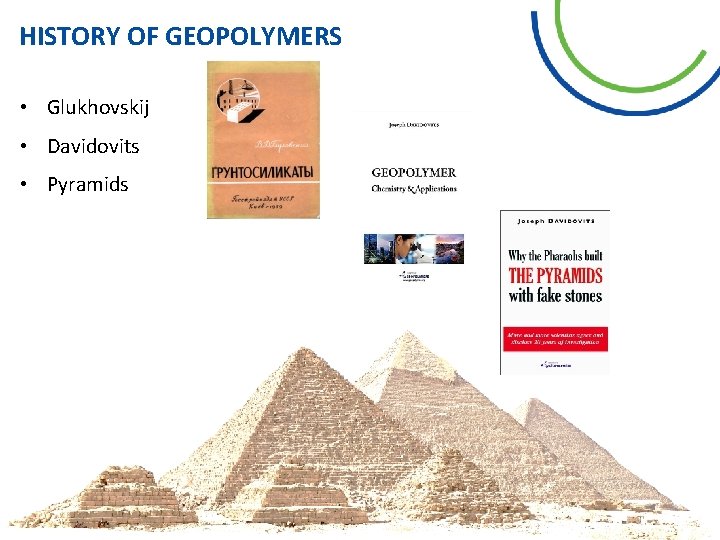
HISTORY OF GEOPOLYMERS • Glukhovskij • Davidovits • Pyramids
PROPERTIES OF GEOPOLYMERS Physical properties • • • high strength resistance against acids temperature resistance cold setting quick setting Environmental properties • • use of secondary raw materials extended lifetime minimum CO 2 production solidification of toxic and nuclear wastes
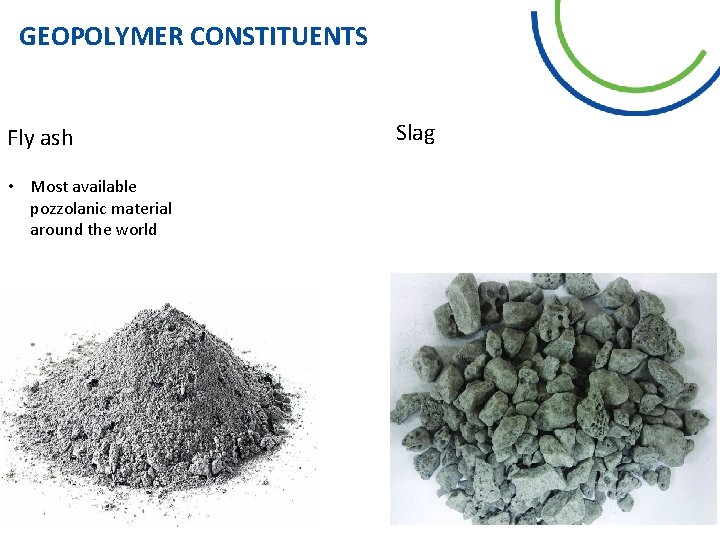
GEOPOLYMER CONSTITUENTS Fly ash • Most available pozzolanic material around the world Slag
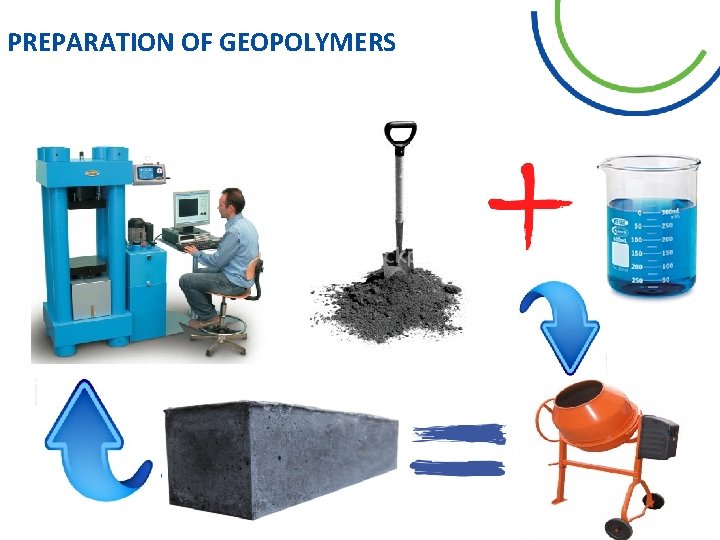
PREPARATION OF GEOPOLYMERS
CIRCULAR ECONOMY Geopolymer concrete is made from natural materials which are generally abundant and locally available. In addition, geopolymers can be recycled 100% at the end of its life. Alternative materials such as fly ash, a by-product of coal-fired power plants, and ground granulated blast furnace slag (GGBS) from steel production, are the main materials that are recycled in the geopolymers manufacturing process. There are two main ways in which recycled concrete is reused: • • As a recycled aggregate in new concrete As a recycled aggregate in road construction and earthworks.
CERAMICS Ceramics are generally compounds between metallic and nonmetallic elements and include such compounds as oxides, nitrides, and carbides. Typically they are insulating (not electrical or thermally conductive) and resistant to high temperatures and harsh environments (corrosion resistant). They usually have lower electrical and thermal conductivity, higher stiffness, good resistance to corrosive environments, and lower fracture toughness than metals. Conventional ceramics • • made from natural raw material such as clay or silica initially take shape on a potter´s wheel or by slip casting and are fired in kilns Advanced ceramics • • require extremely pure manmade starting materials such as Si. C, Si 3 N 4, Zr. O 2, AL 2 O 3 formed and sintered in more complex processes such as hot isostatic pressing
CONCLUSIONS • Geopolymers, are a new generation of inorganic binders. • Any aluminosilicate materials can be used to prepare geopolymers. • OPC could be easily replaced by geopolymers cements. • Geopolymers can be 100% recycled