
Geopolitical Theories Ratzels Theory Friedrich Ratzel States are

- Slides: 29
Geopolitical Theories • Ratzel’s Theory – Friedrich Ratzel • States are similar to biological organism • Birth, rise, decline, death https: //www. youtube. com/watch? v=u. RG 5 a. Casr 4 E
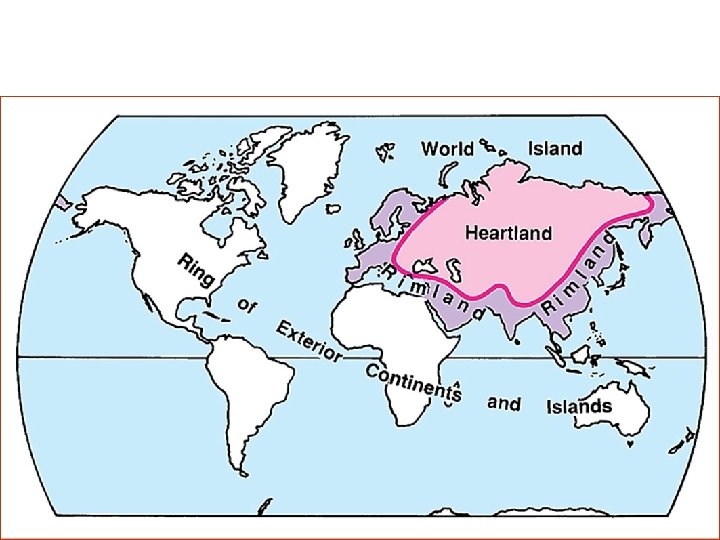
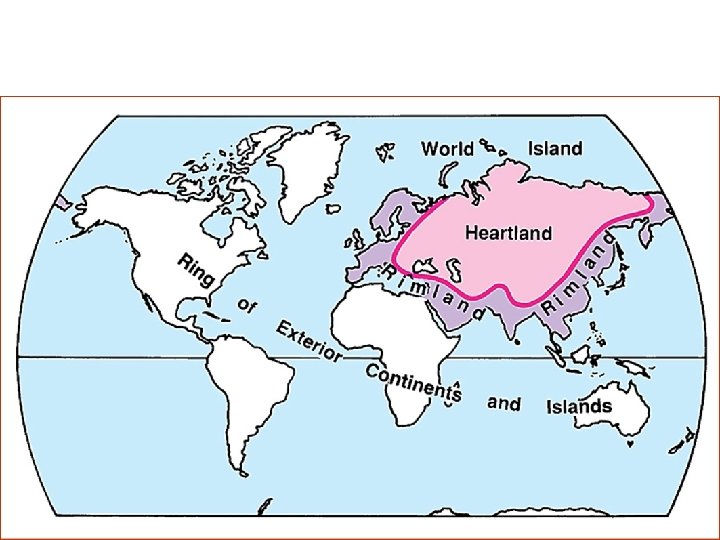
Heartland rules East Europe commands the Heartland • Heartland Theory – Sir Halford J. Mackinder (1919) – Core area – In a nation-state, the area constituted by the national heartland—the largest population cluster, productive region, the area with the greatest centrality and accessibility, probably containing the capital city as well. – Eurasia (World Island) • • Center of Eurasia was a resource rich “pivot area” (Heartland) “Who rules East Europe commands the Heartland Who rules the Heartland commands the World Island Who rules the World Island commands the World”
Rimland • Rimland Theory – Nicholas Spykmann – Opposite of Mackinder – The Heartland is semi-arid and powerless – Rimland (land encircling Heartland) has control
How does this apply? • Doesn’t directly • But has affected geopolitical thought – Nazi lebensraum • Territory believed to be necessary for national existence or economic self-sufficiency – “Domino theory” in SE Asia – “Containment”
Changes to Countries Devolution • Region within a state demand & gains more autonomy at the expense of the central government • If devolution continues, can lead to balkanization – Break up of states – Example: Czechoslovakia, Sudan, Yugoslavia, etc. Democratization • When a nation becomes more democratic • Can also be a region – This is where supranational organizations come into play
Supranational Organizations • Three or more states • Can be: – Economic – Political – Cultural • 20 th C. gave rise to many supranational organizations • Today there are over 60 major supranational organizations
UN • United Nations – The world’s preeminent supranational organization, a world governing body enforcing the upkeep of peace and basic human rights worldwide. – Started in 1945 – Currently includes 193 states • Came from League of Nations – Only 63 nations joined, excluding the U. S. • Main purpose: Diplomacy • Other UN Groups – – World Health Organization (WHO) Food & Agriculture Organization (FAO) Development Program (UNDP) International Children’s Education Fund (UNICEF)
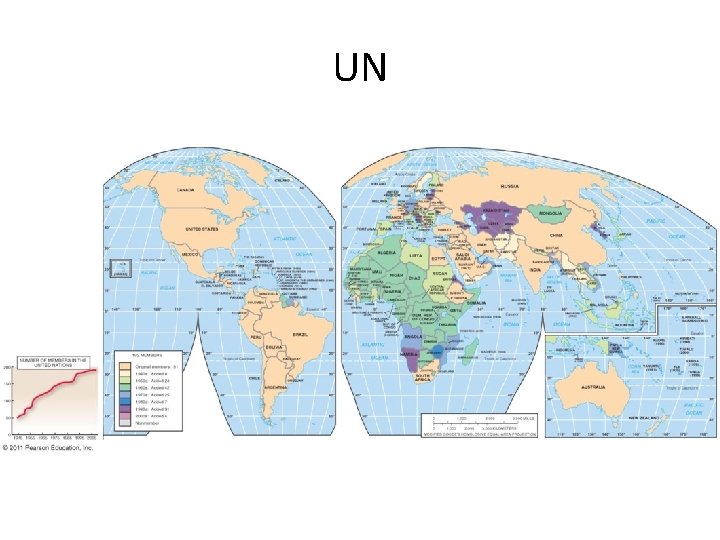
UN
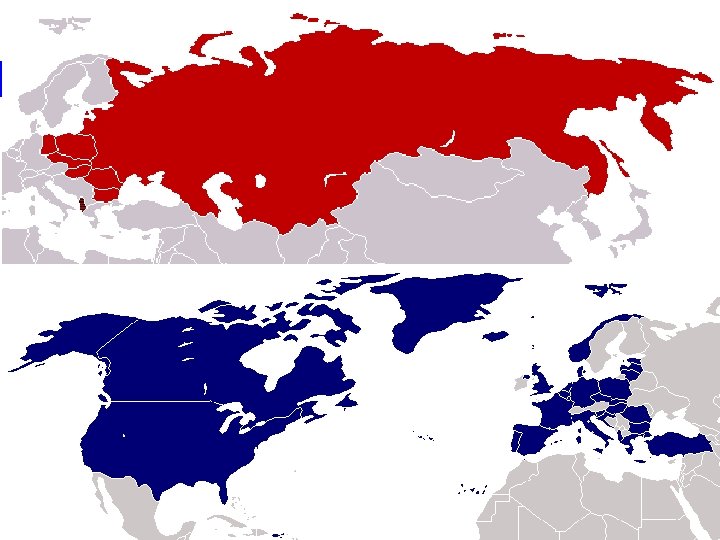
NATO • • North Atlantic Treaty Organization 1949 Regional Military alliance 16 states at its start – U. S. , Canada, & Western Europe • More added after the collapse of USSR – 28 currently
Warsaw Pact • 1955 • Regional Military Alliance • In response to NATO – Maintain balance of power – Condition of roughly equal strength between opposing countries or alliances of countries. • Eastern European communist nations – E. Germany, Poland, Czechoslovakia, Hungary, Romania, Bulgaria, Albania, USSR • Disbanded – Several former Warsaw Pact countries have joined NATO
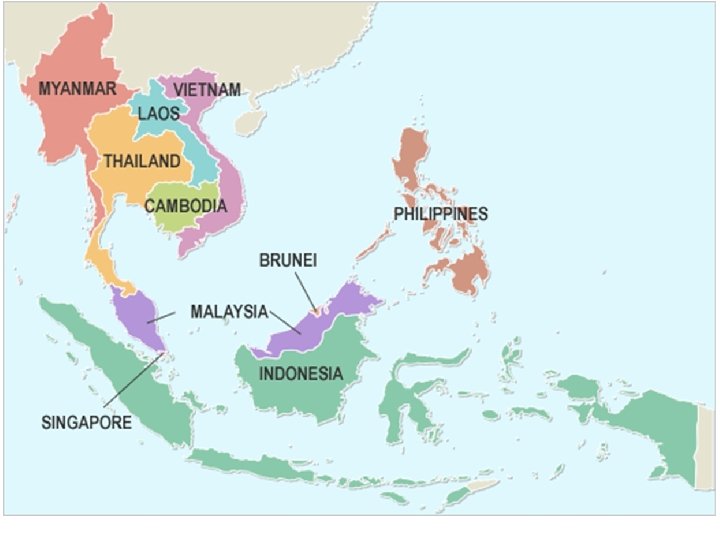
ASEAN • • Association of Southeast Asian Nations 1967 Regional Alliance Membership – 10 states – Brunei, Cambodia, Indonesia, Laos, Malaysia, Myanmar, Philippines, Singapore, Thailand & Vietnam – 1 Observer – Papua New Guinea
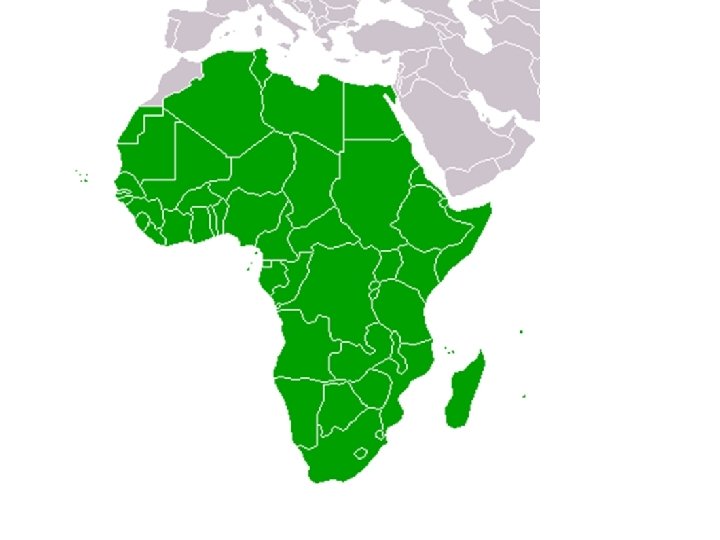
AU • The African Union - 2002 – Replaced the Organization of African Unity (OAU) - 1963 – Organized primarily to end apartheid & colonialism • Regional Economic Alliance • 53 countries of Africa – Morocco only country not joined – Mali, Madagascar & Guinea-Bissau have been suspended
AU
OPEC • Organization of Petroleum Exporting Countries • 1960 – Started by 5 countries • Economic Alliance • Currently 12 nations – Iran, Iraq, Kuwait, Saudi Arabia, Venezuela, Qatar, Libya, United Arab Emirates (UAE), Algeria, Nigeria, Ecuador, Angola – Had as many as 14 (Indonesia & Gabon)
OPEC
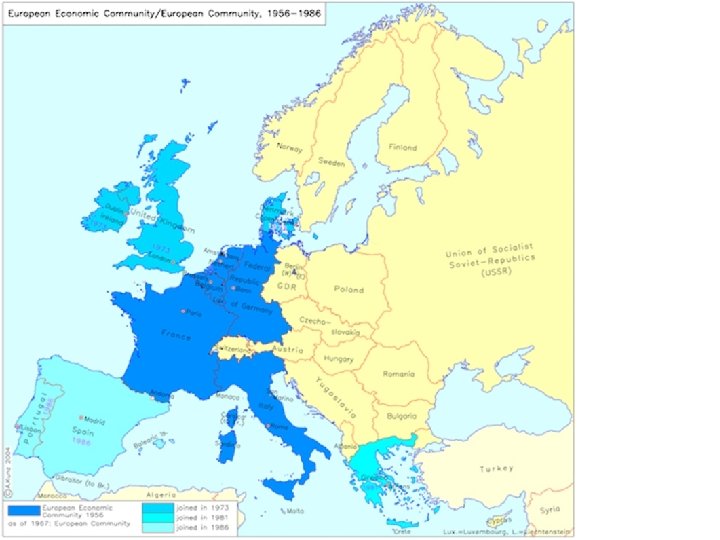
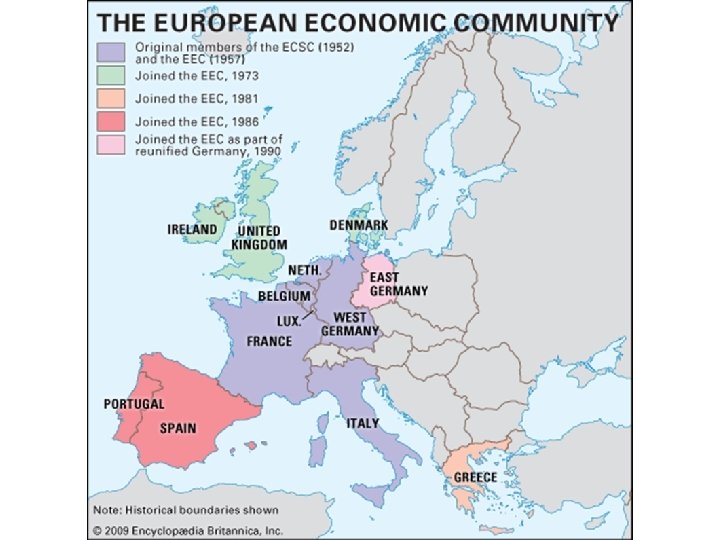
EC • European Community • Preceded by – Organization for European Economic Cooperation (OEEC) – European Coal & Steel Community (ECSC) – European Economic Community (EEC) • Economic Alliance • 1980 s – 12 members • Germany, France, U. K. , Italy, Spain, Portugal, Greece, the Netherlands, Belgium, Luxembourg, Denmark and Ireland – 12 Original members of the EU
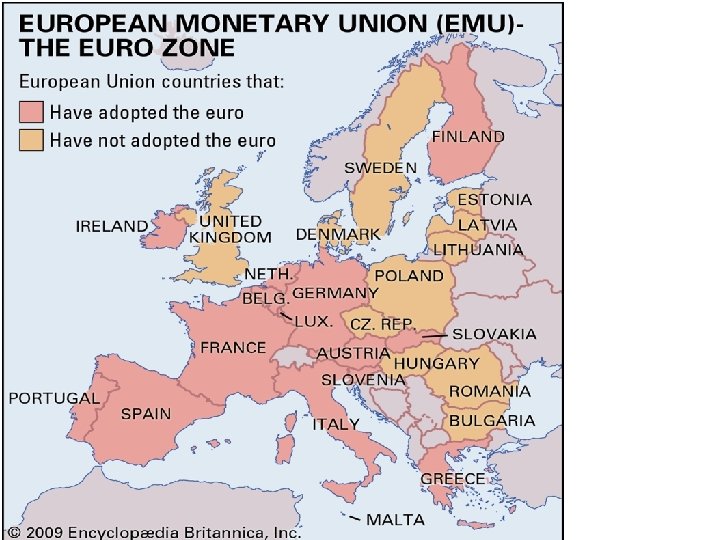
EU • • • European Union 1992 Economic & Political Alliance Currently 27 members Currency: Euro – 23 countries use the Euro (only 17 belong to EU) – EU members not part of Eurozone: Bulgaria, Czech Republic, Denmark, Hungary, Latvia, Lithuania, Poland, Romania, Sweden & UK – Non-EU member part of the Eurozone: Andorra, Kosovo, Montenegro, Monaco, San Marino, & Vatican City
EU
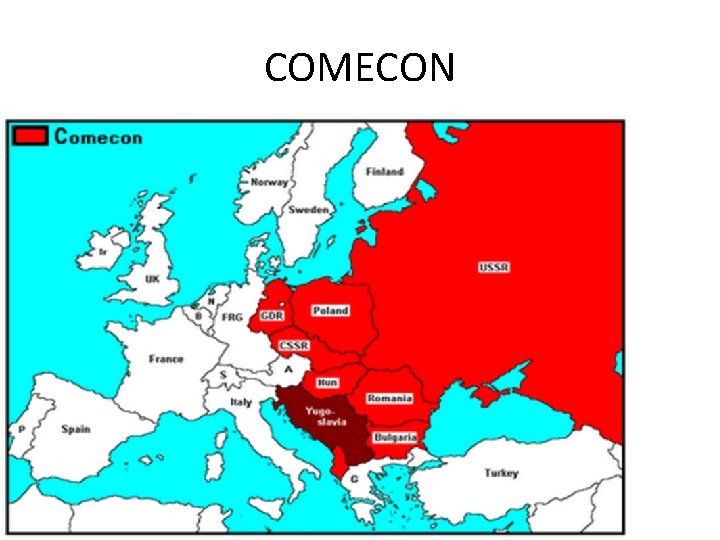
COMECON • • Council for Mutual Economic Assistance 1949 Economic Alliance 10 countries – USSR (E. Germany), Poland, Czechoslovakia, Hungary, Romania, Bulgaria, Albania (All members of Warsaw Pact) – Also added: Cuba, Mongolia, & Vietnam • Disbanded in 1990 s
COMECON
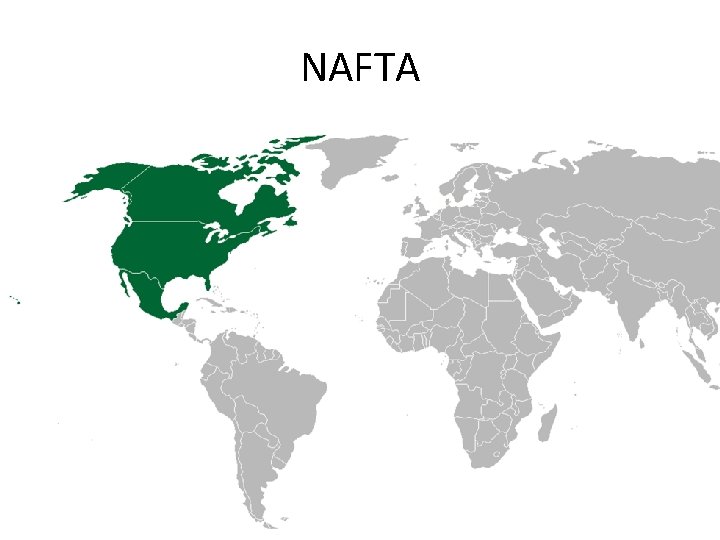
NAFTA • North American Free Trade Agreement • 1989 – Canada & U. S. • 1994 – Added Mexico • Economic Alliance – Free trade (eliminating most tariff & non-tariff barriers) agreement between North American states
NAFTA
Other Supranational Organizations • Organization on Security & Cooperation in Europe (OSCE) • Organization of American States (OAS) • The Commonwealth • The Andean Community • Caribbean Community & Common Market • Commonwealth of Independent States