
GEOMORPHOLOGY RIVERS 1 The way in which water






- Slides: 46
GEOMORPHOLOGY RIVERS 1
The way in which water moves from the ocean to the land back to the ocean is known as The Water Cycle 2
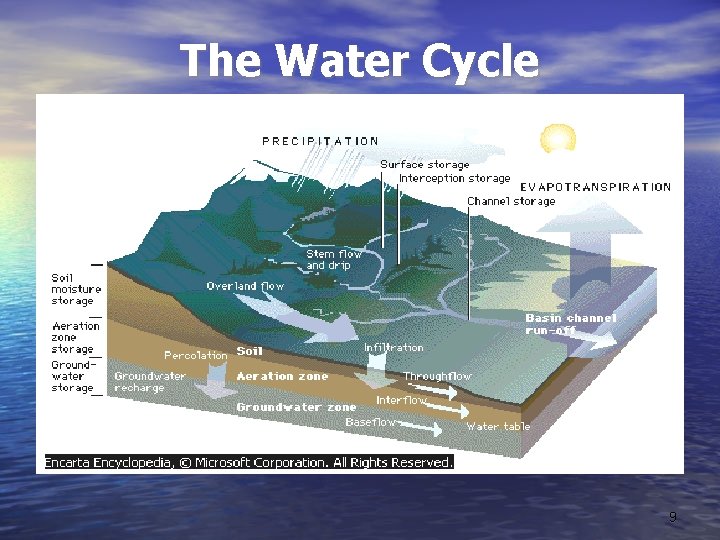
The Water Cycle The water cycle consists of five distinct stages • Storage • Evaporation and Transpiration • Condensation • Precipitation • Runoff – direct or indirect 3
STORAGE • The water on the earth spends most of its time • • • in the ocean Water is also found in the atmosphere either as water vapour or water droplets (clouds) Water is also found in rivers, lakes and dams as surface water Water may also be found as ice in ice caps and glaciers Water may also be found underground and is called ground water Water is found stored in plants 4
Evaporation and Transpiration • Water evaporates from the earth’s surface or • • from the oceans Evaporation occurs when energy from the sun causes water to heat up and evaporate from the earth’s surface. The water rises into the atmosphere as water vapour Transpiration is the evaporation of water particles from plant surfaces, especially from the surface openings (stomata) on leaves 5
Condensation • Condensation in Meteorology is the process whereby water vapour is cooled until a critical temperature is reached (the Dew Point Temperature) and the vapour changes back into water droplets to form clouds 6
Precipitation • Precipitation occurs when water vapour in the atmosphere condenses into clouds and falls back to the earth • It can take a variety of forms, including rain, snow, hail and sleet. 7
Runoff • Water that flows down streams and rivers is called • • • runoff. Water reaches rivers and the sea in the form of either surface runoff (direct) or undergroundwater runoff (indirect) Surface runoff occurs during and shortly after intense rainstorms or periods of rapid melting of snow and ice. Groundwater flow runs through rocks and soil. Surface water infiltrates into the soil and forms the water table, the level at which all of the spaces in the rocks are filled with water Eventually the water either runs into the seas or reevaporates into the atmosphere Almost all the water on the earth has passed through the water cycle countless times 8
The Water Cycle 9
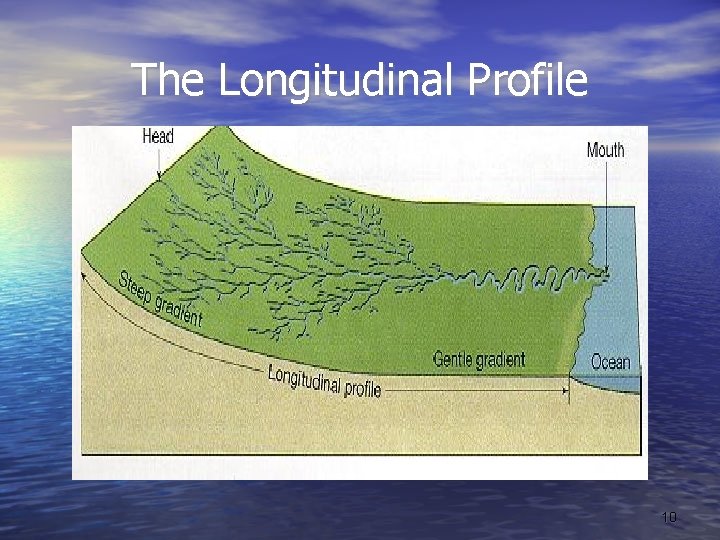
The Longitudinal Profile 10
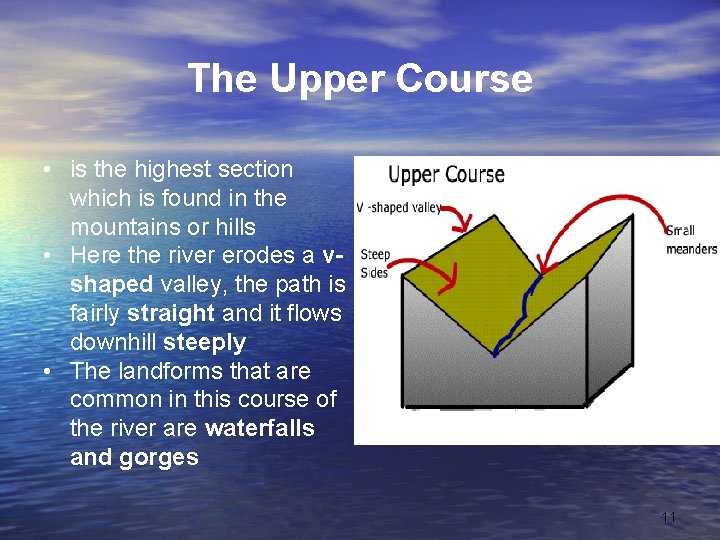
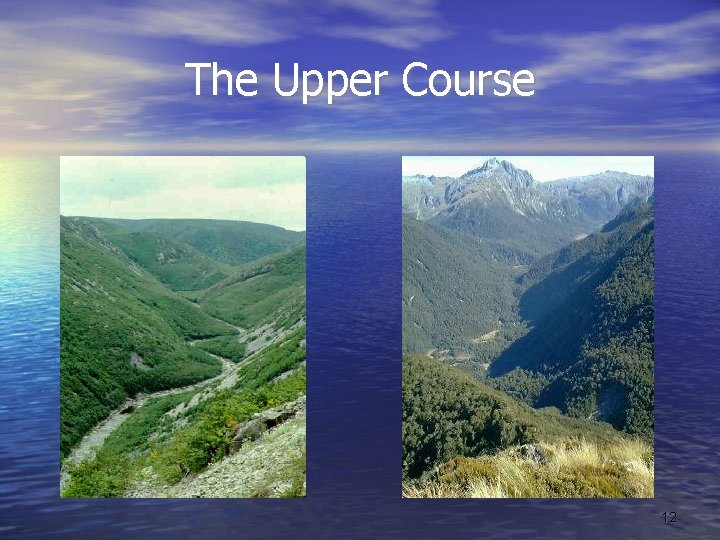
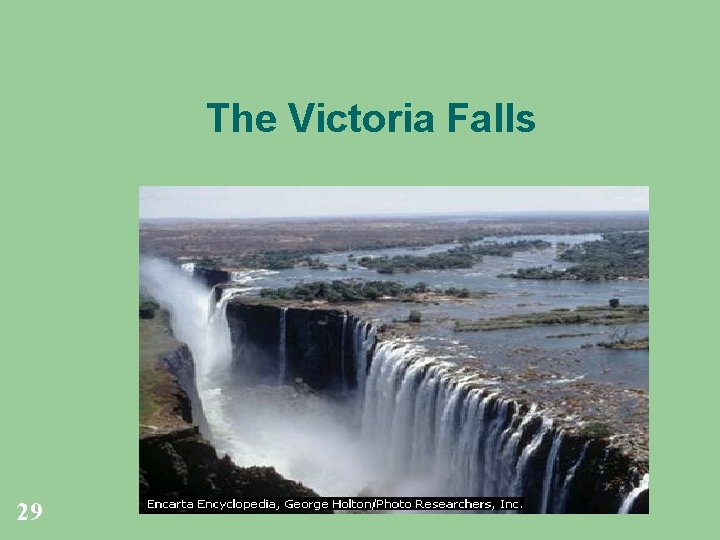
The Upper Course • is the highest section which is found in the mountains or hills • Here the river erodes a vshaped valley, the path is fairly straight and it flows downhill steeply • The landforms that are common in this course of the river are waterfalls and gorges 11
The Upper Course 12
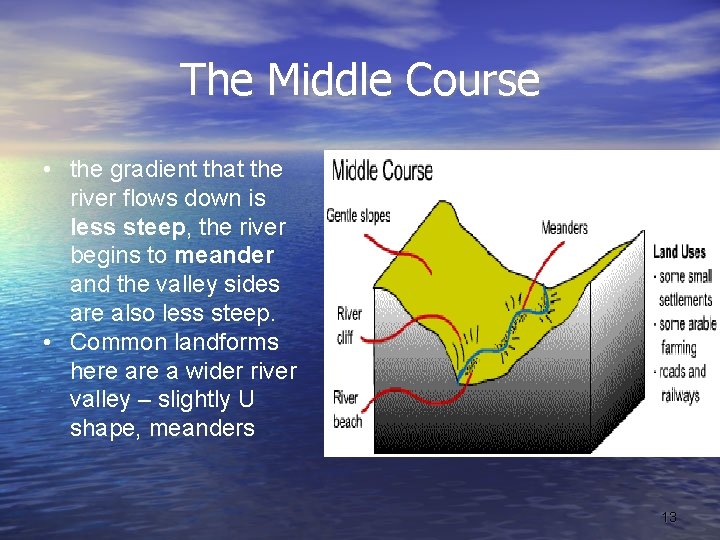
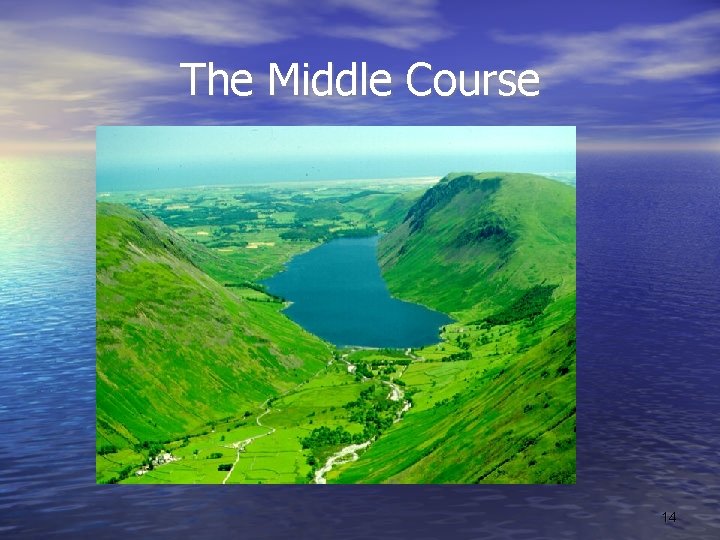
The Middle Course • the gradient that the river flows down is less steep, the river begins to meander and the valley sides are also less steep. • Common landforms here a wider river valley – slightly U shape, meanders 13
The Middle Course 14
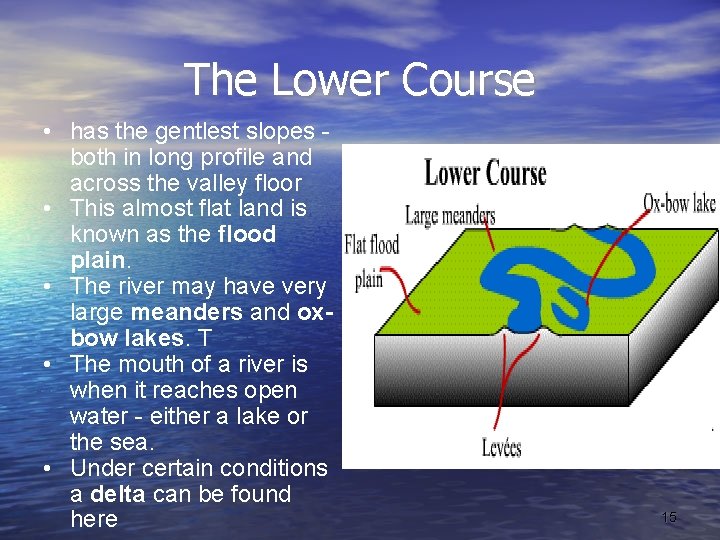
The Lower Course • has the gentlest slopes both in long profile and across the valley floor • This almost flat land is known as the flood plain. • The river may have very large meanders and oxbow lakes. T • The mouth of a river is when it reaches open water - either a lake or the sea. • Under certain conditions a delta can be found here 15
Types of Flow Laminar Flow - at low velocities the fluid particles follow the streamlines Turbulent Flow - at higher velocities the flow breaks up into a fluctuating velocity pattern or eddies 16
Types of Rivers Perennial Rivers – flow all year round Permanent Rivers Exotic Rivers Non Perennial Rivers – flow in rainy season Periodic Rivers Episodic Rivers 17
Permanent Rivers 18
Exotic Rivers 19
Episodic Rivers 20
Periodic Rivers 21
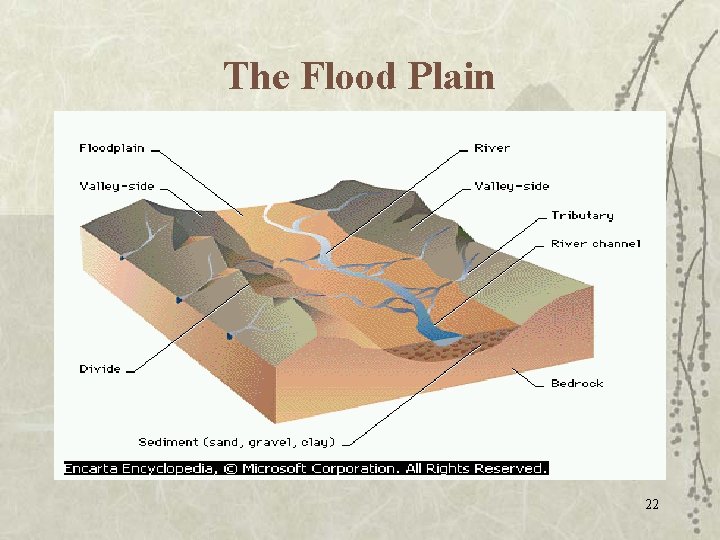
The Flood Plain 22
The Flood Plain is a flat region of a valley floor located on either side of a river channel A floodplain is built of sediments deposited by the river that flows through it and is covered by water during floods when the river overflows its banks. Floodplains tend to develop on the lower and less steep sections of rivers. 23
Meandering and Braided Streams River channels in floodplains form two kinds of patterns: meandering and braided Meandering rivers consist of a single main channel that bends and loops Braided rivers have numerous distinct channels that repeatedly divide and then merge again downstream 24
Oxbow Lakes In meandering rivers, sediment is eroded on the outside of bends (undercut banks) and deposited on the inside of bends (slip off slope) Over time, this causes meander loops to migrate downstream If the movement of one meander loop overruns the next one downstream, then a meander cut-off is formed This causes the course of the channel to be shortened as the two meander loops join The abandoned meander loop is gradually isolated as sediment is deposited at each end by the water flow in the main channel. This process eventually leads to the creation of an ox-bow lake 25
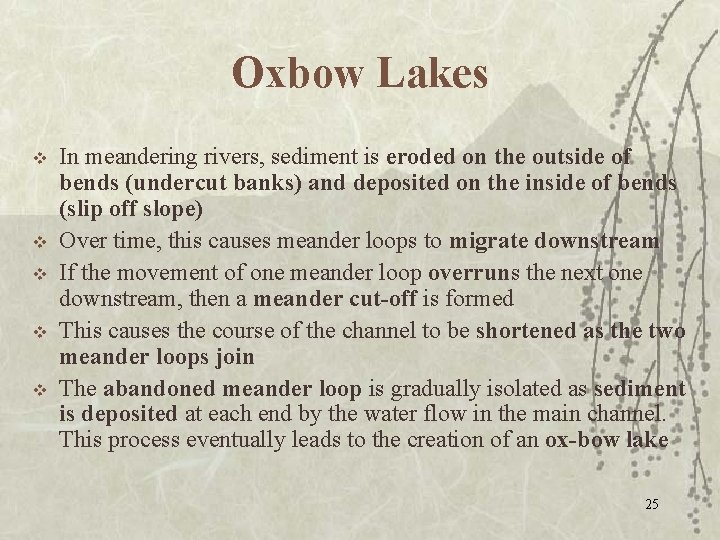
The Amazon River 26
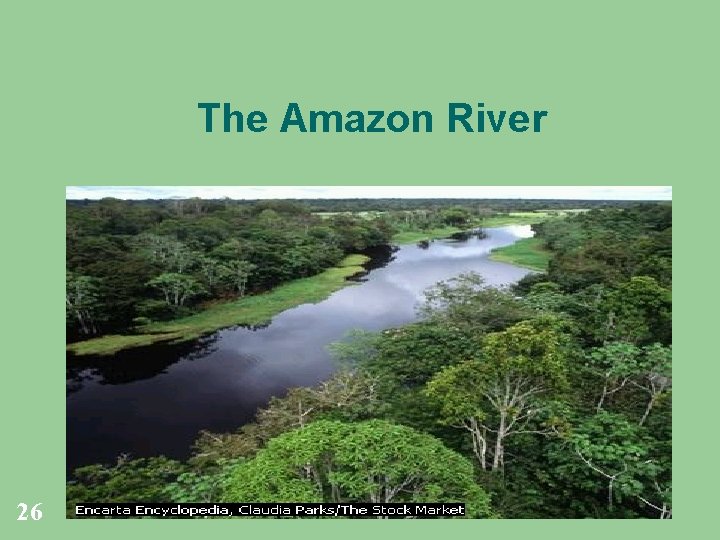
The Orange River 27
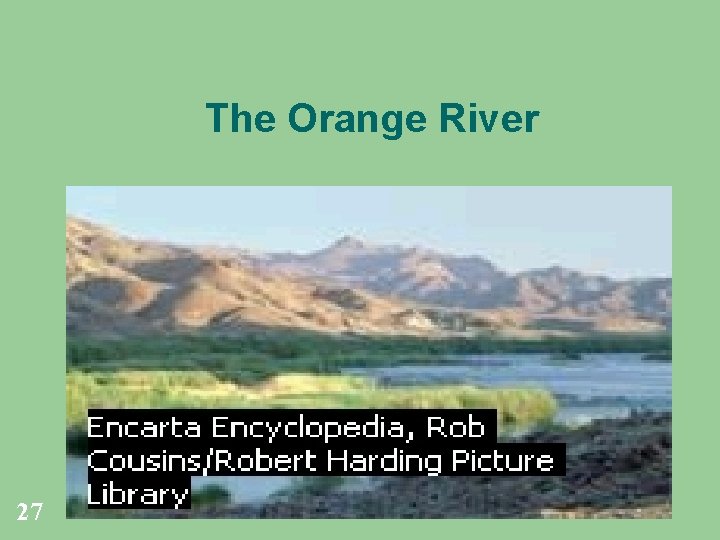
The Niagra Falls 28
The Victoria Falls 29
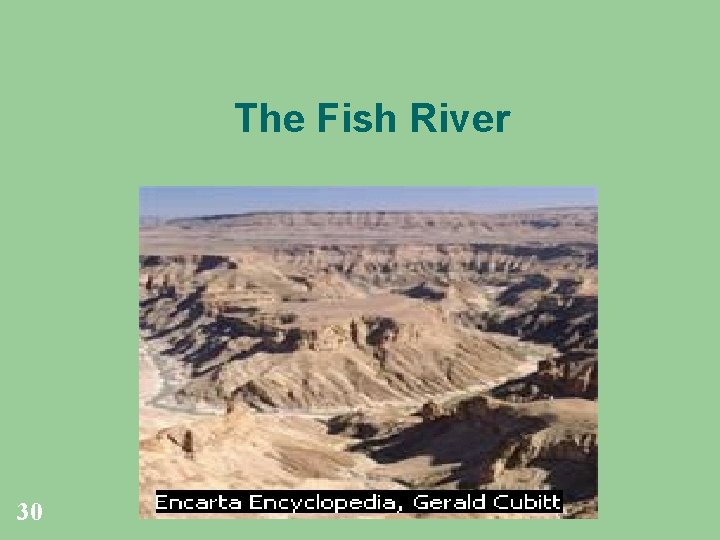
The Fish River 30
Deltas 31
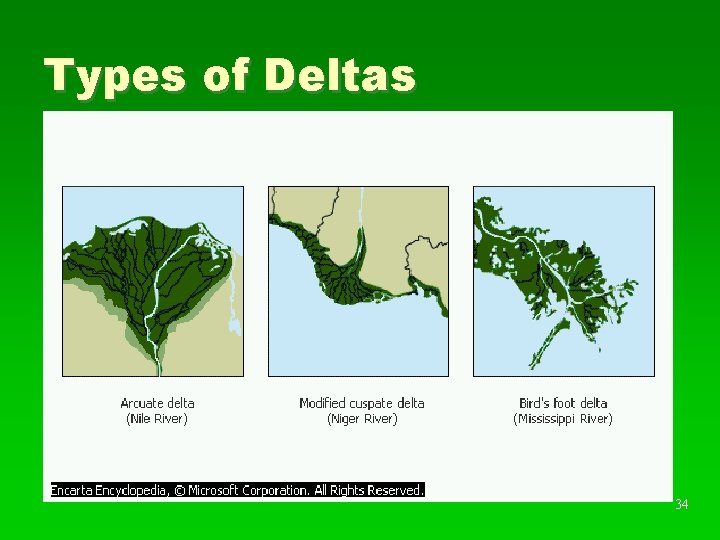
Requirements for the formation of a Delta Constant supply of silt and sand Shallow lake or sea Little or no tidal action, wave action or current action 32
Types of Deltas Lacustrine – Lough Tay, Co. Wicklow Arcuate delta – Nile river Cuspate delta – Elbe River Bird’s Foot delta - Mississippi Estuarine delta - 33
Types of Deltas 34
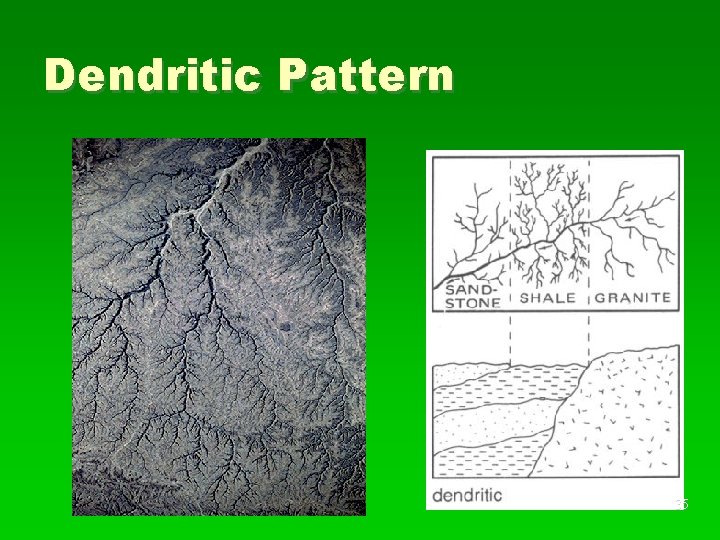
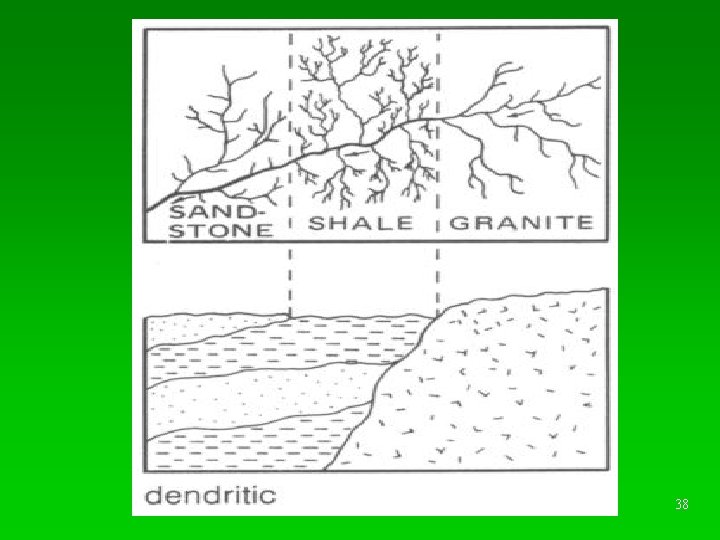
Dendritic Pattern 35
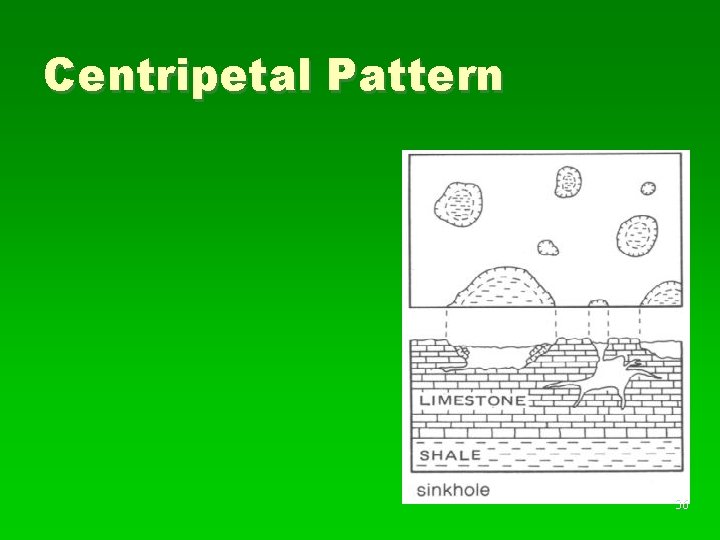
Centripetal Pattern 36
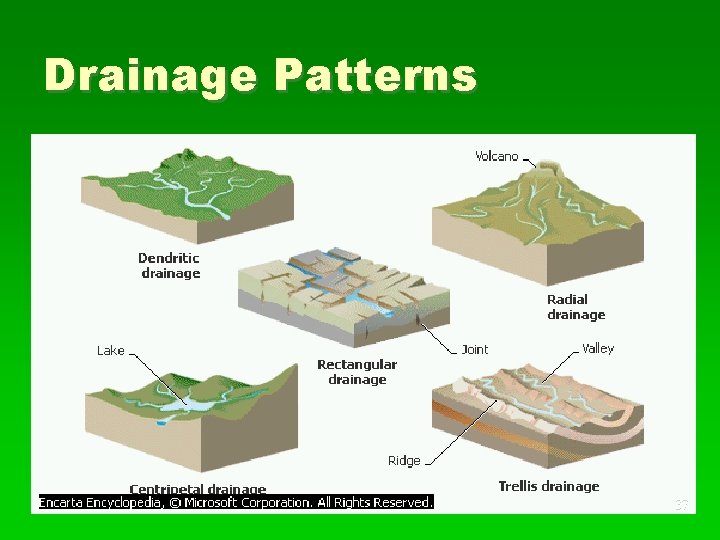
Drainage Patterns 37
38
Radial Pattern 39
Trellis Pattern 40
Deranged Pattern 41
Rectangular Pattern 42
43
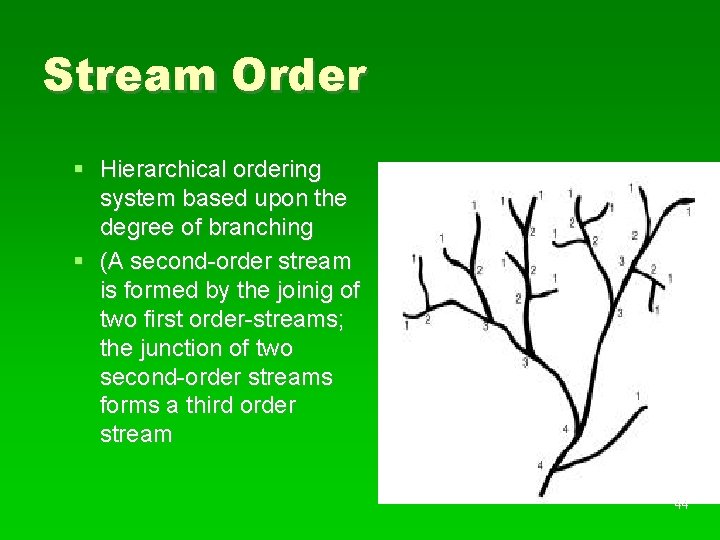
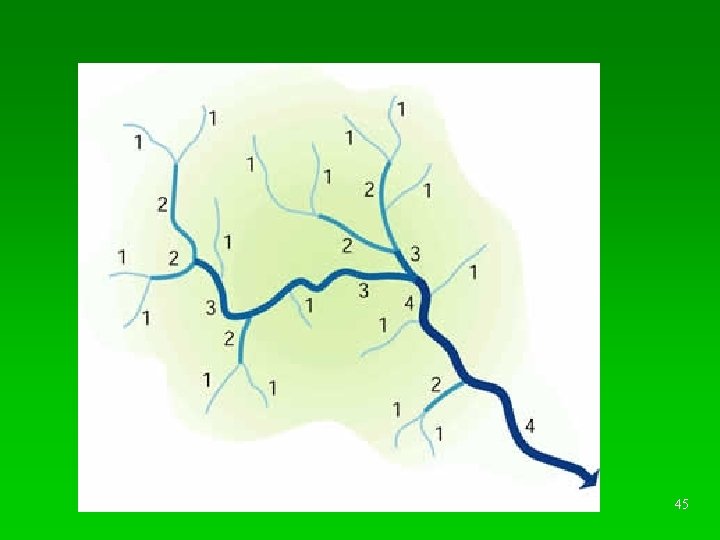
Stream Order Hierarchical ordering system based upon the degree of branching (A second-order stream is formed by the joinig of two first order-streams; the junction of two second-order streams forms a third order stream 44
45
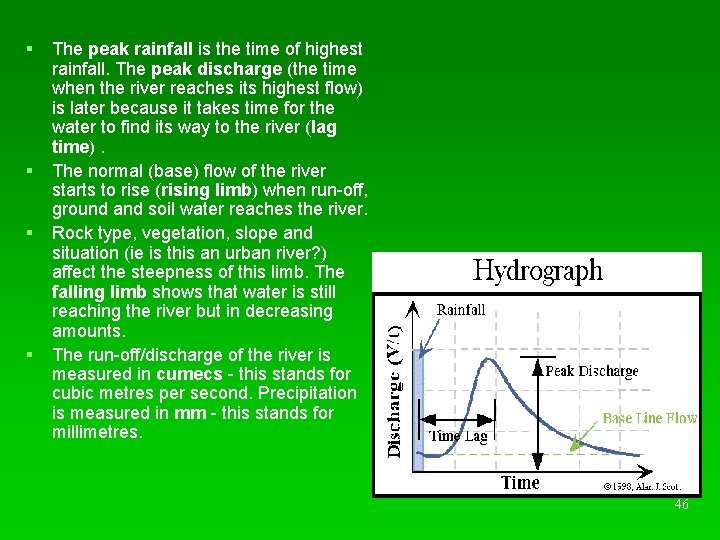
The peak rainfall is the time of highest rainfall. The peak discharge (the time when the river reaches its highest flow) is later because it takes time for the water to find its way to the river (lag time). The normal (base) flow of the river starts to rise (rising limb) when run-off, ground and soil water reaches the river. Rock type, vegetation, slope and situation (ie is this an urban river? ) affect the steepness of this limb. The falling limb shows that water is still reaching the river but in decreasing amounts. The run-off/discharge of the river is measured in cumecs - this stands for cubic metres per second. Precipitation is measured in mm - this stands for millimetres. 46