
Geomorphic Processes II Exogenous II Gradation Processes Weathering
- Slides: 17
Geomorphic Processes: II. Exogenous II. Gradation Processes – Weathering, Mass Wasting, Erosion, Transportation and Deposition
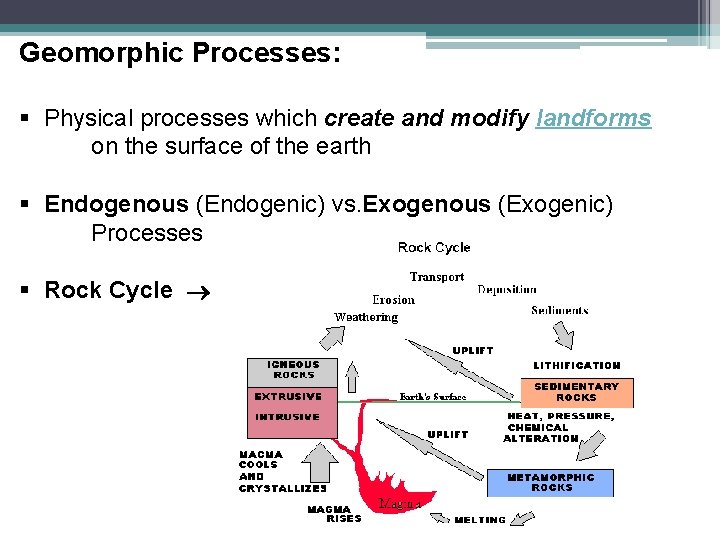
Geomorphic Processes: § Physical processes which create and modify landforms on the surface of the earth § Endogenous (Endogenic) vs. Exogenous (Exogenic) Processes § Rock Cycle
A. Endogenous Processes are large-scale landform building and transforming processes – they create relief. 1. Igneous Processes a. Volcanism: Volcanic eruptions Volcanoes b. Plutonism: Igneous intrusions 2. Tectonic Processes (Also called Diastrophism) a. Folding: anticlines, synclines, mountains b. Faulting: rift valleys, graben, escarpments c. Lateral Faulting: strike-slip faults Earthquakes evidence of present-day tectonic activity
B. Exogenous Processes Also called Gradational Processes, they comprise degradation and aggradation – they modify relief a continuum of processes – Weathering Mass Wasting Erosion Transportation Deposition these processes are carried through by Geomorphic Agents: gravity, flowing water (rivers), moving ice (glaciers), waves and tides (oceans and lakes), wind, plants, organisms, animals and humans 1. Degradation Processes Also called Denudation Processes a. Weathering , b. Mass Wasting and c. Erosion and Transportation 2. Aggradation Processes a. Deposition – fluvial, eolian, glacial, coastal
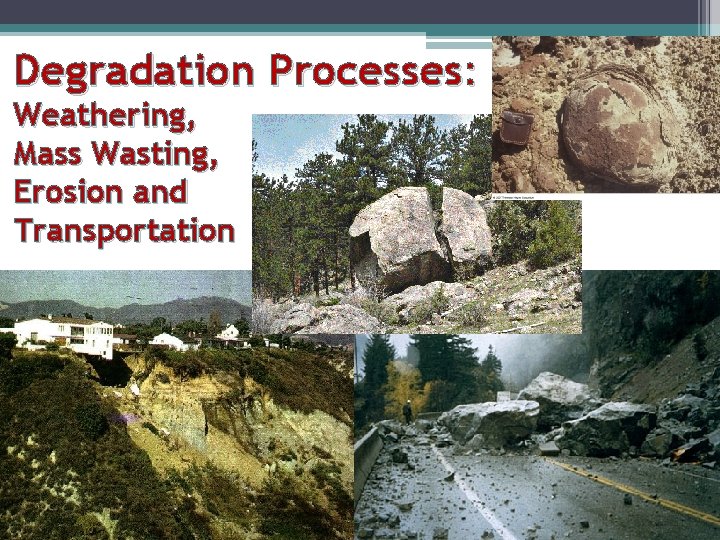
Degradation Processes: Weathering, Mass Wasting, Erosion and Transportation
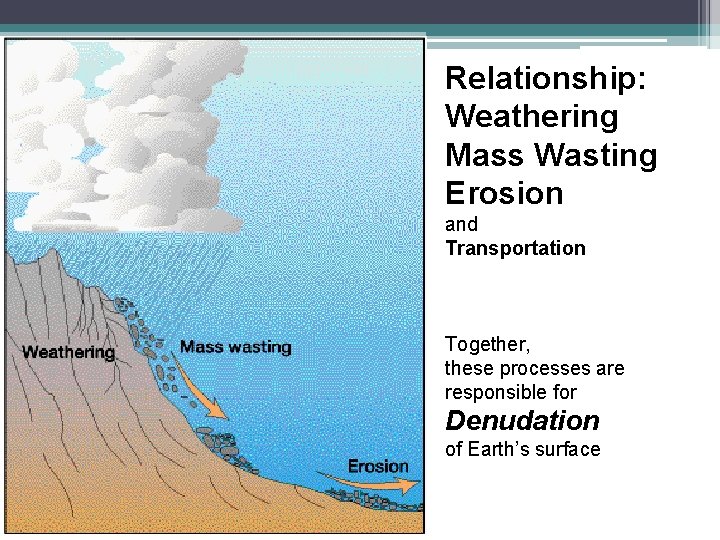
Relationship: Weathering Mass Wasting Erosion and Transportation Together, these processes are responsible for Denudation of Earth’s surface
WEATHERING Weathering is disintegration and decomposition of rocks in situ – no transportation involved produces regolith § More precisely, it involves the mechanical or physical disintegration and/or chemical decomposition that fragments rock masses into smaller components that amass on-site, before being moved by gravity or transported by other agents § The processes begin in microscopic spaces, cracks, joints, faults, fractures, lava vesicles and other rock cavities ØTypes of Weathering: 1) Physical or Mechanical Weathering, 2) Chemical Weathering, and 3) Biological Weathering
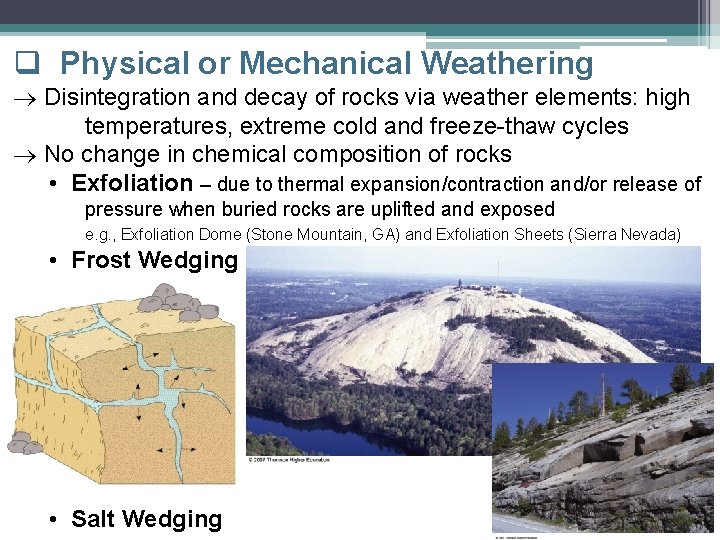
q Physical or Mechanical Weathering Disintegration and decay of rocks via weather elements: high temperatures, extreme cold and freeze-thaw cycles No change in chemical composition of rocks • Exfoliation – due to thermal expansion/contraction and/or release of pressure when buried rocks are uplifted and exposed e. g. , Exfoliation Dome (Stone Mountain, GA) and Exfoliation Sheets (Sierra Nevada) • Frost Wedging • Salt Wedging
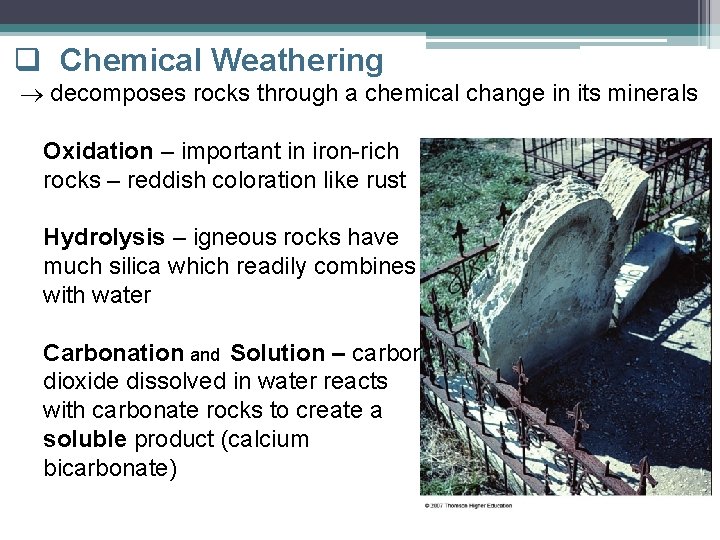
q Chemical Weathering decomposes rocks through a chemical change in its minerals Oxidation – important in iron-rich rocks – reddish coloration like rust Hydrolysis – igneous rocks have much silica which readily combines with water Carbonation and Solution – carbon dioxide dissolved in water reacts with carbonate rocks to create a soluble product (calcium bicarbonate)
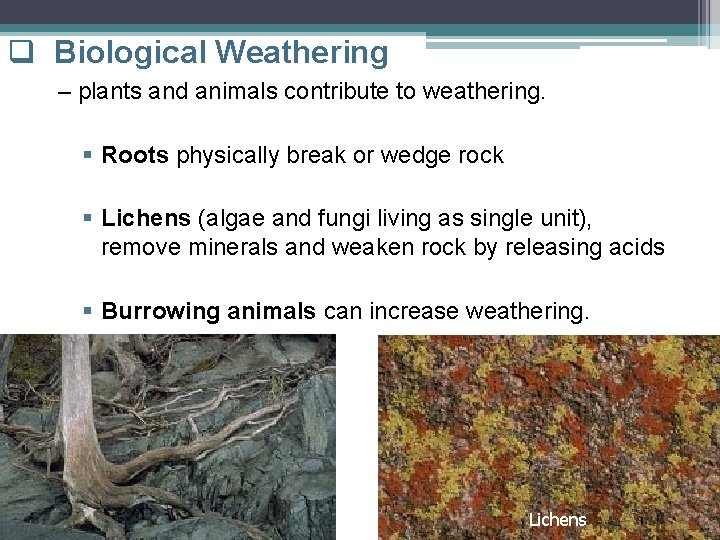
q Biological Weathering – plants and animals contribute to weathering. § Roots physically break or wedge rock § Lichens (algae and fungi living as single unit), remove minerals and weaken rock by releasing acids § Burrowing animals can increase weathering. Lichens
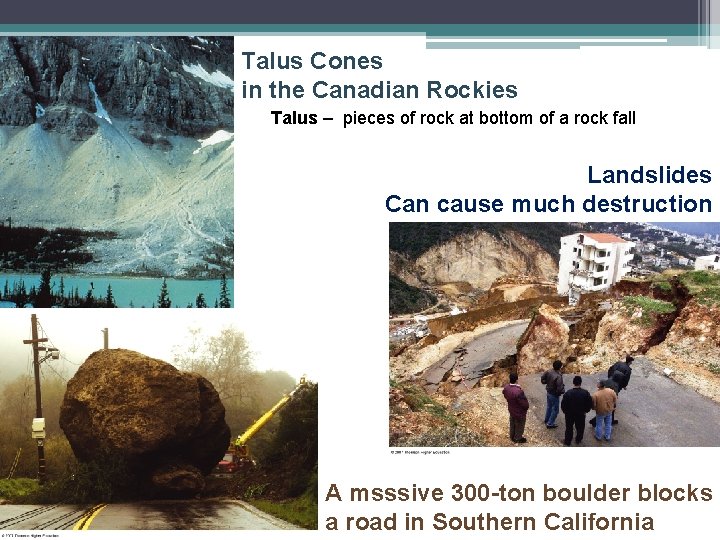
Talus Cones in the Canadian Rockies Talus – pieces of rock at bottom of a rock fall Landslides Can cause much destruction A msssive 300 -ton boulder blocks a road in Southern California
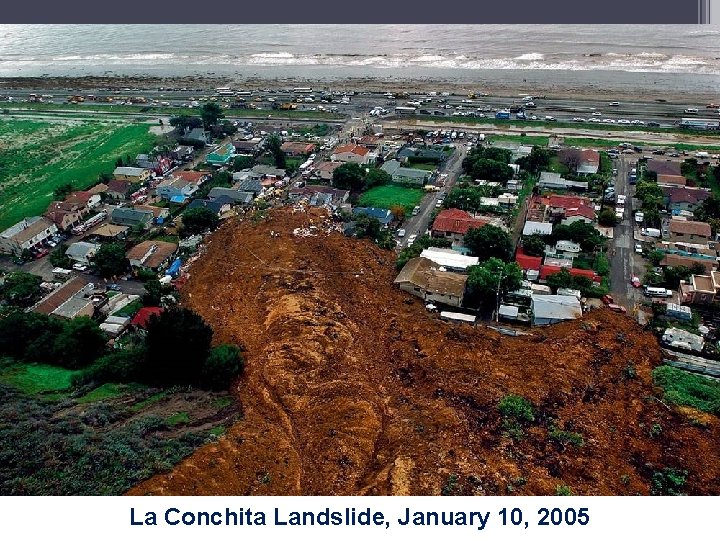
La Conchita Landslide, January 10, 2005
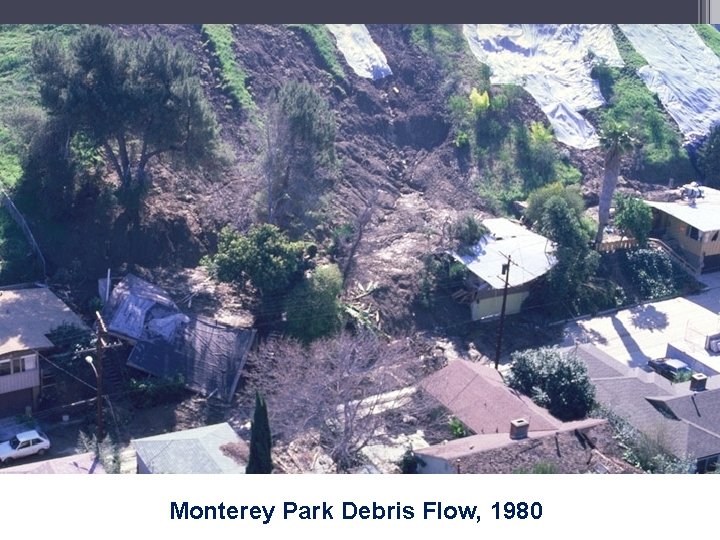
Monterey Park Debris Flow, 1980
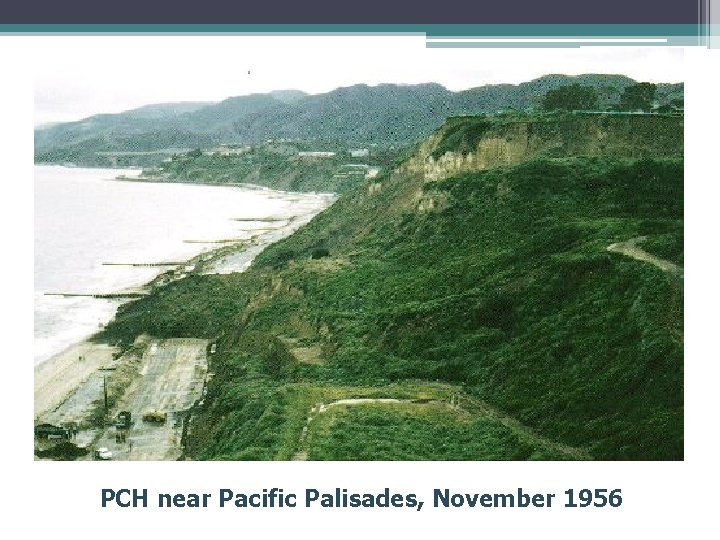
PCH near Pacific Palisades, November 1956
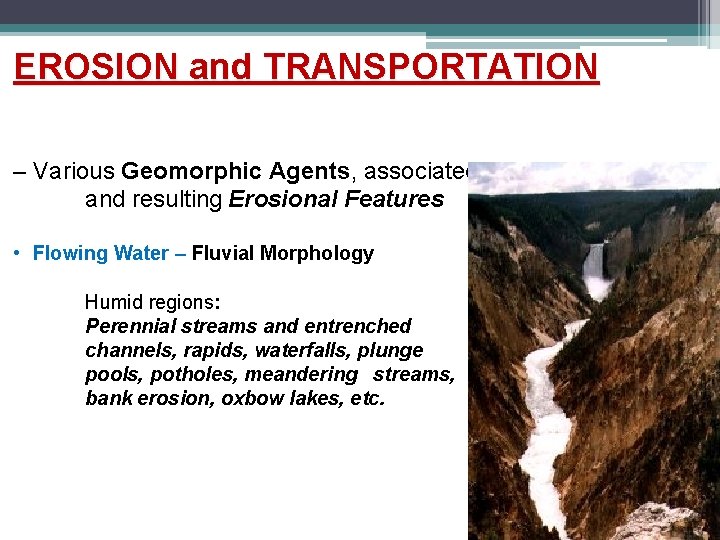
EROSION and TRANSPORTATION – Various Geomorphic Agents, associated Processes, and resulting Erosional Features • Flowing Water – Fluvial Morphology Humid regions: Perennial streams and entrenched channels, rapids, waterfalls, plunge pools, potholes, meandering streams, bank erosion, oxbow lakes, etc.
• Wind – Eolian Landscapes deflation hollows, ventifacts, yardang, etc • Tides and Waves – Coastal Morphology Sea cliffs, sea caves, sea arches, sea stacks, wave-cut beaches, etc. . • Moving Ice – Glacial Morphology glacial troughs (U-shaped valleys), hanging valleys, glacial lakes, .
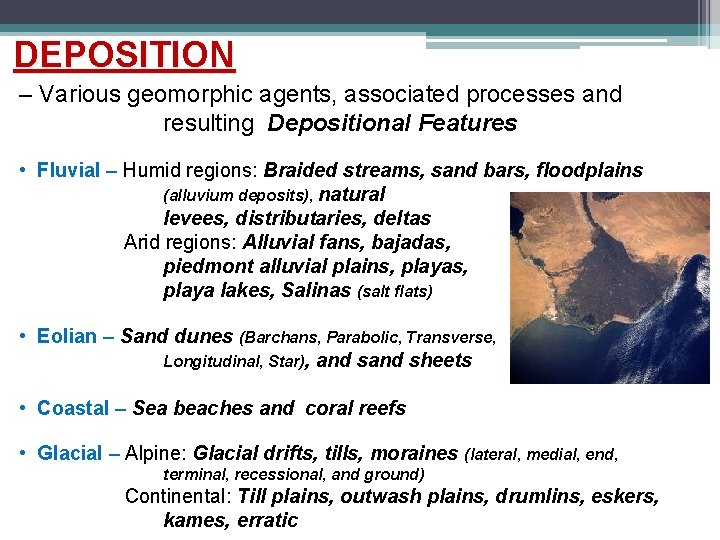
DEPOSITION – Various geomorphic agents, associated processes and resulting Depositional Features • Fluvial – Humid regions: Braided streams, sand bars, floodplains (alluvium deposits), natural levees, distributaries, deltas Arid regions: Alluvial fans, bajadas, piedmont alluvial plains, playa lakes, Salinas (salt flats) • Eolian – Sand dunes (Barchans, Parabolic, Transverse, Longitudinal, Star), and sheets • Coastal – Sea beaches and coral reefs • Glacial – Alpine: Glacial drifts, tills, moraines (lateral, medial, end, terminal, recessional, and ground) Continental: Till plains, outwash plains, drumlins, eskers, kames, erratic