
GEOMETRY VOCABULARY YOLANDA SANCHEZ LINES Straight Succession of
GEOMETRY VOCABULARY YOLANDA SANCHEZ
LINES § Straight: Succession of points in the same direction. § Curve: Any line whose points changes directions. § Zigzag line: Any line made up of segments of straight lines that go in different directions.
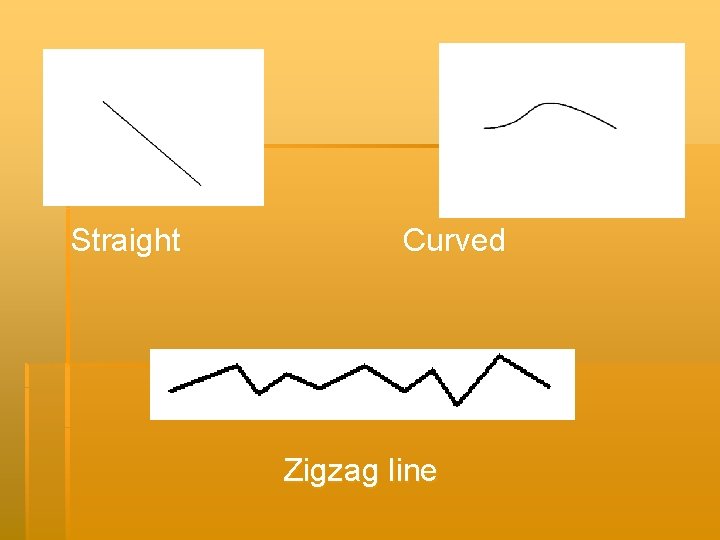
Straight Curved Zigzag line
LINES AND SEGMENTS § Point: It´s the place where two lines cross. § Segment: Line that has started and finished points. § Ray: Straight line limited by a point.
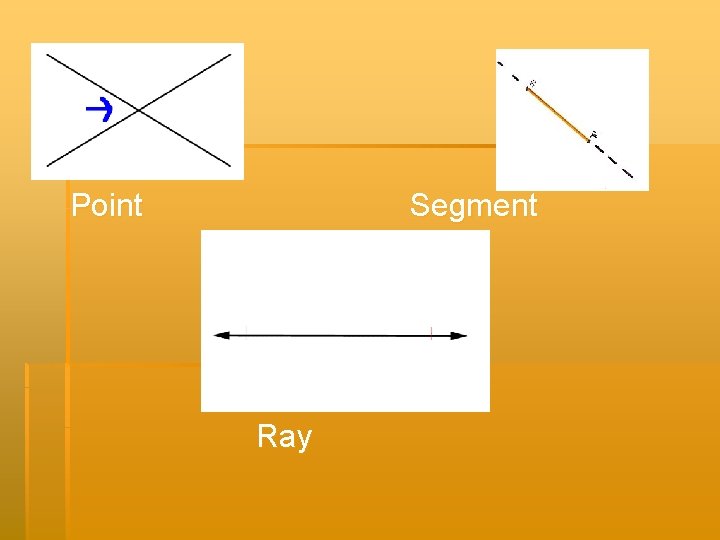
Point Segment Ray
Two lines are: § Parallel: Lines that follow the same direction and they never cross. They keep always the same distances. § Crossing Lines: They intersect in a point, that belongs two both lines. § Perpendicular: crossing lines that cut forming four right angles.
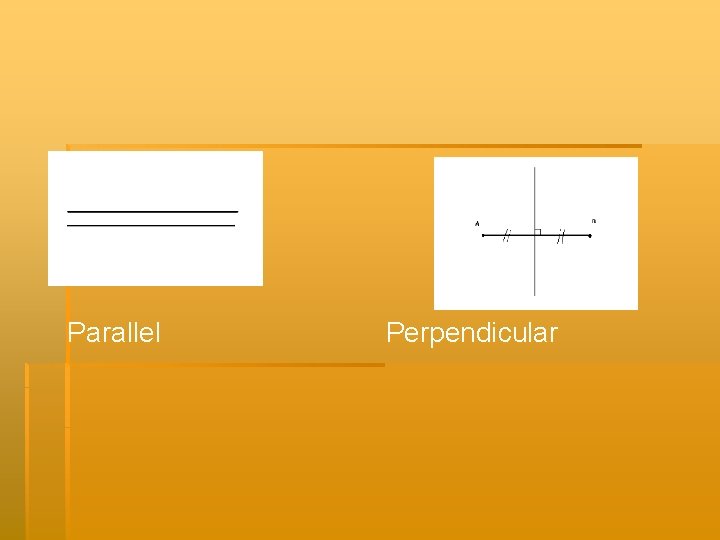
Parallel Perpendicular
Importan lines: § Segment bisector: It’s the perpendicular line that divide a segment in two equals parts. § Angle bisector: It’s the line that divide an angle in two equals parts.
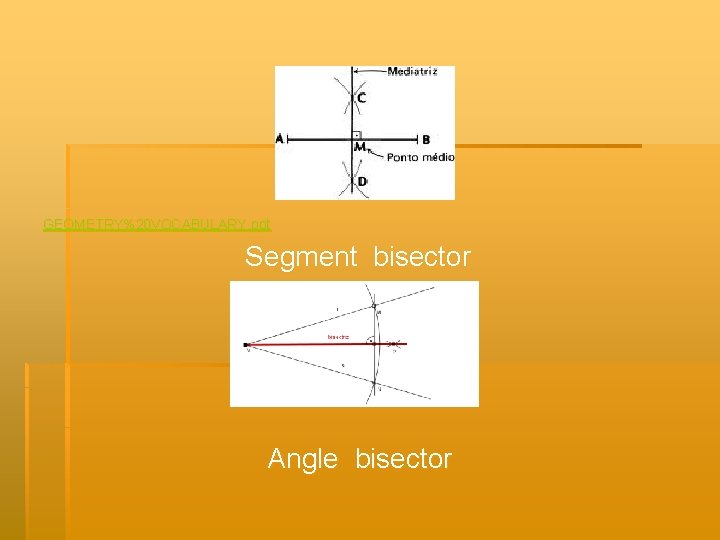
GEOMETRY%20 VOCABULARY. ppt Segment bisector Angle bisector
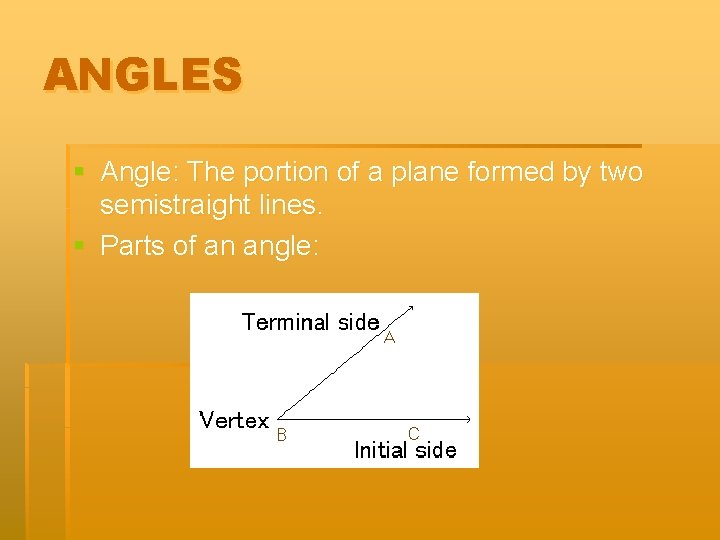
ANGLES § Angle: The portion of a plane formed by two semistraight lines. § Parts of an angle:
§ Kinds of angles: -Right angle: The angle measures 90º -Acute angle: The angle measures less than 90º. -Obtuse angle: The angle measures more than 90º. -Straight angle: The angle measures 180º.
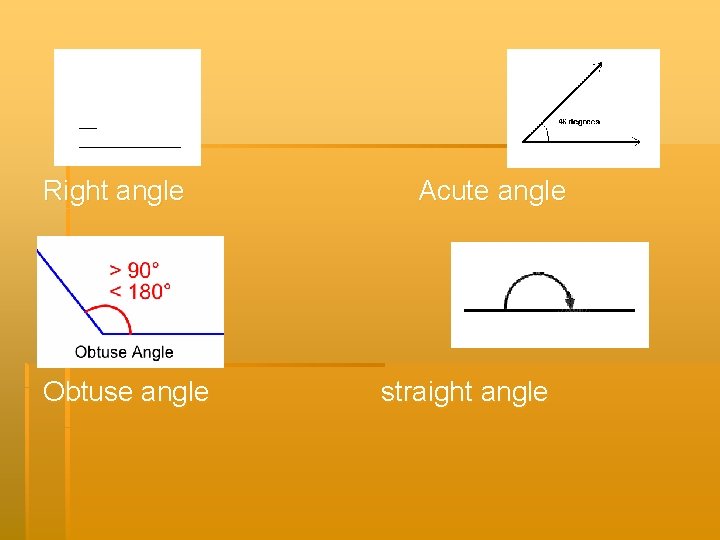
Right angle Obtuse angle Acute angle straight angle
POLYGONS § Polygon: A polygon is a closed figure made up by line segments. § Kinds of polygon: -Regular: It’s a polygon whose sides are all the same length, and whose angles are all the same. -Irregular: It has some of his angles and sides different.
-Concave: A polygon that has one or more interior angles greater than 180°. -Convex: A polygon that has all interior angles less than 180°. -Equilateral: It’s a polygon which has all sides of the same length. -Equiangular: It’s a polygon whose vertex and angles are equal.
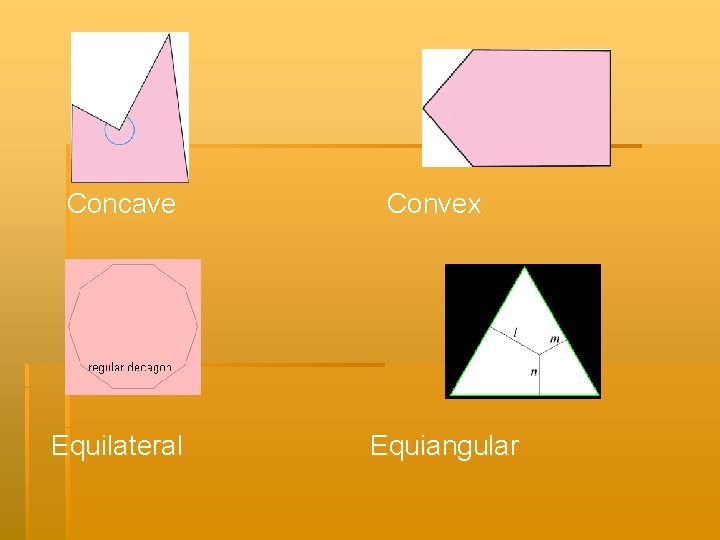
Concave Equilateral Convex Equiangular
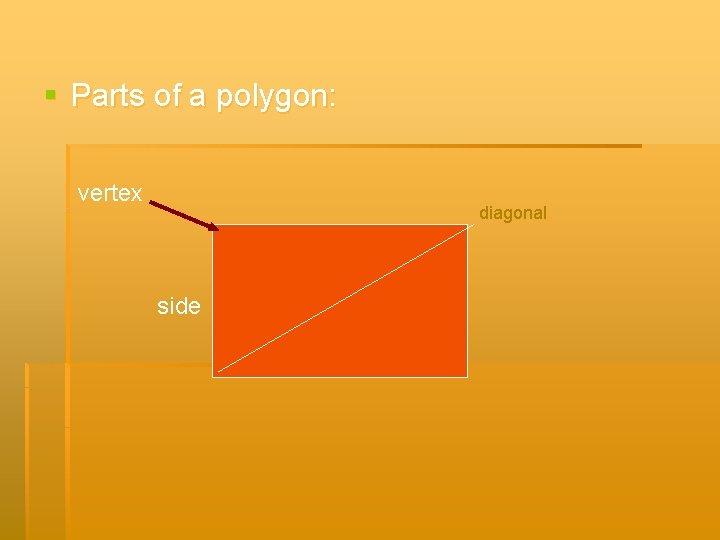
§ Parts of a polygon: vertex diagonal side
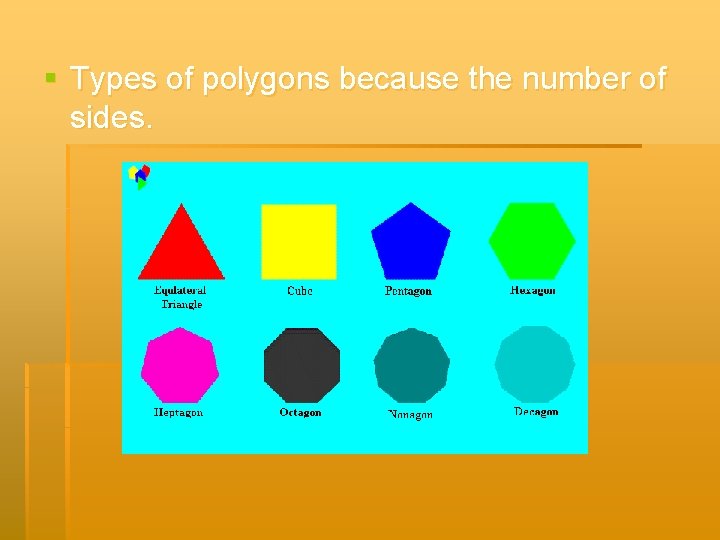
§ Types of polygons because the number of sides.
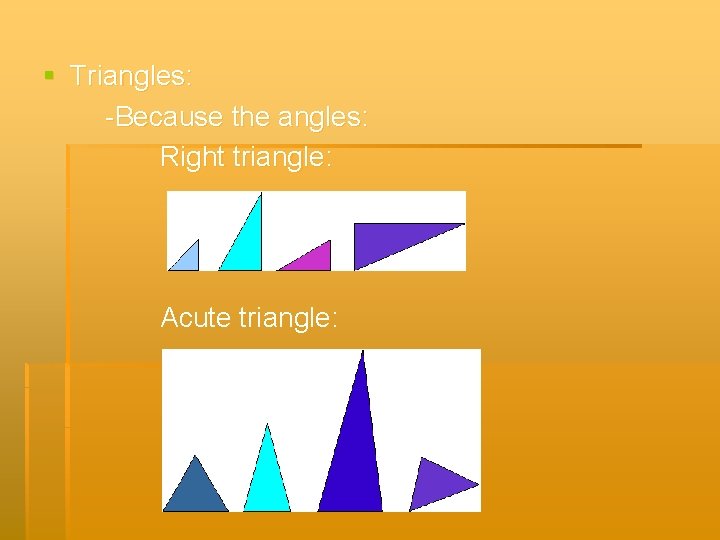
§ Triangles: -Because the angles: Right triangle: Acute triangle:
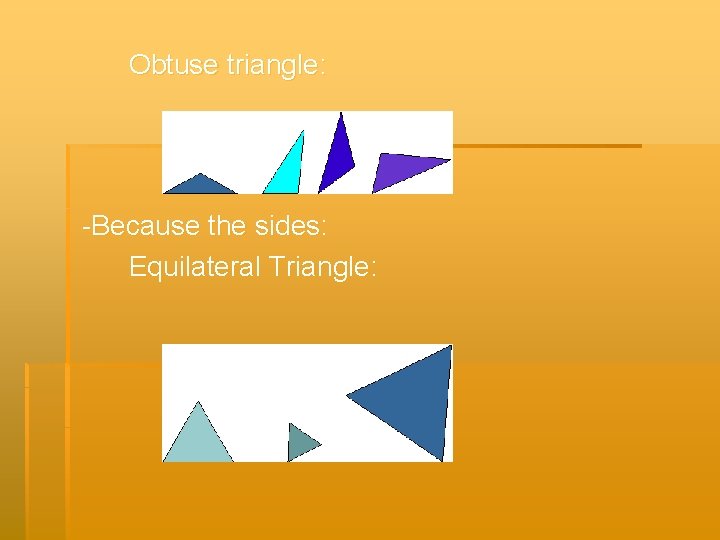
Obtuse triangle: -Because the sides: Equilateral Triangle:
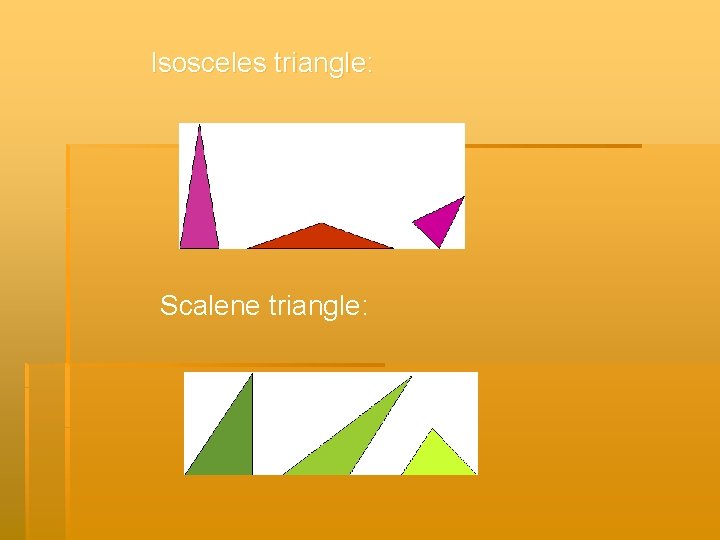
Isosceles triangle: Scalene triangle:
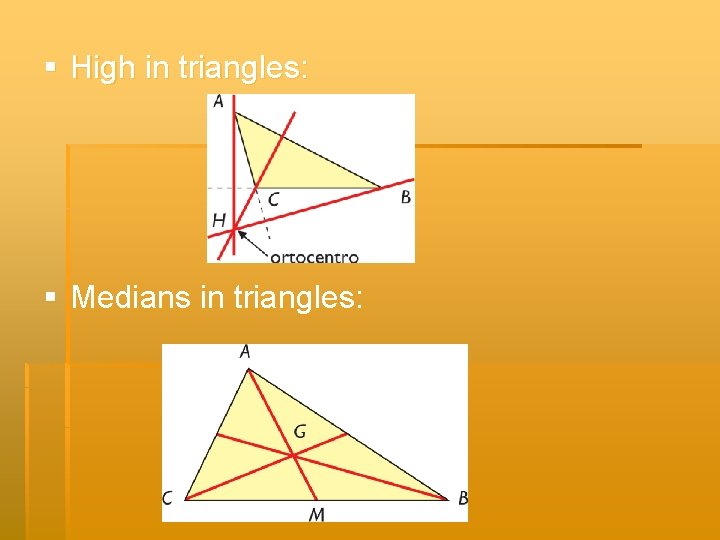
§ High in triangles: § Medians in triangles:
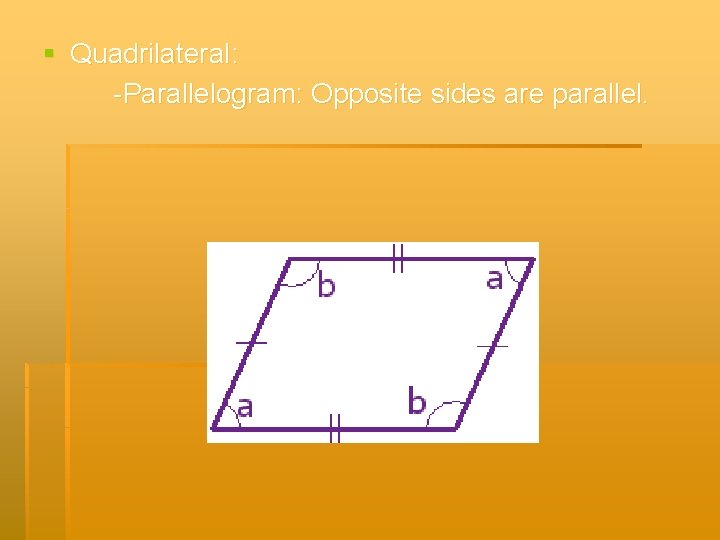
§ Quadrilateral: -Parallelogram: Opposite sides are parallel.
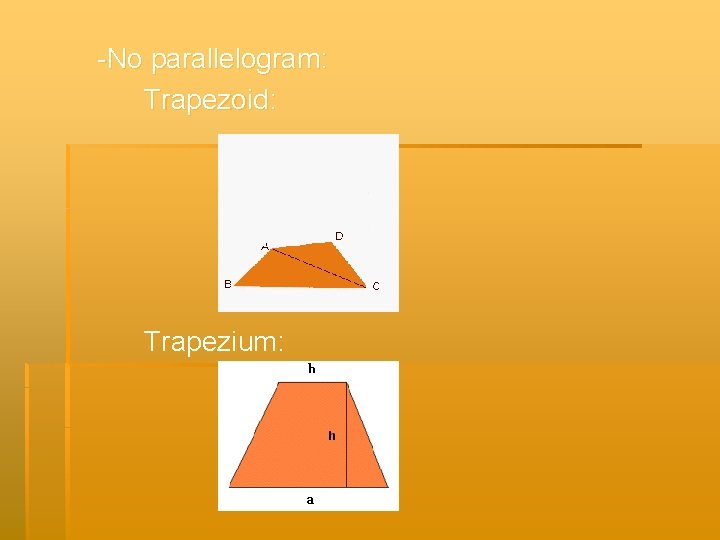
-No parallelogram: Trapezoid: Trapezium:
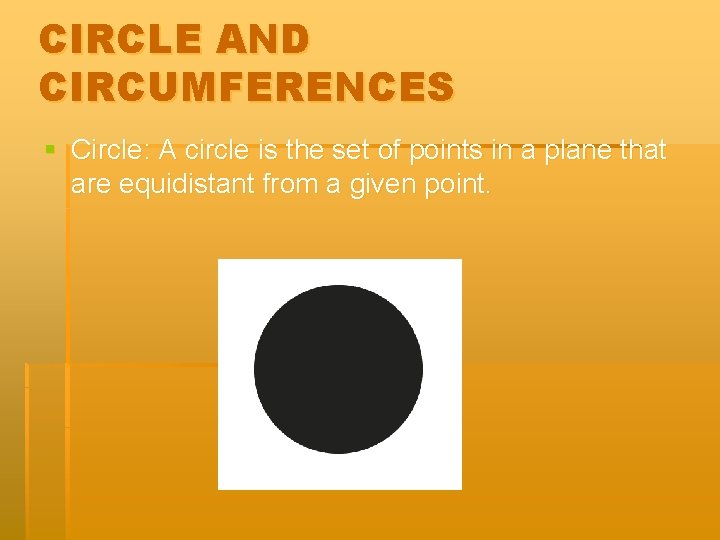
CIRCLE AND CIRCUMFERENCES § Circle: A circle is the set of points in a plane that are equidistant from a given point.
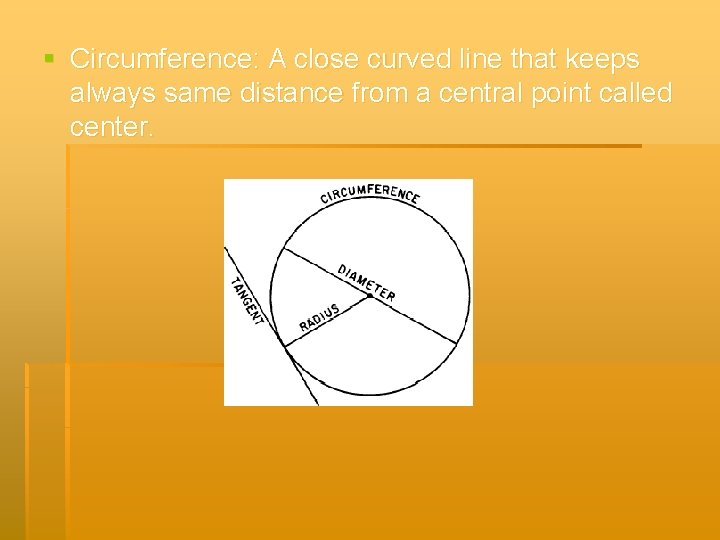
§ Circumference: A close curved line that keeps always same distance from a central point called center.
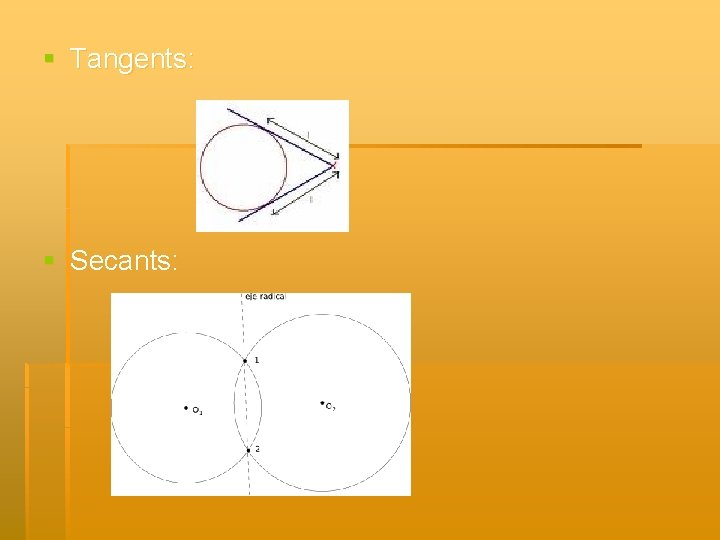
§ Tangents: § Secants:
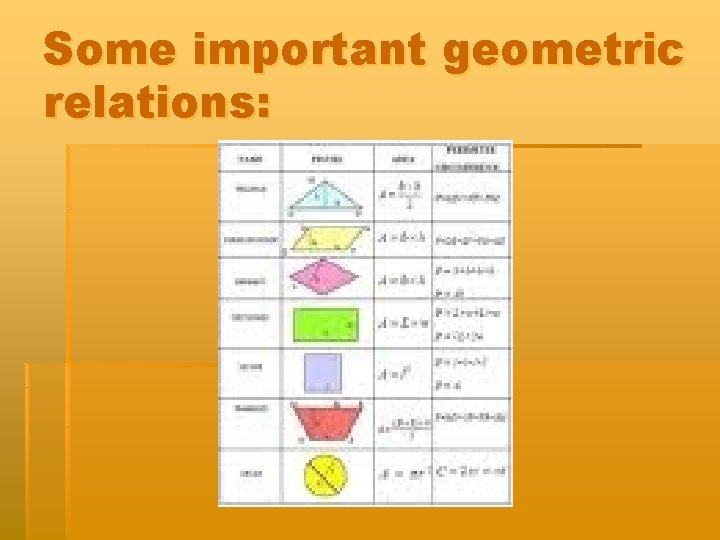
Some important geometric relations:
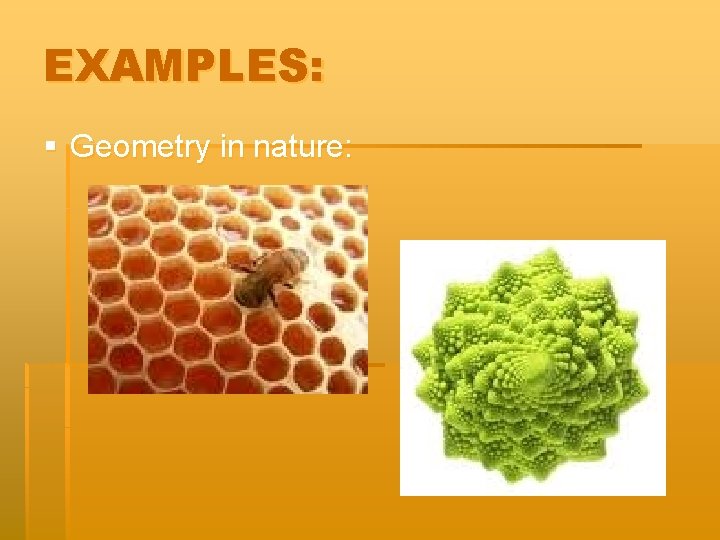
EXAMPLES: § Geometry in nature:
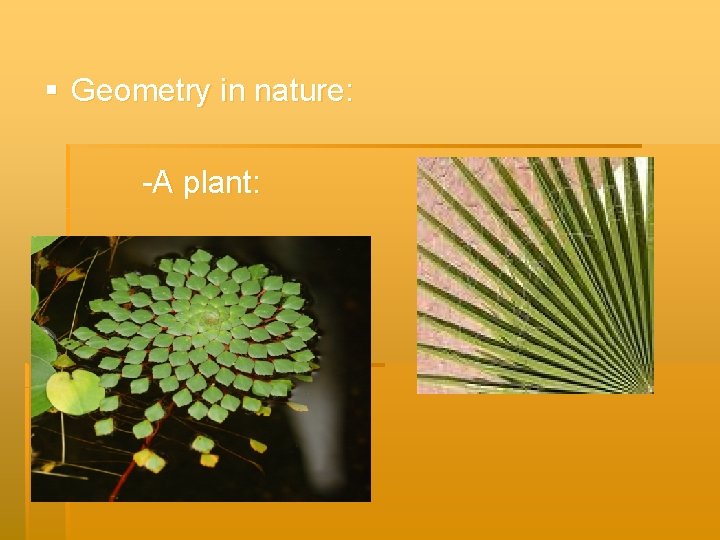
§ Geometry in nature: -A plant:
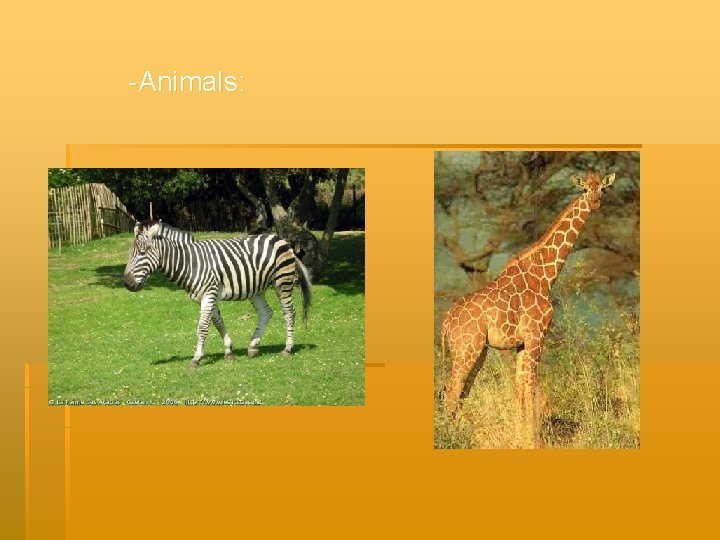
-Animals:
Some important links: § Geometry Articles, Theorems, Problems, and Interactive Illustrations § Geometry § http: //library. thinkquest. org/2647/geometr y/geometry. htm
The end By Yolanda Sánchez Fernández
- Slides: 32