
Geometry Rates of 3 D Mantle Flow in
- Slides: 21
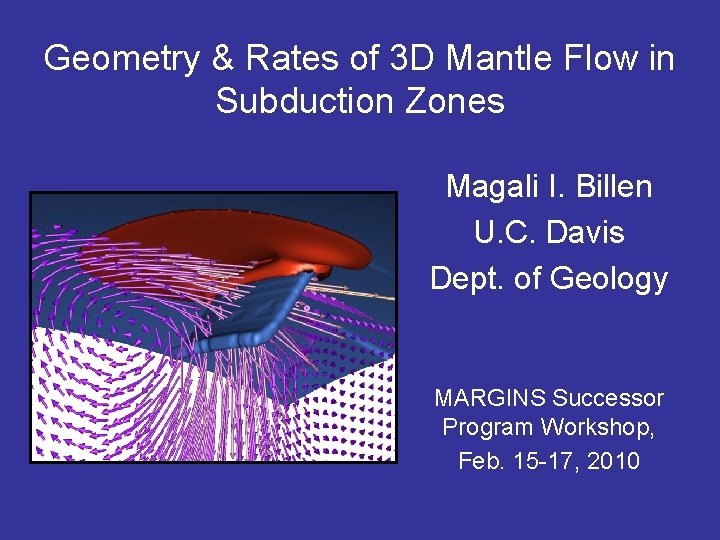
Geometry & Rates of 3 D Mantle Flow in Subduction Zones Magali I. Billen U. C. Davis Dept. of Geology MARGINS Successor Program Workshop, Feb. 15 -17, 2010
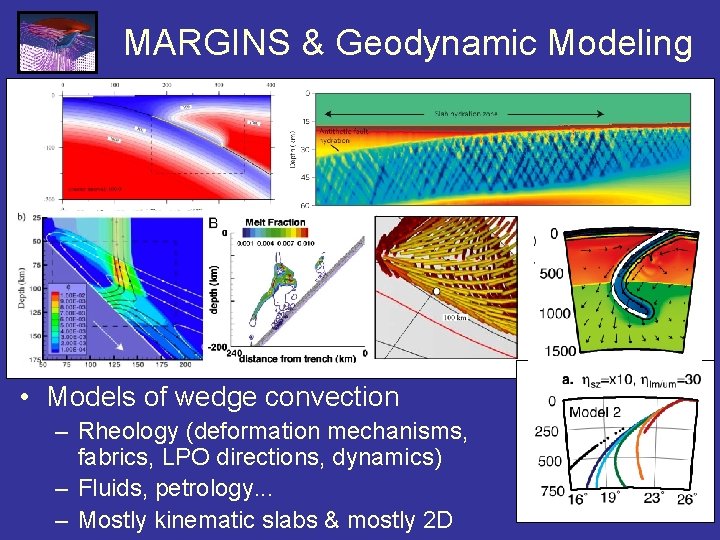
MARGINS & Geodynamic Modeling • Models of wedge convection – Rheology (deformation mechanisms, fabrics, LPO directions, dynamics) – Fluids, petrology. . . – Mostly kinematic slabs & mostly 2 D
How will Geodynamics fit into a MARGINS Successor Program? 1. Develop better tools for. . . – 3 D & time-dependent models – Dynamic slabs (evolving trench & slab geometry) – Coupling & tracking fluid & melt migration flow – Understanding of special processes • ie. , subduction initiation, slab detachment, flat slabs. . . We’re making progress here but it takes time to develop and test the required numerical methods.
How will Geodynamics fit into a MARGINS Successor Program? 2. Integrate modeling with all stages of MARGINS research – Guide deployment of seismic stations, sample collection, etc. . . • Region specific models – Analyze/interpret results from various focus sites • Generic (process-related) & regional models – Integrate & interpret multi-disciplinary observations
Two Illustrative Examples 1. Ridge-Trench Interaction – Ph. D candidate Erin Burkett 2. 3 D Mantle Flow at a Slab Edge – Margarete Jadamec (Ph. D 2009) . . . illustrate two ways in which geodynamic modeling can be even better integrated into a MARGINS successor program.
Ex. 1: Ridge-Trench Interaction Burkett & Billen, JGR 2009
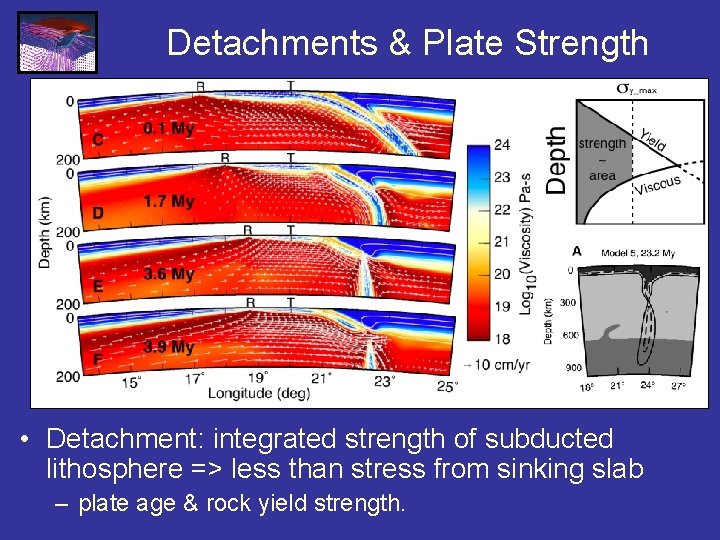
Detachments & Plate Strength • Detachment: integrated strength of subducted lithosphere => less than stress from sinking slab – plate age & rock yield strength.
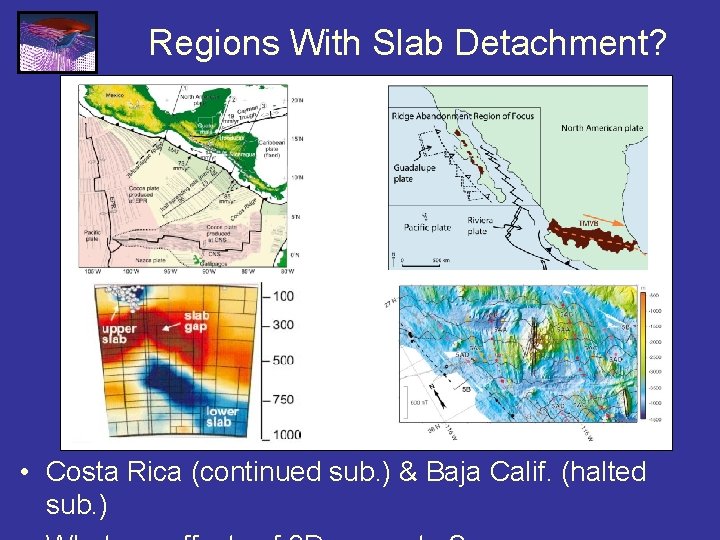
Regions With Slab Detachment? • Costa Rica (continued sub. ) & Baja Calif. (halted sub. )
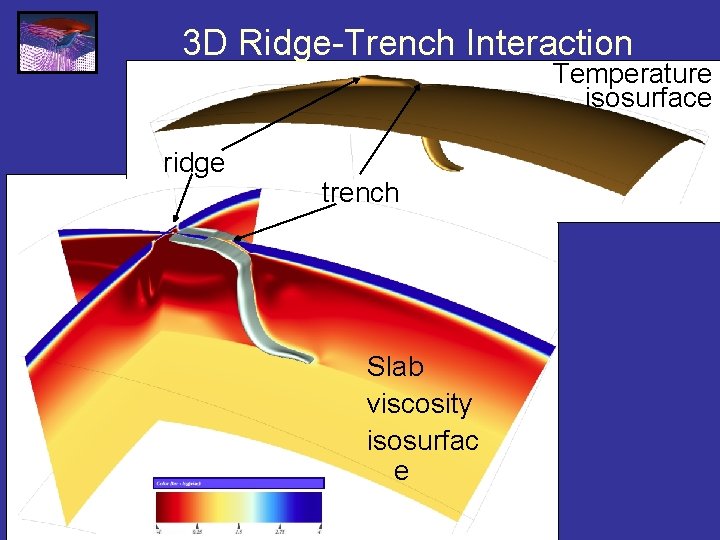
3 D Ridge-Trench Interaction Temperature isosurface ridge trench Slab viscosity isosurfac e
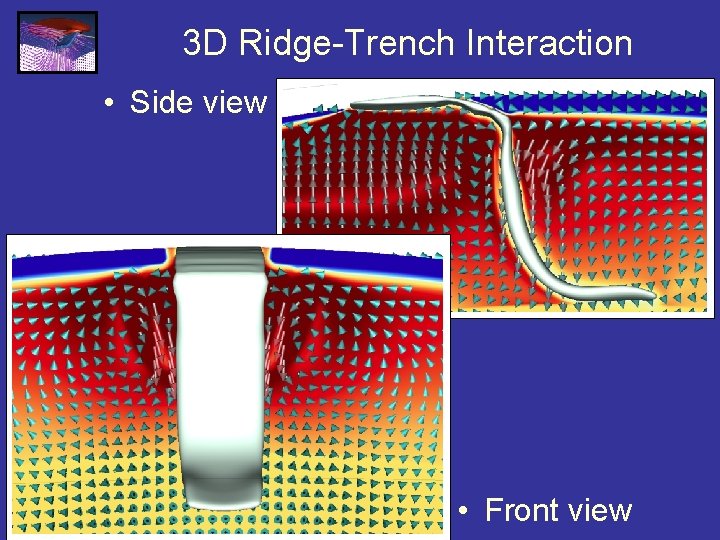
3 D Ridge-Trench Interaction • Side view • Front view
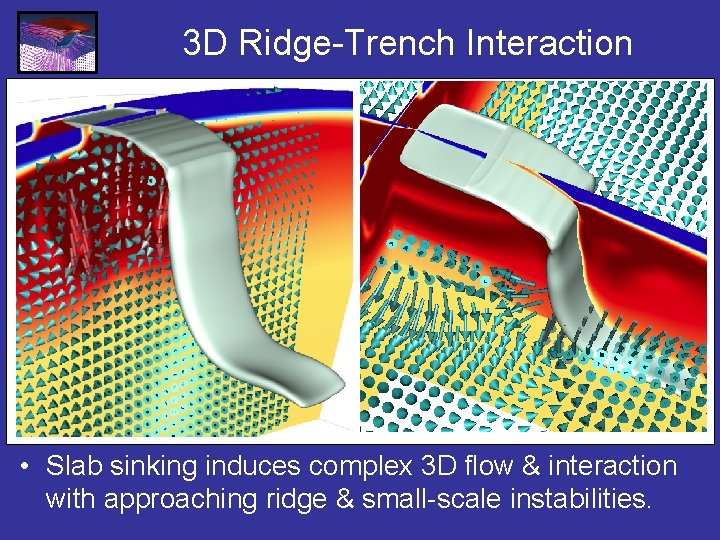
3 D Ridge-Trench Interaction • Slab sinking induces complex 3 D flow & interaction with approaching ridge & small-scale instabilities.
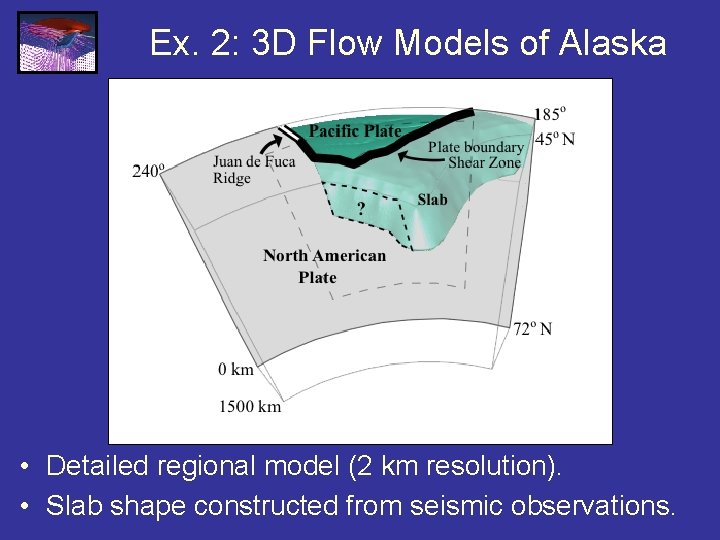
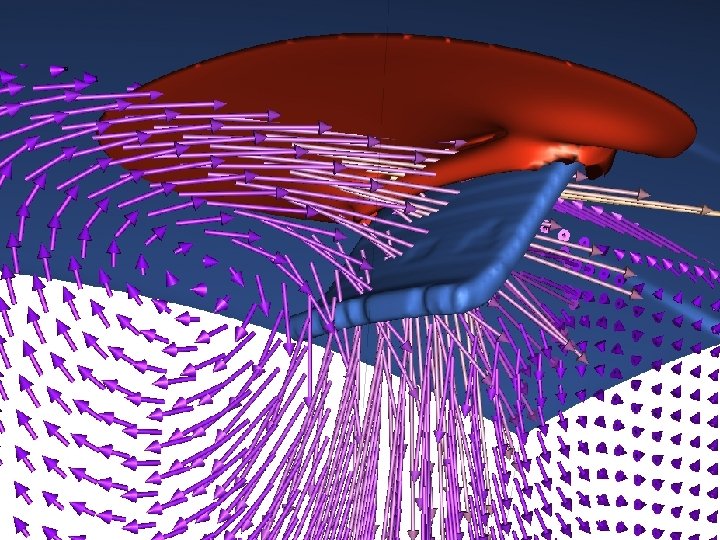
Ex. 2: 3 D Flow Models of Alaska • Detailed regional model (2 km resolution). • Slab shape constructed from seismic observations.
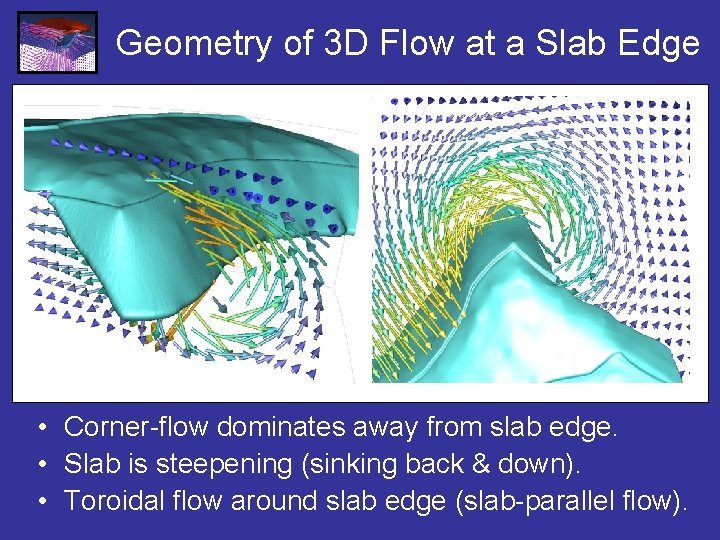
Geometry of 3 D Flow at a Slab Edge • Corner-flow dominates away from slab edge. • Slab is steepening (sinking back & down). • Toroidal flow around slab edge (slab-parallel flow).
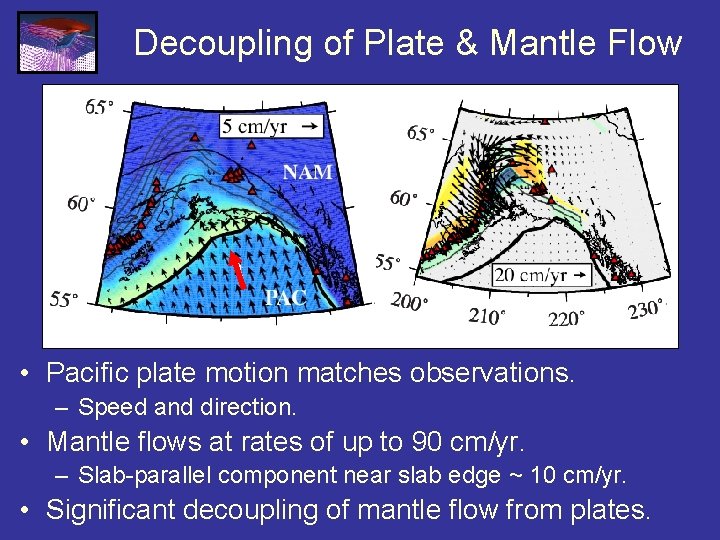
Decoupling of Plate & Mantle Flow • Pacific plate motion matches observations. – Speed and direction. • Mantle flows at rates of up to 90 cm/yr. – Slab-parallel component near slab edge ~ 10 cm/yr. • Significant decoupling of mantle flow from plates.
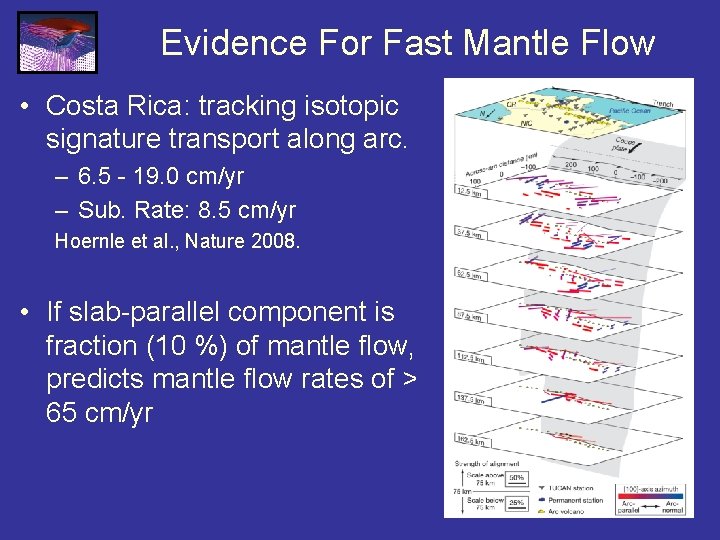
Evidence For Fast Mantle Flow • Costa Rica: tracking isotopic signature transport along arc. – 6. 5 - 19. 0 cm/yr – Sub. Rate: 8. 5 cm/yr Hoernle et al. , Nature 2008. • If slab-parallel component is fraction (10 %) of mantle flow, predicts mantle flow rates of > 65 cm/yr
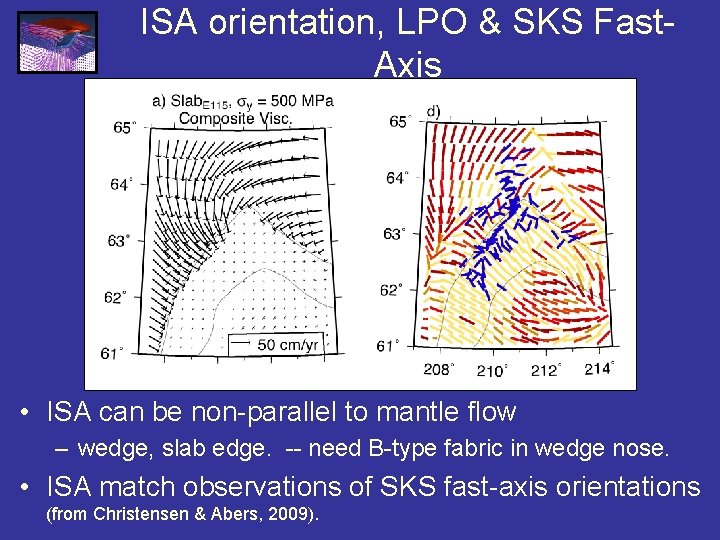
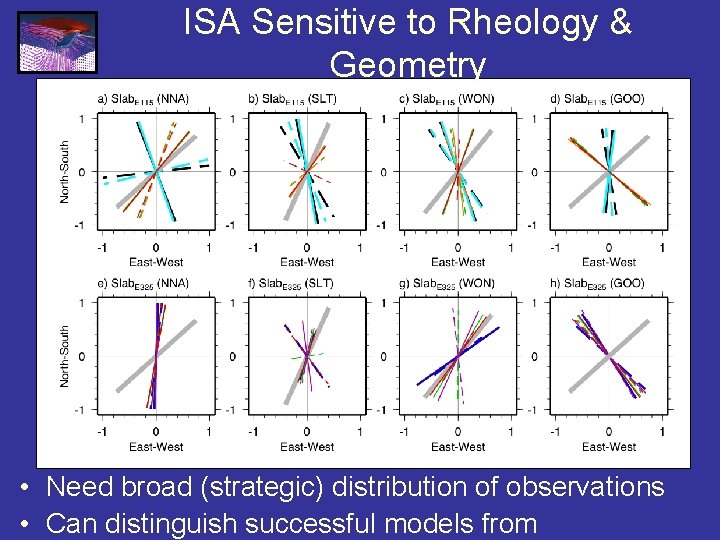
ISA orientation, LPO & SKS Fast. Axis • ISA can be non-parallel to mantle flow – wedge, slab edge. -- need B-type fabric in wedge nose. • ISA match observations of SKS fast-axis orientations (from Christensen & Abers, 2009).
ISA Sensitive to Rheology & Geometry • Need broad (strategic) distribution of observations • Can distinguish successful models from
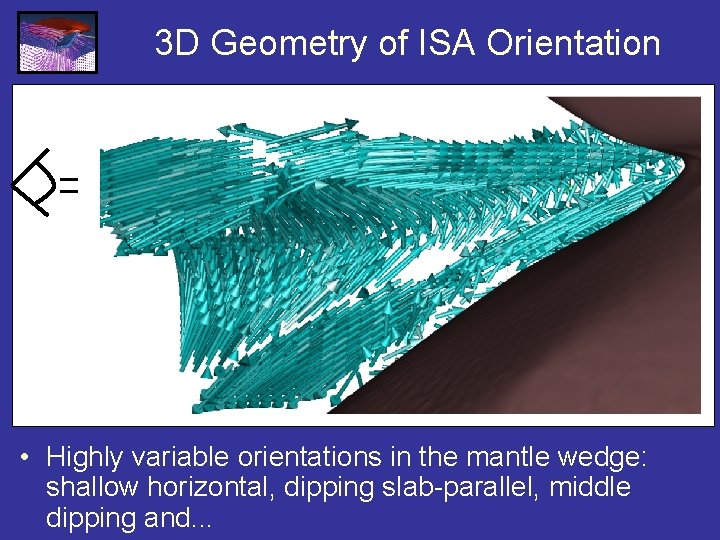
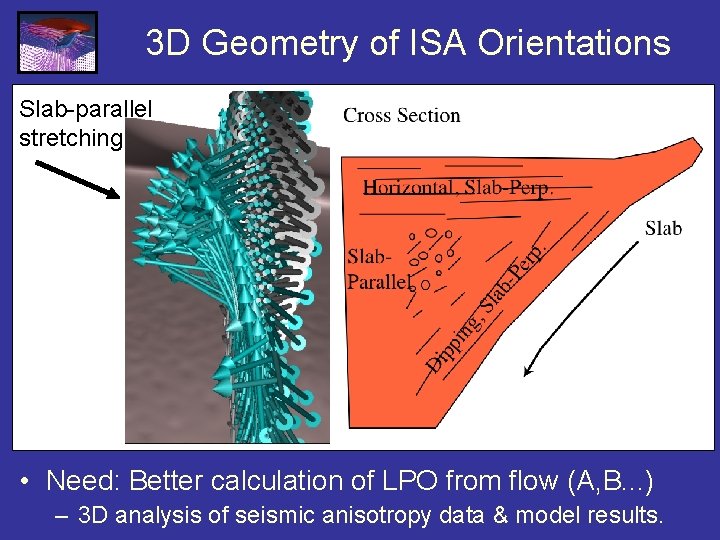
3 D Geometry of ISA Orientation • Highly variable orientations in the mantle wedge: shallow horizontal, dipping slab-parallel, middle dipping and. . .
3 D Geometry of ISA Orientations Slab-parallel stretching • Need: Better calculation of LPO from flow (A, B. . . ) – 3 D analysis of seismic anisotropy data & model results.
Conclusions • Many opportunities to use dynamic modeling – to integrate observations & test hypothesis, – to help plan other experiments & observations. • Need to create a strategy for development of better numerical methods for future MARGINS sceince. – What tools do we need most now? – How do we create these tool in tandem with collection & interpretation of data (field or laboratory-based)? – How do we leverage work being done by CIG (Computational Infrastructure for Geodynamics)?