
GEOMETRY Janine Mc Intosh janineamsi org au Michael
- Slides: 157
GEOMETRY Janine Mc. Intosh janine@amsi. org. au Michael O’Connor: moconnor@amsi. org. au
• The Improving Mathematics Education in Schools (TIMES) Project • The Versatile Circle • A conversation about the properties of 2 D shapes and 3 D objects With thanks to Peter Carmichael, Principal Project Officer - QCAR Mathematics, Nambour
Geometry 4 - 9 Arithmetic has numbers as its basic object of study, in plane geometry points, lines and circles are the basic building blocks. Geometry is used to model the world around us. Classifying and studying the properties of geometric objects gives students an opportunity to develop geometric intuition and also to learn how to construct logical arguments and make deductions in a setting which is, for the most part, independent of number. In this session we will take a look at the rich history of geometry, investigate some ways to develop ideas with children and link to some classroom activities.
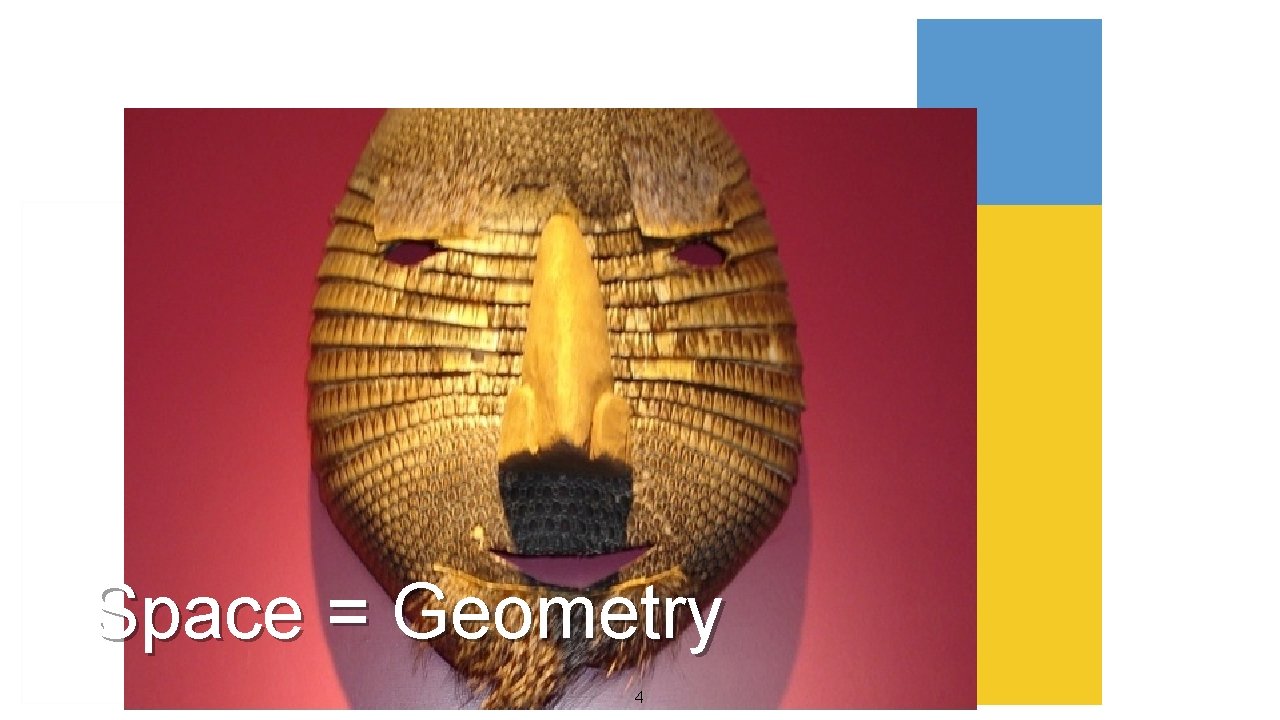
Space = Geometry 4
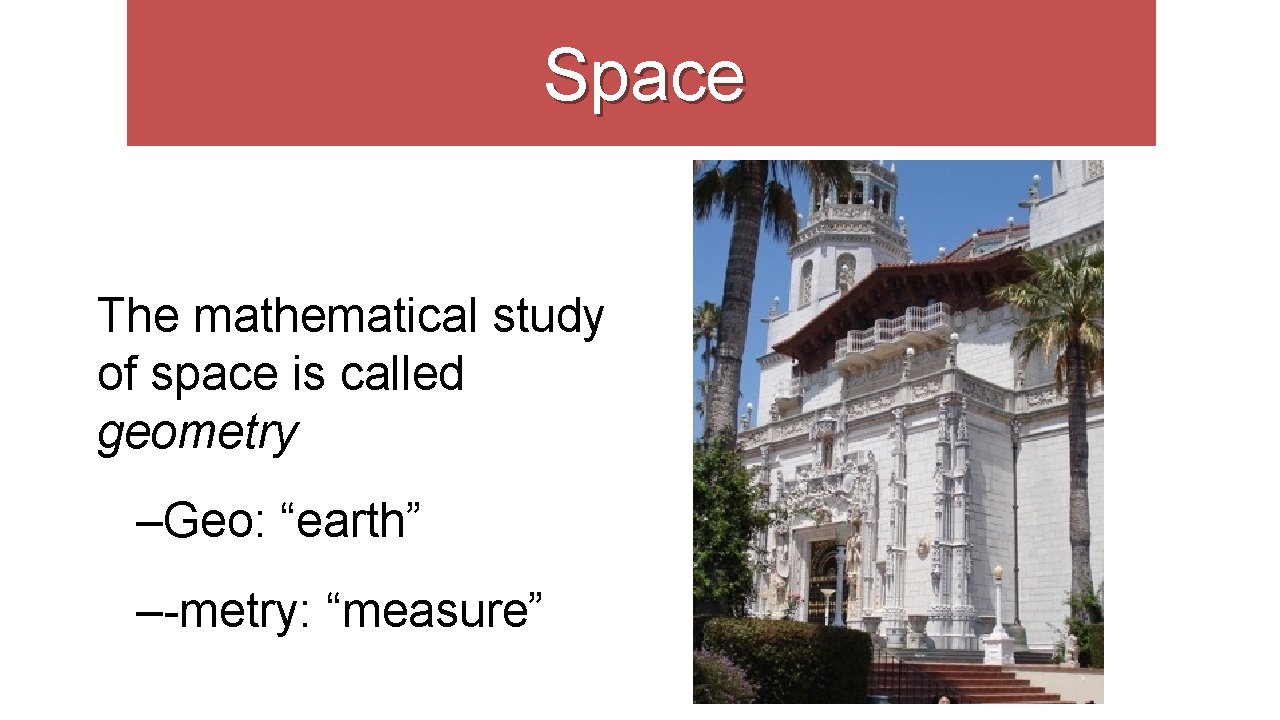
Space The mathematical study of space is called geometry –Geo: “earth” –-metry: “measure”
Space Emphasis is on making links between twodimensional shapes and three-dimensional objects in the physical world and their abstract geometrical representations, leading to an understanding of their properties and how they can be used to solve practical or aesthetic problems
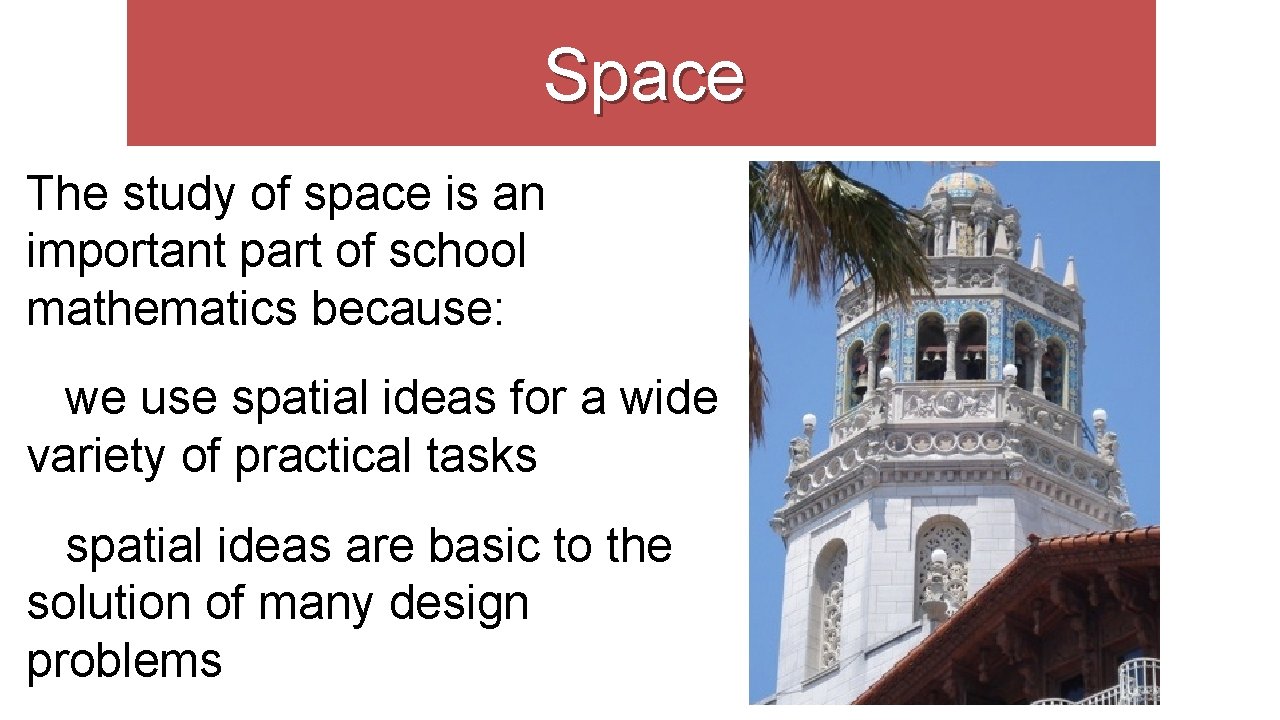
Space The study of space is an important part of school mathematics because: we use spatial ideas for a wide variety of practical tasks spatial ideas are basic to the solution of many design problems
Geometry Prior knowledge • The use of compasses and rulers and the careful drawing of geometrical figures. • Types of angles, including at least right angles, acute angles, obtuse angles and reflex angles. • Triangles, including an informal introduction to isosceles and equilateral triangles. • Quadrilaterals, including an informal introduction to squares, rectangles, parallelograms, trapezia and rhombuses. • Informal experience with translations, reflections, rotations and enlargements, and with symmetry in the context of activities such as folding an isosceles triangle, rectangle or rhombus.
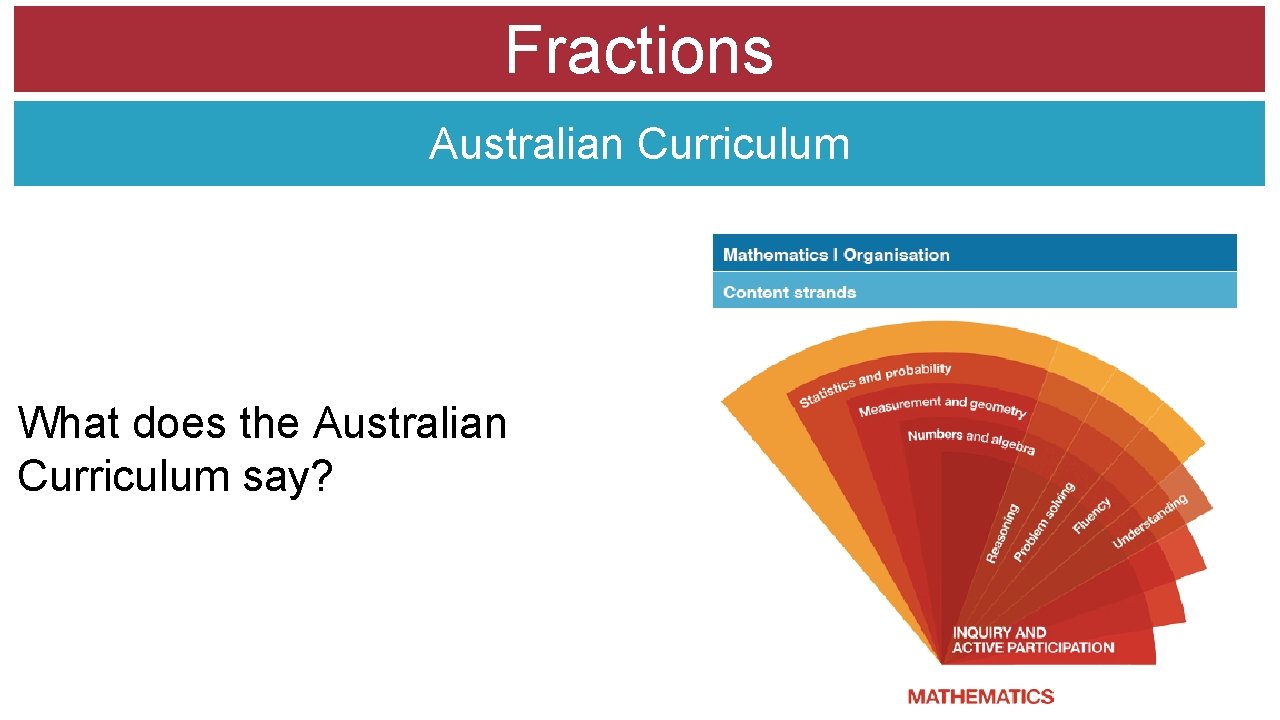
Fractions Australian Curriculum What does the Australian Curriculum say?
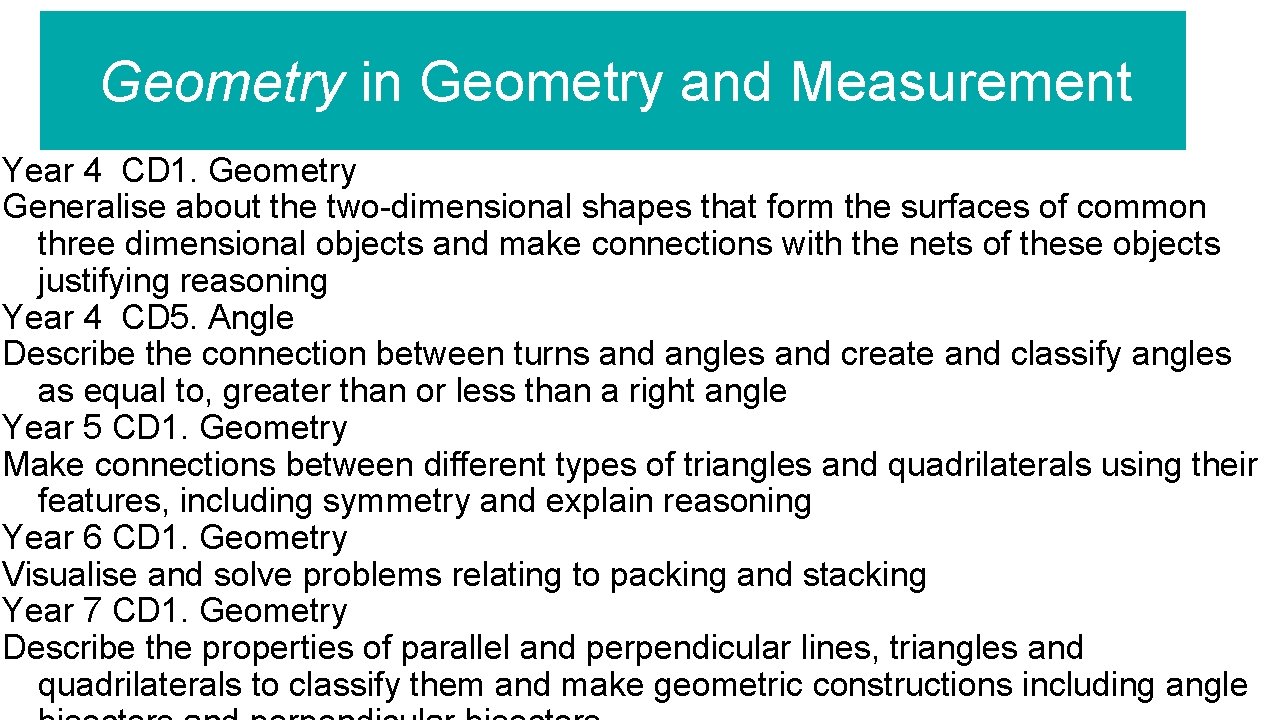
Geometry in Geometry and Measurement Year 4 CD 1. Geometry Generalise about the two-dimensional shapes that form the surfaces of common three dimensional objects and make connections with the nets of these objects justifying reasoning Year 4 CD 5. Angle Describe the connection between turns and angles and create and classify angles as equal to, greater than or less than a right angle Year 5 CD 1. Geometry Make connections between different types of triangles and quadrilaterals using their features, including symmetry and explain reasoning Year 6 CD 1. Geometry Visualise and solve problems relating to packing and stacking Year 7 CD 1. Geometry Describe the properties of parallel and perpendicular lines, triangles and quadrilaterals to classify them and make geometric constructions including angle
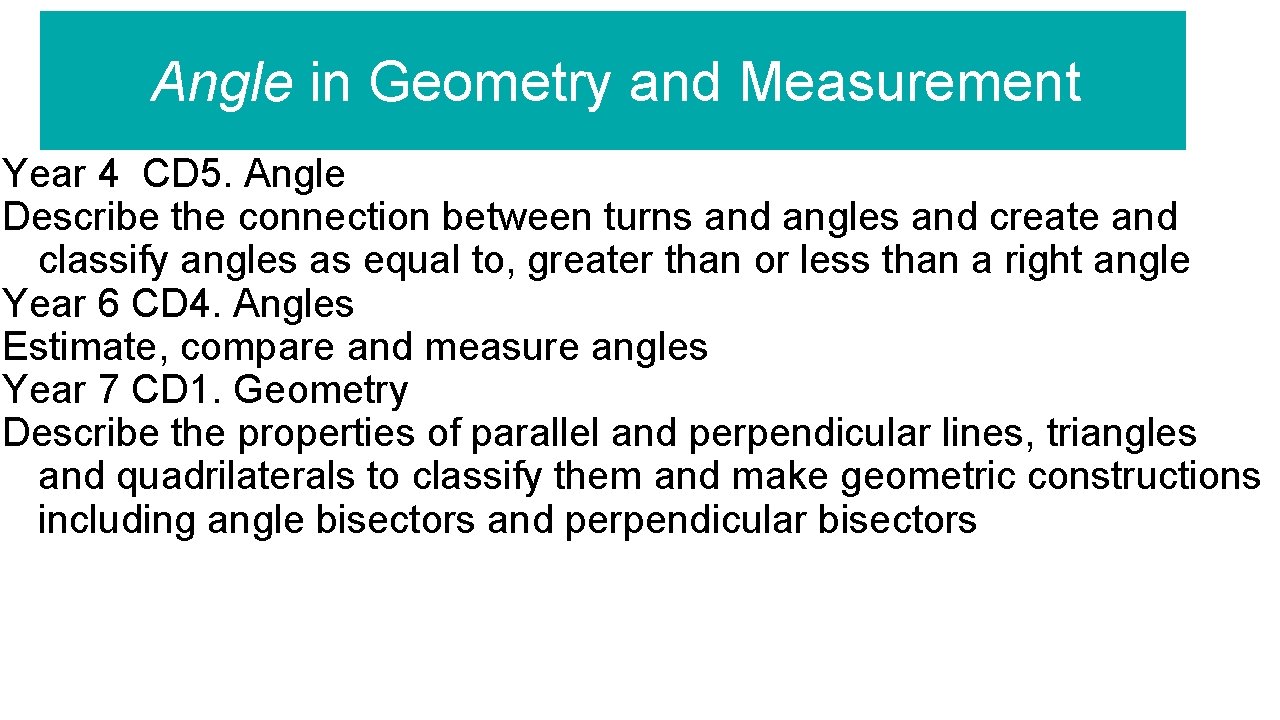
Angle in Geometry and Measurement Year 4 CD 5. Angle Describe the connection between turns and angles and create and classify angles as equal to, greater than or less than a right angle Year 6 CD 4. Angles Estimate, compare and measure angles Year 7 CD 1. Geometry Describe the properties of parallel and perpendicular lines, triangles and quadrilaterals to classify them and make geometric constructions including angle bisectors and perpendicular bisectors
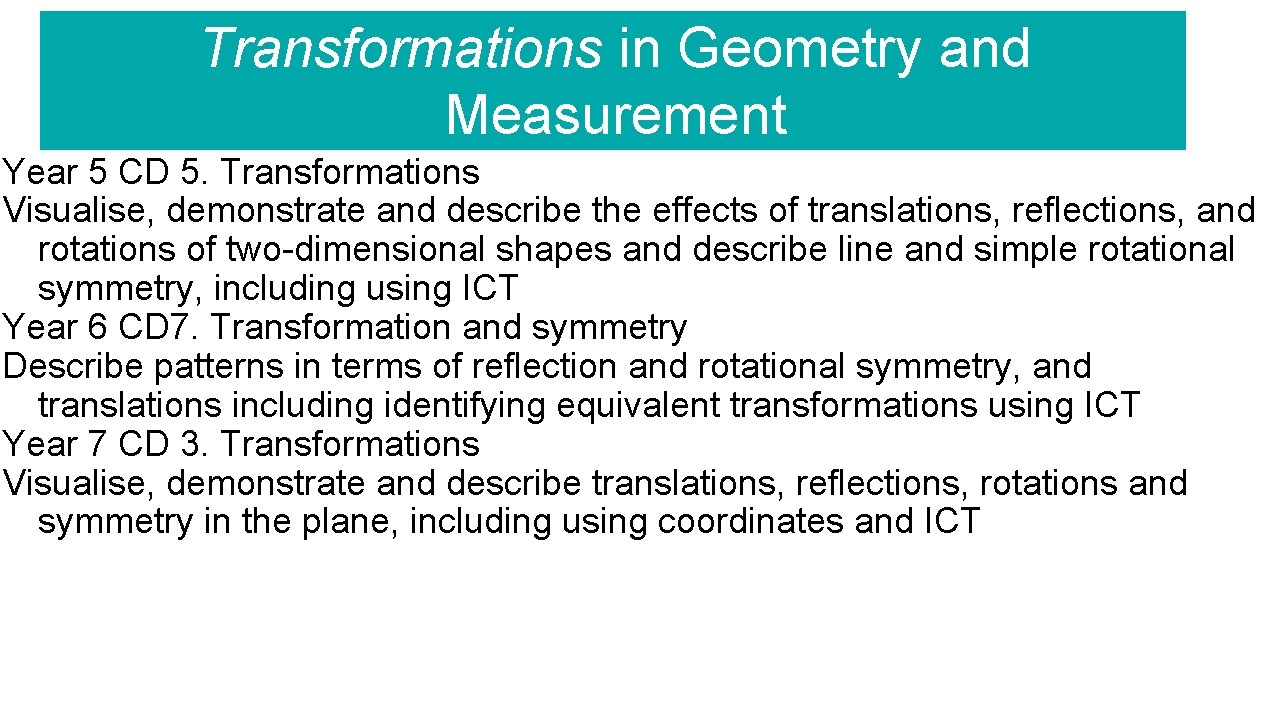
Transformations in Geometry and Measurement Year 5 CD 5. Transformations Visualise, demonstrate and describe the effects of translations, reflections, and rotations of two-dimensional shapes and describe line and simple rotational symmetry, including using ICT Year 6 CD 7. Transformation and symmetry Describe patterns in terms of reflection and rotational symmetry, and translations including identifying equivalent transformations using ICT Year 7 CD 3. Transformations Visualise, demonstrate and describe translations, reflections, rotations and symmetry in the plane, including using coordinates and ICT
Geometry in Geometry and Measurement Year 8 CD 1. Congruence Identify properties and conditions for congruence of plane figures, and use coordinates to describe transformations Year 8 CD 2. Measurement formulas Generalise from the formulas for perimeter and area of triangles and rectangles to investigate relationships between the perimeter and area of special quadrilaterals and volumes of triangular prisms and use these to solve problems Year 8 CD 3. Circles Investigate the relationship between features of circles such as circumference, area, radius and diameter and generalise these to solve problems involving circumference and area Year 8 CD 4. Congruence Explain properties for congruence of triangles and apply these to investigate properties of quadrilaterals
Geometry in Geometry and Measurement Year 9 CD 1. Geometry Investigate properties of polygons and circles, including lines and angles, forming generalisations, explaining reasoning and solving problems Year 9 CD 2. Pythagoras Solve problems involving right angled triangles using Pythagoras’ theorem and trigonometric ratios and justify reasoning Year 9 CD 3. Similarity Apply transformations to triangles to explain similarity and congruence, to establish geometric properties Year 9 CD 4. Circles Solve problems involving circumference and area of circles and part circles, and the surface area and volume of cylinders and composite solids
Geometry Why teach it? Just as arithmetic has numbers as its basic object of study, so points, lines and circles are the basic building blocks of plane geometry. Geometry gives an opportunity for students to develop their geometric intuition, which has applications in many areas of life, and also to learn how to construct logical arguments and make deductions in a setting which is, for the most part, independent of number.
Why teach it? Why teach geometry? • Applications • Accessibility to students who prefer pictures • Encourages flexibility • Historical importance • Central role in mathematics • Logical structure • The surprise of results • It is in the syllabus
Why teach it? What are the issues when teaching geometry?
Why teach it? What are the issues when teaching geometry? • Connected logical arguments • Proof • Statements and converses • Necessary and sufficient conditions Sounds like working mathematically…
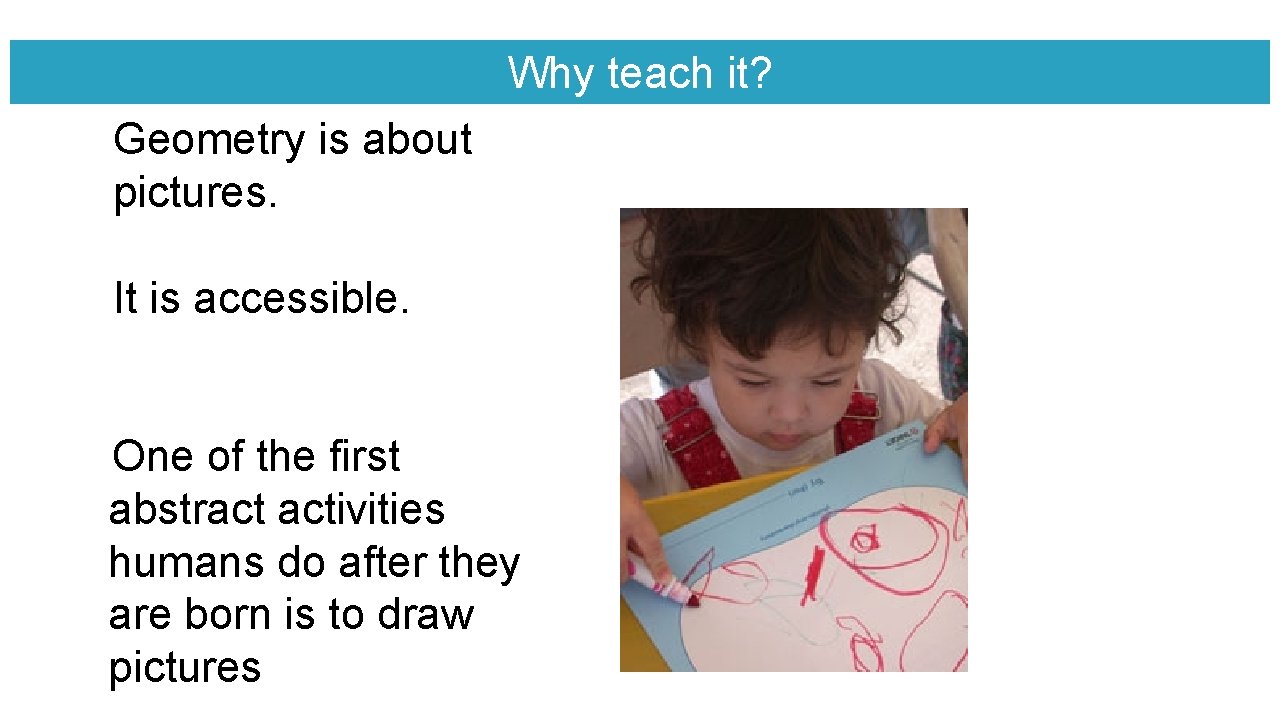
Why teach it? Geometry is about pictures. It is accessible. One of the first abstract activities humans do after they are born is to draw pictures
Why teach it? Pictures are helpful to people who prefer nonverbal learning. Geometry can make other areas of mathematics more accessible. For example: algebra
Why teach it? Geometry helps us develop flexibility in our understanding through application of fundamental knowledge.
Geometry
Geometry
Geometry Why teach it? Geometry is used to model the world around us. A view of the roofs of houses quickly reveals triangles, trapezia and rectangles, while tiling patterns in pavements and bathrooms use hexagons, pentagons, triangles and squares. Builders, tilers, architects, graphic designers and web designers routinely use geometric ideas in their work. Classifying such geometric objects and studying their properties are very important. Geometry also has many applications in art.
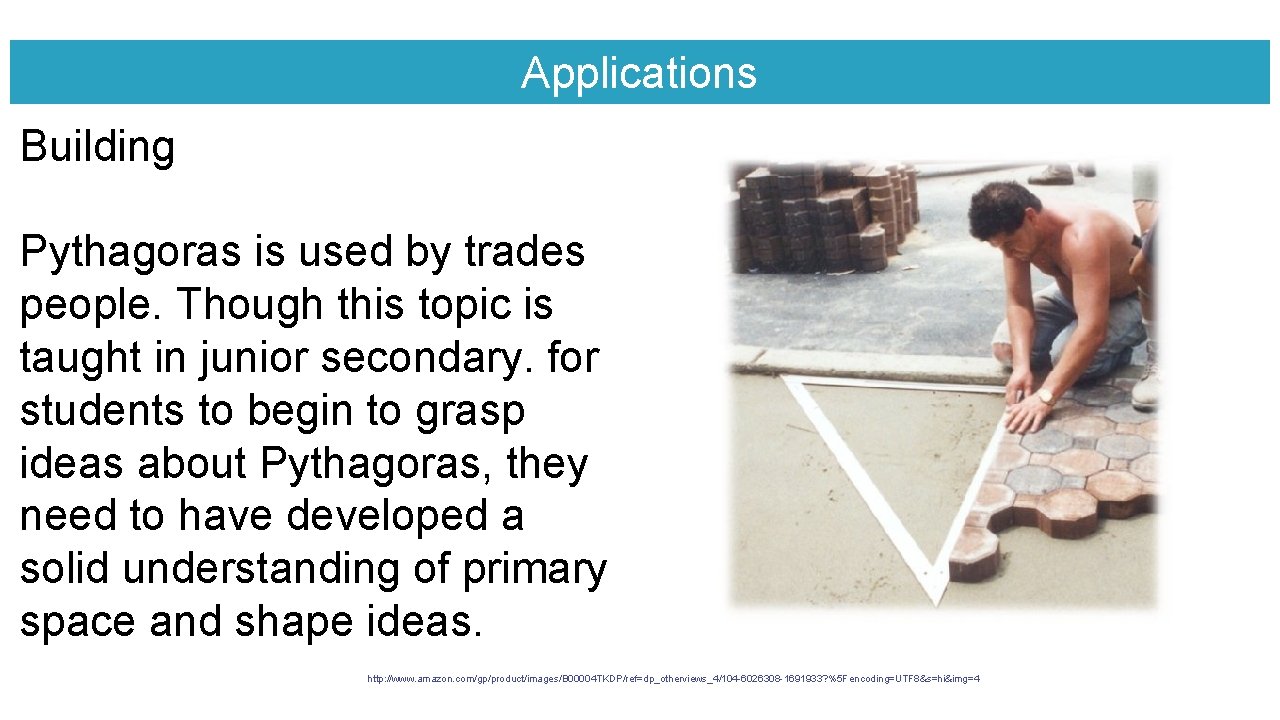
Applications Building Pythagoras is used by trades people. Though this topic is taught in junior secondary. for students to begin to grasp ideas about Pythagoras, they need to have developed a solid understanding of primary space and shape ideas. http: //www. amazon. com/gp/product/images/B 00004 TKDP/ref=dp_otherviews_4/104 -6026308 -1691933? %5 Fencoding=UTF 8&s=hi&img=4
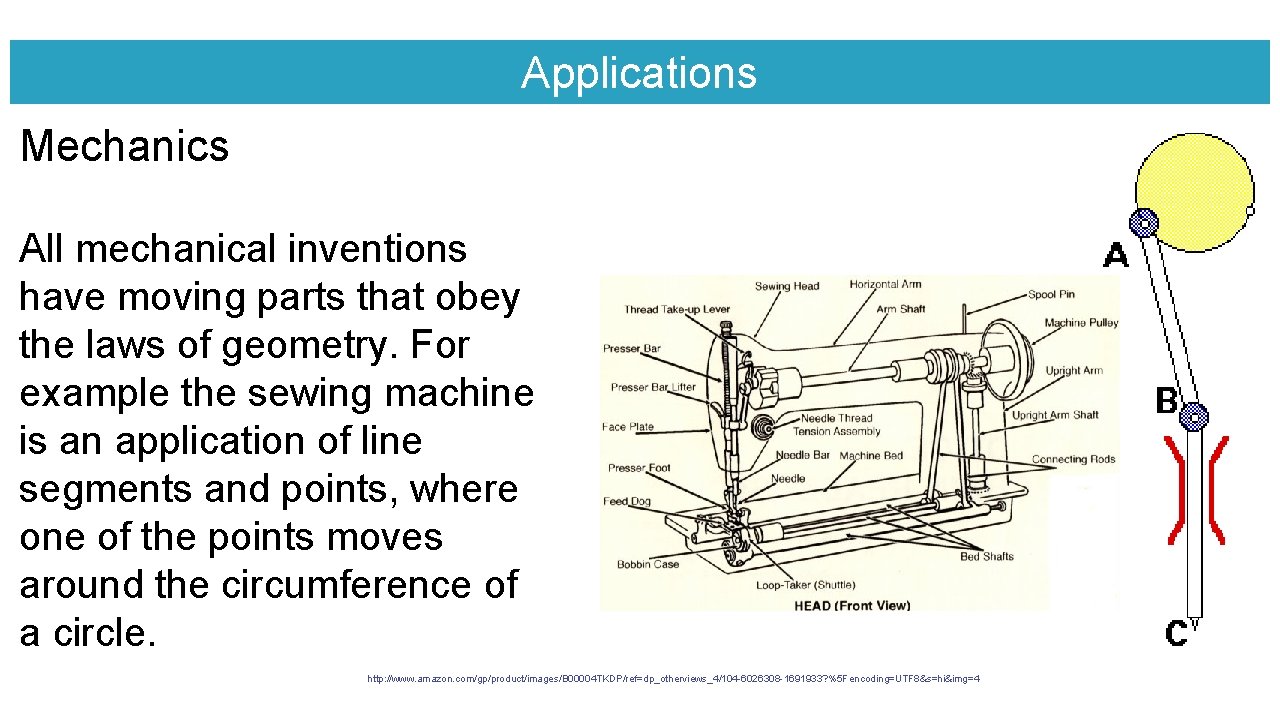
Applications Mechanics All mechanical inventions have moving parts that obey the laws of geometry. For example the sewing machine is an application of line segments and points, where one of the points moves around the circumference of a circle. http: //www. amazon. com/gp/product/images/B 00004 TKDP/ref=dp_otherviews_4/104 -6026308 -1691933? %5 Fencoding=UTF 8&s=hi&img=4
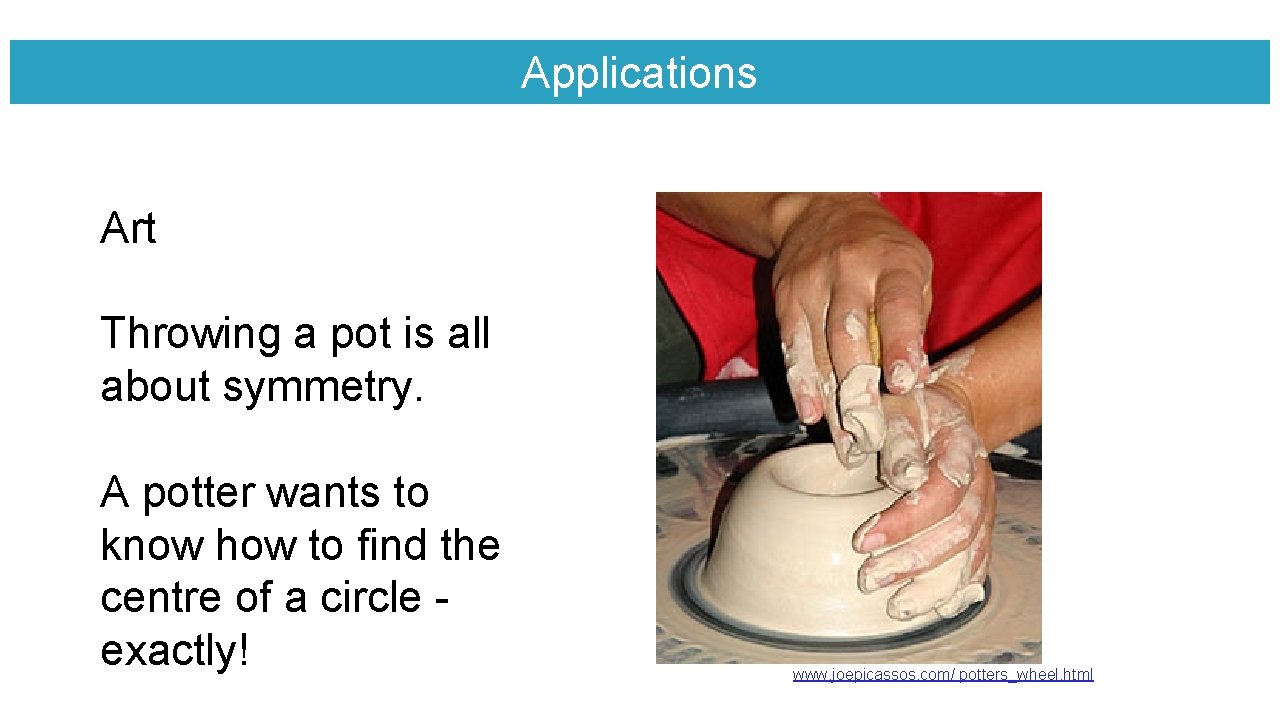
Applications Art Throwing a pot is all about symmetry. A potter wants to know how to find the centre of a circle - exactly! www. joepicassos. com/ potters_wheel. html
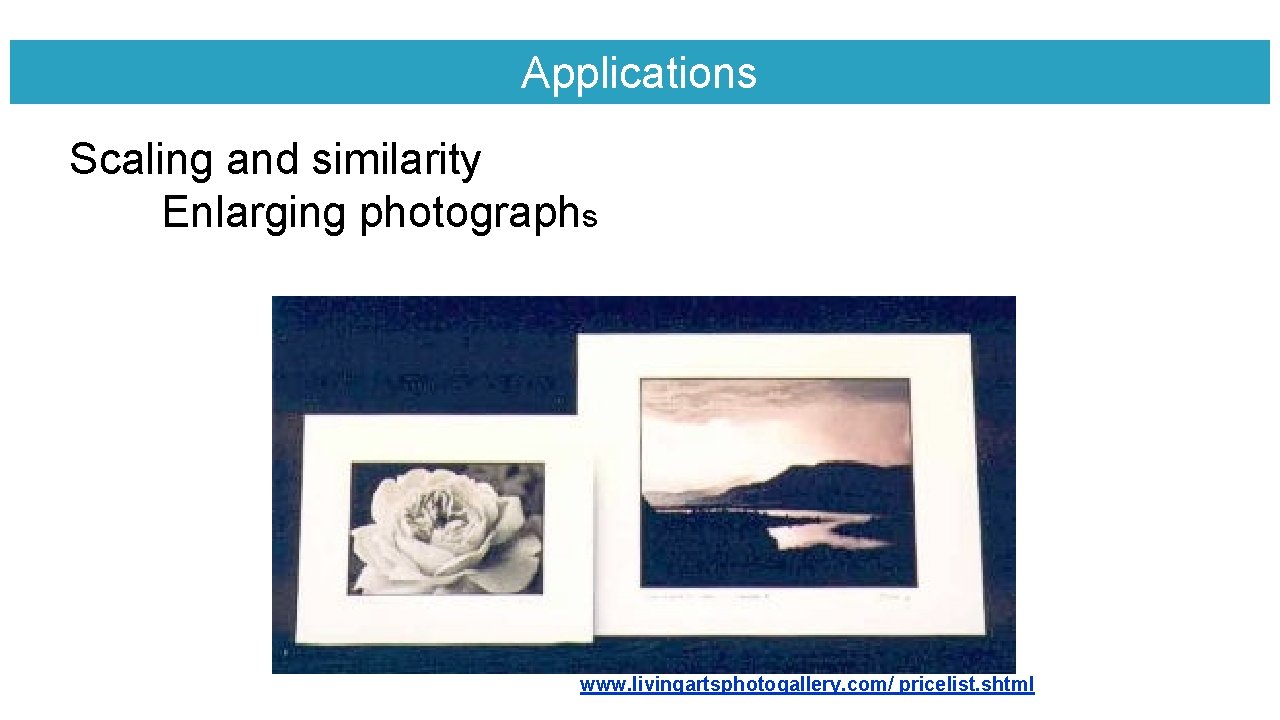
Applications Scaling and similarity Enlarging photographs www. livingartsphotogallery. com/ pricelist. shtml
Applications A Real Estate Agent once asked a mathematics department how to calculate the area of a block of land knowing only the length of the four sides. Can this be done? www. tarapolley. com/ Sellingyourownhome
Applications • • Land money: the Toorak example How much is a strip of land one foot wide down the length of a property worth?
History of Geometry All the classical civilisations – Egypt, Babylon, India and China had a practical geometry but none treated geometry as a deductive science.
History of Geometry The papyri, clay tablets and other written material that have come to us invariably state problems in numbers and solve them by recipes.
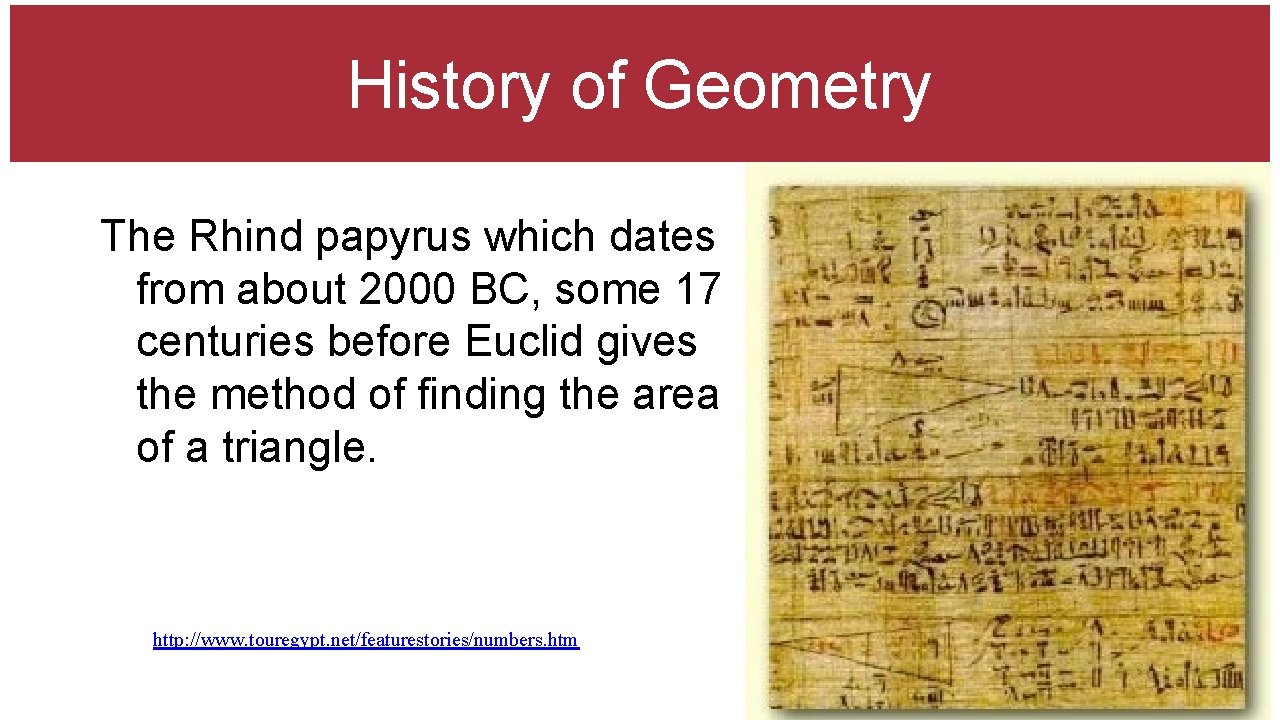
History of Geometry The Rhind papyrus which dates from about 2000 BC, some 17 centuries before Euclid gives the method of finding the area of a triangle. http: //www. touregypt. net/featurestories/numbers. htm
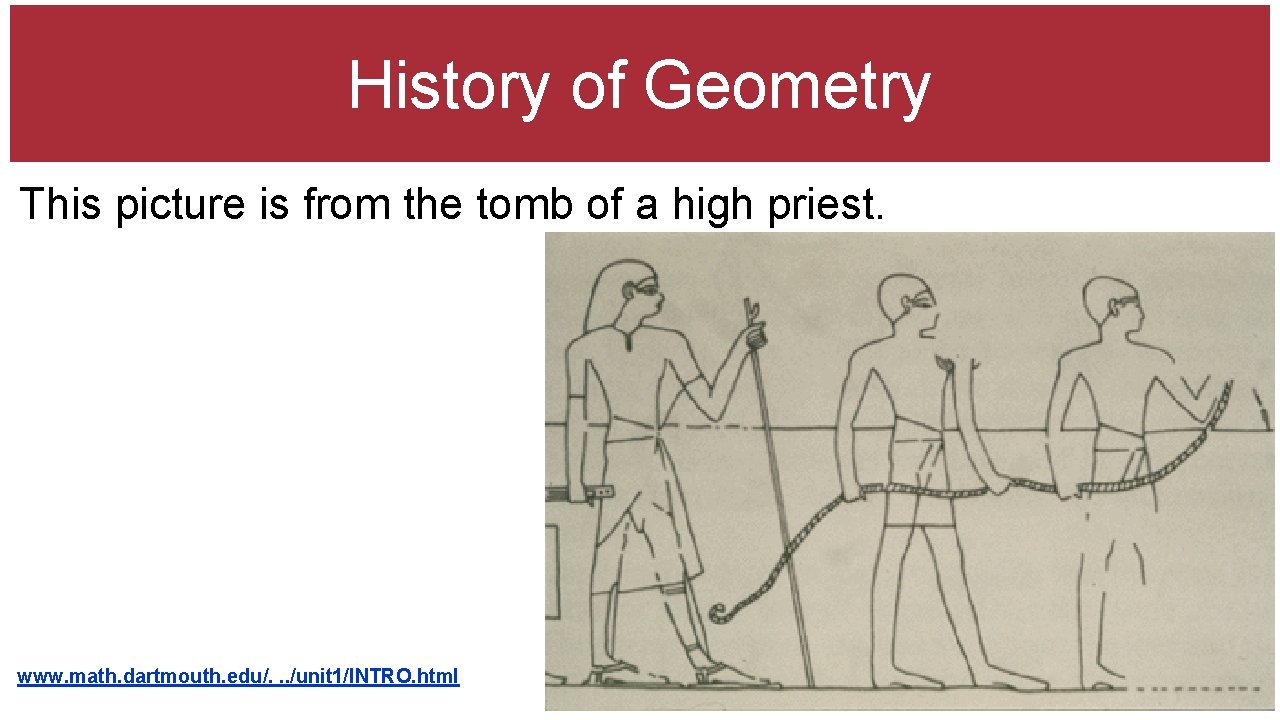
History of Geometry In Egypt, the rope pullers were important members of Egyptian society. They used ropes to form rectangular shapes and right angled triangles.
History of Geometry This picture is from the tomb of a high priest. www. math. dartmouth. edu/. . . /unit 1/INTRO. html
History of Geometry It took 1500 years before the Greeks devised a logical system that enabled them to demonstrate, on very general assumptions many of the geometric results which had been used in special cases by the earlier civilisations. Students should not become impatient if they do not immediately understand the point of geometrical argument. Entire civilisations missed the point altogether.
History of Geometry Euclid’s Elements was written in about 300 BC. The Elements begins with definitions and five postulates that have come to define much of the geometry we know today.
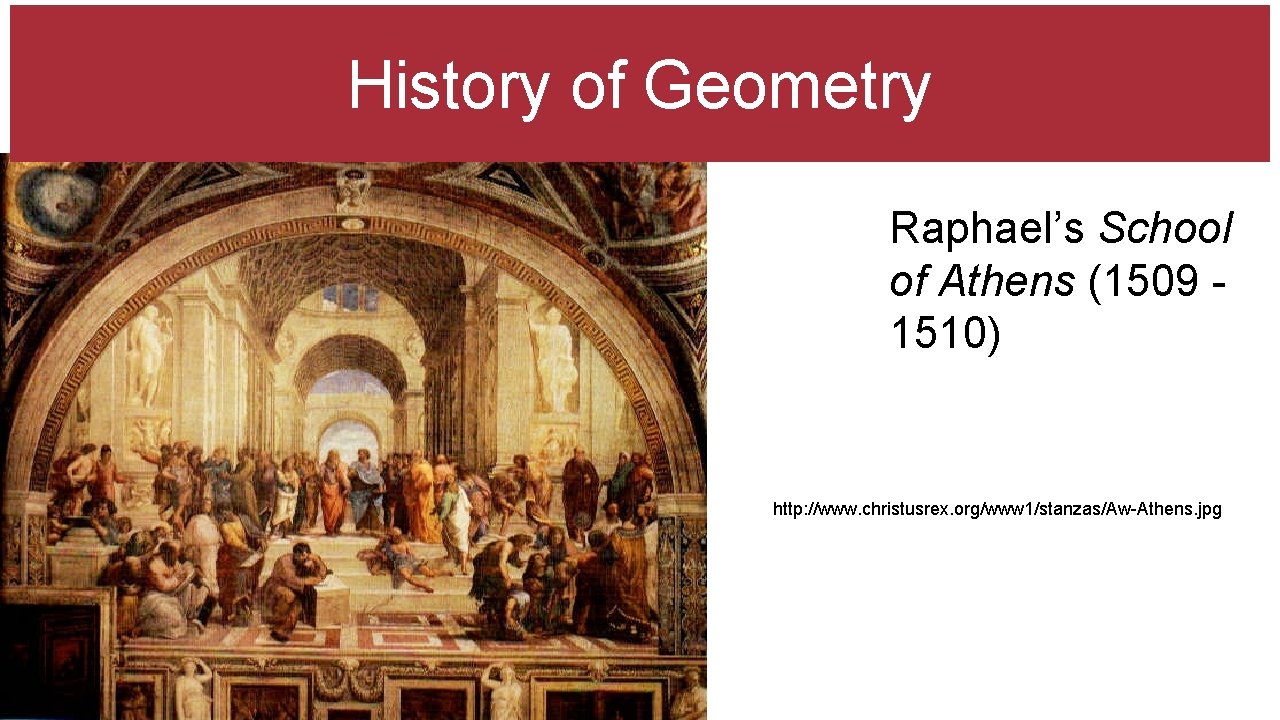
History of Geometry Raphael’s School of Athens (1509 - 1510) http: //www. christusrex. org/www 1/stanzas/Aw-Athens. jpg
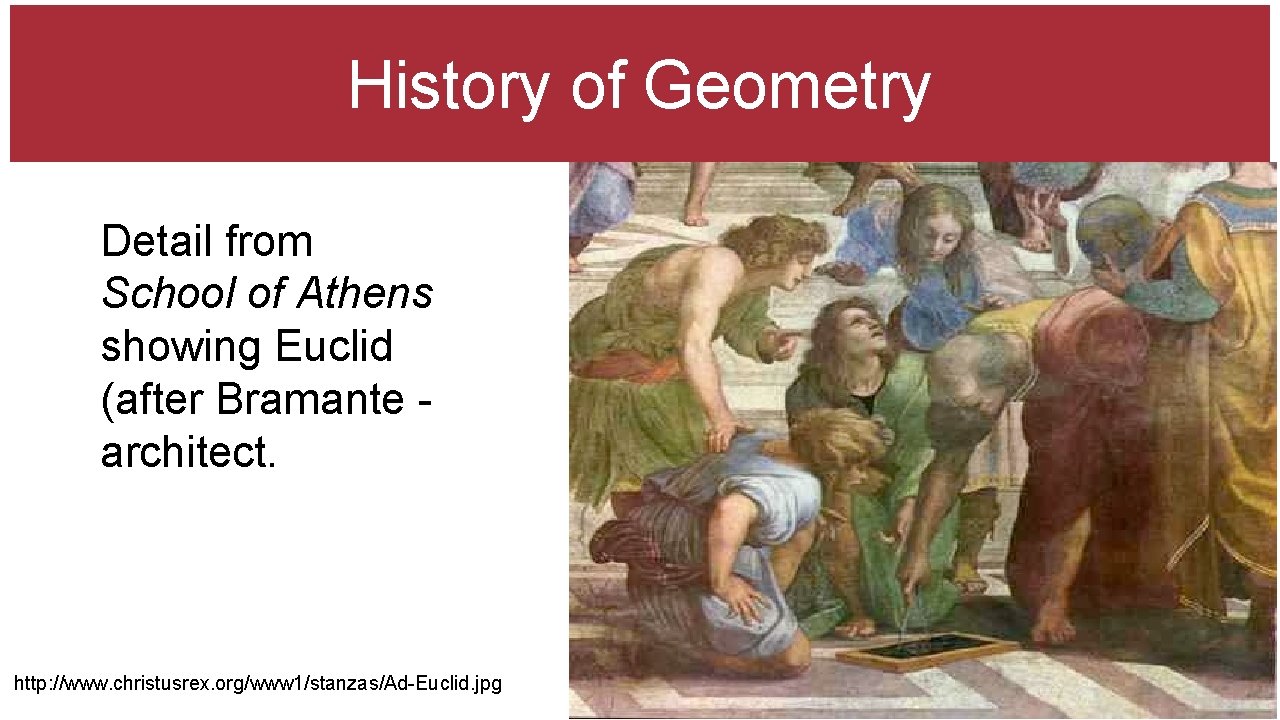
History of Geometry Detail from School of Athens showing Euclid (after Bramante - architect. http: //www. christusrex. org/www 1/stanzas/Ad-Euclid. jpg
History of Geometry The renaissance produced a renewed interest in the work of the Greek geometers.
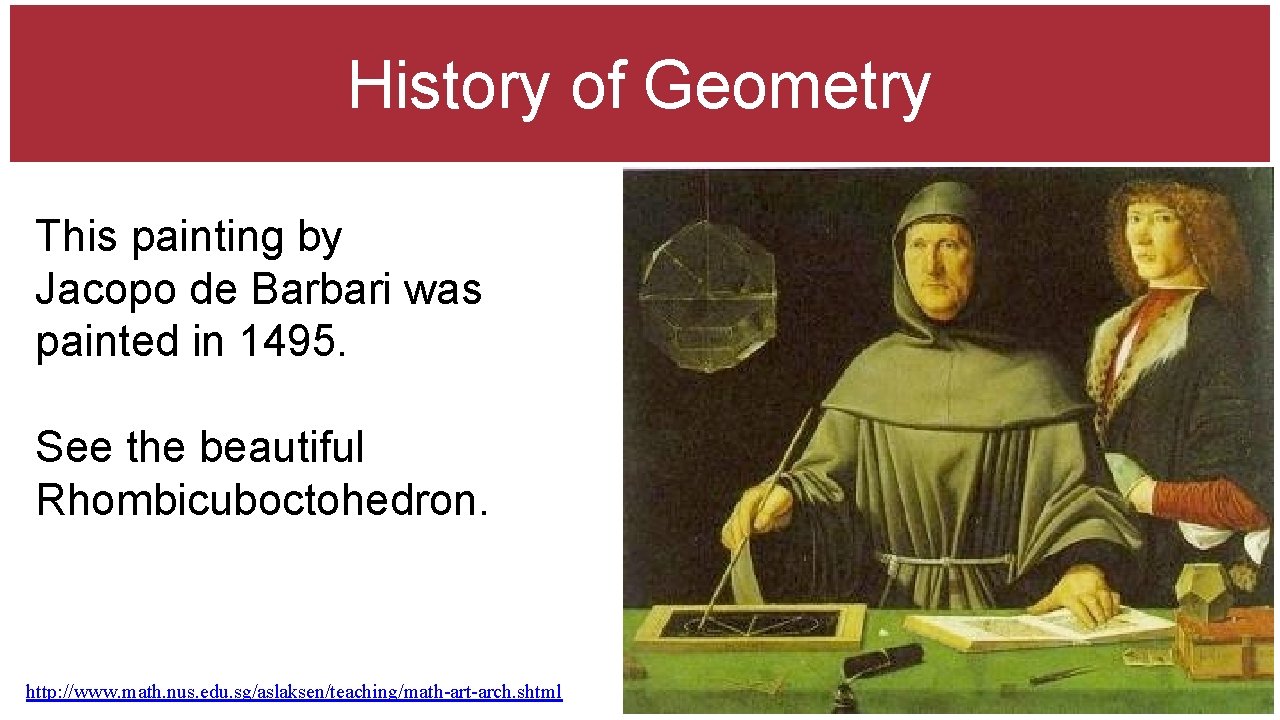
History of Geometry This painting by Jacopo de Barbari was painted in 1495. See the beautiful Rhombicuboctohedron. http: //www. math. nus. edu. sg/aslaksen/teaching/math-art-arch. shtml
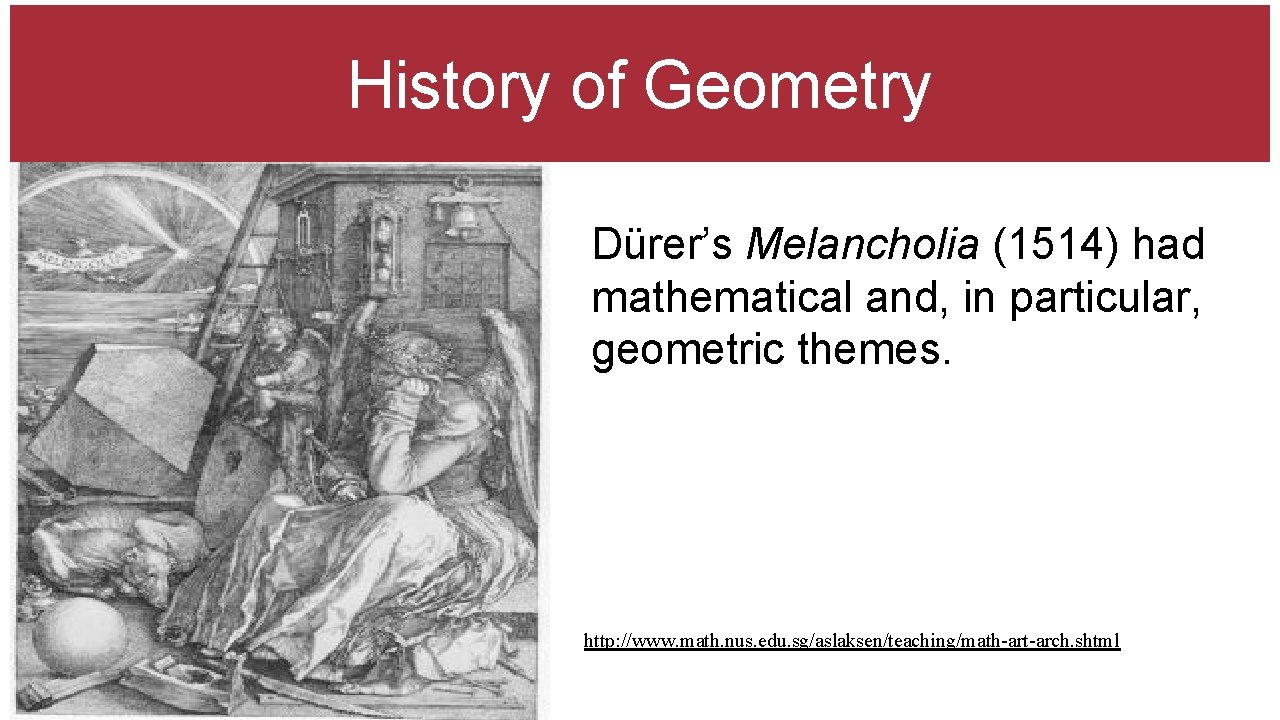
History of Geometry Dürer’s Melancholia (1514) had mathematical and, in particular, geometric themes. http: //www. math. nus. edu. sg/aslaksen/teaching/math-art-arch. shtml
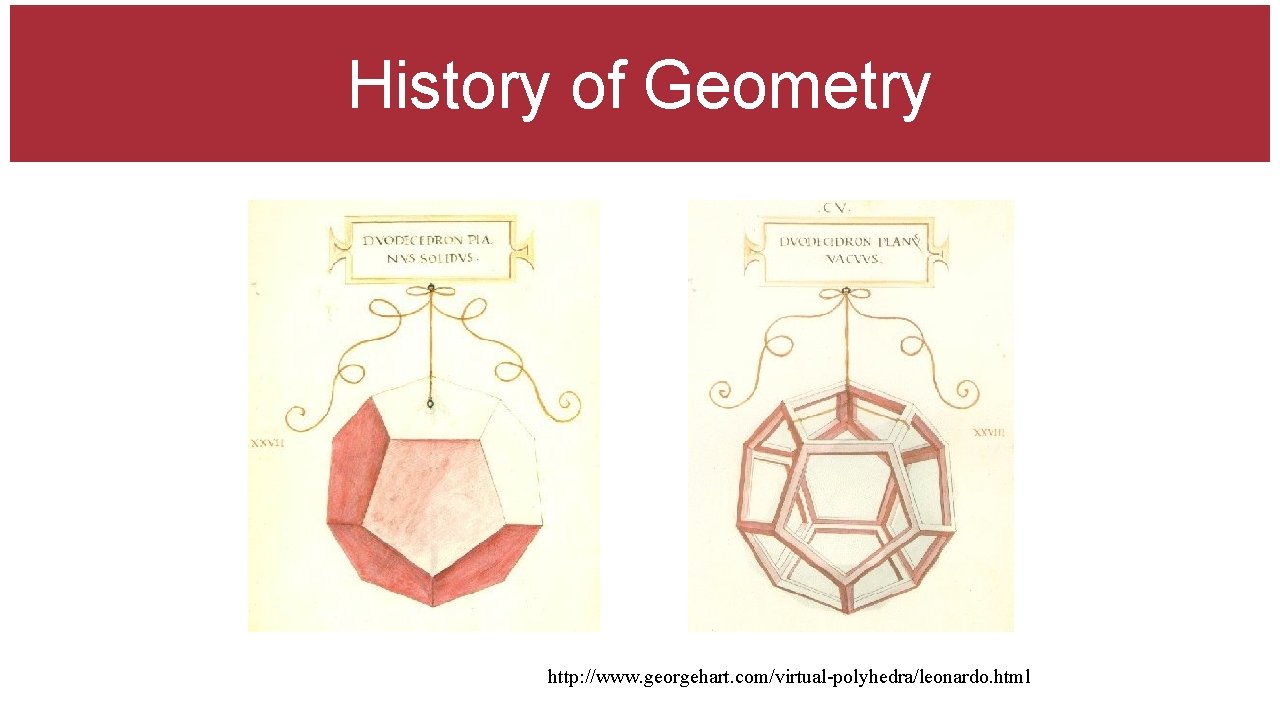
History of Geometry Leonardo da Vinci produced the following drawings for a book by Luca Pacioli (1509).
History of Geometry http: //www. georgehart. com/virtual-polyhedra/leonardo. html
History of Geometry This is a terrific website: Art and Mathematics http: //www. math. nus. edu. sg/aslaksen/teaching/mathart-arch. shtml
Language 46
Language Technical language is used in order to be precise and accurate in the description of spatial ideas Technical terms should be defined carefully
Language Use of technical terms. Teachers should have a clear understanding of these terms; not underestimate students’ ability to recognise and use terms; show discretion in using them with students; supplement terms with informal but accurate language; ensure geometry teaching does not degenerate into merely learning lists of technical terms
Geometry Introducing. . . Points Lines Planes Angle
Geometry The Difference Between Physical Objects Diagrams And Geometric Concepts
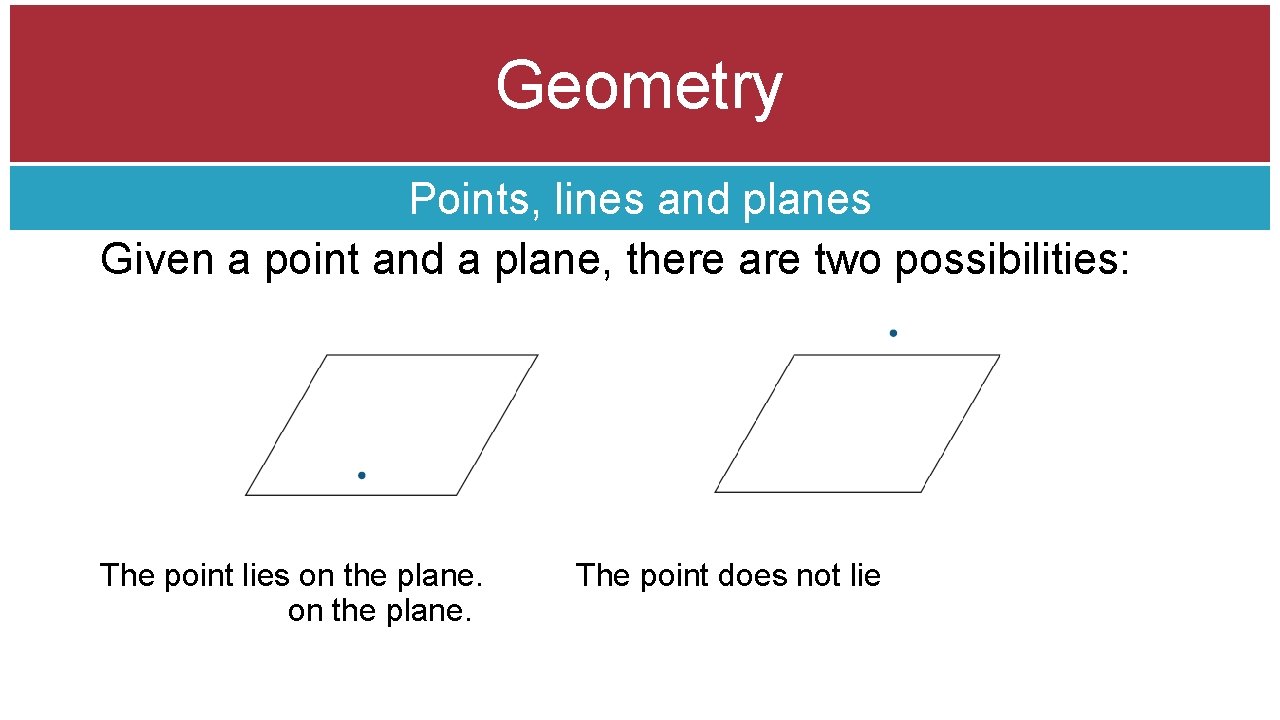
Geometry Points, lines and planes Given a point and a plane, there are two possibilities: Points The point lies on the plane. The point does not lie
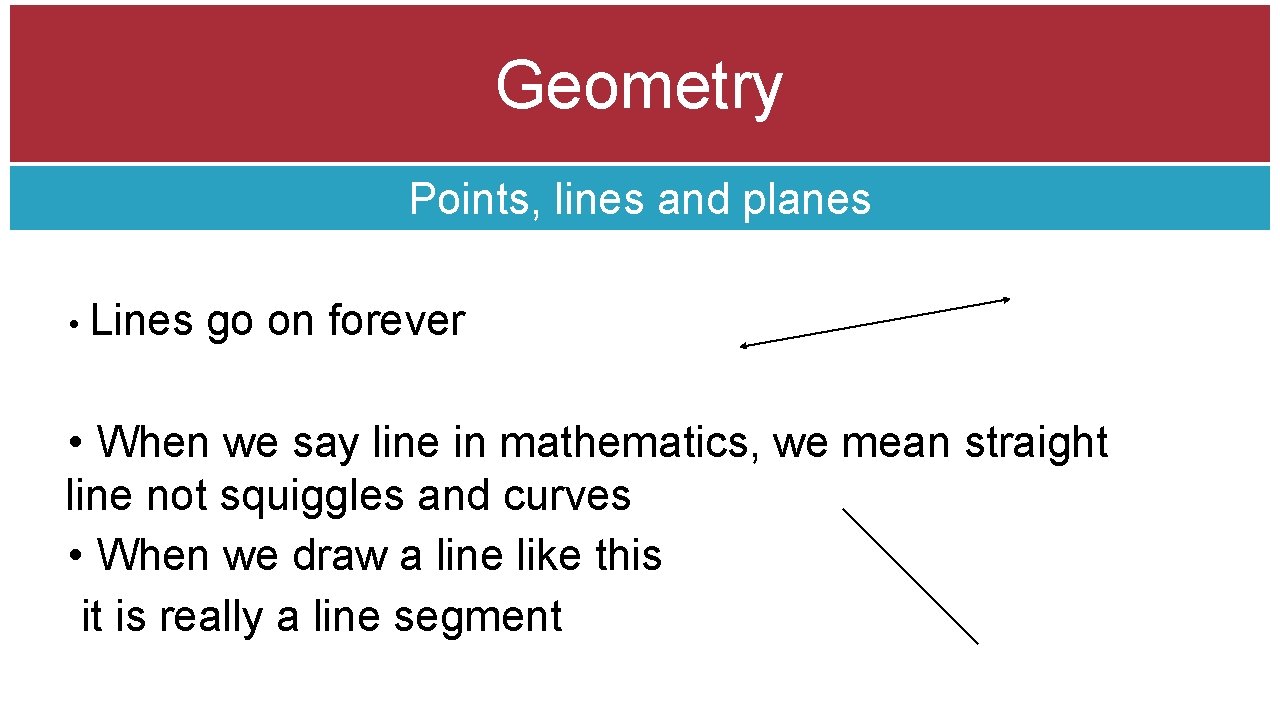
Geometry Points, lines and planes • Lines go on forever • When we say line in mathematics, we mean straight line not squiggles and curves • When we draw a line like this it is really a line segment
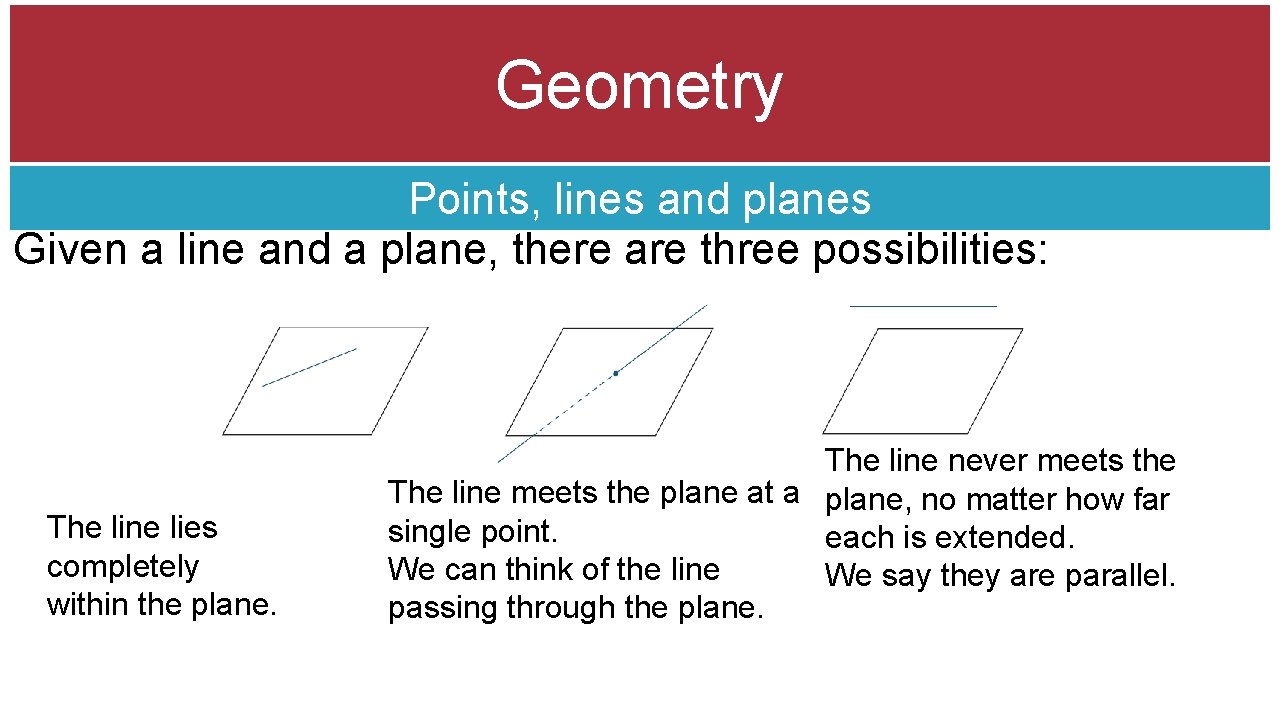
Geometry Points, lines and planes Given a line and a plane, there are three possibilities: The line lies completely within the plane. The line never meets the The line meets the plane at a plane, no matter how far single point. each is extended. We can think of the line We say they are parallel. passing through the plane.
Geometry Points, lines and planes Parallel lines • never meet • go on forever Students have an intuitive understanding of parallel • Need to discuss on informal basis with students. • Parallel implies corresponding angles equal and vice-versa.
Geometry Points, lines and planes Perpendicular lines o • meet at 90 • think of the letter T
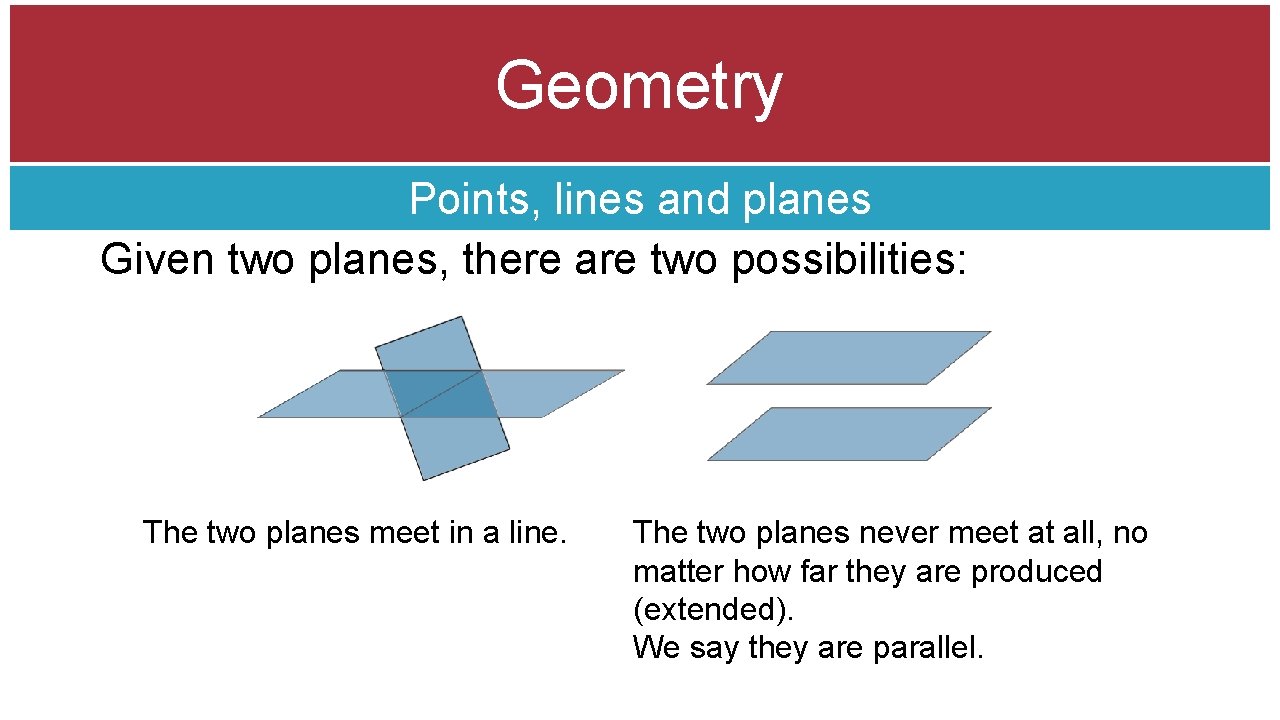
Geometry Points, lines and planes Given two planes, there are two possibilities: Planes The two planes meet in a line. The two planes never meet at all, no matter how far they are produced (extended). We say they are parallel.
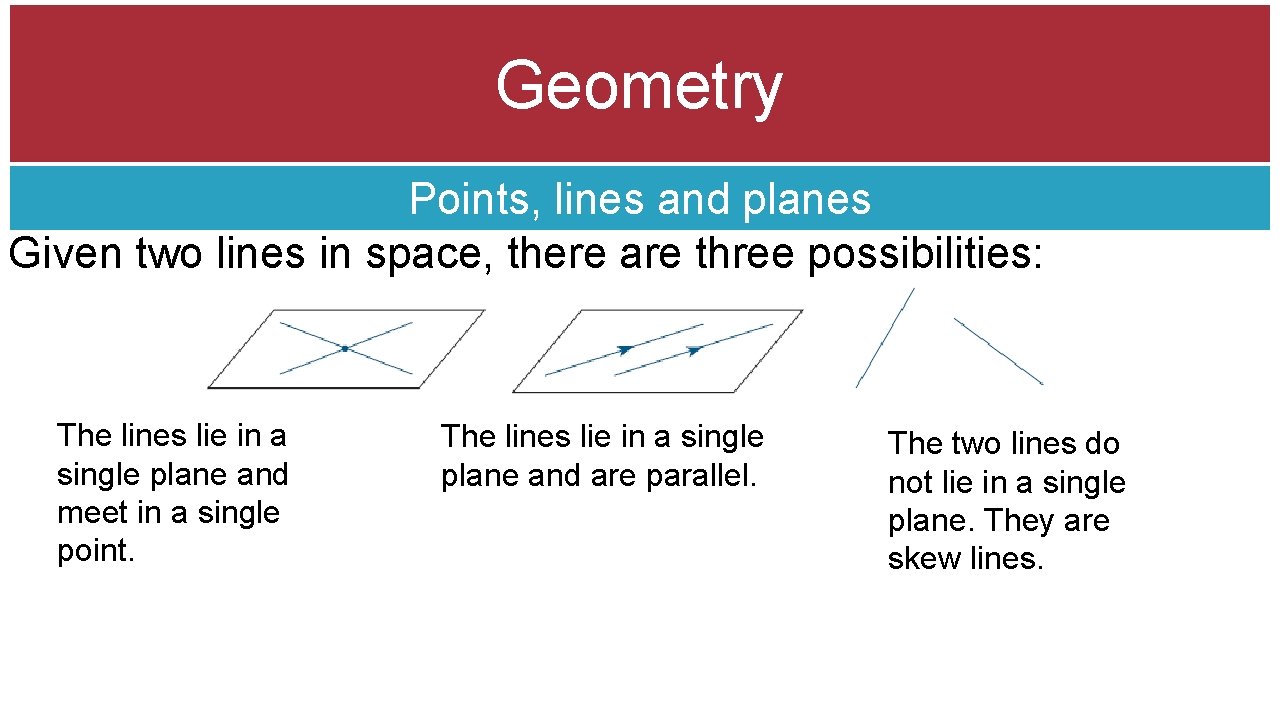
Geometry Points, lines and planes Given two lines in space, there are three possibilities: The lines lie in a single plane and meet in a single point. The lines lie in a single plane and are parallel. The two lines do not lie in a single plane. They are skew lines.
Angles 58
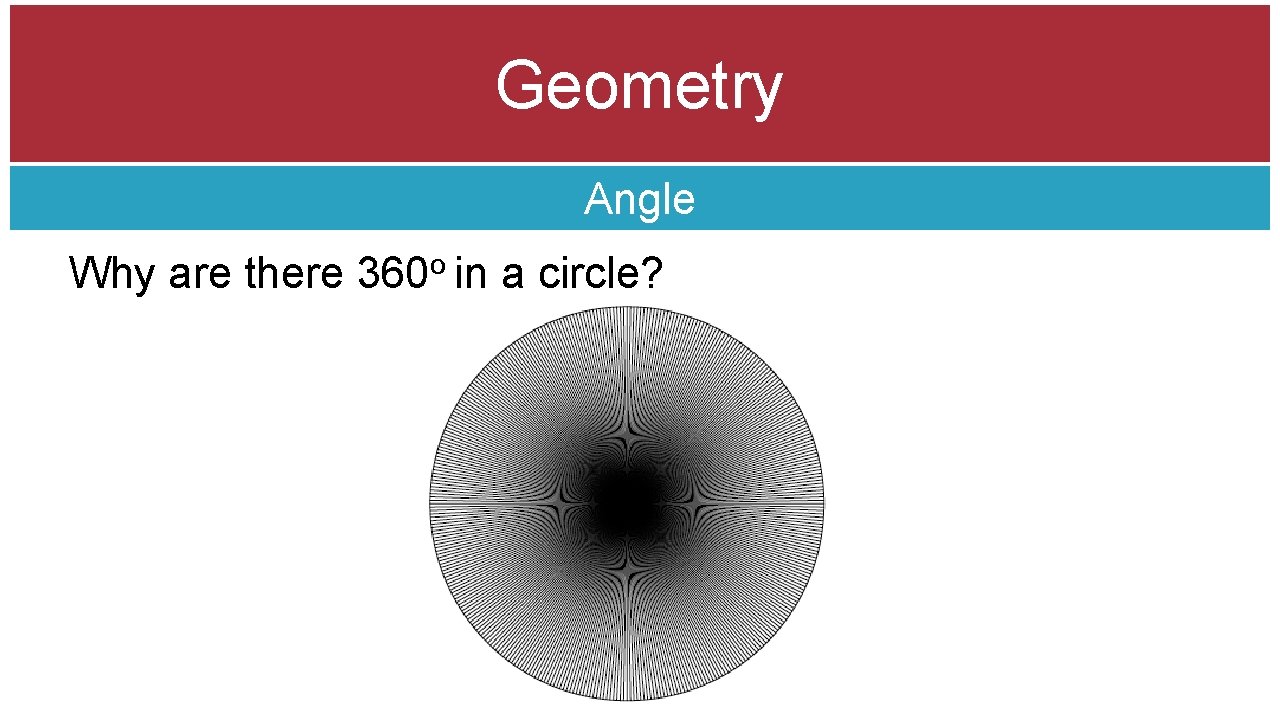
Geometry Angle Why are there 360 o in a circle?
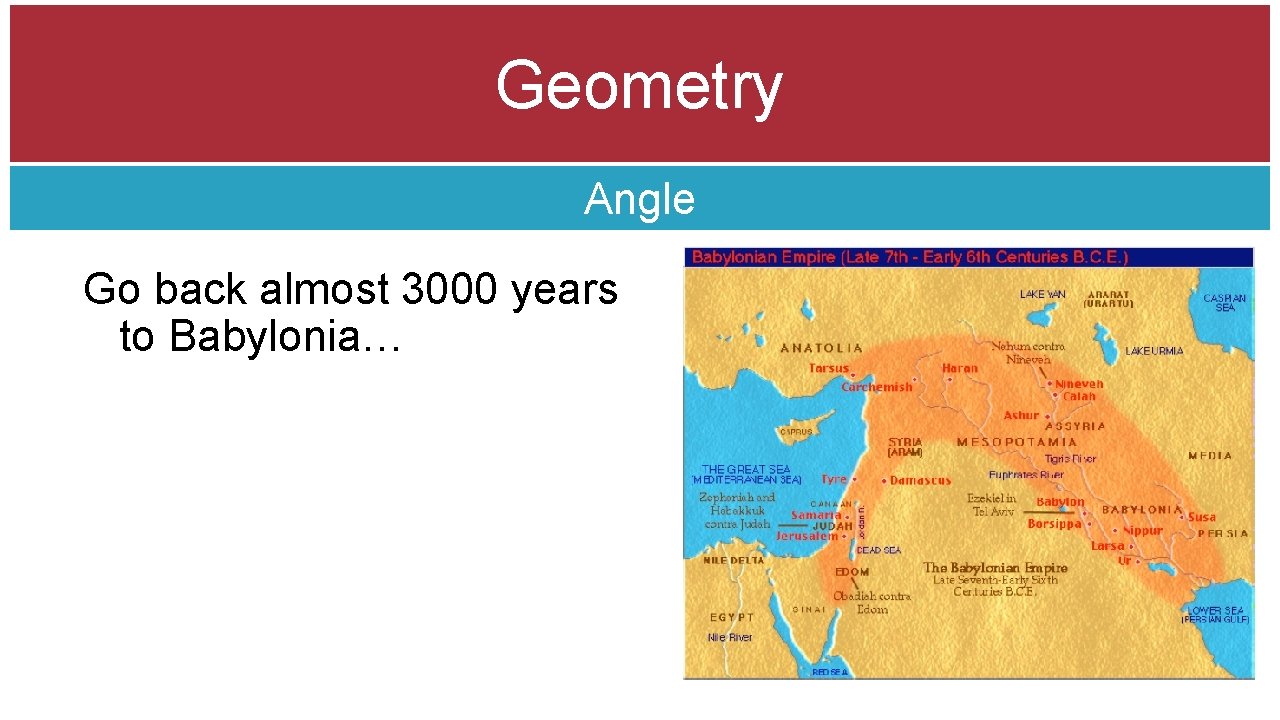
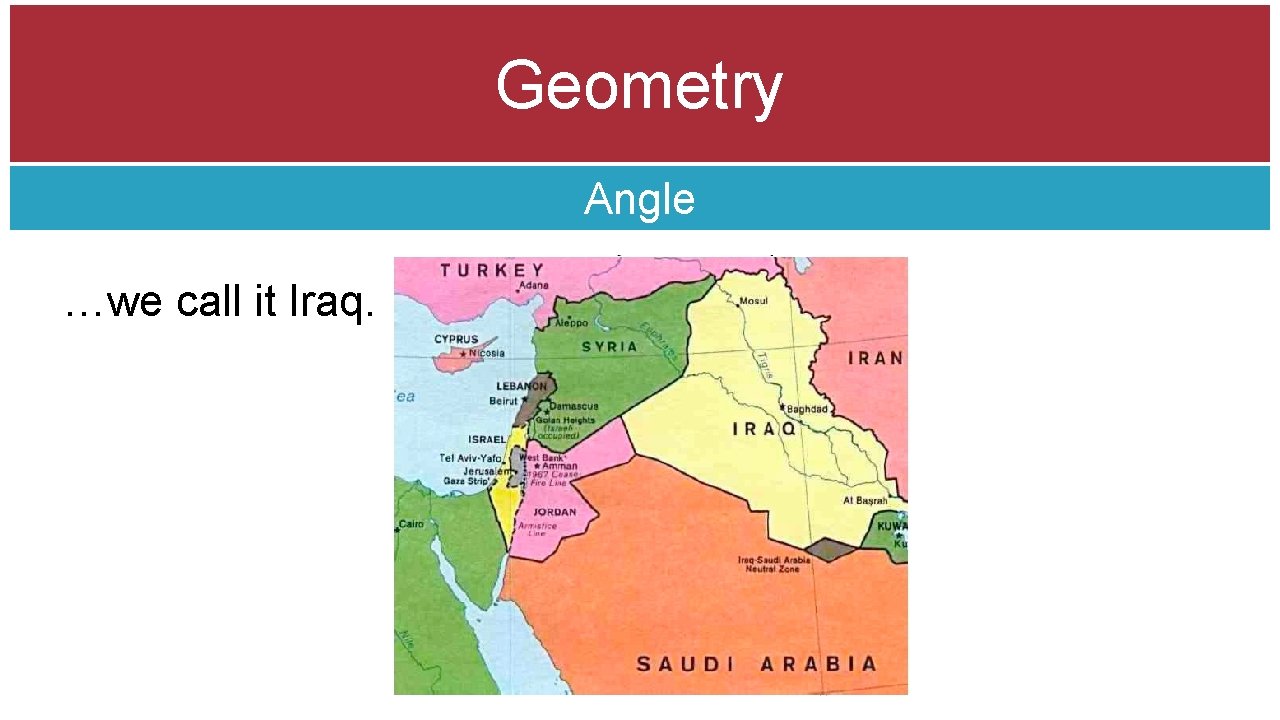
Geometry Angle Go back almost 3000 years to Babylonia…
Geometry Angle …we call it Iraq.
Geometry Angle The Babylonians were astronomers.
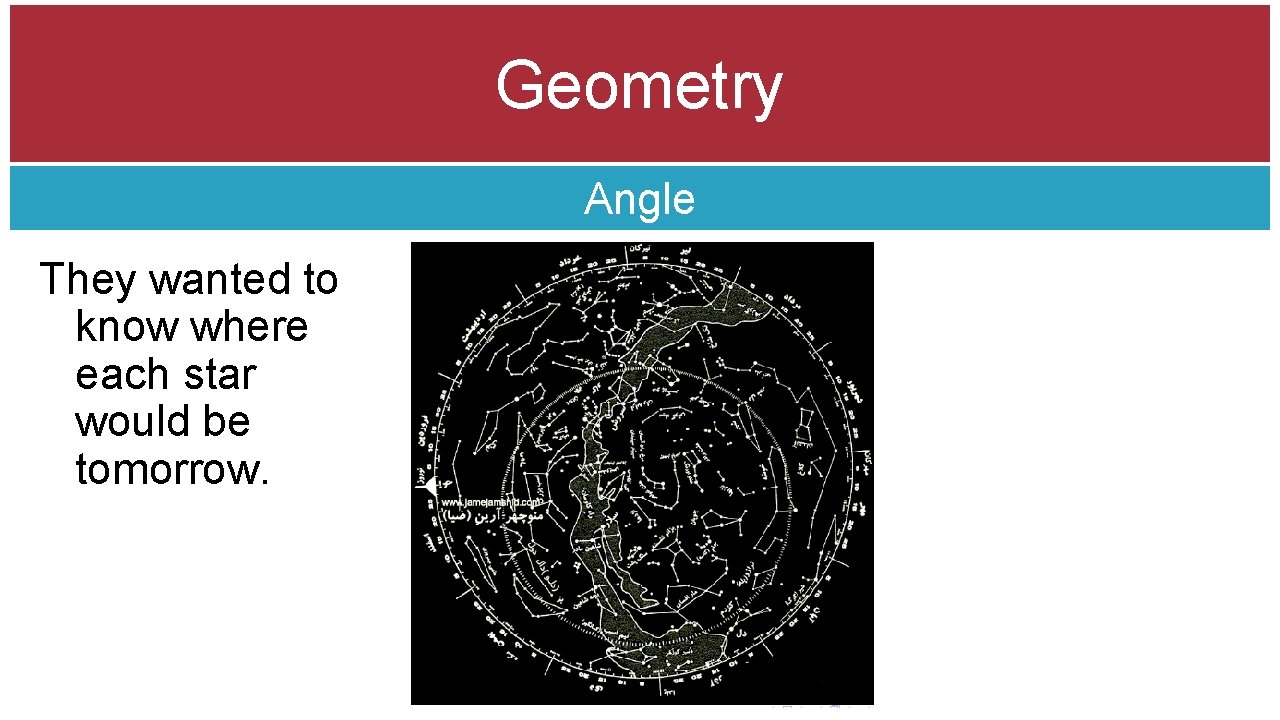
Geometry Angle They wanted to know where each star would be tomorrow.
Geometry Angle They knew the year was about 365 days long. If you wanted to calculate the length of the year, how would you go about it? How long would it take you?
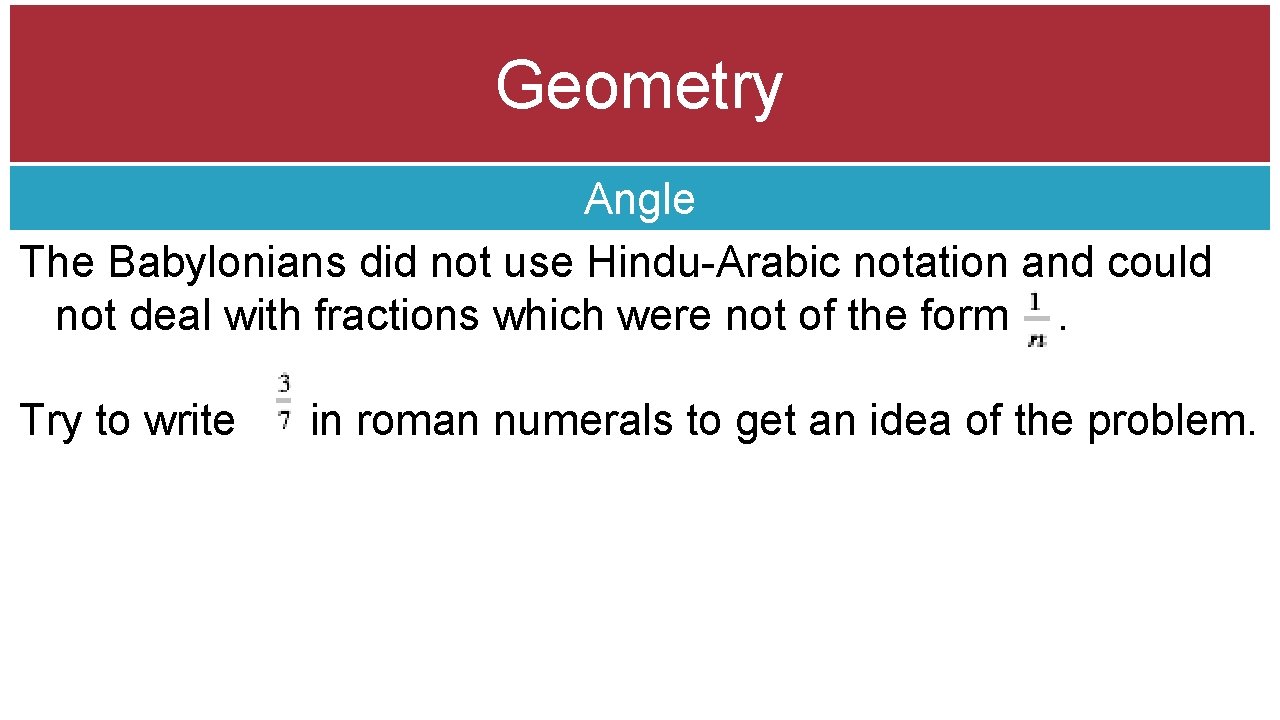
Geometry Angle The Babylonians did not use Hindu-Arabic notation and could not deal with fractions which were not of the form . Try to write in roman numerals to get an idea of the problem.
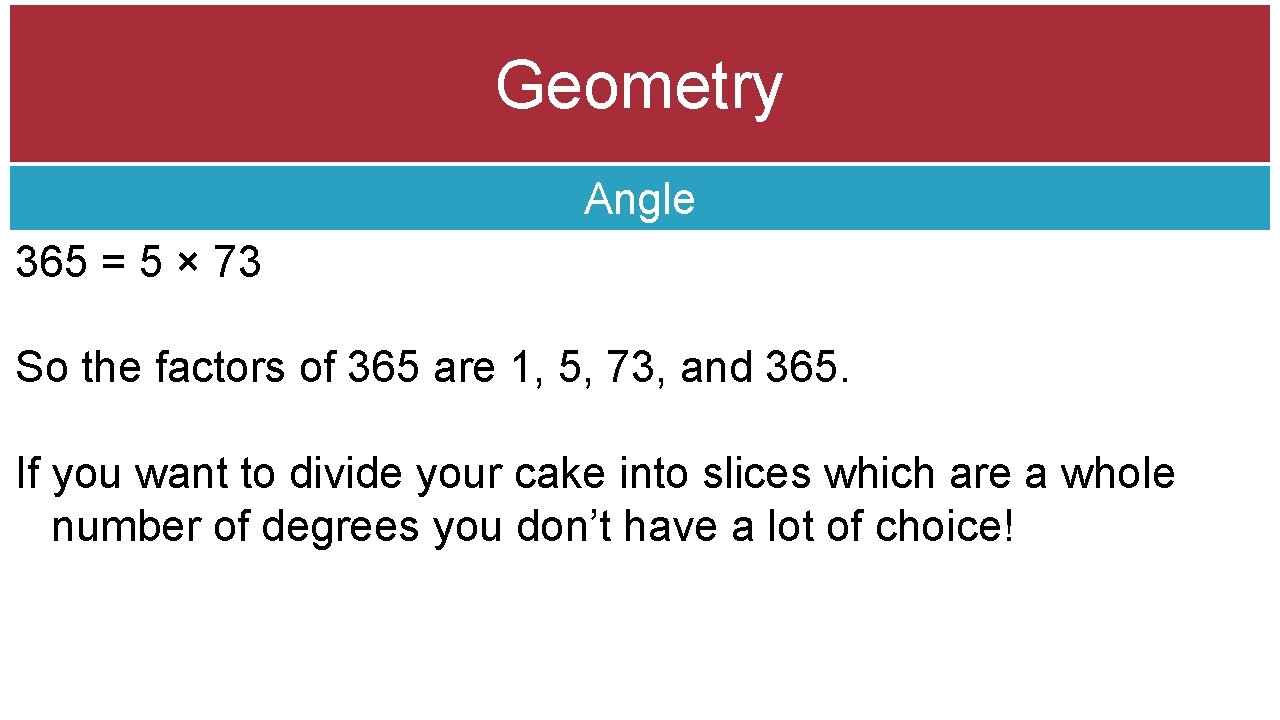
Geometry Angle 365 = 5 × 73 So the factors of 365 are 1, 5, 73, and 365. If you want to divide your cake into slices which are a whole number of degrees you don’t have a lot of choice!
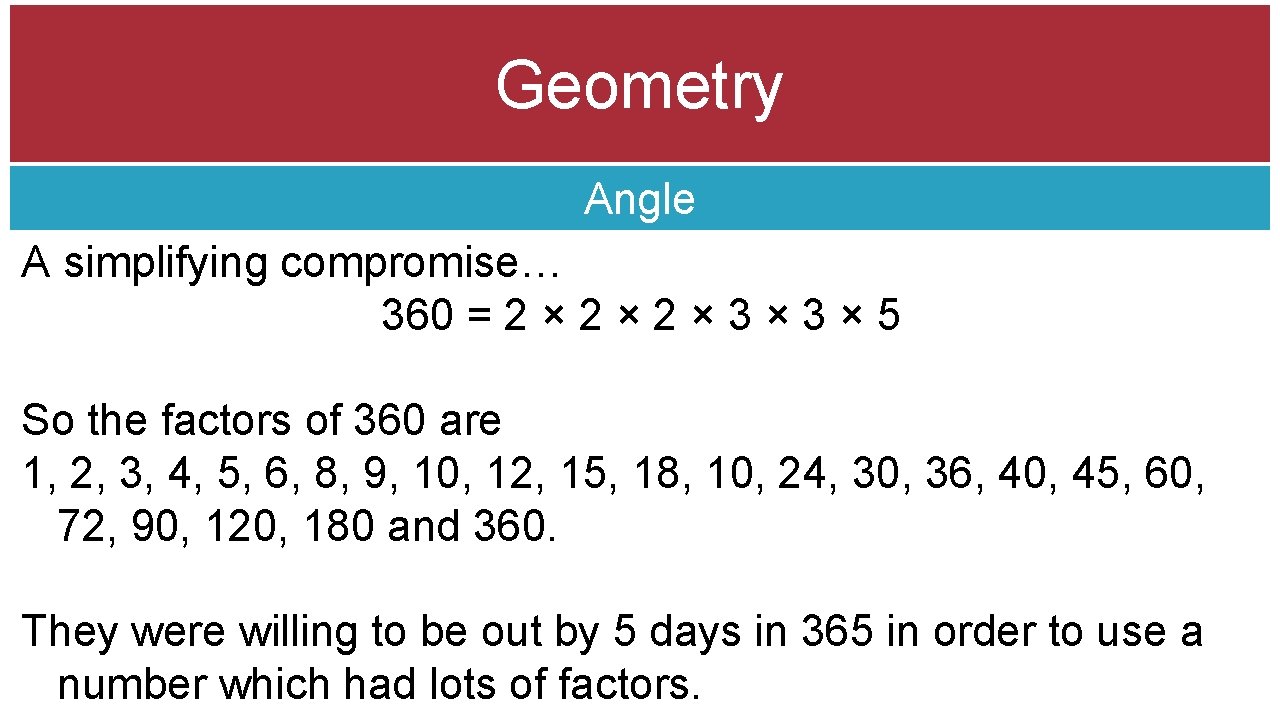
Geometry Angle A simplifying compromise… 360 = 2 × 2 × 3 × 5 So the factors of 360 are 1, 2, 3, 4, 5, 6, 8, 9, 10, 12, 15, 18, 10, 24, 30, 36, 40, 45, 60, 72, 90, 120, 180 and 360. They were willing to be out by 5 days in 365 in order to use a number which had lots of factors.
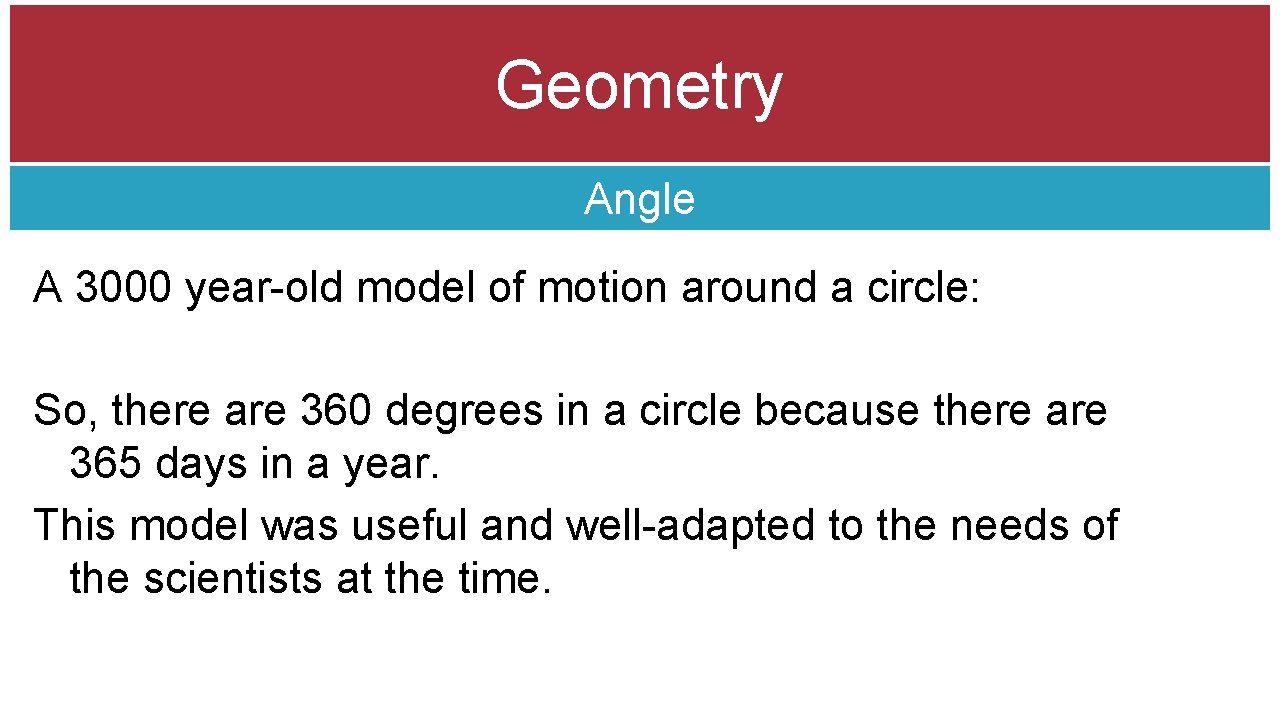
Geometry Angle A 3000 year-old model of motion around a circle: So, there are 360 degrees in a circle because there are 365 days in a year. This model was useful and well-adapted to the needs of the scientists at the time.
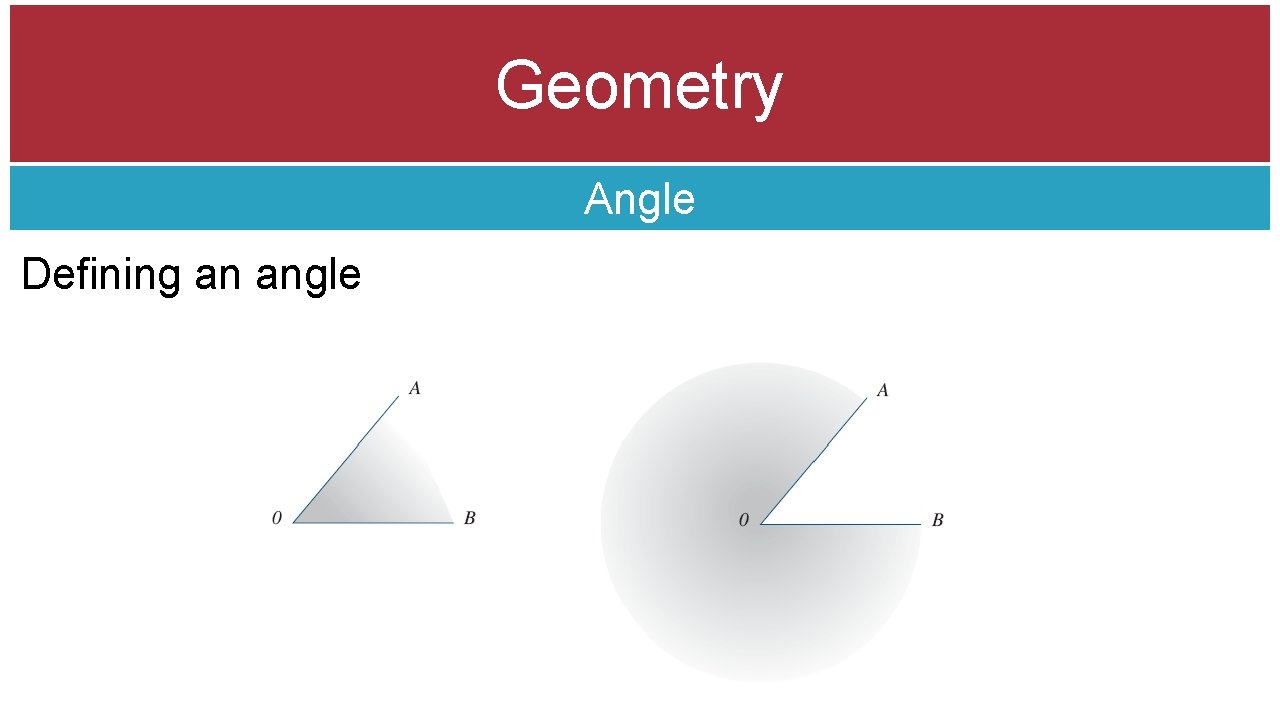
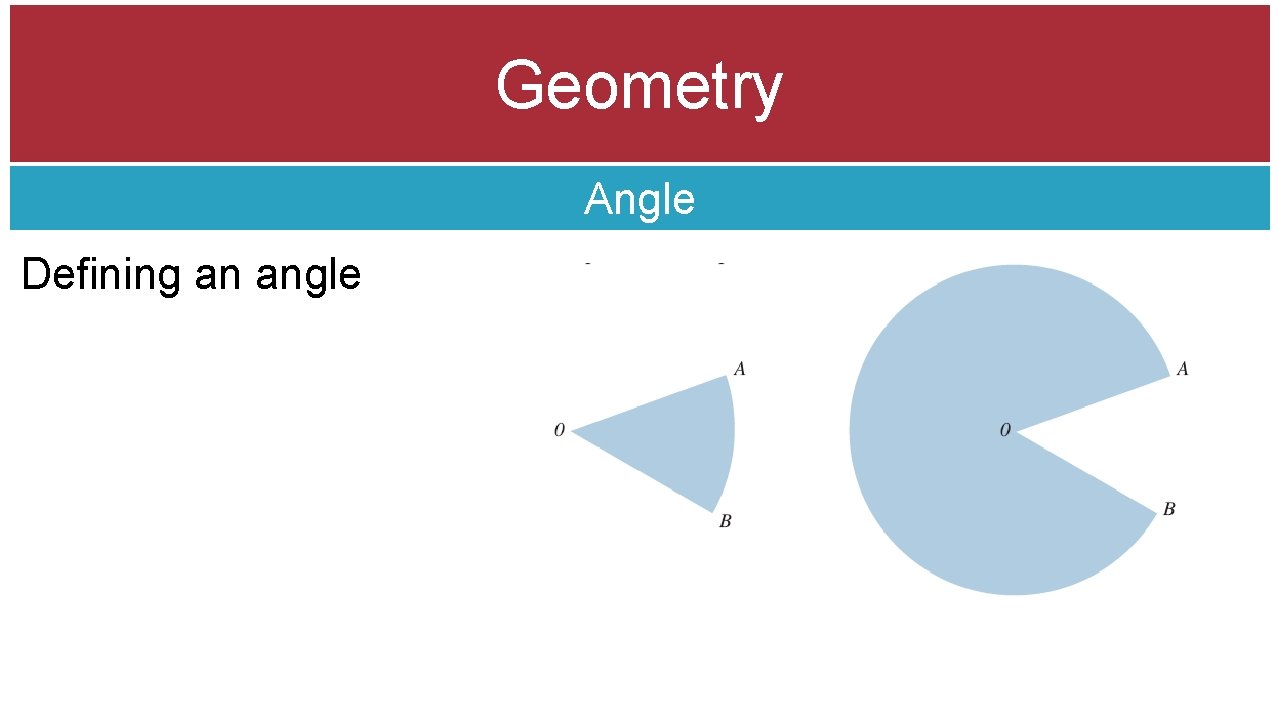
Geometry Angle Defining an angle
Geometry Angle Defining an angle
Geometry Angle Defining an angle
Geometry Angle Measuring angles Students need a great deal of practise using a pair of compasses and a protractor
Geometry Angle Kids in primary school learn about measuring angles before they understand irrational numbers. The most appropriate measure of angle to use at that time in their mathematical development is the degree. When doing anything other than measuring (eg models of motion involving differentiation), radians behave much more neatly than degrees. When students learn calculus they need to be comfortable with radian measure of angles.
Geometry Angle is a measure of an amount of turn. The amount of turning is called the size of the angle. The size of the reflex angle corresponding to one full revolution was divided(by the Babylonians) into 360 equal parts, which we call degrees.
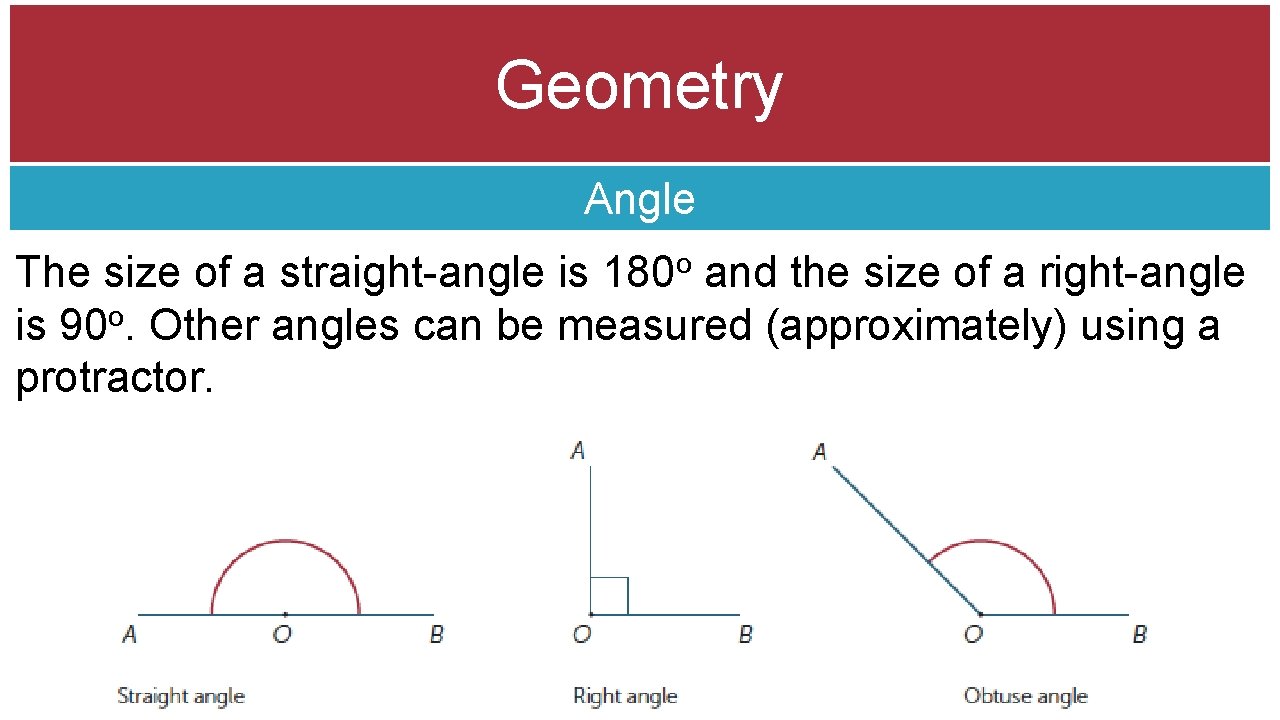
Geometry Angle The size of a straight-angle is 180 o and the size of a right-angle is 90 o. Other angles can be measured (approximately) using a protractor.
Geometry Angle • acute (less than 900) • right angle (exactly 900) • obtuse (between 900 and 1800) • straight (exactly 1800) • reflex (more than 1800)
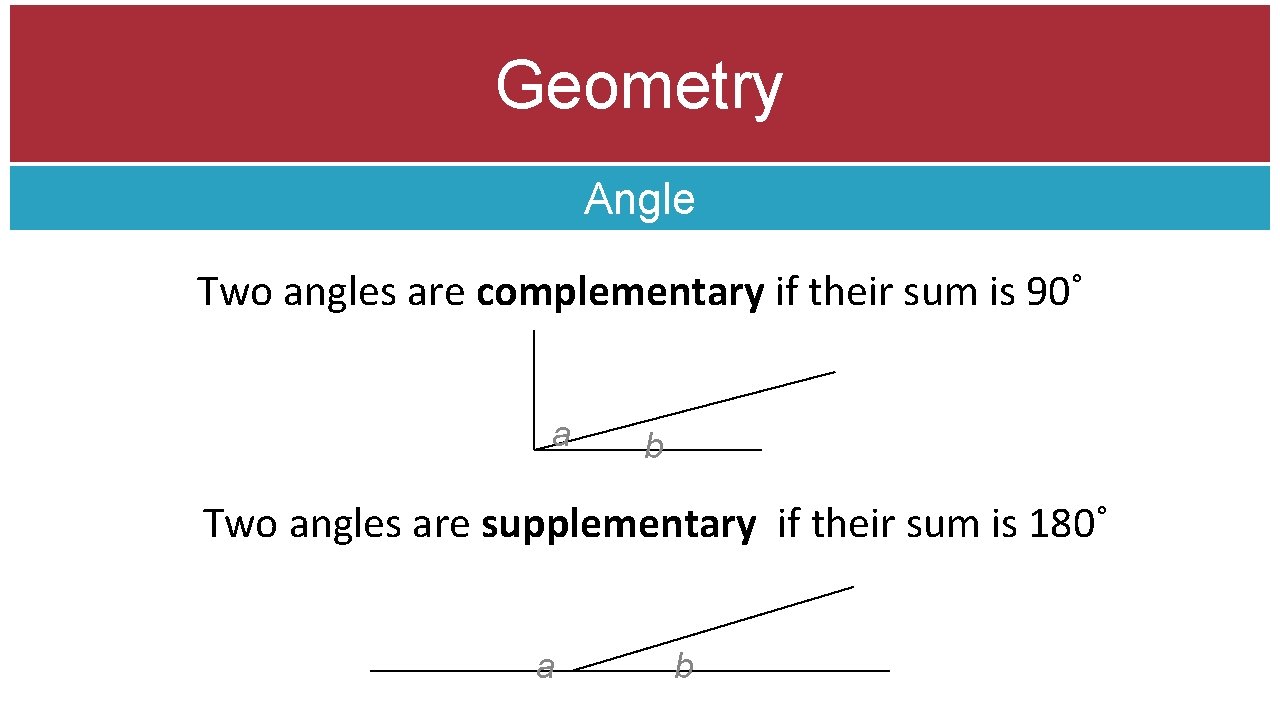
Geometry Angle Two angles are complementary if their sum is 90˚ a b Two angles are supplementary if their sum is 180˚ a b
Geometry Pi
Geometry Pi
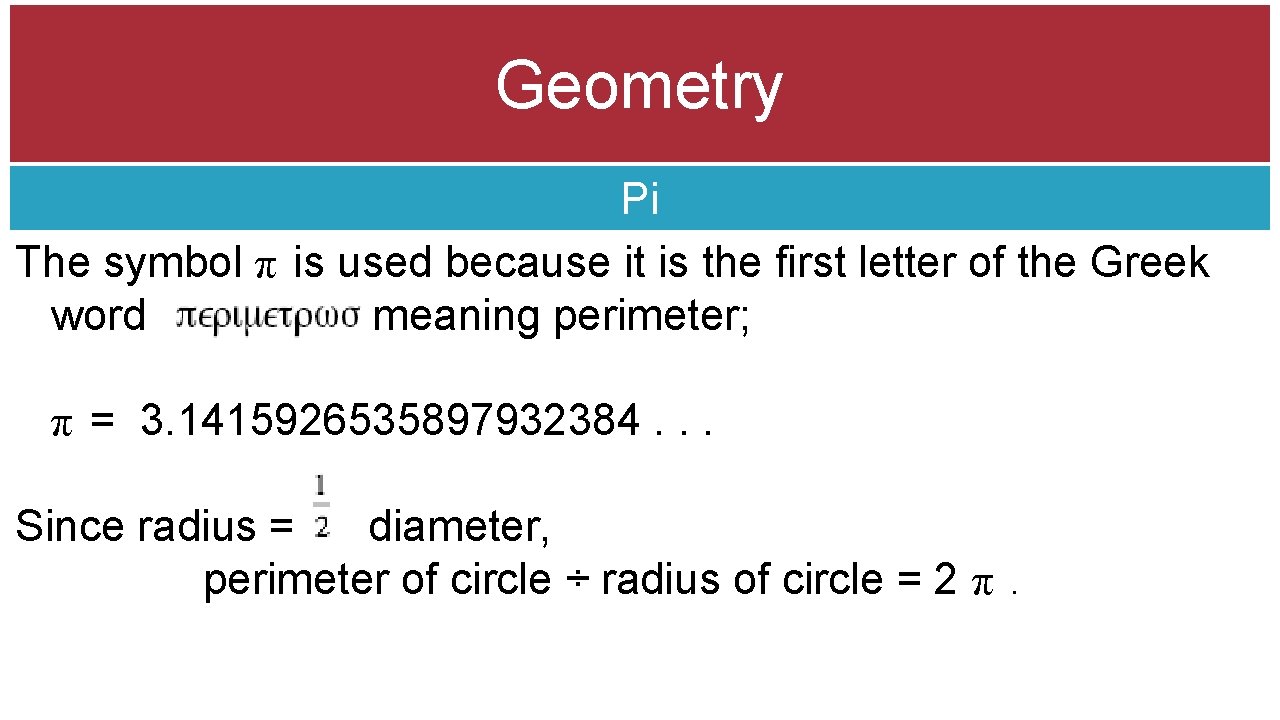
Geometry Pi The symbol π is used because it is the first letter of the Greek word , meaning perimeter; π = 3. 1415926535897932384. . . Since radius = diameter, perimeter of circle ÷ radius of circle = 2 π.
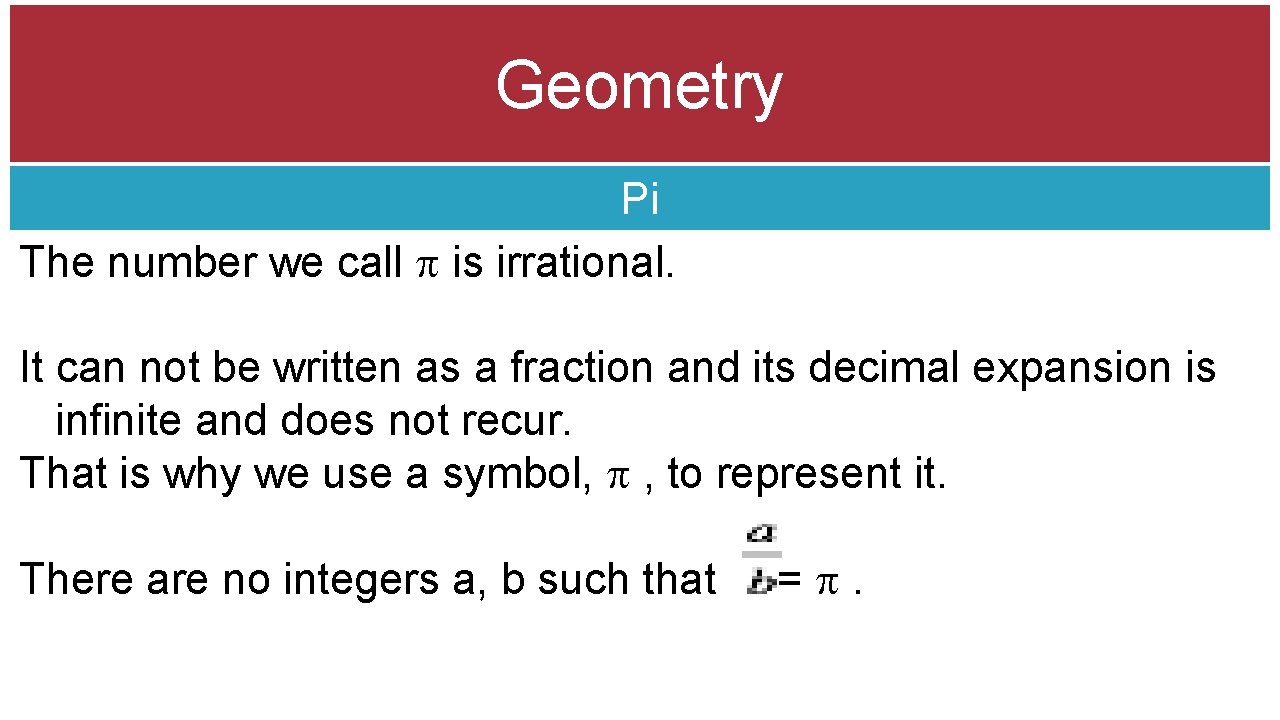
Geometry Pi The number we call is irrational. It can not be written as a fraction and its decimal expansion is infinite and does not recur. That is why we use a symbol, , to represent it. There are no integers a, b such that = .
Two-dimensional shapes 82
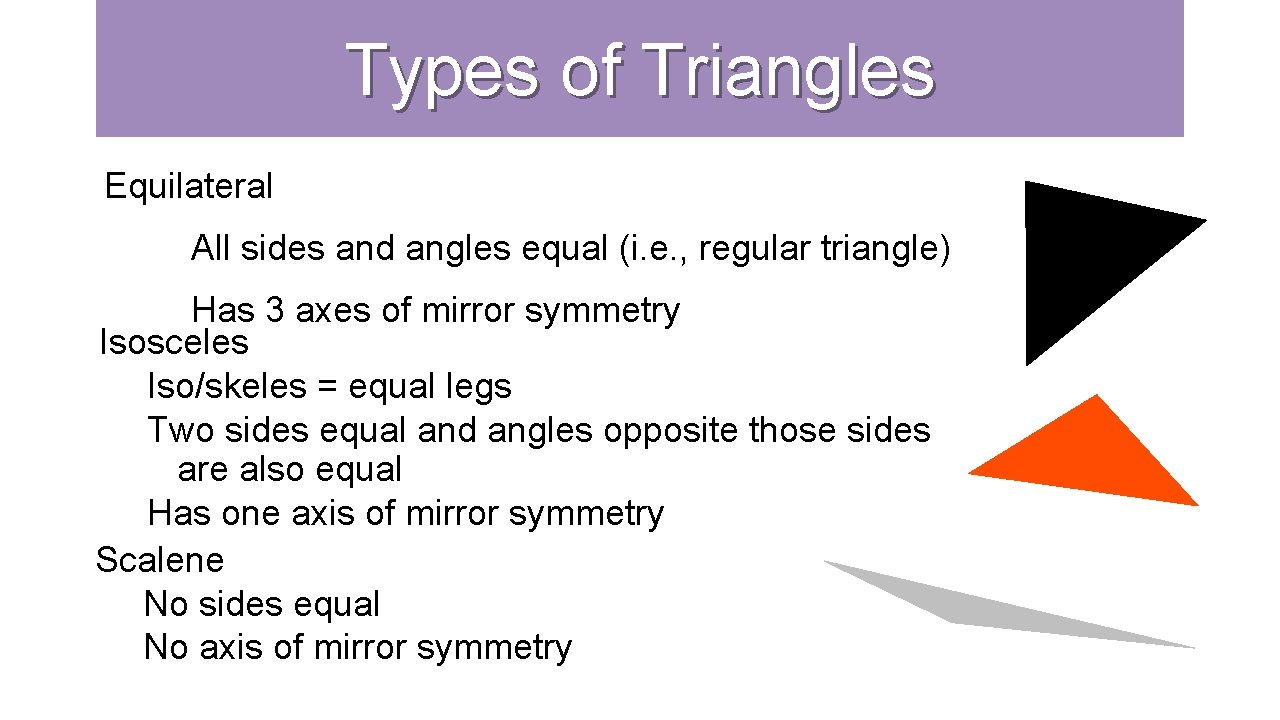
Types of Triangles Equilateral All sides and angles equal (i. e. , regular triangle) Has 3 axes of mirror symmetry Isosceles Iso/skeles = equal legs Two sides equal and angles opposite those sides are also equal Has one axis of mirror symmetry Scalene No sides equal No axis of mirror symmetry
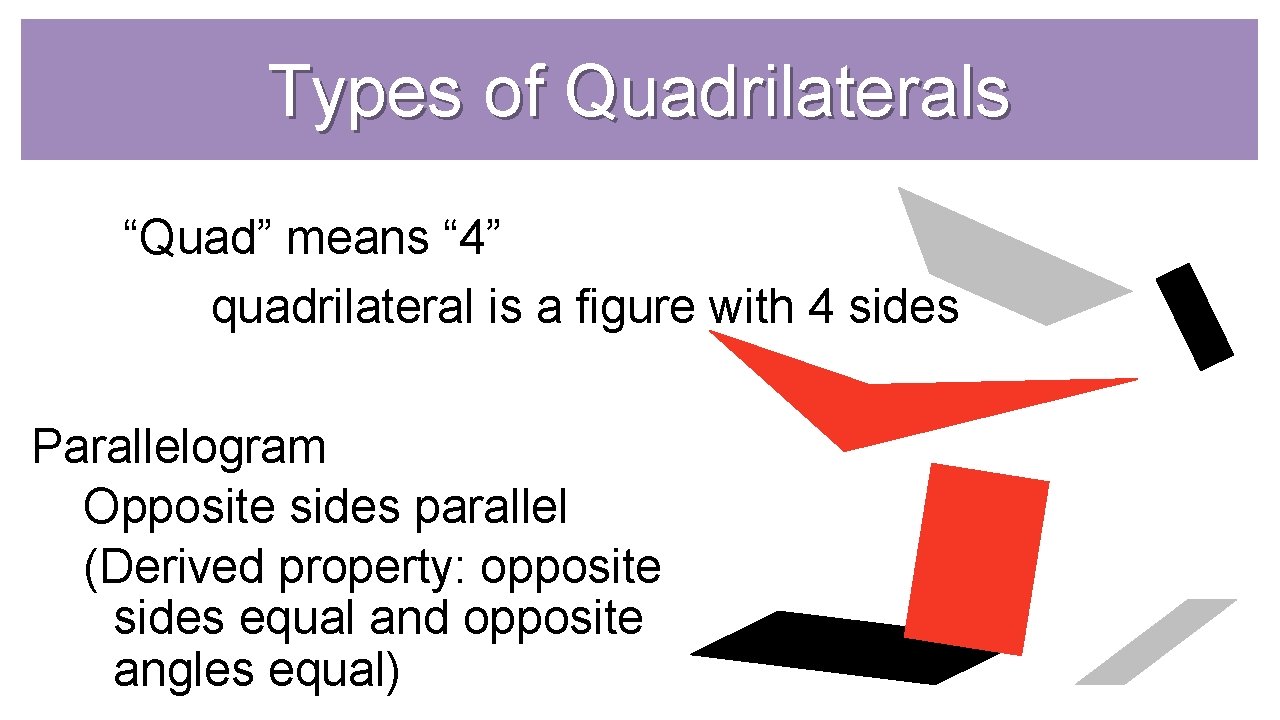
Types of Quadrilaterals “Quad” means “ 4” quadrilateral is a figure with 4 sides Parallelogram Opposite sides parallel (Derived property: opposite sides equal and opposite angles equal)
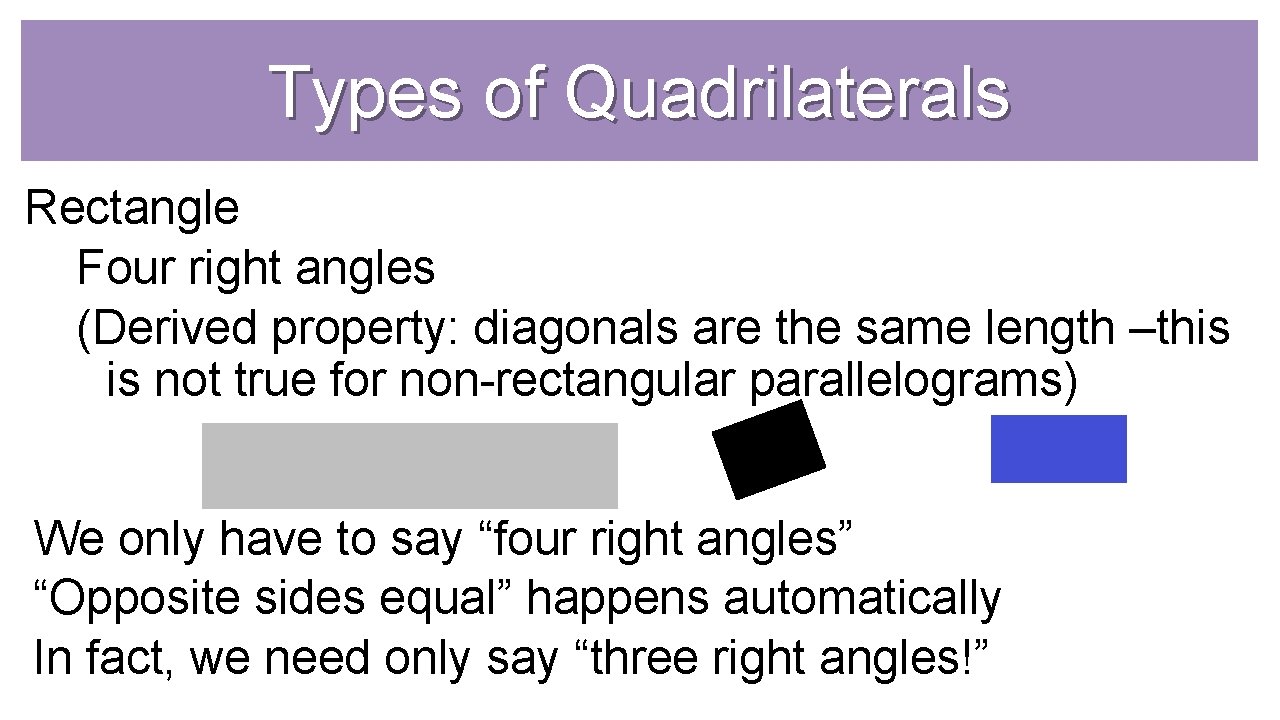
Types of Quadrilaterals Rectangle Four right angles (Derived property: diagonals are the same length –this is not true for non-rectangular parallelograms) We only have to say “four right angles” “Opposite sides equal” happens automatically In fact, we need only say “three right angles!”
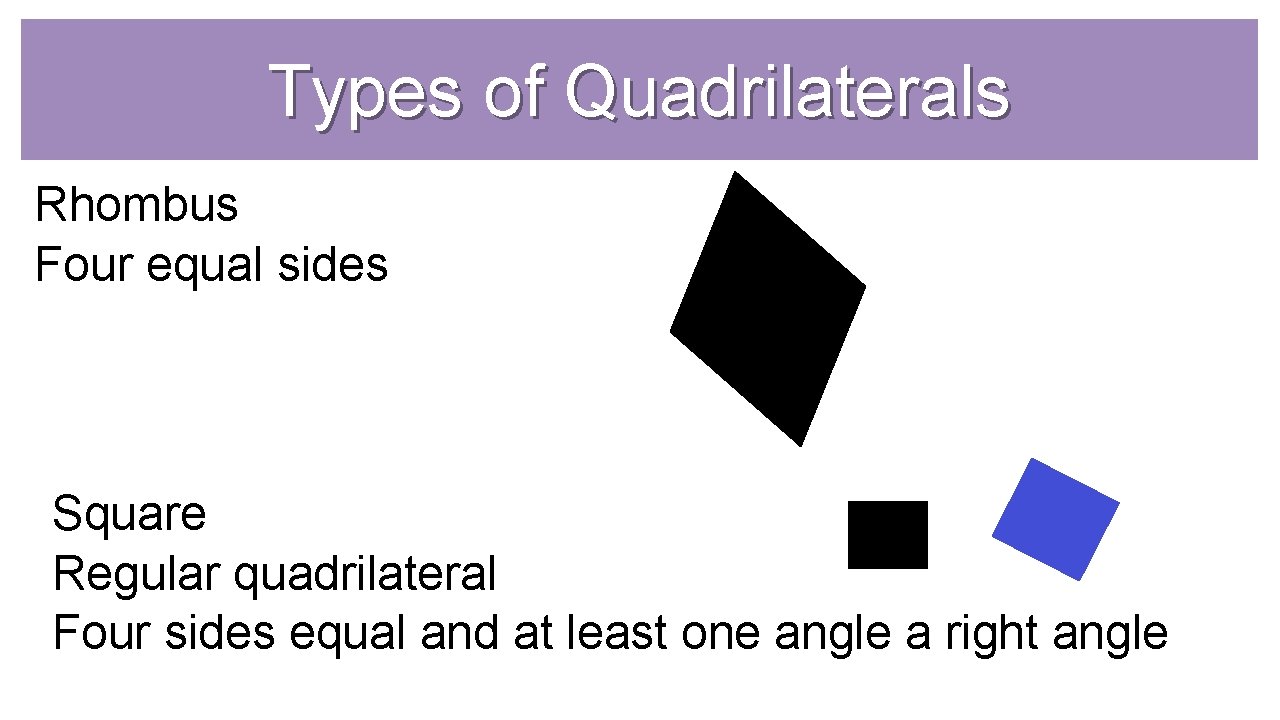
Types of Quadrilaterals Rhombus Four equal sides Square Regular quadrilateral Four sides equal and at least one angle a right angle
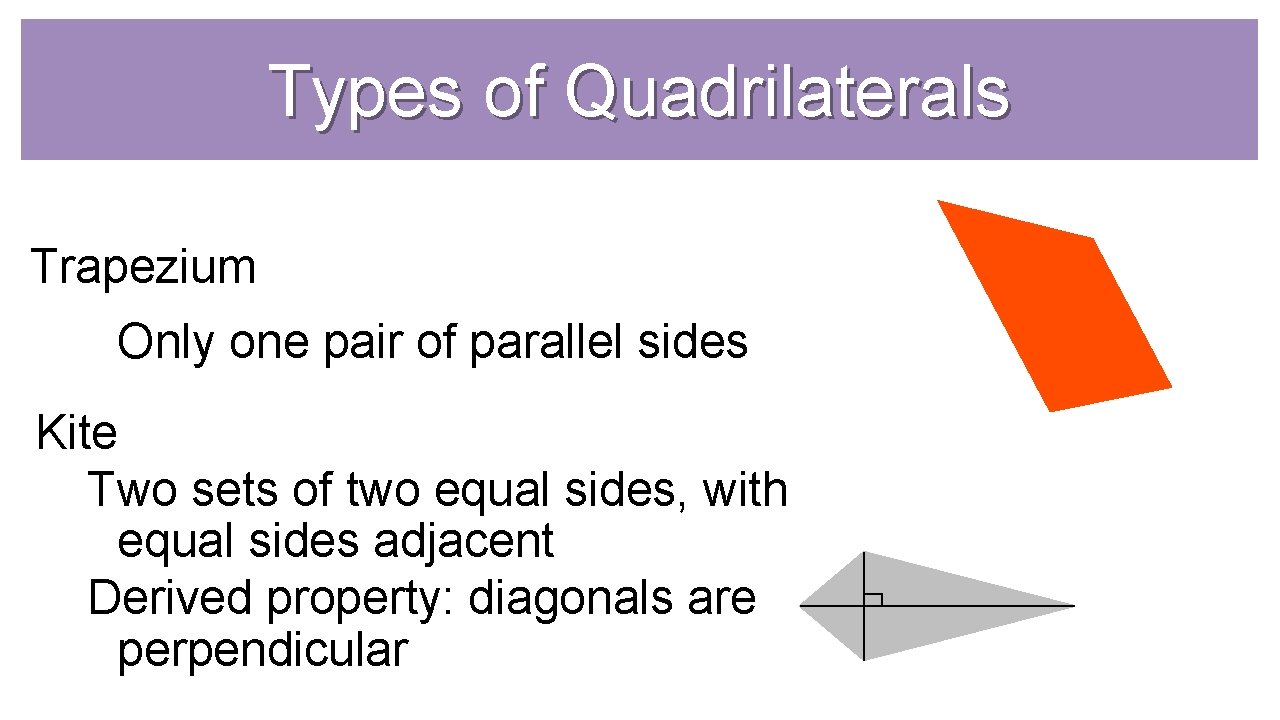
Types of Quadrilaterals Trapezium Only one pair of parallel sides Kite Two sets of two equal sides, with equal sides adjacent Derived property: diagonals are perpendicular
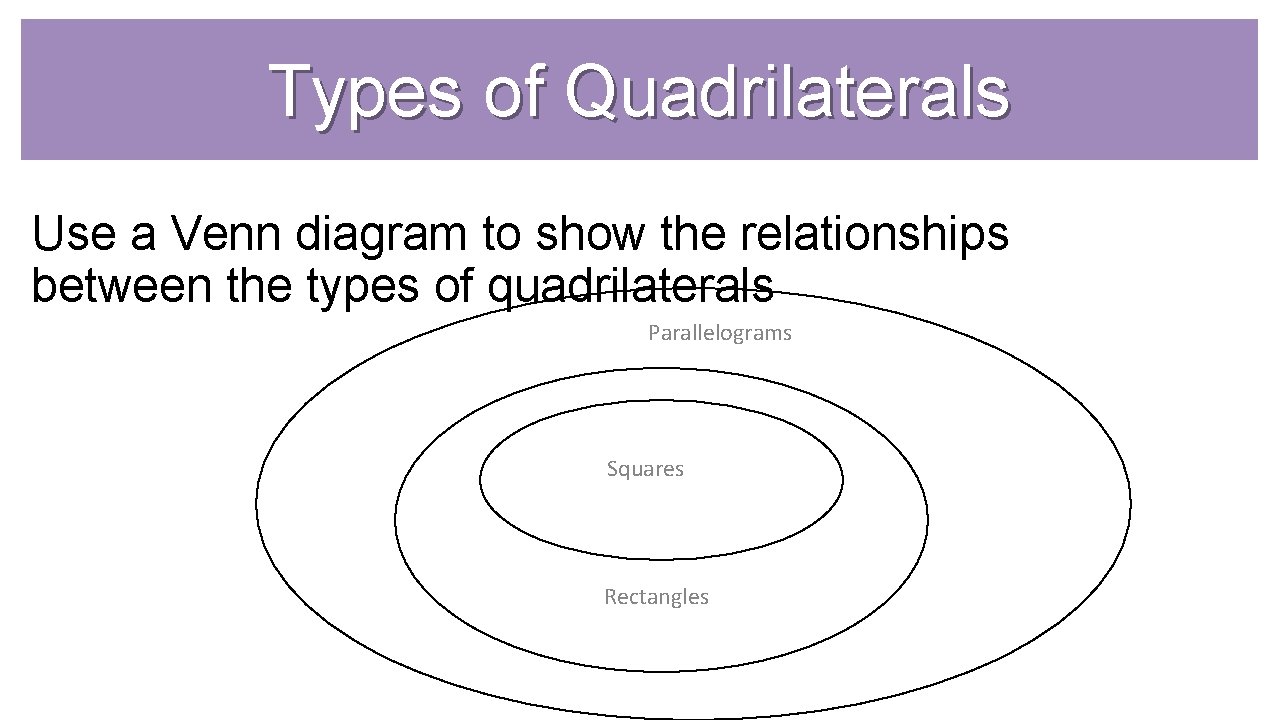
Types of Quadrilaterals Use a Venn diagram to show the relationships between the types of quadrilaterals Parallelograms Squares Rectangles
Polygons A polygon is a closed, plane figure (that is - 2 D) consisting only of straight line segments (sides) “Many-sided”- though poly/gon means many/angled (“gon” = knee)) Classified according to the number of sides (as before)
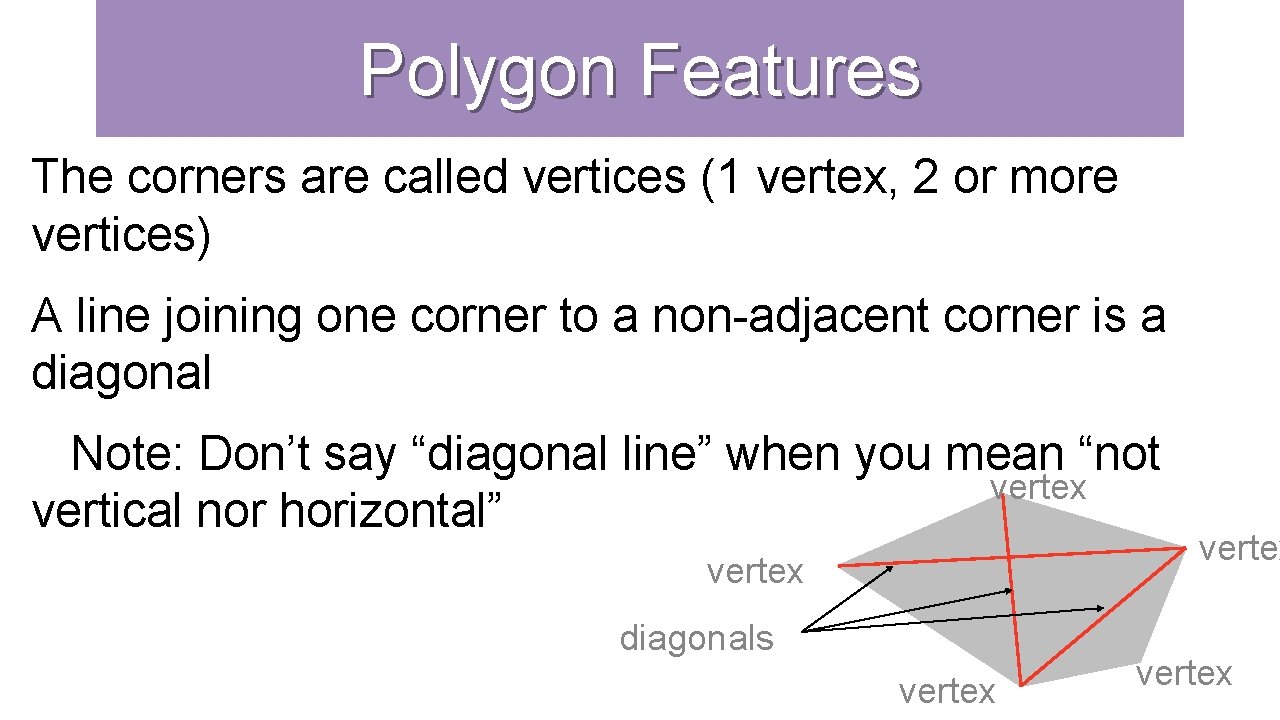
Polygon Features The corners are called vertices (1 vertex, 2 or more vertices) A line joining one corner to a non-adjacent corner is a diagonal Note: Don’t say “diagonal line” when you mean “not vertex vertical nor horizontal” vertex diagonals vertex
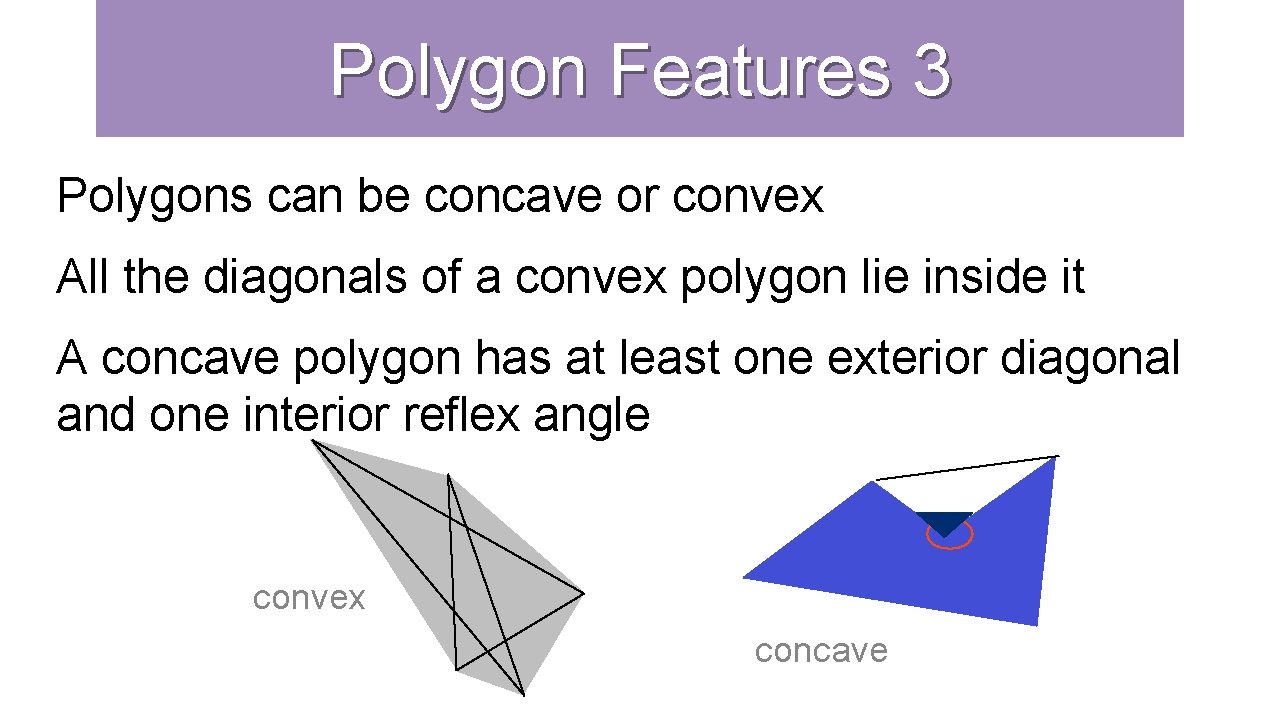
Polygon Features 3 Polygons can be concave or convex All the diagonals of a convex polygon lie inside it A concave polygon has at least one exterior diagonal and one interior reflex angle convex concave
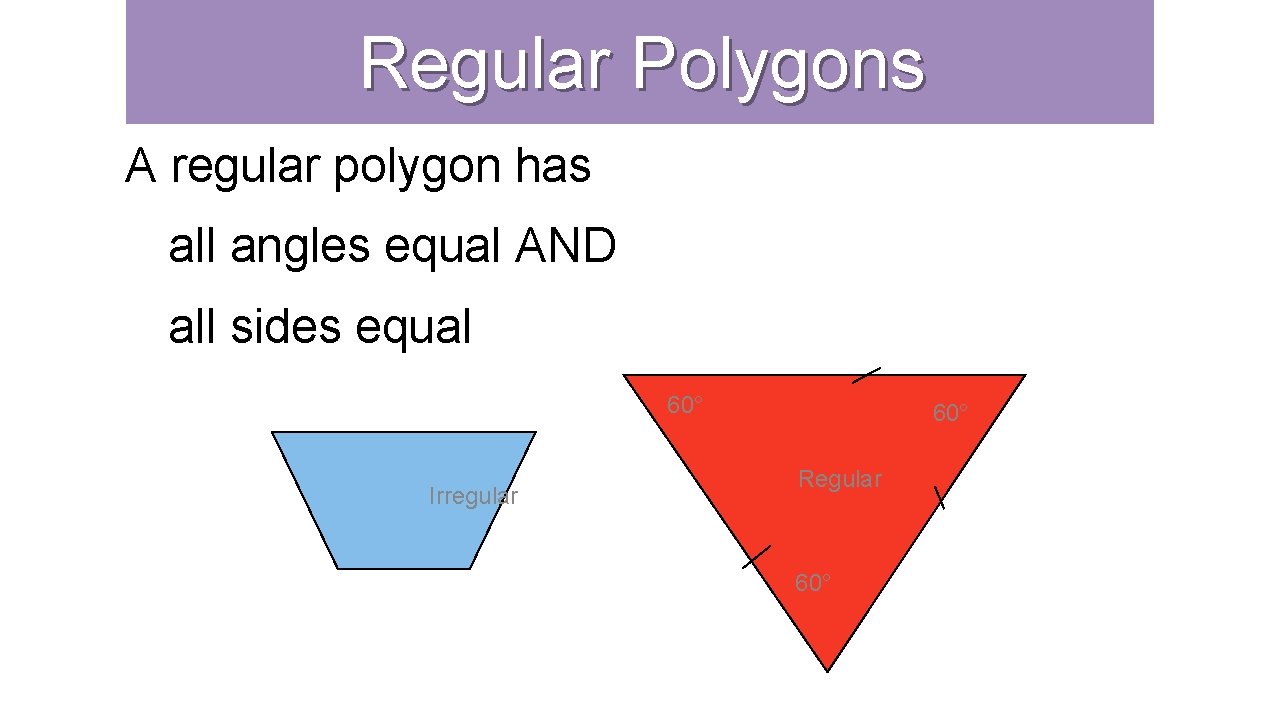
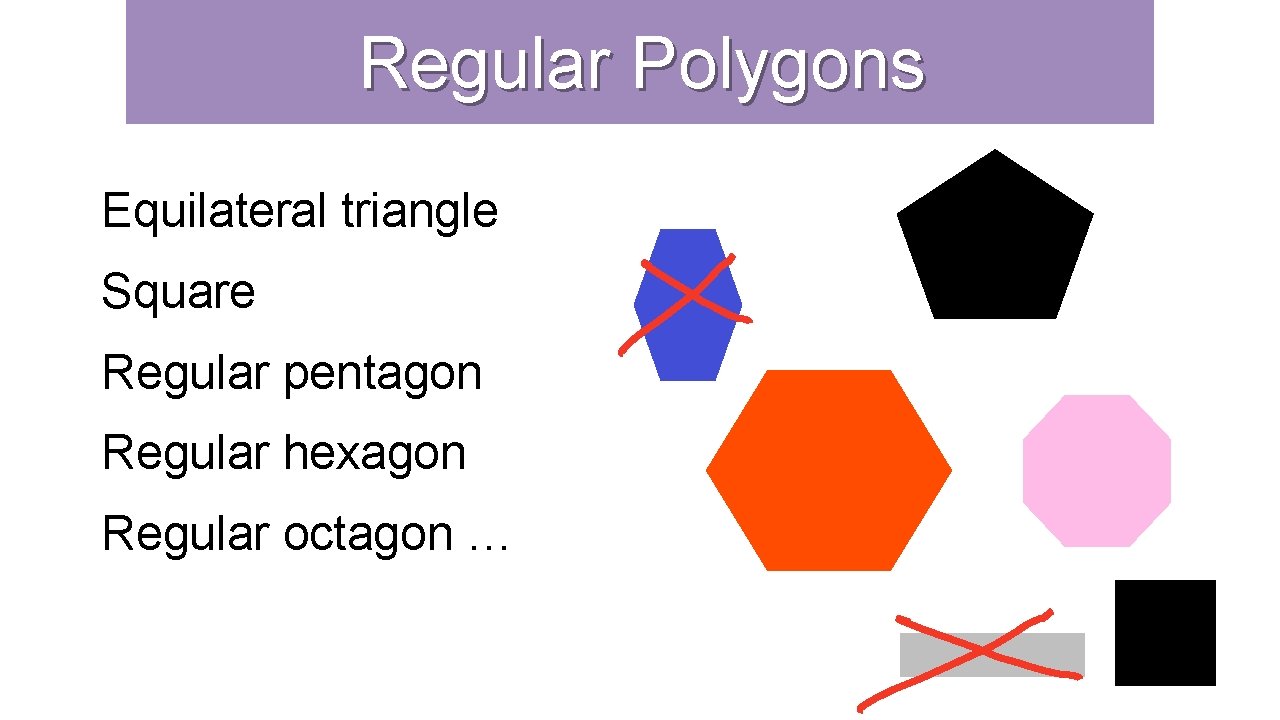
Regular Polygons A regular polygon has all angles equal AND all sides equal 60° Irregular 60° Regular 60°
Regular Polygons Equilateral triangle Square Regular pentagon Regular hexagon Regular octagon …
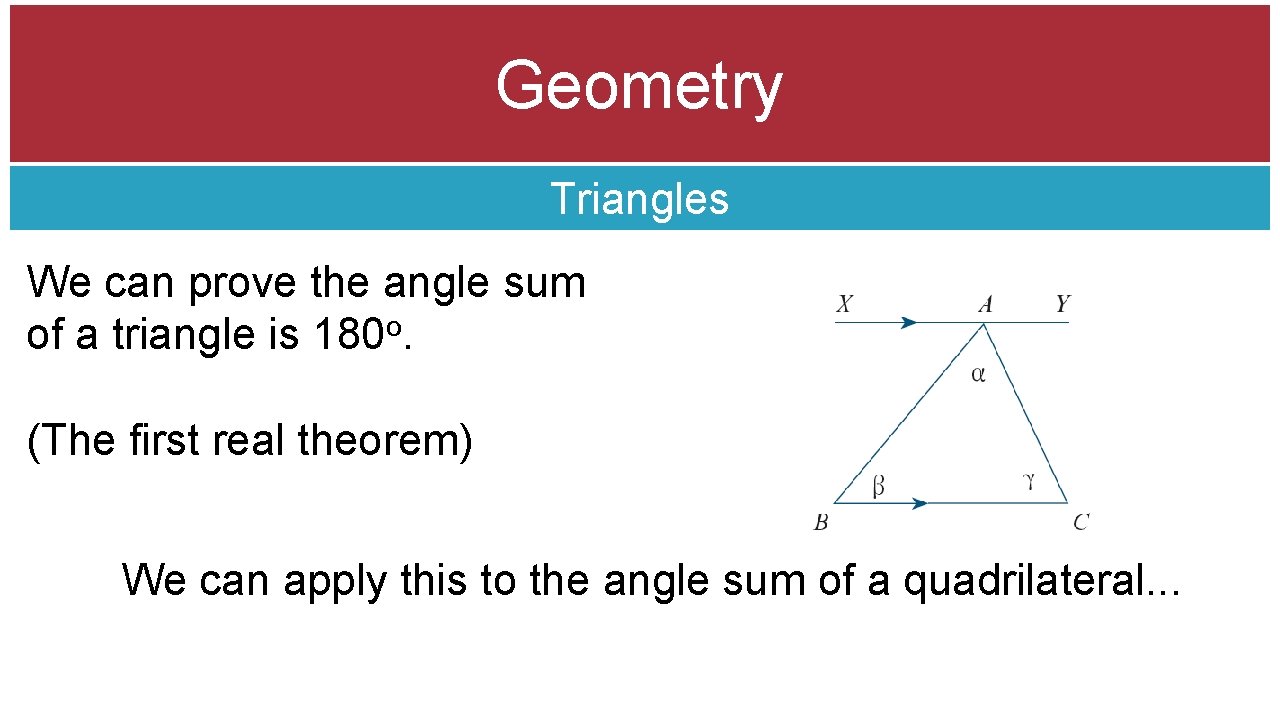
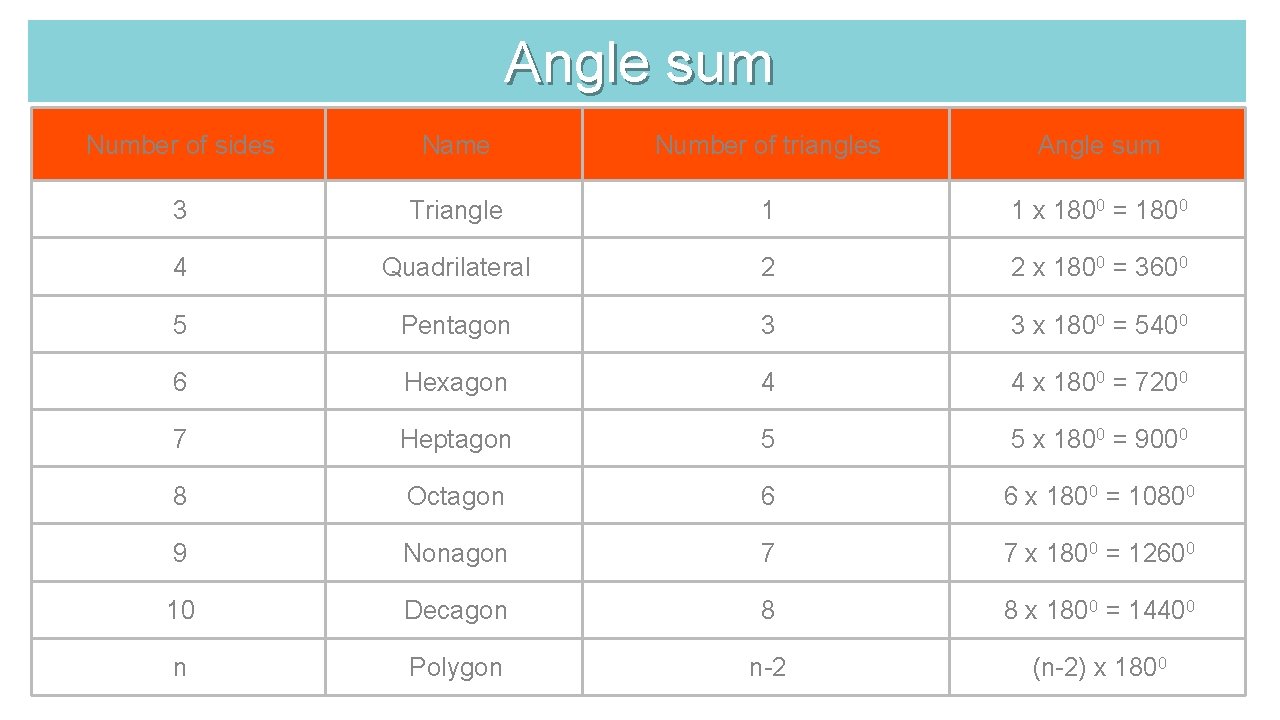
Geometry Triangles We can prove the angle sum of a triangle is 180 o. (The first real theorem) We can apply this to the angle sum of a quadrilateral. . .
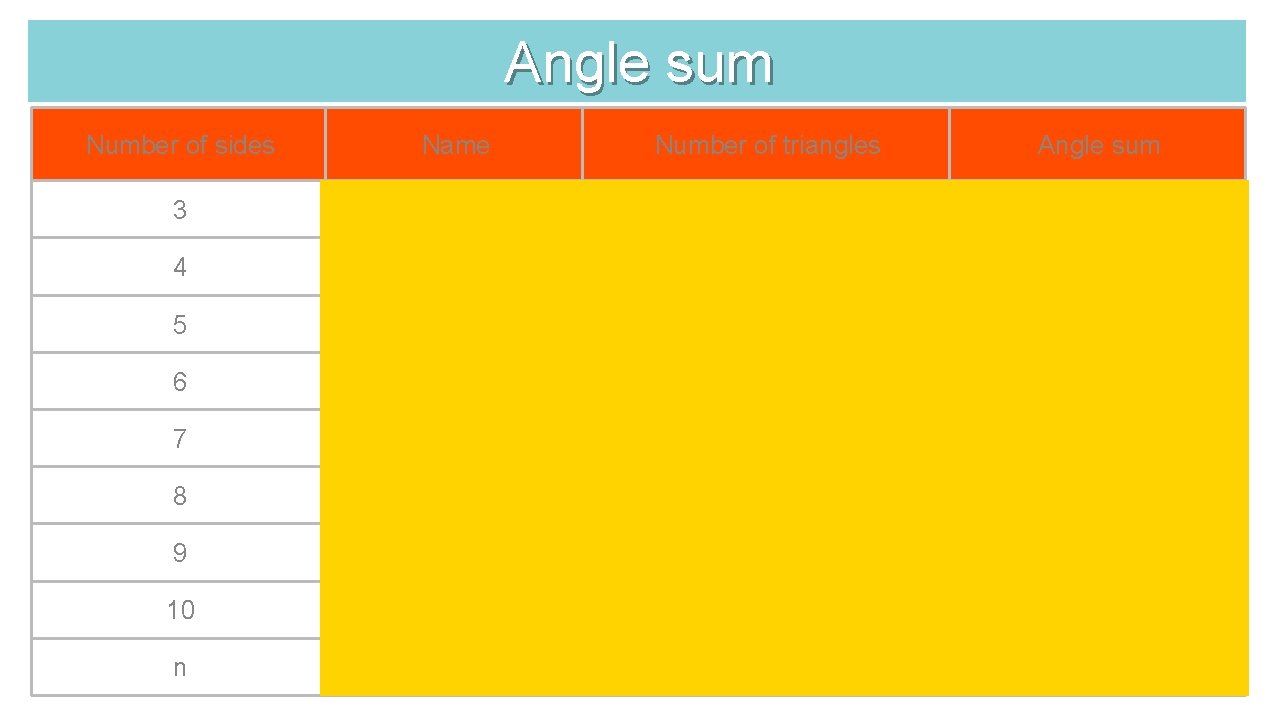
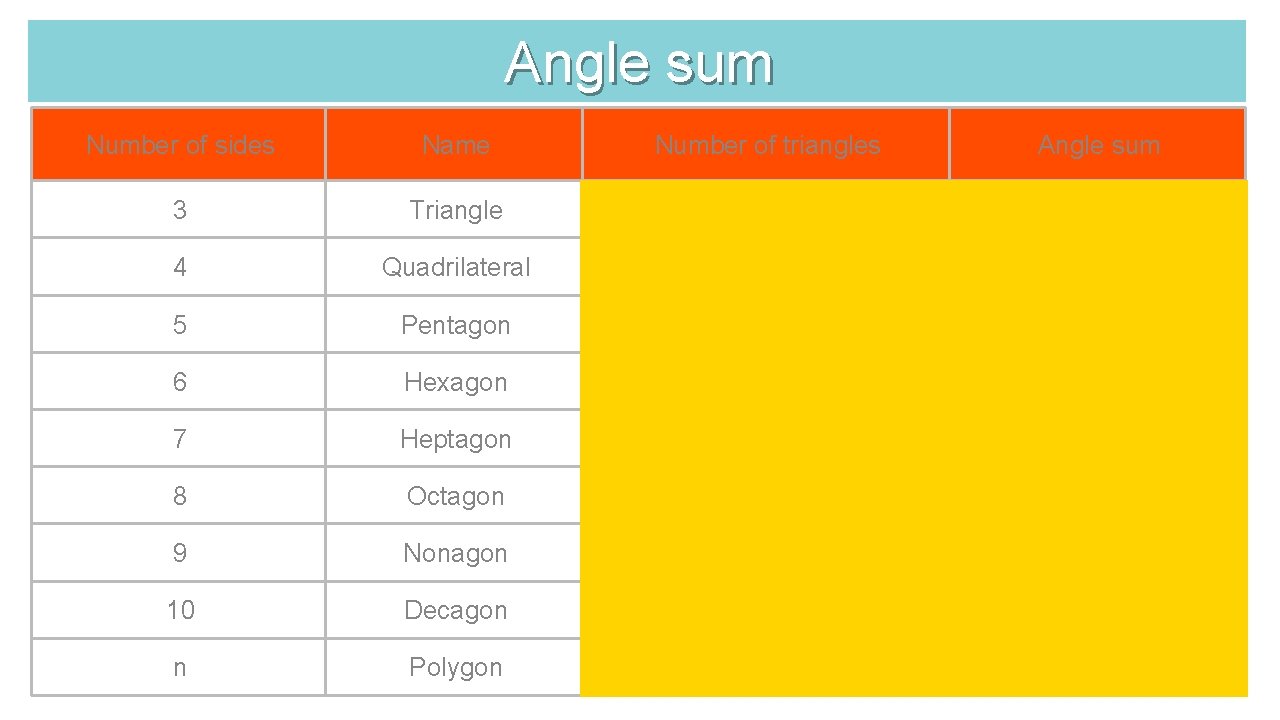
Angle sum Number of sides Name Number of triangles Angle sum 3 Triangle 1 1 x 1800 = 1800 4 Quadrilateral 2 2 x 1800 = 3600 5 Pentagon 3 3 x 1800 = 5400 6 Hexagon 4 4 x 1800 = 7200 7 Heptagon 5 5 x 1800 = 9000 8 Octagon 6 6 x 1800 = 10800 9 Nonagon 7 7 x 1800 = 12600 10 Decagon 8 8 x 1800 = 14400 n Polygon n-2 (n-2) x 1800
Angle sum Number of sides Name Number of triangles Angle sum 3 Triangle 1 1 x 1800 = 1800 4 Quadrilateral 2 2 x 1800 = 3600 5 Pentagon 3 3 x 1800 = 5400 6 Hexagon 4 4 x 1800 = 7200 7 Heptagon 5 5 x 1800 = 9000 8 Octagon 6 6 x 1800 = 10800 9 Nonagon 7 7 x 1800 = 12600 10 Decagon 8 8 x 1800 = 14400 n Polygon n-2 (n-2) x 1800
Angle sum Number of sides Name Number of triangles Angle sum 3 Triangle 1 1 x 1800 = 1800 4 Quadrilateral 2 2 x 1800 = 3600 5 Pentagon 3 3 x 1800 = 5400 6 Hexagon 4 4 x 1800 = 7200 7 Heptagon 5 5 x 1800 = 9000 8 Octagon 6 6 x 1800 = 10800 9 Nonagon 7 7 x 1800 = 12600 10 Decagon 8 8 x 1800 = 14400 n Polygon n-2 (n-2) x 1800
Angle sum Number of sides Name Number of triangles Angle sum 3 Triangle 1 1 x 1800 = 1800 4 Quadrilateral 2 2 x 1800 = 3600 5 Pentagon 3 3 x 1800 = 5400 6 Hexagon 4 4 x 1800 = 7200 7 Heptagon 5 5 x 1800 = 9000 8 Octagon 6 6 x 1800 = 10800 9 Nonagon 7 7 x 1800 = 12600 10 Decagon 8 8 x 1800 = 14400 n Polygon n-2 (n-2) x 1800
Congruent and similar shapes 99
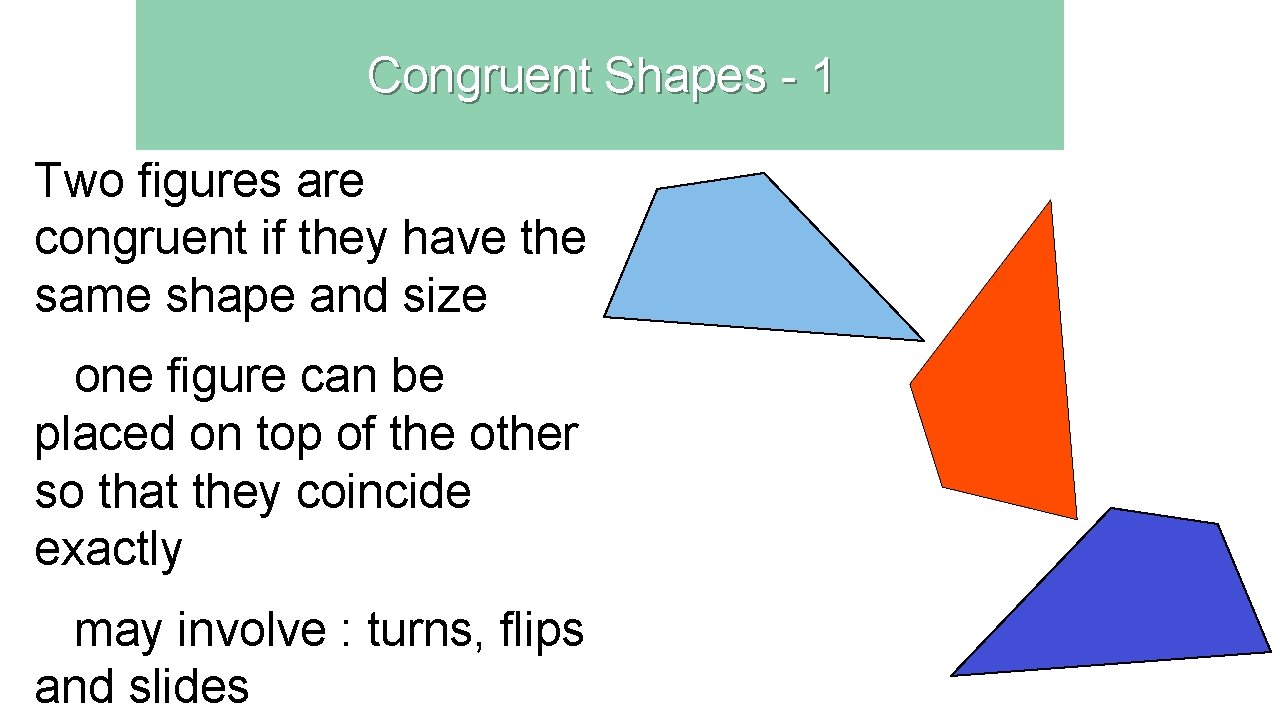
Congruent Shapes - 1 Two figures are congruent if they have the same shape and size one figure can be placed on top of the other so that they coincide exactly may involve : turns, flips and slides
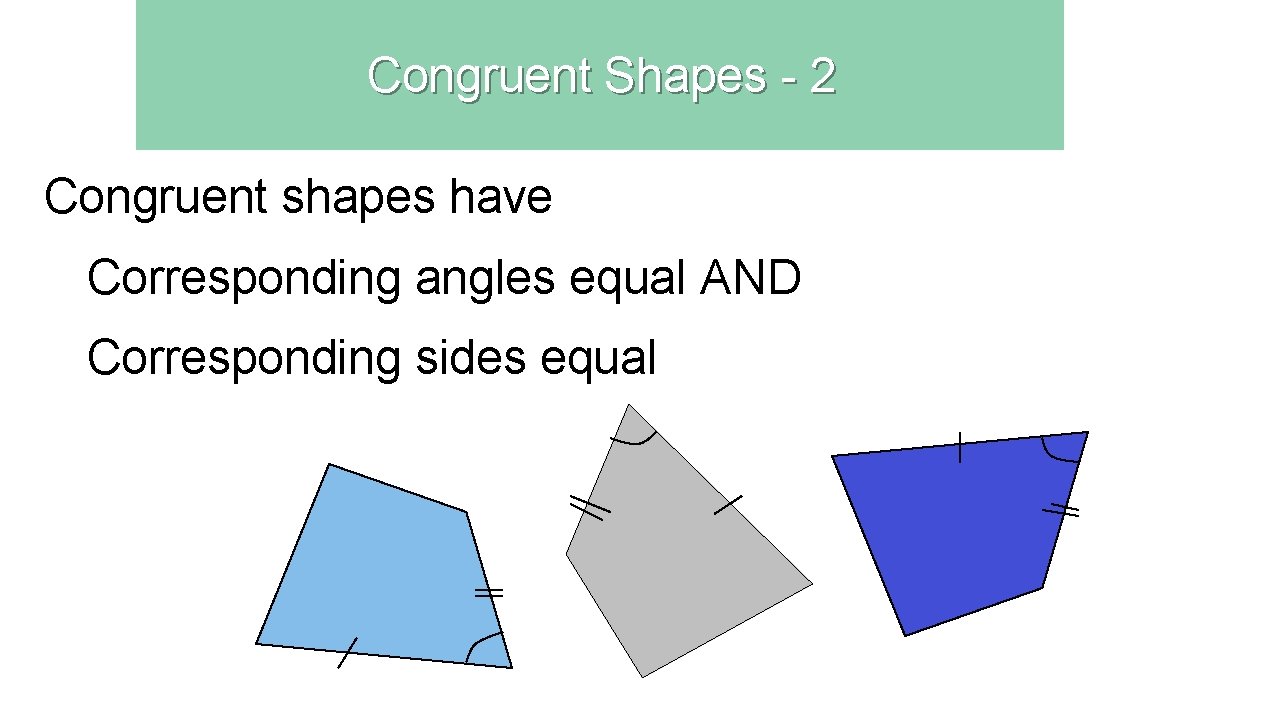
Congruent Shapes - 2 Congruent shapes have Corresponding angles equal AND Corresponding sides equal
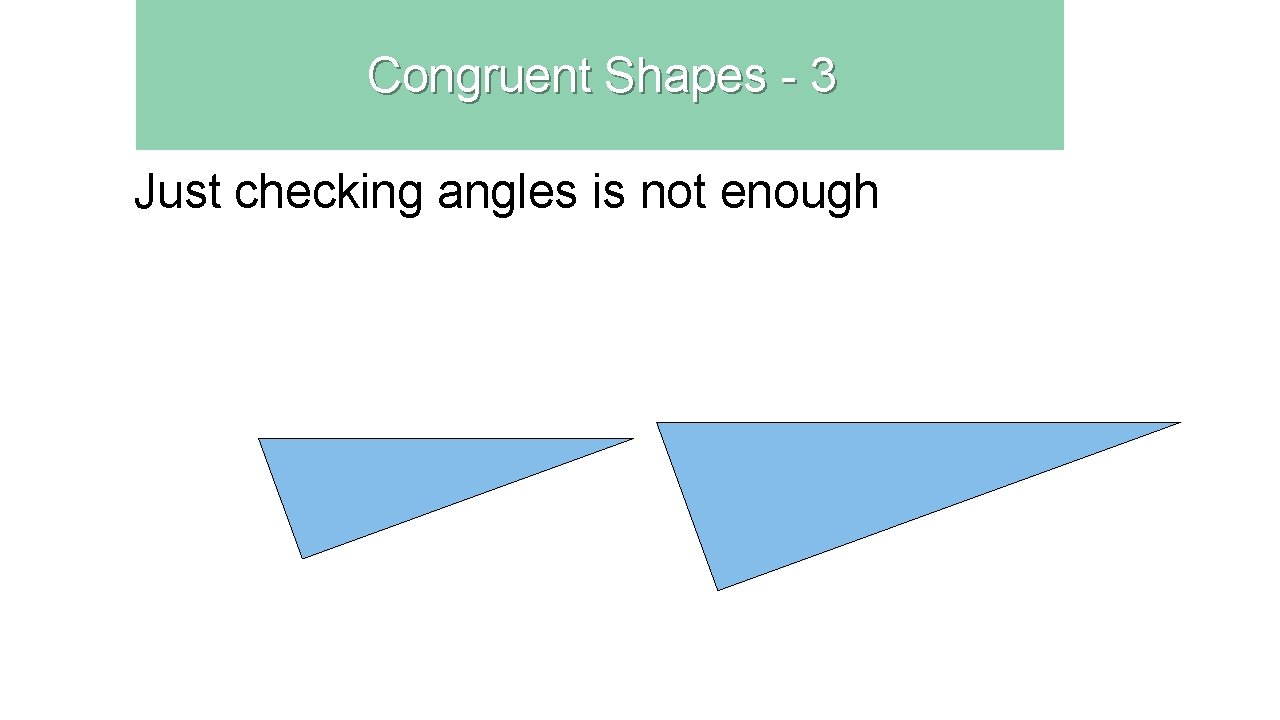
Congruent Shapes - 3 Just checking angles is not enough
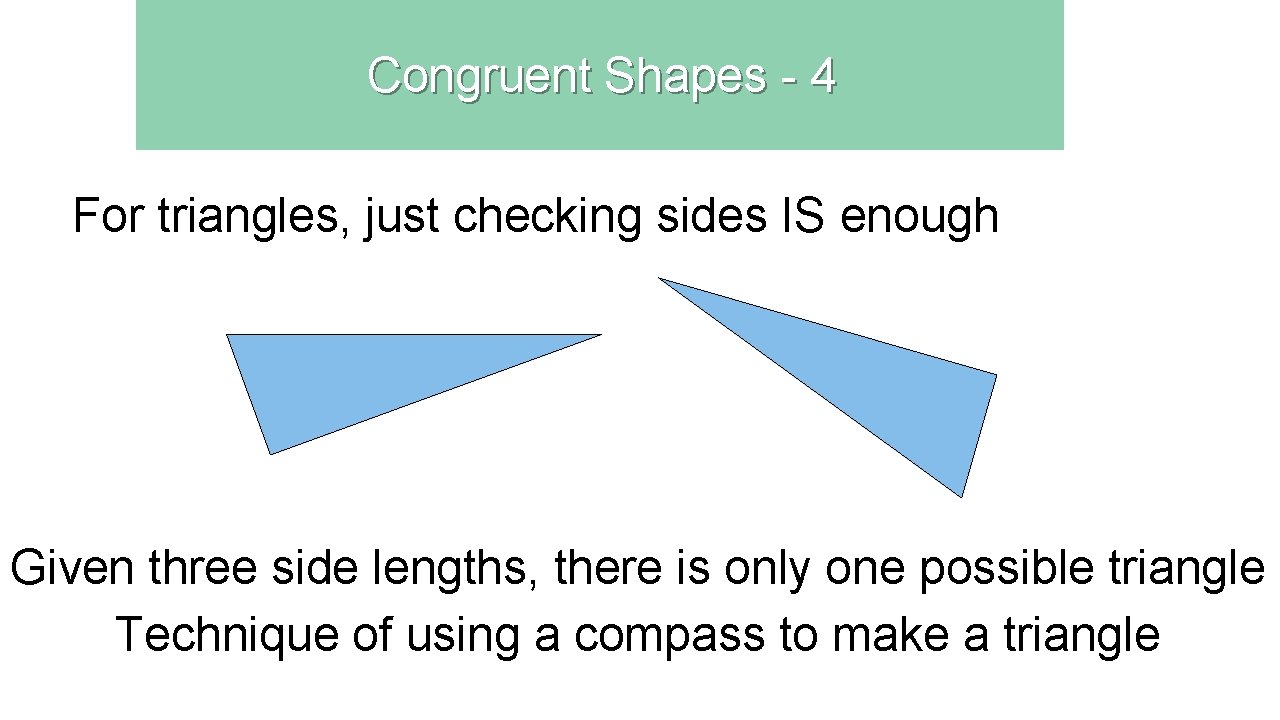
Congruent Shapes - 4 For triangles, just checking sides IS enough Given three side lengths, there is only one possible triangle Technique of using a compass to make a triangle
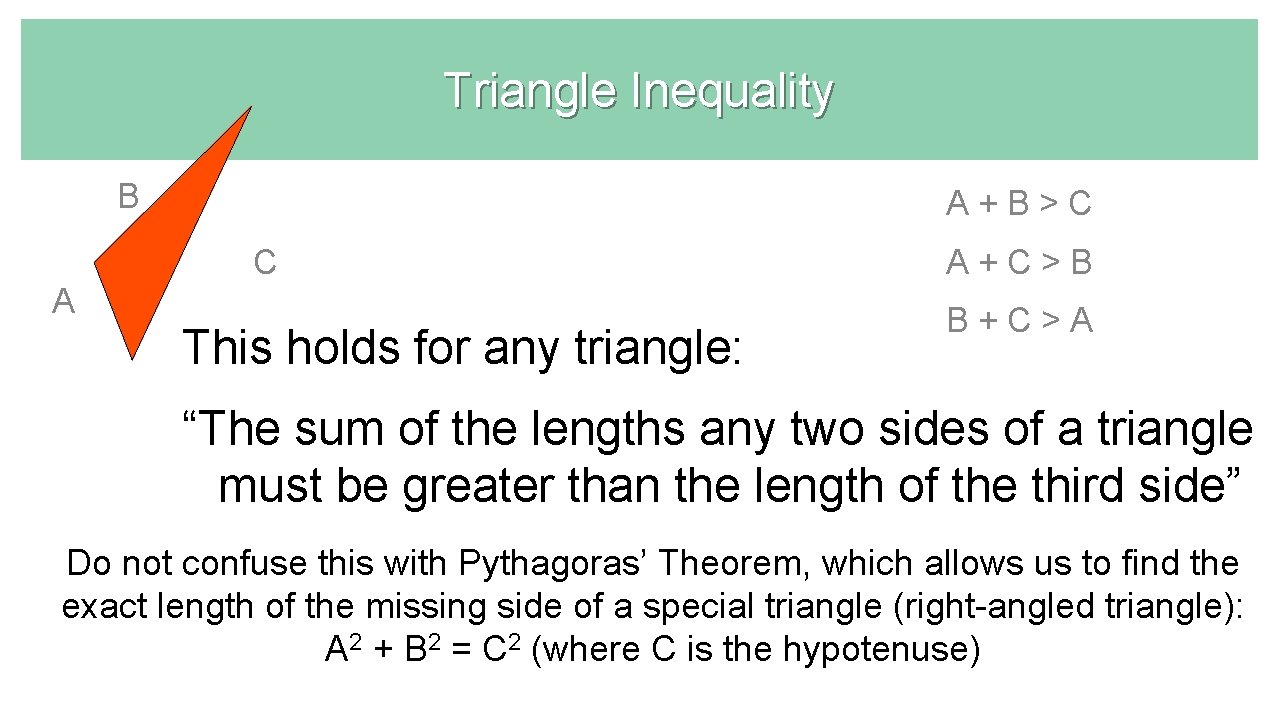
Triangle Inequality B A + B > C C A This holds for any triangle: A + C > B B + C > A “The sum of the lengths any two sides of a triangle must be greater than the length of the third side” Do not confuse this with Pythagoras’ Theorem, which allows us to find the exact length of the missing side of a special triangle (right-angled triangle): A 2 + B 2 = C 2 (where C is the hypotenuse)
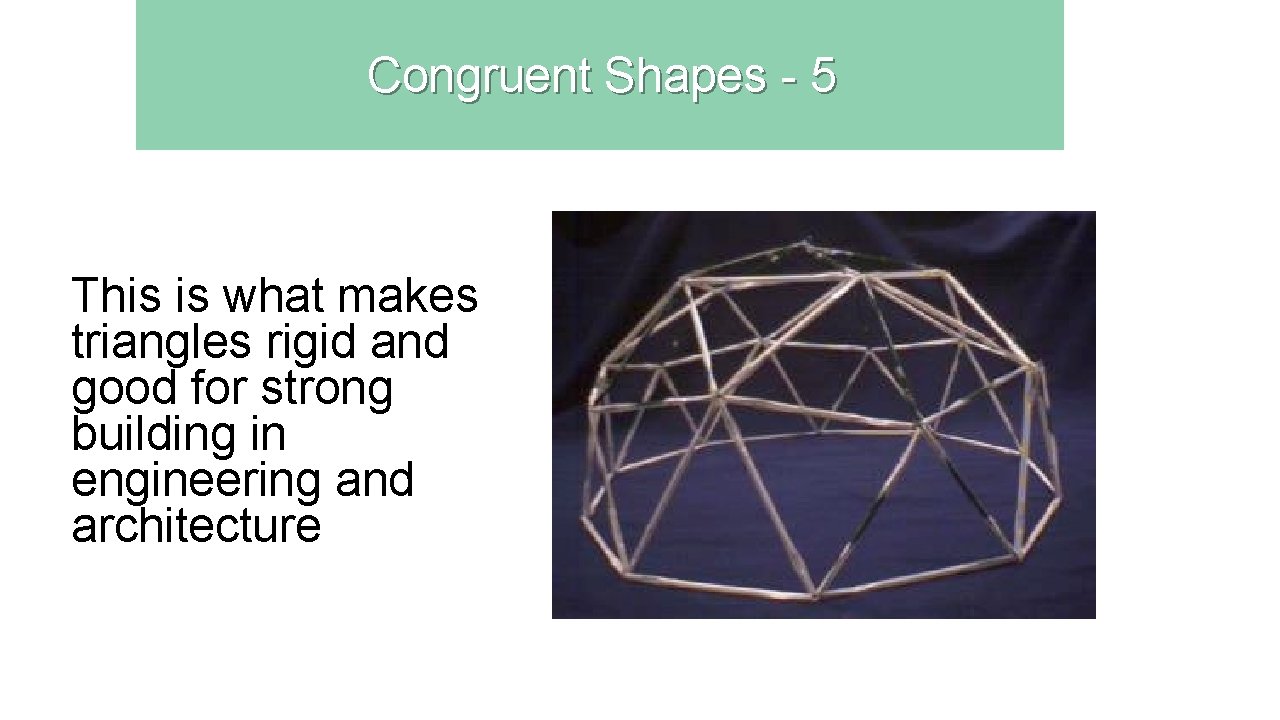
Congruent Shapes - 5 This is what makes triangles rigid and good for strong building in engineering and architecture
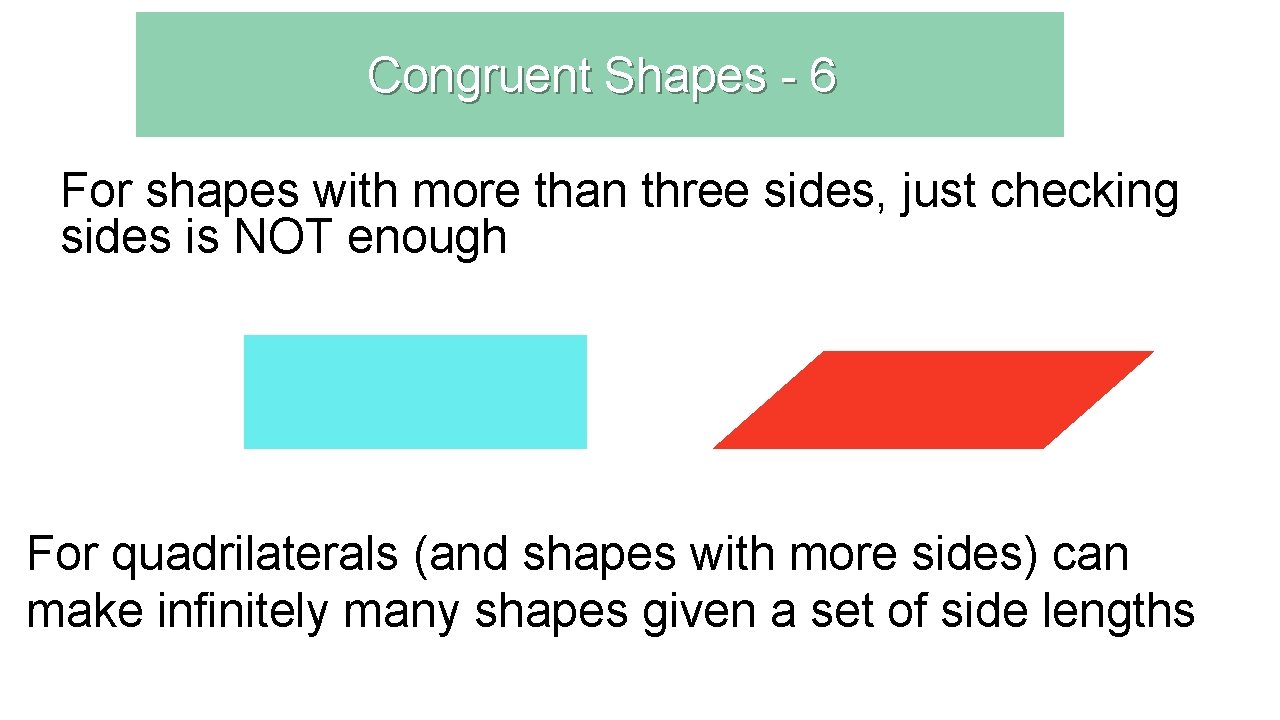
Congruent Shapes - 6 For shapes with more than three sides, just checking sides is NOT enough For quadrilaterals (and shapes with more sides) can make infinitely many shapes given a set of side lengths
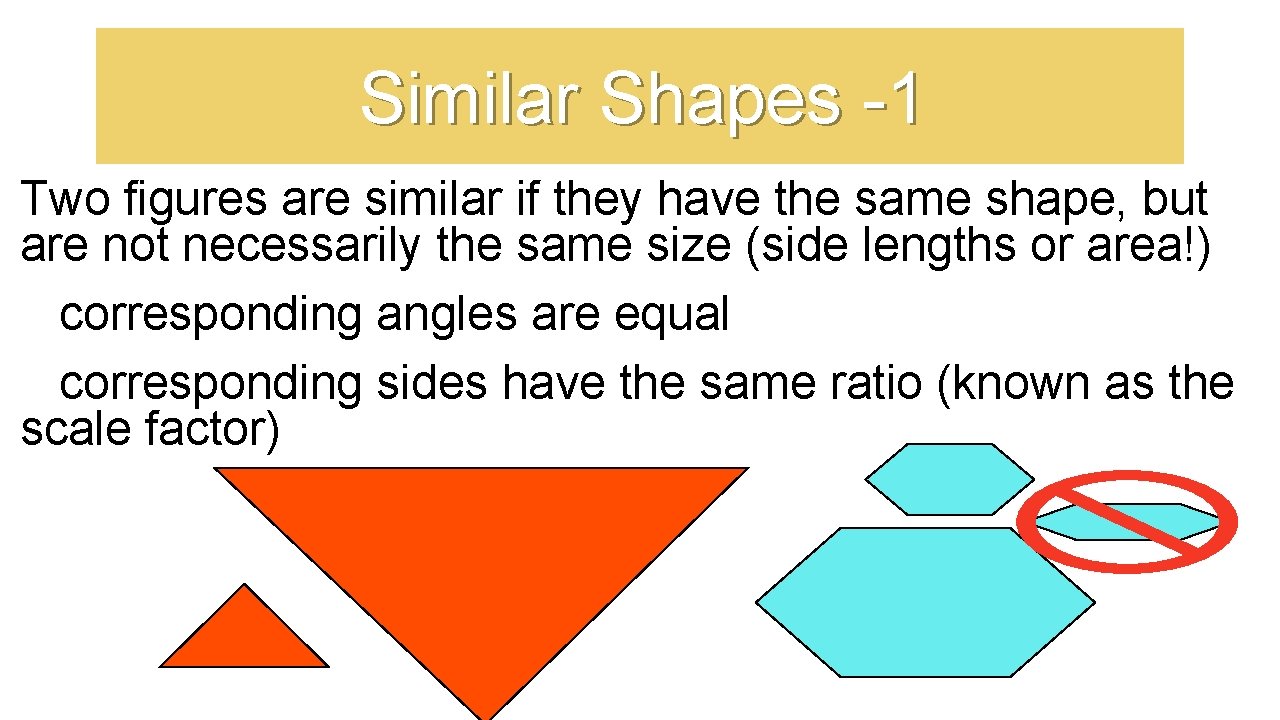
Similar Shapes -1 Two figures are similar if they have the same shape, but are not necessarily the same size (side lengths or area!) corresponding angles are equal corresponding sides have the same ratio (known as the scale factor)
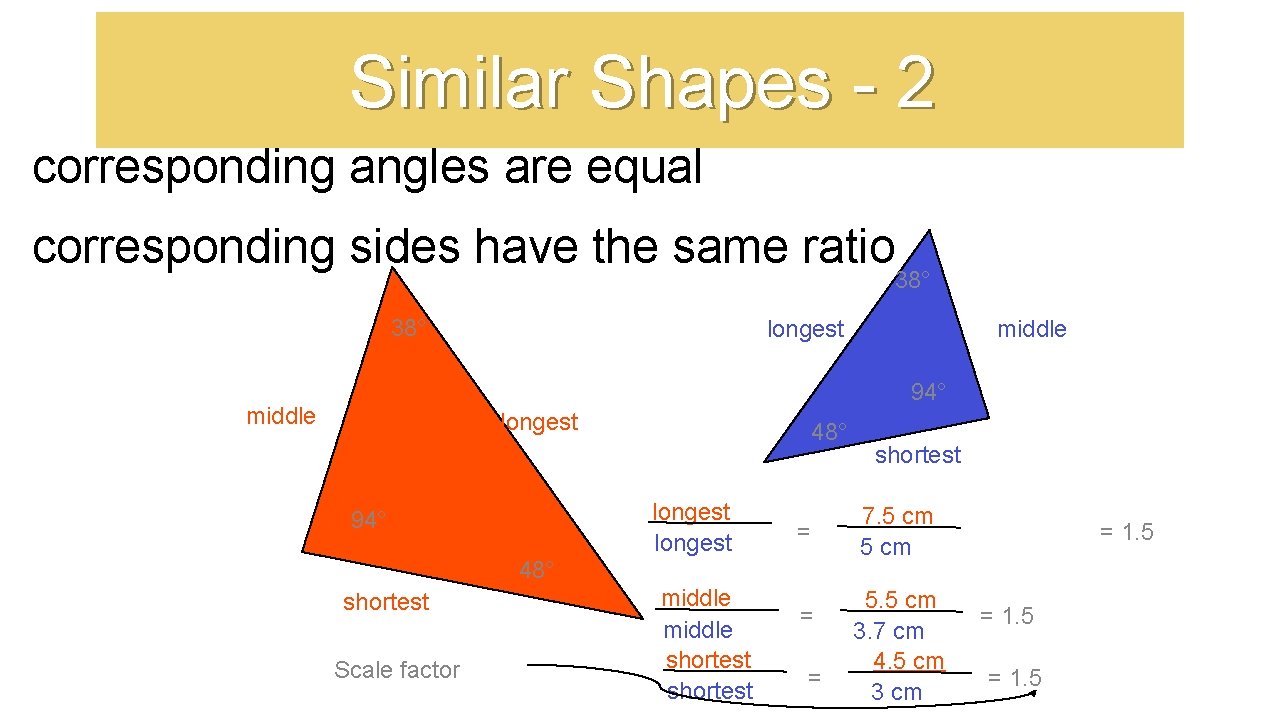
Similar Shapes - 2 corresponding angles are equal corresponding sides have the same ratio 38° longest middle 94° middle longest 94° 48° shortest Scale factor 48° longest middle shortest = = = shortest 7. 5 cm 5. 5 cm 3. 7 cm 4. 5 cm 3 cm = 1. 5
Similar Shapes - 3 Similar shapes: Imagine using the photocopier to enlarge or reduce the shape A setting of 200% is a scale factor of 2, and so the side lengths on the new shape are 2 times those on the original How would the area of the new shape compare to the original? A special case of similarity is when the scale factor is 1 (100%), and then we call the shapes congruent.
Three-dimensional objects 110
Talk to the person next to you: Describe &/ or draw: a “prism” a “pyramid” Describe what is meant by the term “crosssection”
Write down yes or no … Is a cylinder a prism? Is a cone a pyramid?
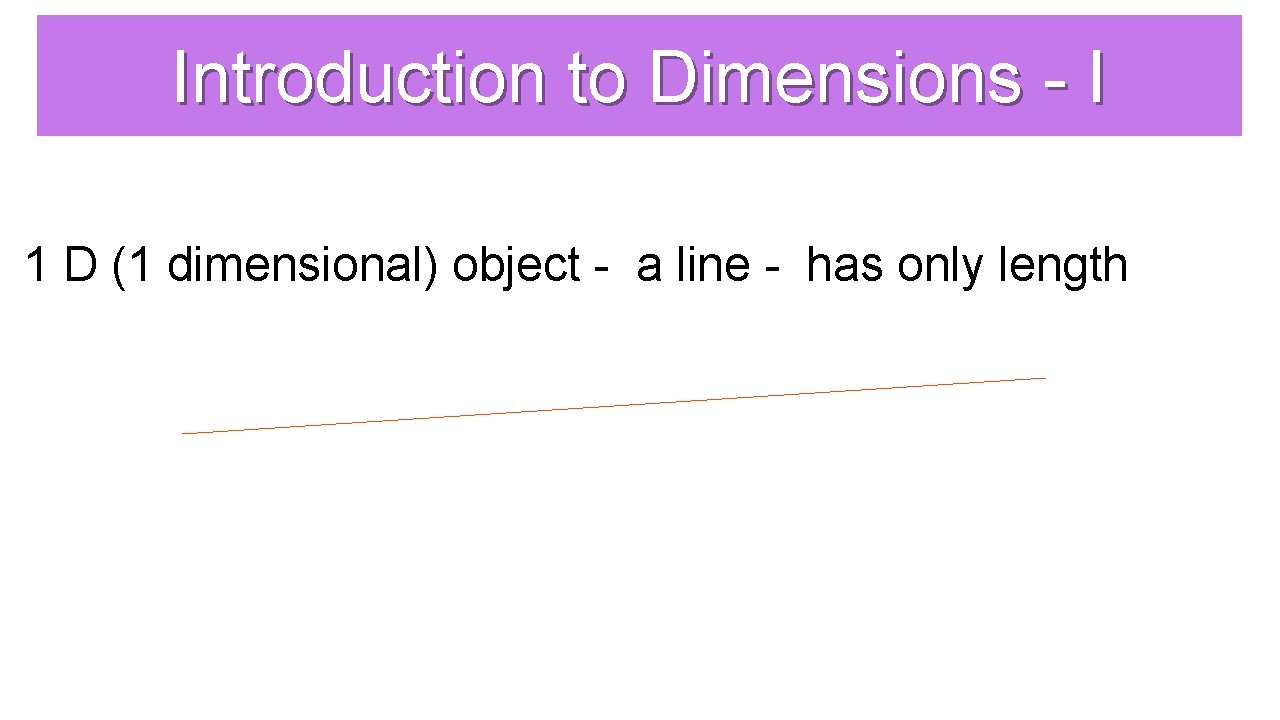
Introduction to Dimensions - I 1 D (1 dimensional) object - a line - has only length
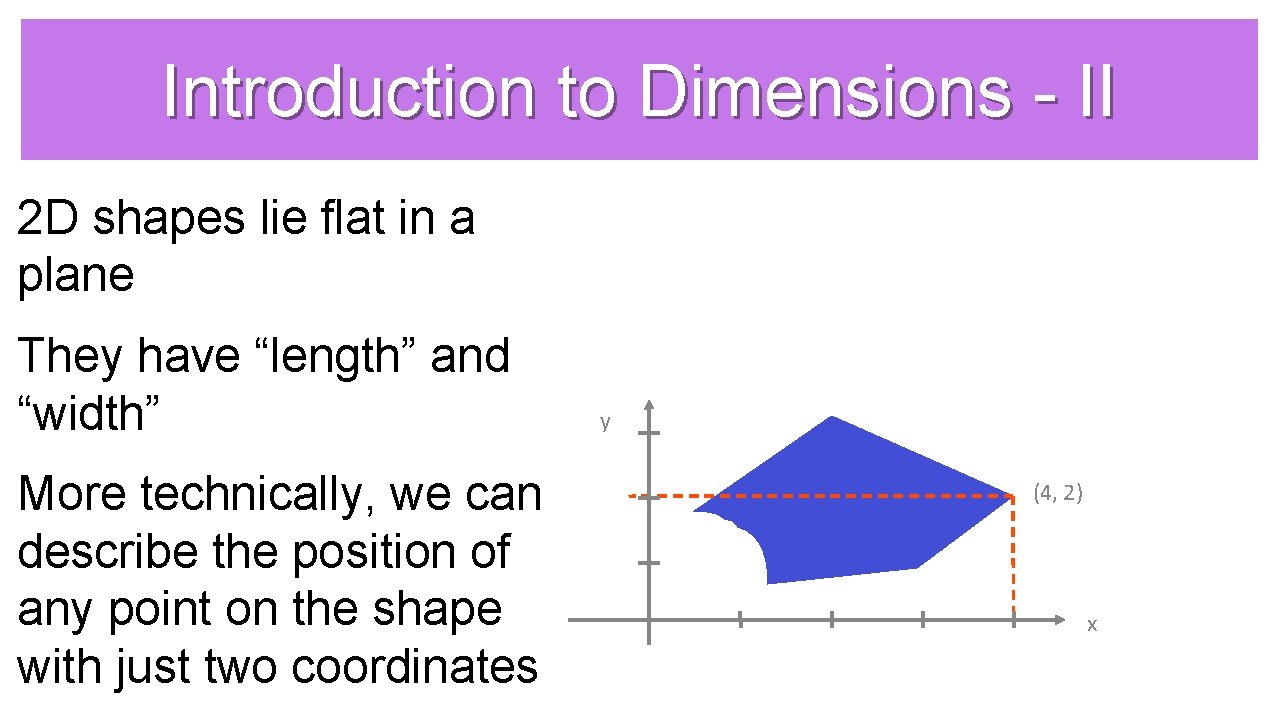
Introduction to Dimensions - II 2 D shapes lie flat in a plane They have “length” and “width” More technically, we can describe the position of any point on the shape with just two coordinates y (4, 2) x
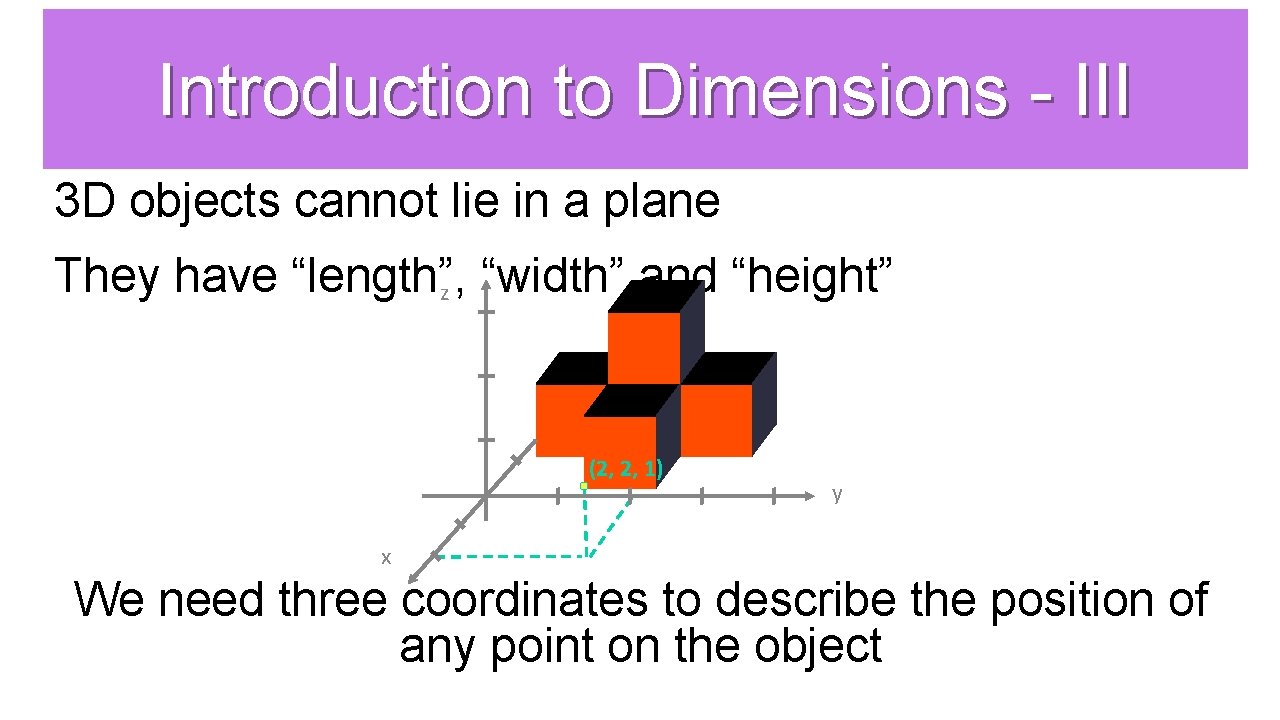
Introduction to Dimensions - III 3 D objects cannot lie in a plane They have “length”, “width” and “height” z (2, 2, 1) y x We need three coordinates to describe the position of any point on the object
Introduction to Dimensions - IV We live in a 3 D world but our perception of it is more 2 D. Binocular vision gives an impression of depth, BUT we can’t see around the back of something Drawings are only 2 D representations of 3 D objects Lots of real life 3 D shapes including people, chairs, etc! Educationally we tend to focus on certain conventional objects.
Language Using correct and appropriate language is very important As for 2 D shapes, properties define solids, not merely that “they look like it” To talk about properties you need the language
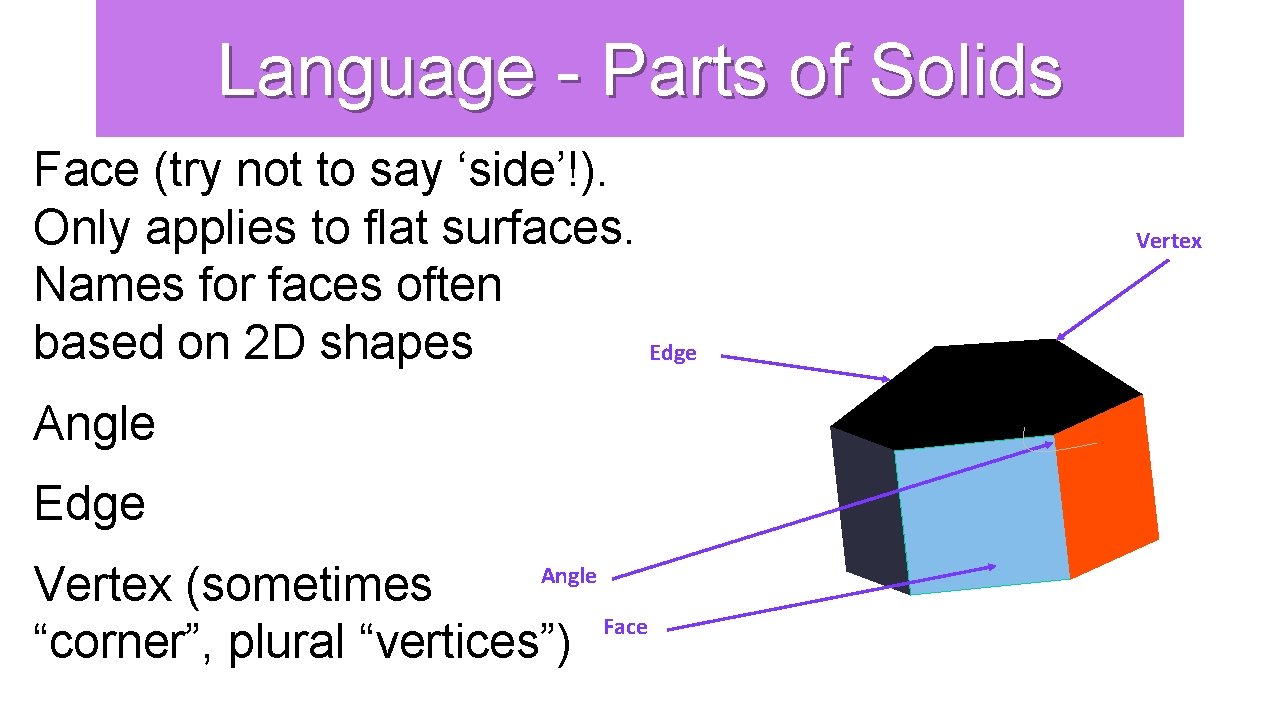
Language - Parts of Solids Face (try not to say ‘side’!). Only applies to flat surfaces. Names for faces often based on 2 D shapes Edge Angle Edge Vertex (sometimes “corner”, plural “vertices”) Angle Face Vertex
Language - Types of Solids Prisms and pyramids Sphere, cylinder, cone, cube Polyhedron - 3 D shape made of 2 D polygonal faces - Plural is “polyhedra” - Regular polyhedra (Platonic solids)
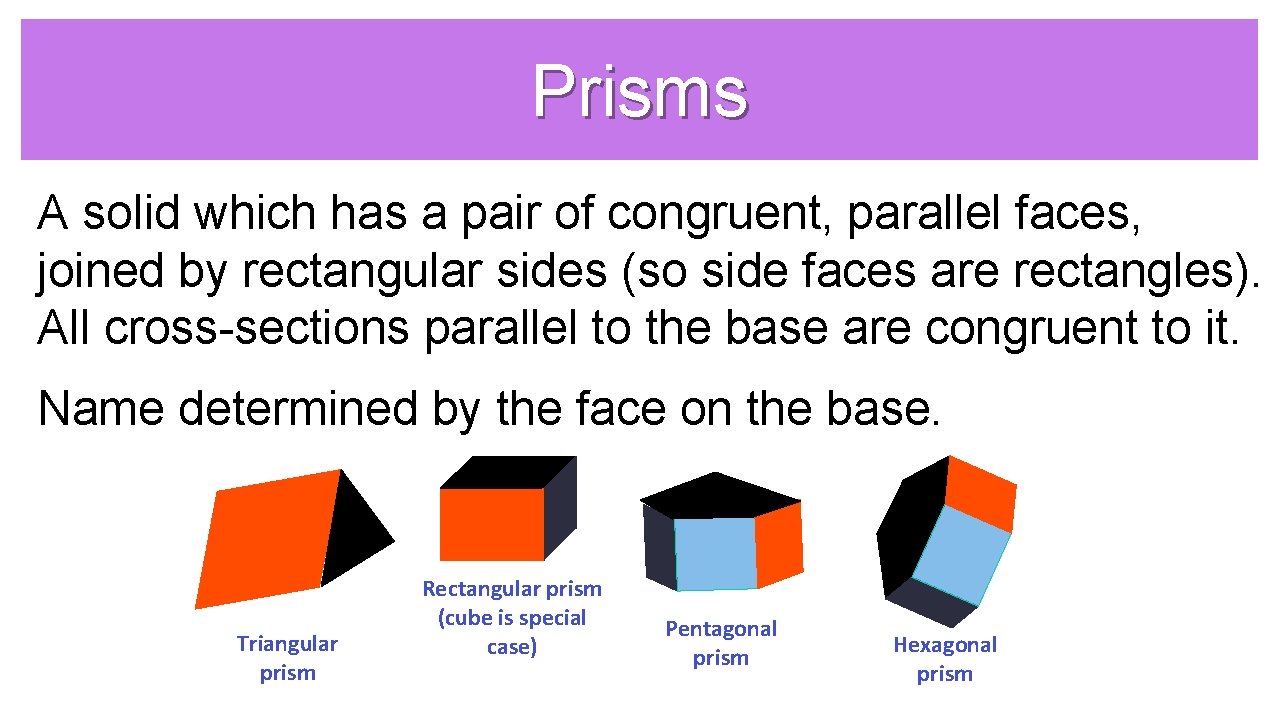
Prisms A solid which has a pair of congruent, parallel faces, joined by rectangular sides (so side faces are rectangles). All cross-sections parallel to the base are congruent to it. Name determined by the face on the base. Triangular prism Rectangular prism (cube is special case) Pentagonal prism Hexagonal prism
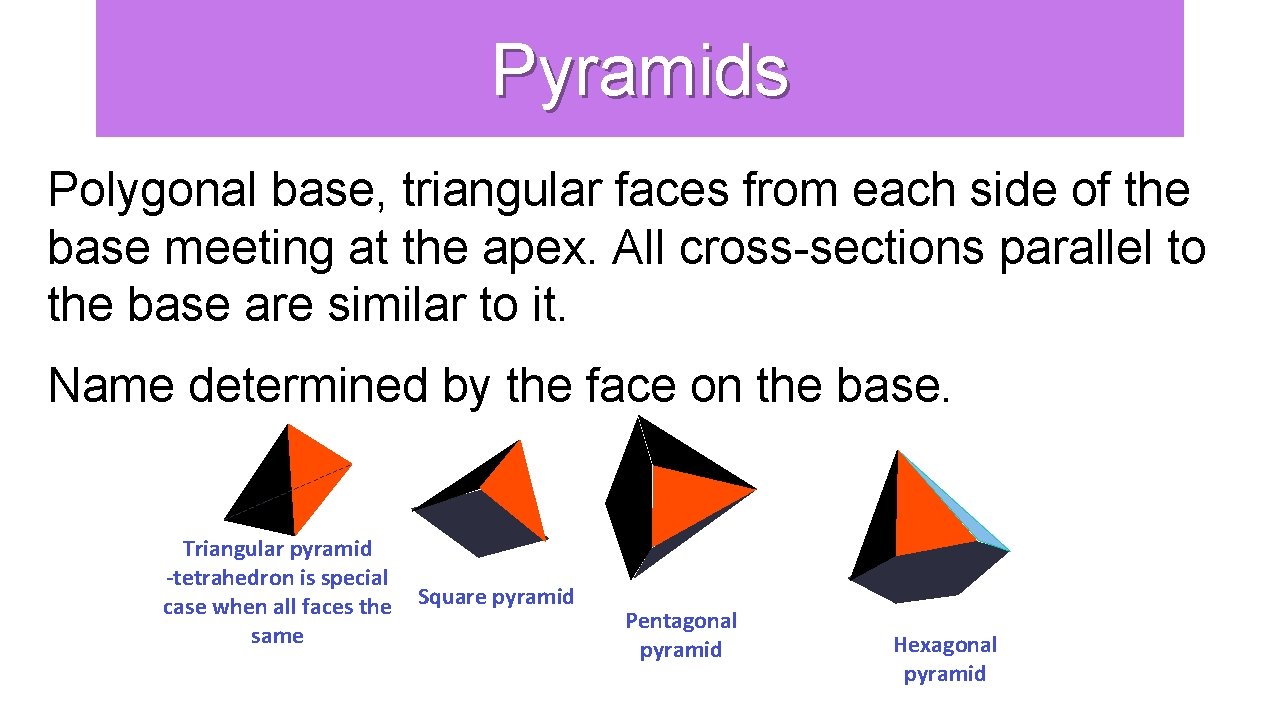
Pyramids Polygonal base, triangular faces from each side of the base meeting at the apex. All cross-sections parallel to the base are similar to it. Name determined by the face on the base. Triangular pyramid -tetrahedron is special case when all faces the same Square pyramid Pentagonal pyramid Hexagonal pyramid
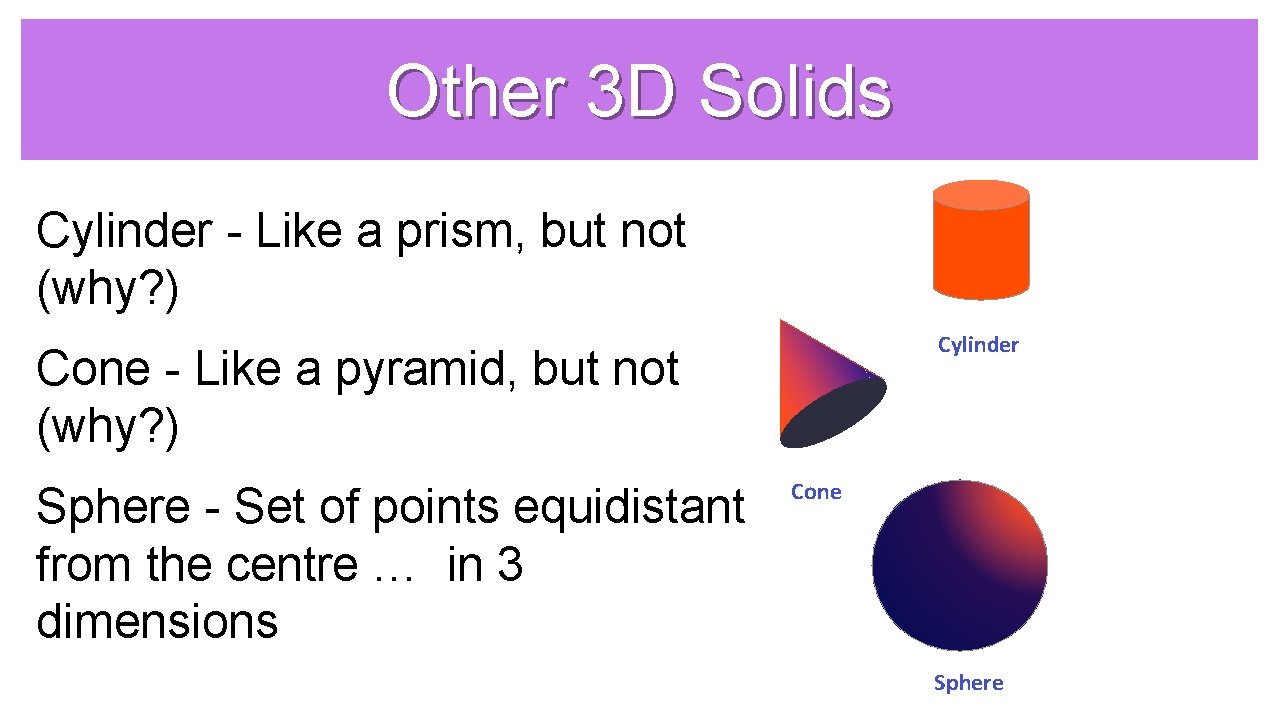
Other 3 D Solids Cylinder - Like a prism, but not (why? ) Cylinder Cone - Like a pyramid, but not (why? ) Sphere - Set of points equidistant from the centre … in 3 dimensions Cone Sphere
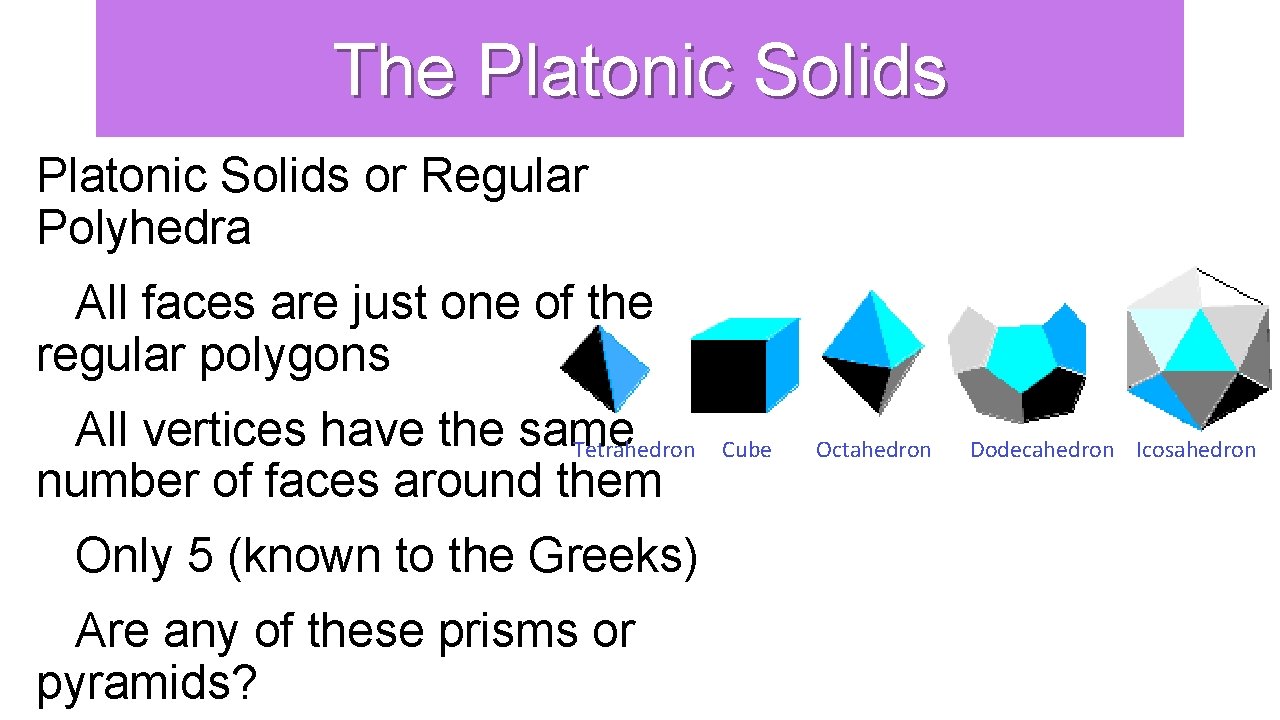
The Platonic Solids or Regular Polyhedra All faces are just one of the regular polygons All vertices have the same Tetrahedron number of faces around them Only 5 (known to the Greeks) Are any of these prisms or pyramids? Cube Octahedron Dodecahedron Icosahedron
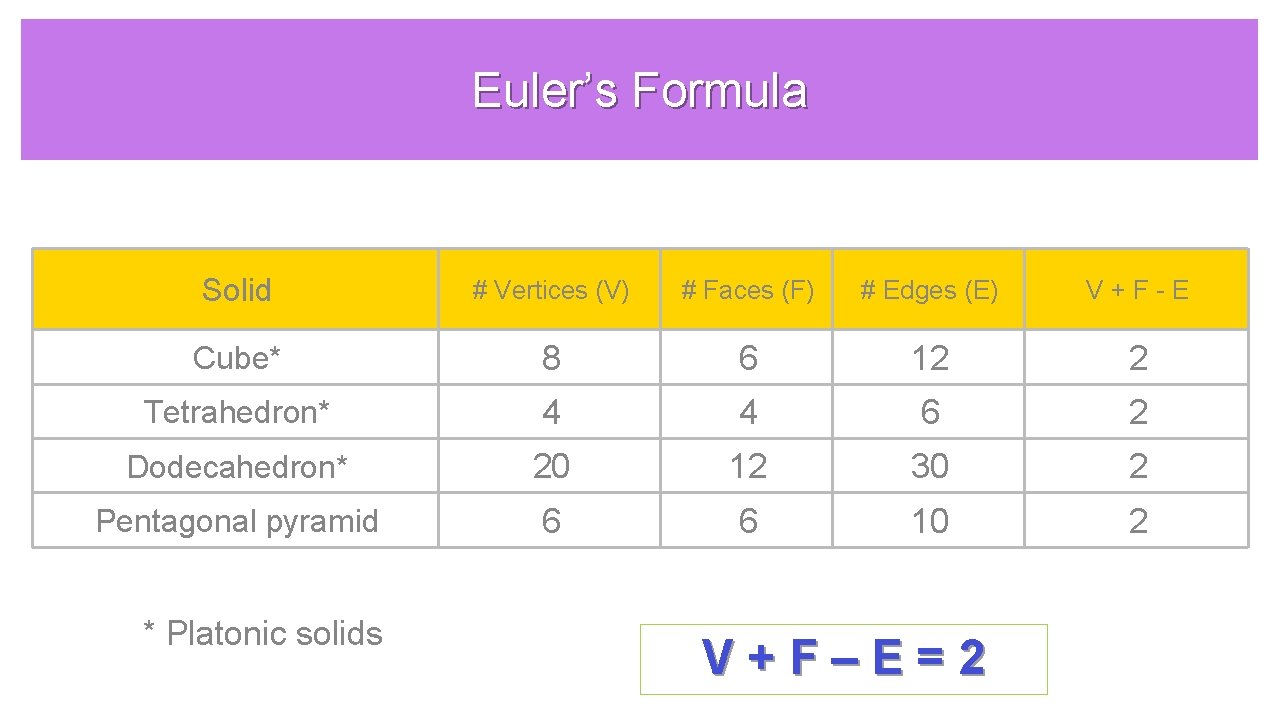
Euler’s Formula Solid # Vertices (V) # Faces (F) # Edges (E) V + F - E Cube* 8 6 12 2 Tetrahedron* 4 4 6 2 Dodecahedron* 20 12 30 2 Pentagonal pyramid 6 6 10 2 * Platonic solids V+F–E=2
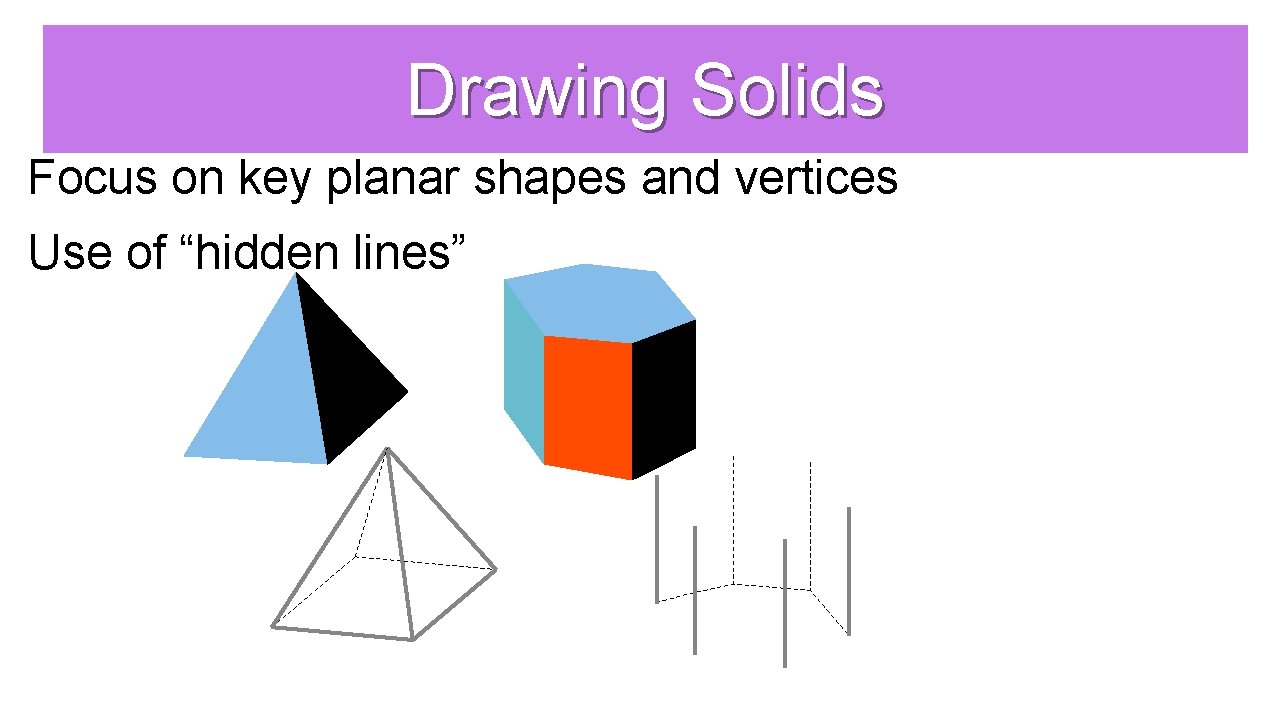
Drawing Solids Focus on key planar shapes and vertices Use of “hidden lines”
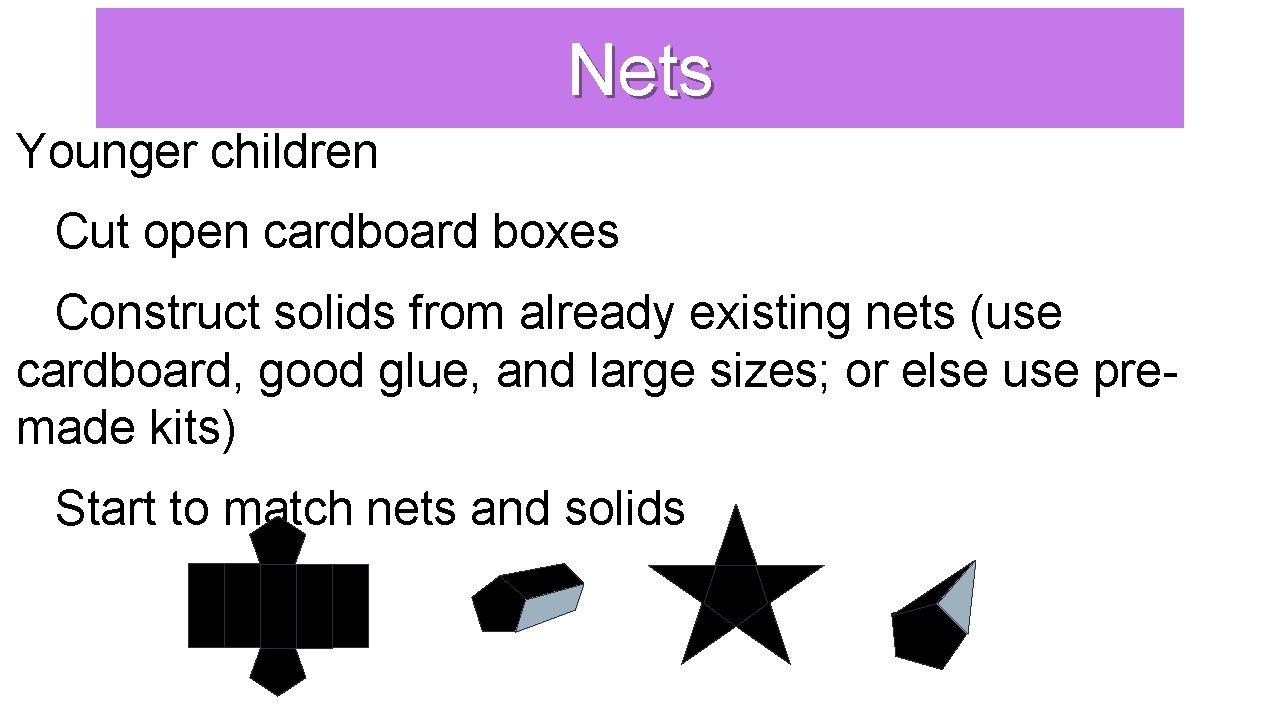
Nets Younger children Cut open cardboard boxes Construct solids from already existing nets (use cardboard, good glue, and large sizes; or else use premade kits) Start to match nets and solids
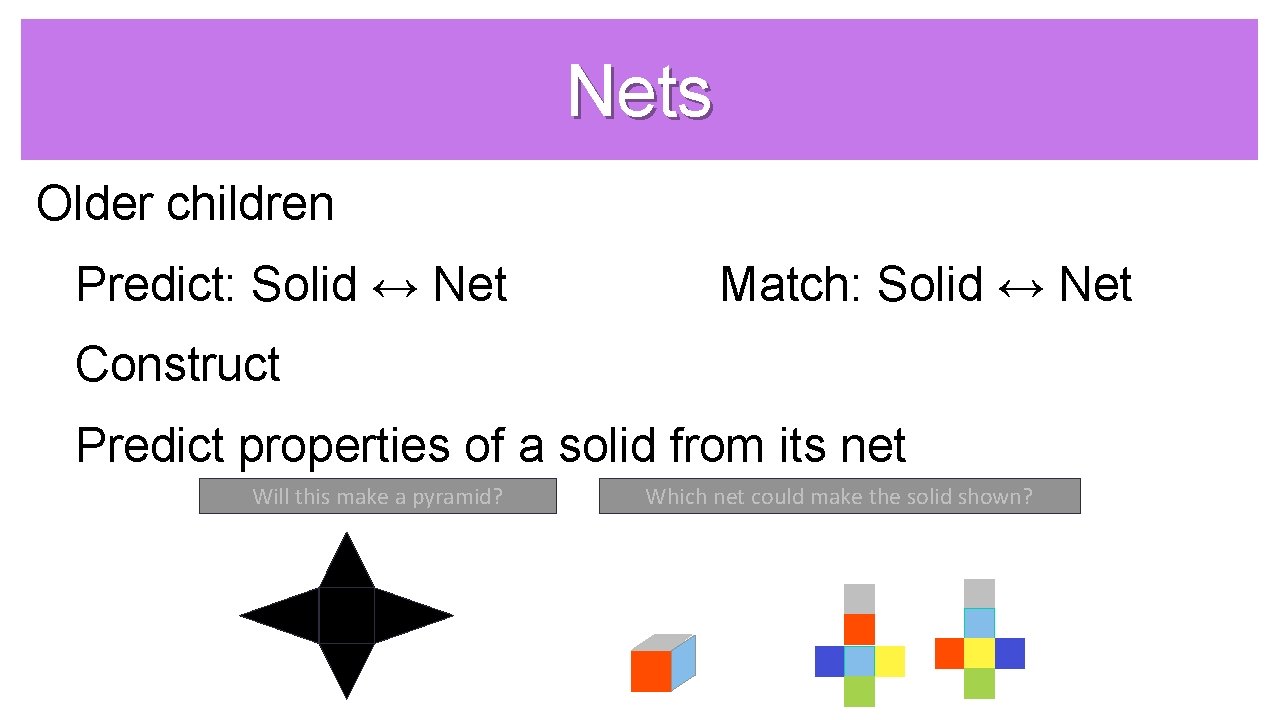
Nets Older children Predict: Solid ↔ Net Match: Solid ↔ Net Construct Predict properties of a solid from its net Will this make a pyramid? Which net could make the solid shown?
Theory of learning 128
The Van Hiele Theory Developed jointly by Pierre van Hiele and Dina van Hiele-Geldof in the 1950 s Used as a framework for teaching geometry and for considering children’s levels of understanding
The Van Hiele Theory Level 1: Visualisation/Recognition Level 2: Analysis Level 3: Abstraction Level 4: Deduction Level 5: Rigour If you teach at one level, those at lower levels can’t work at it. For example, give Level 1 examples as well as Level 2 when working at Level 2.
Level 1: Visualisation (Recognition) Figures are identified according to their overall appearance. That is, by their shape, not by their properties. Language is imprecise. Reasoning is dominated by perception. Visual prototypes used to identify figures Parallel lines “like a door”, Cube: “like a box, dice” Angle: “pointy triangle shape”
Level 2: Analysis Figures identified in terms of their properties - Figures still seen as wholes, but as a collection of properties rather than as typical shapes - Properties are independent Recognises that properties imply certain figures, but does not understand that one property may imply another - a figure is not a rectangle because it is a square
Students’ Level 2 Descriptions (Pegg, 1995) “A square has four even sides” (lowest category) “A square is a four-sided figure with all sides equal and all angles 90˚” “A rectangle is a four-sided figure with four right-angles and two pairs of parallel sides. The top and bottom are the same but different from the other two” “Parallel lines are two lines the same distance apart that go on forever and never meet”
Level 3: Abstraction Relationships between properties of a figure are established Properties can be used to classify figures hierarchically a square is a rhombus because it has the properties of a rhombus (plus some extra properties) Understanding of class inclusion
Level 3: Abstraction Student language is more sophisticated E. g. , “a square is a rectangle with all sides equal”, compared with: a square is a sort of rectangle (level 2) a square is like a rectangle but all sides are equal (level 2) Students are able to discuss this rationally (i. e. , with reasons)
Level 4: Deduction The role of deduction is understood. Necessary and sufficient conditions are understood and ‘minimum property’ definitions can be given. - a square is a rectangle with a pair of adjacent sides equal. - A rectangle is a parallelogram with an angle of 90º. The need for rote learning is minimised. Proofs of theorems can be constructed.
Level 5: Rigour Geometry becomes an abstract study based on systems of postulates/axioms Students challenge the deductions of Euclidean geometry and look at alternate geometries E. g. , Projective geometry: parallel lines meet at infinity. Can accept results contrary to everyday experience if the proof is mathematically valid
Attainment of Levels 1– 3 Age parameters are not usually associated with van Hiele levels Students can have attained Level 1 by age 5 or 6, but may still be at this level at age 14 -15 Most children starting school will be at Level 1 and should be able to attain Level 2 by the end of primary school Very few primary school children reach Level 3
Attainment of Levels 3 & 4 Level 3 should be attained by Year 10 indicates a reasonable grasp of geometry for everyday purposes Level 4 is an appropriate goal for the end of secondary school (reasonable upper bound) Only about 25% of 18 year-olds function at Level 4 (Pegg & Faithful, 1993)
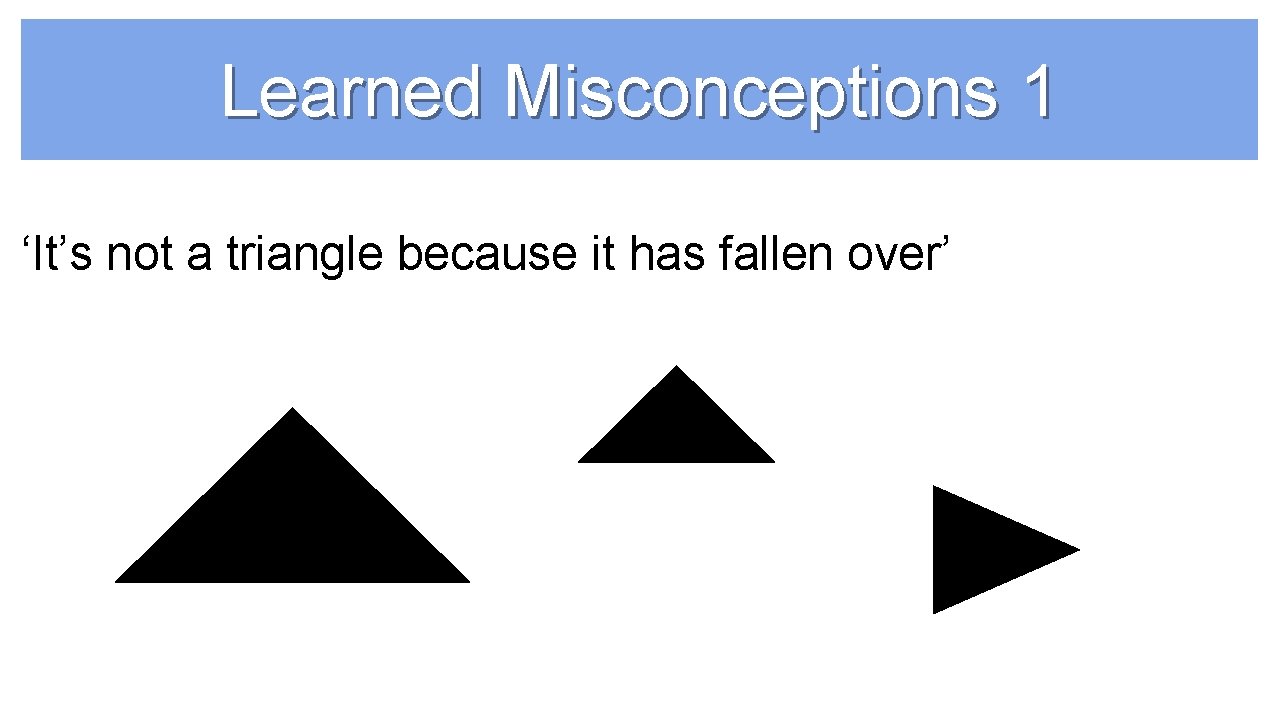
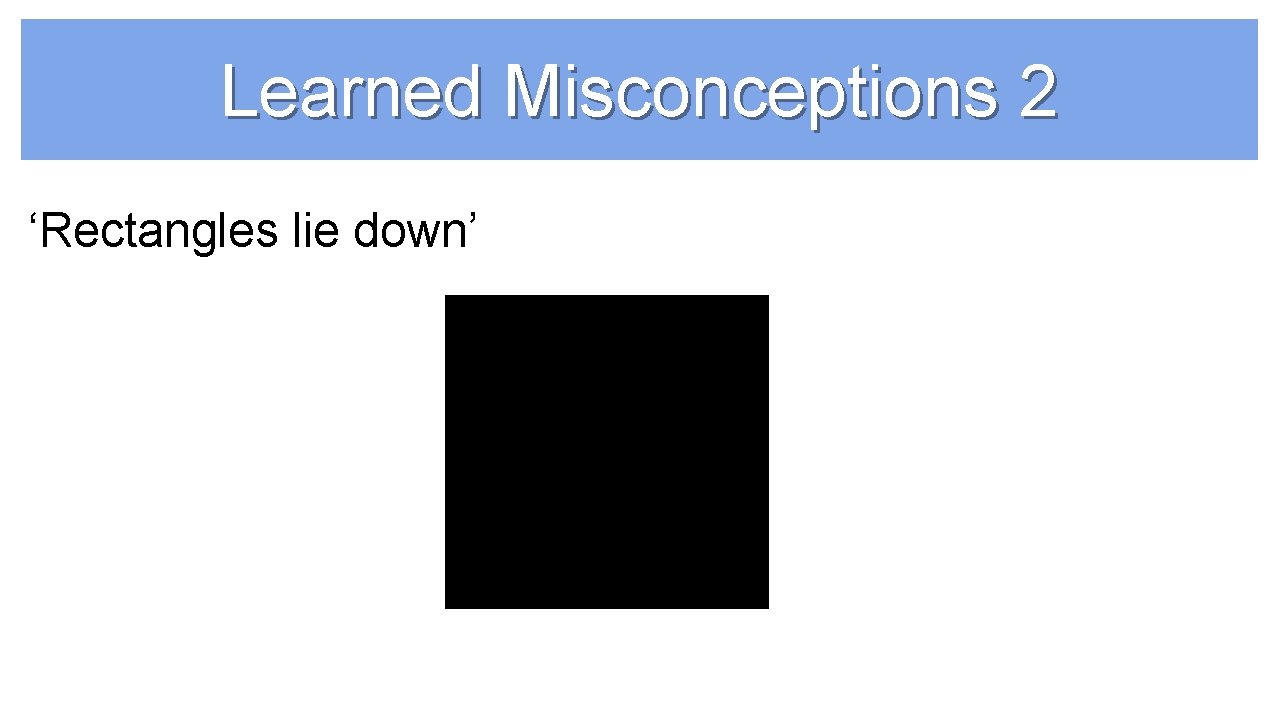
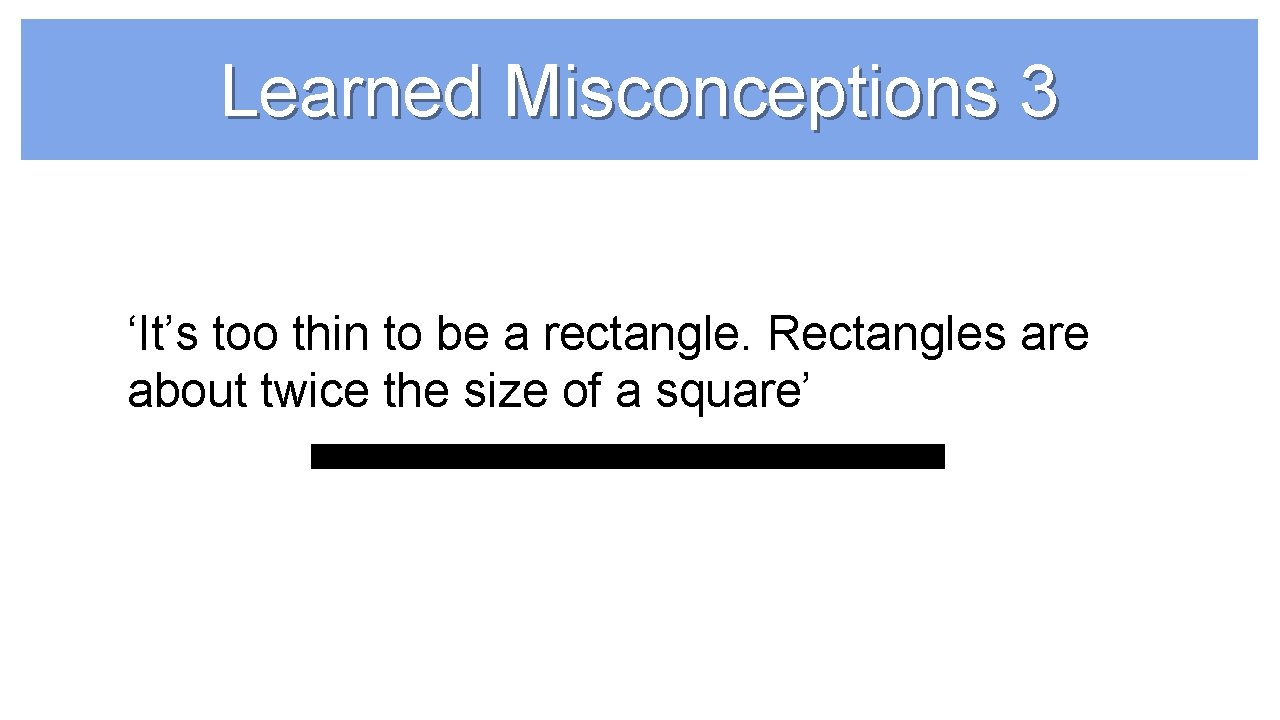
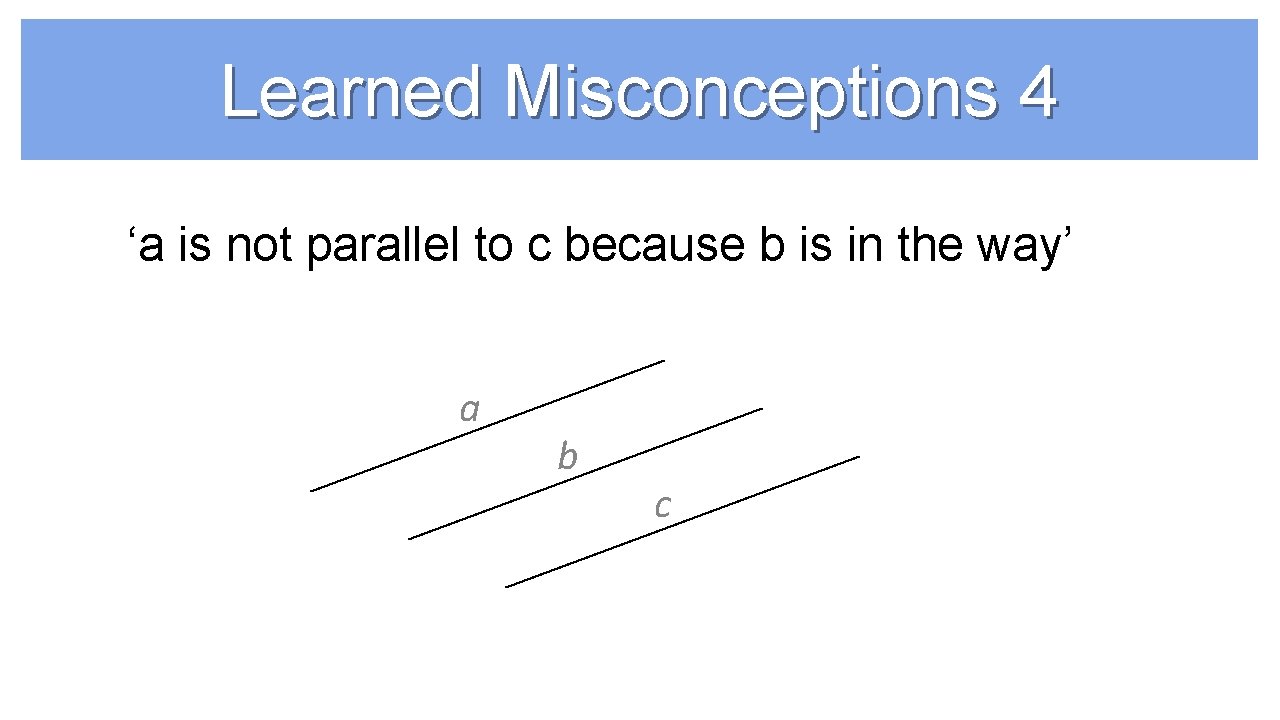
Children’s Misconceptions Many misconceptions about space are ‘learned misconceptions’ Children focus on the wrong characteristics and develop limited or false concepts Geometrical figures are often presented in standard orientations making it difficult for children to generalise these concepts (i. e. , it is a flaw in teaching).
Learned Misconceptions 1 ‘It’s not a triangle because it has fallen over’
Learned Misconceptions 2 ‘Rectangles lie down’
Learned Misconceptions 3 ‘It’s too thin to be a rectangle. Rectangles are about twice the size of a square’
Learned Misconceptions 4 ‘a is not parallel to c because b is in the way’ a b c
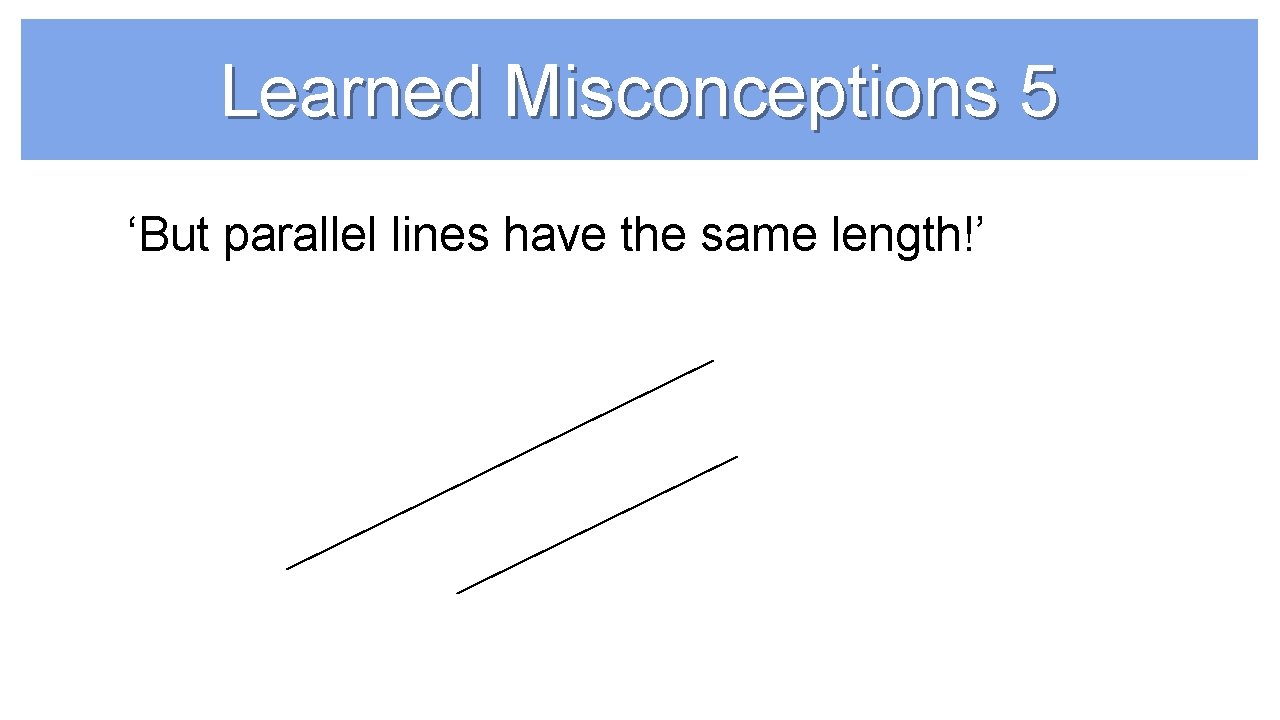
Learned Misconceptions 5 ‘But parallel lines have the same length!’
Avoiding Learned Misconceptions A systematic attempt to avoid the misconceptions that a teacher knows may arise can be very effective
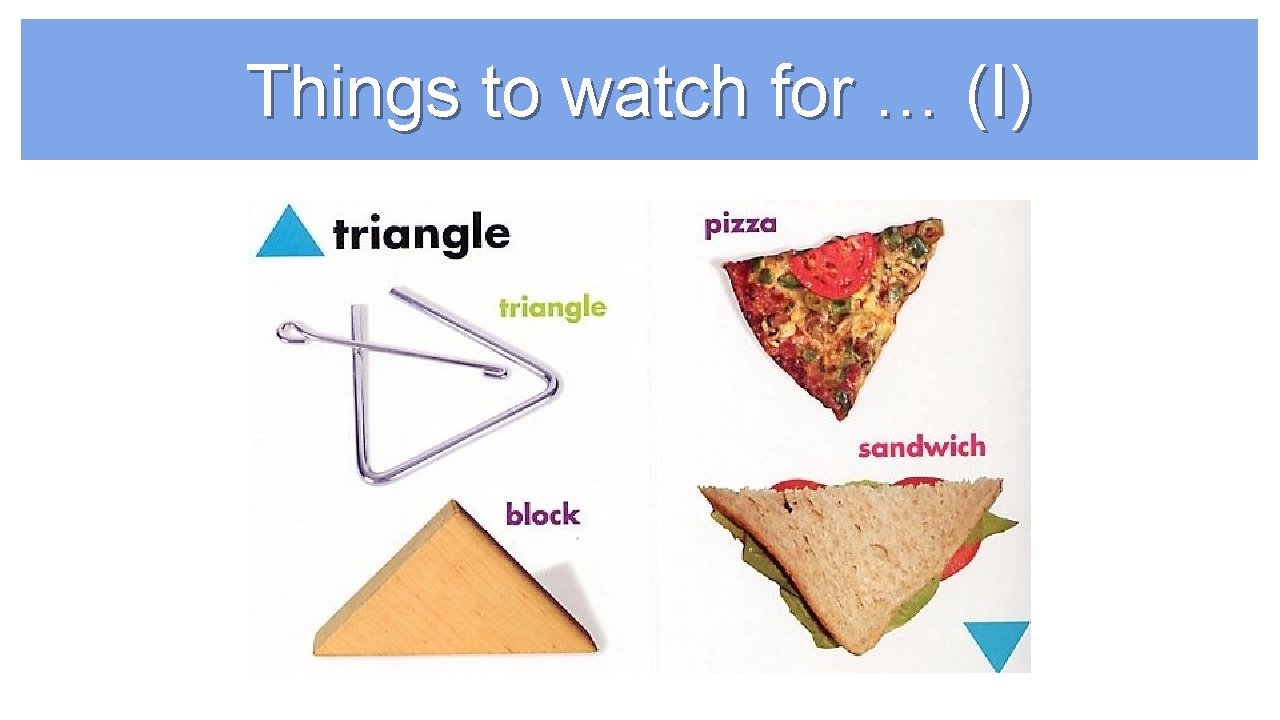
Things to watch for … (I)
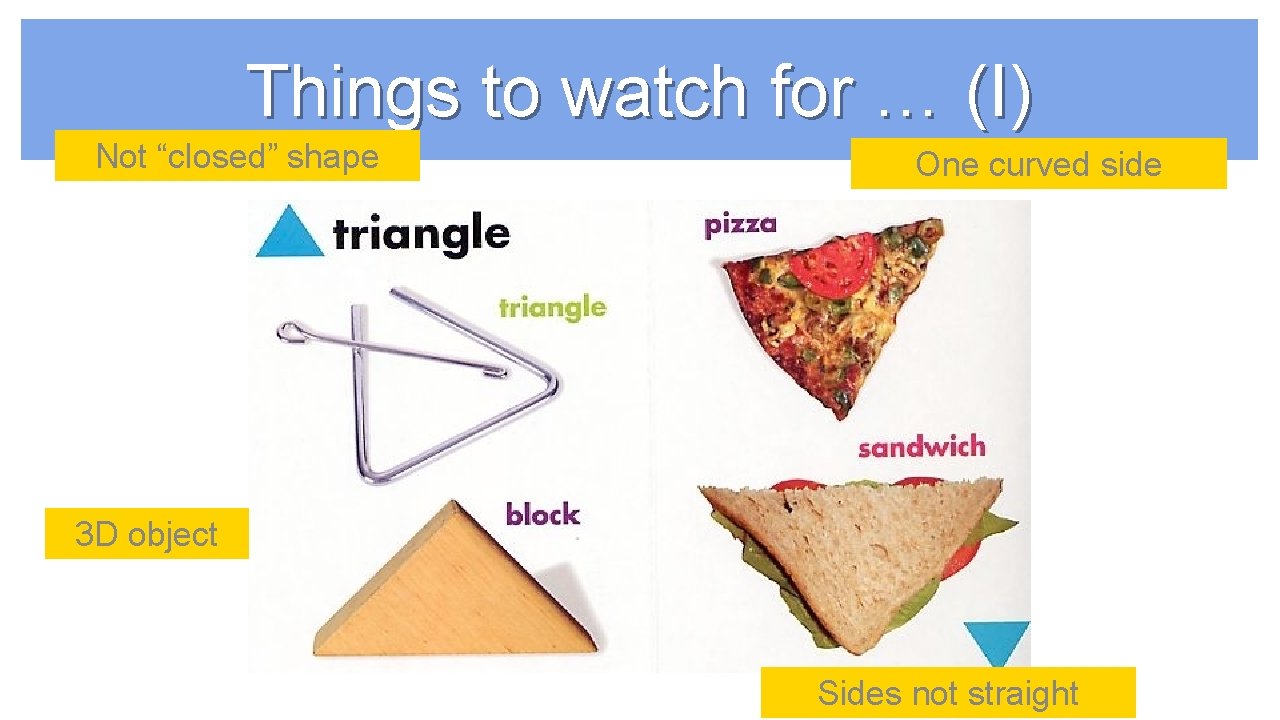
Things to watch for … (I) Not “closed” shape One curved side 3 D object Sides not straight
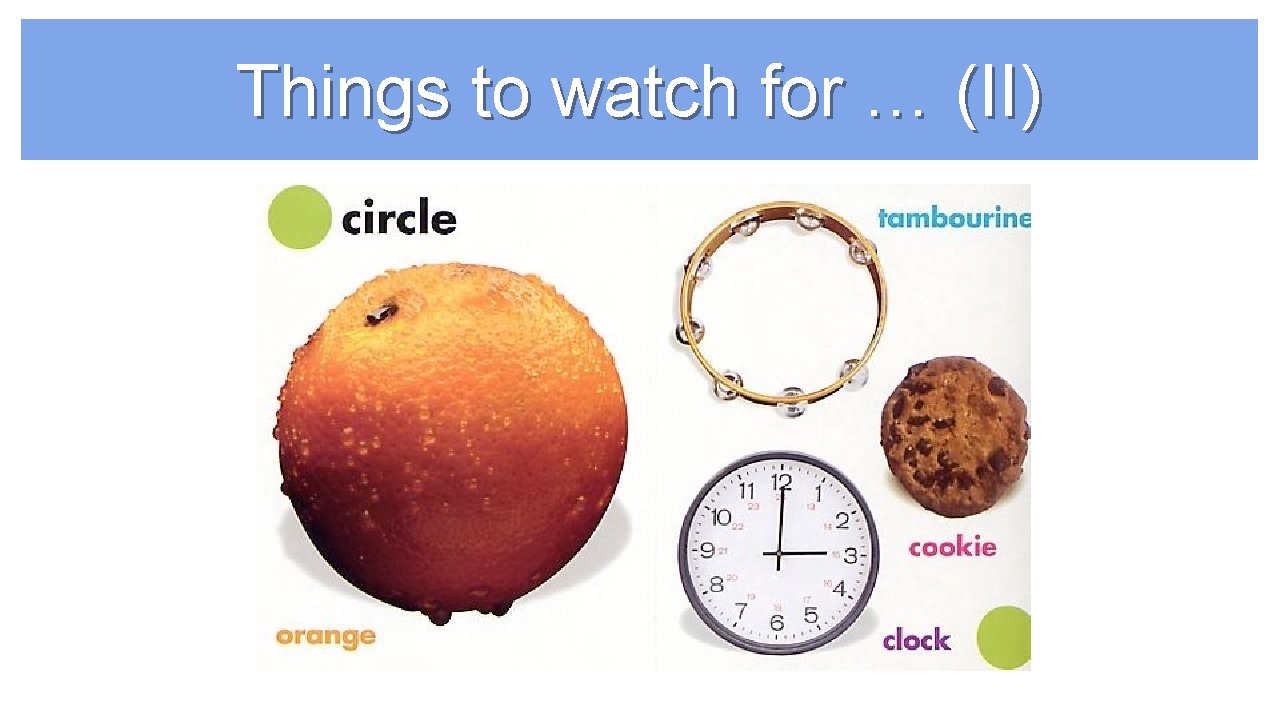
Things to watch for … (II)
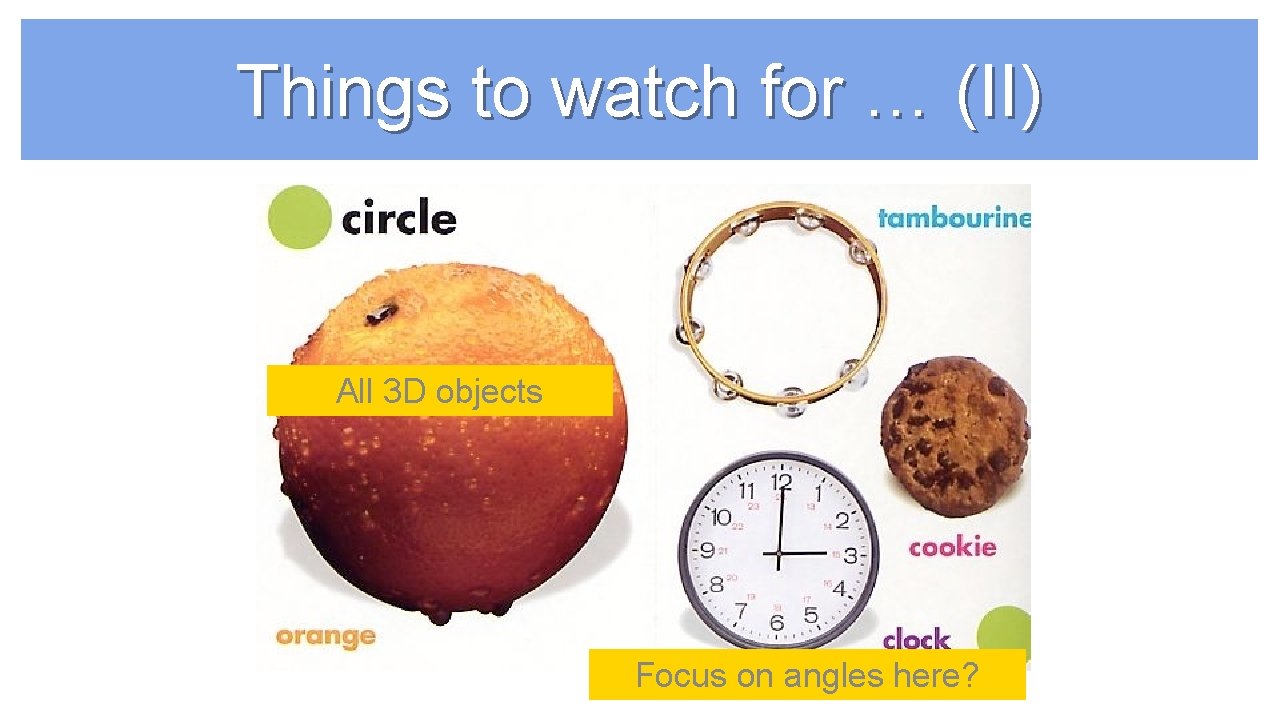
Things to watch for … (II) All 3 D objects Focus on angles here?
Pythagoras • The Pythagorean Proposition Elisha Scott Loomis • Perigal’s Proof: Bill Casselman
Trigonometry
Proof
Proof: EG Circles
We already knew… We said… We remembered… We wrote… Where’s the We used equipment… We saw… Maths? We need to find out… We heard… It was interesting when… We know… The tricky bit was… We drew… We didn’t know that… We said… It was cool when… We asked… The important thing to remember is… We felt… A new word we learnt was… We liked… Our group worked well when… We learnt… We discovered… We didn’t like… Congratulations to… We found out…
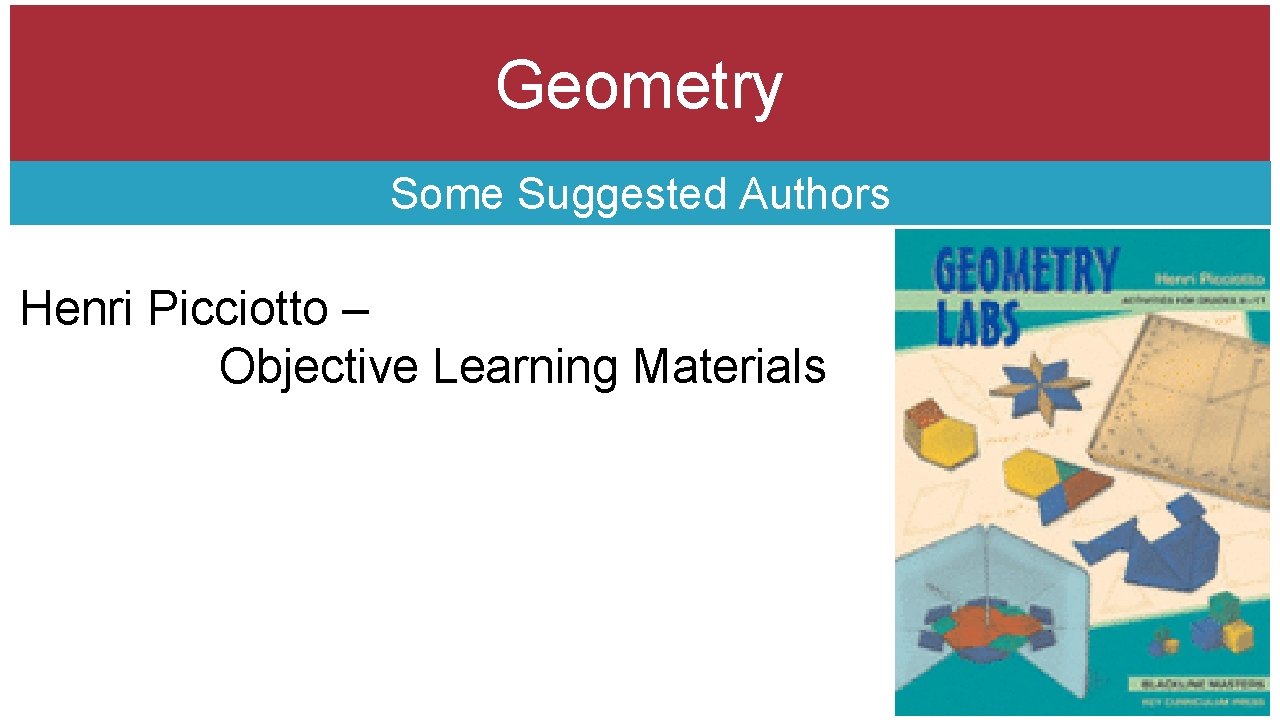
Geometry Some Suggested Authors Henri Picciotto – Objective Learning Materials
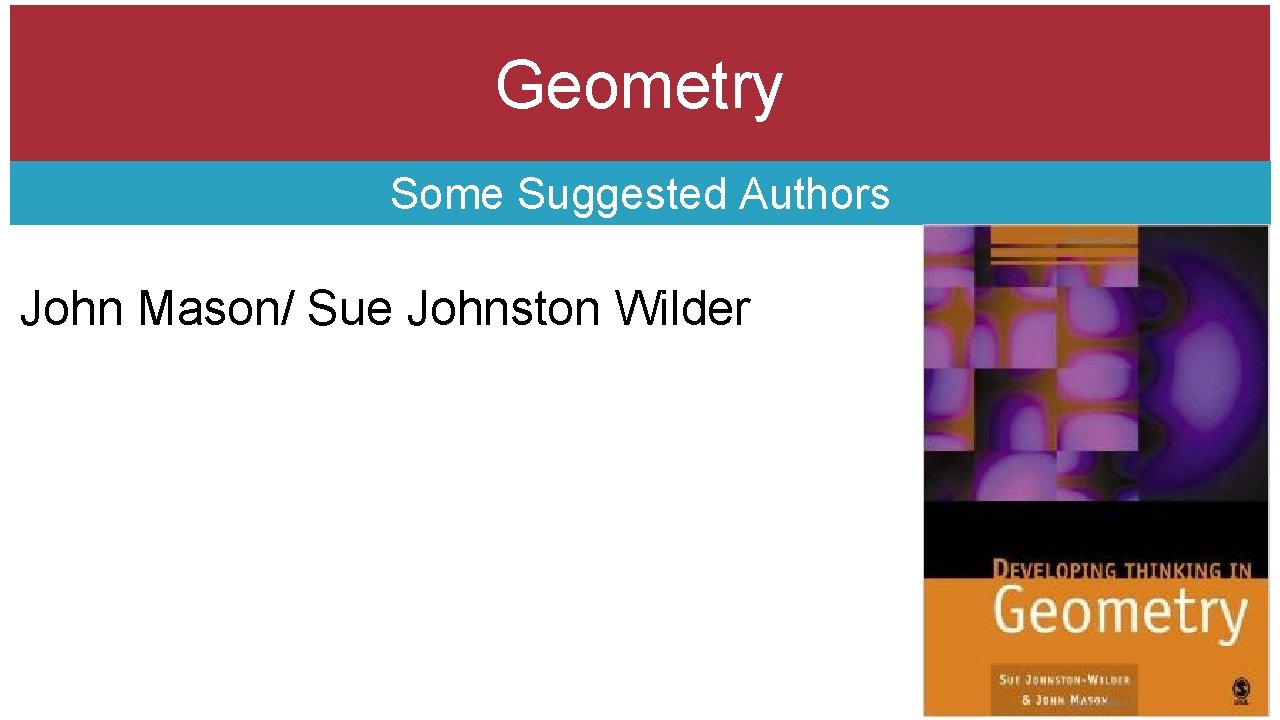
Geometry Some Suggested Authors John Mason/ Sue Johnston Wilder