
Geometry Chapter 8 8 2 USE PROPERTIES OF
- Slides: 40
Geometry Chapter 8 8 -2: USE PROPERTIES OF PARALLELOGRAMS
Use Properties of Parallelograms Objective: Students will be able to find side and angle measures using the properties of parallelograms. Agenda Parallelograms Theorems Practice
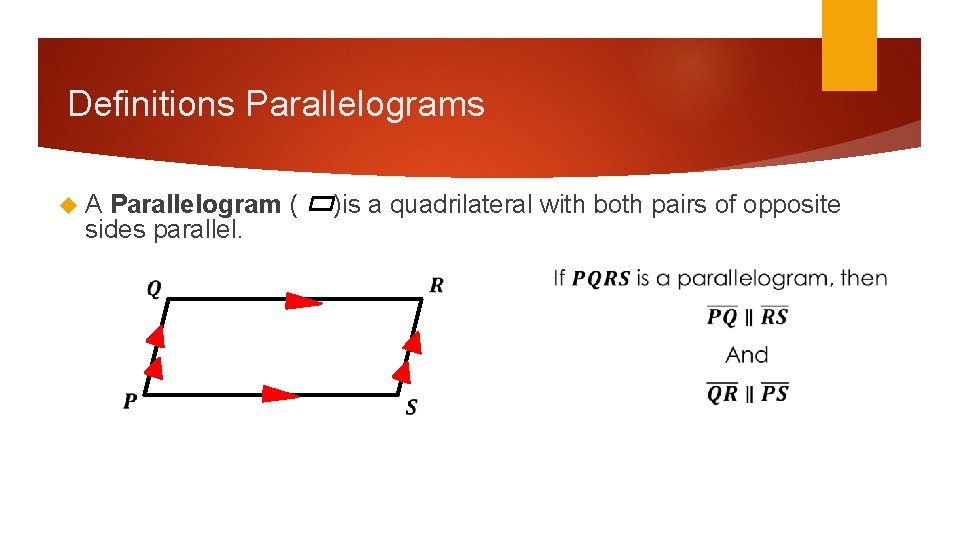
Definitions Parallelograms A Parallelogram ( sides parallel. )is a quadrilateral with both pairs of opposite
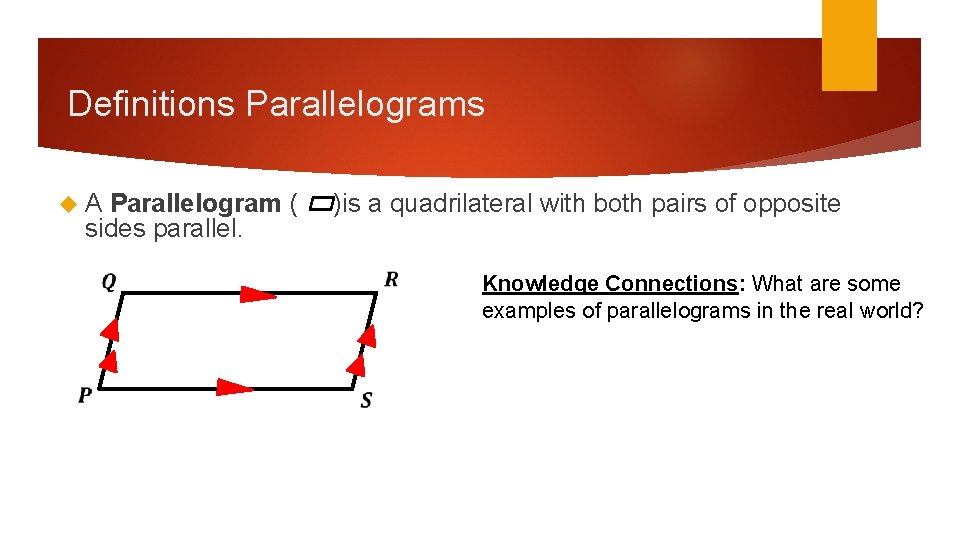
Definitions Parallelograms A Parallelogram ( sides parallel. )is a quadrilateral with both pairs of opposite Knowledge Connections: What are some examples of parallelograms in the real world?
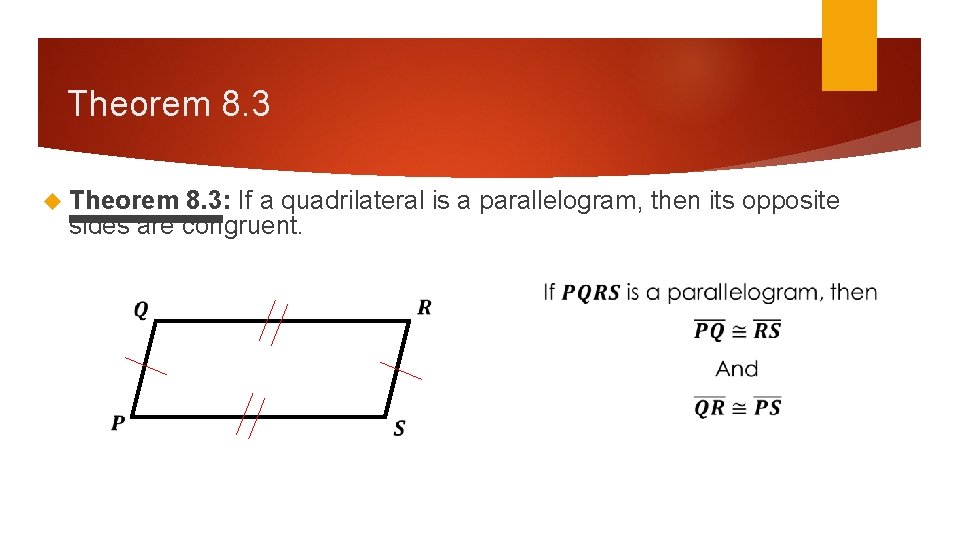
Theorem 8. 3 Theorem 8. 3: If a quadrilateral is a parallelogram, then its opposite sides are congruent.
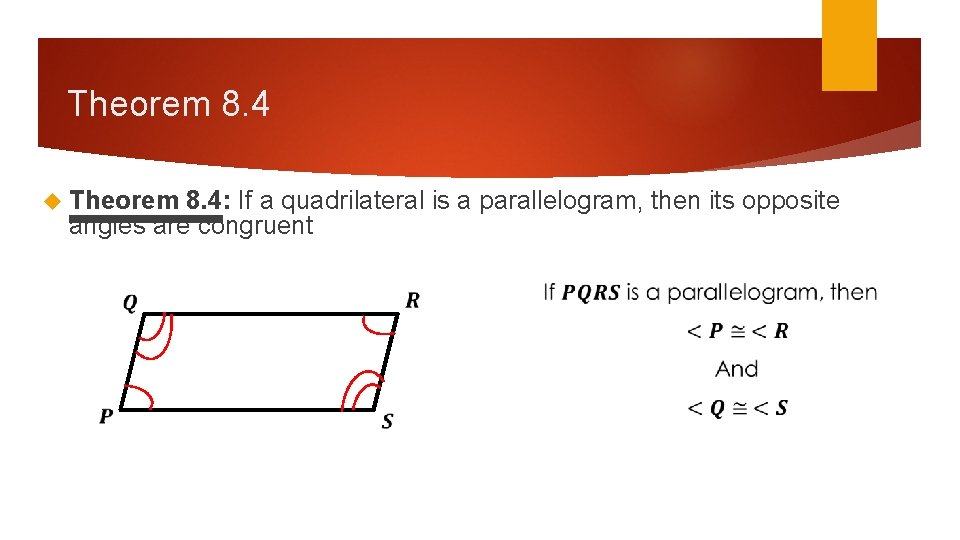
Theorem 8. 4 Theorem 8. 4: If a quadrilateral is a parallelogram, then its opposite angles are congruent
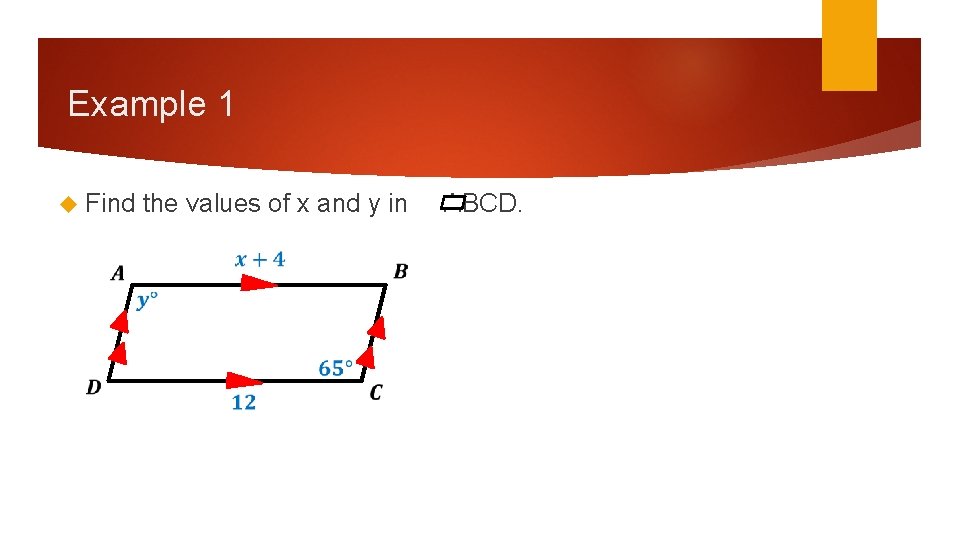
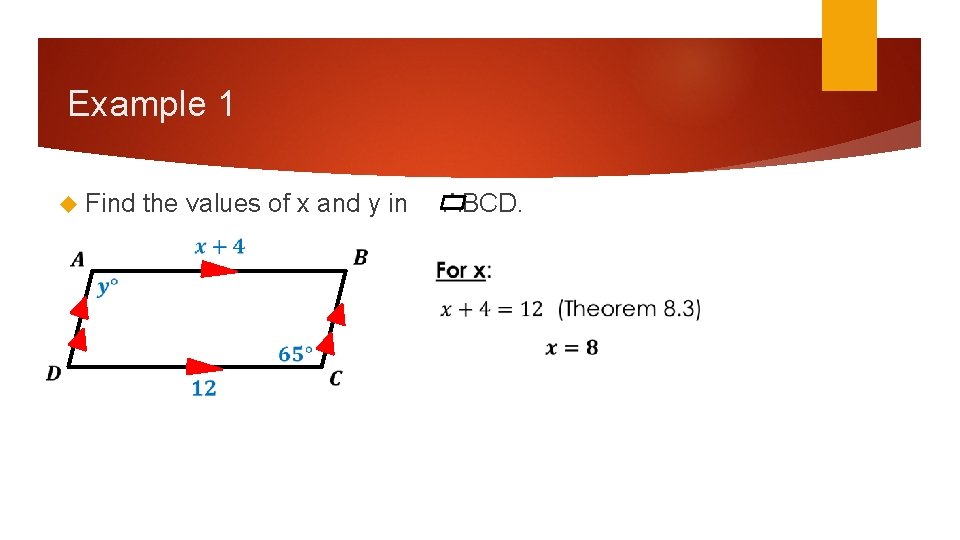
Example 1 Find the values of x and y in ABCD.
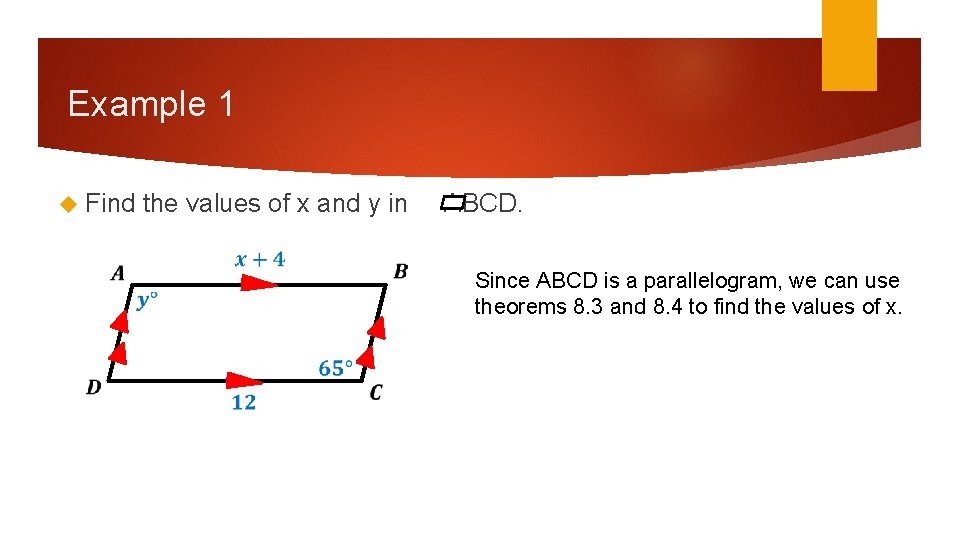
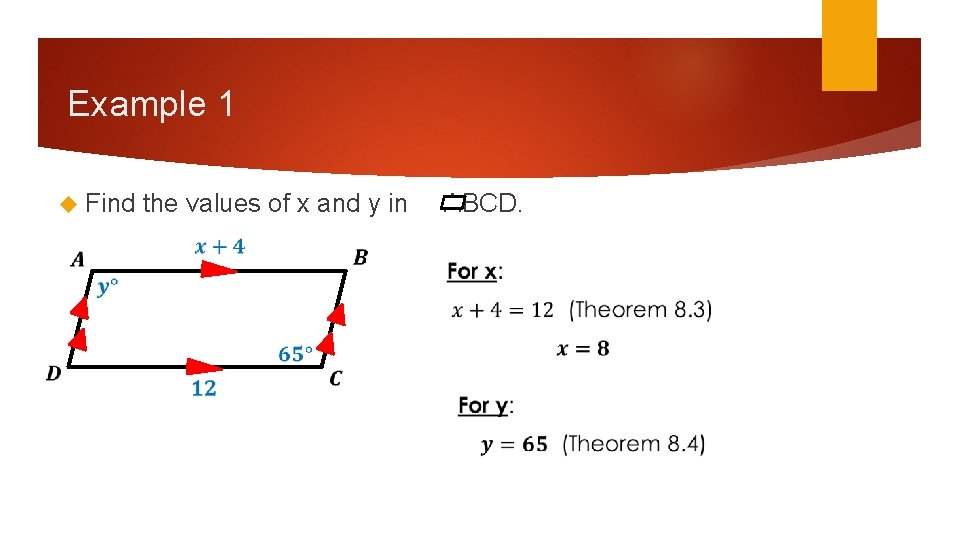
Example 1 Find the values of x and y in ABCD. Since ABCD is a parallelogram, we can use theorems 8. 3 and 8. 4 to find the values of x.
Example 1 Find the values of x and y in ABCD.
Example 1 Find the values of x and y in ABCD.
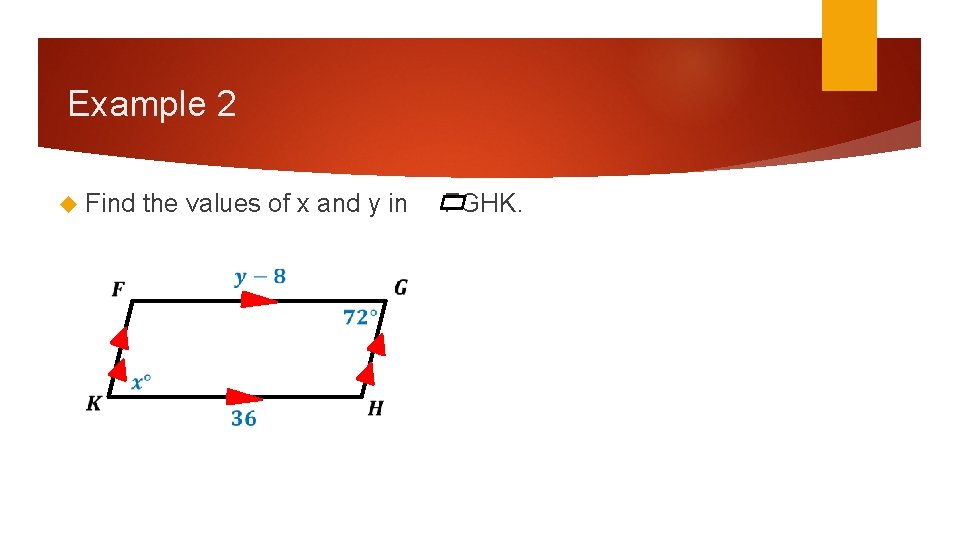
Example 2 Find the values of x and y in FGHK.
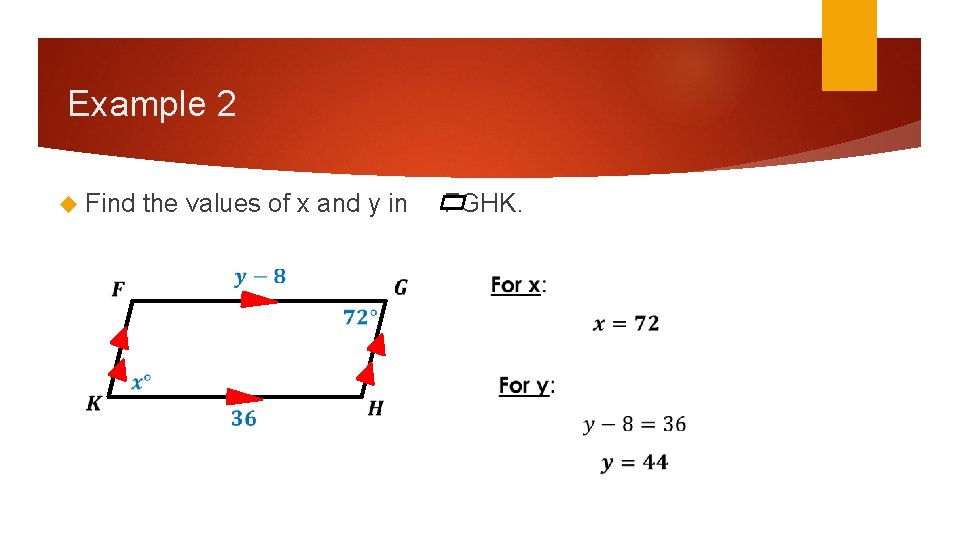
Example 2 Find the values of x and y in FGHK.
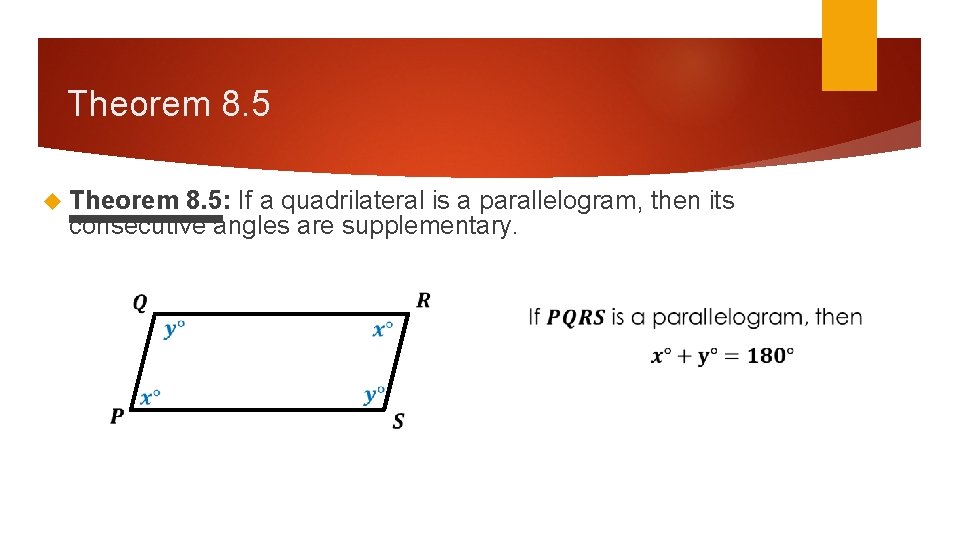
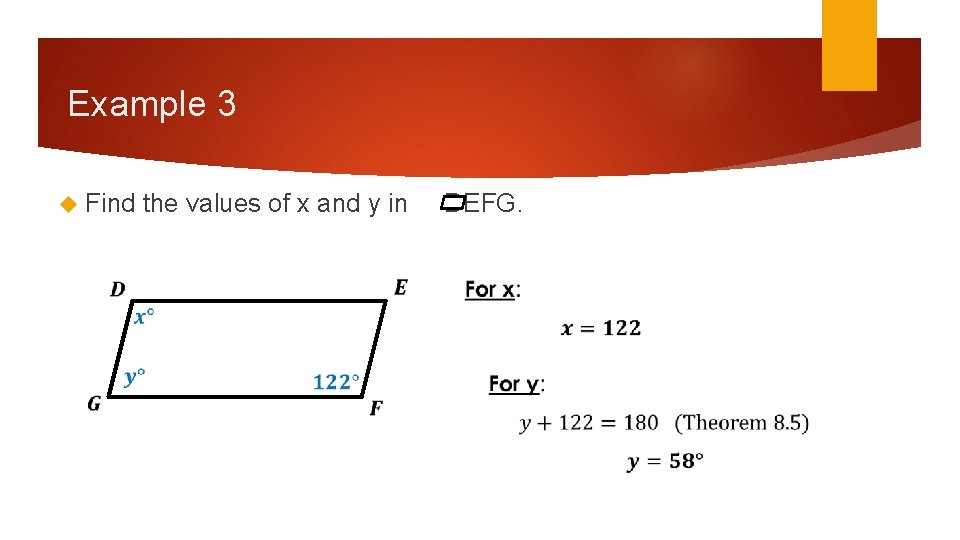
Theorem 8. 5 Theorem 8. 5: If a quadrilateral is a parallelogram, then its consecutive angles are supplementary.
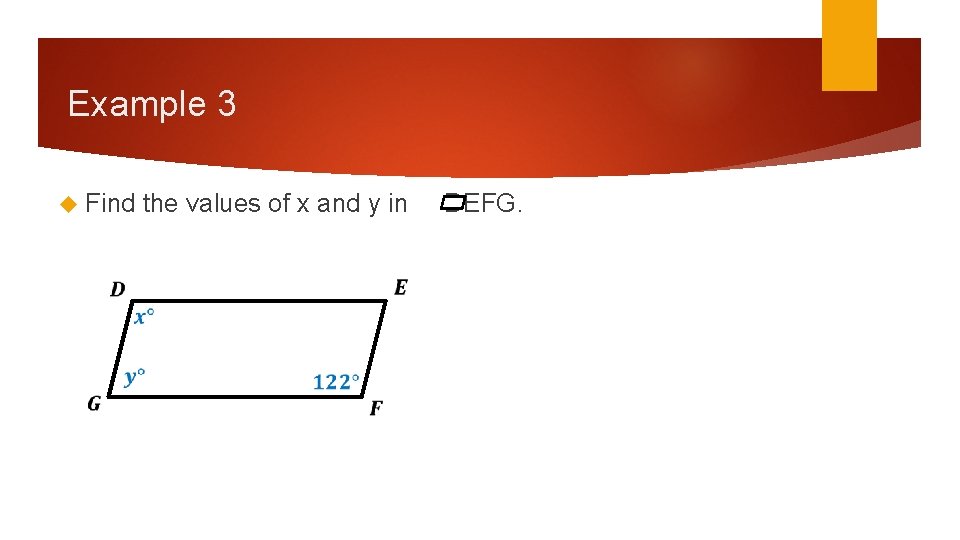
Example 3 Find the values of x and y in DEFG.
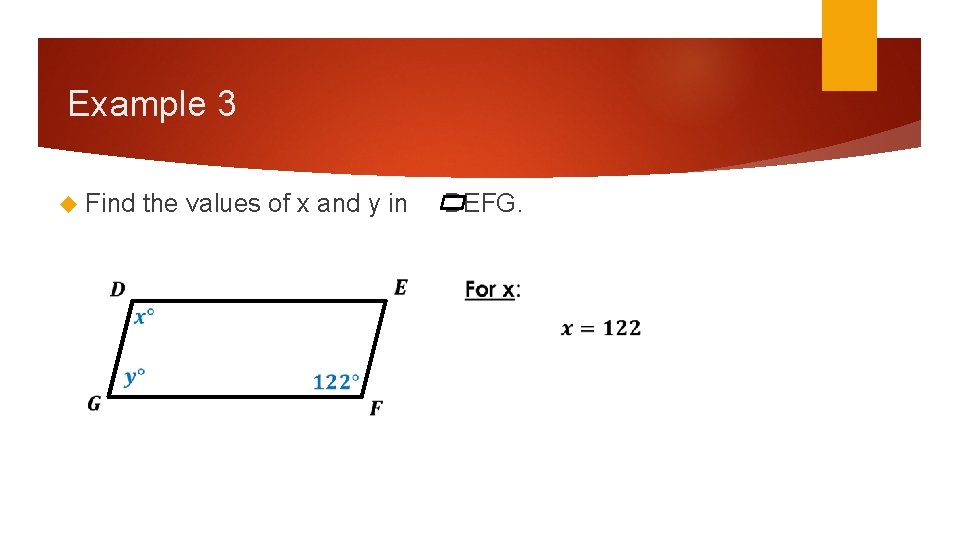
Example 3 Find the values of x and y in DEFG.
Example 3 Find the values of x and y in DEFG.
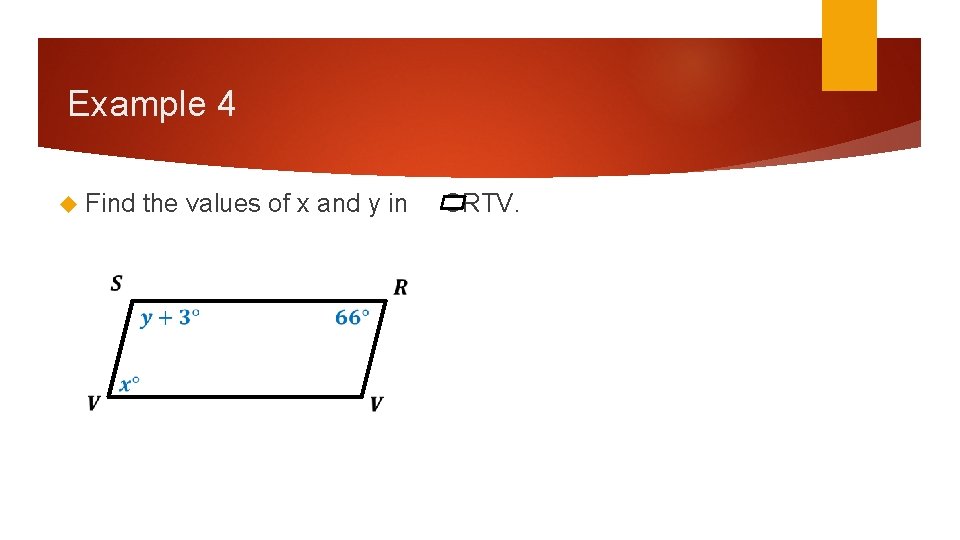
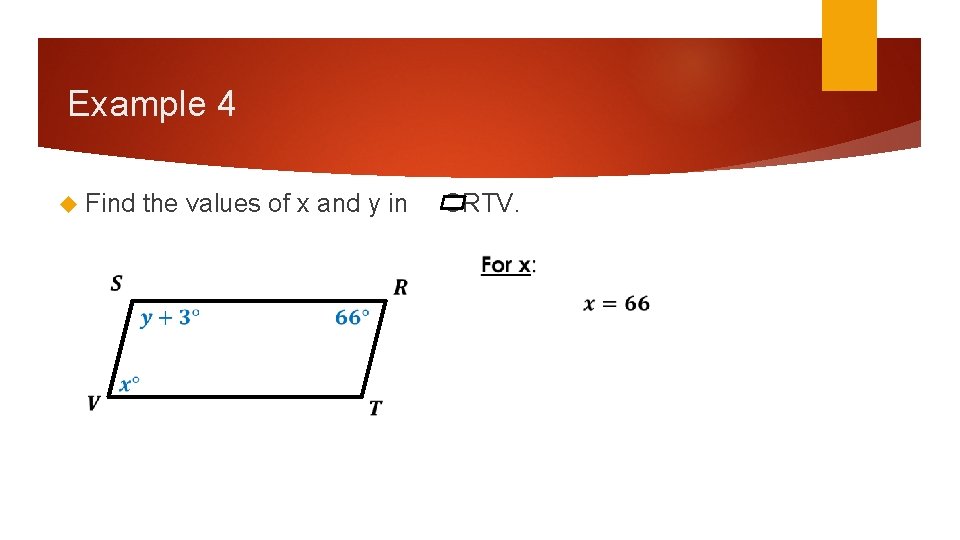
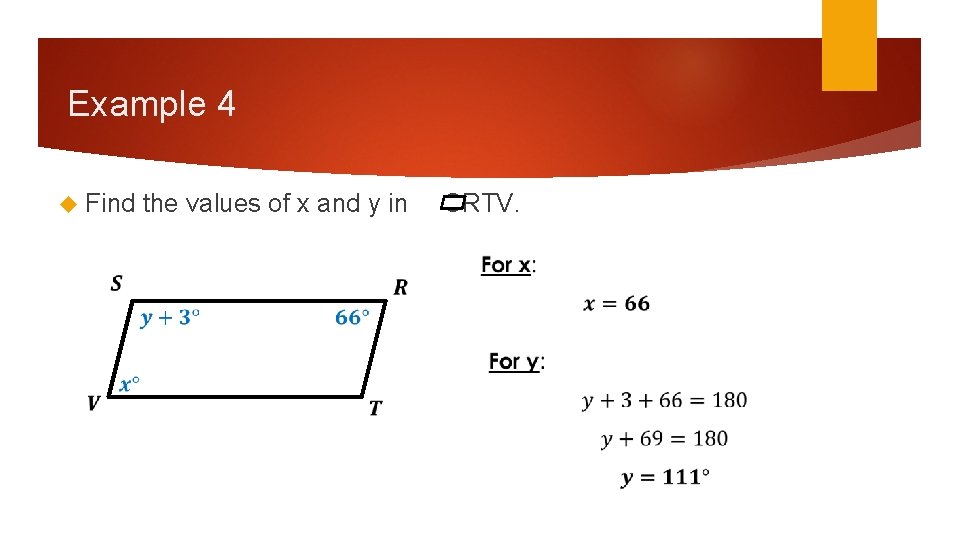
Example 4 Find the values of x and y in SRTV.
Example 4 Find the values of x and y in SRTV.
Example 4 Find the values of x and y in SRTV.
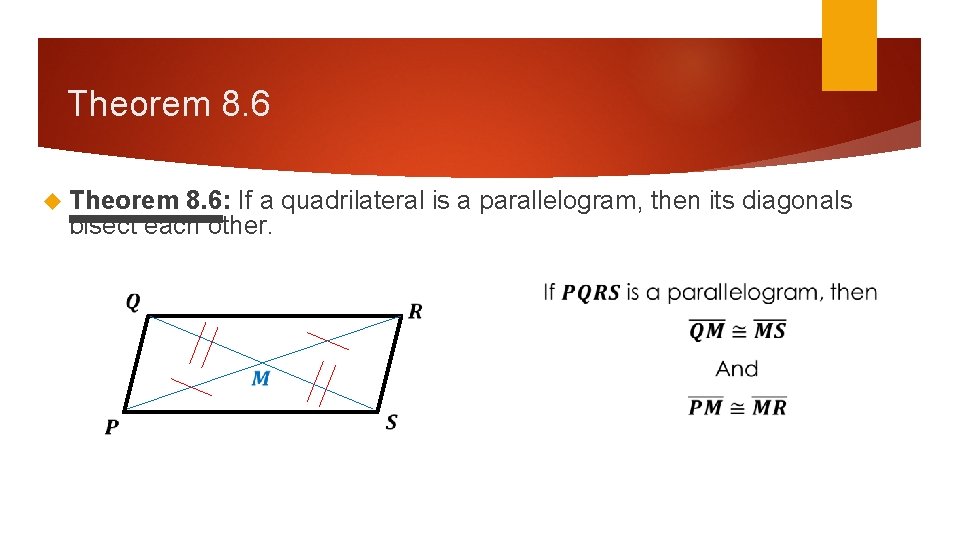
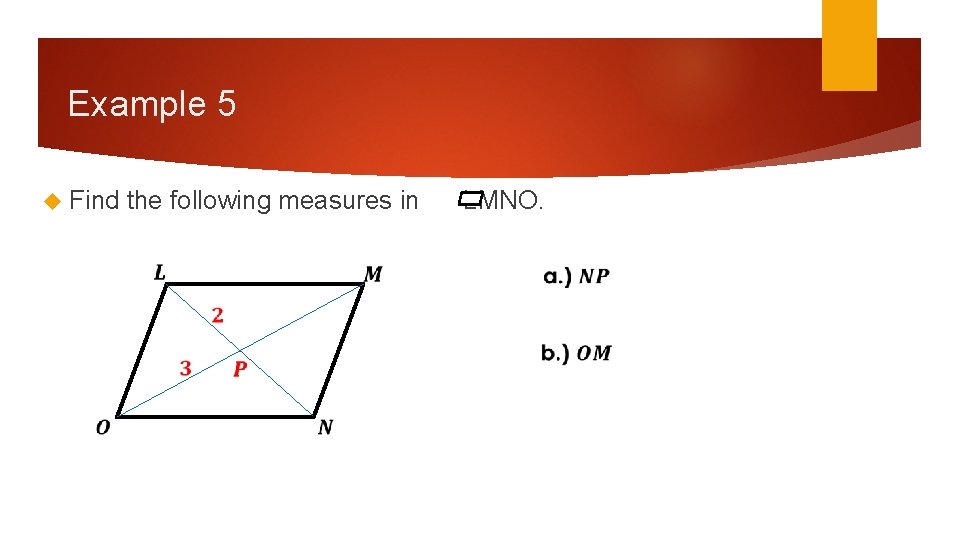
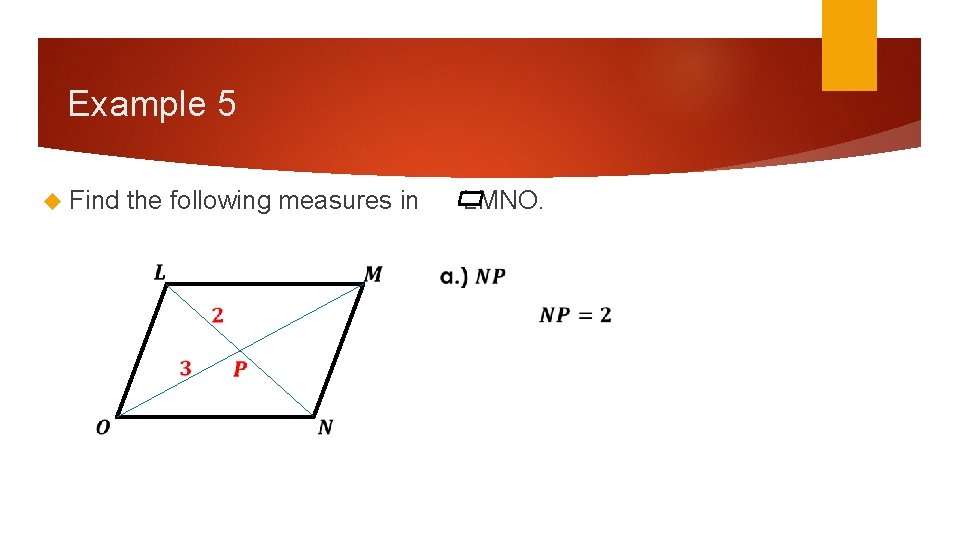
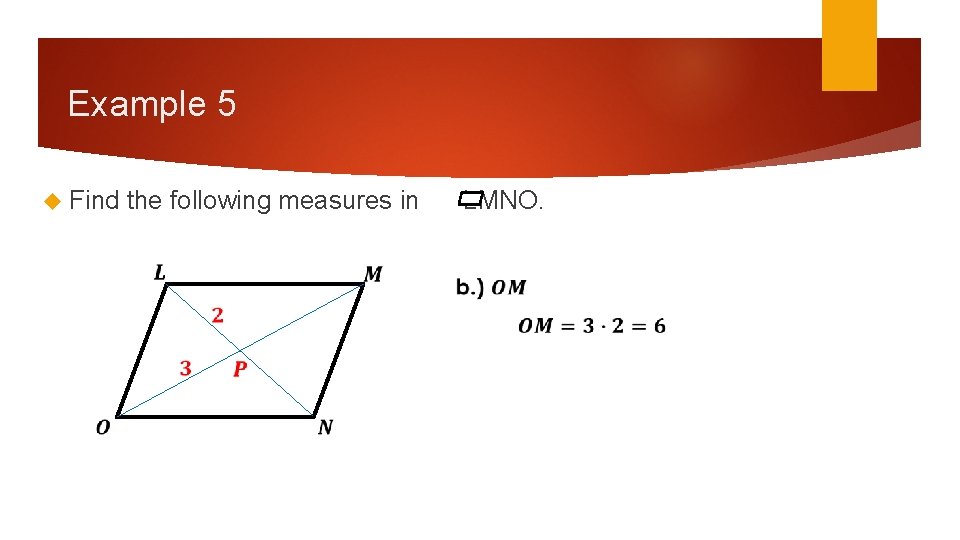
Theorem 8. 6 Theorem 8. 6: If a quadrilateral is a parallelogram, then its diagonals bisect each other.
Example 5 Find the following measures in LMNO.
Example 5 Find the following measures in LMNO.
Example 5 Find the following measures in LMNO.
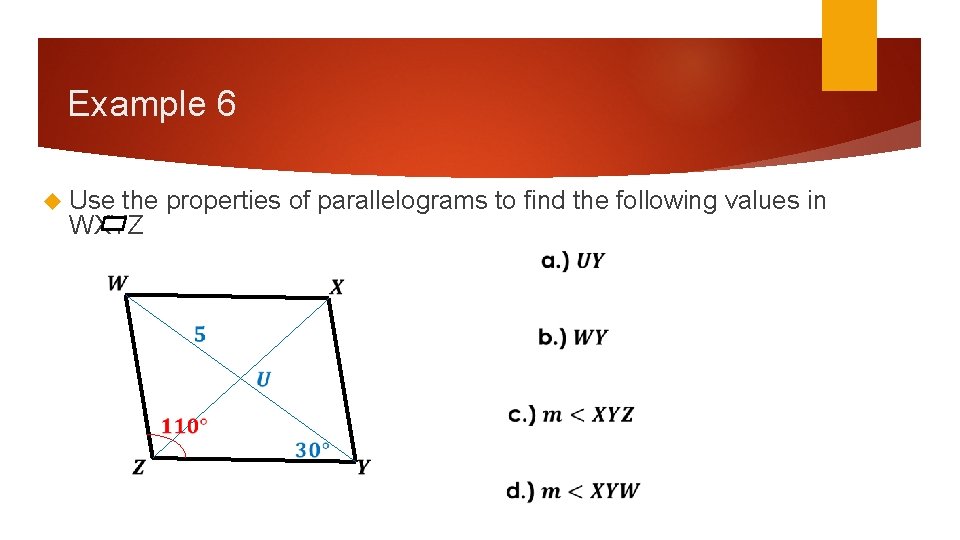
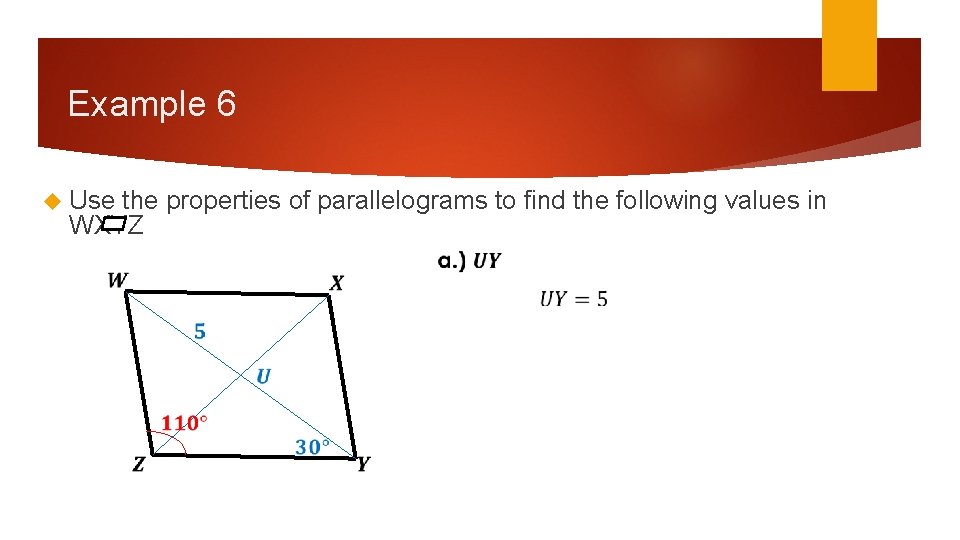
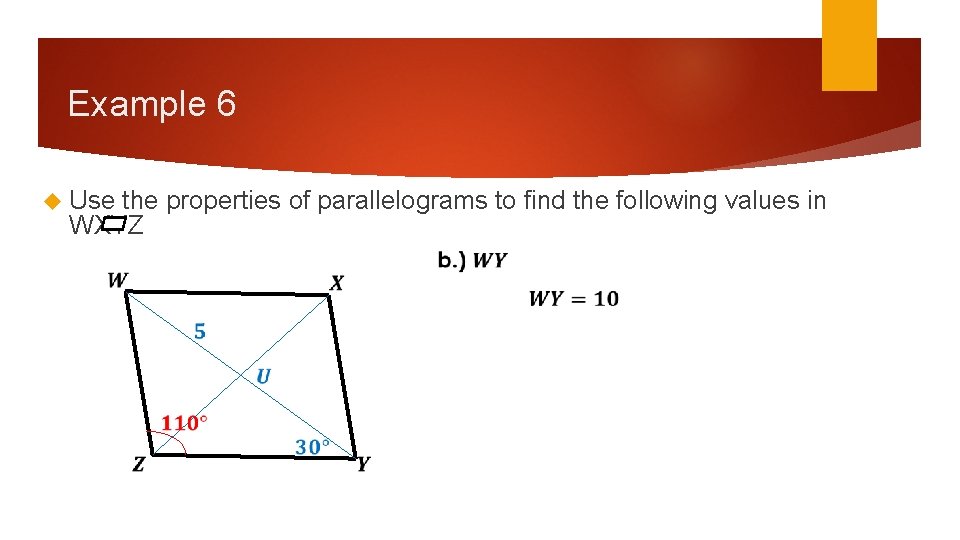
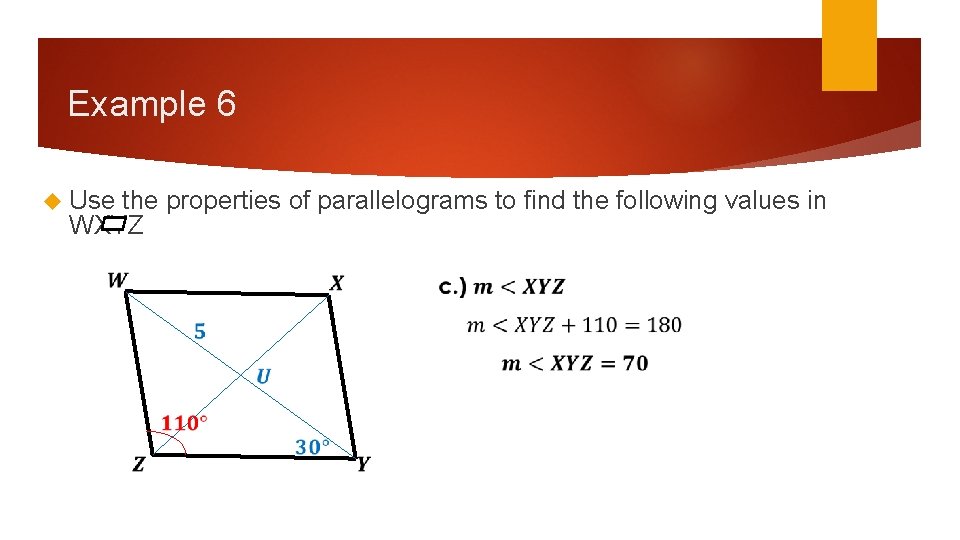
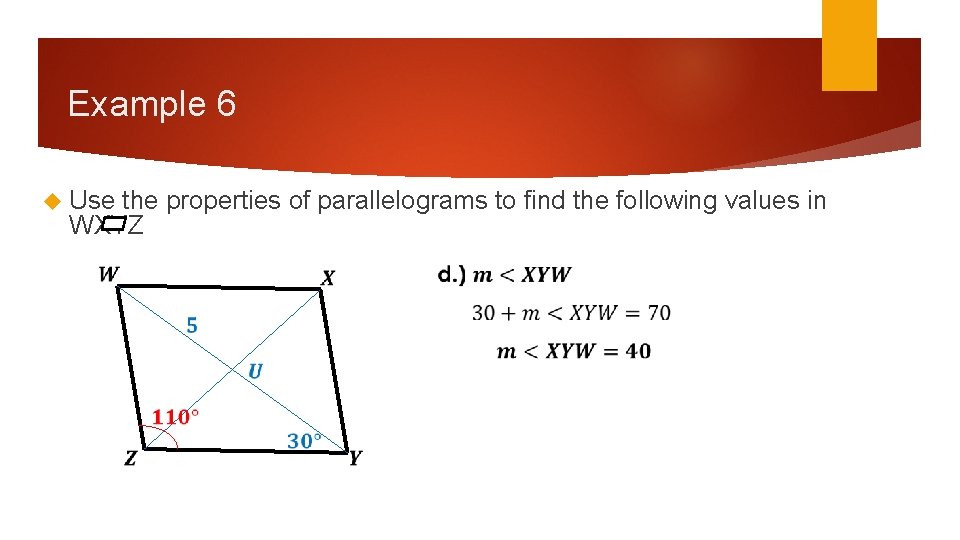
Example 6 Use the properties of parallelograms to find the following values in WXYZ
Example 6 Use the properties of parallelograms to find the following values in WXYZ
Example 6 Use the properties of parallelograms to find the following values in WXYZ
Example 6 Use the properties of parallelograms to find the following values in WXYZ
Example 6 Use the properties of parallelograms to find the following values in WXYZ
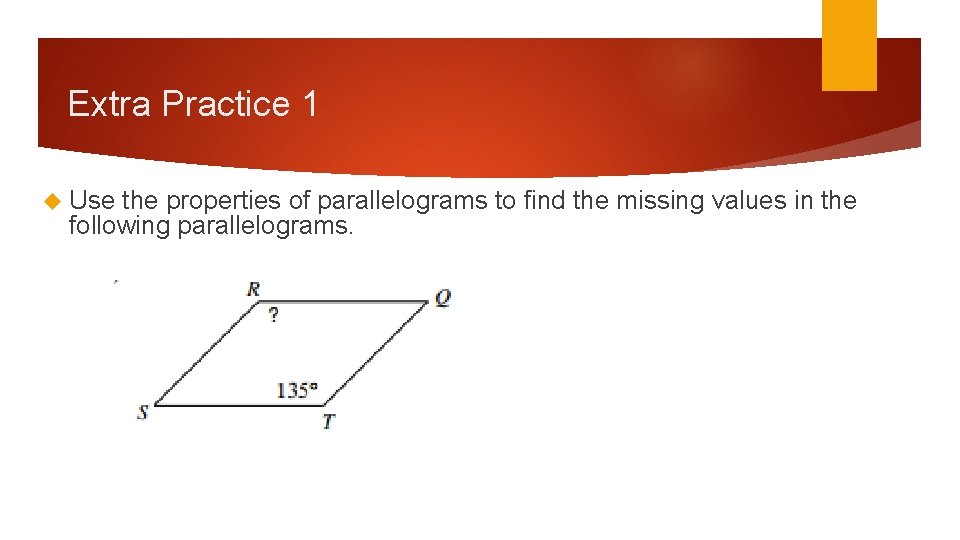
Extra Practice 1 Use the properties of parallelograms to find the missing values in the following parallelograms.
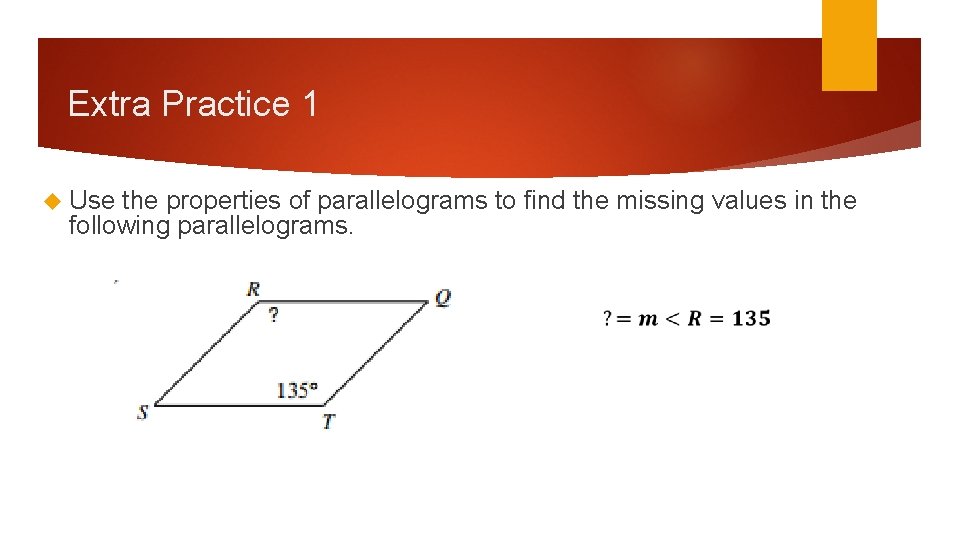
Extra Practice 1 Use the properties of parallelograms to find the missing values in the following parallelograms.
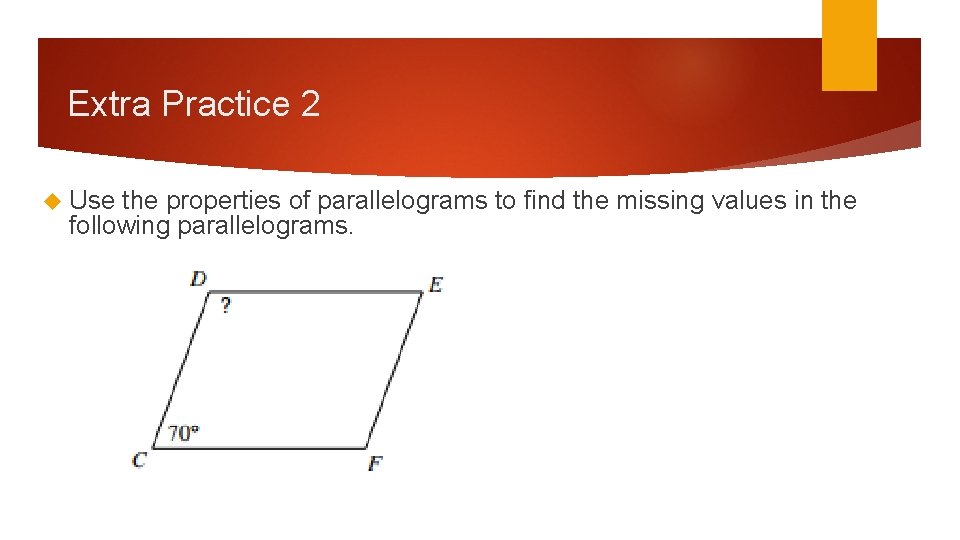
Extra Practice 2 Use the properties of parallelograms to find the missing values in the following parallelograms.
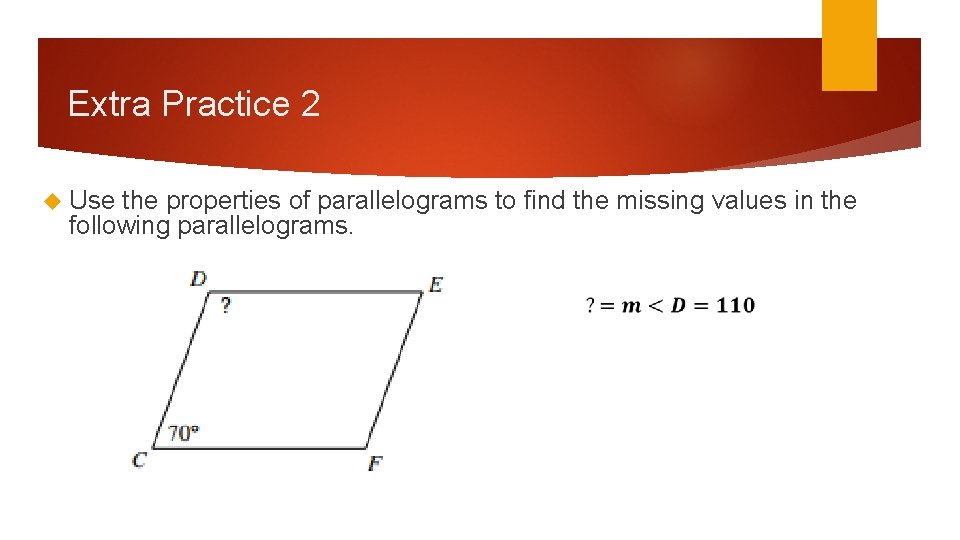
Extra Practice 2 Use the properties of parallelograms to find the missing values in the following parallelograms.
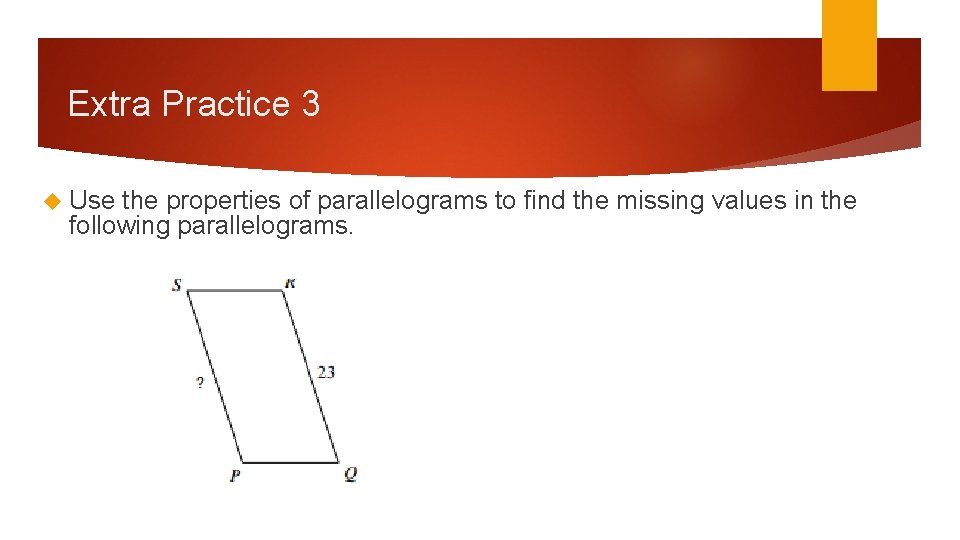
Extra Practice 3 Use the properties of parallelograms to find the missing values in the following parallelograms.
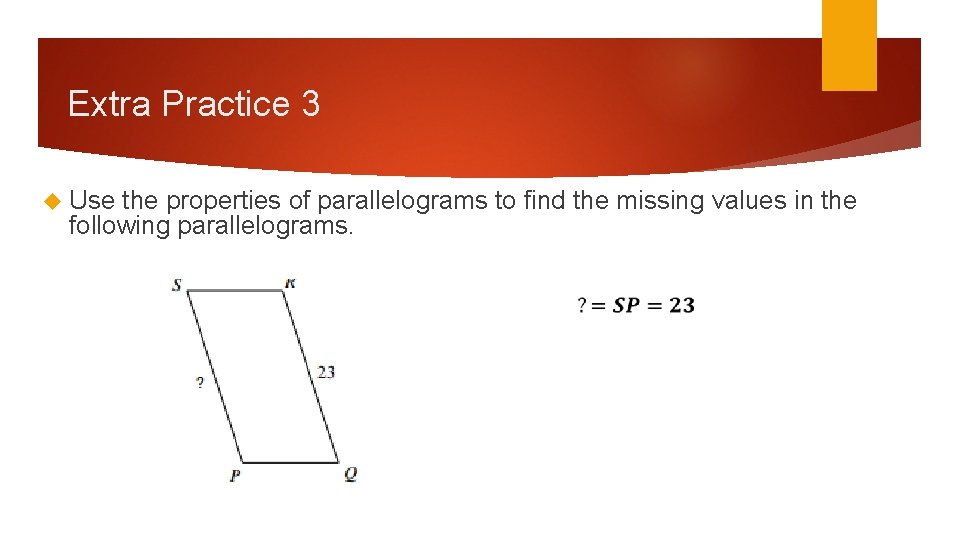
Extra Practice 3 Use the properties of parallelograms to find the missing values in the following parallelograms.
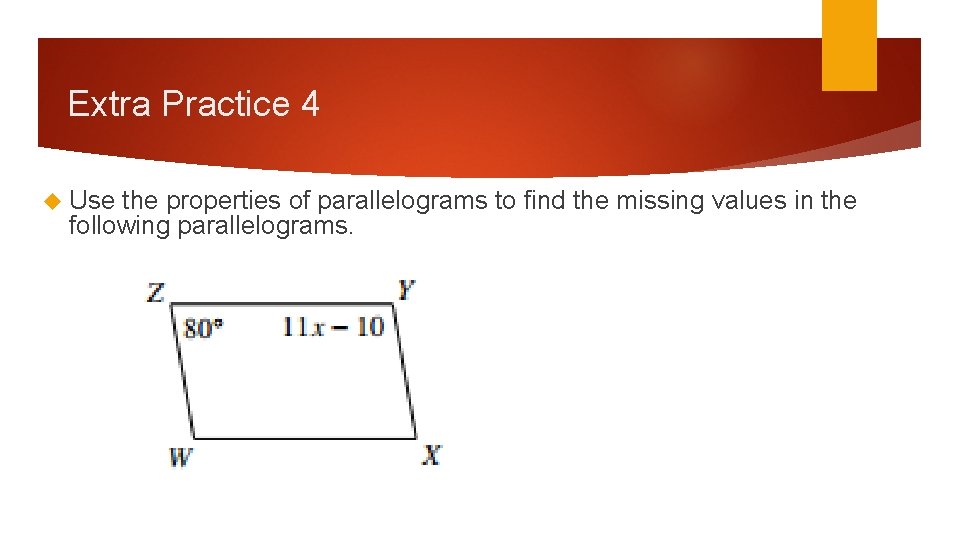
Extra Practice 4 Use the properties of parallelograms to find the missing values in the following parallelograms.
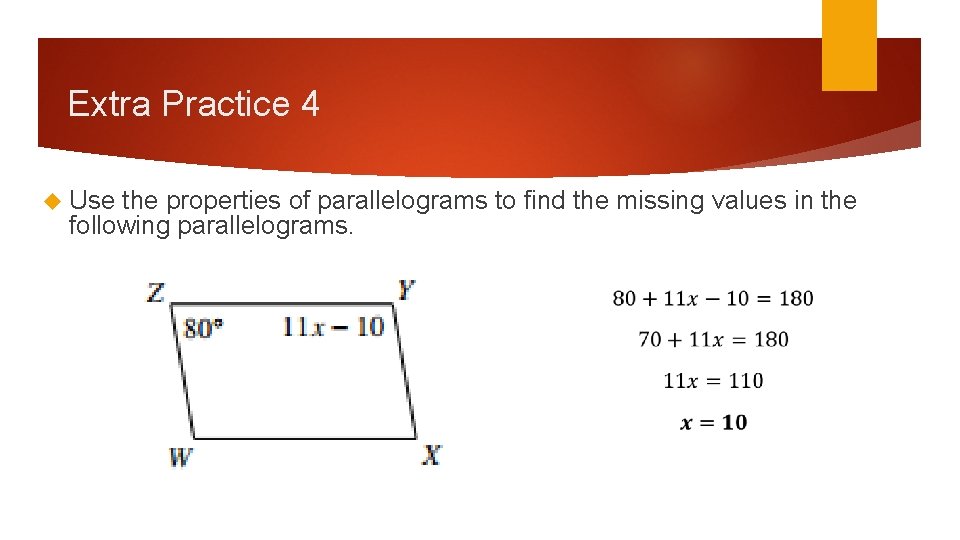
Extra Practice 4 Use the properties of parallelograms to find the missing values in the following parallelograms.
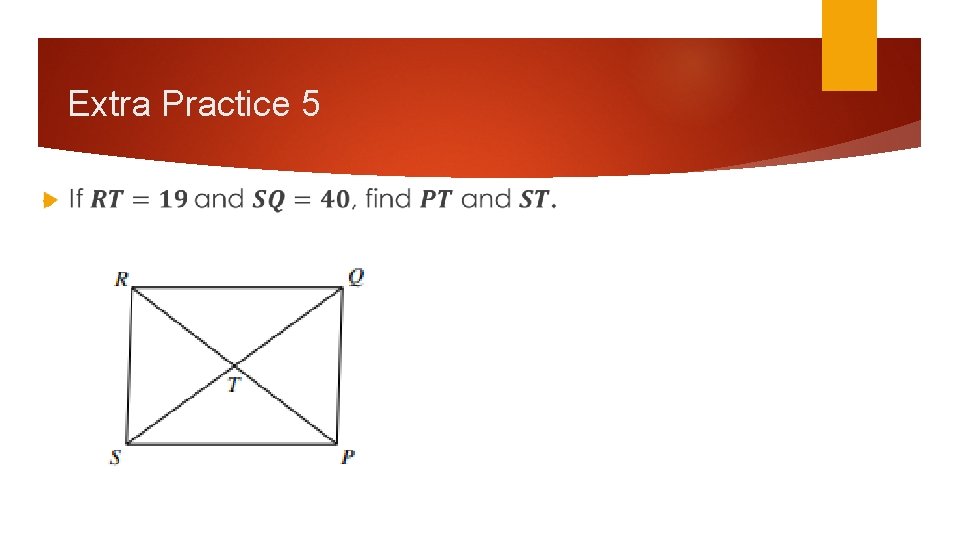
Extra Practice 5
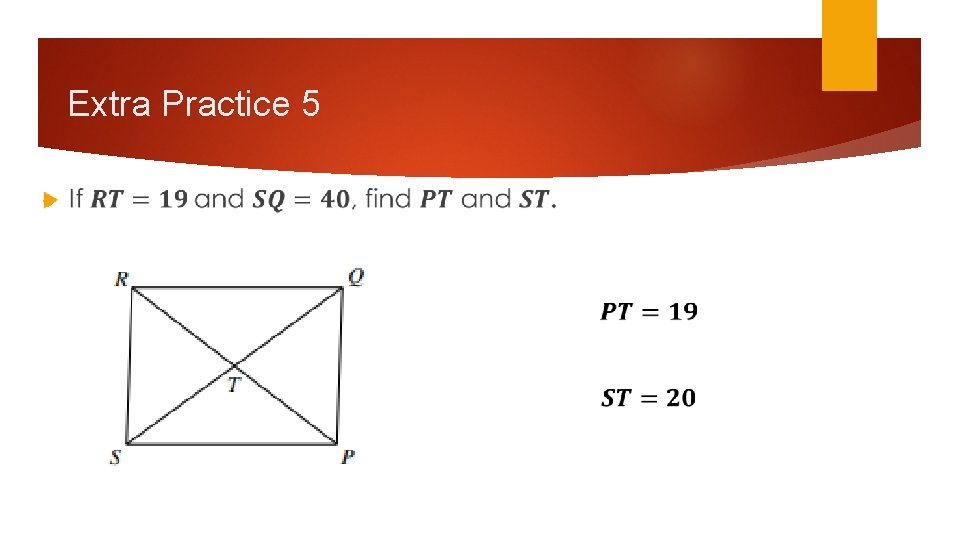
Extra Practice 5
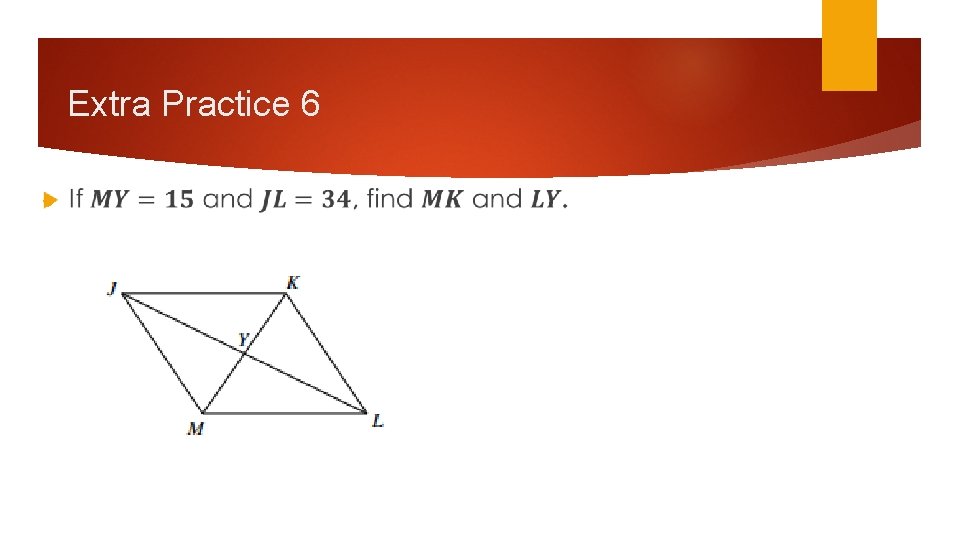
Extra Practice 6
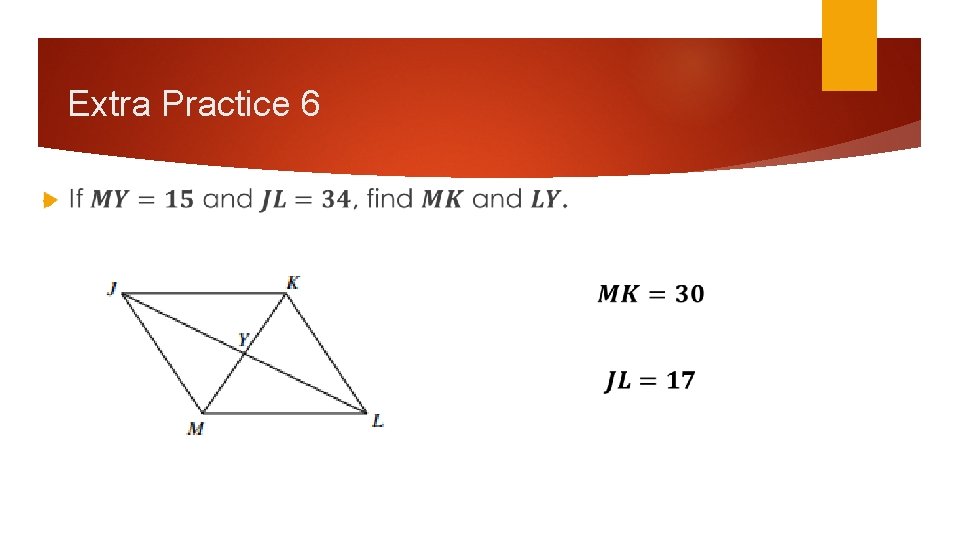
Extra Practice 6