
Geometry Chapter 6 6 36 4 PROVING TRIANGLES





- Slides: 45
Geometry Chapter 6 6 -3/6 -4: PROVING TRIANGLES SIMILAR
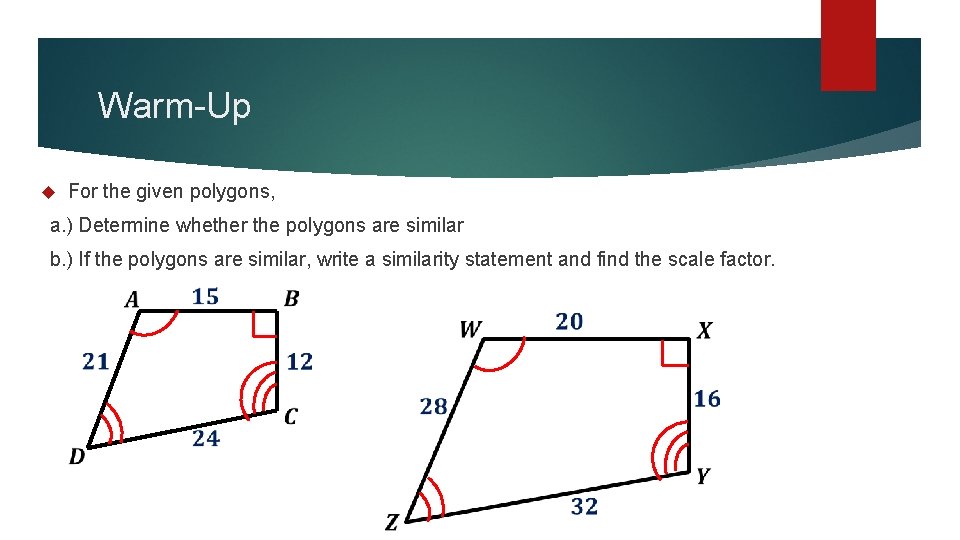
Warm-Up For the given polygons, a. ) Determine whether the polygons are similar b. ) If the polygons are similar, write a similarity statement and find the scale factor.
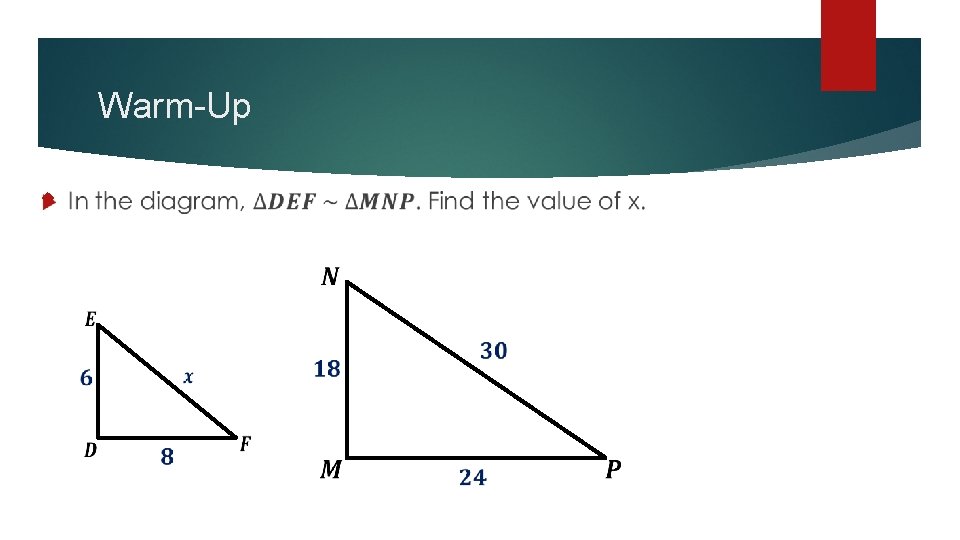
Warm-Up
Proving Triangles Similar Objective: Students will be able to use theorems and postulates to prove that triangles are similar. Agenda Postulates/Theorems for Similarity Practice
Proving Similar Polygons To identify that two polygons are similar, then you must identify that:
Definition: Similar Polygons To identify that two polygons are similar, then you must identify that: 1. ) Corresponding angles are congruent
Definition: Similar Polygons To identify that two polygons are similar, then you must identify that: 1. ) Corresponding angles are congruent 2. ) Corresponding sides are in proportion (i. e. Their side lengths have the same ratio. )
Definition: Similar Polygons To identify that two polygons are similar, then you must identify that: 1. ) Corresponding angles are congruent 2. ) Corresponding sides are in proportion (i. e. Their side lengths have the same ratio. ) *For Triangles, however, we can prove that they are similar more quickly with the following:
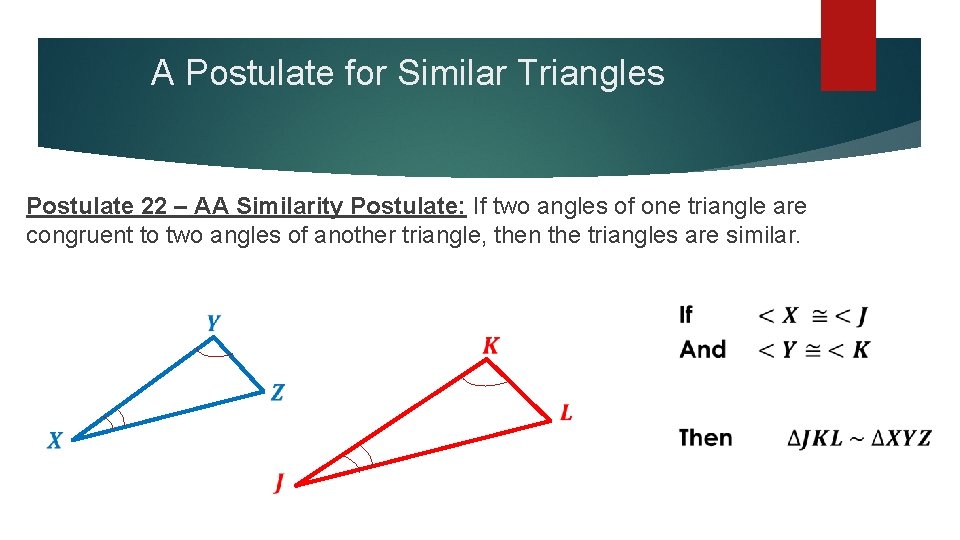
A Postulate for Similar Triangles Postulate 22 – AA Similarity Postulate: If two angles of one triangle are congruent to two angles of another triangle, then the triangles are similar.
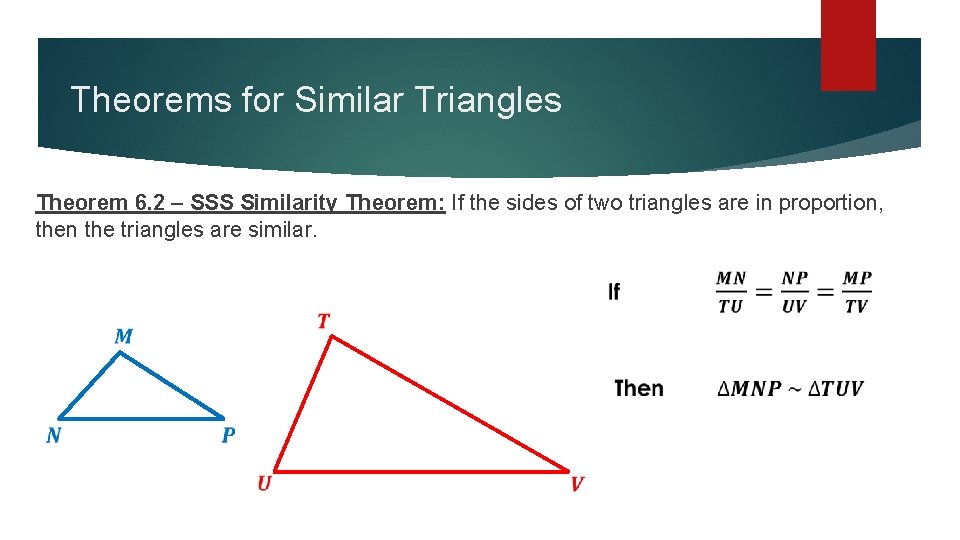
Theorems for Similar Triangles Theorem 6. 2 – SSS Similarity Theorem: If the sides of two triangles are in proportion, then the triangles are similar.
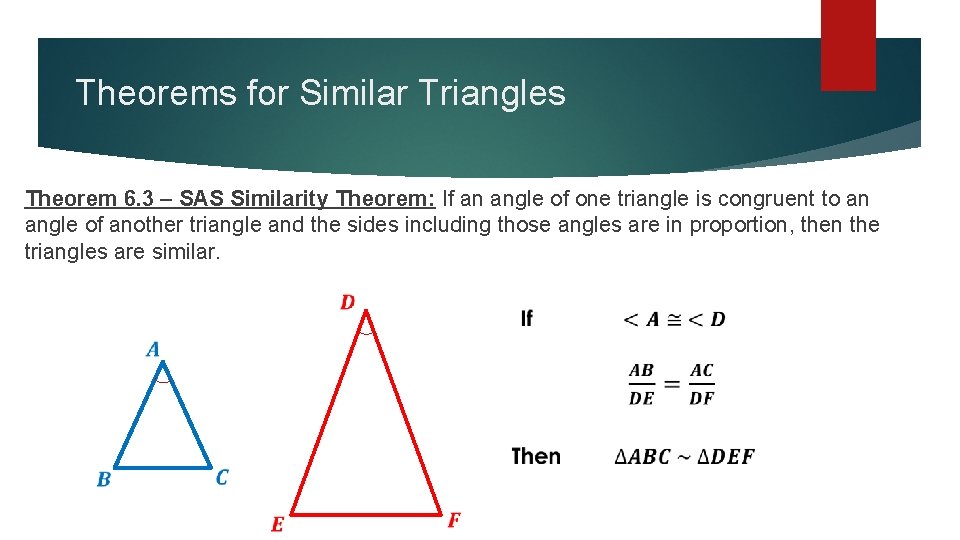
Theorems for Similar Triangles Theorem 6. 3 – SAS Similarity Theorem: If an angle of one triangle is congruent to an angle of another triangle and the sides including those angles are in proportion, then the triangles are similar.
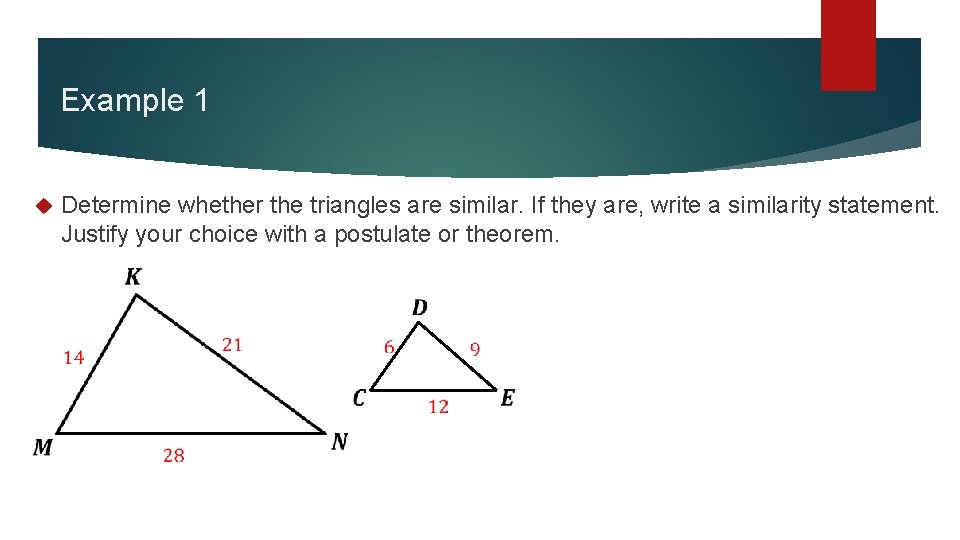
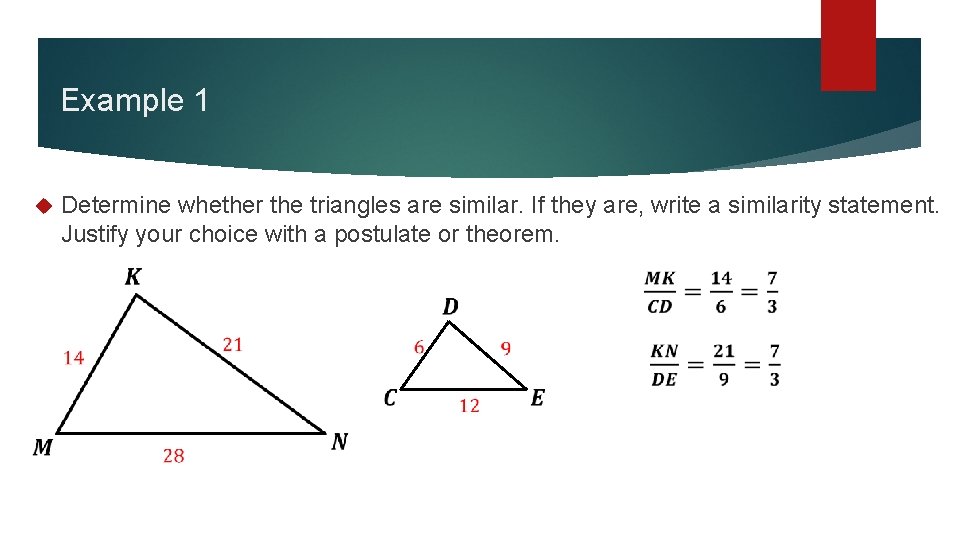
Example 1 Determine whether the triangles are similar. If they are, write a similarity statement. Justify your choice with a postulate or theorem.
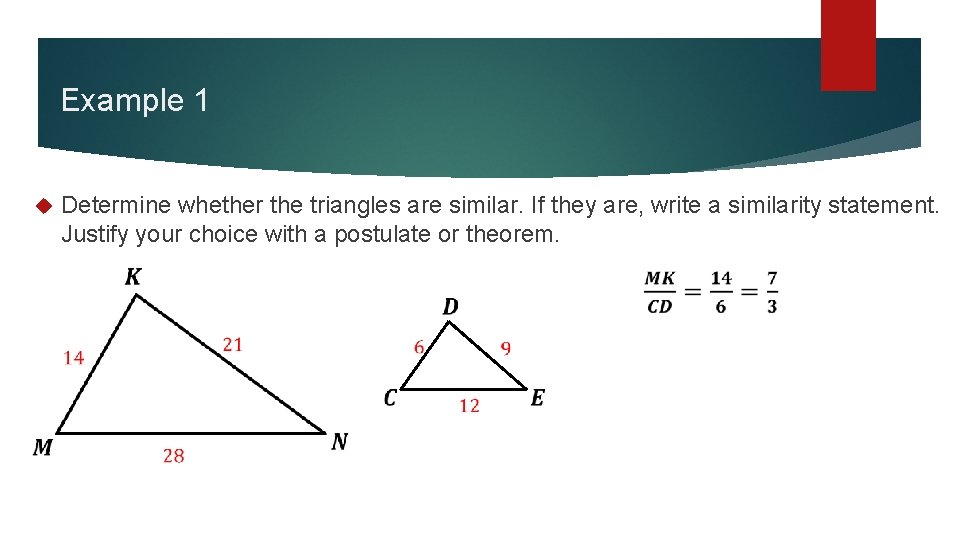
Example 1 Determine whether the triangles are similar. If they are, write a similarity statement. Justify your choice with a postulate or theorem.
Example 1 Determine whether the triangles are similar. If they are, write a similarity statement. Justify your choice with a postulate or theorem.
Example 1 Determine whether the triangles are similar. If they are, write a similarity statement. Justify your choice with a postulate or theorem.
Example 1 Determine whether the triangles are similar. If they are, write a similarity statement. Justify your choice with a postulate or theorem.
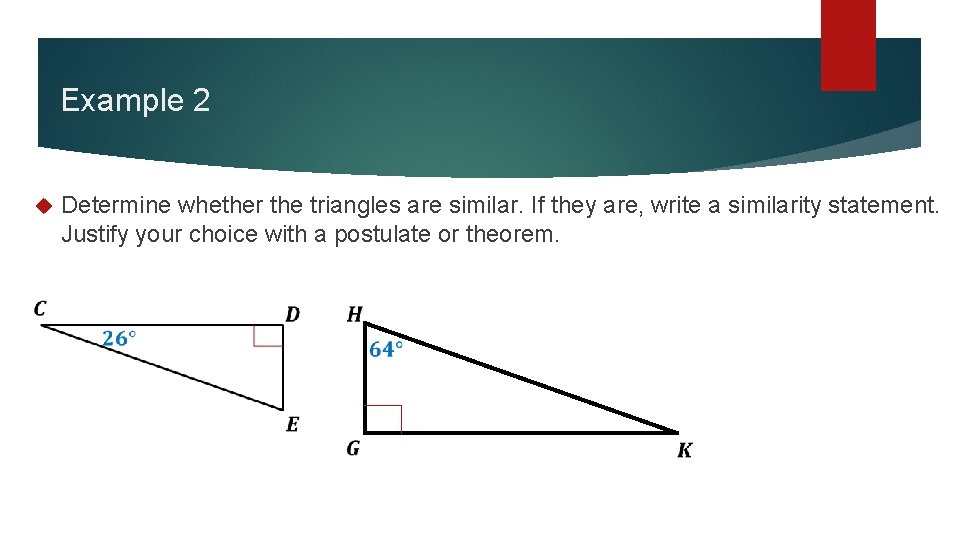
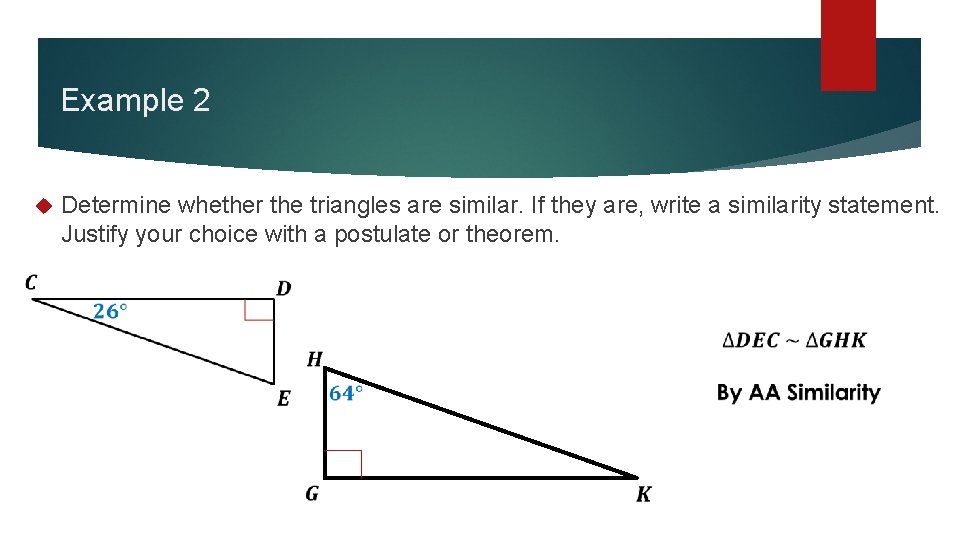
Example 2 Determine whether the triangles are similar. If they are, write a similarity statement. Justify your choice with a postulate or theorem.
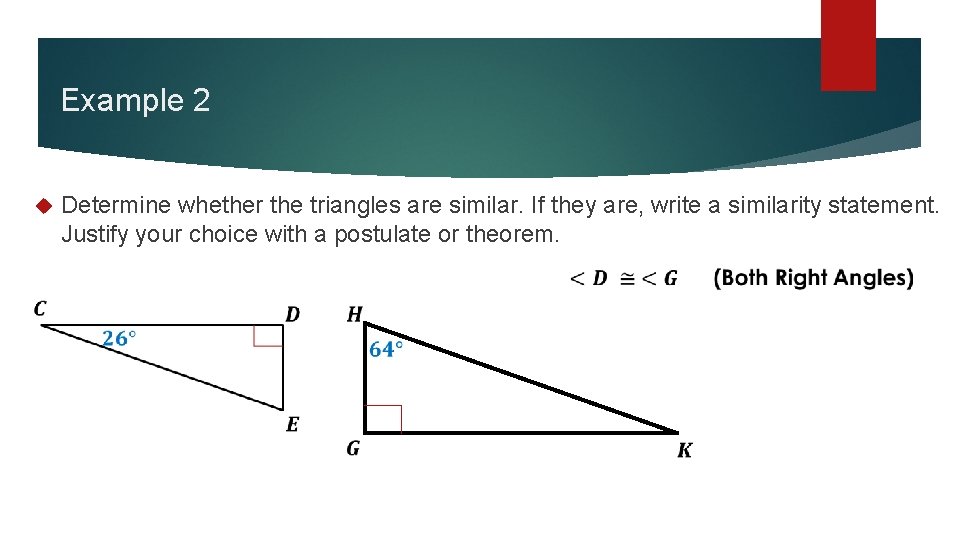
Example 2 Determine whether the triangles are similar. If they are, write a similarity statement. Justify your choice with a postulate or theorem.
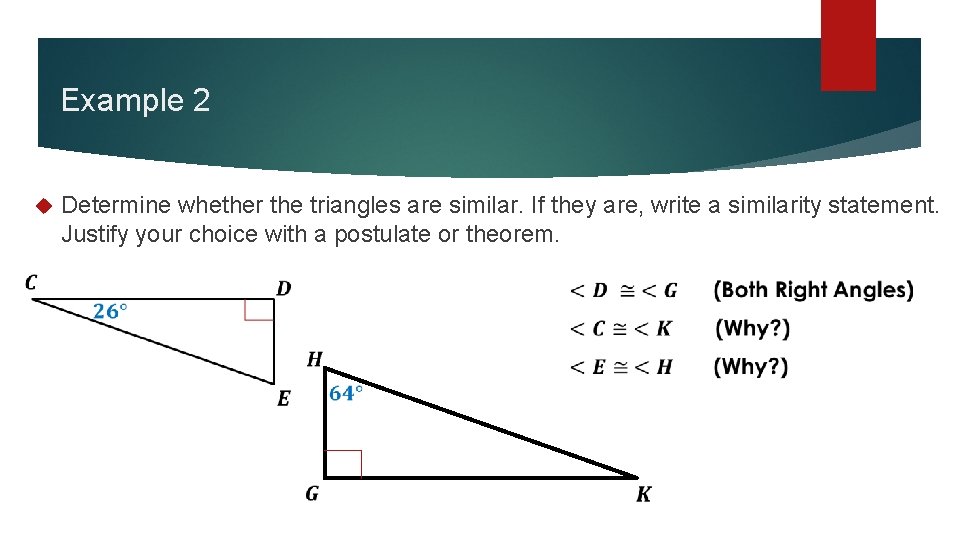
Example 2 Determine whether the triangles are similar. If they are, write a similarity statement. Justify your choice with a postulate or theorem.
Example 2 Determine whether the triangles are similar. If they are, write a similarity statement. Justify your choice with a postulate or theorem.
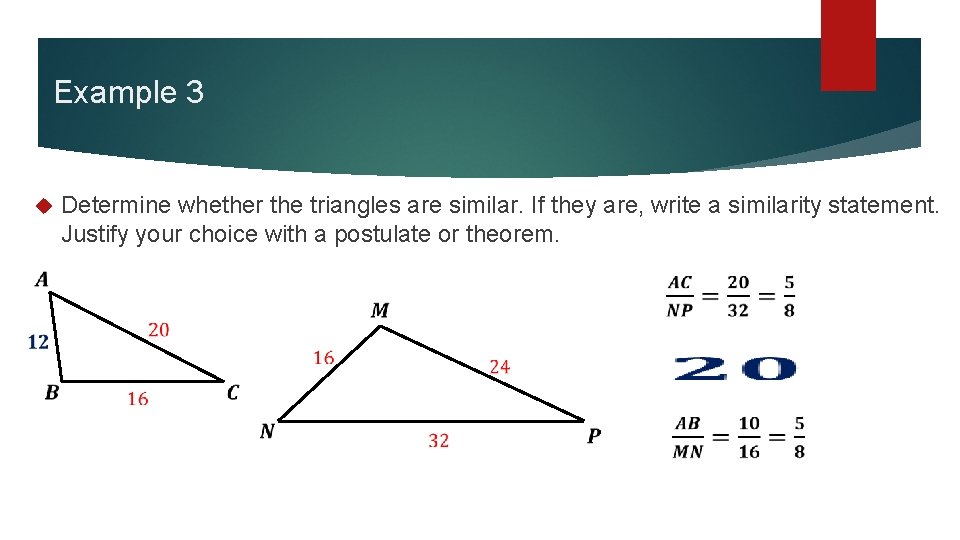
Example 3 Determine whether the triangles are similar. If they are, write a similarity statement. Justify your choice with a postulate or theorem.
Example 3 Determine whether the triangles are similar. If they are, write a similarity statement. Justify your choice with a postulate or theorem.
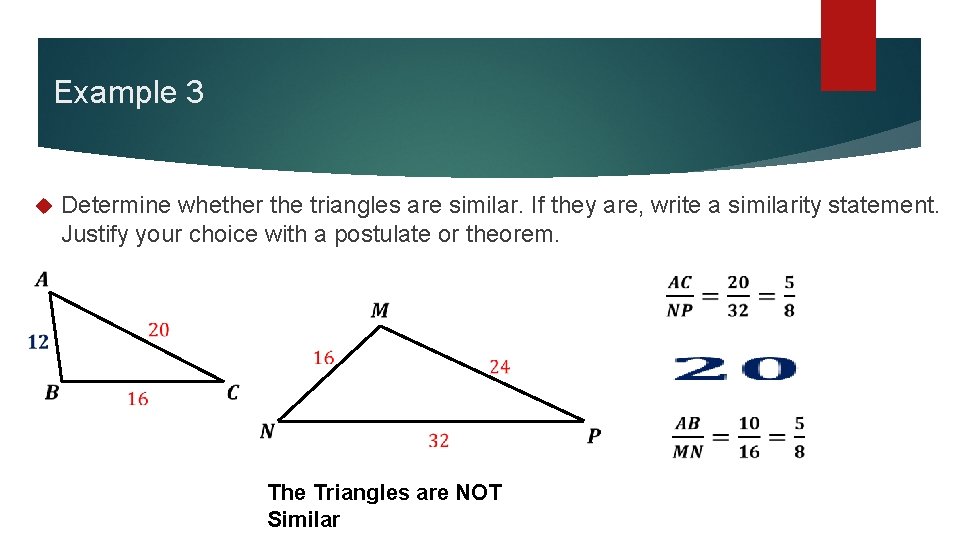
Example 3 Determine whether the triangles are similar. If they are, write a similarity statement. Justify your choice with a postulate or theorem. The Triangles are NOT Similar
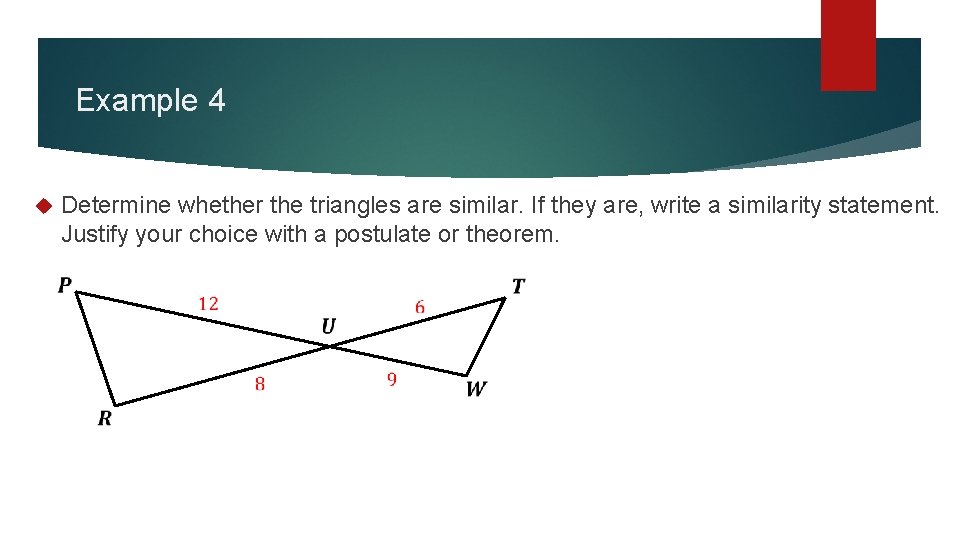
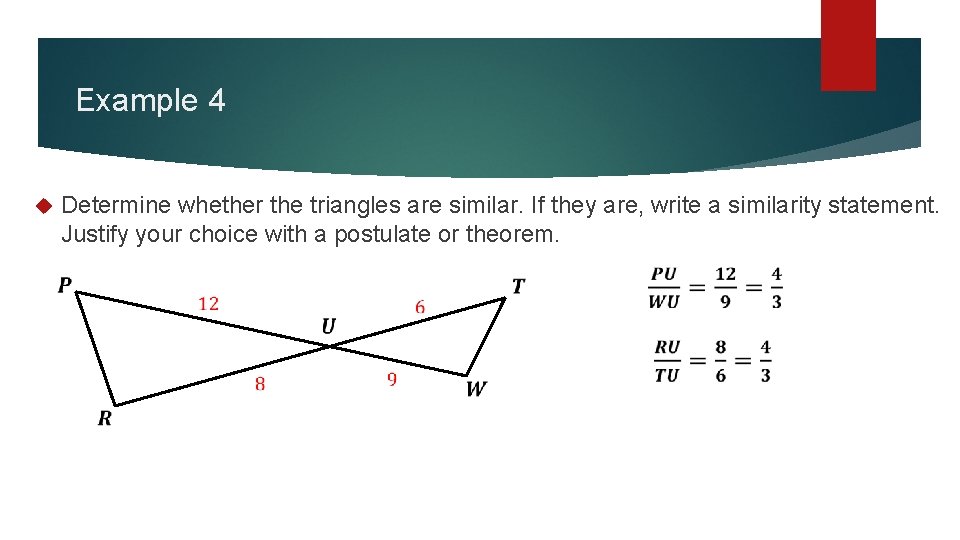
Example 4 Determine whether the triangles are similar. If they are, write a similarity statement. Justify your choice with a postulate or theorem.
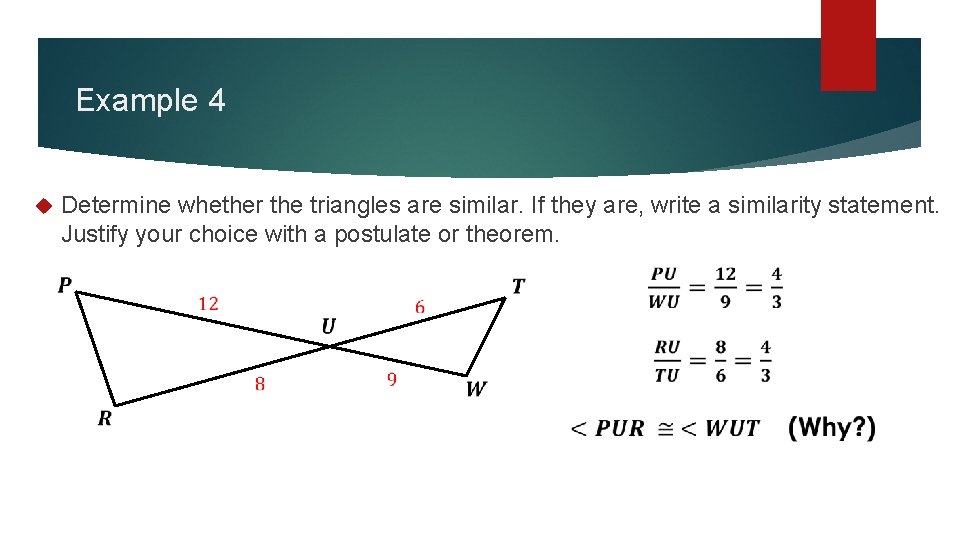
Example 4 Determine whether the triangles are similar. If they are, write a similarity statement. Justify your choice with a postulate or theorem.
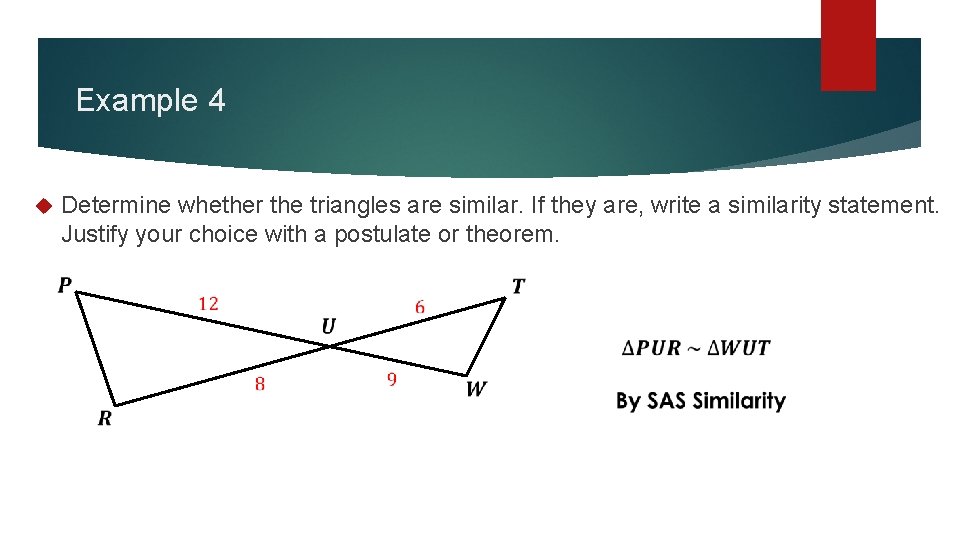
Example 4 Determine whether the triangles are similar. If they are, write a similarity statement. Justify your choice with a postulate or theorem.
Example 4 Determine whether the triangles are similar. If they are, write a similarity statement. Justify your choice with a postulate or theorem.
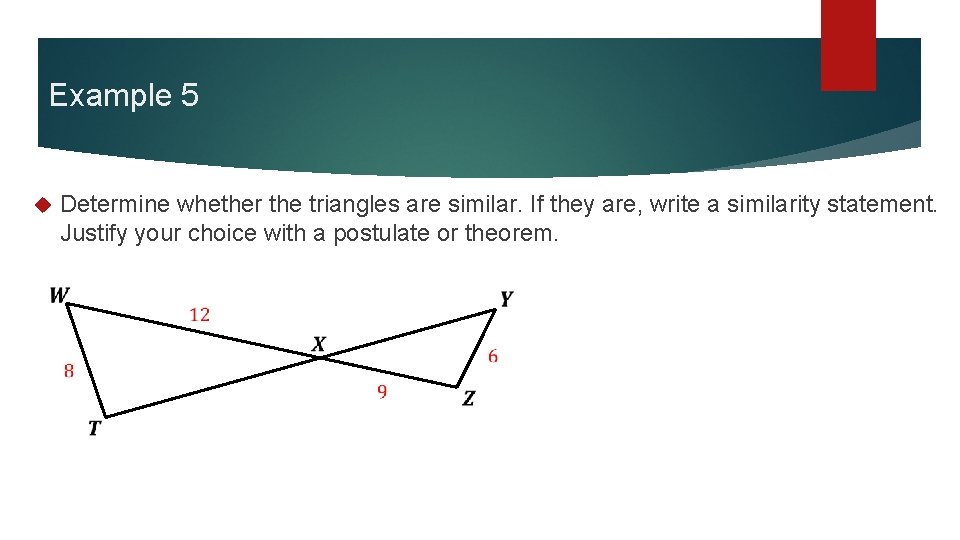
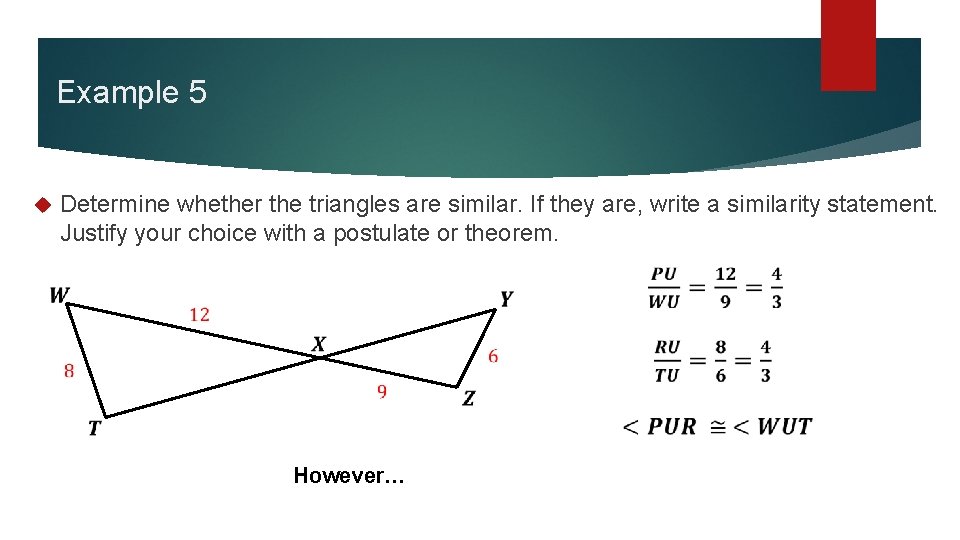
Example 5 Determine whether the triangles are similar. If they are, write a similarity statement. Justify your choice with a postulate or theorem.
Example 5 Determine whether the triangles are similar. If they are, write a similarity statement. Justify your choice with a postulate or theorem. However…
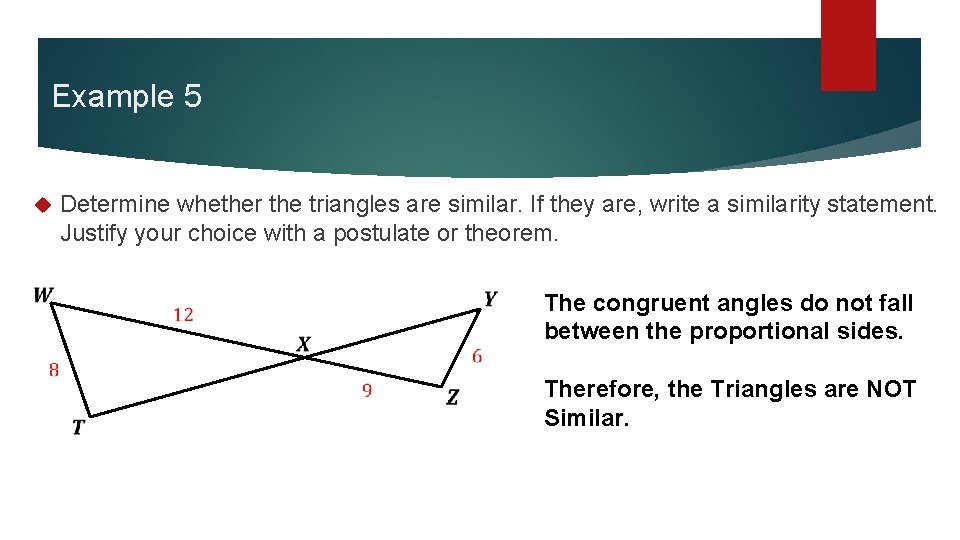
Example 5 Determine whether the triangles are similar. If they are, write a similarity statement. Justify your choice with a postulate or theorem. The congruent angles do not fall between the proportional sides. Therefore, the Triangles are NOT Similar.
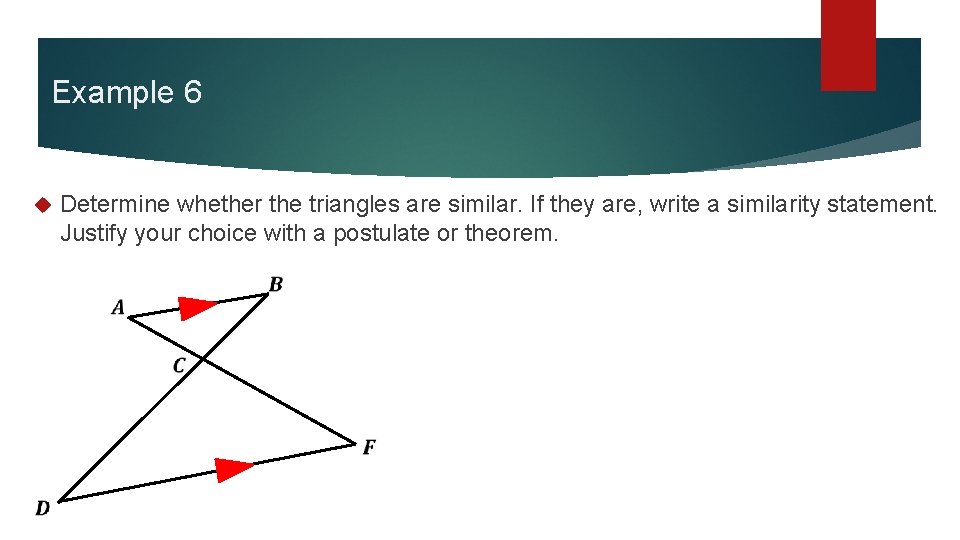
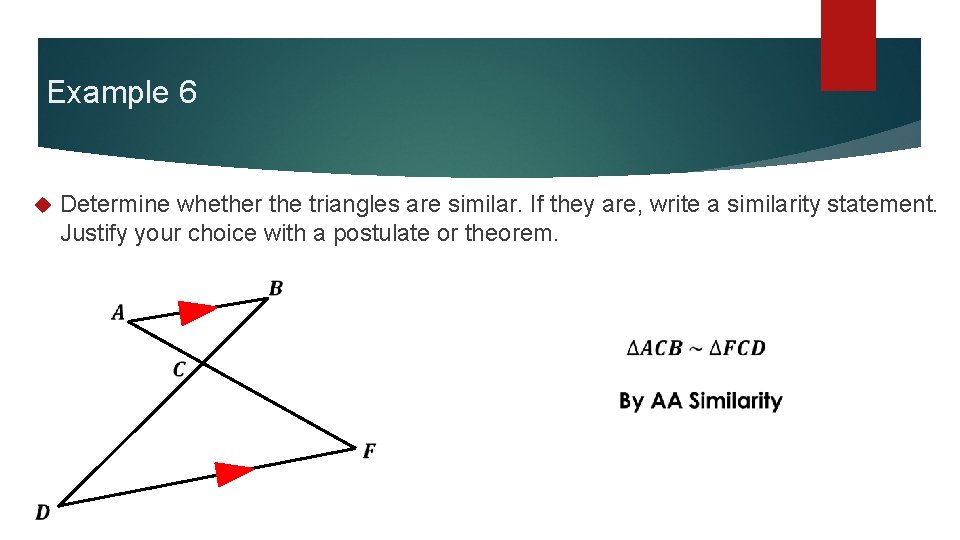
Example 6 Determine whether the triangles are similar. If they are, write a similarity statement. Justify your choice with a postulate or theorem.
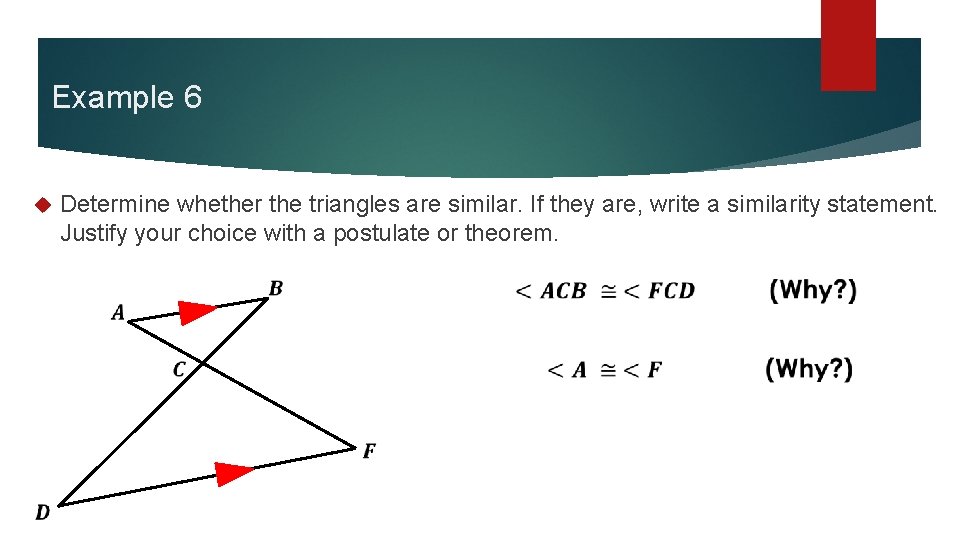
Example 6 Determine whether the triangles are similar. If they are, write a similarity statement. Justify your choice with a postulate or theorem.
Example 6 Determine whether the triangles are similar. If they are, write a similarity statement. Justify your choice with a postulate or theorem.
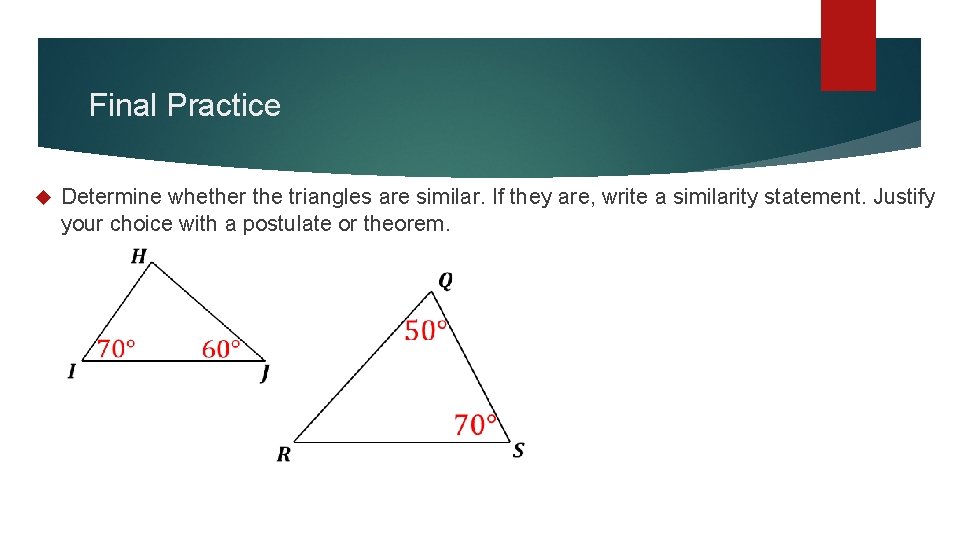
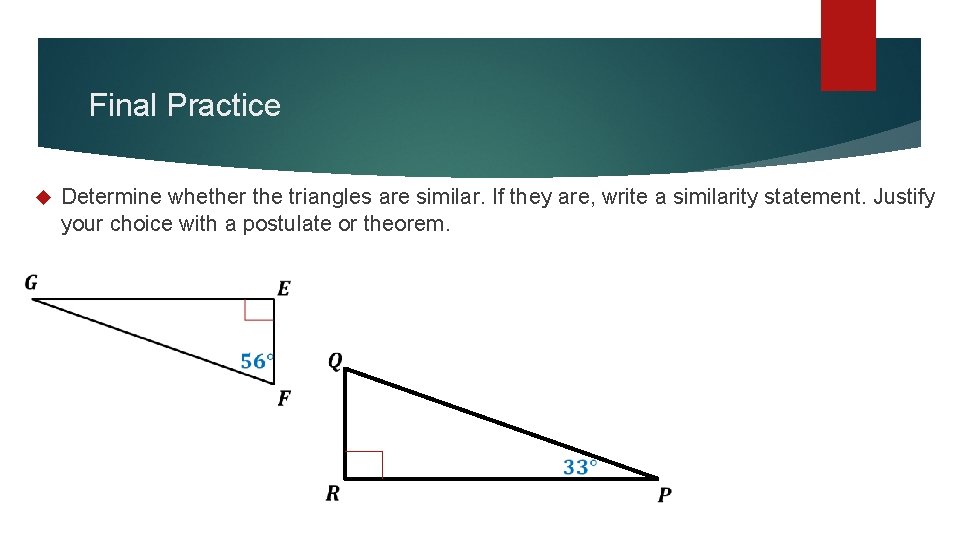
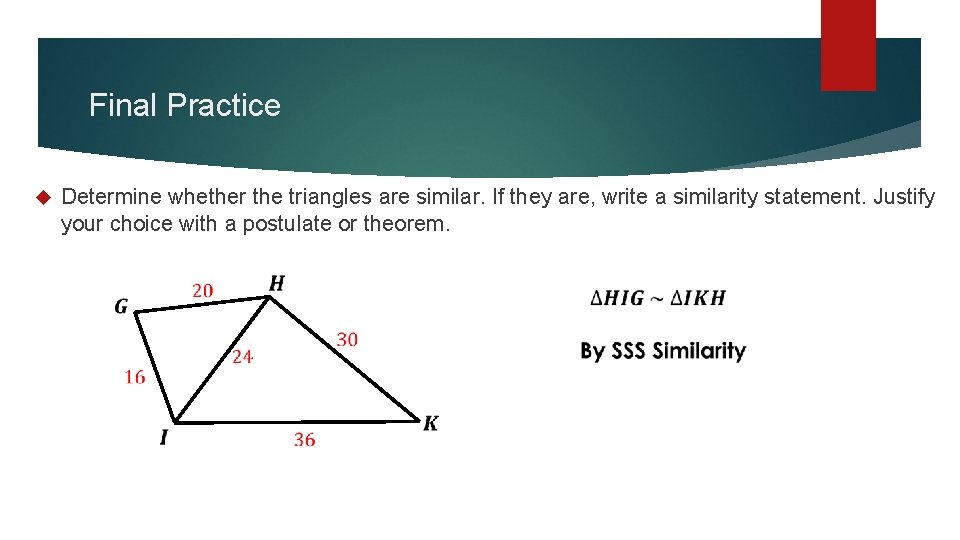
Final Practice Determine whether the triangles are similar. If they are, write a similarity statement. Justify your choice with a postulate or theorem.
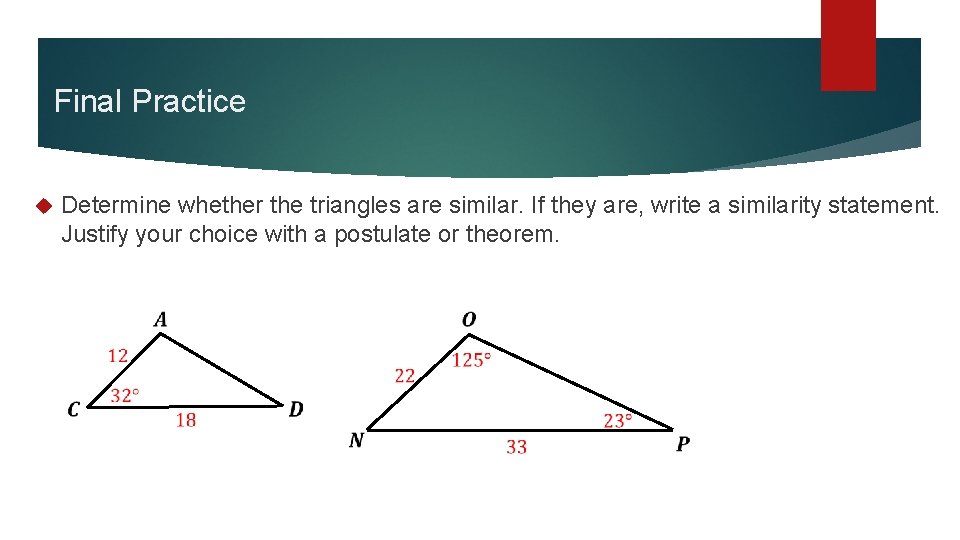
Final Practice Determine whether the triangles are similar. If they are, write a similarity statement. Justify your choice with a postulate or theorem.
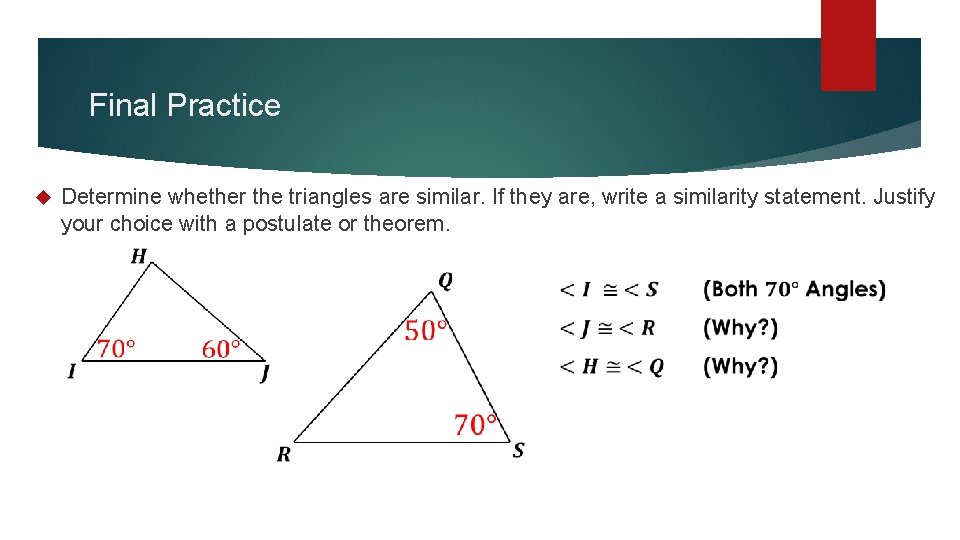
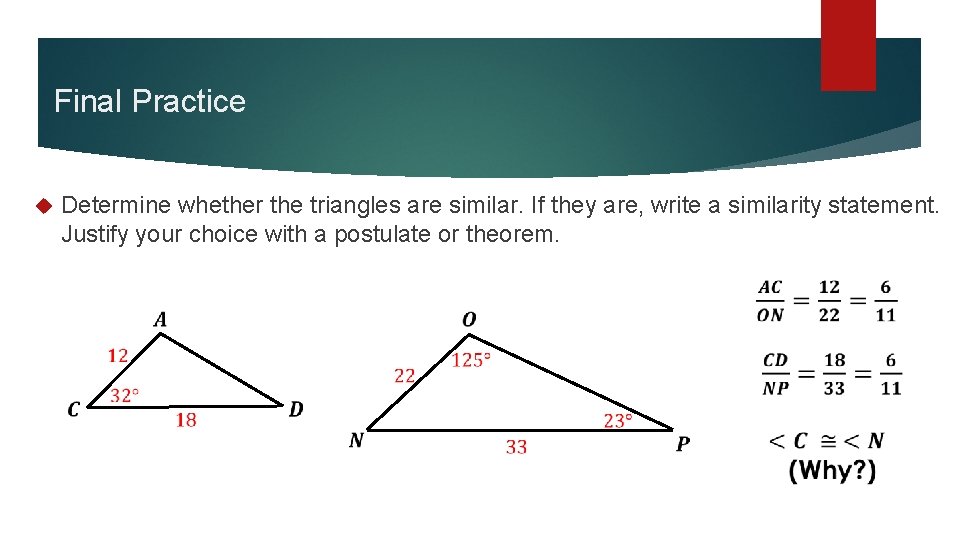
Final Practice Determine whether the triangles are similar. If they are, write a similarity statement. Justify your choice with a postulate or theorem.
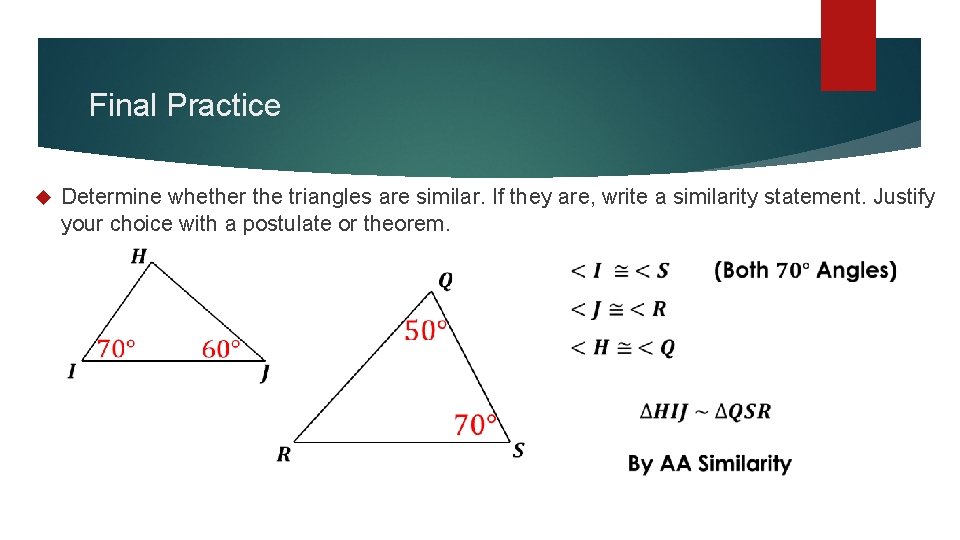
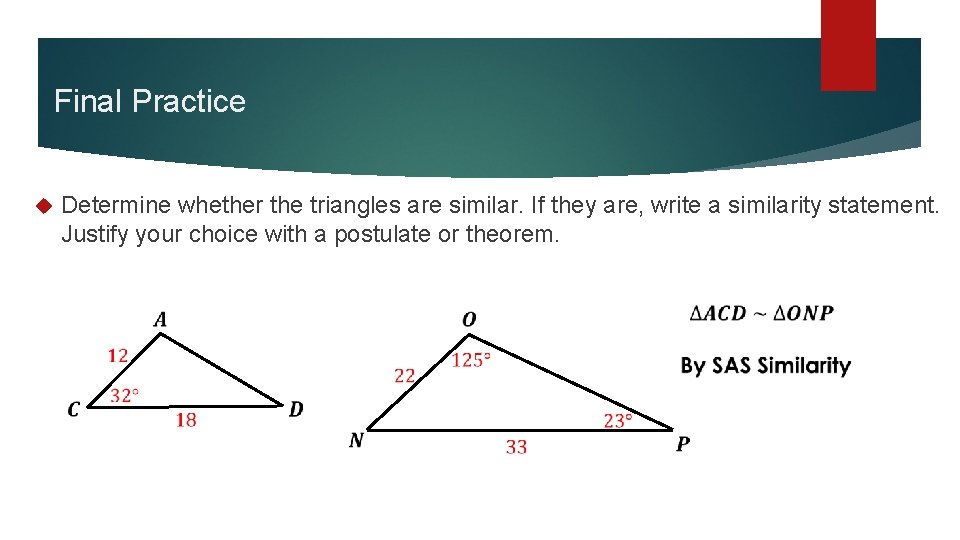
Final Practice Determine whether the triangles are similar. If they are, write a similarity statement. Justify your choice with a postulate or theorem.
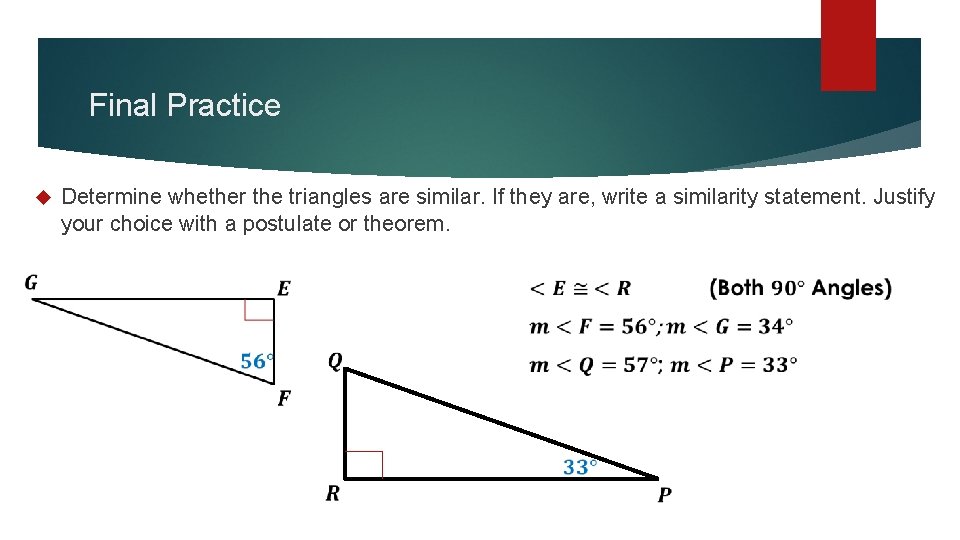
Final Practice Determine whether the triangles are similar. If they are, write a similarity statement. Justify your choice with a postulate or theorem. Only 1 pair of angles are congruent. Not enough for AA. The Triangles are NOT Similar
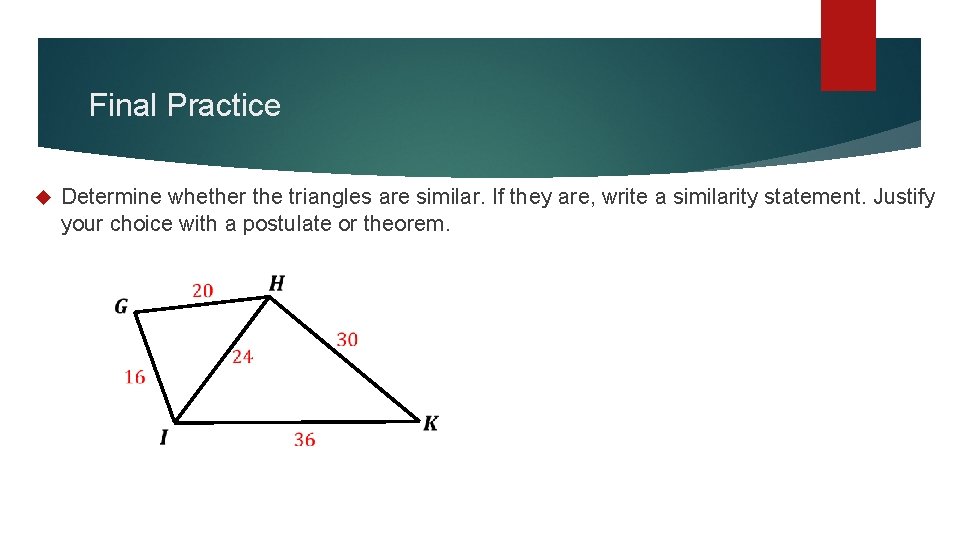
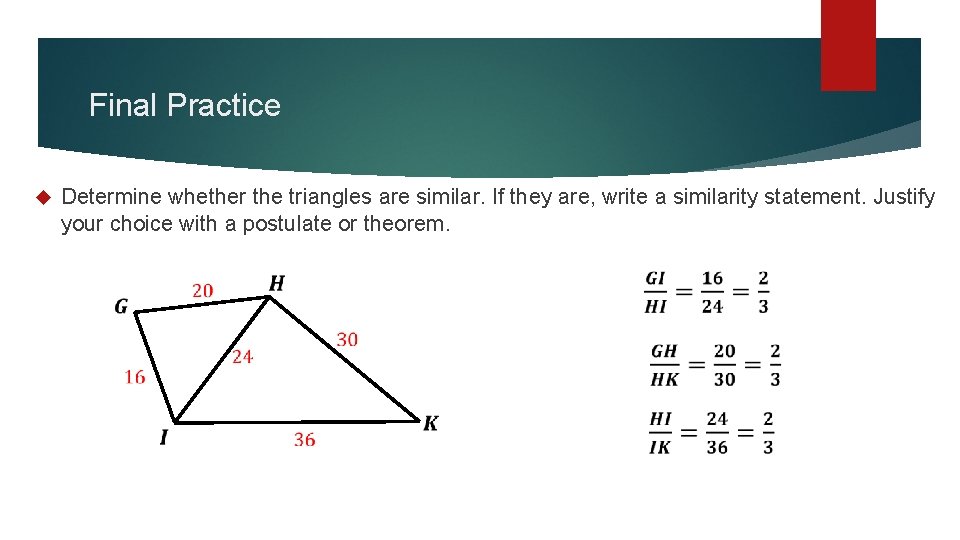
Final Practice Determine whether the triangles are similar. If they are, write a similarity statement. Justify your choice with a postulate or theorem.
Final Practice Determine whether the triangles are similar. If they are, write a similarity statement. Justify your choice with a postulate or theorem.
Final Practice Determine whether the triangles are similar. If they are, write a similarity statement. Justify your choice with a postulate or theorem.
Final Practice Determine whether the triangles are similar. If they are, write a similarity statement. Justify your choice with a postulate or theorem.
Final Practice Determine whether the triangles are similar. If they are, write a similarity statement. Justify your choice with a postulate or theorem.
Final Practice Determine whether the triangles are similar. If they are, write a similarity statement. Justify your choice with a postulate or theorem.
Final Practice Determine whether the triangles are similar. If they are, write a similarity statement. Justify your choice with a postulate or theorem.