
Geology Rocks CH 8 PAGE 277 Structure of


- Slides: 30
Geology - Rocks CH 8 PAGE 277
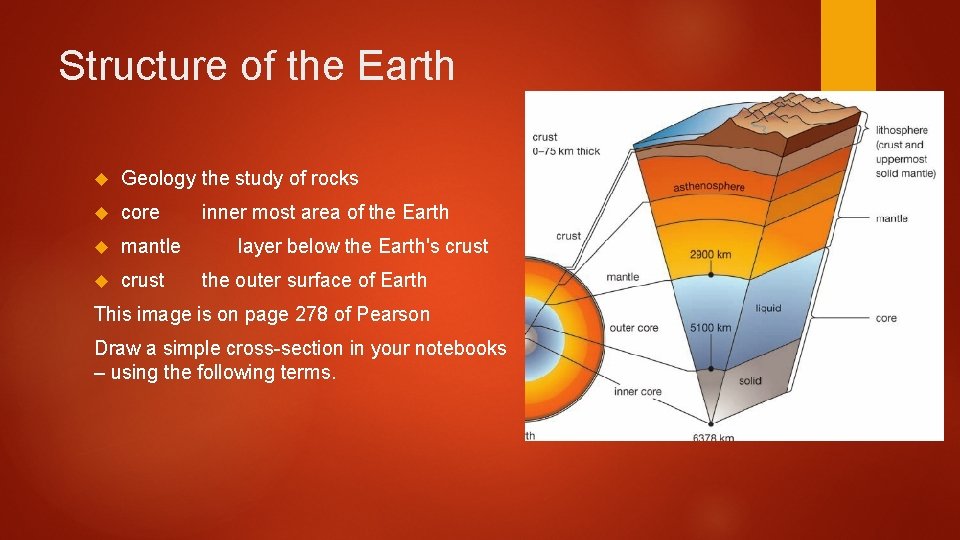
Structure of the Earth Geology the study of rocks core mantle crust inner most area of the Earth layer below the Earth's crust the outer surface of Earth This image is on page 278 of Pearson Draw a simple cross-section in your notebooks – using the following terms.
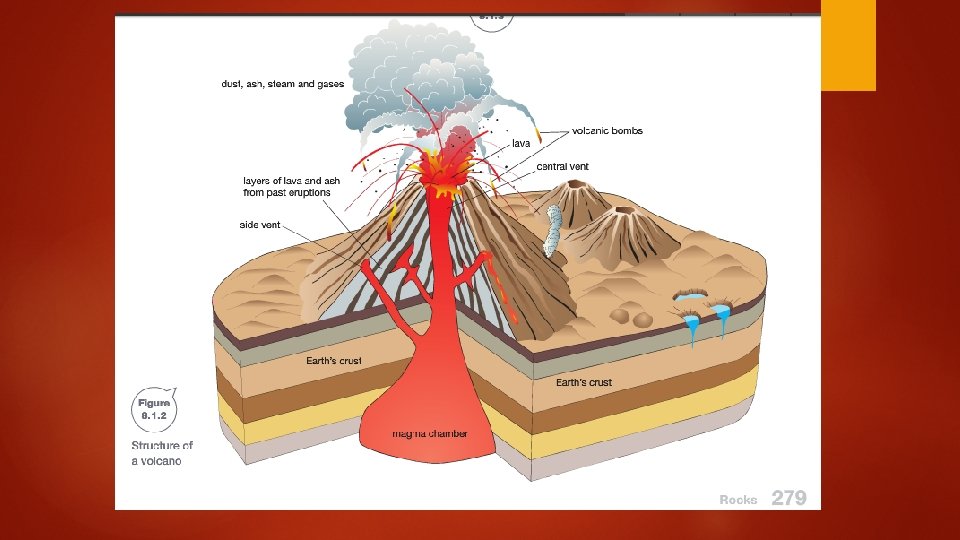
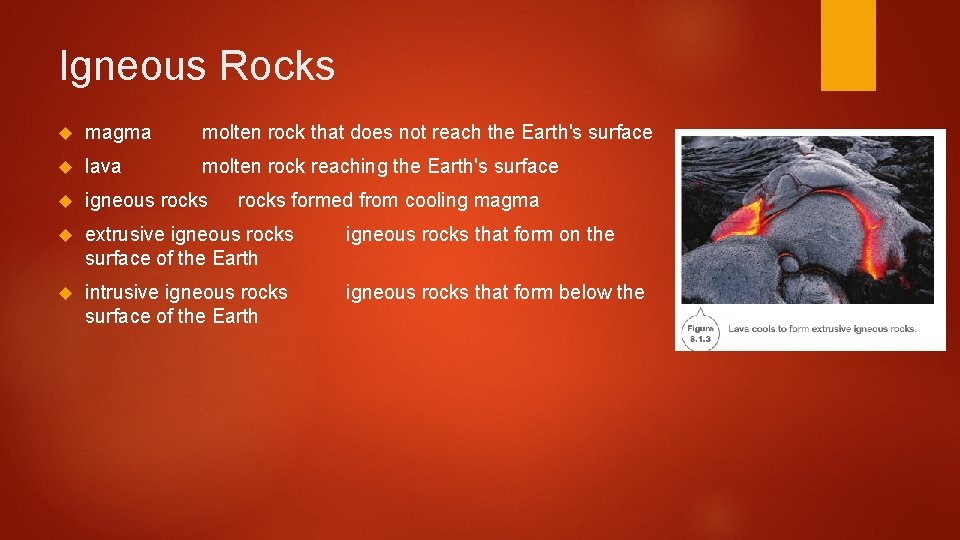
Igneous Rocks magma molten rock that does not reach the Earth's surface lava molten rock reaching the Earth's surface igneous rocks extrusive igneous rocks surface of the Earth igneous rocks that form on the intrusive igneous rocks surface of the Earth igneous rocks that form below the rocks formed from cooling magma
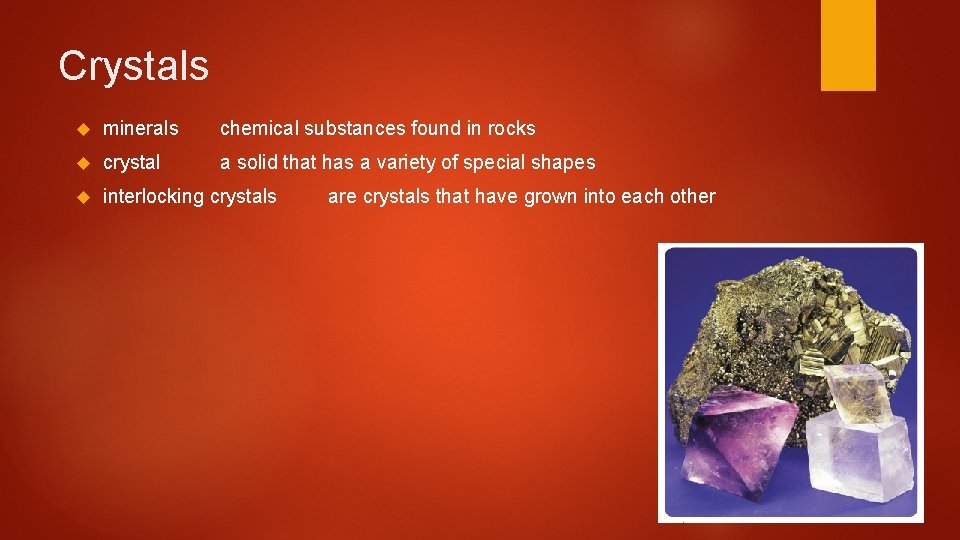
Crystals minerals chemical substances found in rocks crystal a solid that has a variety of special shapes interlocking crystals are crystals that have grown into each other
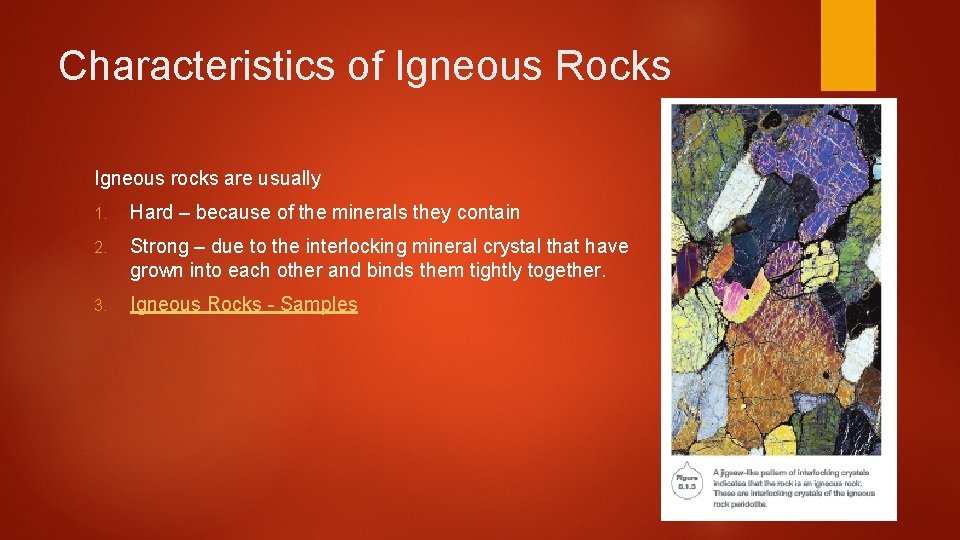
Characteristics of Igneous Rocks Igneous rocks are usually 1. Hard – because of the minerals they contain 2. Strong – due to the interlocking mineral crystal that have grown into each other and binds them tightly together. 3. Igneous Rocks - Samples
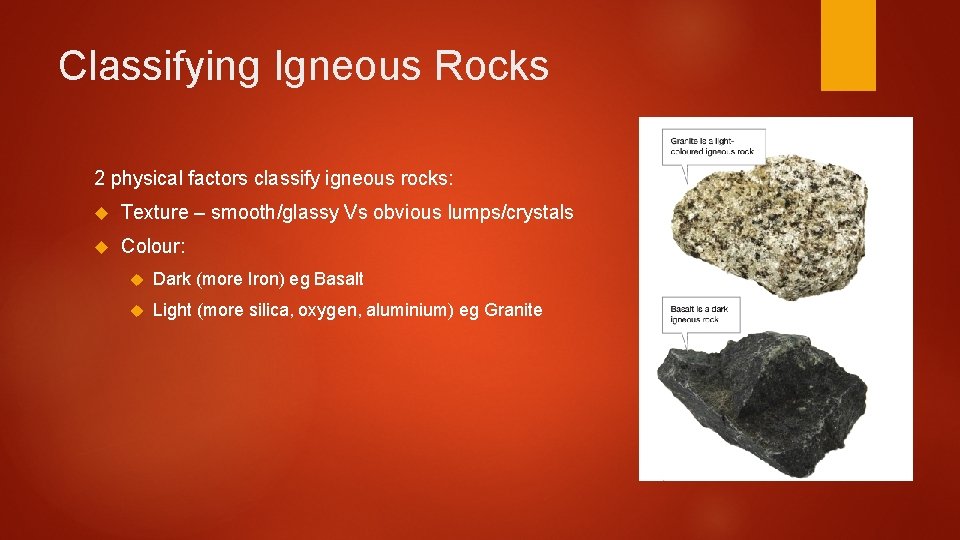
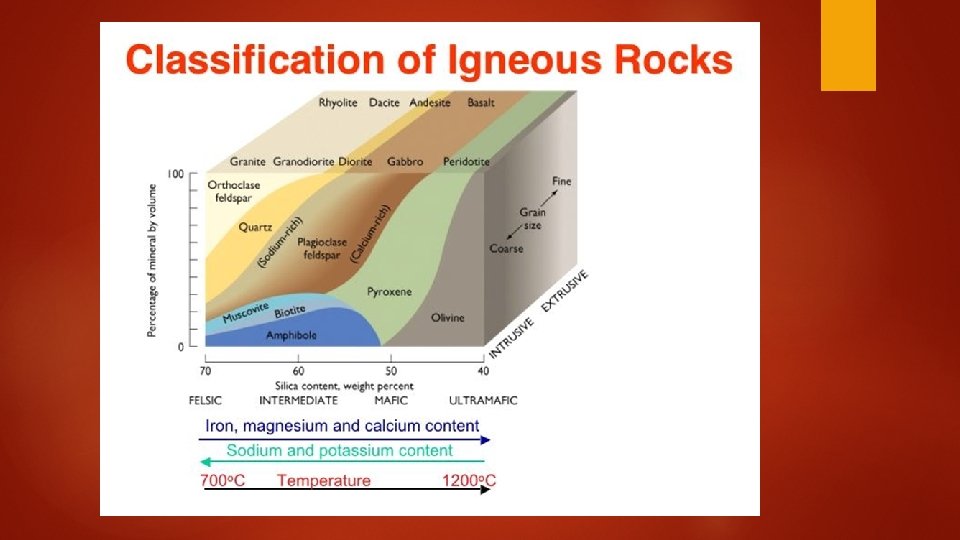
Classifying Igneous Rocks 2 physical factors classify igneous rocks: Texture – smooth/glassy Vs obvious lumps/crystals Colour: Dark (more Iron) eg Basalt Light (more silica, oxygen, aluminium) eg Granite
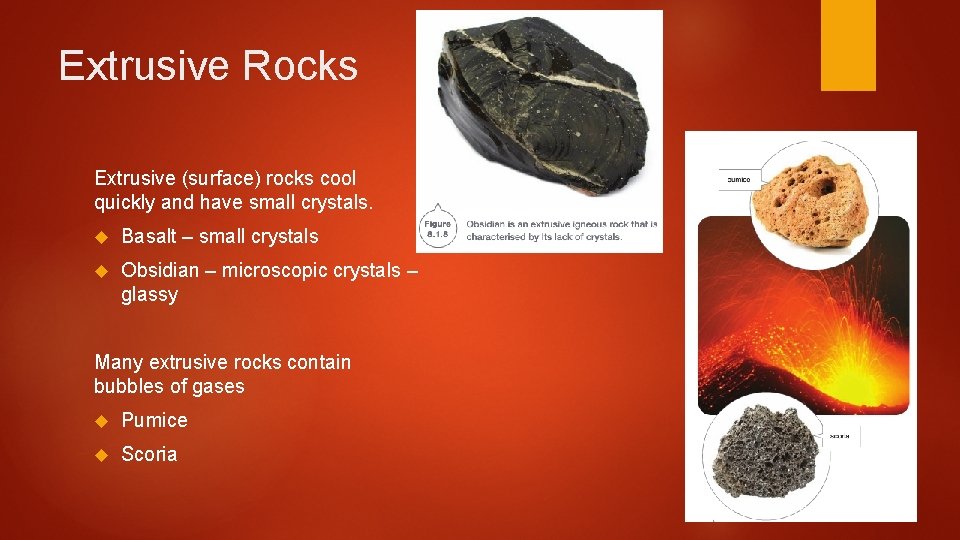
Extrusive Rocks Extrusive (surface) rocks cool quickly and have small crystals. Basalt – small crystals Obsidian – microscopic crystals – glassy Many extrusive rocks contain bubbles of gases Pumice Scoria
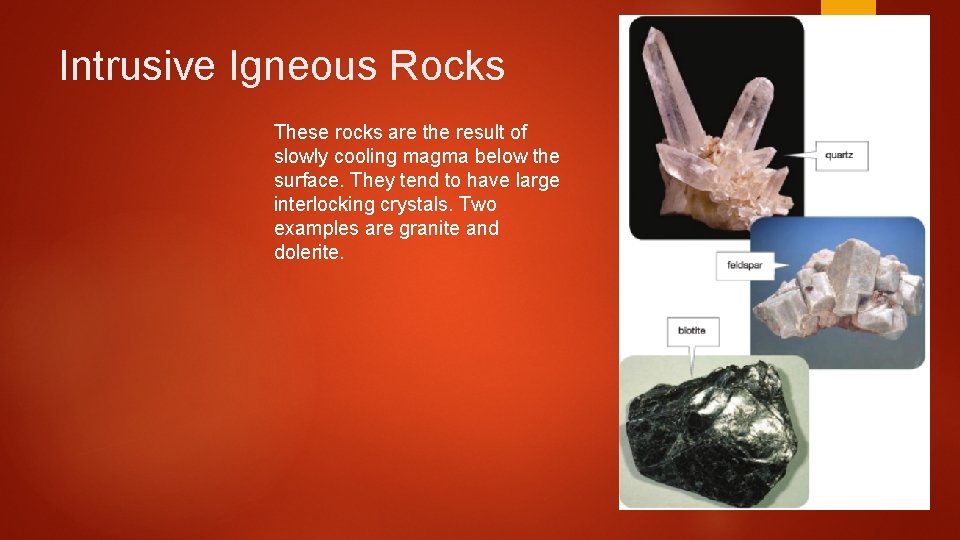
Intrusive Igneous Rocks These rocks are the result of slowly cooling magma below the surface. They tend to have large interlocking crystals. Two examples are granite and dolerite.
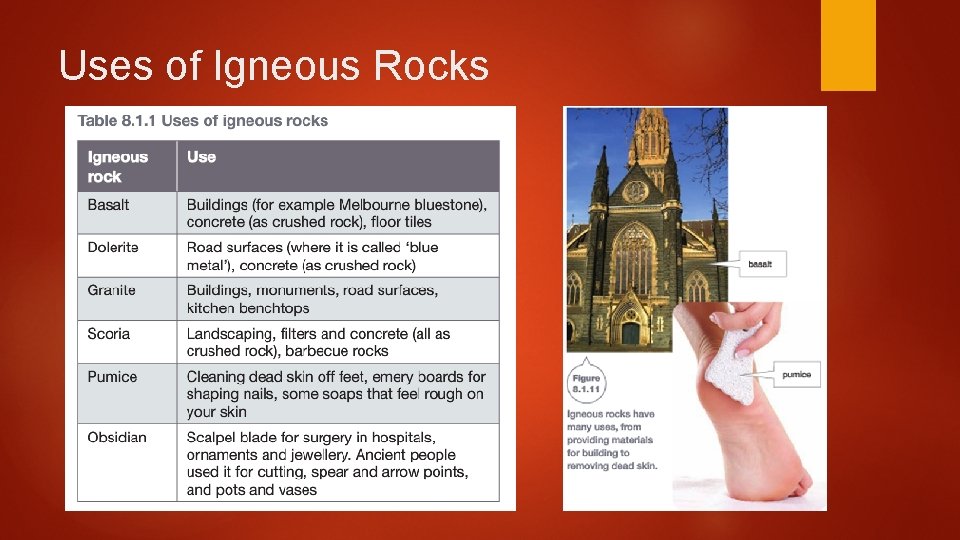
Uses of Igneous Rocks
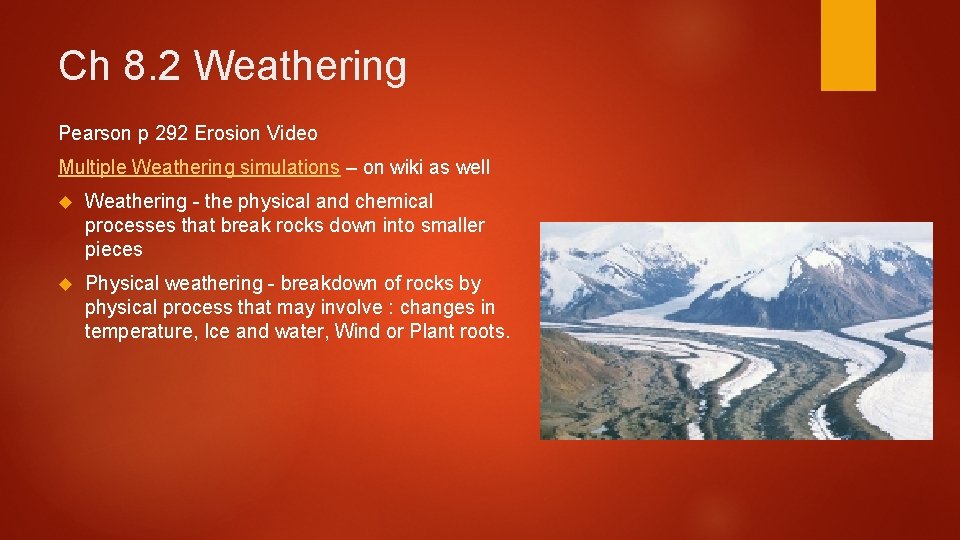
Ch 8. 2 Weathering Pearson p 292 Erosion Video Multiple Weathering simulations – on wiki as well Weathering - the physical and chemical processes that break rocks down into smaller pieces Physical weathering - breakdown of rocks by physical process that may involve : changes in temperature, Ice and water, Wind or Plant roots.
Chemical weathering - water, or chemicals in the water and air reacting and breaking down rock – eg carbon dioxide dissolves in water creating a mild acid that can weaken some rocks, other acids may come in the form of acid rain (pollution).
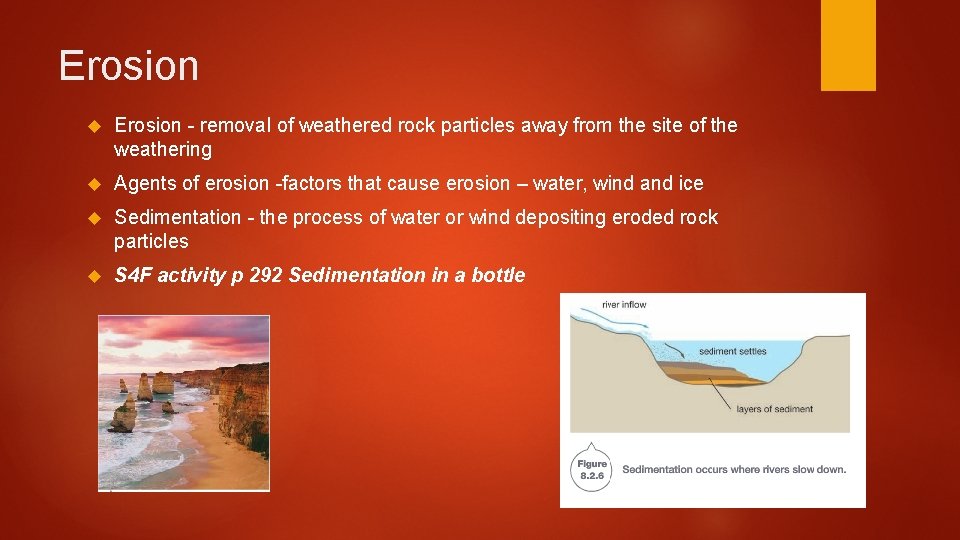
Erosion - removal of weathered rock particles away from the site of the weathering Agents of erosion -factors that cause erosion – water, wind and ice Sedimentation - the process of water or wind depositing eroded rock particles S 4 F activity p 292 Sedimentation in a bottle
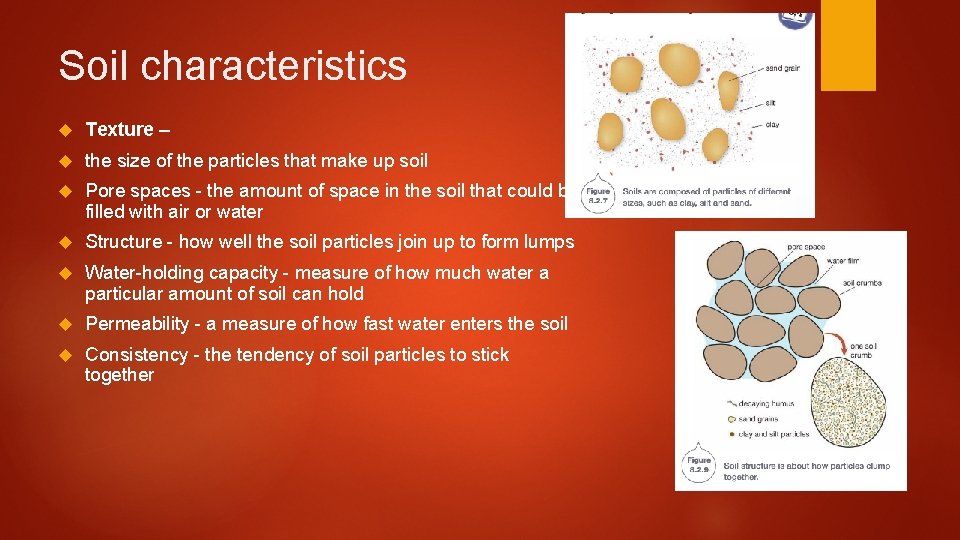
Soil characteristics Texture – the size of the particles that make up soil Pore spaces - the amount of space in the soil that could be filled with air or water Structure - how well the soil particles join up to form lumps Water-holding capacity - measure of how much water a particular amount of soil can hold Permeability - a measure of how fast water enters the soil Consistency - the tendency of soil particles to stick together
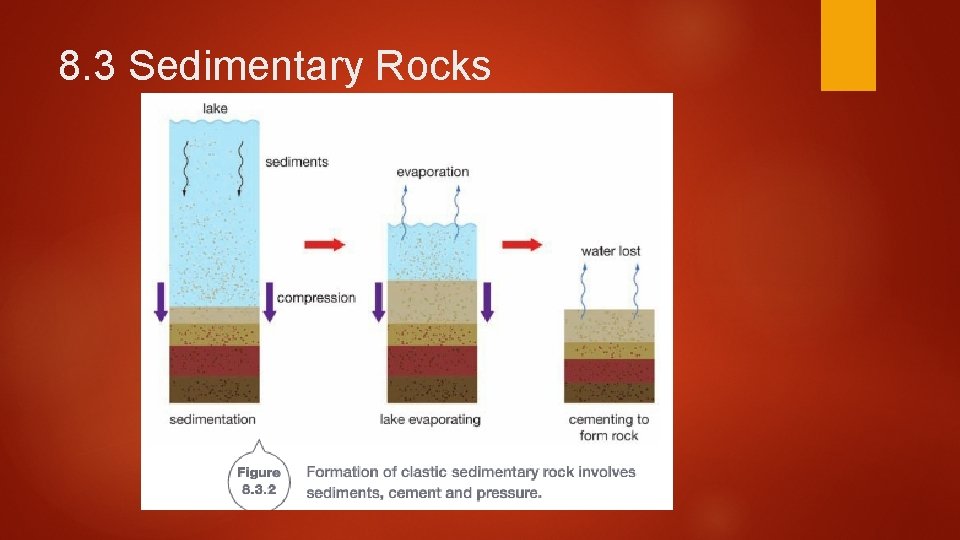
8. 3 Sedimentary Rocks
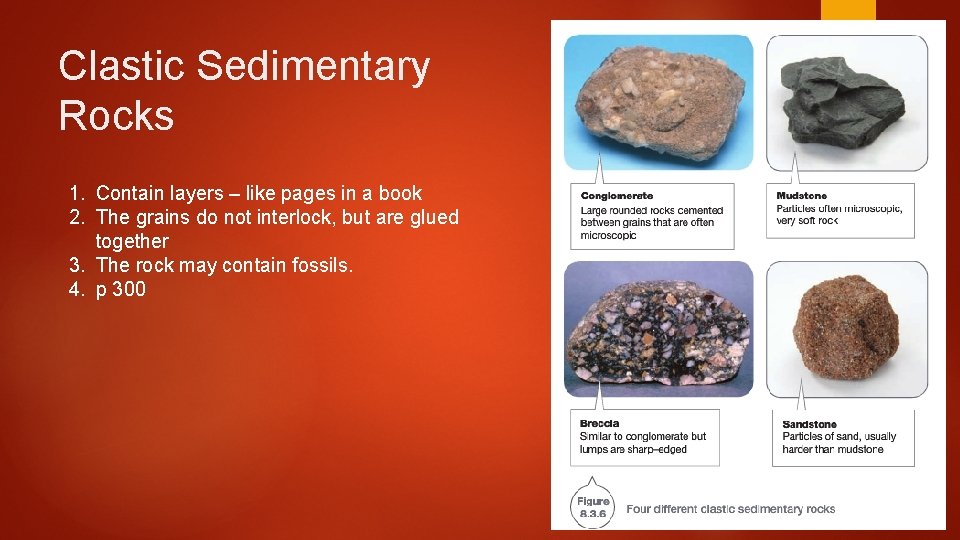
3 types of sedimentary rocks Clastic sedimentary rocks – Layered rocks, may contain fossils Chemical sedimentary rocks – limestone caves Organic sedimentary rocks - coal
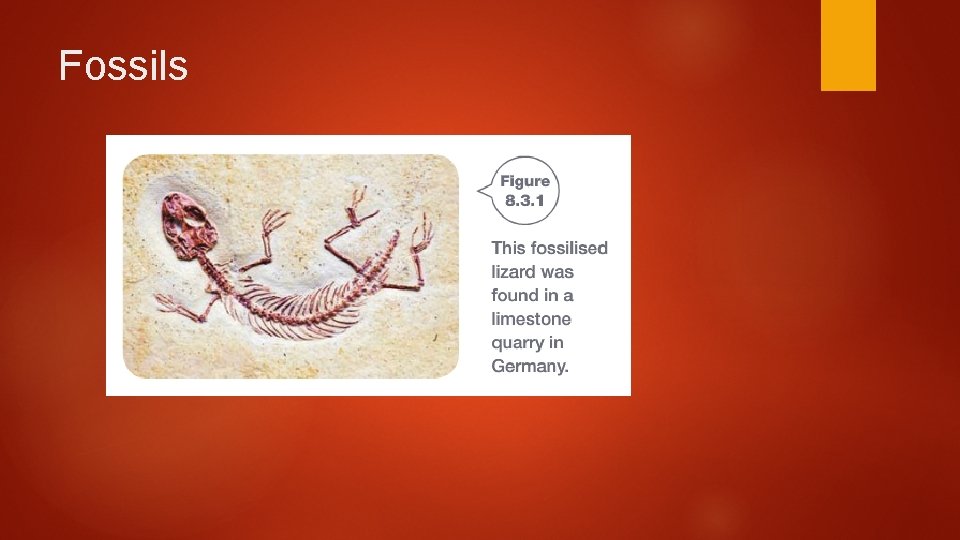
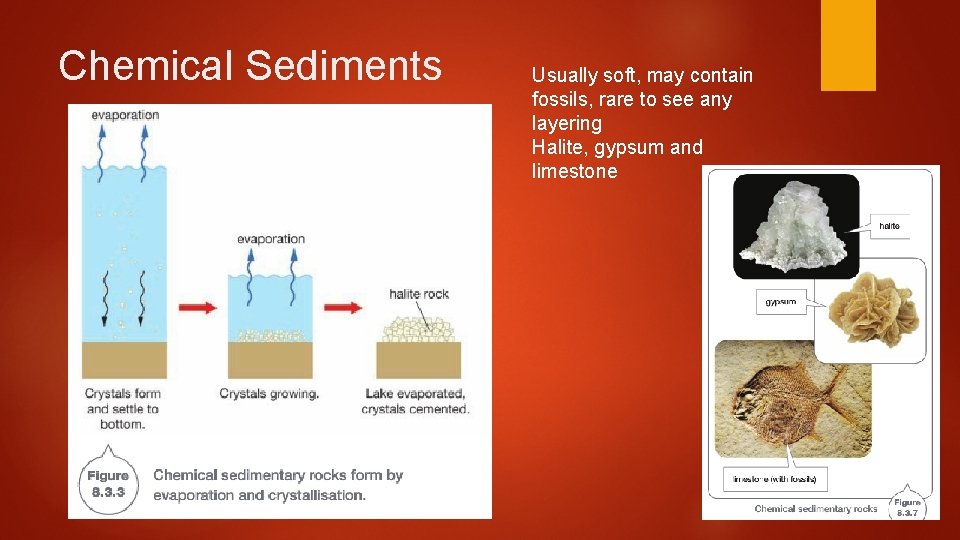
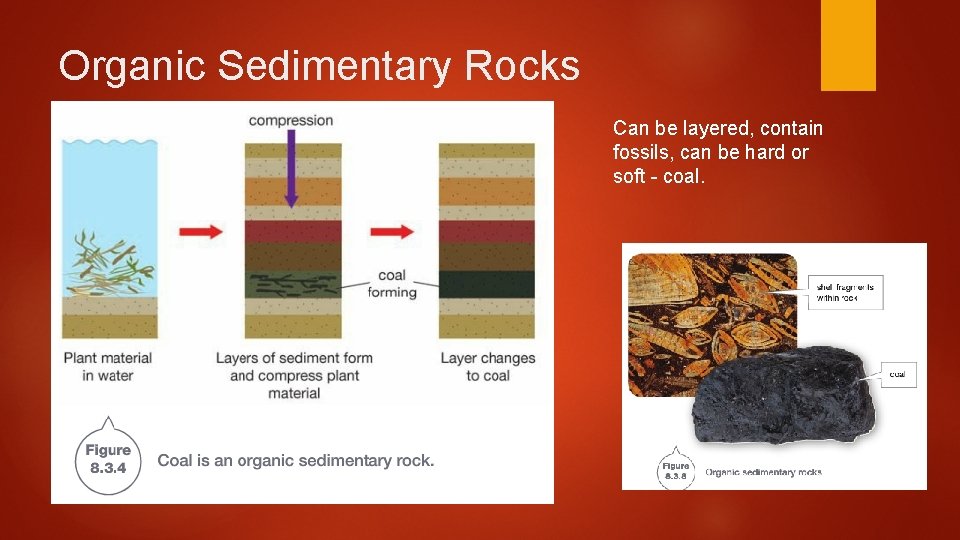
8. 3 Sedimentary Rocks Sedimentary rocks - rocks made by sediments being cemented together Clastic sedimentary rocks - sedimentary rocks made from weathered sediments of other rocks – mud, silt Chemical sedimentary rocks - sedimentary rocks that form when dissolved materials precipitate from solution Organic sedimentary rocks - rocks that form by the accumulation of plant or animal debris, which is then cemented together Fossils - preserved remains of living organisms Natural cements - chemicals that can flow around sediments in water and then set like cement – includes calcium carbonate, silica, clay, iron quartz.
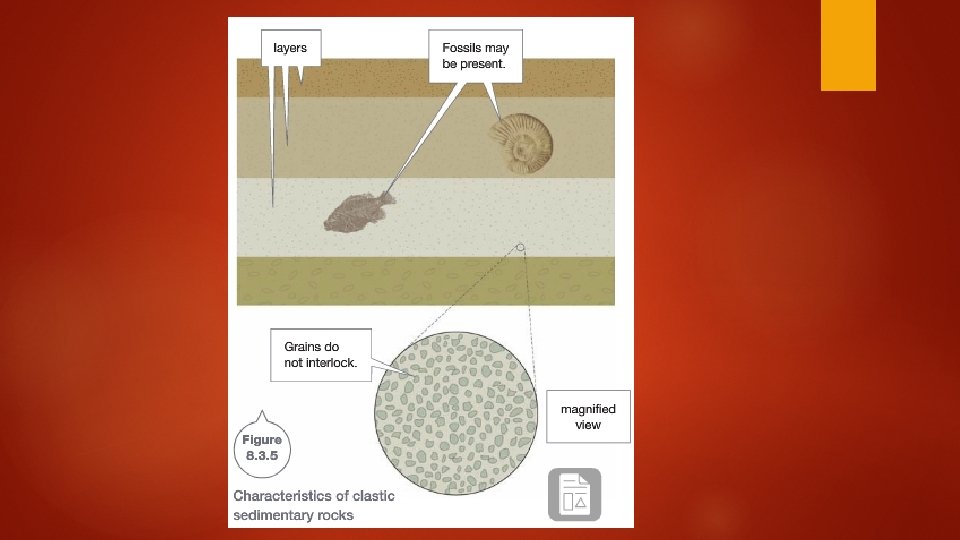
Clastic Sedimentary Rocks 1. Contain layers – like pages in a book 2. The grains do not interlock, but are glued together 3. The rock may contain fossils. 4. p 300
Fossils
Chemical Sediments Usually soft, may contain fossils, rare to see any layering Halite, gypsum and limestone
Organic Sedimentary Rocks Can be layered, contain fossils, can be hard or soft - coal.
Uses of sedimentary rocks Limestone was used on buildings and monuments, but weathers easily due to pollution. Sandstone – lasts better, outer layer on many historical buildings Gypsum – used to make plaster and Gyprock Rock phosphate (guano) – phosphate ferilizers Coal – energy supply Bauxite – from near Weipa is refined in Gladstone as Aluminium
Ch 8. 4 Metamorphic Rocks Metamorphic rocks - rocks formed when high temperature and pressure alter existing rocks. Igneous and sedimentary rocks can be transformed into this third category of rock. Meta – means to change. Morph – refers to form or shape.
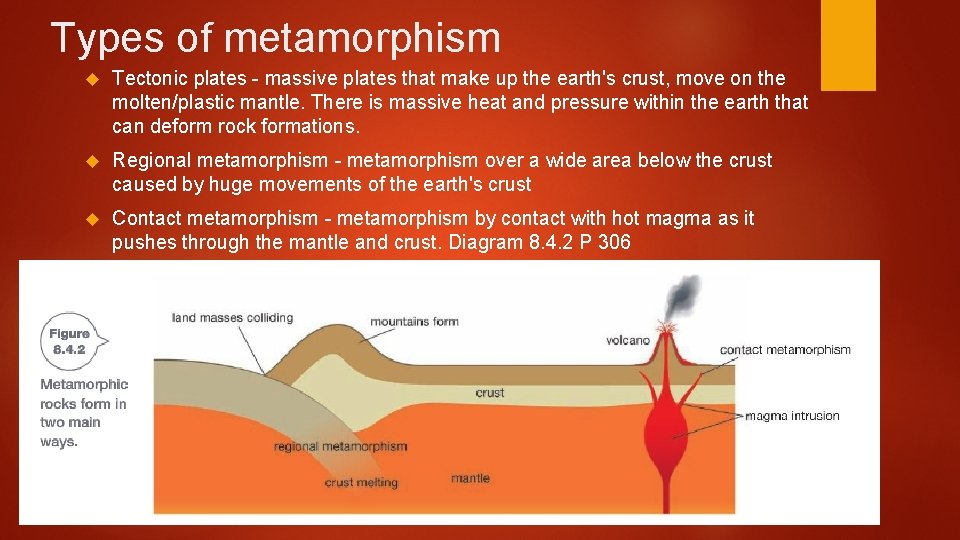
Types of metamorphism Tectonic plates - massive plates that make up the earth's crust, move on the molten/plastic mantle. There is massive heat and pressure within the earth that can deform rock formations. Regional metamorphism - metamorphism over a wide area below the crust caused by huge movements of the earth's crust Contact metamorphism - metamorphism by contact with hot magma as it pushes through the mantle and crust. Diagram 8. 4. 2 P 306
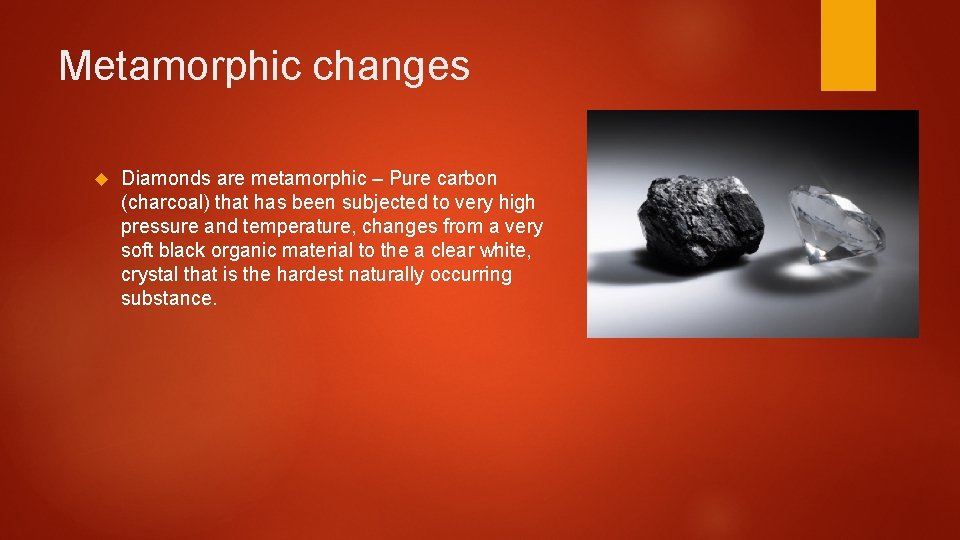
Metamorphic changes Diamonds are metamorphic – Pure carbon (charcoal) that has been subjected to very high pressure and temperature, changes from a very soft black organic material to the a clear white, crystal that is the hardest naturally occurring substance.
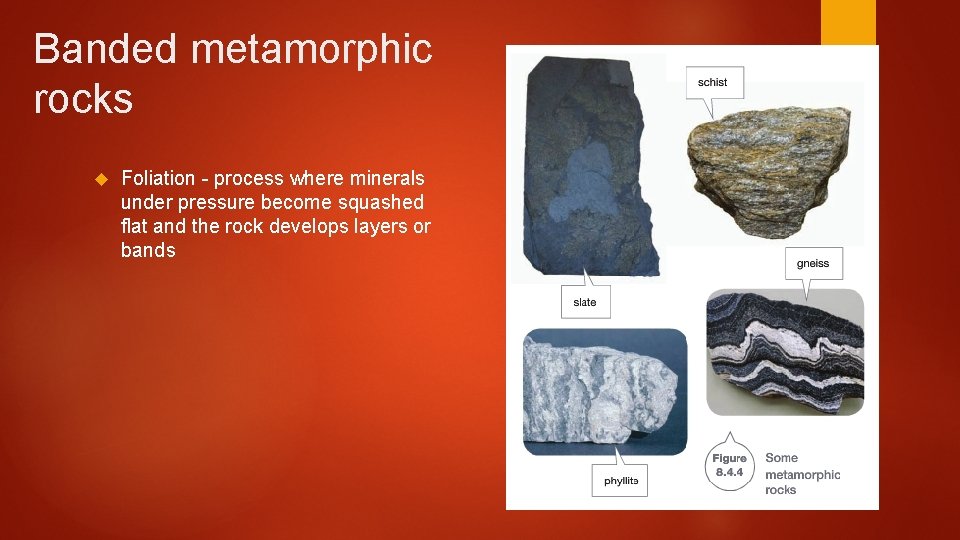
Banded metamorphic rocks Foliation - process where minerals under pressure become squashed flat and the rock develops layers or bands
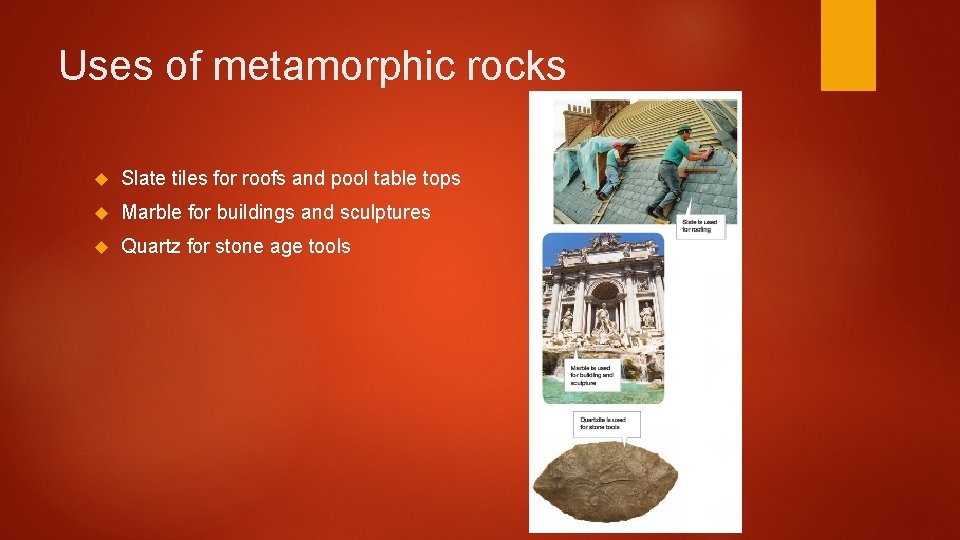
Uses of metamorphic rocks Slate tiles for roofs and pool table tops Marble for buildings and sculptures Quartz for stone age tools
The rock cycle p 308