
Geology Review The Earths Layers Questions Which layer
- Slides: 19
Geology
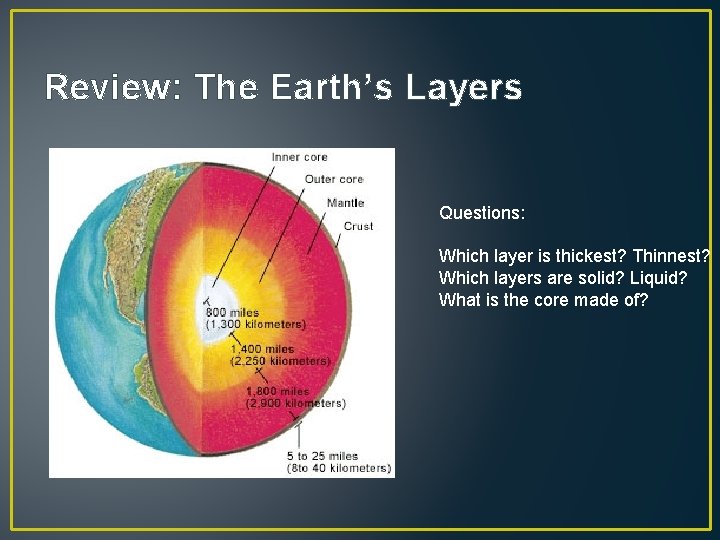
Review: The Earth’s Layers Questions: Which layer is thickest? Thinnest? Which layers are solid? Liquid? What is the core made of?
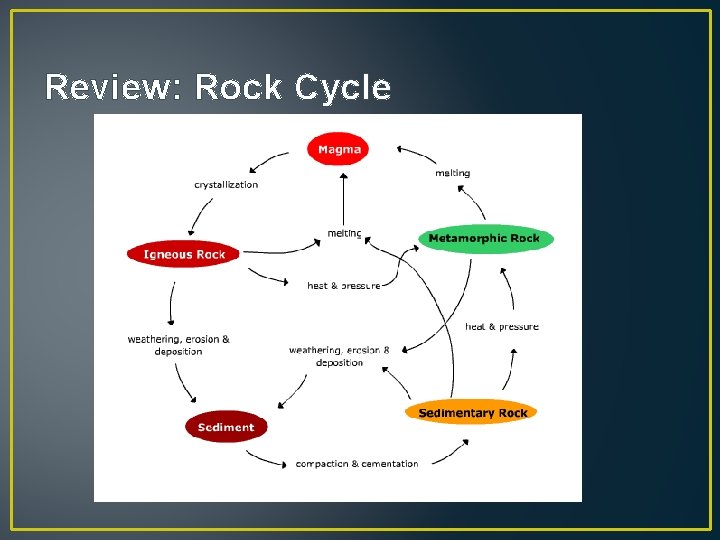
Review: Rock Cycle
Review: Formation of Different Rock Types Igneous Rock: - Formed by the heat of magma under the Earth’s crust - As magma cools it turns into igneous rock - Only new rock Sedimentary Rock: - Weathering and erosion break down rocks into small pieces, or sediment - Pieces of sediment are forced together over millions of years through intense pressure Metamorphic Rock: - Formed from heat of magma under the Earth’s crust and pressure from the Earth’s crust from other rock types (igneous or sedimentary)
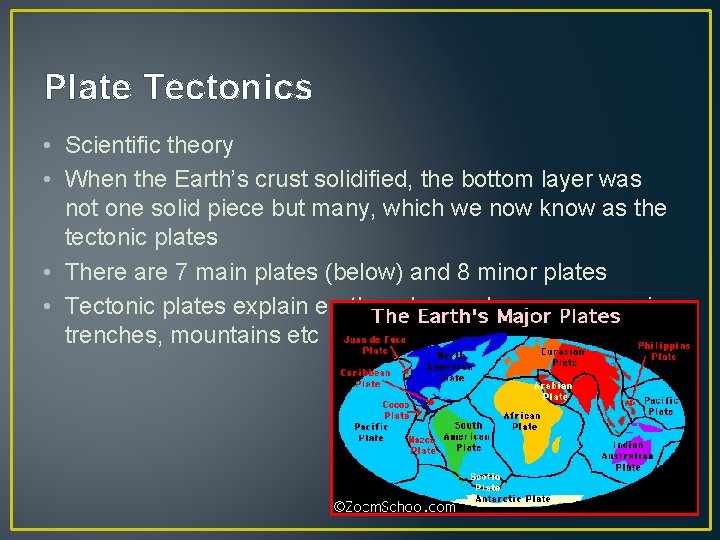
Plate Tectonics • Scientific theory • When the Earth’s crust solidified, the bottom layer was not one solid piece but many, which we now know as the tectonic plates • There are 7 main plates (below) and 8 minor plates • Tectonic plates explain earthquakes, volcanoes, oceanic trenches, mountains etc
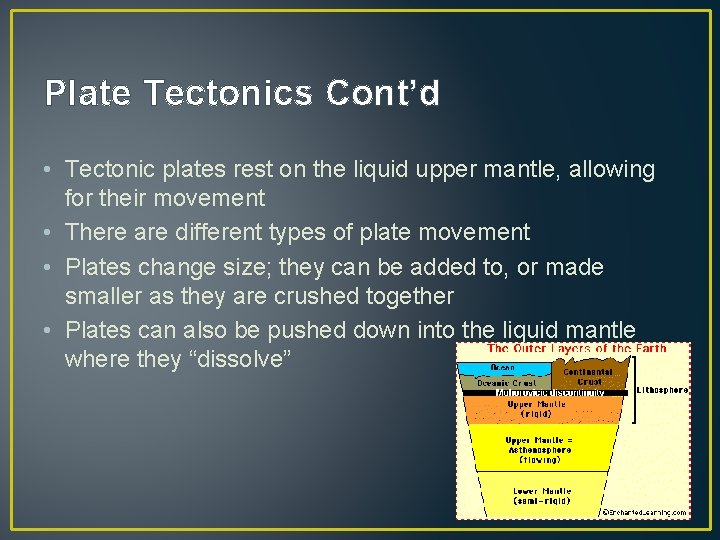
Plate Tectonics Cont’d • Tectonic plates rest on the liquid upper mantle, allowing for their movement • There are different types of plate movement • Plates change size; they can be added to, or made smaller as they are crushed together • Plates can also be pushed down into the liquid mantle where they “dissolve”
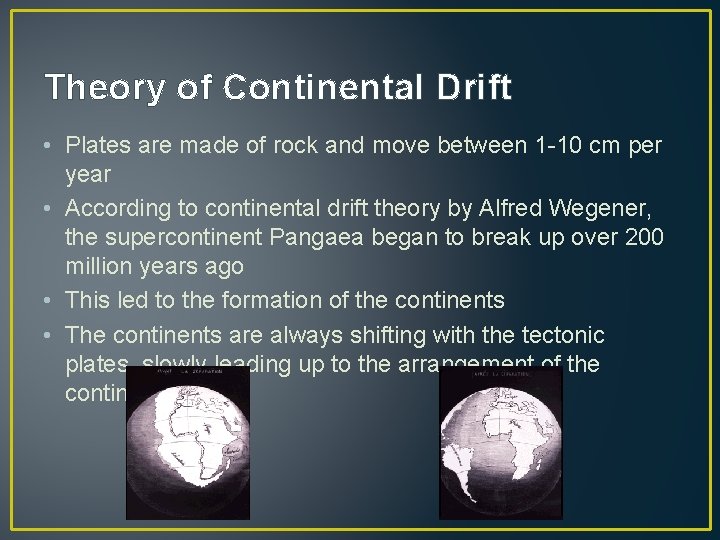
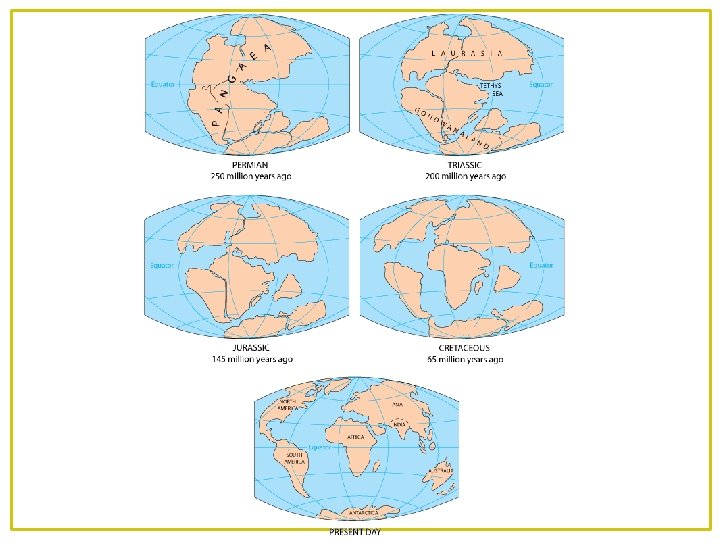
Theory of Continental Drift • Plates are made of rock and move between 1 -10 cm per year • According to continental drift theory by Alfred Wegener, the supercontinent Pangaea began to break up over 200 million years ago • This led to the formation of the continents • The continents are always shifting with the tectonic plates, slowly leading up to the arrangement of the continents today
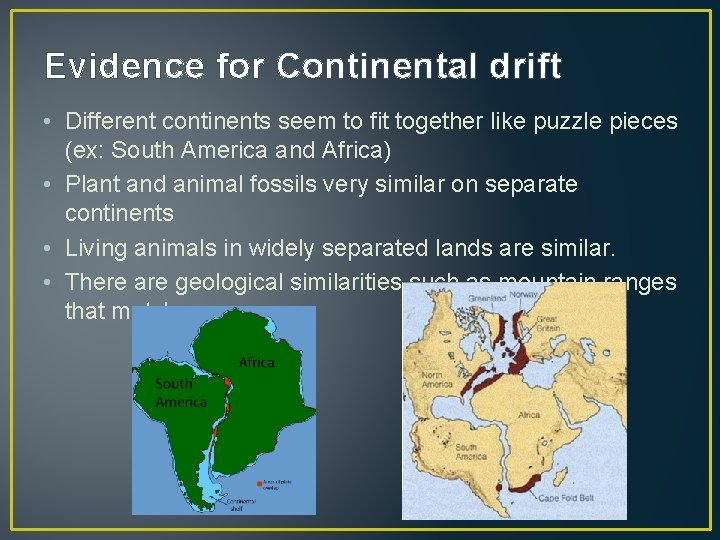
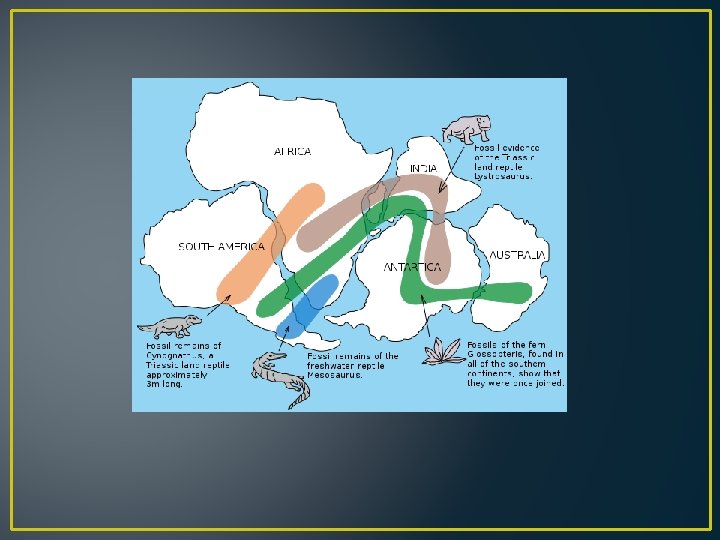
Evidence for Continental drift • Different continents seem to fit together like puzzle pieces (ex: South America and Africa) • Plant and animal fossils very similar on separate continents • Living animals in widely separated lands are similar. • There are geological similarities such as mountain ranges that match up
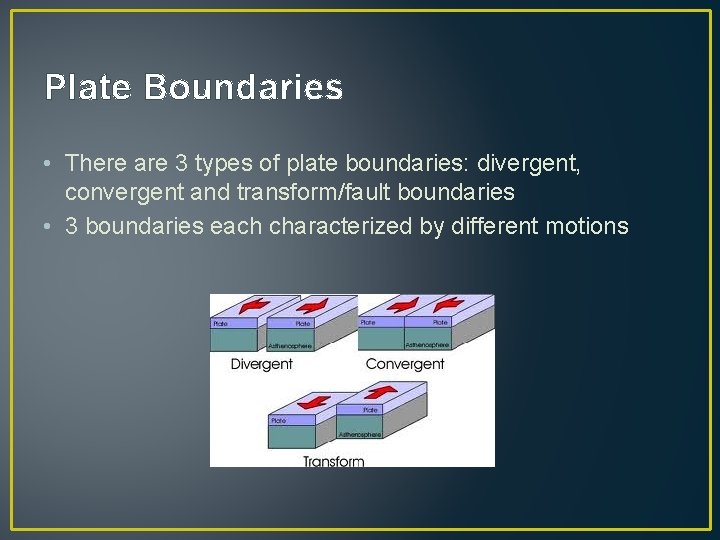
Plate Boundaries • There are 3 types of plate boundaries: divergent, convergent and transform/fault boundaries • 3 boundaries each characterized by different motions
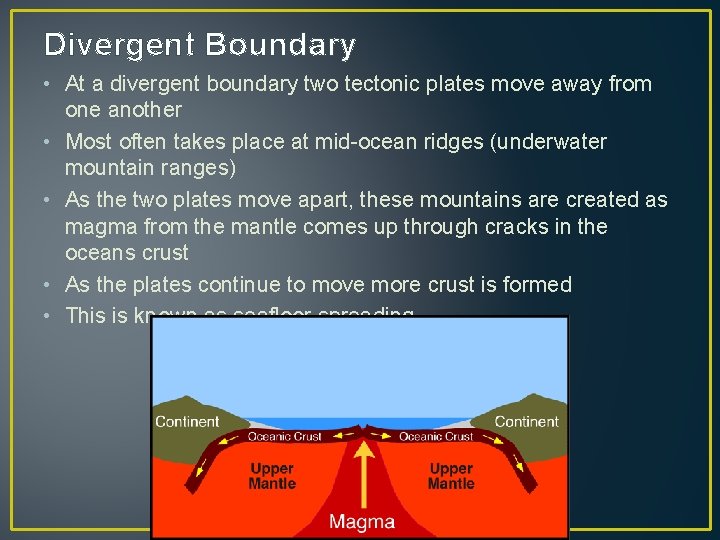
Divergent Boundary • At a divergent boundary two tectonic plates move away from one another • Most often takes place at mid-ocean ridges (underwater mountain ranges) • As the two plates move apart, these mountains are created as magma from the mantle comes up through cracks in the oceans crust • As the plates continue to move more crust is formed • This is known as seafloor spreading.
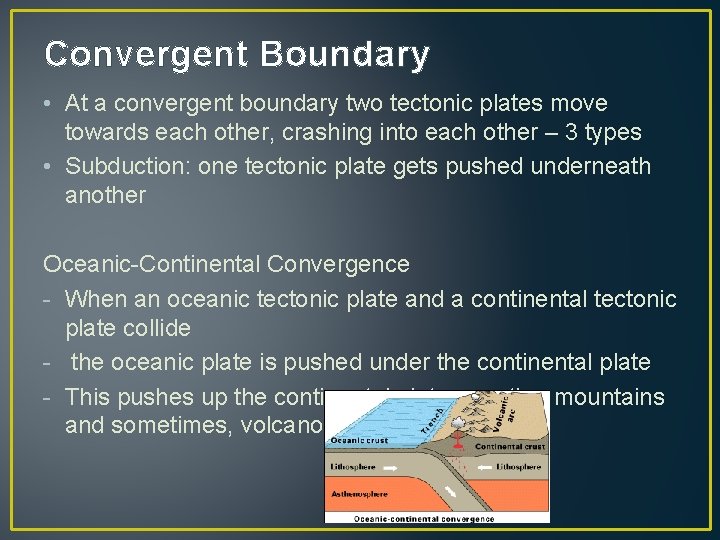
Convergent Boundary • At a convergent boundary two tectonic plates move towards each other, crashing into each other – 3 types • Subduction: one tectonic plate gets pushed underneath another Oceanic-Continental Convergence - When an oceanic tectonic plate and a continental tectonic plate collide - the oceanic plate is pushed under the continental plate - This pushes up the continental plate, creating mountains and sometimes, volcanoes
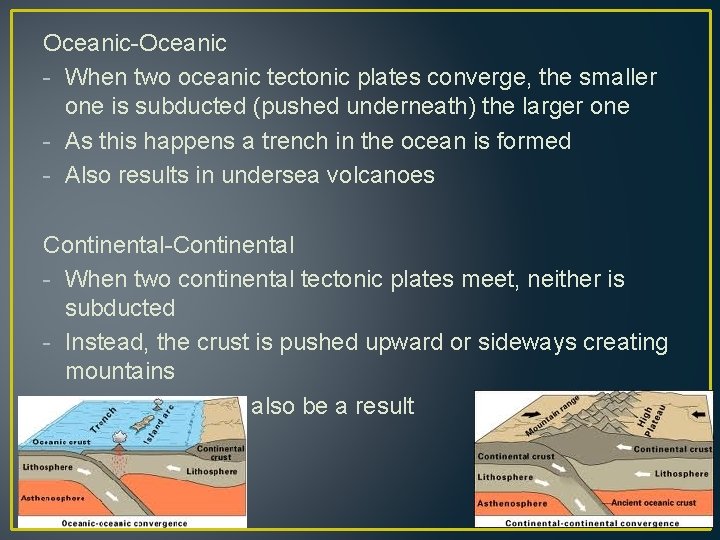
Oceanic-Oceanic - When two oceanic tectonic plates converge, the smaller one is subducted (pushed underneath) the larger one - As this happens a trench in the ocean is formed - Also results in undersea volcanoes Continental-Continental - When two continental tectonic plates meet, neither is subducted - Instead, the crust is pushed upward or sideways creating mountains - Earthquakes can also be a result
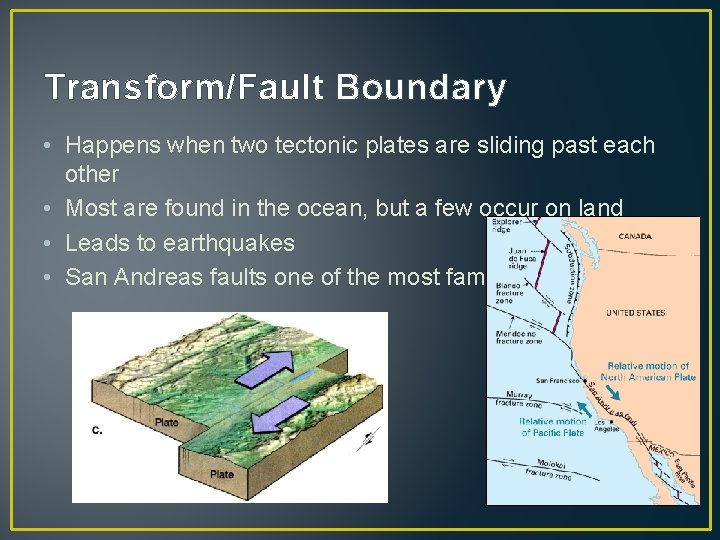
Transform/Fault Boundary • Happens when two tectonic plates are sliding past each other • Most are found in the ocean, but a few occur on land • Leads to earthquakes • San Andreas faults one of the most famous
Earthquakes
Seismograph
Volcanoes
Types of Volcanoes