
Geology of NY and NJ Objectives Earth Science
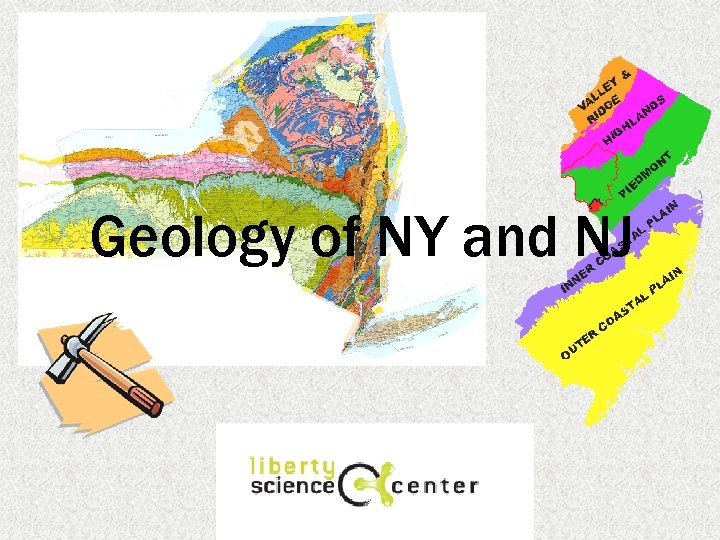
Geology of NY and NJ
Objectives Earth Science Review Structure of the Earth Minerals vs. Rocks What are three rock types? How does the rock cycle work? New York and New Jersey Geologic Connection Northeast Geologic History Impacts on Society Explore the Museum Visit Skyscraper! Visit Our Hudson Home Wrap-up Exhibit Questions Answered Incorporating Earth Science in the Classroom
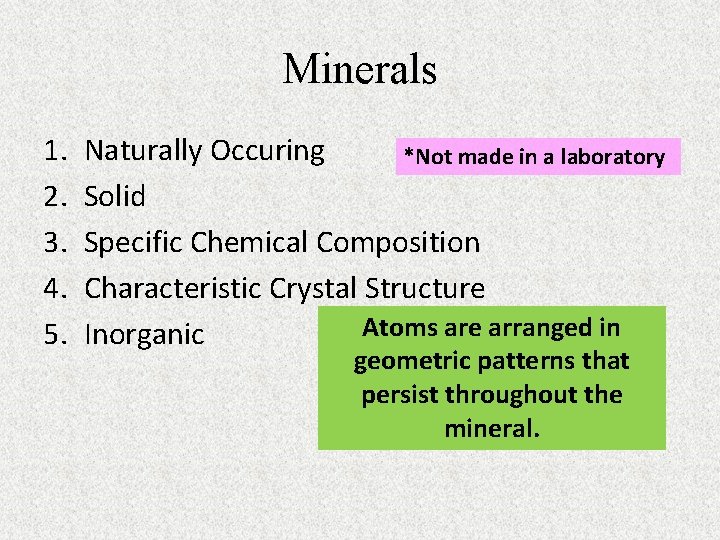
Minerals 1. 2. 3. 4. 5. Naturally Occuring *Not made in a laboratory Solid Specific Chemical Composition Characteristic Crystal Structure Atoms are arranged in Inorganic geometric patterns that persist throughout the mineral.
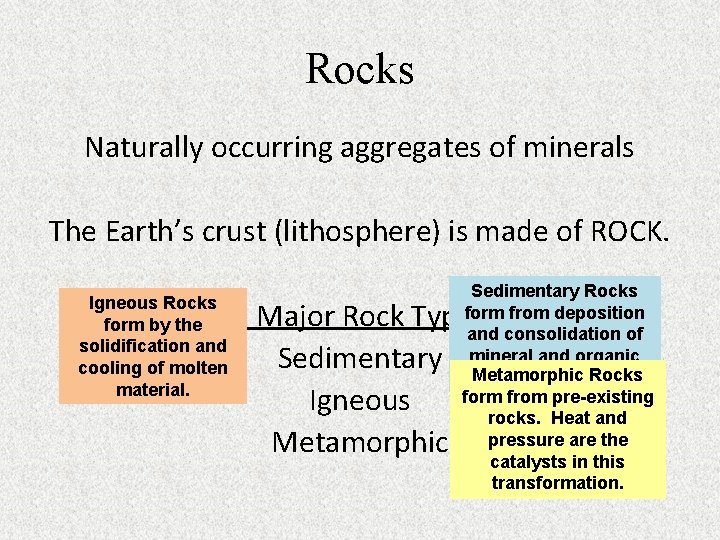
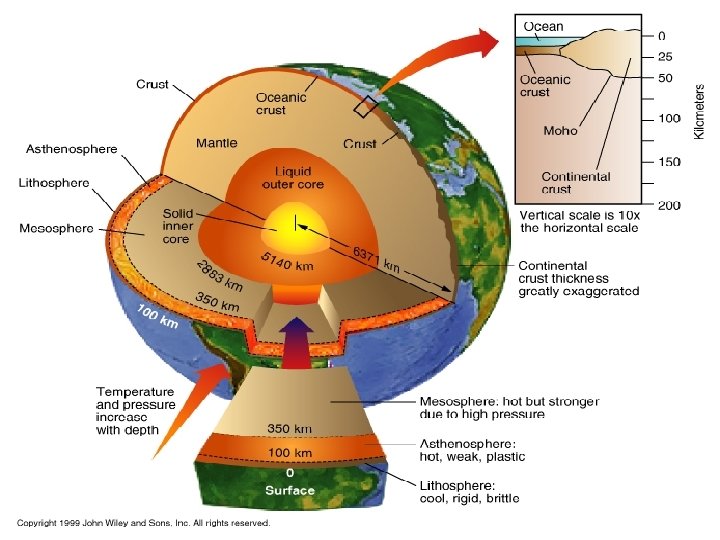
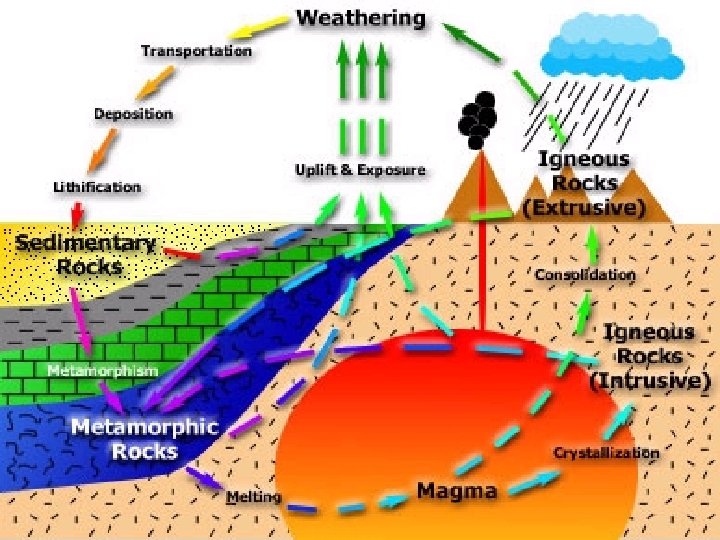
Rocks Naturally occurring aggregates of minerals The Earth’s crust (lithosphere) is made of ROCK. Igneous Rocks form by the solidification and cooling of molten material. Sedimentary Rocks form from deposition and consolidation of mineral and organic Metamorphic material. Rocks form from pre-existing rocks. Heat and pressure are the catalysts in this transformation. 3 Major Rock Types Sedimentary Igneous Metamorphic
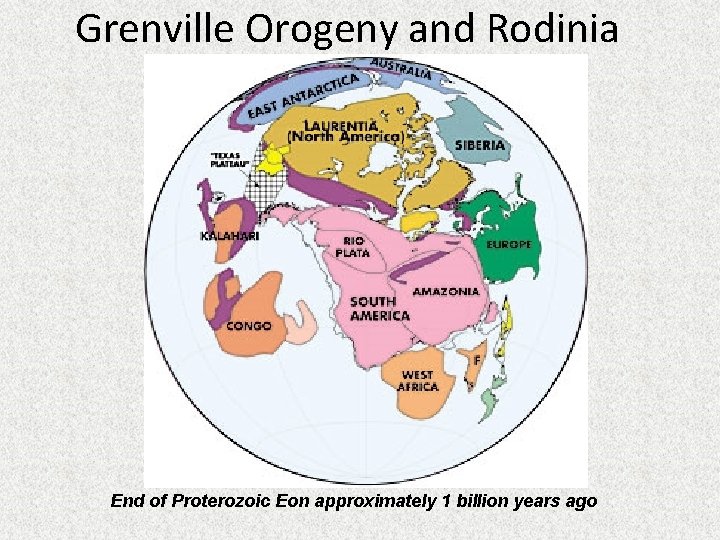
Grenville Orogeny and Rodinia End of Proterozoic Eon approximately 1 billion years ago
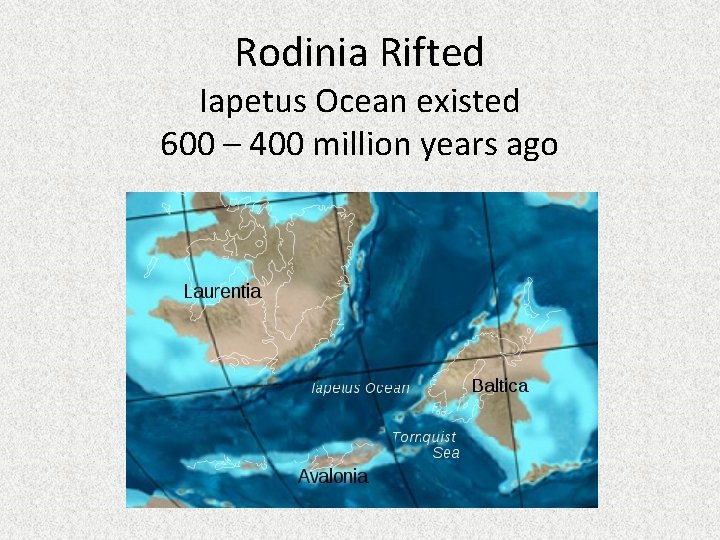
Rodinia Rifted Iapetus Ocean existed 600 – 400 million years ago
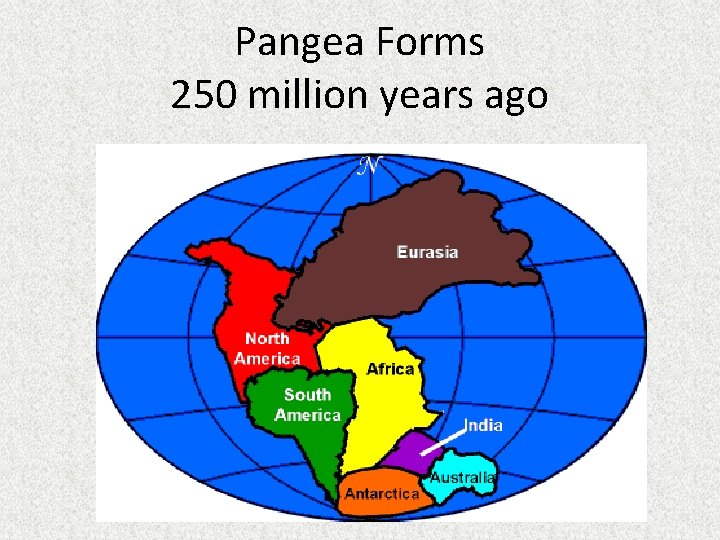
Pangea Forms 250 million years ago
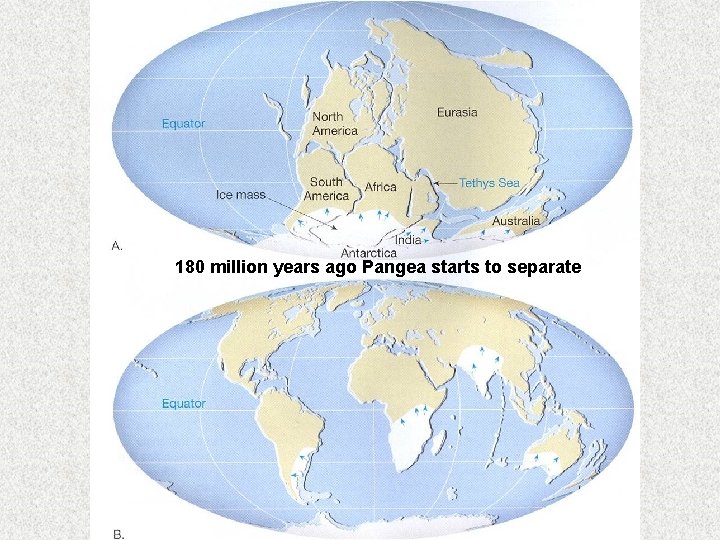
180 million years ago Pangea starts to separate
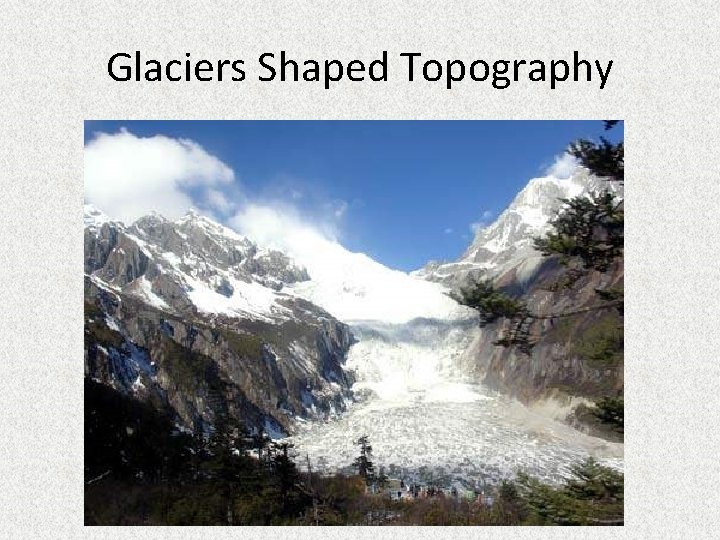
Glaciers Shaped Topography
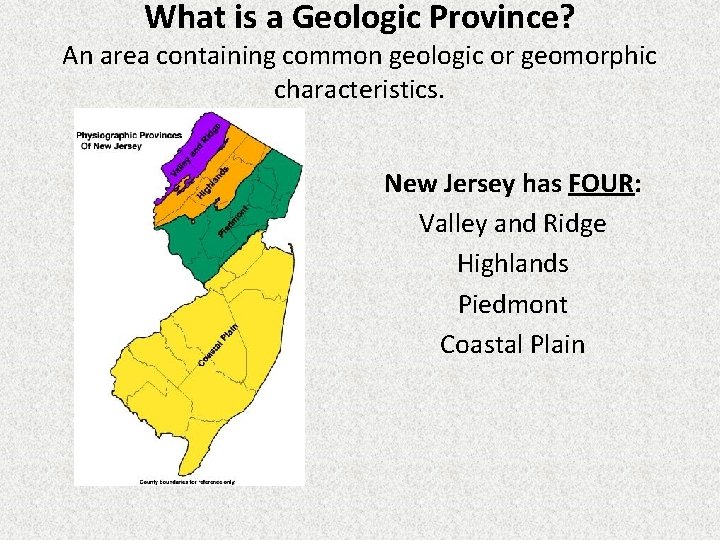
What is a Geologic Province? An area containing common geologic or geomorphic characteristics. New Jersey has FOUR: Valley and Ridge Highlands Piedmont Coastal Plain
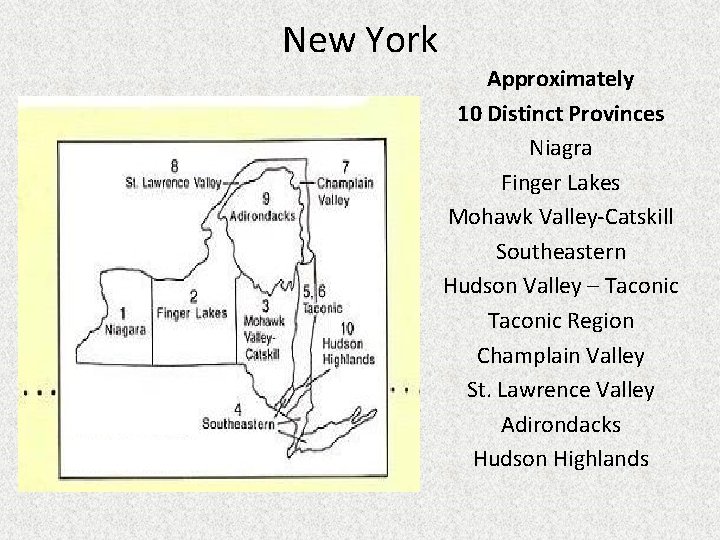
New York Approximately 10 Distinct Provinces Niagra Finger Lakes Mohawk Valley-Catskill Southeastern Hudson Valley – Taconic Region Champlain Valley St. Lawrence Valley Adirondacks Hudson Highlands
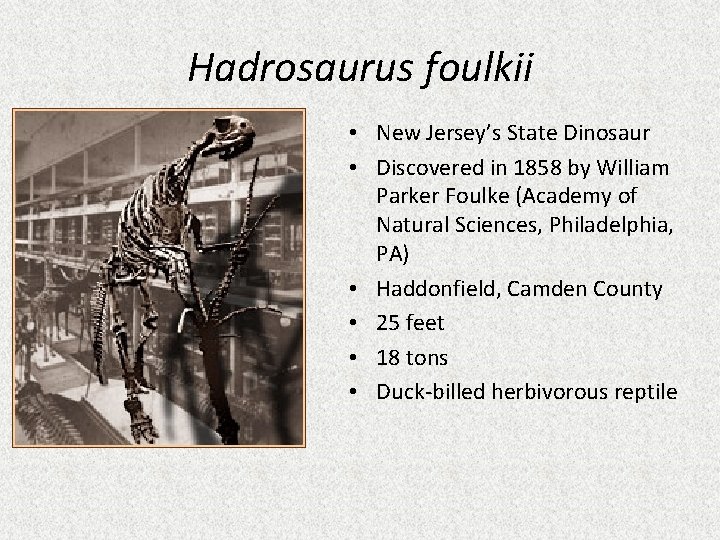
Hadrosaurus foulkii • New Jersey’s State Dinosaur • Discovered in 1858 by William Parker Foulke (Academy of Natural Sciences, Philadelphia, PA) • Haddonfield, Camden County • 25 feet • 18 tons • Duck-billed herbivorous reptile
- Slides: 14