
Geology Mineral definition 1 naturally occurring 2 inorganic
- Slides: 37
Geology Mineral (definition) 1. naturally occurring, 2. inorganic solid 3. with a specific chemical composition 4. a definite crystalline structure Minerals can form from the cooling of magma which is the molten material found beneath Earth’s surface as magma rises closer to the surface the molten compounds no longer move freely and they begin to interact chemically to form minerals
Geology Minerals form by combining elements together to create compounds. Each compound is unique and has specific properties that separate it from other compounds Minerals are like rocks because all rocks are made of minerals
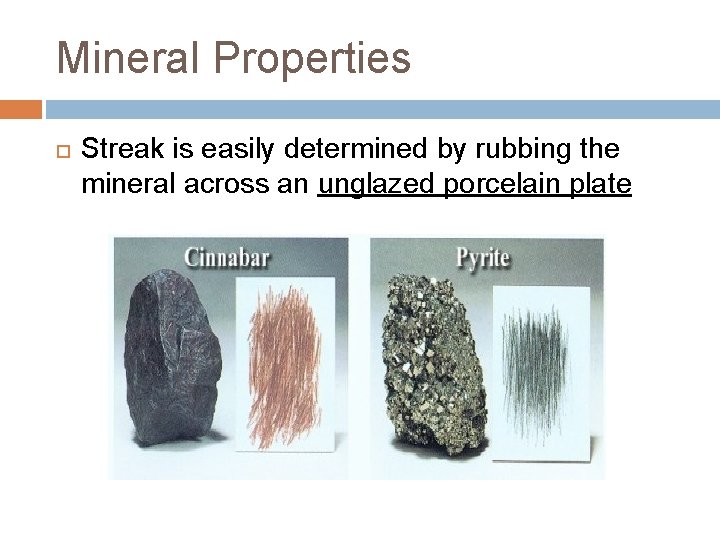
Mineral Properties Streak is easily determined by rubbing the mineral across an unglazed porcelain plate
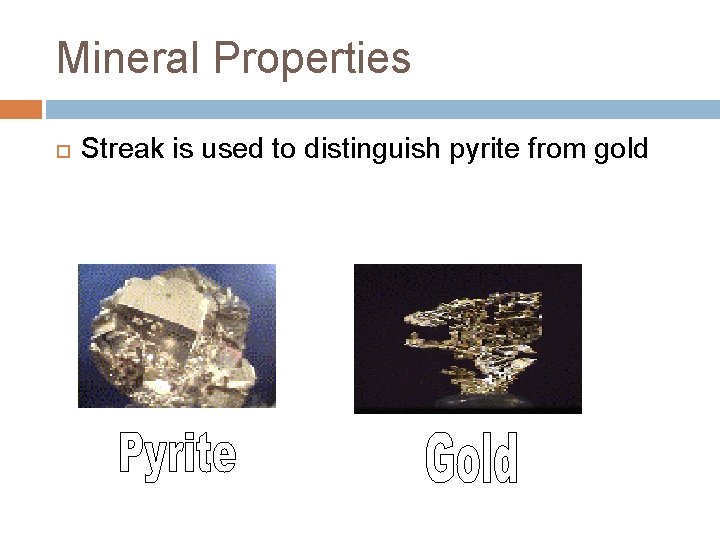
Mineral Properties Streak is used to distinguish pyrite from gold
Mineral Properties Luster is the way a mineral reflects light from its surface and is caused by differences in mineral chemical compositions
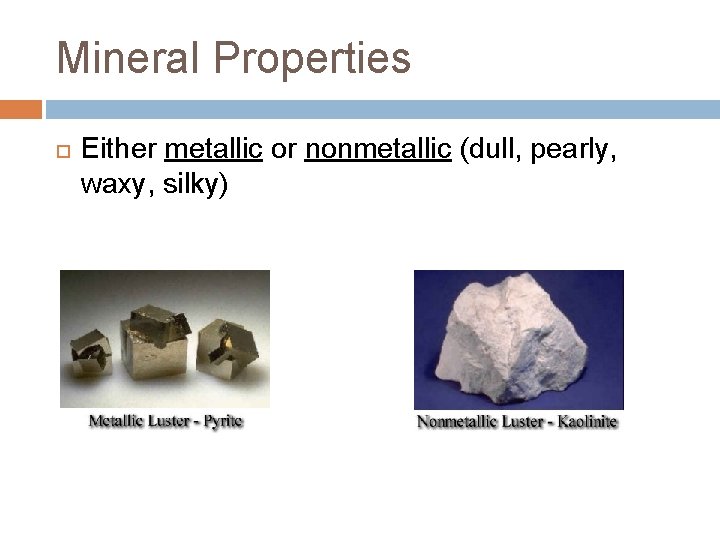
Mineral Properties Either metallic or nonmetallic (dull, pearly, waxy, silky)
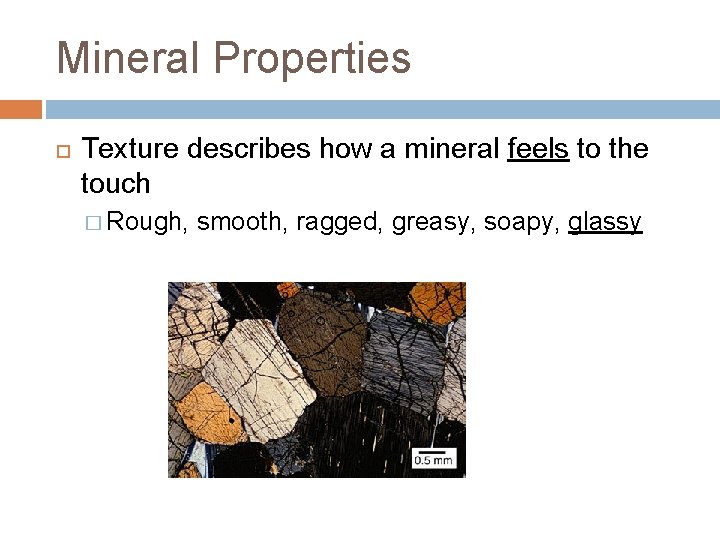
Mineral Properties Texture describes how a mineral feels to the touch � Rough, smooth, ragged, greasy, soapy, glassy
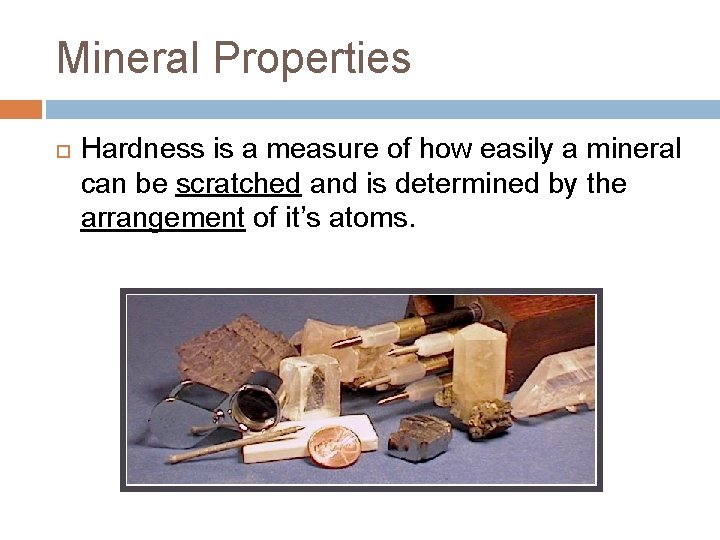
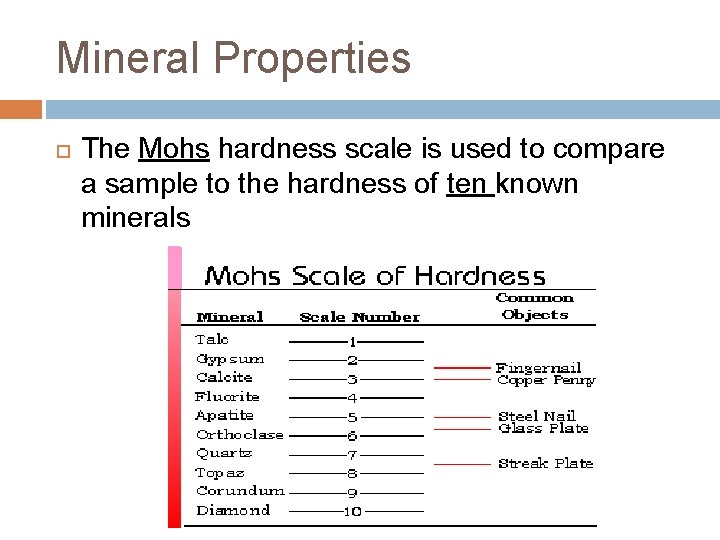
Mineral Properties Hardness is a measure of how easily a mineral can be scratched and is determined by the arrangement of it’s atoms.
Mineral Properties The Mohs hardness scale is used to compare a sample to the hardness of ten known minerals
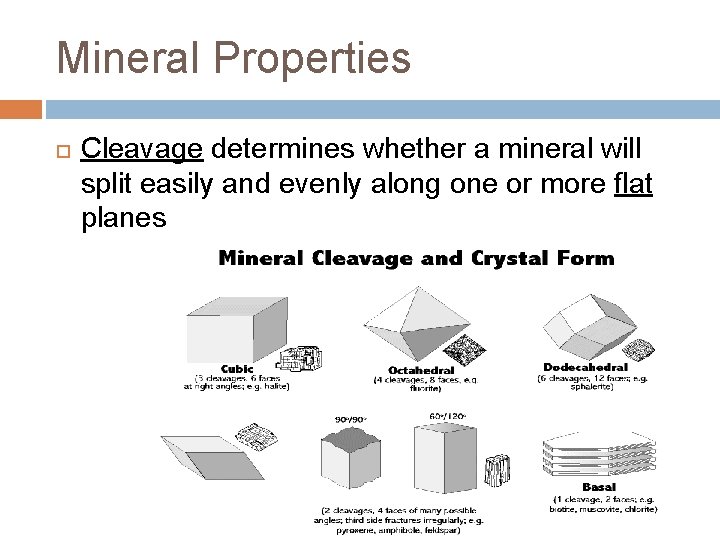
Mineral Properties Cleavage determines whether a mineral will split easily and evenly along one or more flat planes
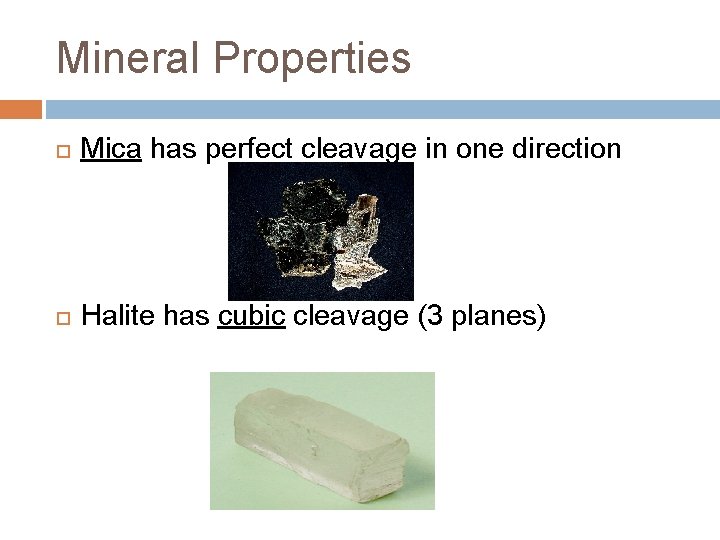
Mineral Properties Mica has perfect cleavage in one direction Halite has cubic cleavage (3 planes)
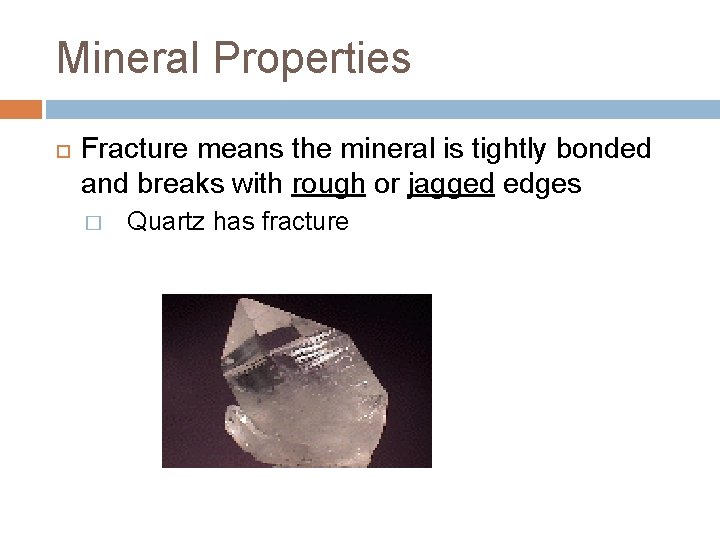
Mineral Properties Fracture means the mineral is tightly bonded and breaks with rough or jagged edges � Quartz has fracture
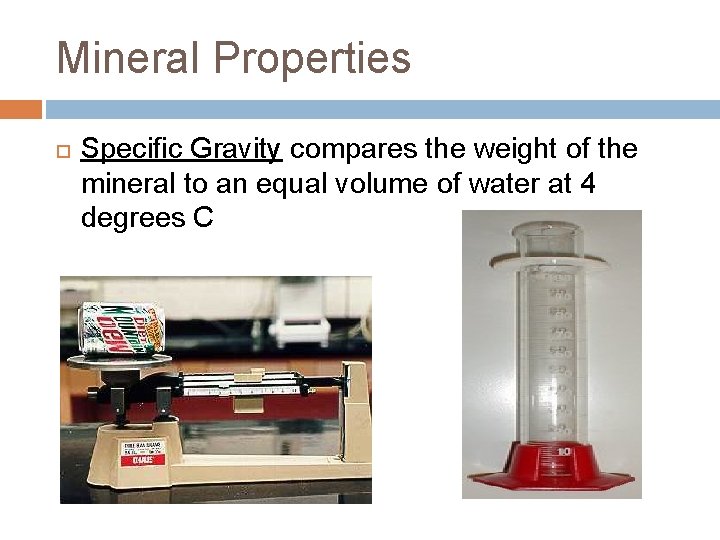
Mineral Properties Specific Gravity compares the weight of the mineral to an equal volume of water at 4 degrees C
Mineral Properties Special Properties such as light reflection and reactions to acids are also useful tools
Mineral Properties Calcite fizzles when in contact with HCl
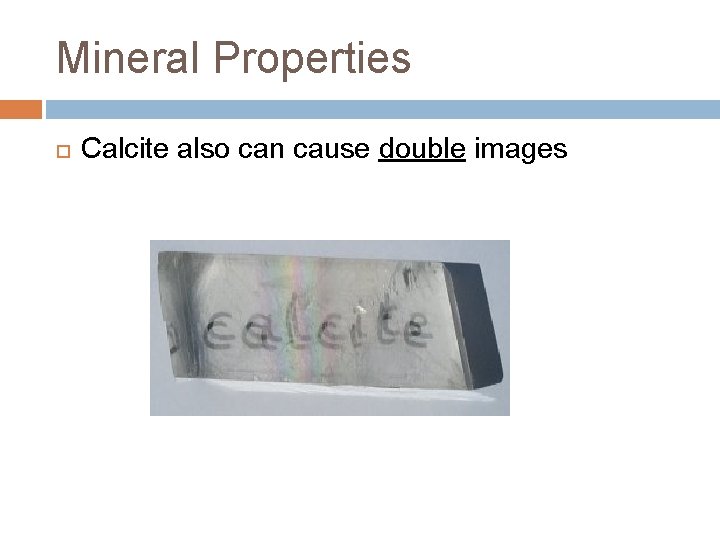
Mineral Properties Calcite also can cause double images
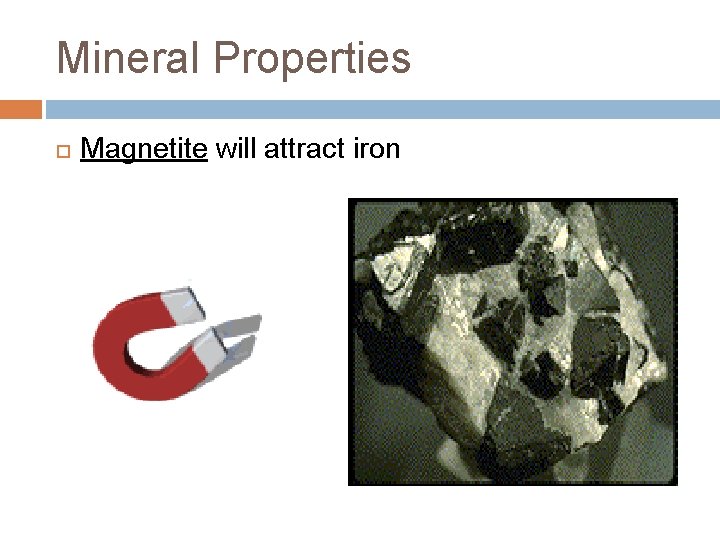
Mineral Properties Magnetite will attract iron
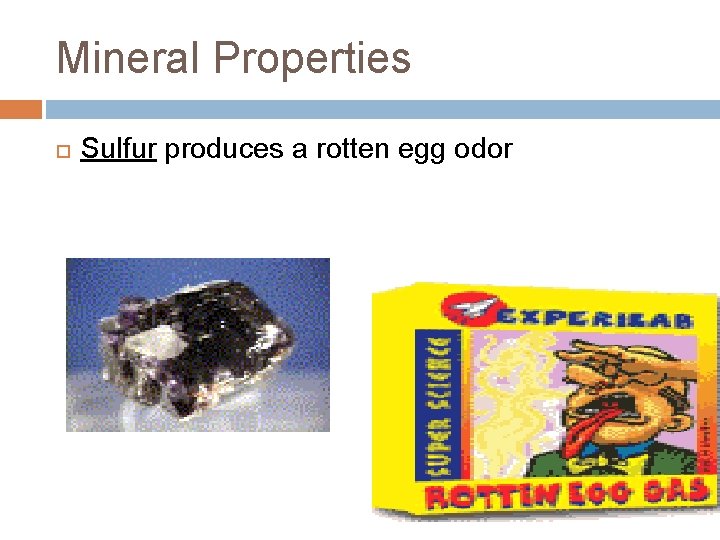
Mineral Properties Sulfur produces a rotten egg odor
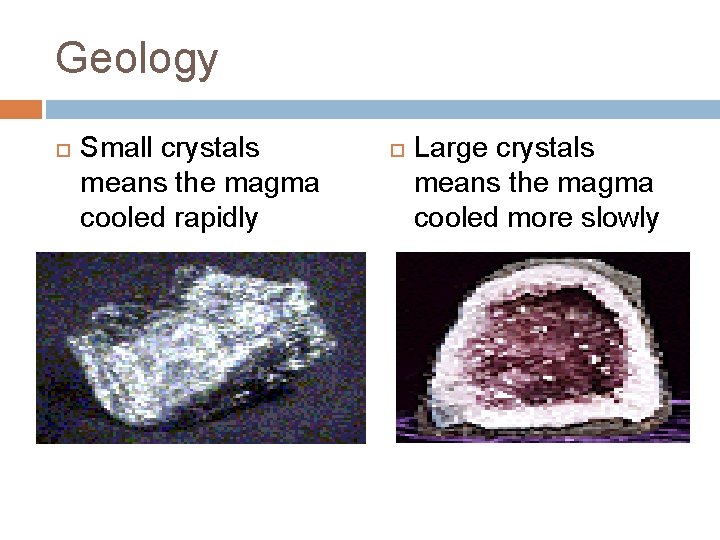
Geology Small crystals means the magma cooled rapidly Large crystals means the magma cooled more slowly
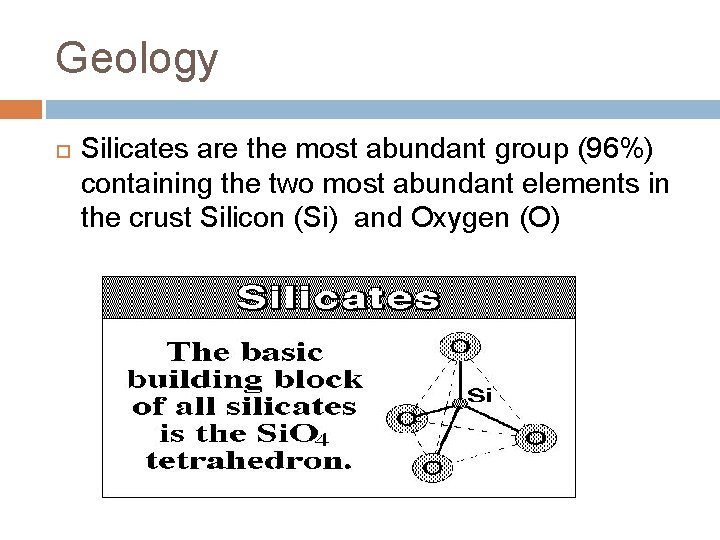
Geology Silicates are the most abundant group (96%) containing the two most abundant elements in the crust Silicon (Si) and Oxygen (O)
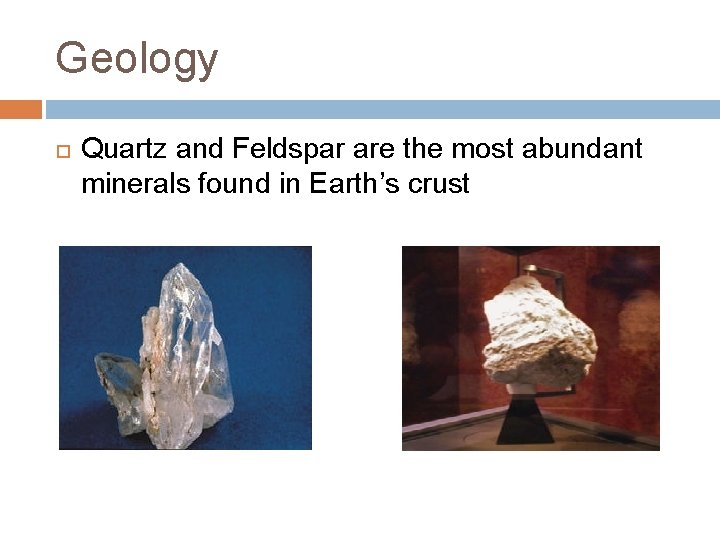
Geology Quartz and Feldspar are the most abundant minerals found in Earth’s crust
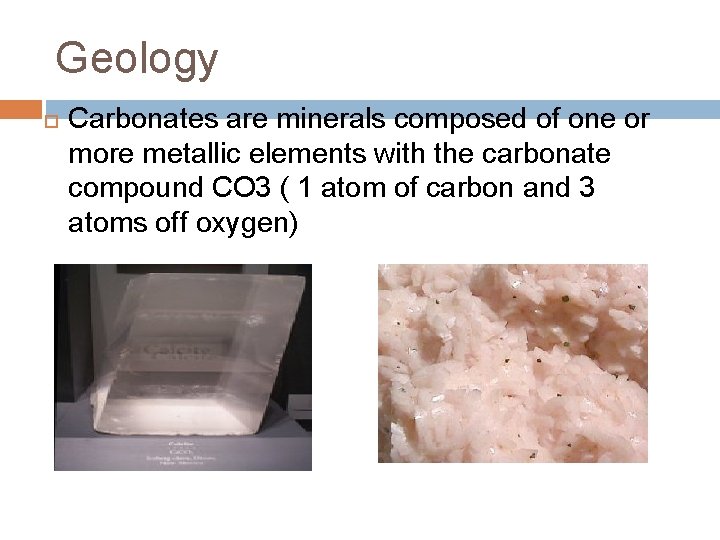
Geology Carbonates are minerals composed of one or more metallic elements with the carbonate compound CO 3 ( 1 atom of carbon and 3 atoms off oxygen)
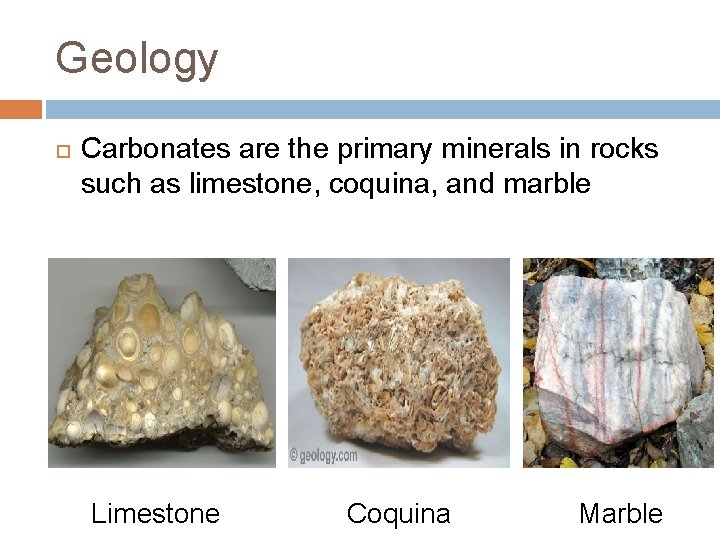
Geology Carbonates are the primary minerals in rocks such as limestone, coquina, and marble Limestone Coquina Marble
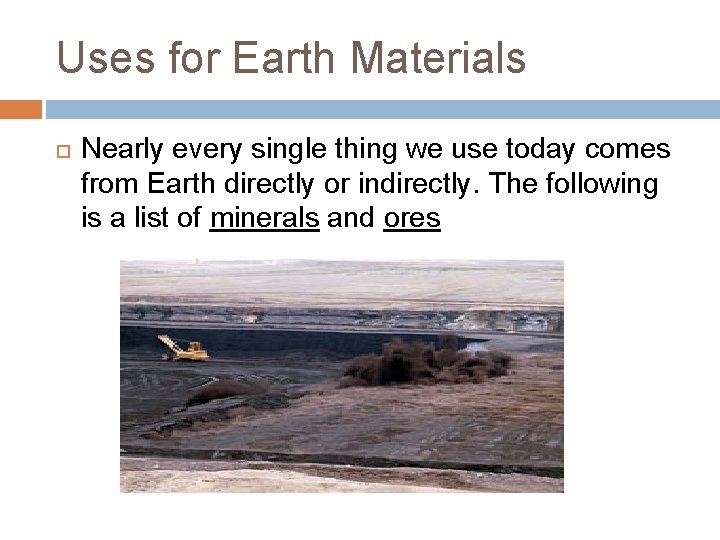
Uses for Earth Materials Nearly every single thing we use today comes from Earth directly or indirectly. The following is a list of minerals and ores
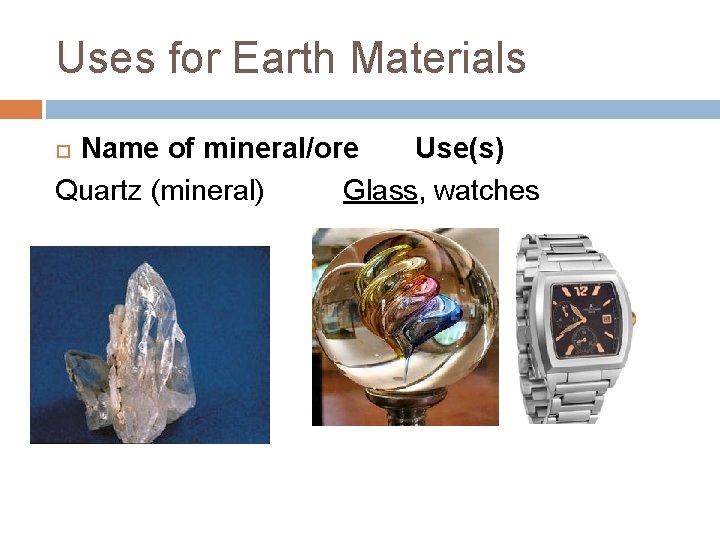
Uses for Earth Materials Name of mineral/ore Use(s) Quartz (mineral) Glass, watches
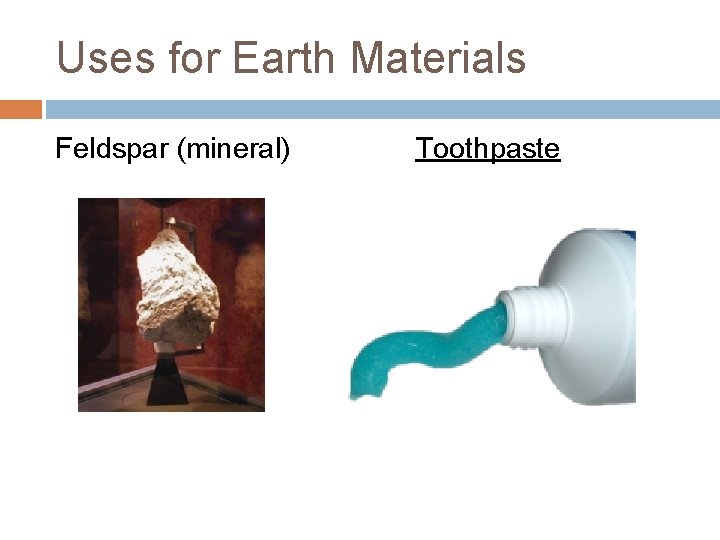
Uses for Earth Materials Feldspar (mineral) Toothpaste
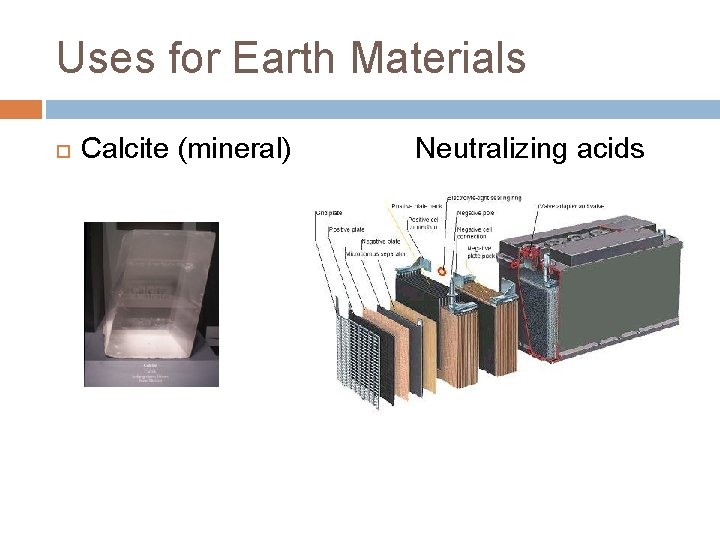
Uses for Earth Materials Calcite (mineral) Neutralizing acids
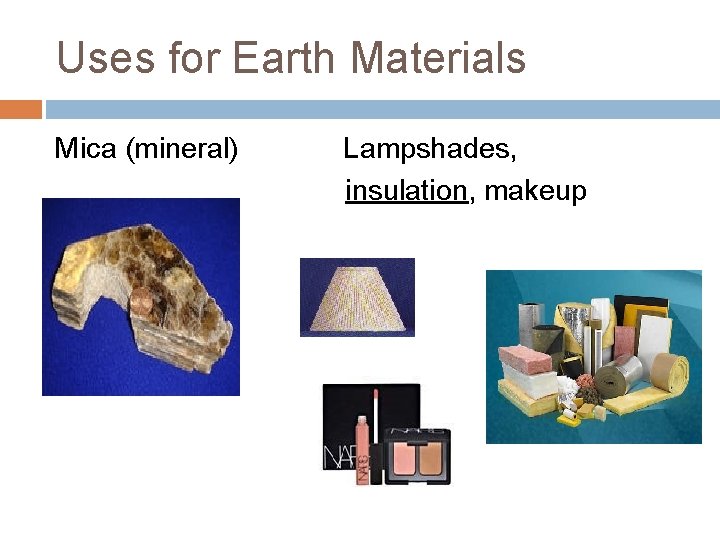
Uses for Earth Materials Mica (mineral) Lampshades, insulation, makeup
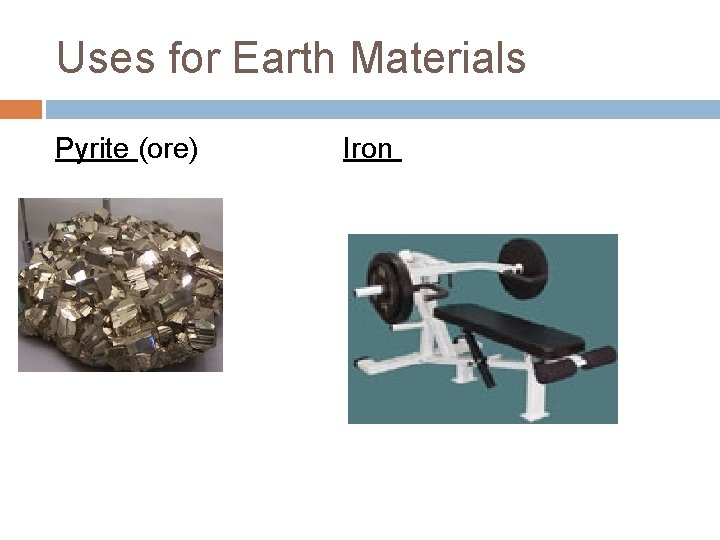
Uses for Earth Materials Pyrite (ore) Iron
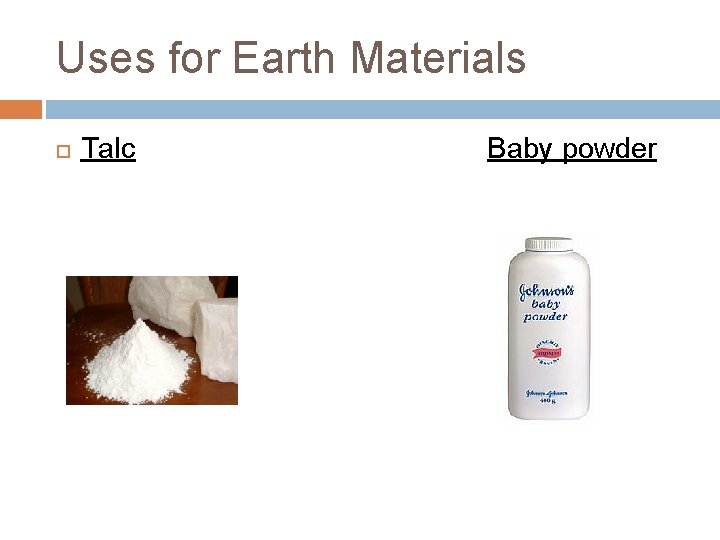
Uses for Earth Materials Talc Baby powder
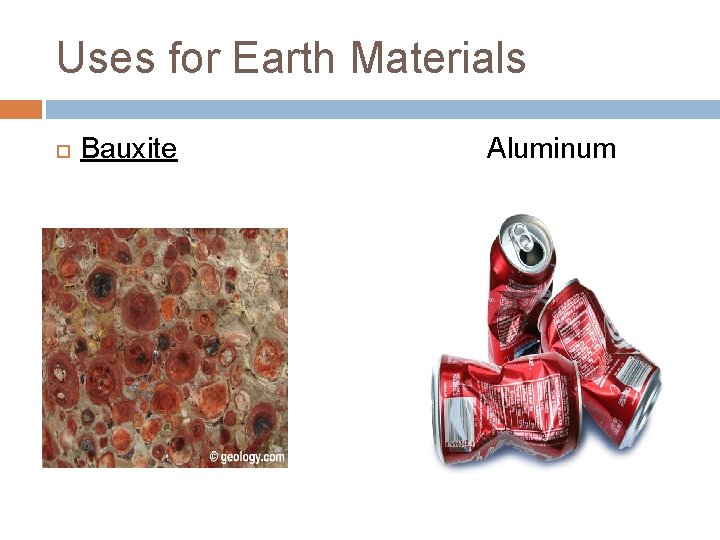
Uses for Earth Materials Bauxite Aluminum
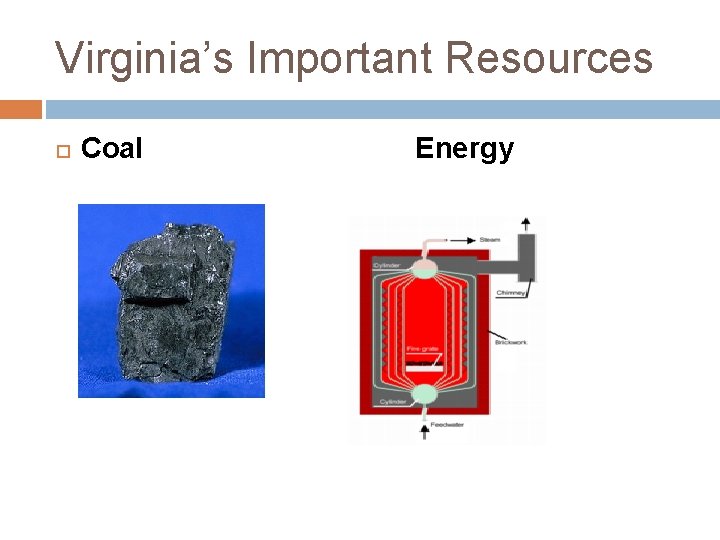
Virginia’s Important Resources Coal Energy
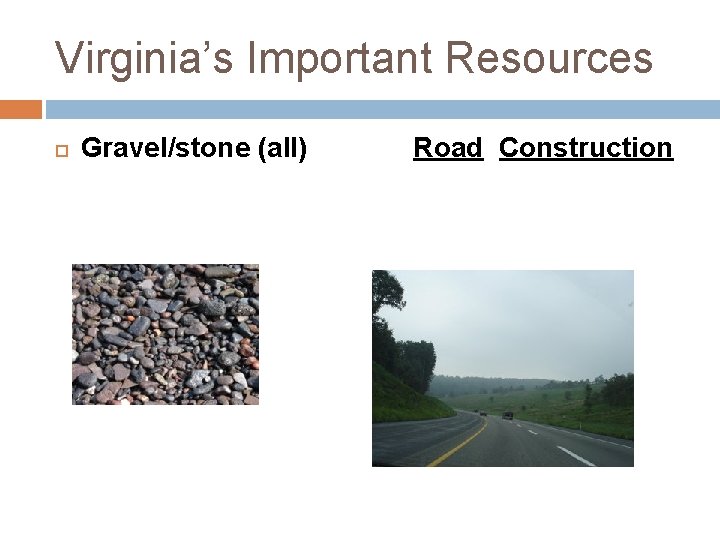
Virginia’s Important Resources Gravel/stone (all) Road Construction
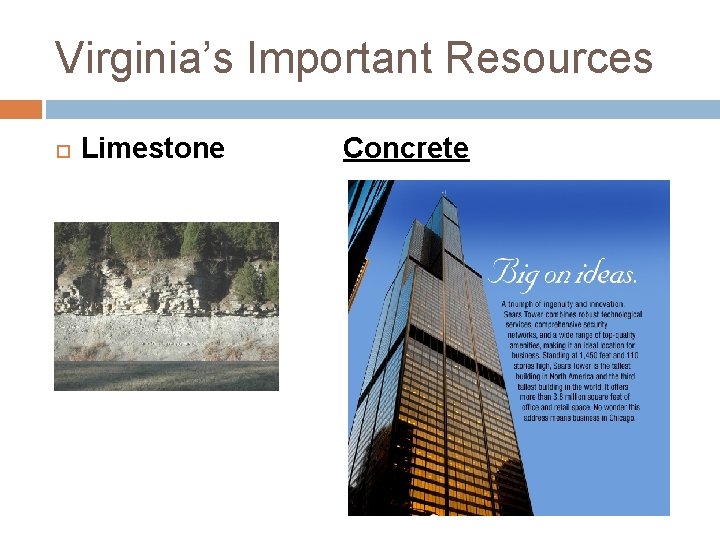
Virginia’s Important Resources Limestone Concrete
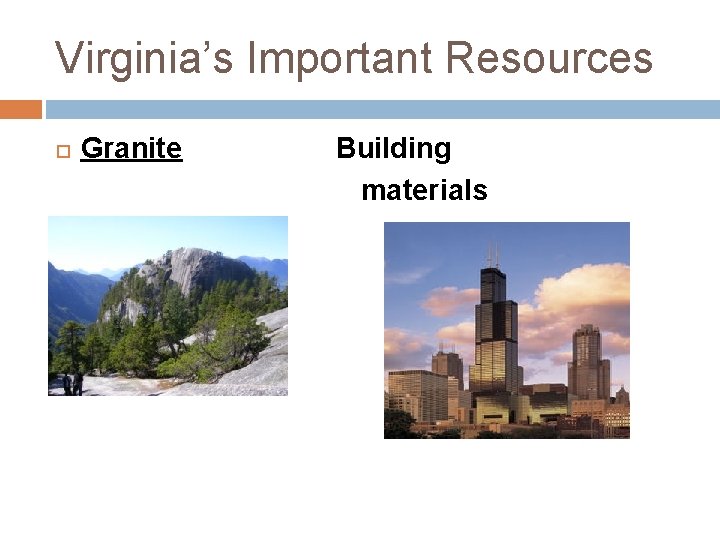
Virginia’s Important Resources Granite Building materials
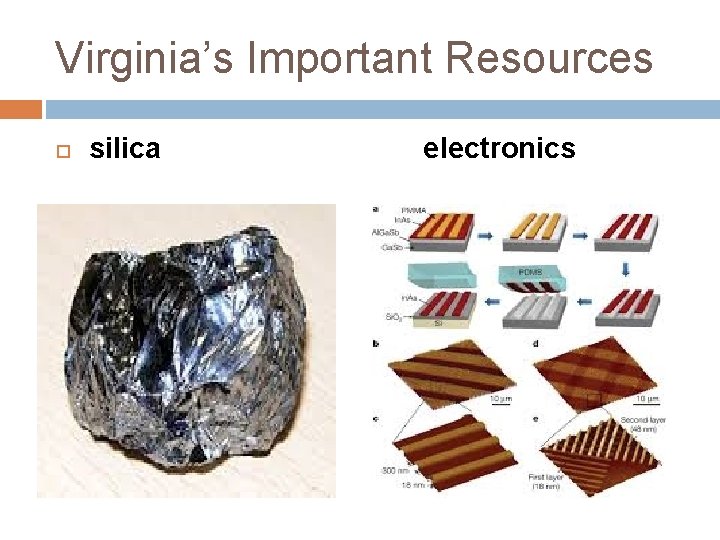
Virginia’s Important Resources silica electronics
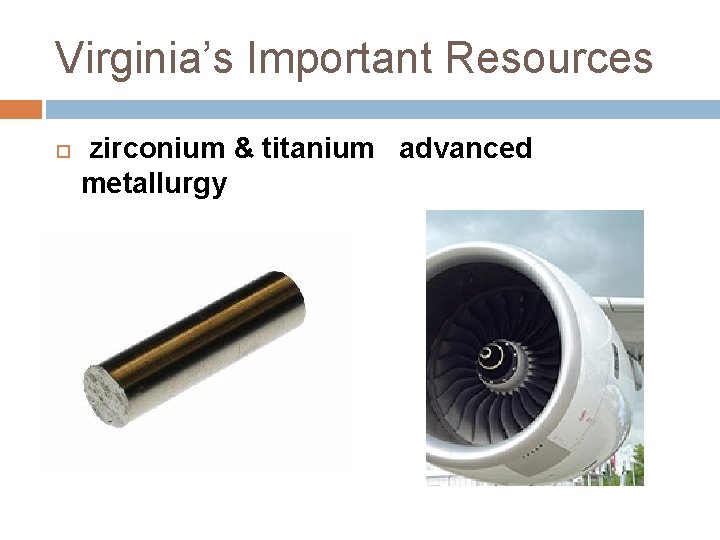
Virginia’s Important Resources zirconium & titanium advanced metallurgy