
Geology 3120 Sedimentary Structures 1 Outline Review the

- Slides: 24
Geology 3120 - Sedimentary Structures 1
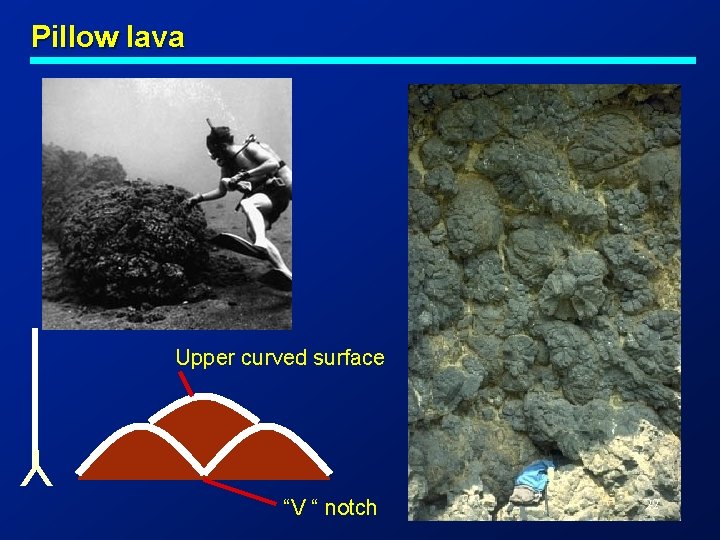
Outline • Review the geologic history exercise from last time • Contacts, primary structures, and secondary structures • How to determine which “way is up”… • Cross-bedding, graded-bedding, reverse graded-bedding Determining way up using top surface features - ripples, mudcracks, raindrops, footprints • Determining way up using bottom surface features - load casts • Determining way up using features within rocks geopetal, bioturbation, stromatolites, flame structures, pillow lavas • 2
Block model for exercise 3
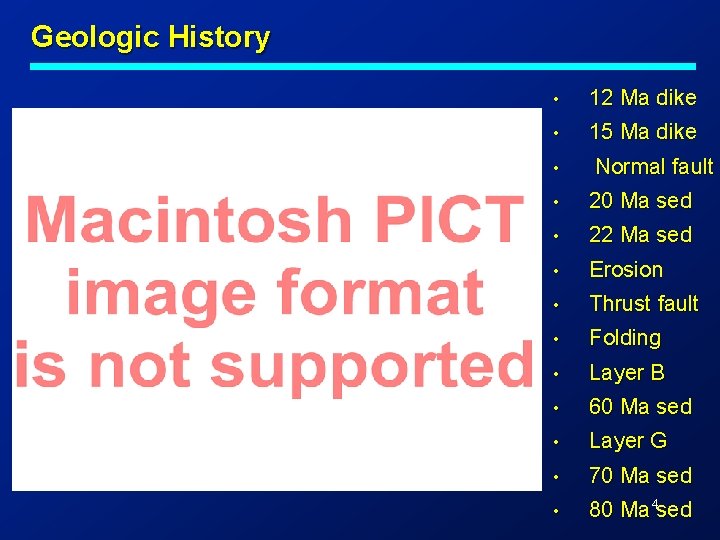
Geologic History • 12 Ma dike • 15 Ma dike • Normal fault • 20 Ma sed • 22 Ma sed • Erosion • Thrust fault • Folding • Layer B • 60 Ma sed • Layer G • 70 Ma sed • 80 Ma 4 sed
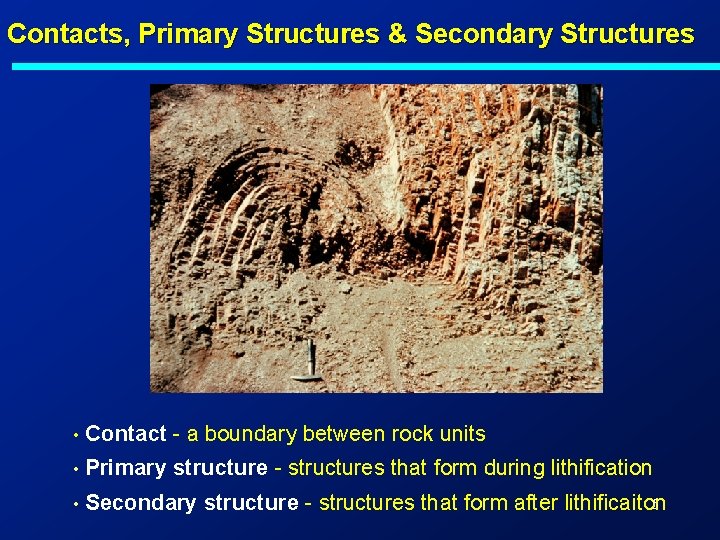
Contacts, Primary Structures & Secondary Structures • Contact - a boundary between rock units • Primary structure - structures that form during lithification • 5 Secondary structure - structures that form after lithificaiton
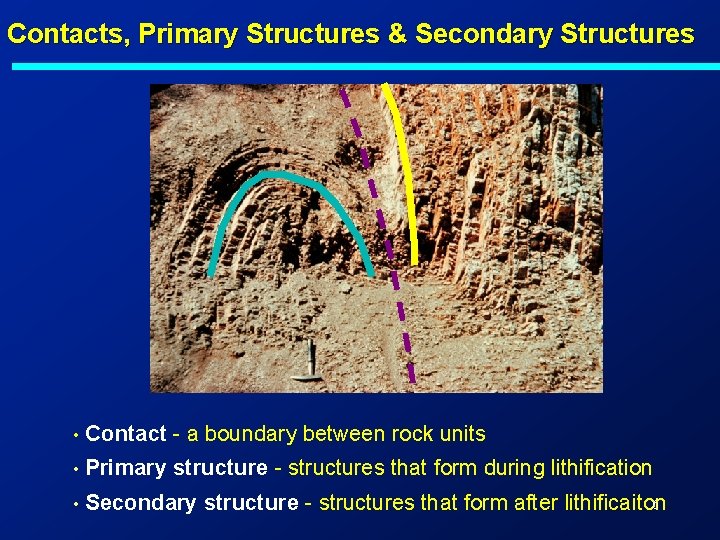
Contacts, Primary Structures & Secondary Structures • Contact - a boundary between rock units • Primary structure - structures that form during lithification • 6 Secondary structure - structures that form after lithificaiton
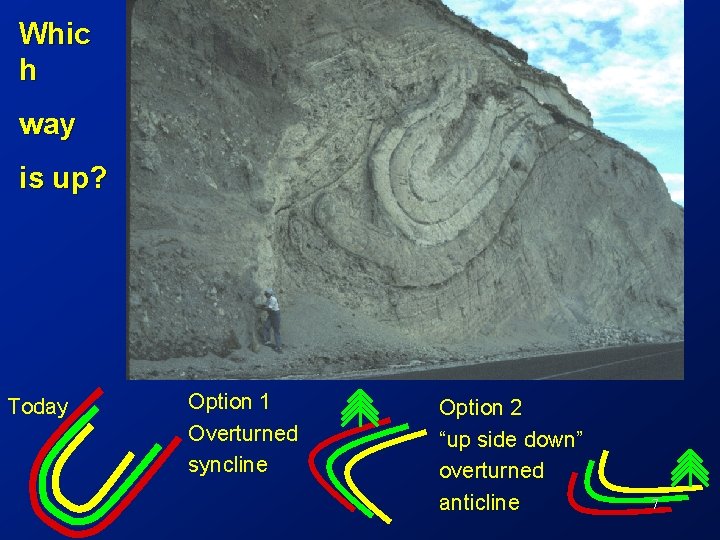
Whic h way is up? Today Option 1 Overturned syncline Option 2 “up side down” overturned anticline 7
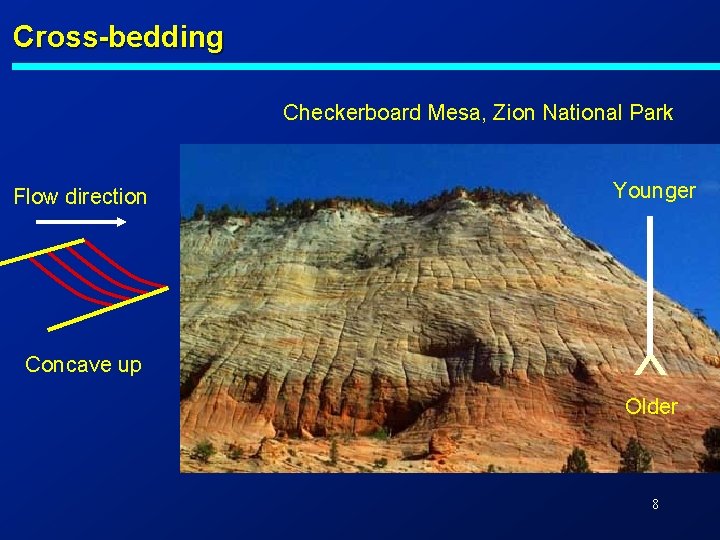
Cross-bedding Checkerboard Mesa, Zion National Park Concave up Younger Y Flow direction Older 8
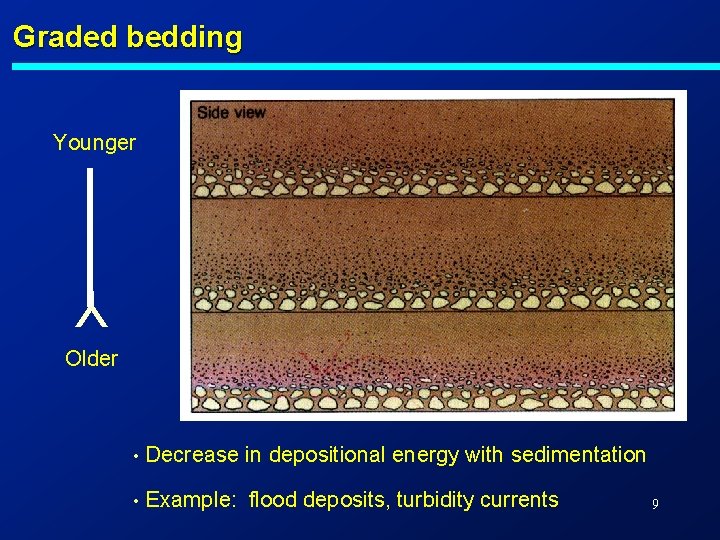
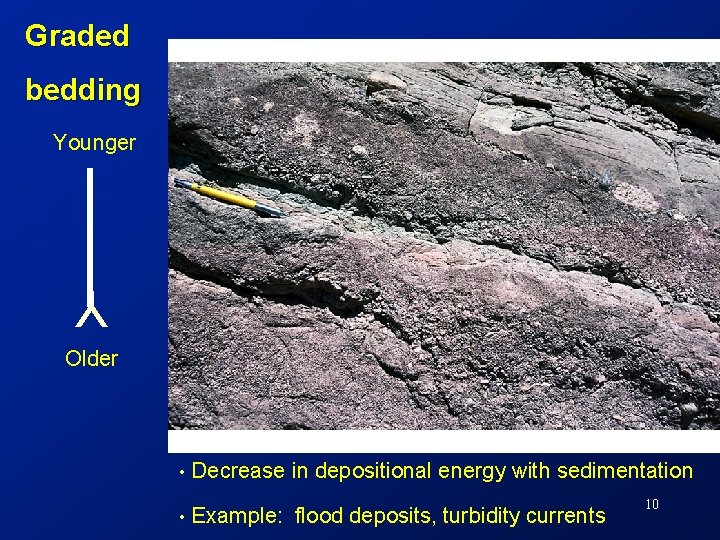
Graded bedding Younger Y Older • Decrease in depositional energy with sedimentation • Example: flood deposits, turbidity currents 9
Graded bedding Younger Y Older • Decrease in depositional energy with sedimentation • Example: flood deposits, turbidity currents 10
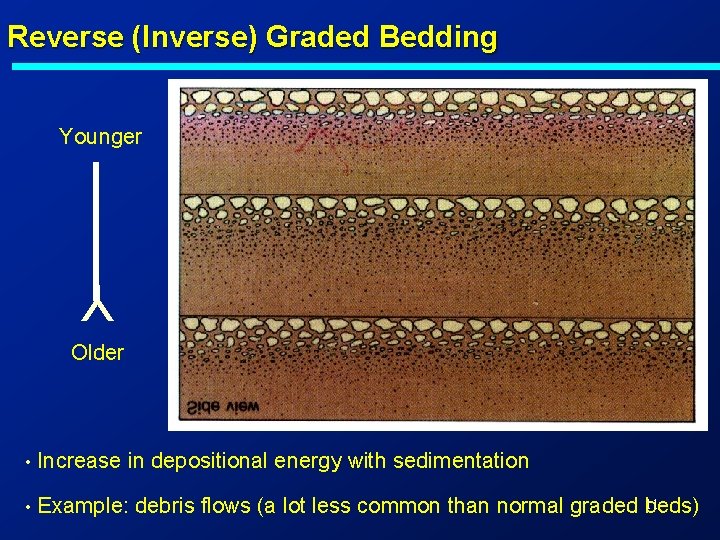
Reverse (Inverse) Graded Bedding Younger Y Older • Increase in depositional energy with sedimentation • 11 Example: debris flows (a lot less common than normal graded beds)
Ripple marks • Symmetric ripples indicate bi -modal current • Concave = up Y • Asymmetric ripples indicate unidirectional current 12
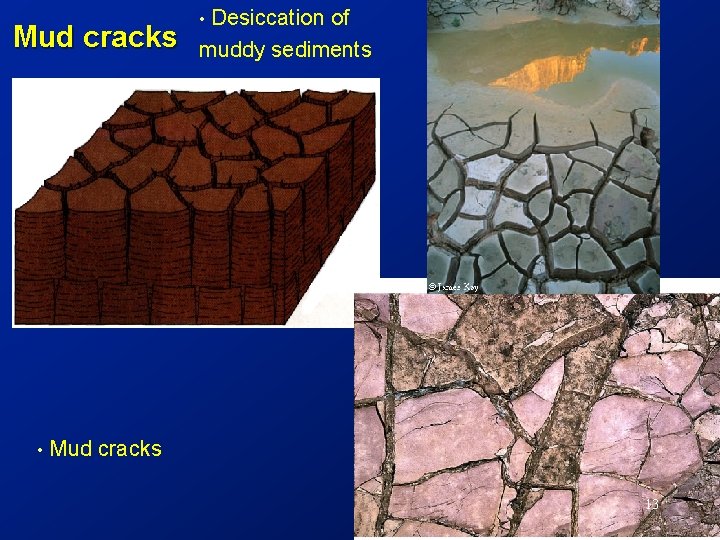
Mud cracks • Desiccation of muddy sediments • Mud cracks 5 cm 13
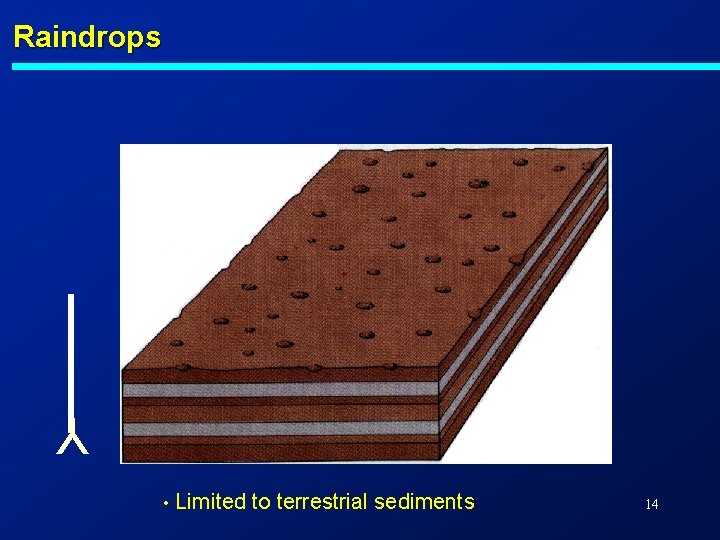
Raindrops Y • Limited to terrestrial sediments 14
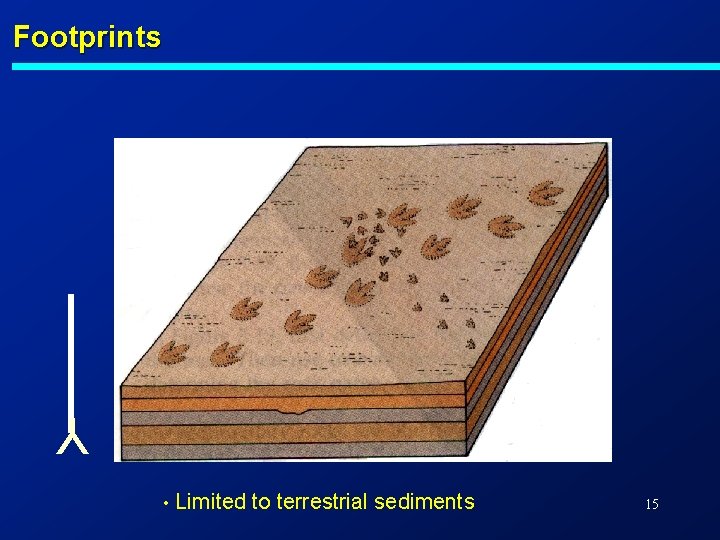
Footprints Y • Limited to terrestrial sediments 15
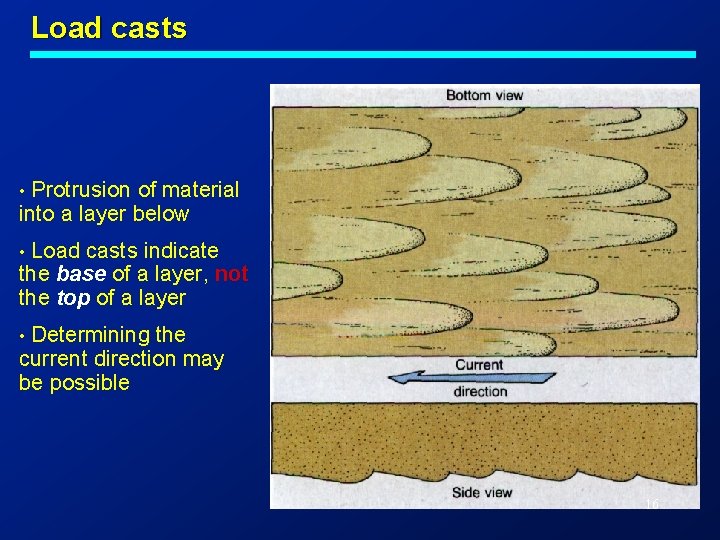
Load casts Protrusion of material into a layer below • Load casts indicate the base of a layer, not the top of a layer • Determining the current direction may be possible • 16
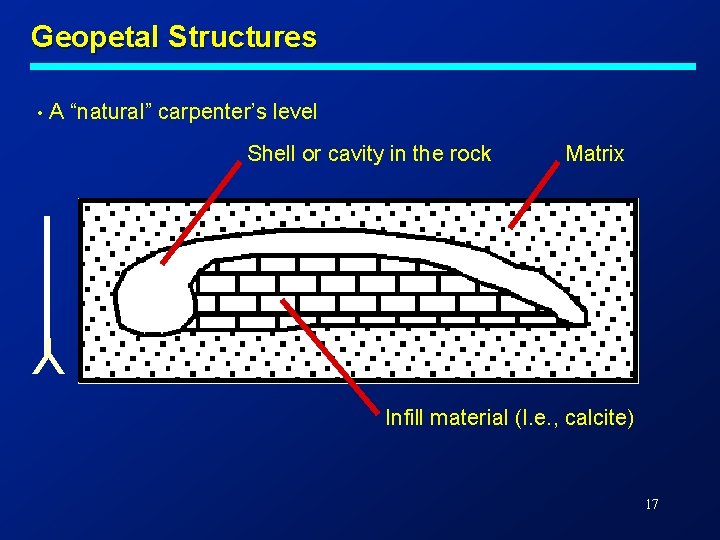
Geopetal Structures • A “natural” carpenter’s level Shell or cavity in the rock Matrix Y Infill material (I. e. , calcite) 17
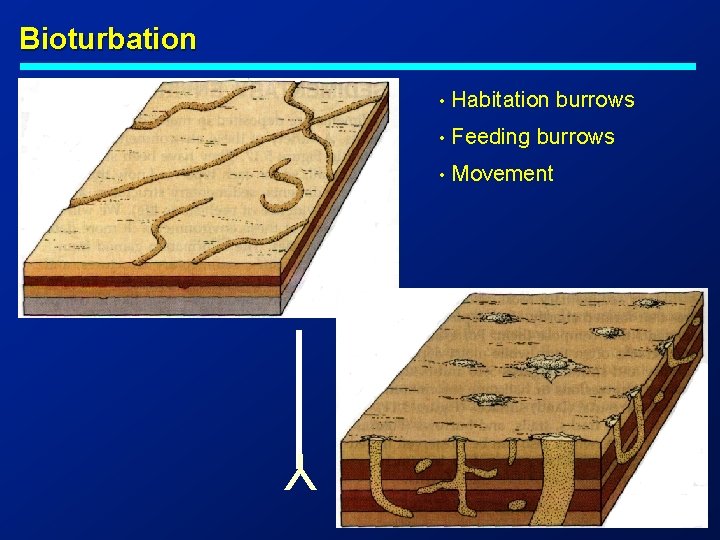
Bioturbation • Habitation burrows • Feeding burrows • Movement 18 Y
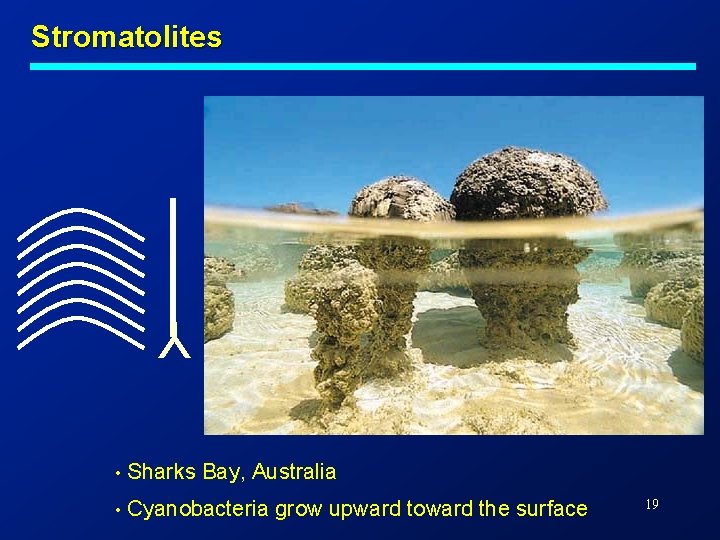
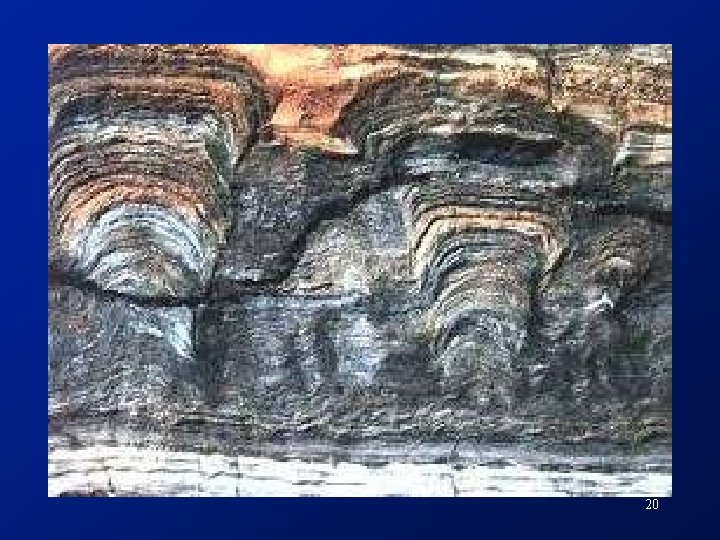
Stromatolites Y • Sharks Bay, Australia • Cyanobacteria grow upward toward the surface 19
20
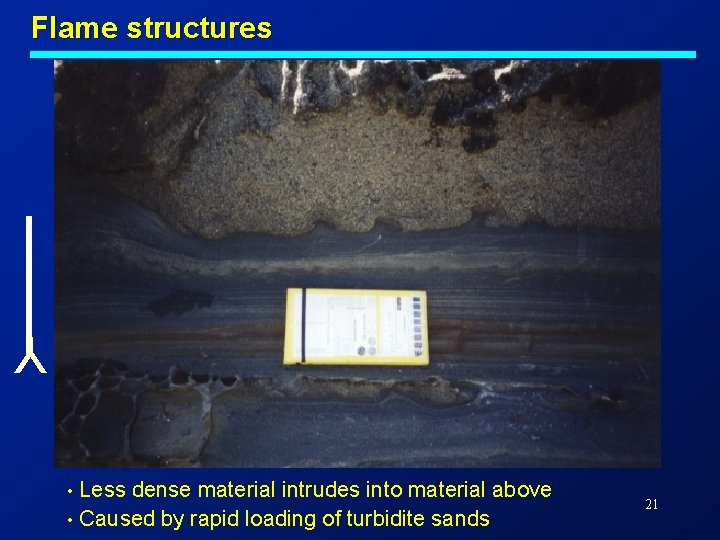
Flame structures Y Less dense material intrudes into material above • Caused by rapid loading of turbidite sands • 21
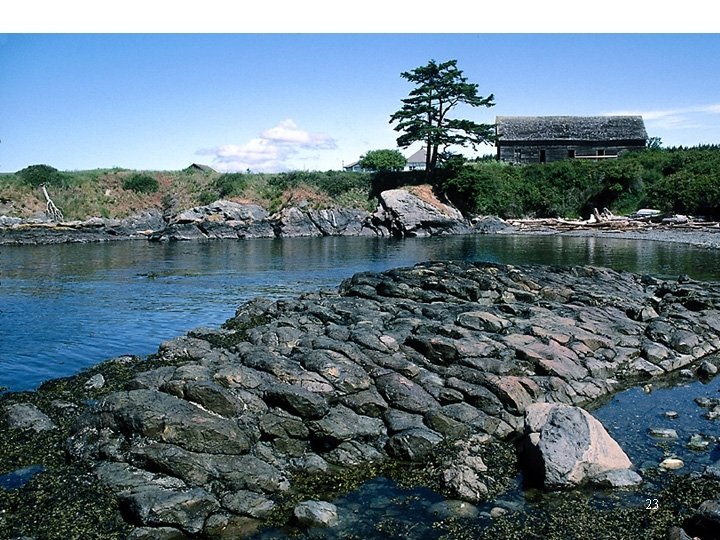
Pillow lava Upper curved surface “V “ notch 22 Y
23
References Slide 8 http: //www. utahpictures. com/Checkerboard. html Slides 9 -15, 17 Busch, R. M. and D. Tasa, Laboratory Manual in Physical Geology, 3 rd. Ed. , American Geological Institute and National Association of Geology Teachers, 260 p. , 1990. Slide 18 http: //www. discoverwest. com. au/hablin. html Slide 20 http: //volcanoes. usgs. gov/Products/Pglossary/Pillow. Lava. html http: //volcanoes. usgs. gov/Products/Pglossary/ancientseq. html 24