
Geology 12 Presents l Hand out note helper

- Slides: 49
Geology 12 Presents
l Hand out note helper WS 8. 45
Unit Outline • A: Fossil Record & Geologic Time – WSs: 8. 1, 8. 2, 8. 3, & 8. 4 – Labs: 8. 1, 8. 2 & 8. 3 (bonus) • B: Relative Dating – WS: 8. 5, Lab 8. 4 • C: Absolute Dating – WS 8. 5, Lab 8. 5 – Unit 2 Review WS + Unit 2 Test
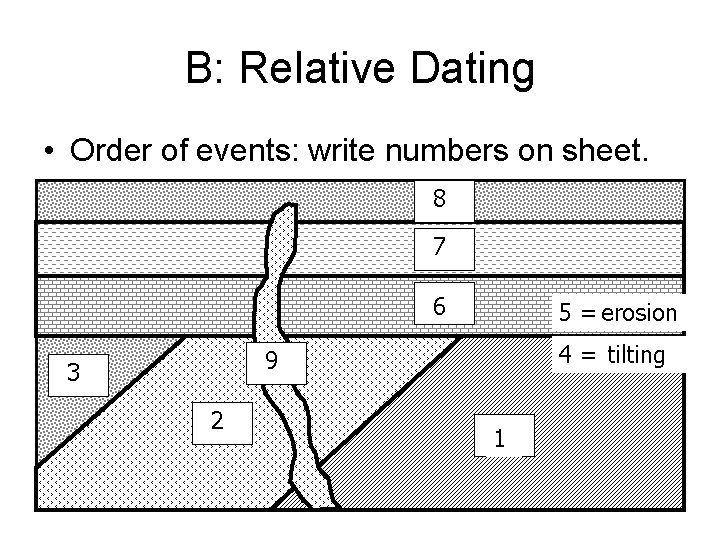
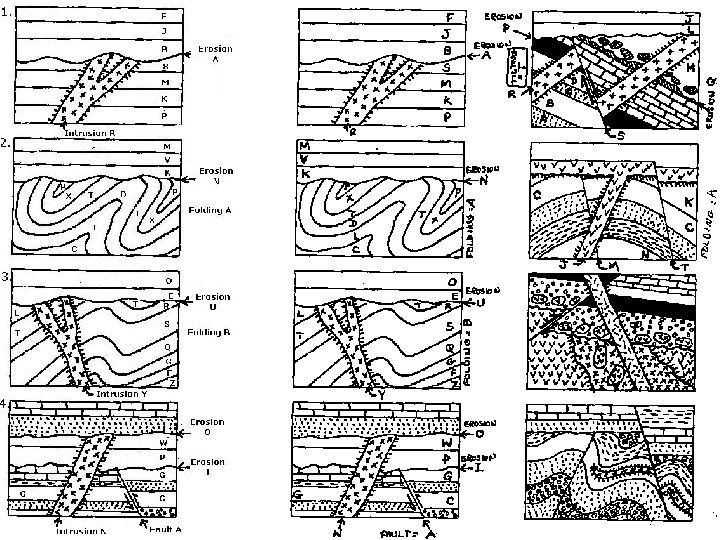
B: Relative Dating • Order of events: write numbers on sheet. 8 7 6 5 = erosion 4 = tilting 9 3 2 1
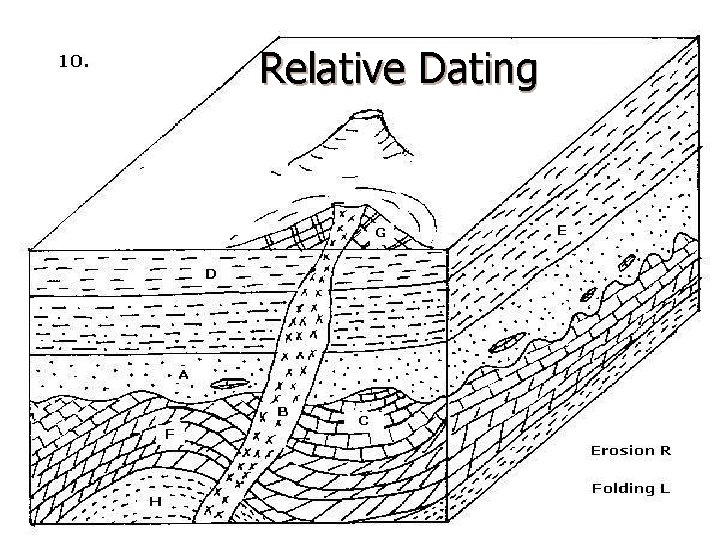
Relative Dating
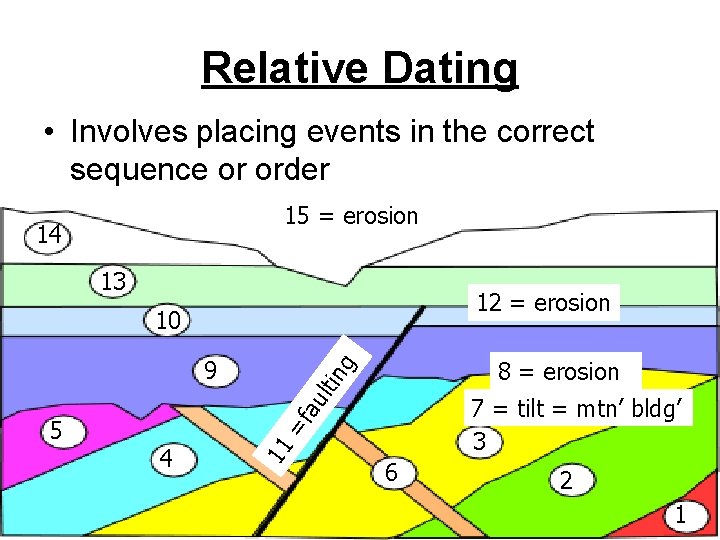
Relative Dating • Involves placing events in the correct sequence or order 15 = erosion 14 13 12 = erosion 10 au lt 7 = tilt = mtn’ bldg’ 3 =f 4 11 5 8 = erosion ing 9 6 2 1
• Absolute Dating is determining how long ago something happened (ma) – ie. Dinosaurs became extinct 65 ma ago. • Using the principle of Uniformitarianism, six principles have been developed
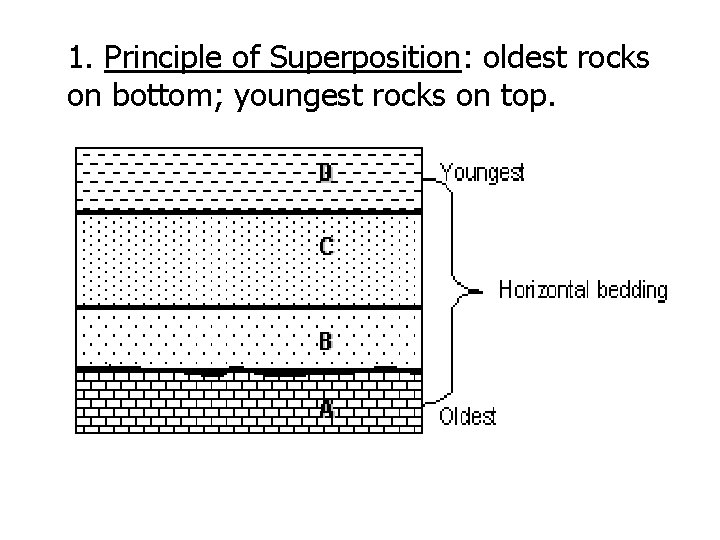
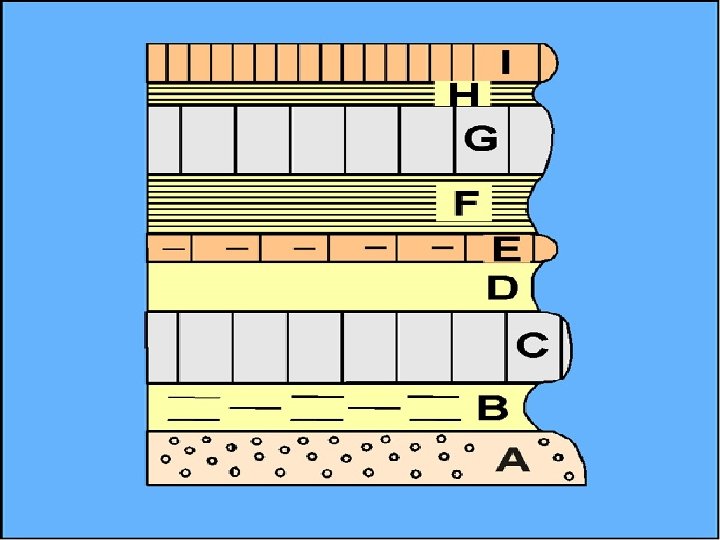
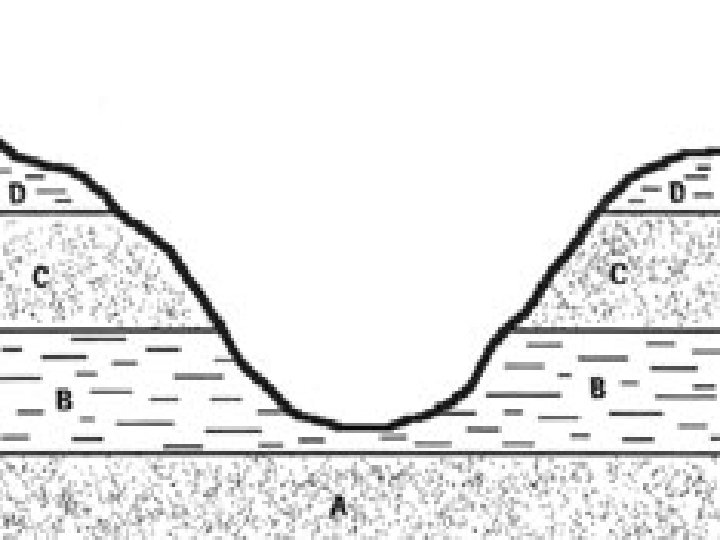
1. Principle of Superposition: oldest rocks on bottom; youngest rocks on top.
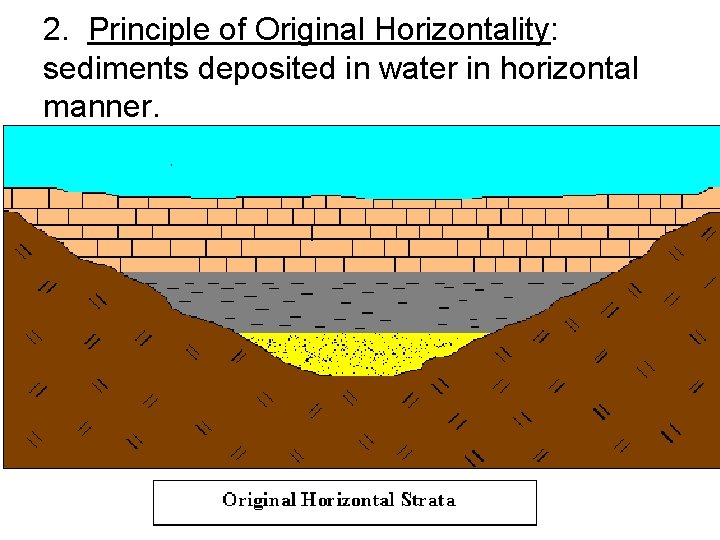
2. Principle of Original Horizontality: sediments deposited in water in horizontal manner.
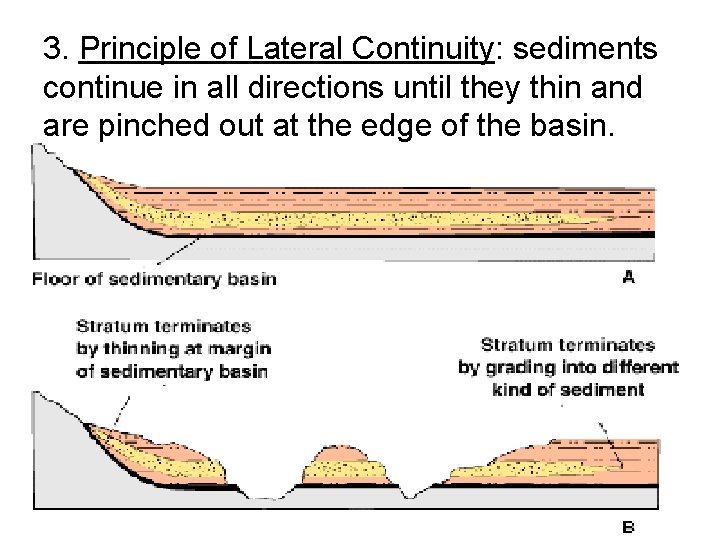
3. Principle of Lateral Continuity: sediments continue in all directions until they thin and are pinched out at the edge of the basin.
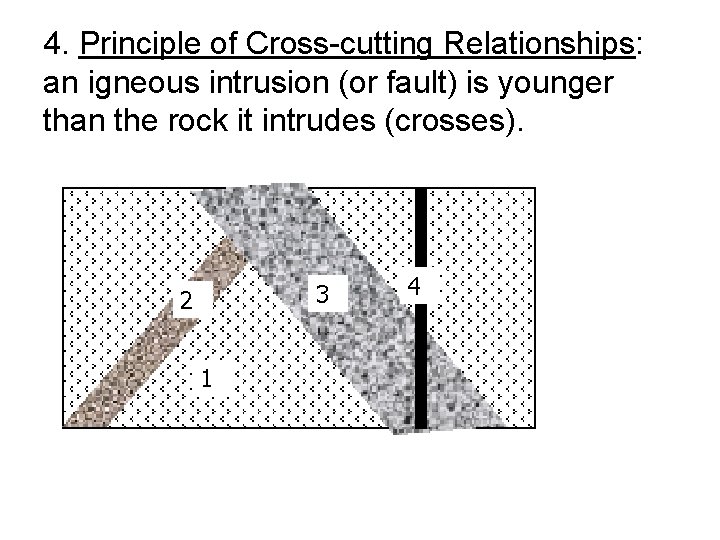
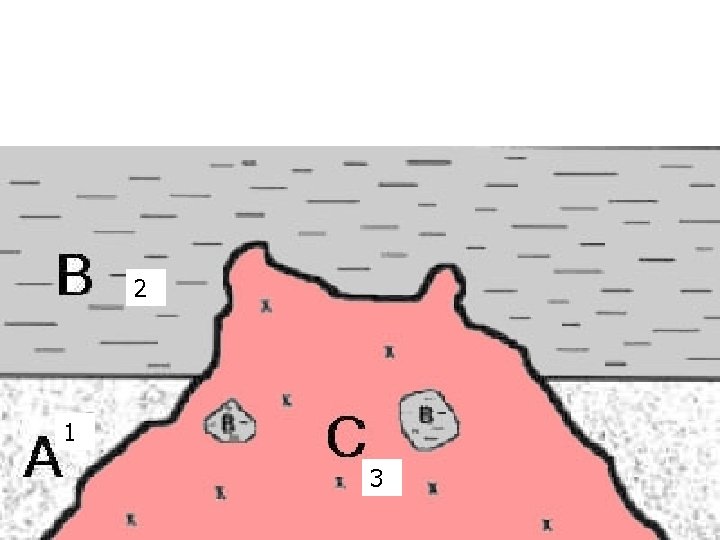
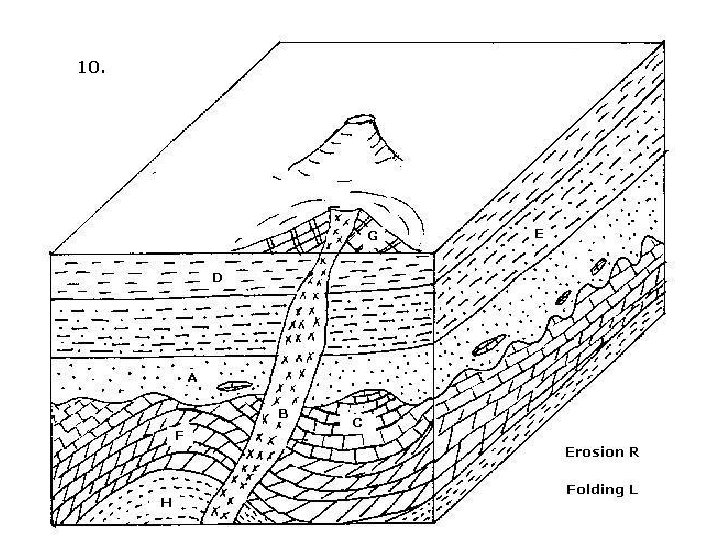
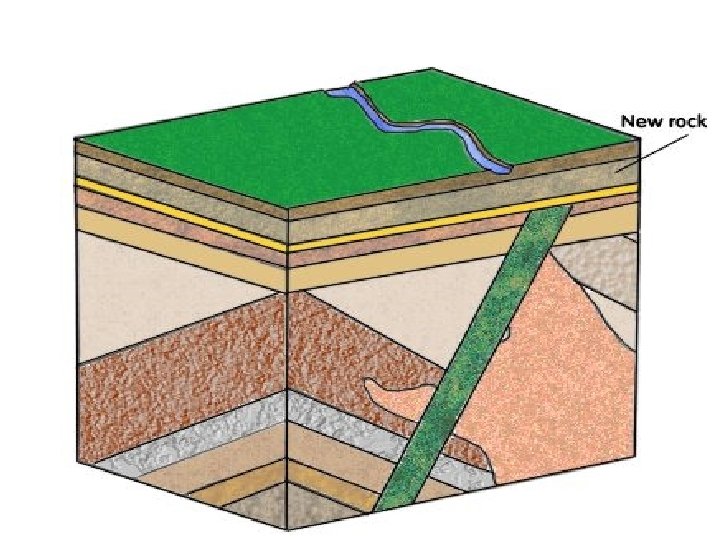
4. Principle of Cross-cutting Relationships: an igneous intrusion (or fault) is younger than the rock it intrudes (crosses). 3 2 1 4
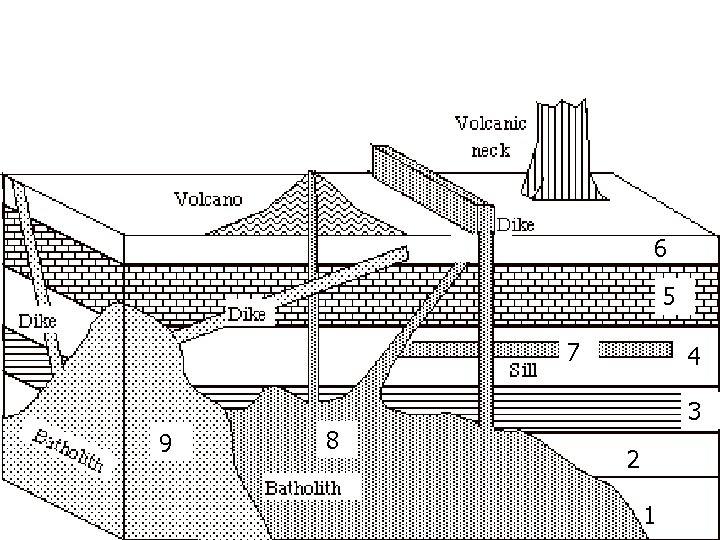
6 5 7 4 3 9 8 2 1
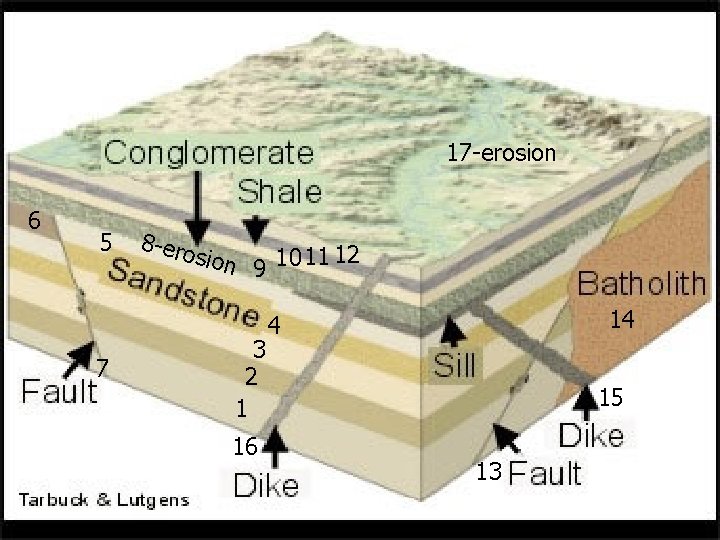
17 -erosion 6 5 7 8 -ero sion 12 11 10 9 3 2 1 16 14 4 15 13
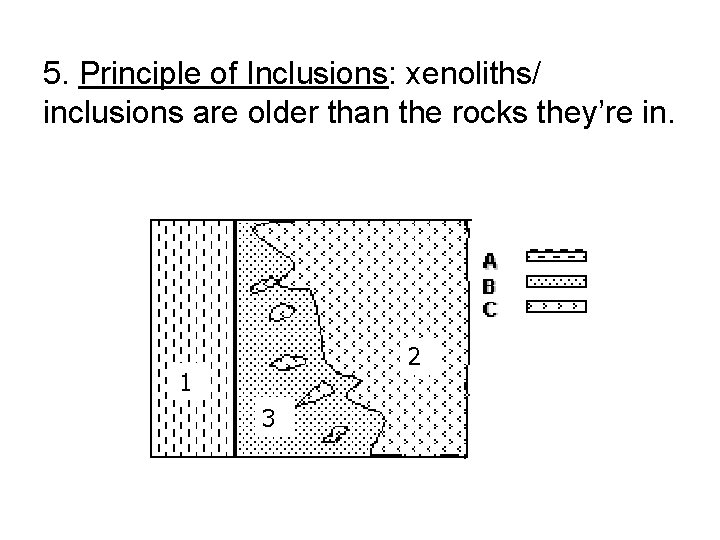
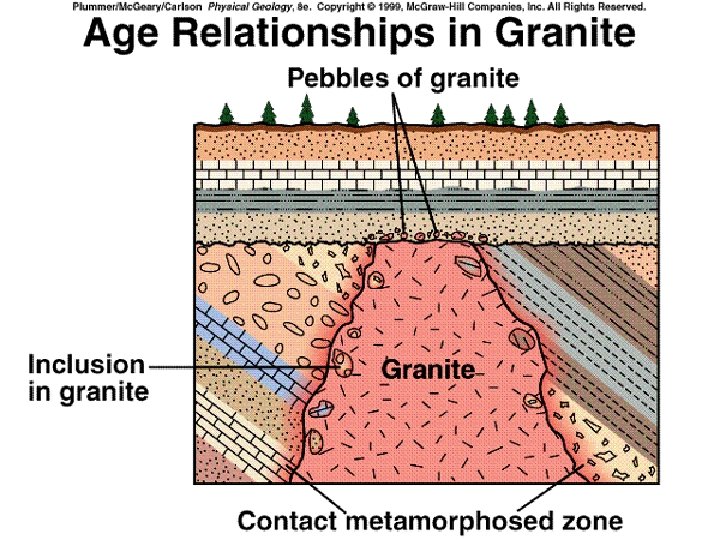
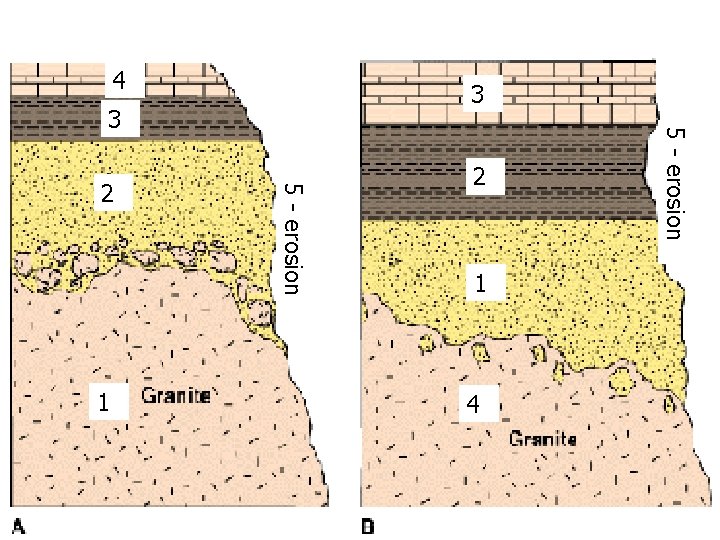
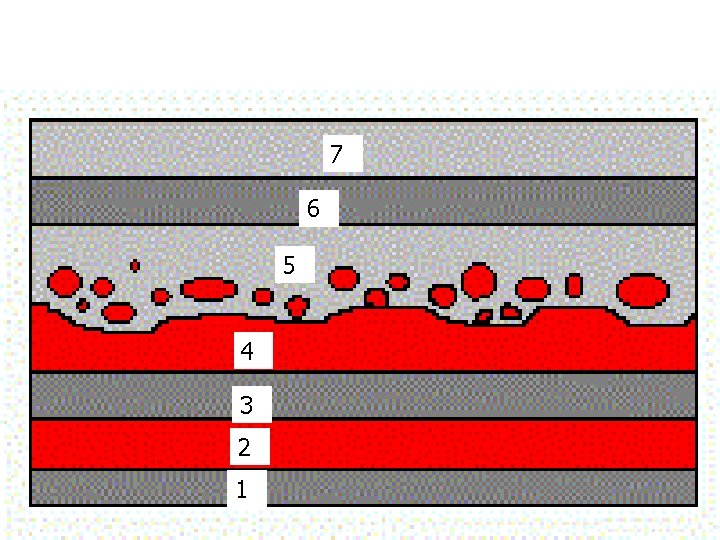
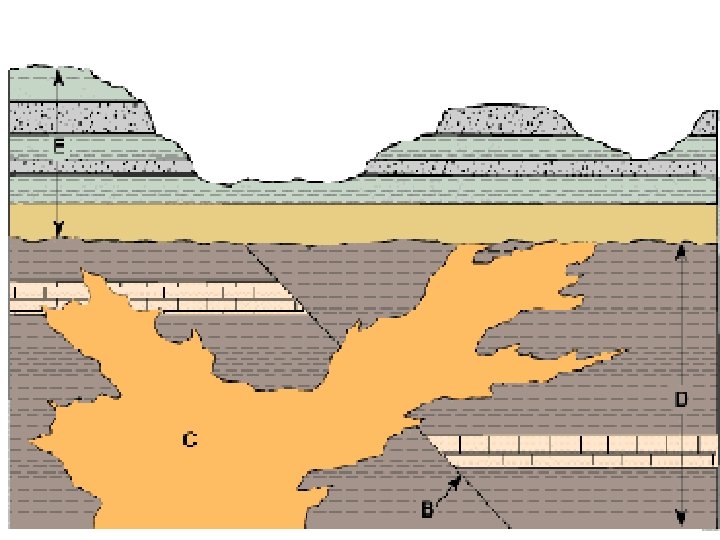
5. Principle of Inclusions: xenoliths/ inclusions are older than the rocks they’re in. 2 1 3
2 1 3
5 - erosion 4 1 1 5 - erosion 3 2 2 3 4
7 6 5 4 3 2 1
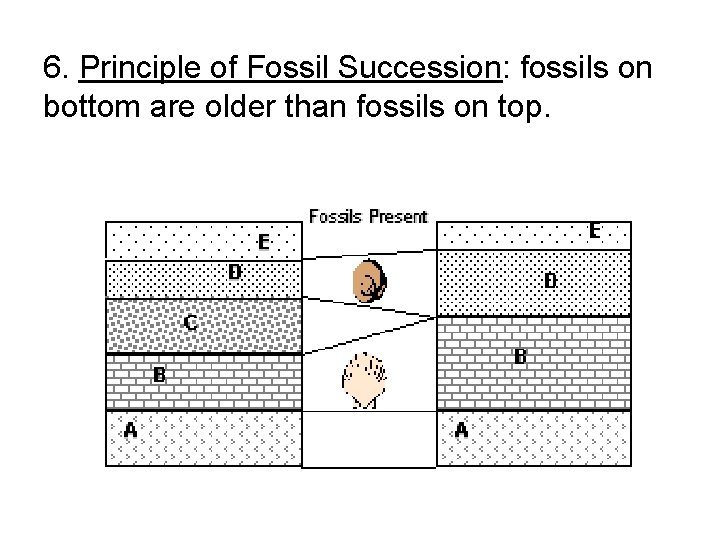
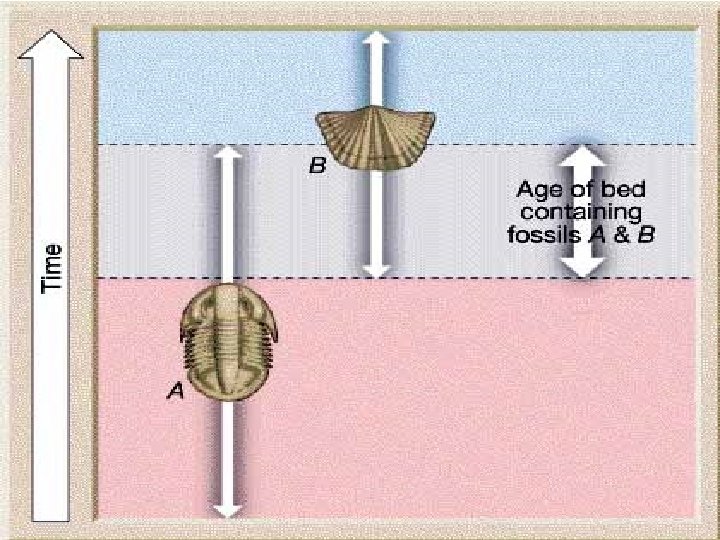
6. Principle of Fossil Succession: fossils on bottom are older than fossils on top.
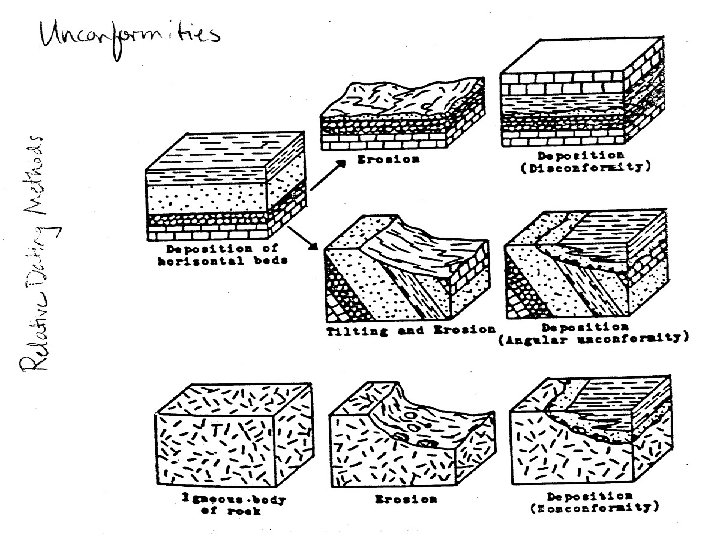
Unconformities • Break or portion of time (hiatus) is missing • Cause: period of non-deposition, period of erosion or mountain building • 3 types
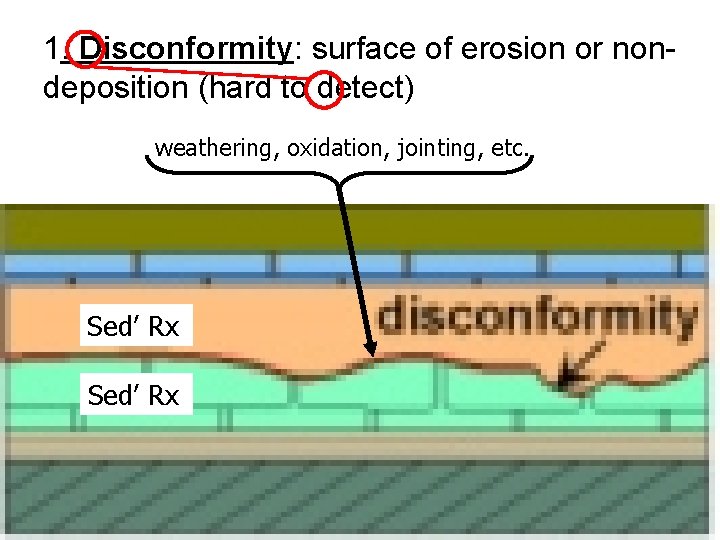
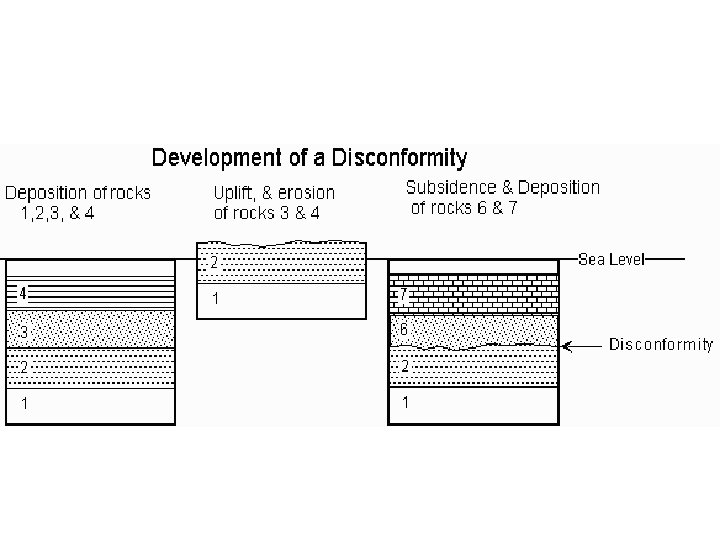
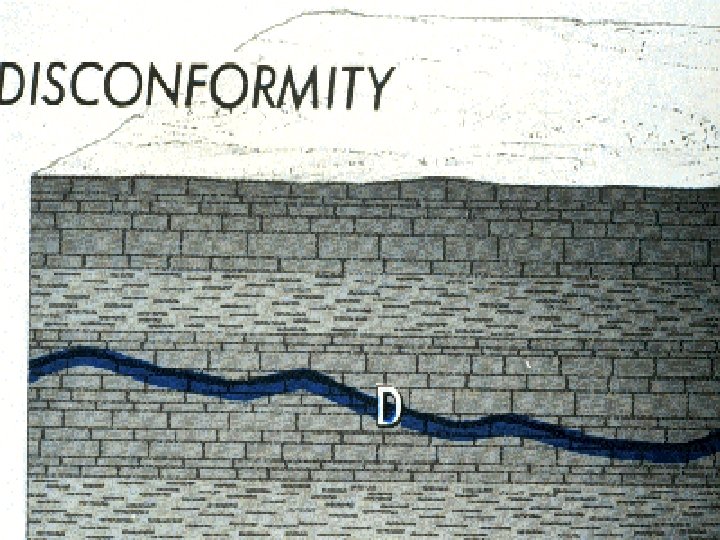
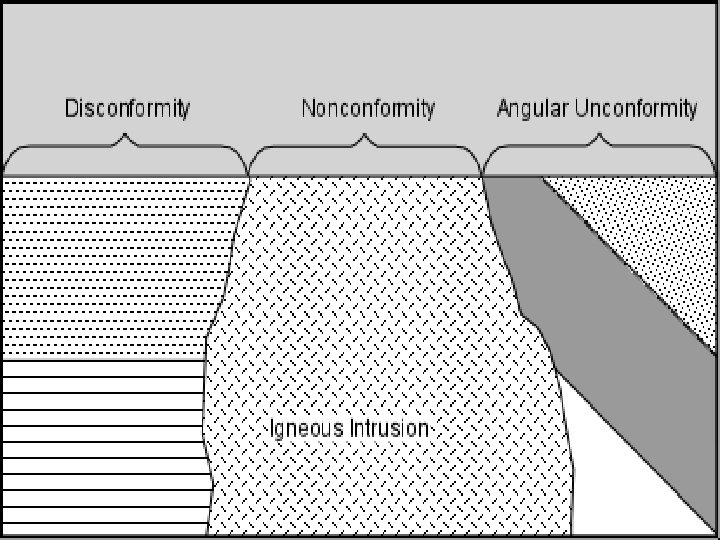
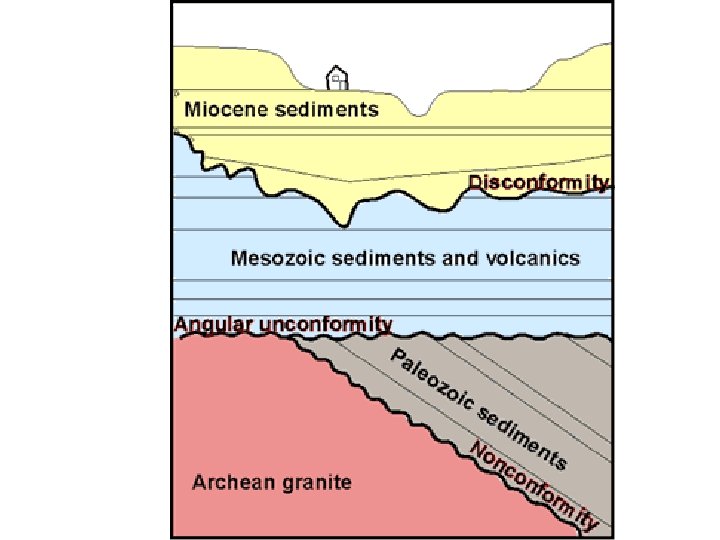
1. Disconformity: surface of erosion or nondeposition (hard to detect) weathering, oxidation, jointing, etc. Sed’ Rx
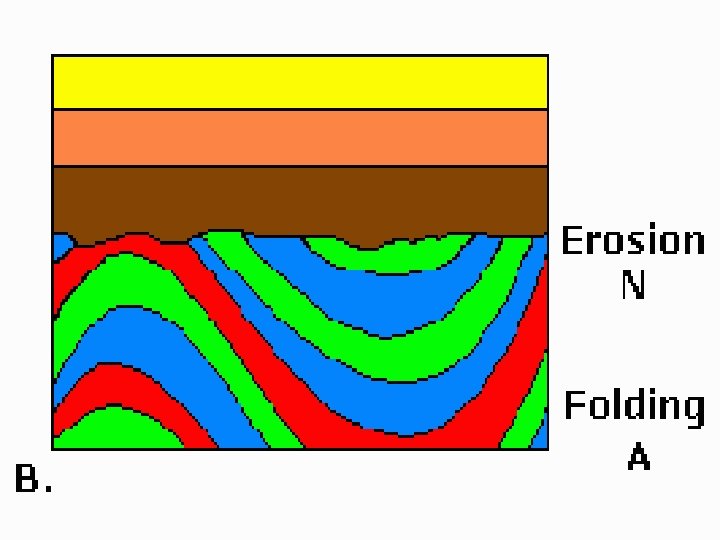
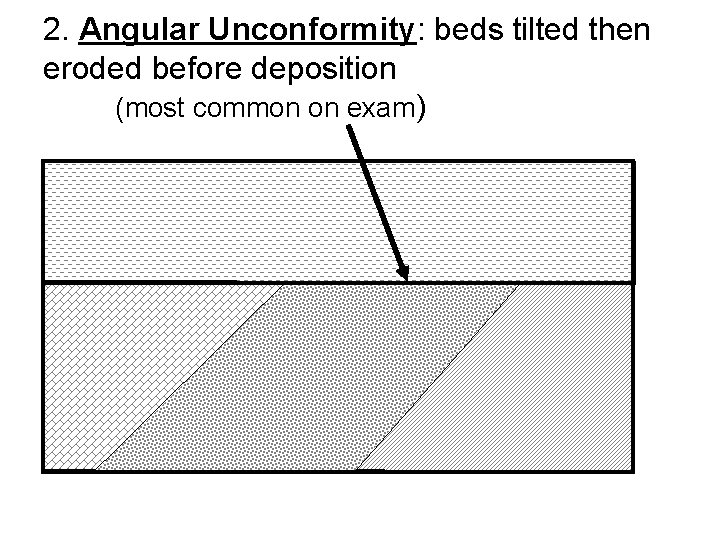
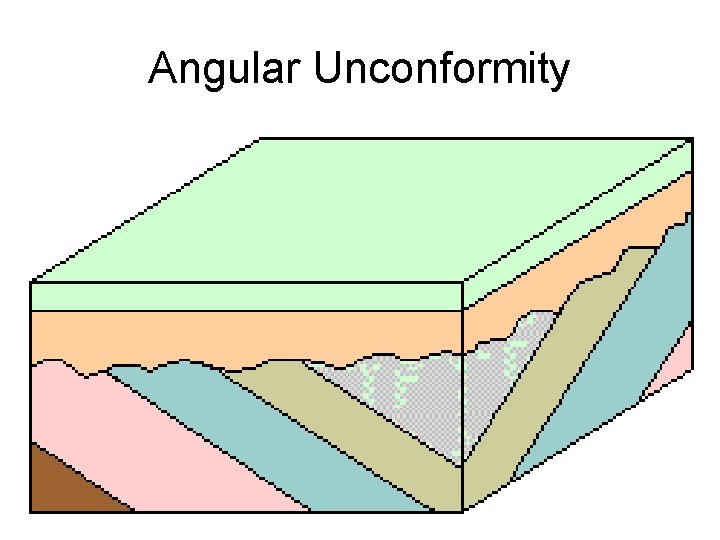
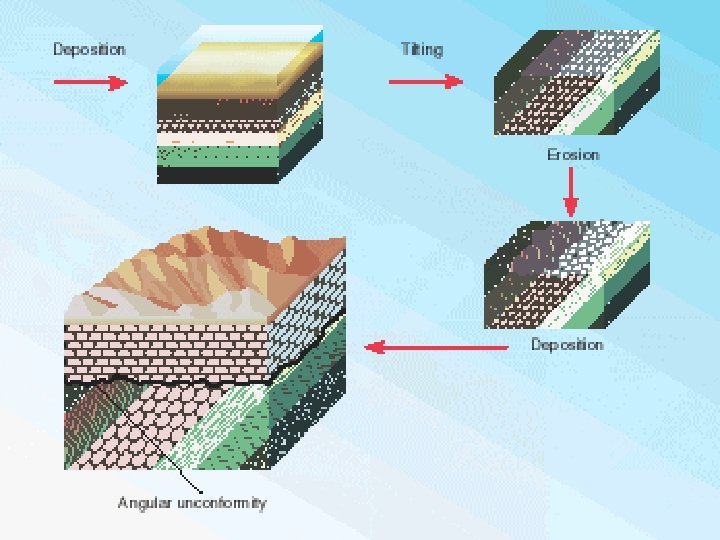
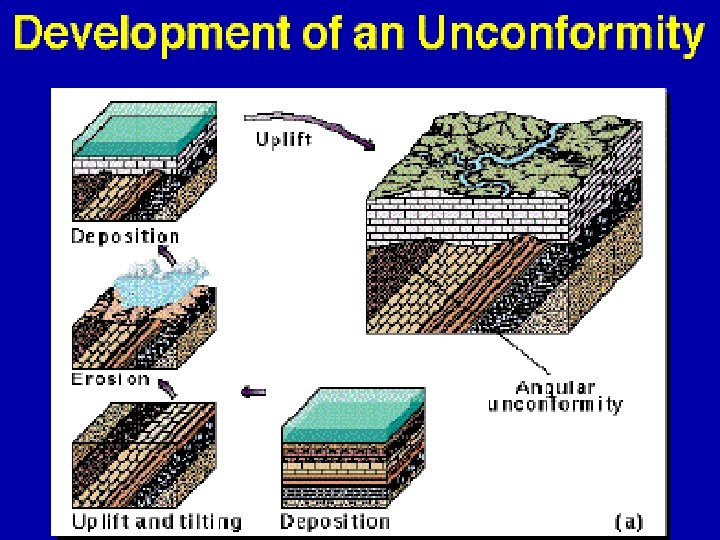
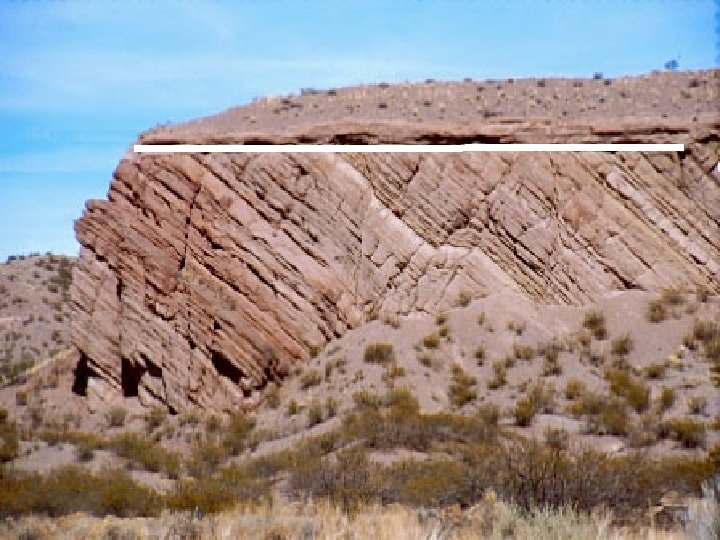
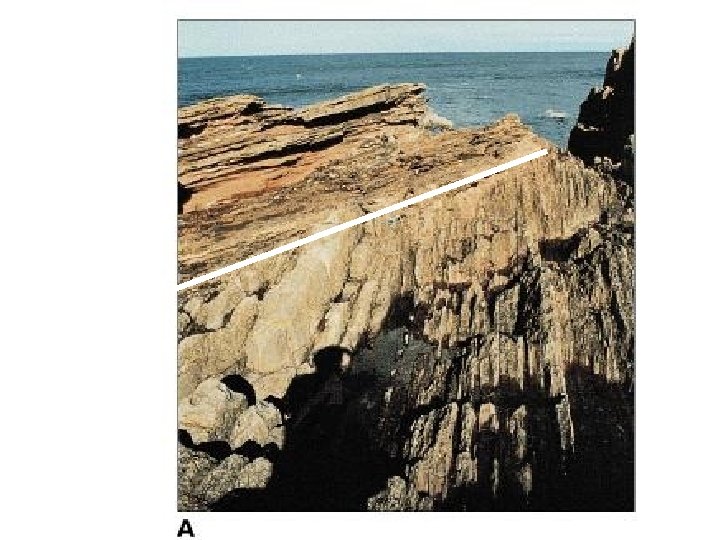
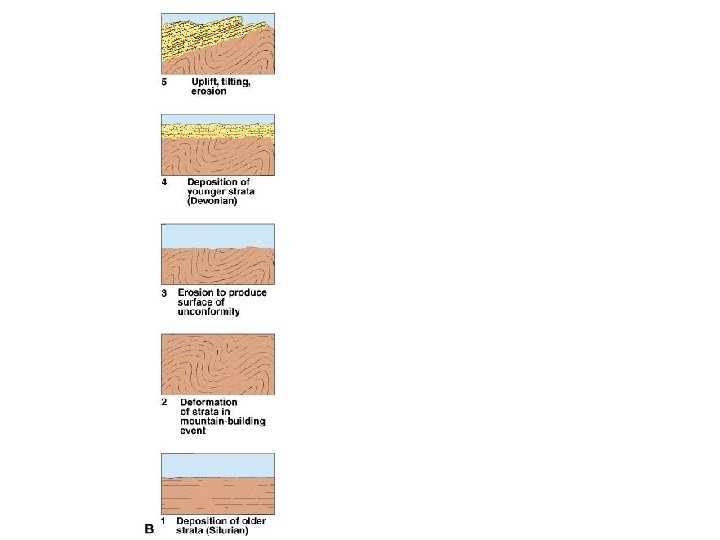
2. Angular Unconformity: beds tilted then eroded before deposition (most common on exam)
Angular Unconformity
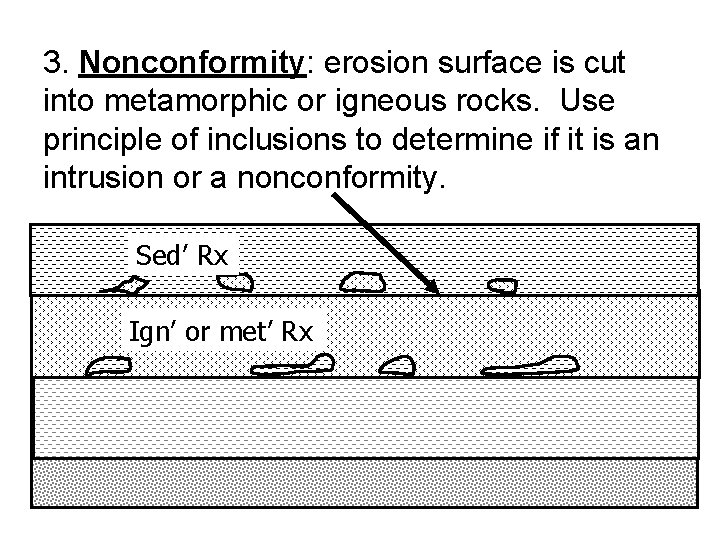
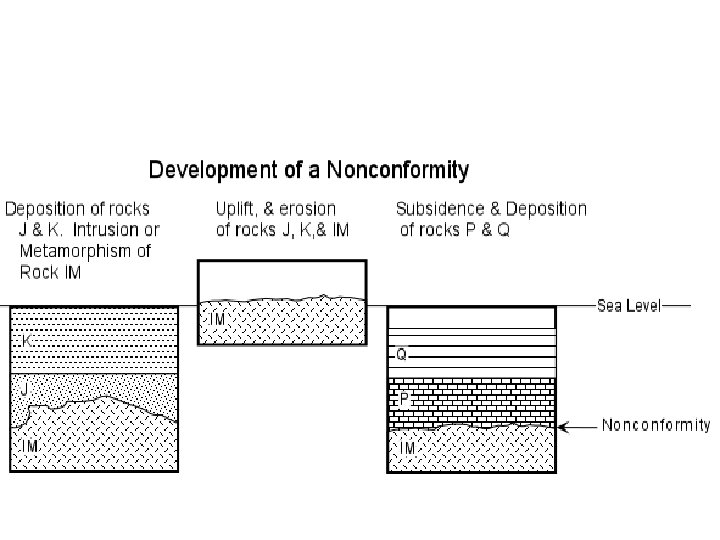
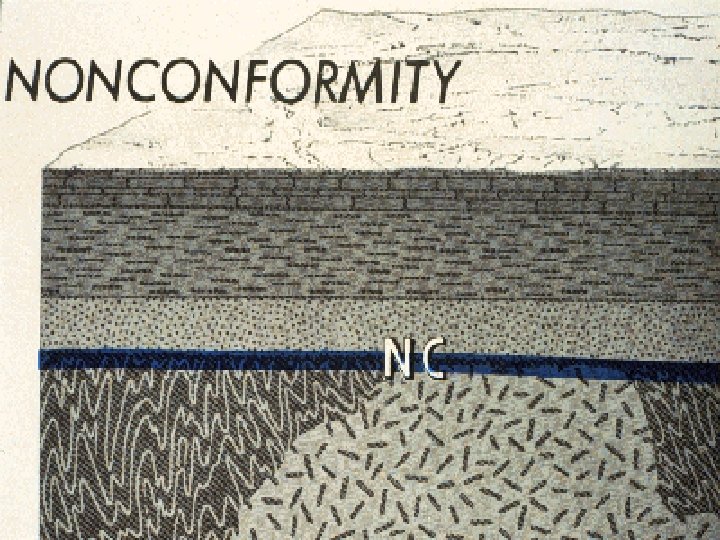
3. Nonconformity: erosion surface is cut into metamorphic or igneous rocks. Use principle of inclusions to determine if it is an intrusion or a nonconformity. Sed’ Rx Ign’ or met’ Rx
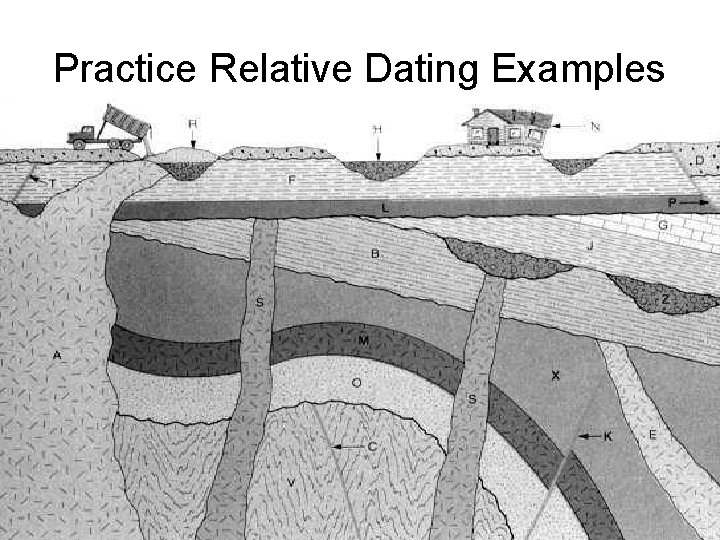
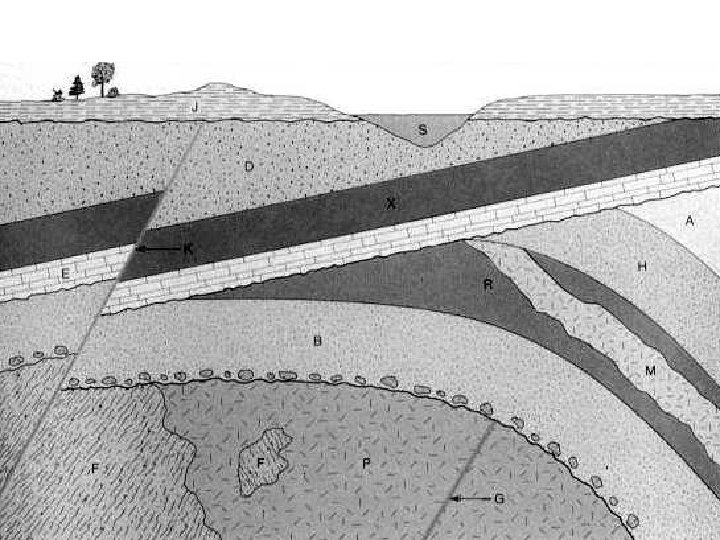
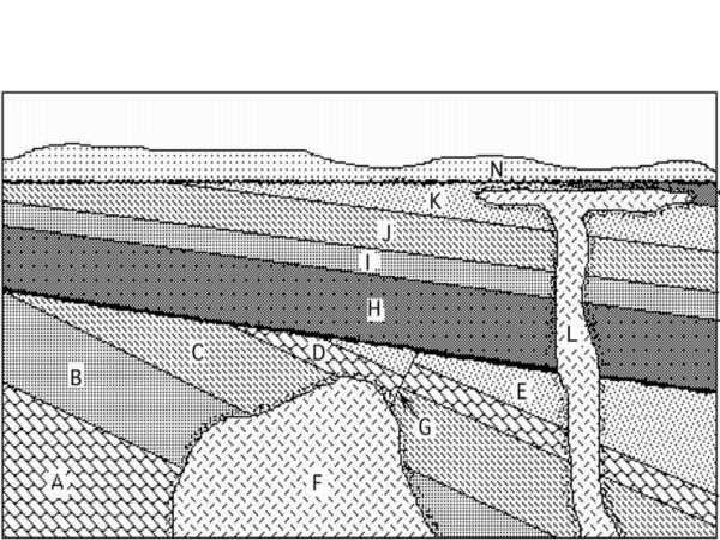
Practice Relative Dating Examples
l Do Lab 8 -4 Relative Dating l Work on WS 8 -5 l Work on Chp. 8 Review WS