
Geological activity at plate boundaries Pangaea derived from

Geological activity at plate boundaries
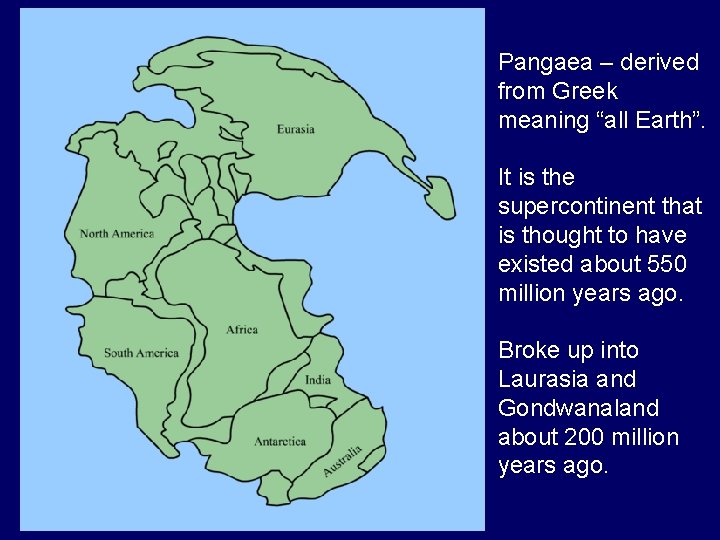
Pangaea – derived from Greek meaning “all Earth”. It is the supercontinent that is thought to have existed about 550 million years ago. Broke up into Laurasia and Gondwanaland about 200 million years ago.

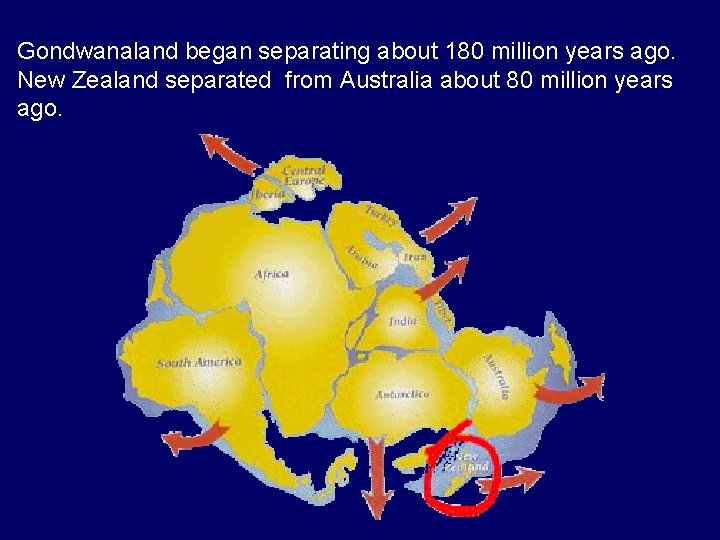
Gondwanaland began separating about 180 million years ago. New Zealand separated from Australia about 80 million years ago.
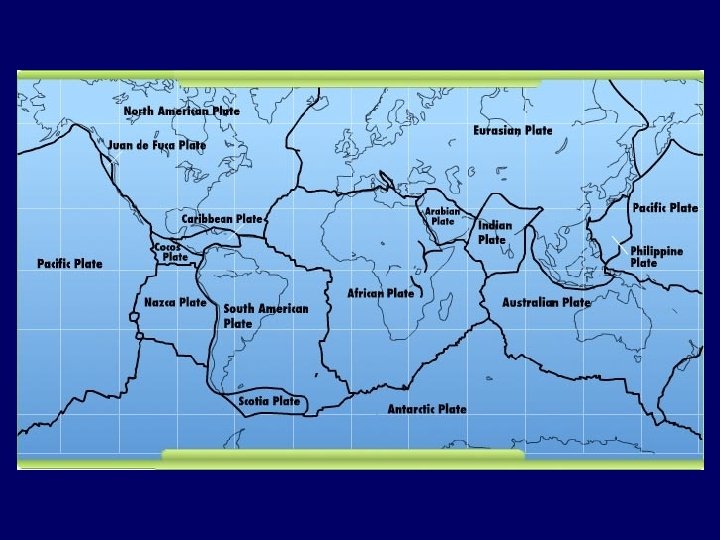
Tectonic plates today The major plates are the Antarctic, African, Eurasian, Australian, Pacific, North American, South American and Nazca. There also a number of minor plates, such as the Indian, Arabian, Caribbean and Philippine.
Oceanic and Continental Plates Oceanic plates (5 km thick) are thin parts of the Earth’s crust located under the oceans. Continental plates (35 km thick) are thick parts of the Earth’s crust not located under the ocean.
Plate movement • The tectonic plates are constantly moving on top of the mantle, sometimes moving apart, sometimes past each other and other times moving together at plate boundaries. Using GPS, the plates have been measured as moving from a few millimetres to up to 20 cm per year. Over many millions of years, this can mean thousands of kilometres of movement.

Plate boundaries are associated with geological events such as earthquakes and the creation of mountains and volcanoes. Most of the world’s active volcanoes occur along plate boundaries – the Pacific plate’s Ring of Fire is the most active. The Ring of Fire is home to over 75% of the world's active and dormant volcanoes (452).
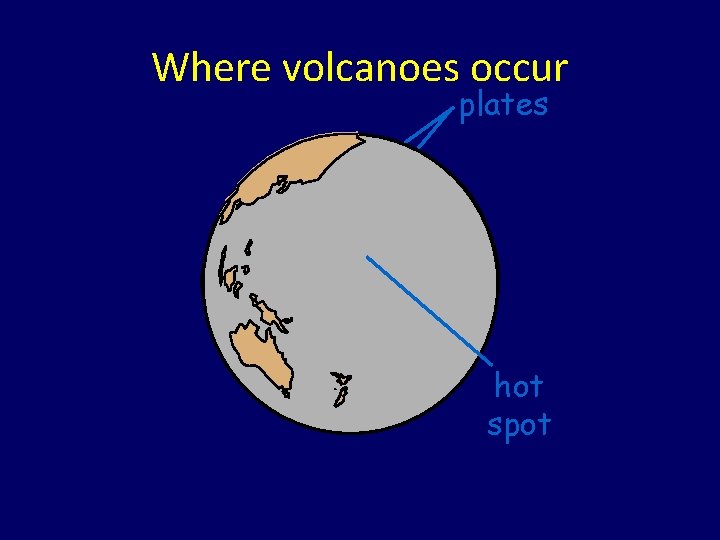
Where volcanoes occur plates hot spot
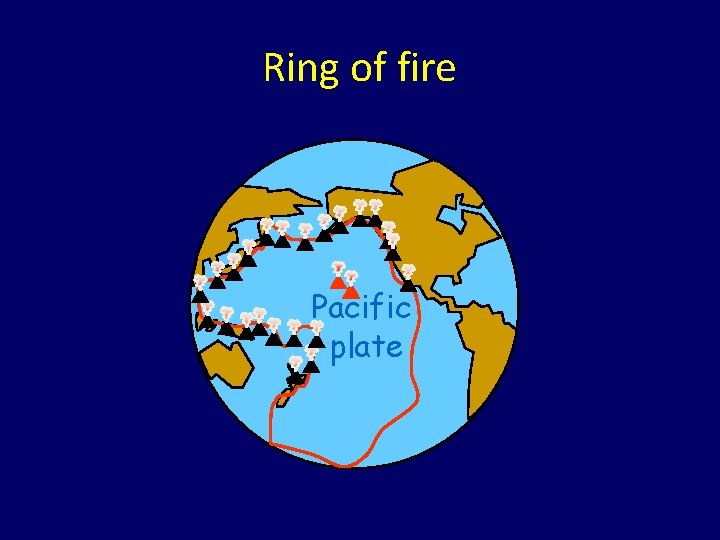
Ring of fire Pacific plate
- Slides: 11