
GEOLOGIC TIME Sedimentary Rock Formation Favs Where do


- Slides: 51
GEOLOGIC TIME
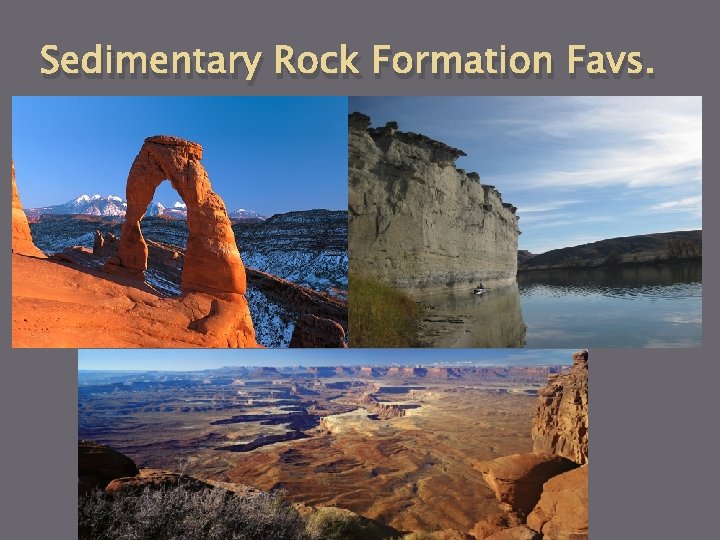
Sedimentary Rock Formation Favs.
Where do sediments come from? - Weathering – breaking down rock into smaller pieces chemically and physically. - Erosion- carrying away the particles and depositing them. � Glaciers � Wind � Running Water
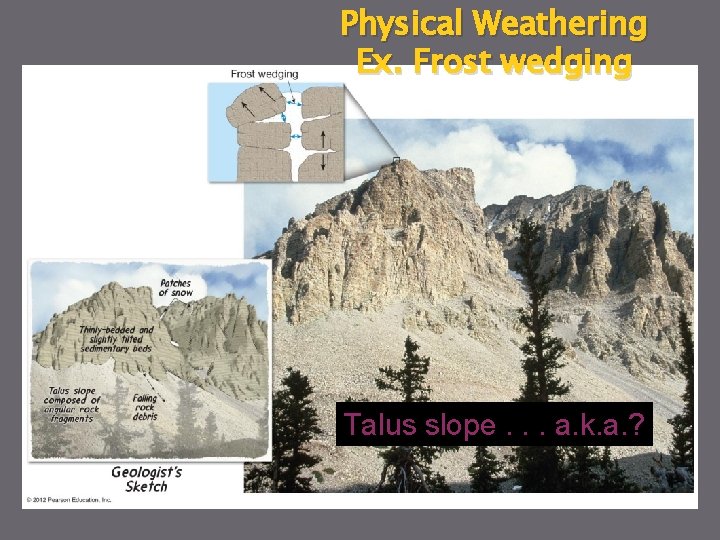
Physical Weathering Ex. Frost wedging Talus slope. . . a. k. a. ?
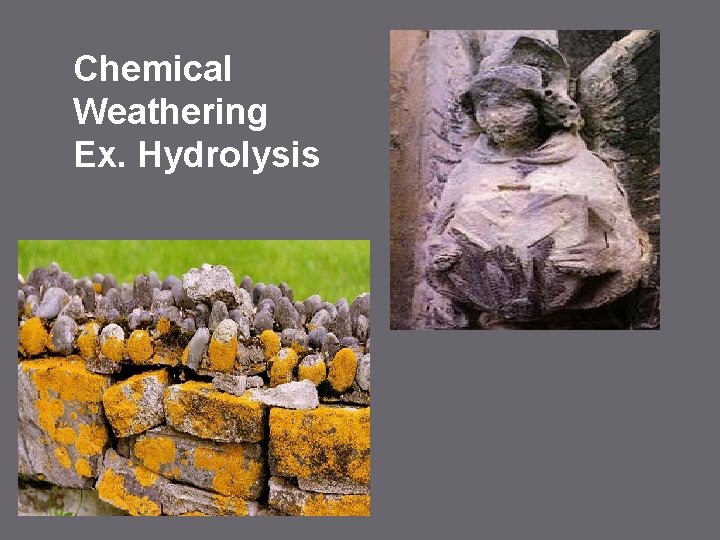
Chemical Weathering Ex. Hydrolysis
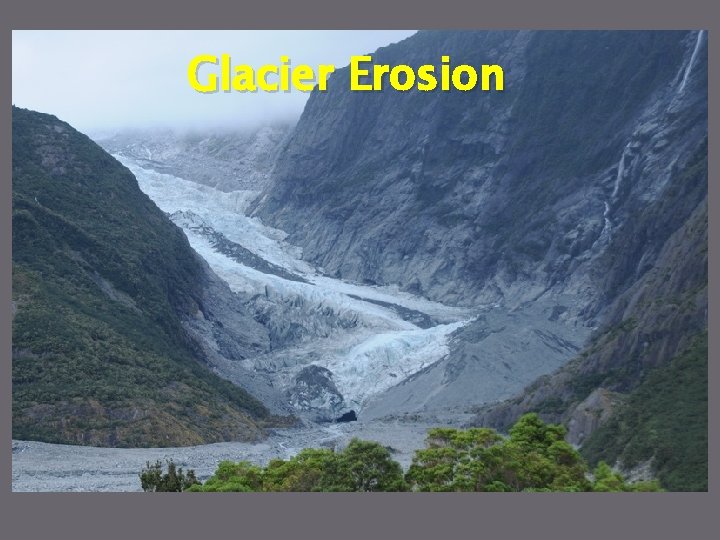
Glacier Erosion
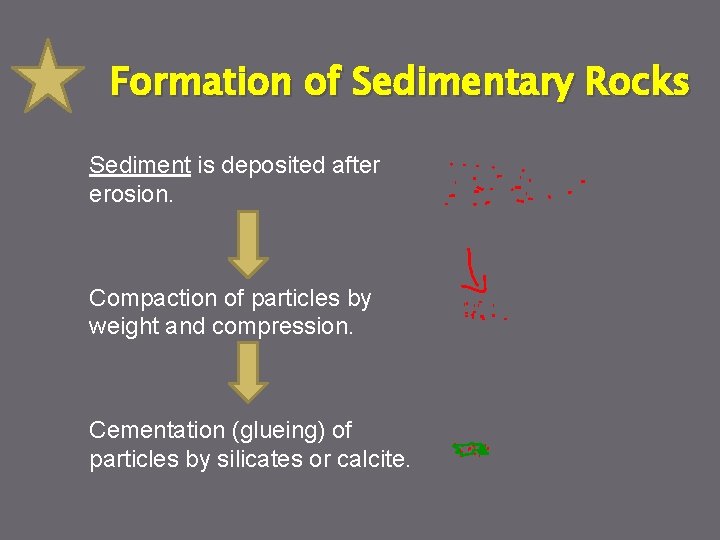
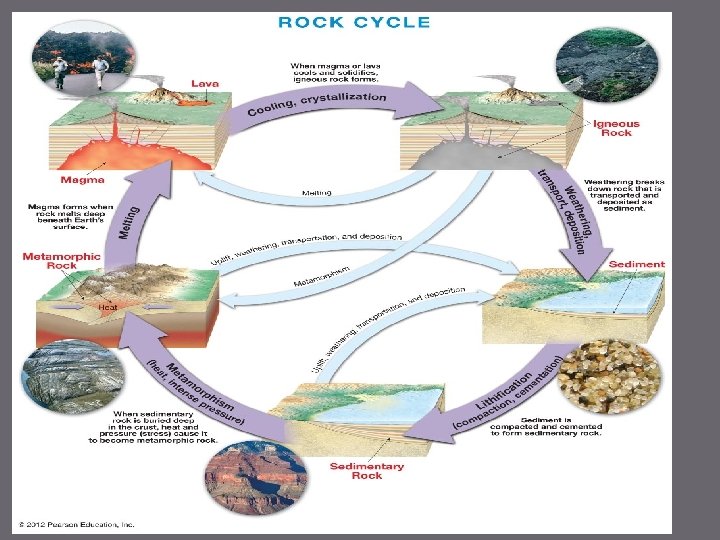
Formation of Sedimentary Rocks Sediment is deposited after erosion. Compaction of particles by weight and compression. Cementation (glueing) of particles by silicates or calcite.
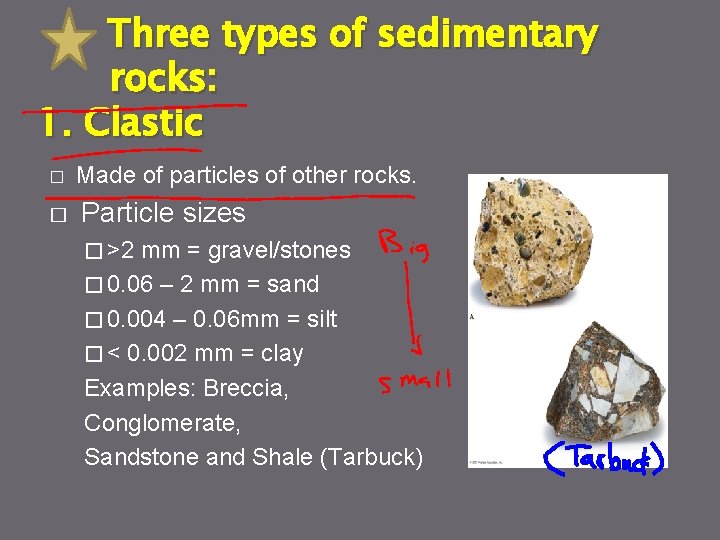
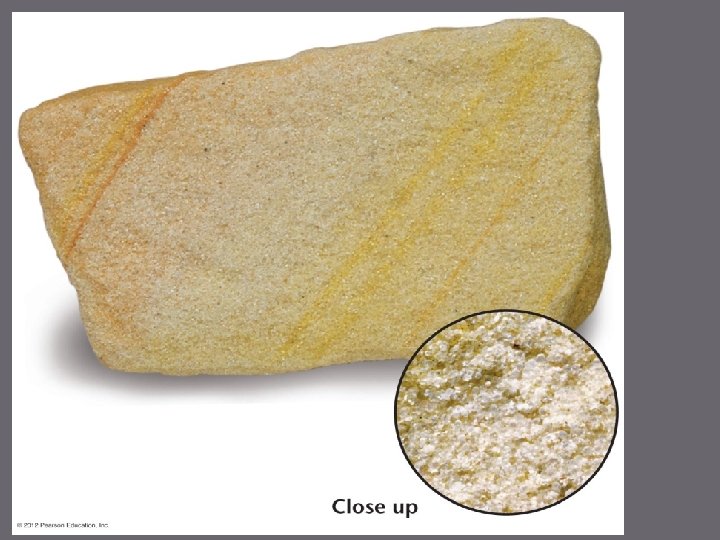
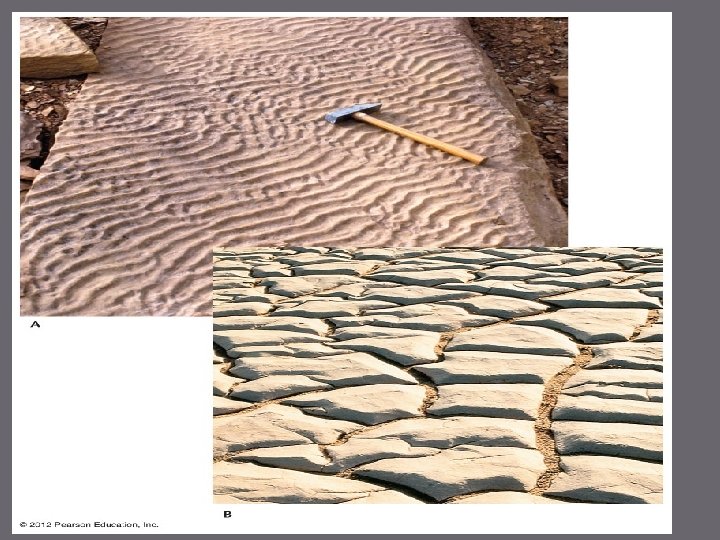
Three types of sedimentary rocks: 1. Clastic � � Made of particles of other rocks. Particle sizes � >2 mm = gravel/stones � 0. 06 – 2 mm = sand � 0. 004 – 0. 06 mm = silt � < 0. 002 mm = clay Examples: Breccia, Conglomerate, Sandstone and Shale (Tarbuck)
Work Cited � Tarbuck, E. Lutgens, Frederick. Earth Science. New Jersey: Pearson Education. 2012. Print
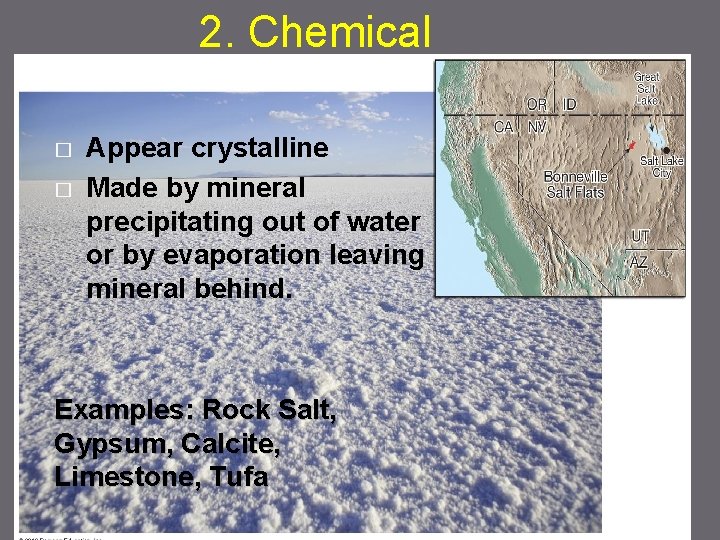
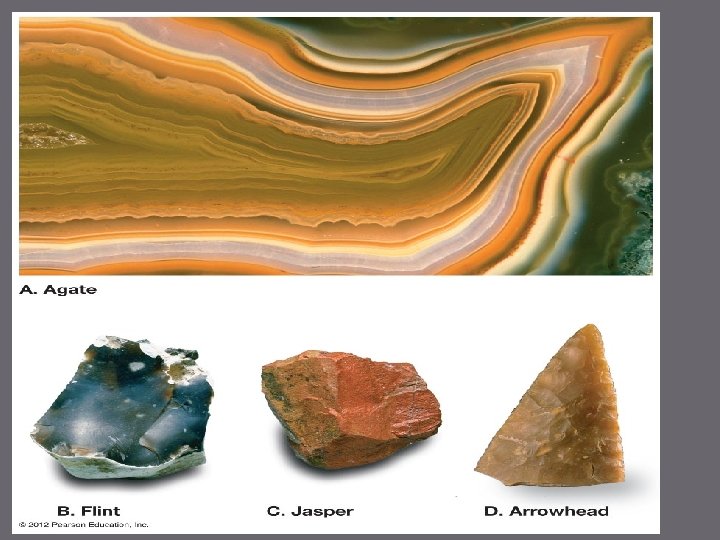
2. Chemical � � Appear crystalline Made by mineral precipitating out of water or by evaporation leaving mineral behind. Examples: Rock Salt, Gypsum, Calcite, Limestone, Tufa
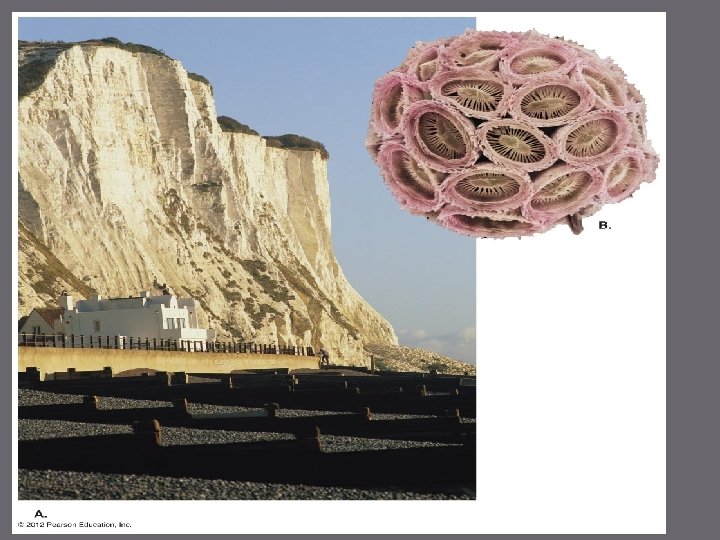
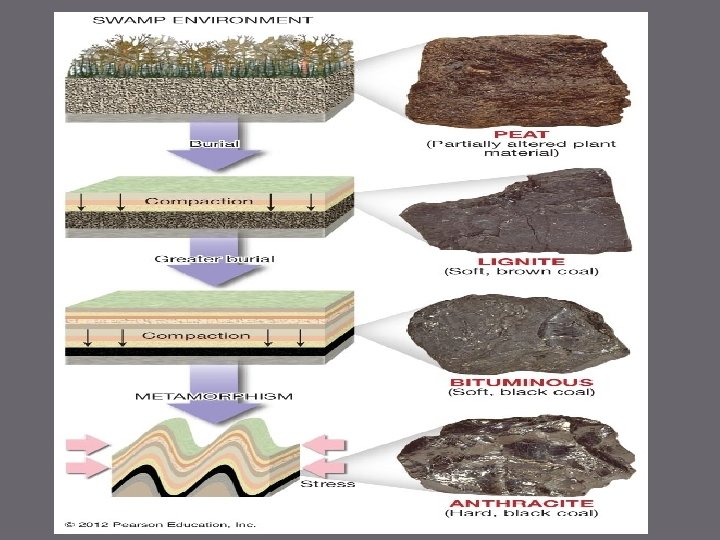
3. Organic � Formed from compaction and cementation of organic material plants, animals and shells. Examples: Bituminous Coal, Fossiliferous Limestone, Chalk, Coquina
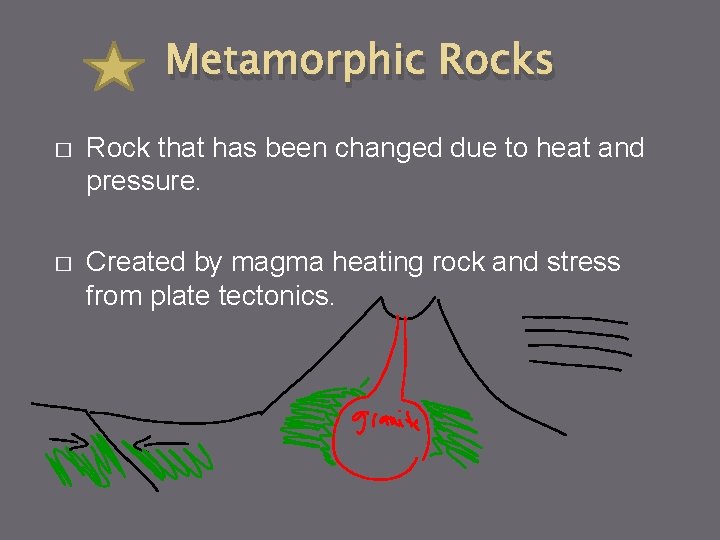
Metamorphic Rocks � Rock that has been changed due to heat and pressure. � Created by magma heating rock and stress from plate tectonics.
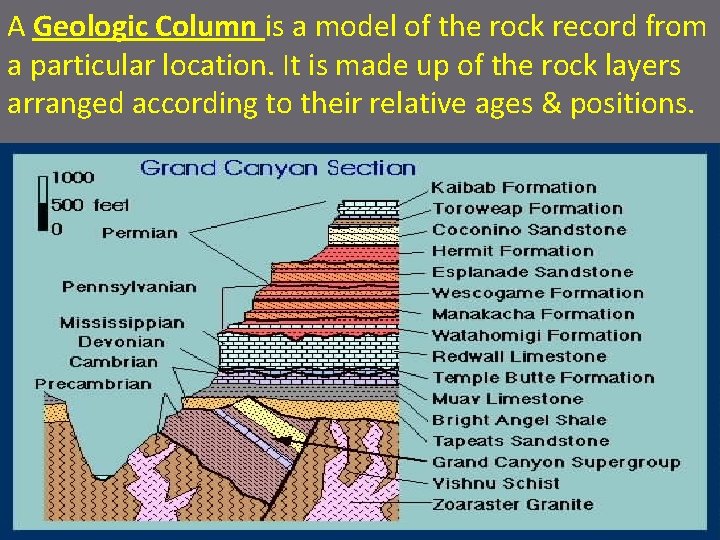
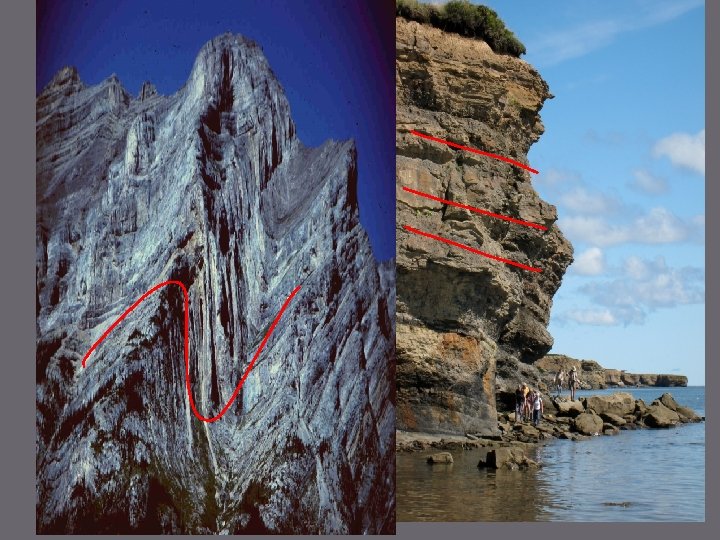
A Geologic Column is a model of the rock record from a particular location. It is made up of the rock layers arranged according to their relative ages & positions.
Before we start, understand uniformitarianism. The longest word you will learn in Earth Science. *Uniformitarianism - “The Past is key to the present. ” (James Hutton) PSC 121 Prince George’s Community College
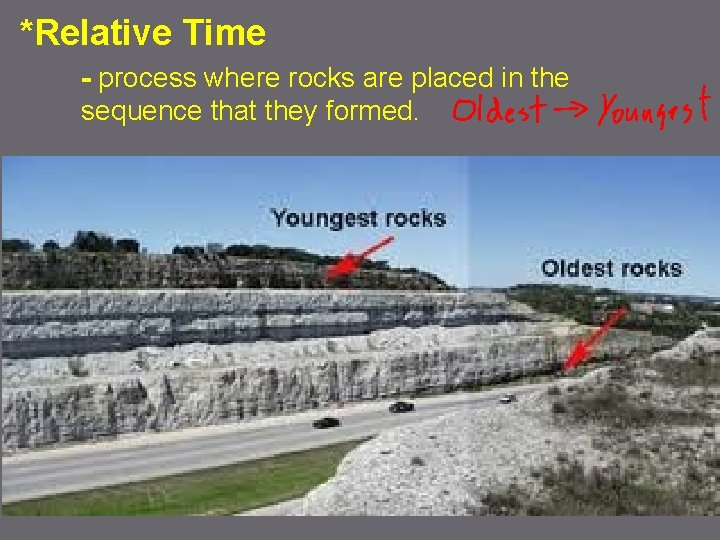
*Relative Time - process where rocks are placed in the sequence that they formed.
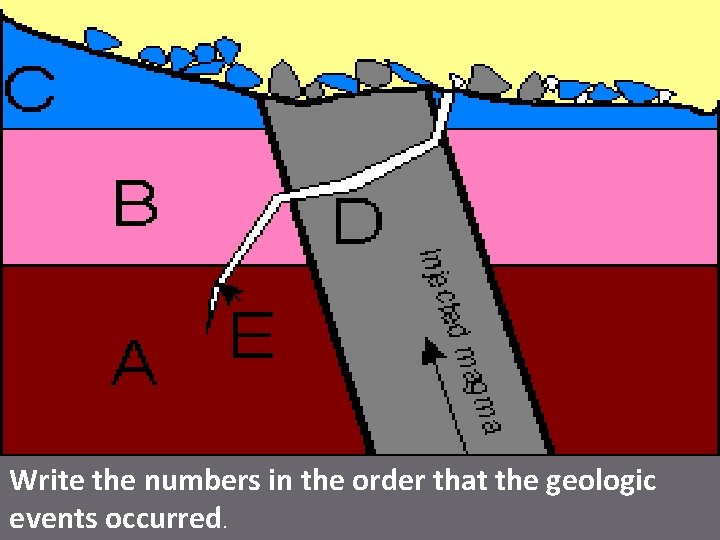
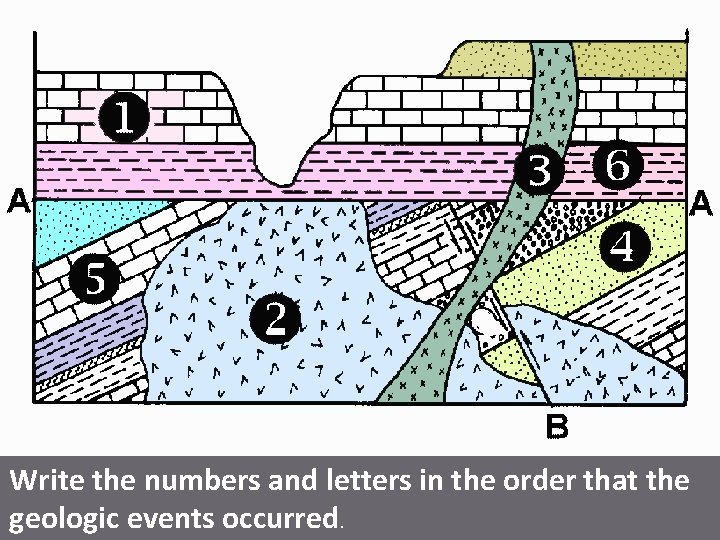
Write the numbers in the order that the geologic events occurred.
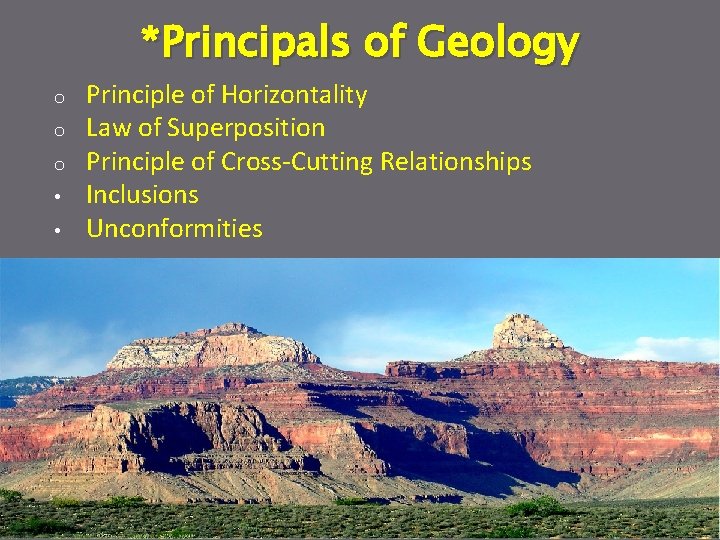
*Principals of Geology o o o • • Principle of Horizontality Law of Superposition Principle of Cross-Cutting Relationships Inclusions Unconformities
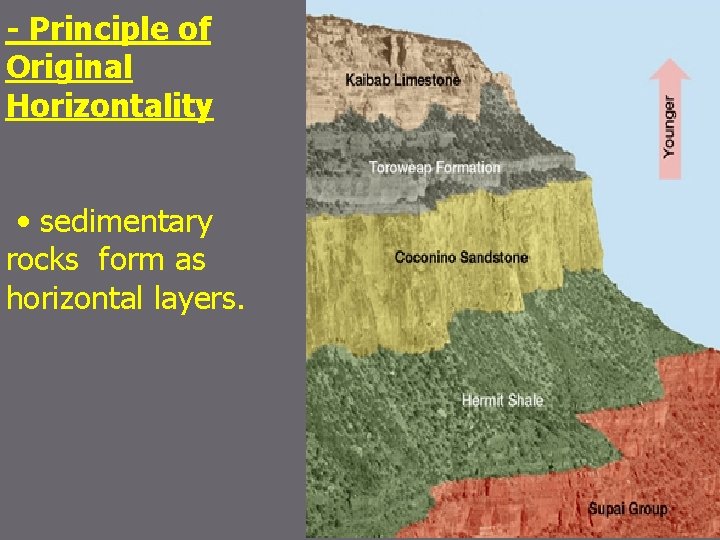
- Principle of Original Horizontality • sedimentary rocks form as horizontal layers.
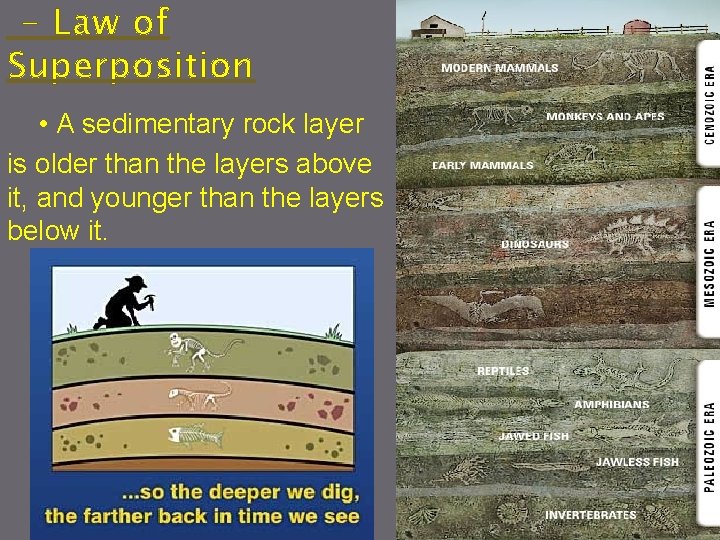
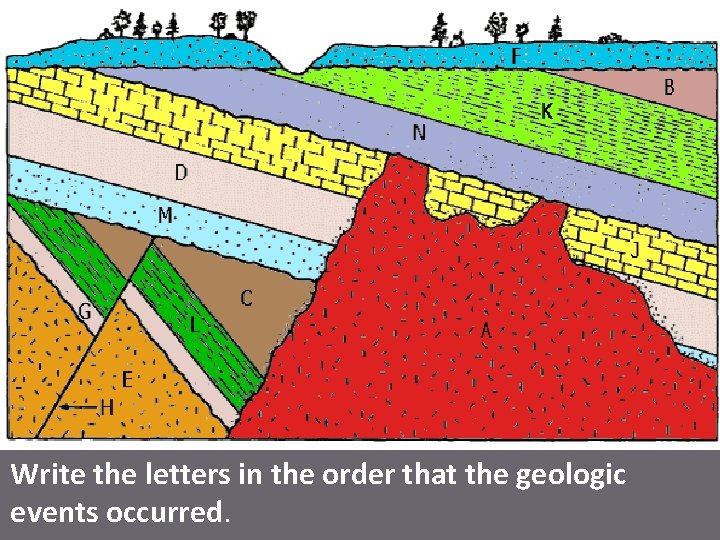
- Law of Superposition • A sedimentary rock layer is older than the layers above it, and younger than the layers below it.
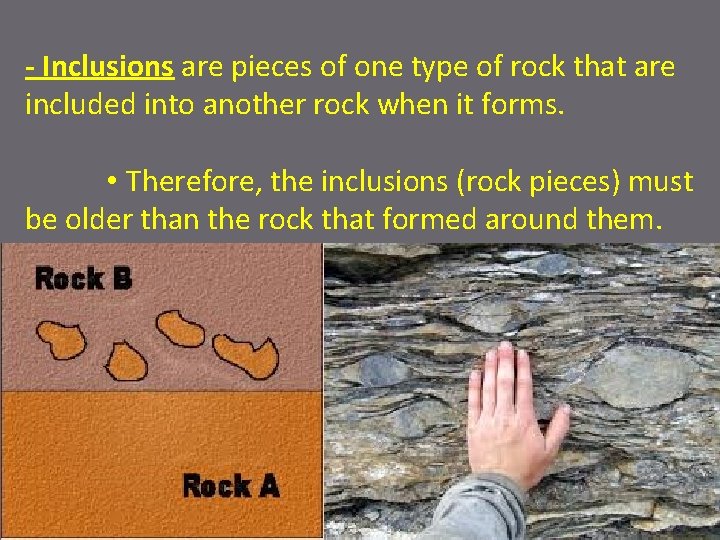
- Inclusions are pieces of one type of rock that are included into another rock when it forms. • Therefore, the inclusions (rock pieces) must be older than the rock that formed around them.
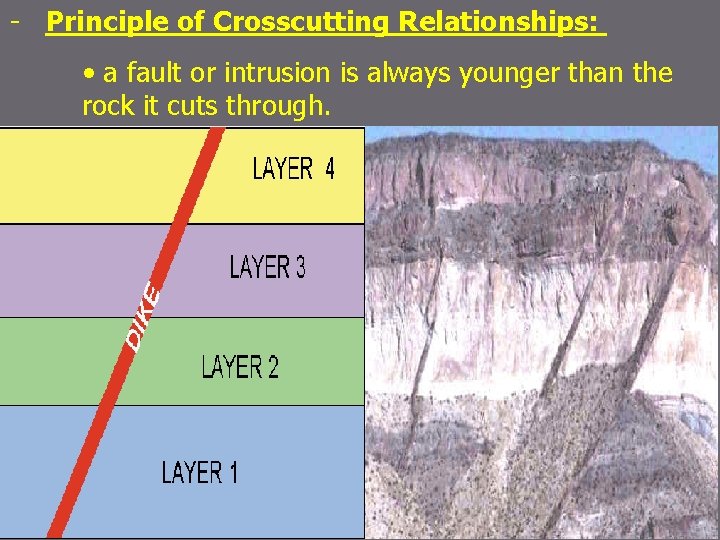
- Principle of Crosscutting Relationships: • a fault or intrusion is always younger than the rock it cuts through.
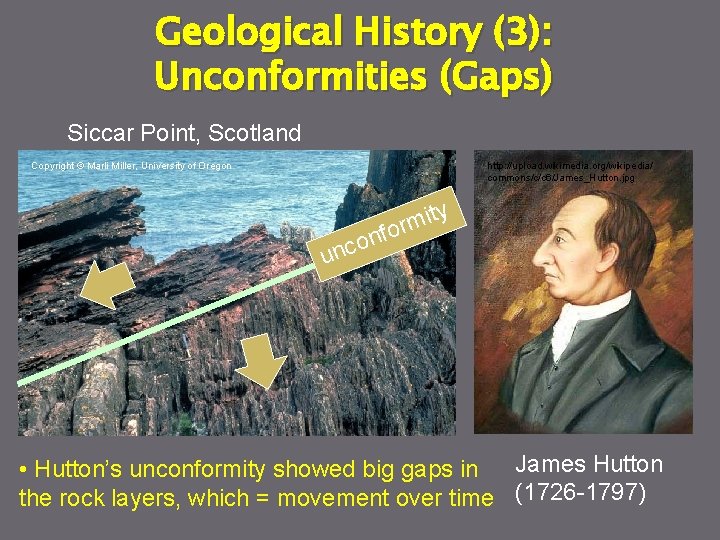
Geological History (3): Unconformities (Gaps) Siccar Point, Scotland Copyright © Marli Miller, University of Oregon http: //upload. wikimedia. org/wikipedia/ commons/c/c 6/James_Hutton. jpg ty i m for n o c un James Hutton • Hutton’s unconformity showed big gaps in the rock layers, which = movement over time (1726 -1797)
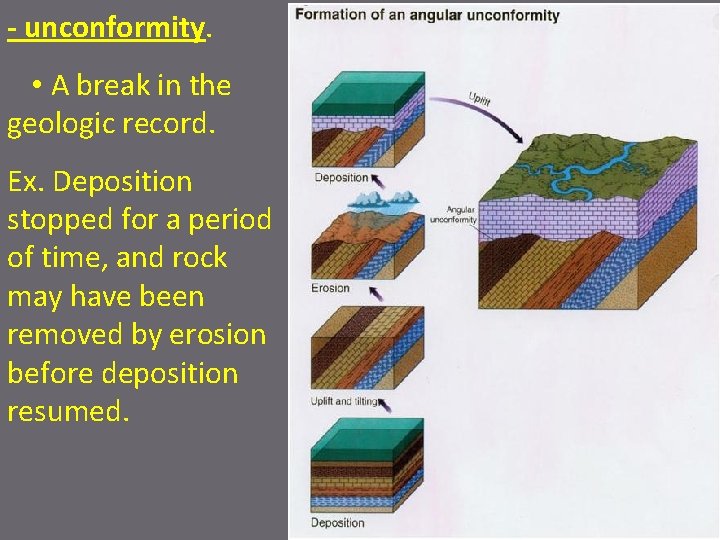
- unconformity. • A break in the geologic record. Ex. Deposition stopped for a period of time, and rock may have been removed by erosion before deposition resumed.
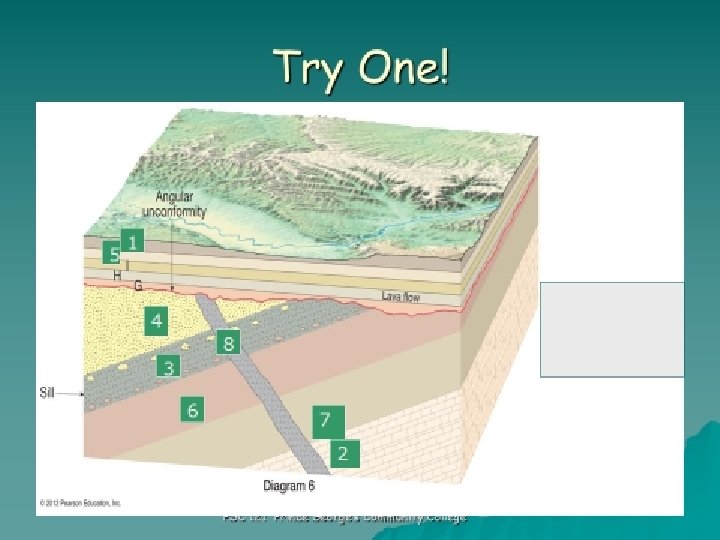
Write the numbers and letters in the order that the geologic events occurred.
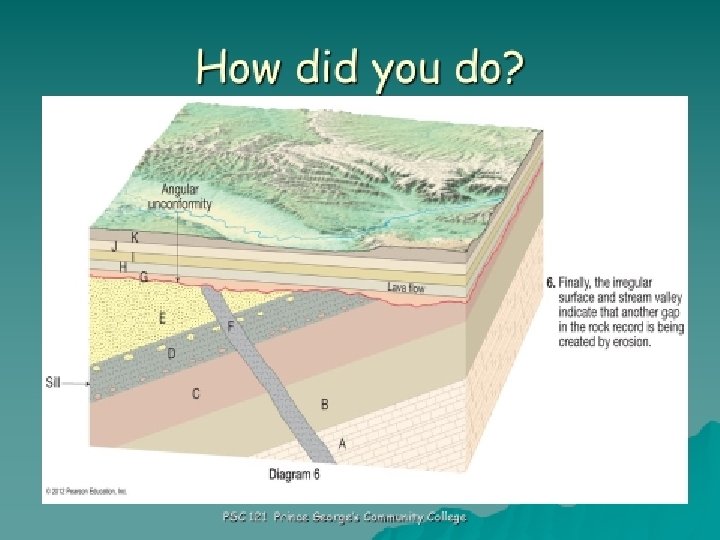
Write the letters in the order that the geologic events occurred.
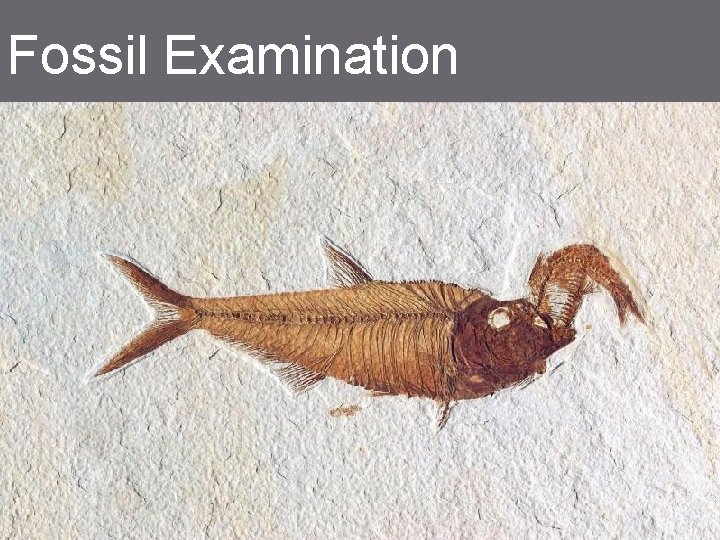
Fossil Examination
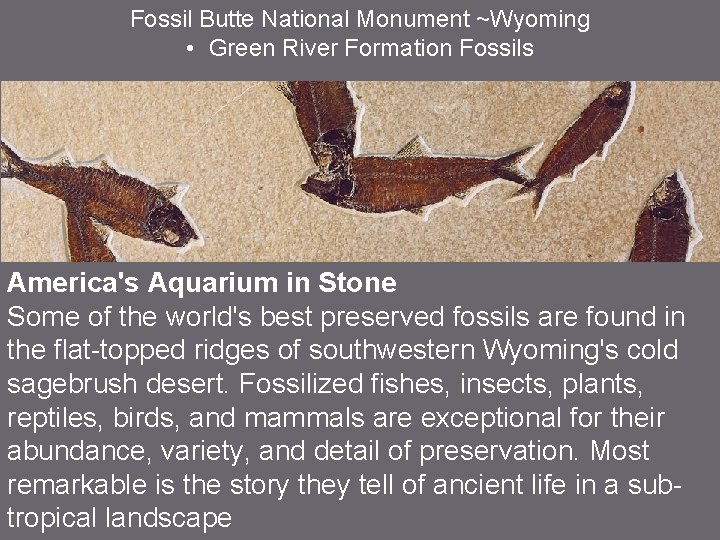
Fossil Butte National Monument ~Wyoming • Green River Formation Fossils America's Aquarium in Stone Some of the world's best preserved fossils are found in the flat-topped ridges of southwestern Wyoming's cold sagebrush desert. Fossilized fishes, insects, plants, reptiles, birds, and mammals are exceptional for their abundance, variety, and detail of preservation. Most remarkable is the story they tell of ancient life in a subtropical landscape
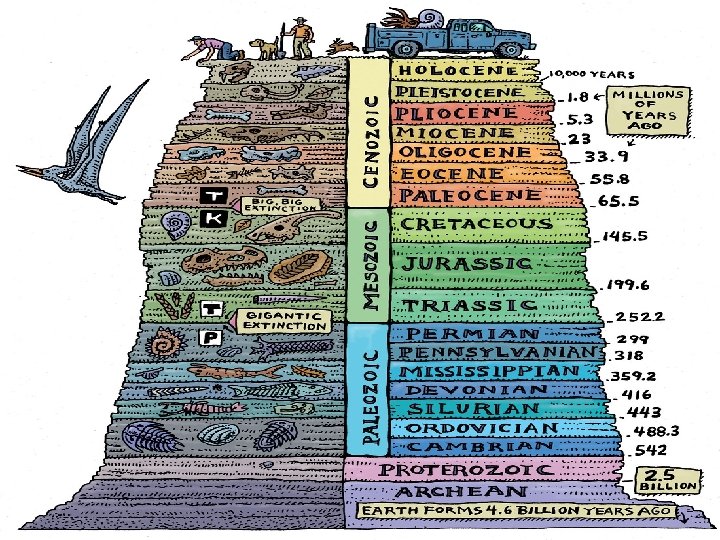
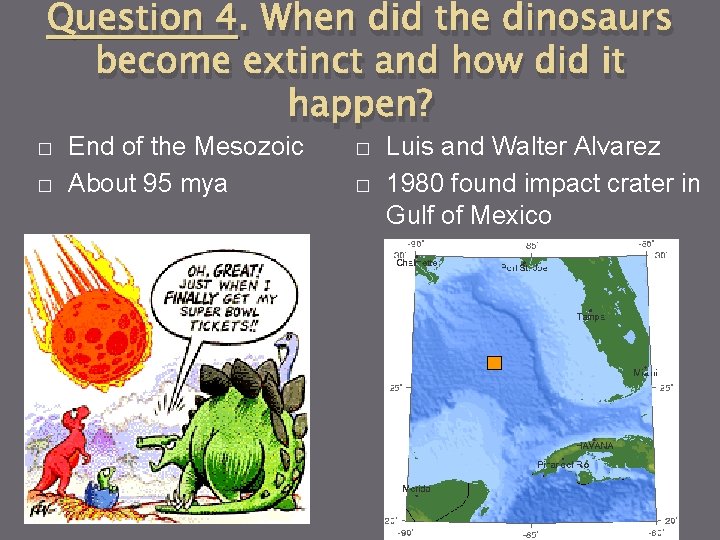
Question 4. When did the dinosaurs become extinct and how did it happen? � � End of the Mesozoic About 95 mya � � Luis and Walter Alvarez 1980 found impact crater in Gulf of Mexico
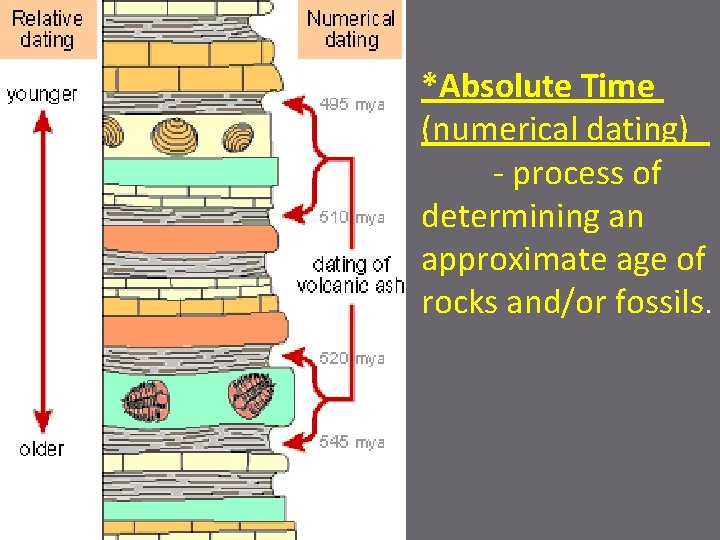
*Absolute Time (numerical dating) - process of determining an approximate age of rocks and/or fossils.
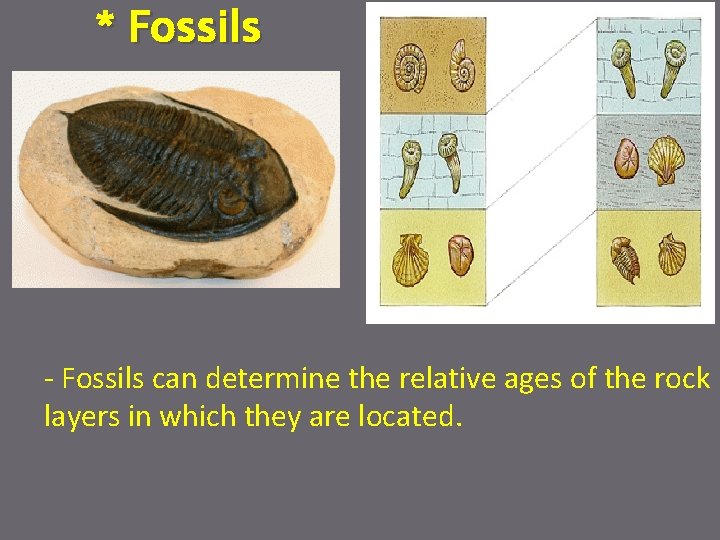
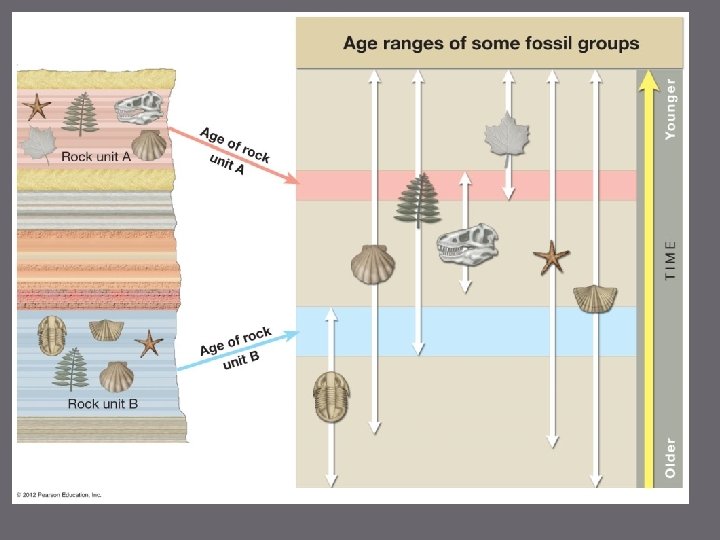
* Fossils - Fossils can determine the relative ages of the rock layers in which they are located.
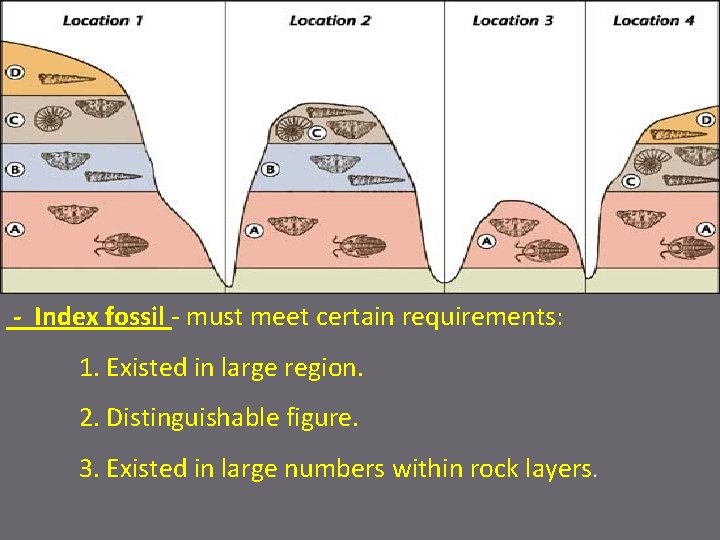
- Index fossil - must meet certain requirements: 1. Existed in large region. 2. Distinguishable figure. 3. Existed in large numbers within rock layers.
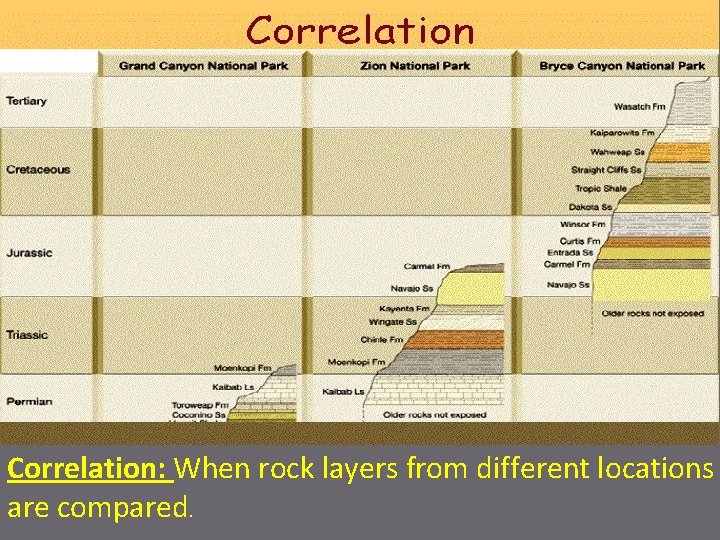
Correlation: When rock layers from different locations are compared.
* What is an Isotope? - Atoms have the same number of protons, but varying numbers of neutrons. � Carbon 14 (C-14) � Carbon 12 (C-12)
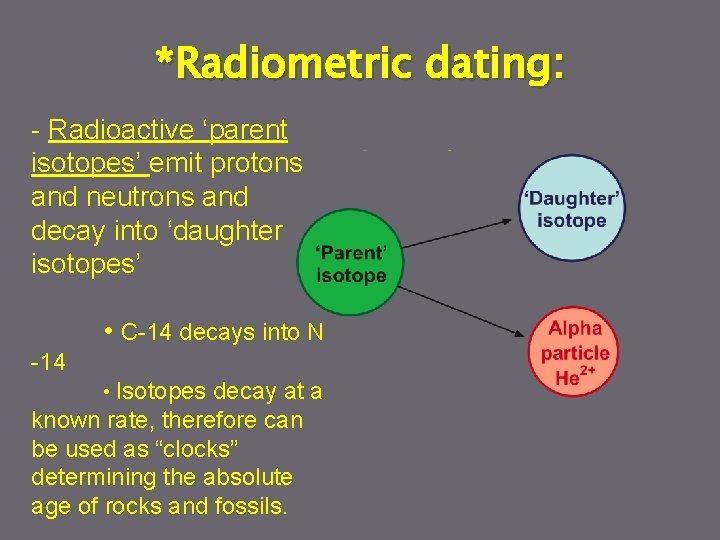
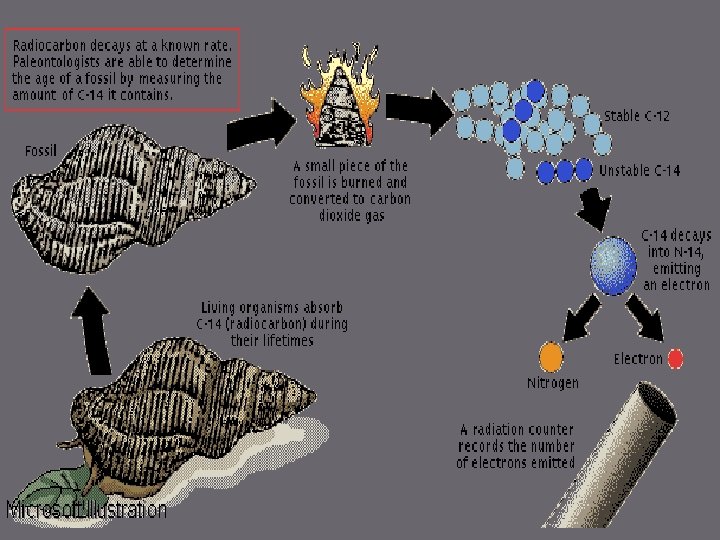
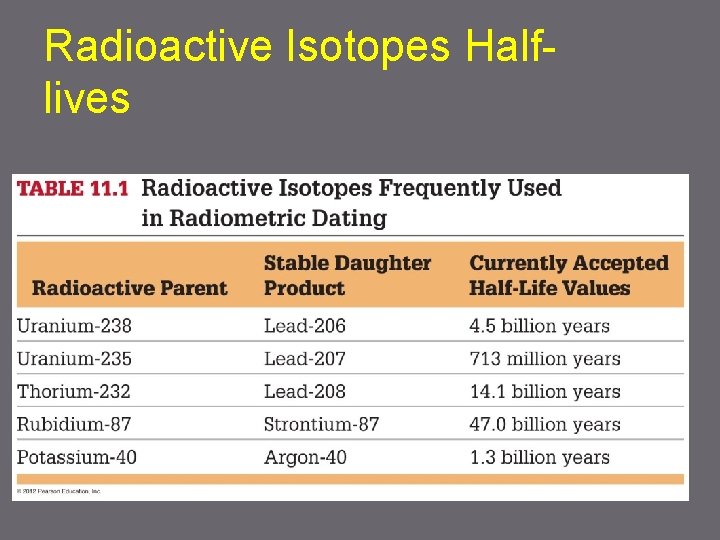
*Radiometric dating: - Radioactive ‘parent isotopes’ emit protons and neutrons and decay into ‘daughter isotopes’ • C-14 decays into N -14 • Isotopes decay at a known rate, therefore can be used as “clocks” determining the absolute age of rocks and fossils.
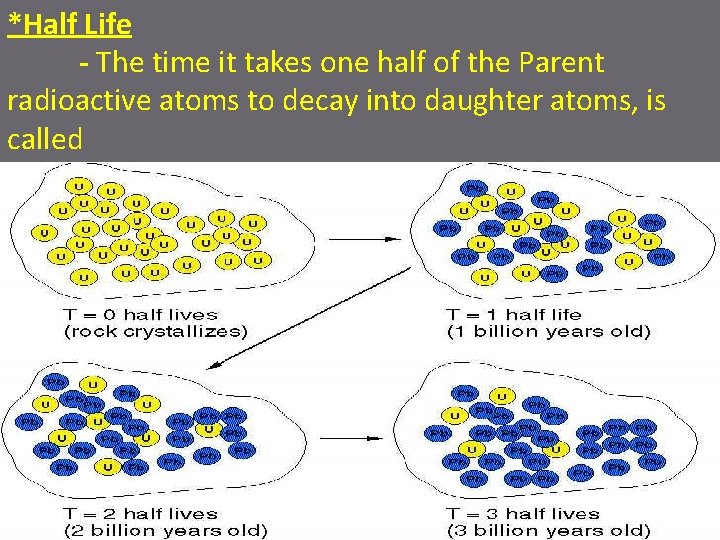
*Half Life - The time it takes one half of the Parent radioactive atoms to decay into daughter atoms, is called
Radioactive Isotopes Halflives