
Geologic Time Essential Question How is the age



- Slides: 25
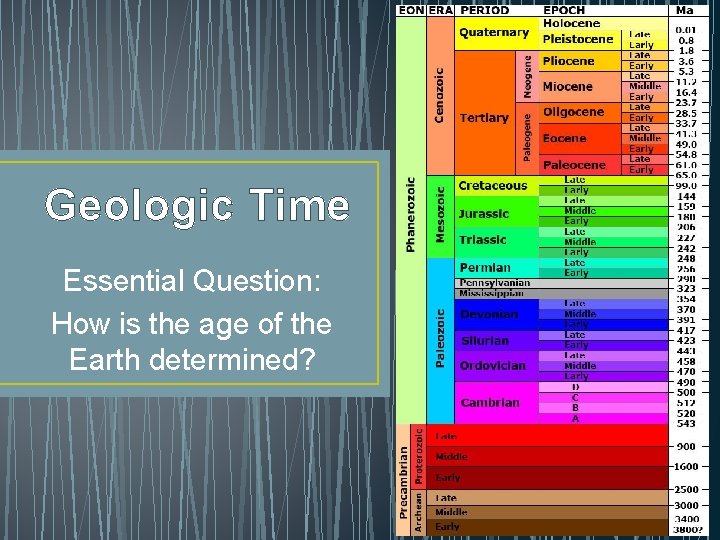
Geologic Time Essential Question: How is the age of the Earth determined?
Vocabulary • Geologic Time Scale Law of Superposition • Eon, Epoch, Era, Period Intrusion • Cenozoic Ice Cores • Mesozoic Relative Age • Paleozoic Absolute Age • Precambrian Radioactive Dating • Index Fossil
Concept • Geologic Time Events • Major eras of history • How fossils/rocks are dated
http: //www. youtube. com/watch? v=7 PQURsc 2 SYs
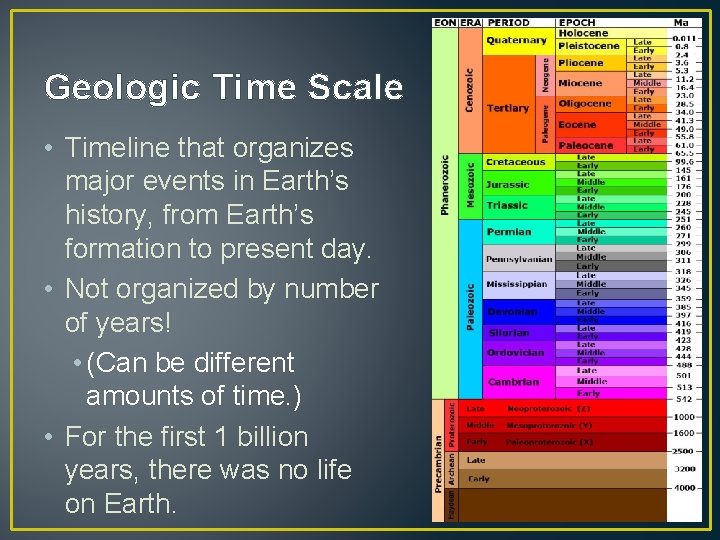
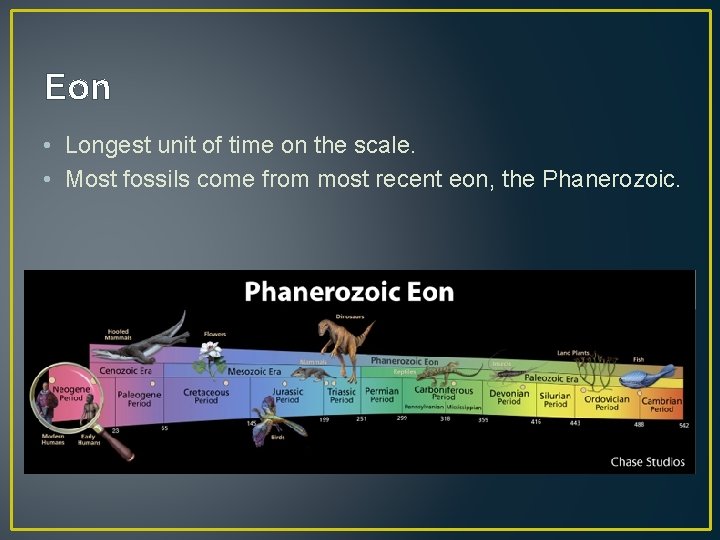
Geologic Time Scale • Timeline that organizes major events in Earth’s history, from Earth’s formation to present day. • Not organized by number of years! • (Can be different amounts of time. ) • For the first 1 billion years, there was no life on Earth.
Eon • Longest unit of time on the scale. • Most fossils come from most recent eon, the Phanerozoic.
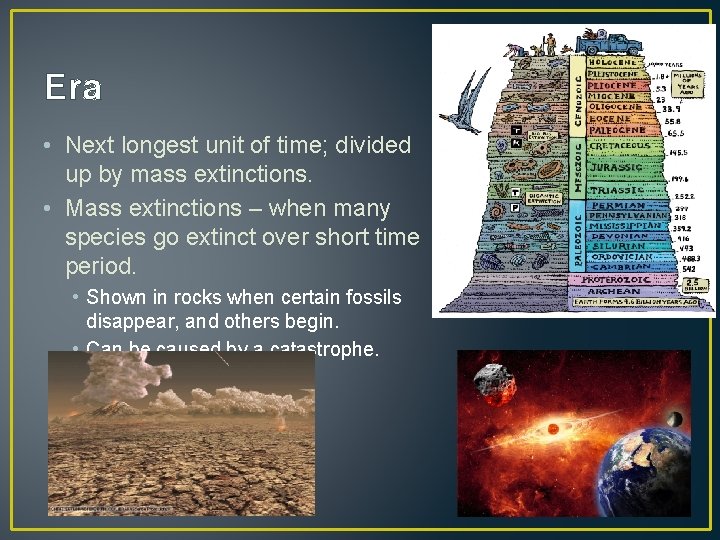
Era • Next longest unit of time; divided up by mass extinctions. • Mass extinctions – when many species go extinct over short time period. • Shown in rocks when certain fossils disappear, and others begin. • Can be caused by a catastrophe.
Mass Extinctions Video • Please take notes on each extinction event in your Lab NB. • https: //www. youtube. com/watch? v=Fl. Ues_NPa 6 M Name of Extinction: 1. 2. 3. 4. 5. When? Why?
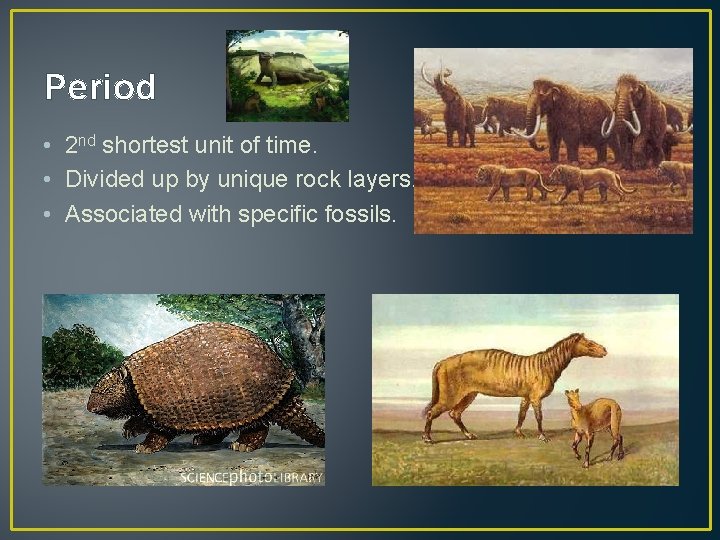
Period • 2 nd shortest unit of time. • Divided up by unique rock layers. • Associated with specific fossils.
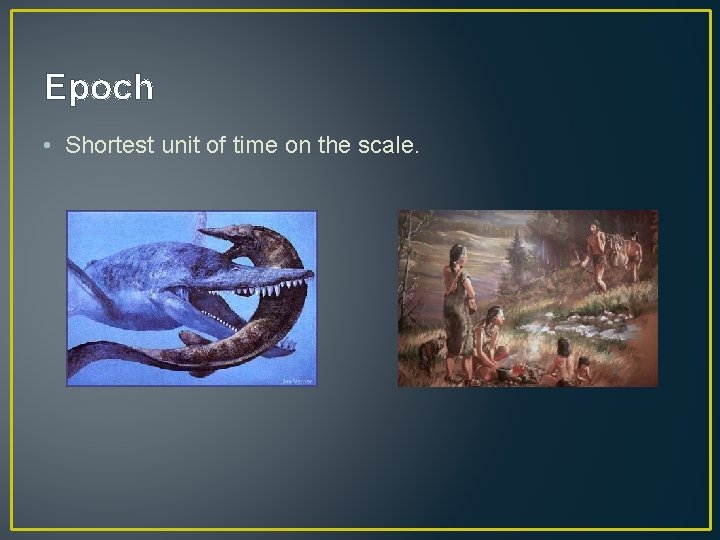
Epoch • Shortest unit of time on the scale.
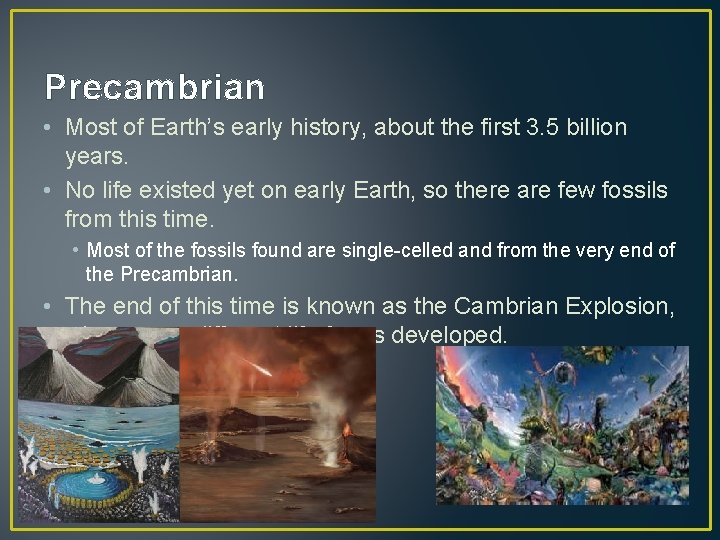
Precambrian • Most of Earth’s early history, about the first 3. 5 billion years. • No life existed yet on early Earth, so there are few fossils from this time. • Most of the fossils found are single-celled and from the very end of the Precambrian. • The end of this time is known as the Cambrian Explosion, when many different life forms developed.
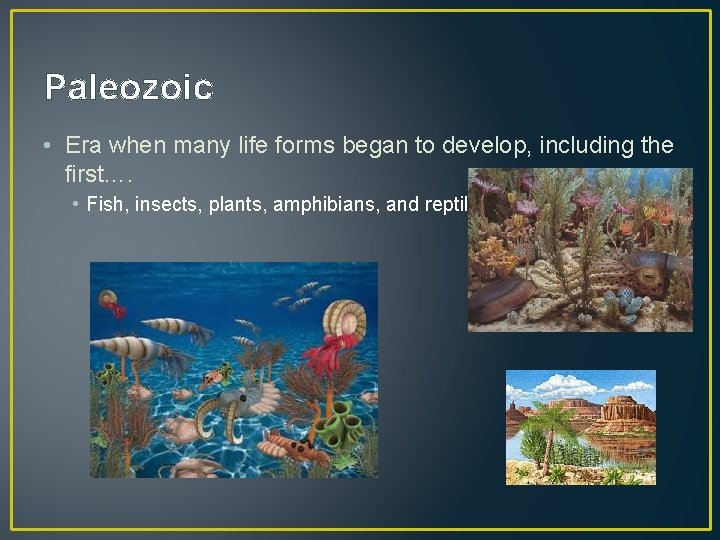
Paleozoic • Era when many life forms began to develop, including the first…. • Fish, insects, plants, amphibians, and reptiles.
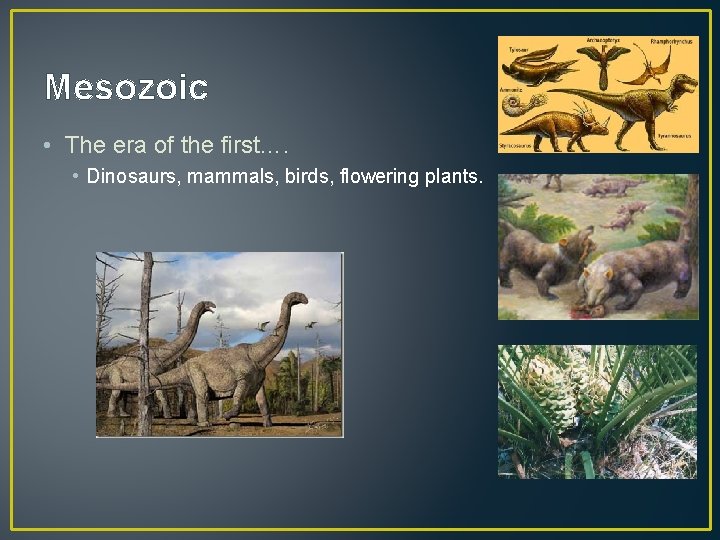
Mesozoic • The era of the first…. • Dinosaurs, mammals, birds, flowering plants.
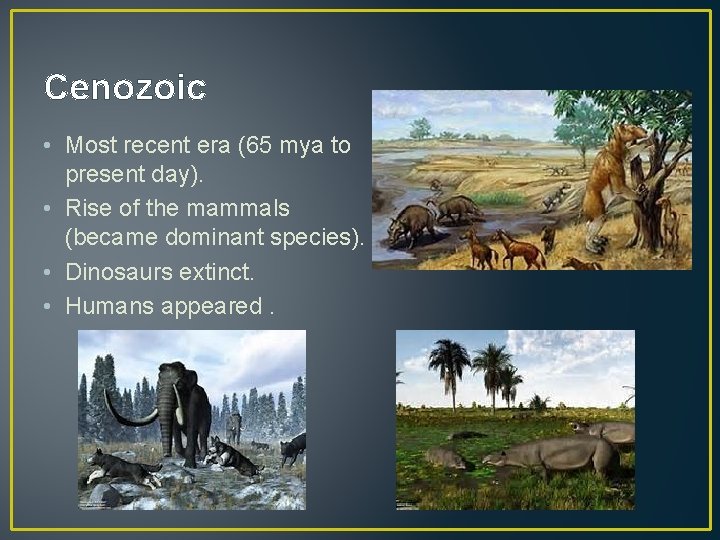
Cenozoic • Most recent era (65 mya to present day). • Rise of the mammals (became dominant species). • Dinosaurs extinct. • Humans appeared.
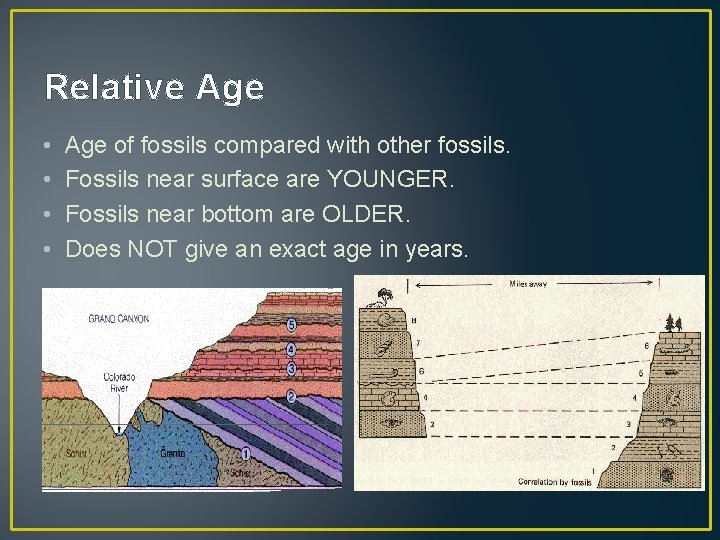
Relative Age • • Age of fossils compared with other fossils. Fossils near surface are YOUNGER. Fossils near bottom are OLDER. Does NOT give an exact age in years.
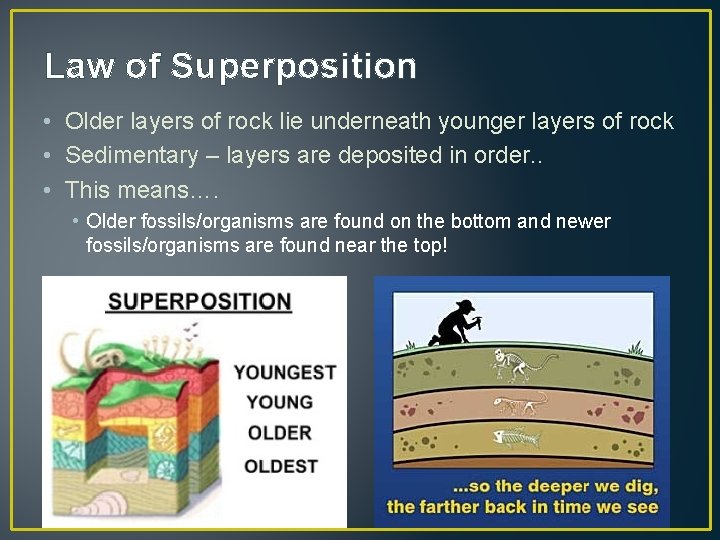
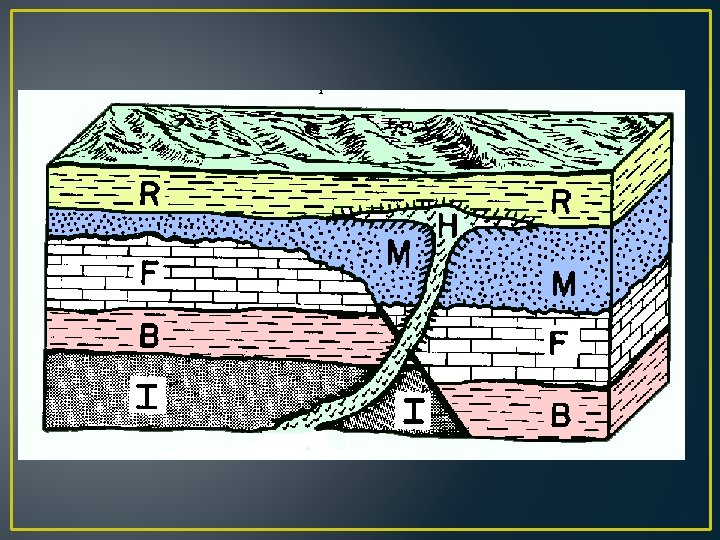
Law of Superposition • Older layers of rock lie underneath younger layers of rock • Sedimentary – layers are deposited in order. . • This means…. • Older fossils/organisms are found on the bottom and newer fossils/organisms are found near the top!
https: //www. youtube. com/watch? v=Yg. E-d. Sx-f. Pc
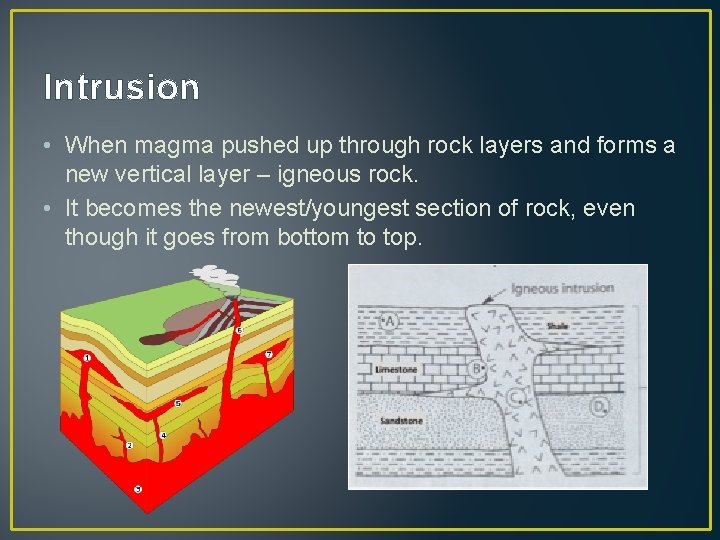
Intrusion • When magma pushed up through rock layers and forms a new vertical layer – igneous rock. • It becomes the newest/youngest section of rock, even though it goes from bottom to top.
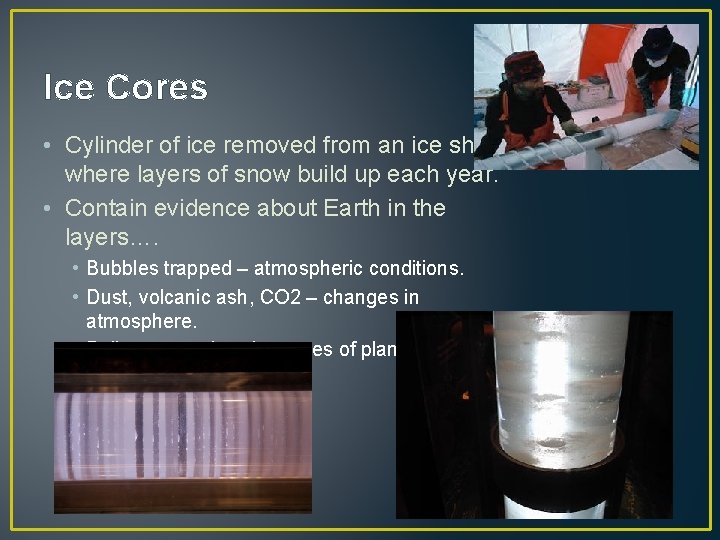
Ice Cores • Cylinder of ice removed from an ice sheet where layers of snow build up each year. • Contain evidence about Earth in the layers…. • Bubbles trapped – atmospheric conditions. • Dust, volcanic ash, CO 2 – changes in atmosphere. • Pollen trapped – what types of plants lived.
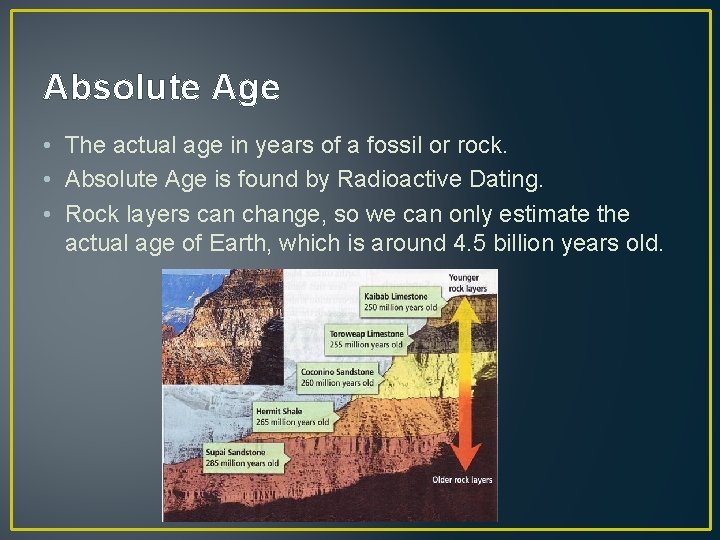
Absolute Age • The actual age in years of a fossil or rock. • Absolute Age is found by Radioactive Dating. • Rock layers can change, so we can only estimate the actual age of Earth, which is around 4. 5 billion years old.
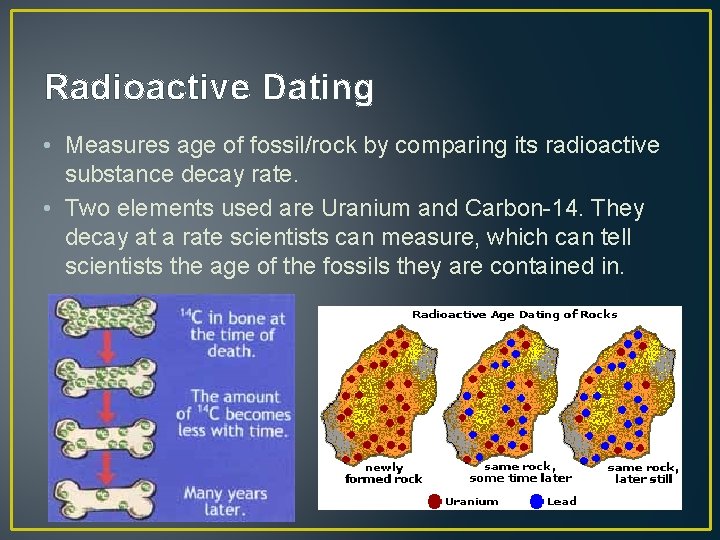
Radioactive Dating • Measures age of fossil/rock by comparing its radioactive substance decay rate. • Two elements used are Uranium and Carbon-14. They decay at a rate scientists can measure, which can tell scientists the age of the fossils they are contained in.
https: //www. youtube. com/watch? v=Q 6 OLBVDb. Jo. I
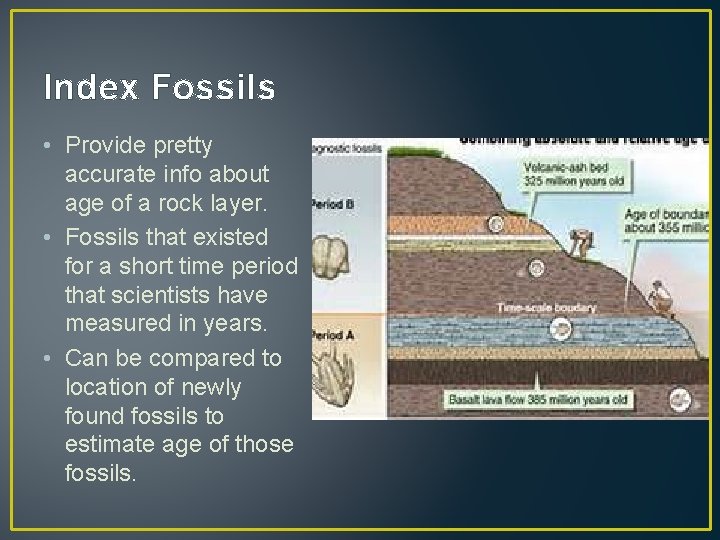
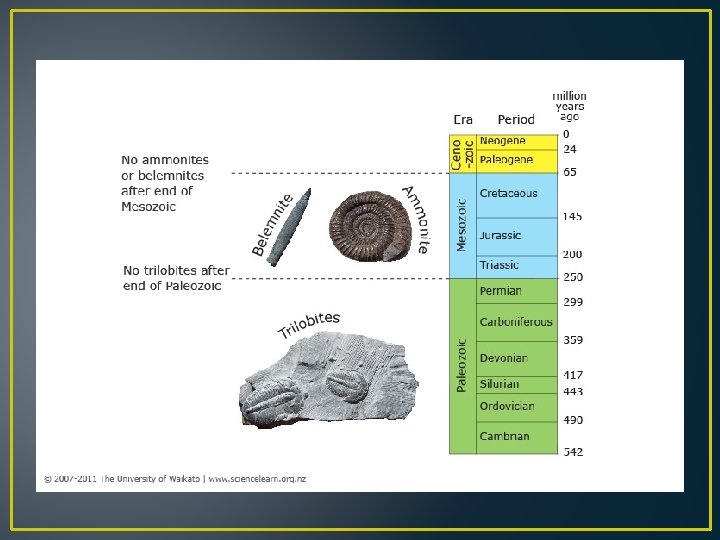
Index Fossils • Provide pretty accurate info about age of a rock layer. • Fossils that existed for a short time period that scientists have measured in years. • Can be compared to location of newly found fossils to estimate age of those fossils.