
GEOLOCATION The Importance of Place DESCRIBING A PLACE
GEOLOCATION The Importance of Place
DESCRIBING A PLACE Toponyms: What do we name it? Site factors: What’s there? Situation factors: What’s it near?
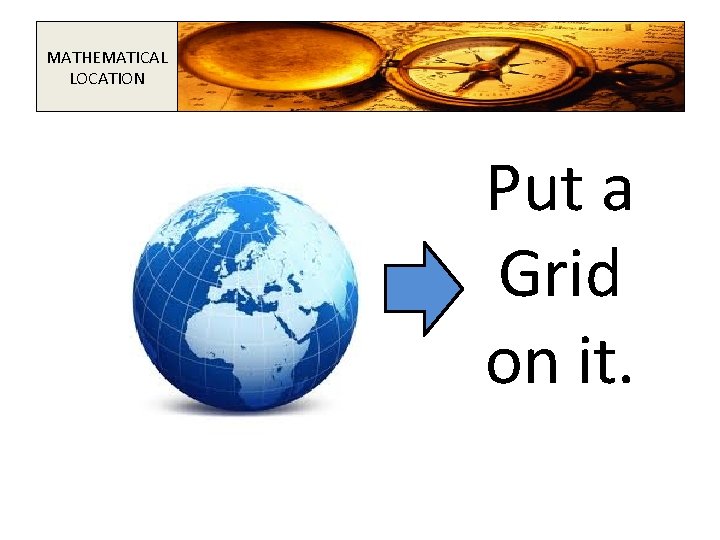
MATHEMATICAL LOCATION Put a Grid on it.
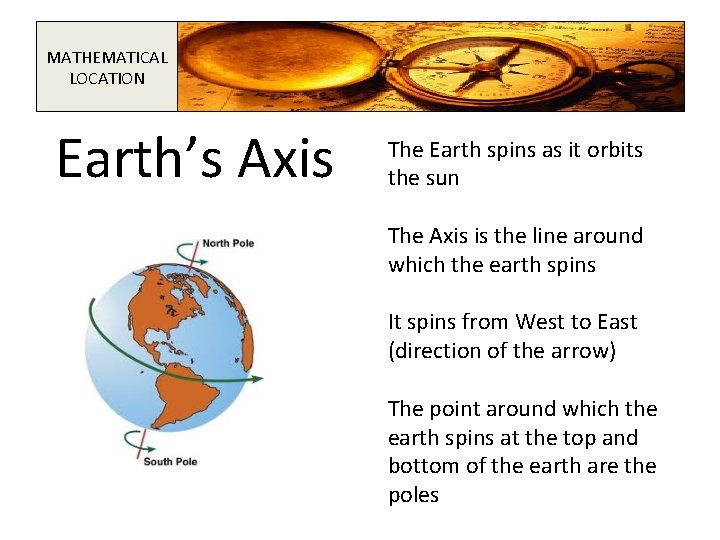
MATHEMATICAL LOCATION Earth’s Axis The Earth spins as it orbits the sun The Axis is the line around which the earth spins It spins from West to East (direction of the arrow) The point around which the earth spins at the top and bottom of the earth are the poles
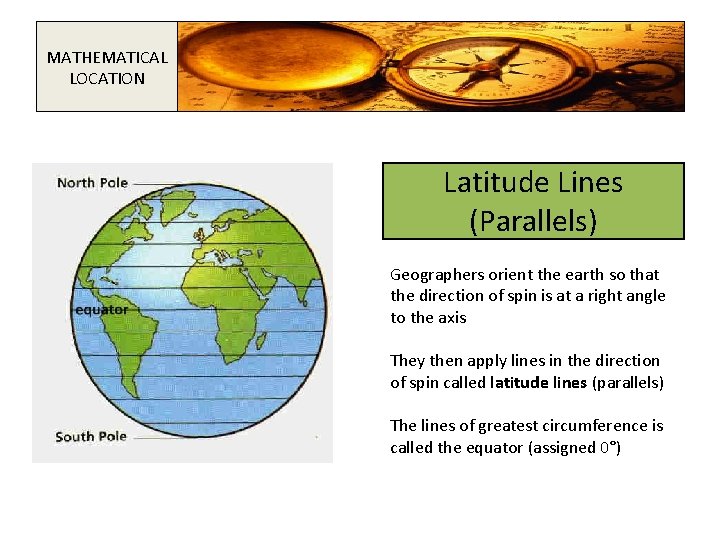
MATHEMATICAL LOCATION Latitude Lines (Parallels) Geographers orient the earth so that the direction of spin is at a right angle to the axis They then apply lines in the direction of spin called latitude lines (parallels) The lines of greatest circumference is called the equator (assigned 0°)
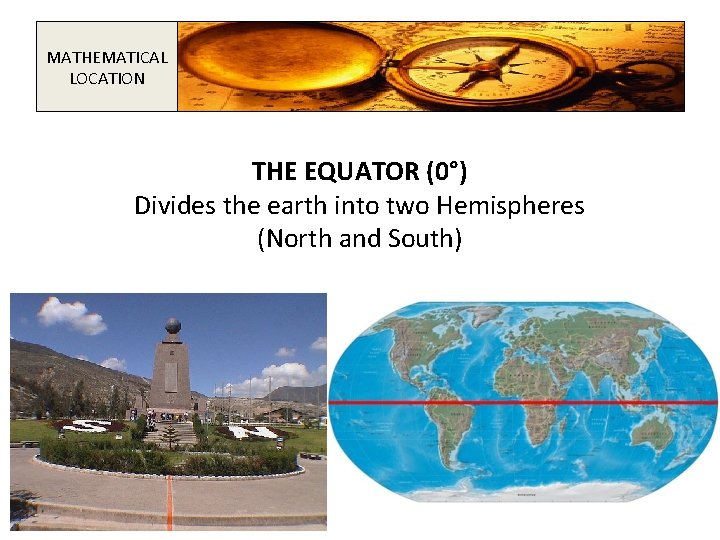
MATHEMATICAL LOCATION THE EQUATOR (0°) Divides the earth into two Hemispheres (North and South)
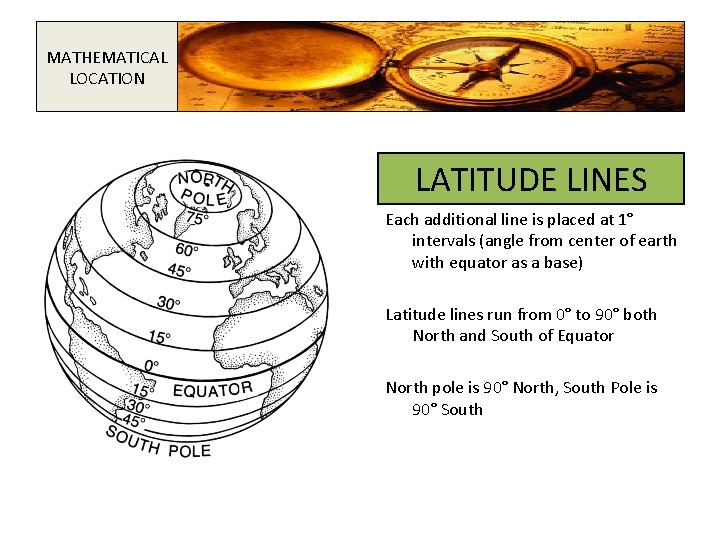
MATHEMATICAL LOCATION LATITUDE LINES Each additional line is placed at 1° intervals (angle from center of earth with equator as a base) Latitude lines run from 0° to 90° both North and South of Equator North pole is 90° North, South Pole is 90° South
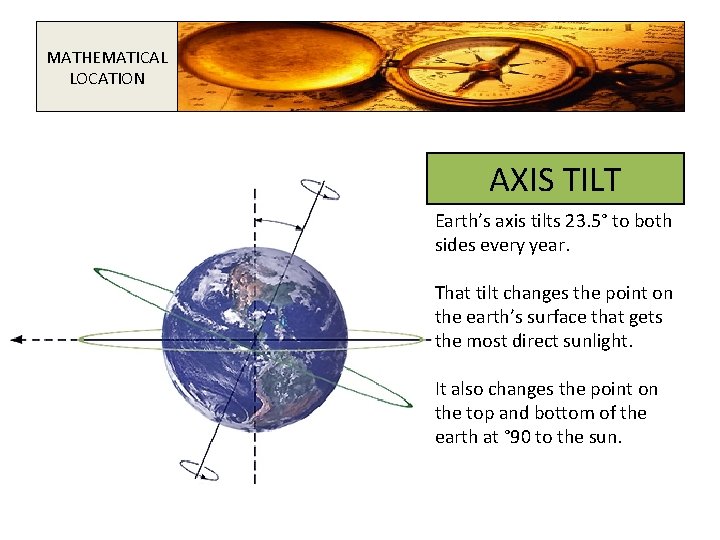
MATHEMATICAL LOCATION AXIS TILT Earth’s axis tilts 23. 5° to both sides every year. That tilt changes the point on the earth’s surface that gets the most direct sunlight. It also changes the point on the top and bottom of the earth at ° 90 to the sun.
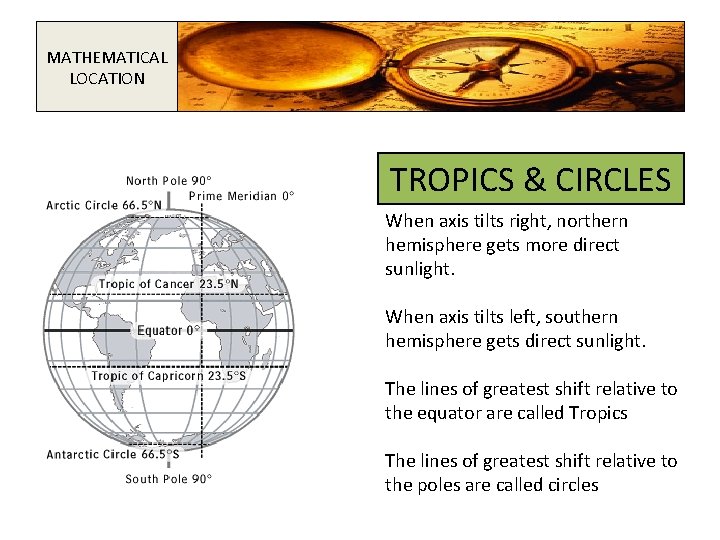
MATHEMATICAL LOCATION TROPICS & CIRCLES When axis tilts right, northern hemisphere gets more direct sunlight. When axis tilts left, southern hemisphere gets direct sunlight. The lines of greatest shift relative to the equator are called Tropics The lines of greatest shift relative to the poles are called circles
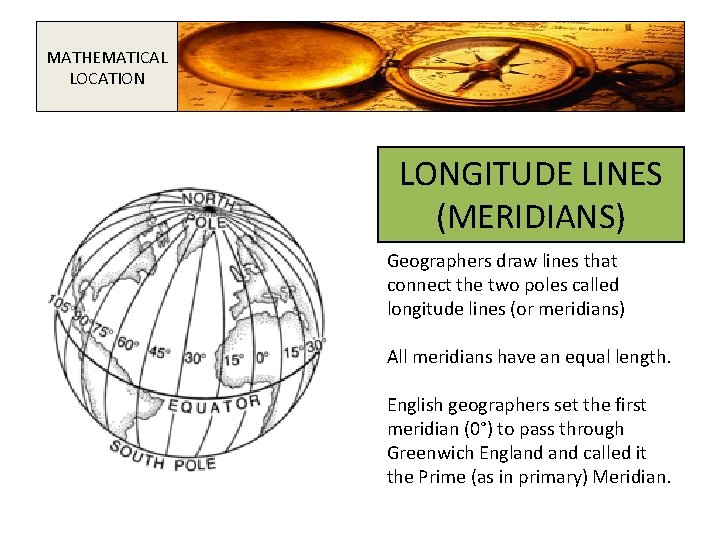
MATHEMATICAL LOCATION LONGITUDE LINES (MERIDIANS) Geographers draw lines that connect the two poles called longitude lines (or meridians) All meridians have an equal length. English geographers set the first meridian (0°) to pass through Greenwich England called it the Prime (as in primary) Meridian.
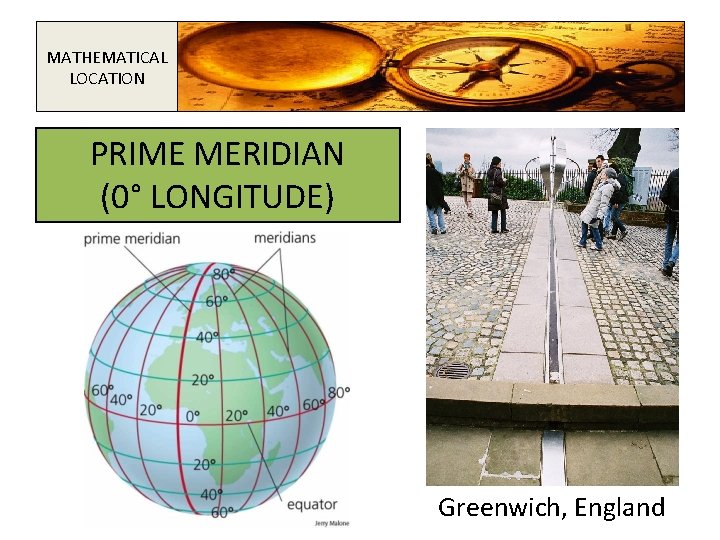
MATHEMATICAL LOCATION PRIME MERIDIAN (0° LONGITUDE) Greenwich, England
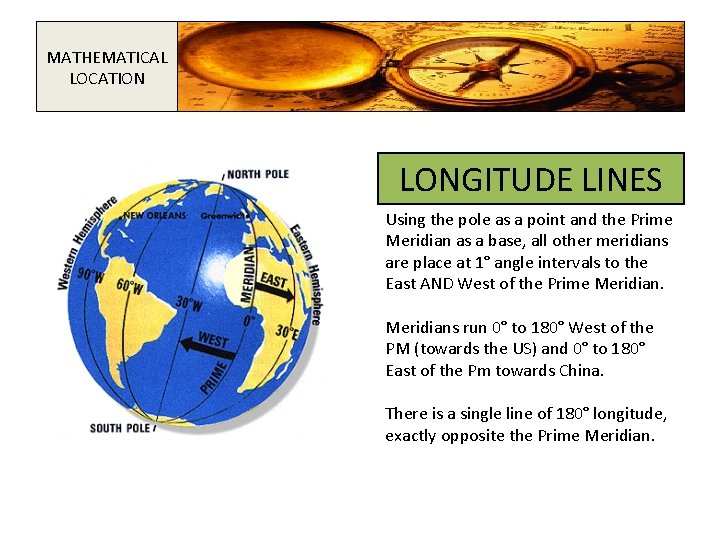
MATHEMATICAL LOCATION LONGITUDE LINES Using the pole as a point and the Prime Meridian as a base, all other meridians are place at 1° angle intervals to the East AND West of the Prime Meridians run 0° to 180° West of the PM (towards the US) and 0° to 180° East of the Pm towards China. There is a single line of 180° longitude, exactly opposite the Prime Meridian.
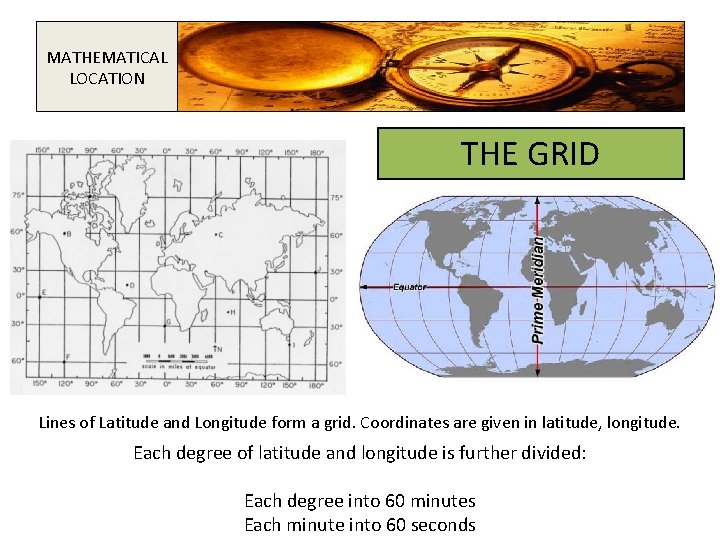
MATHEMATICAL LOCATION THE GRID Lines of Latitude and Longitude form a grid. Coordinates are given in latitude, longitude. Each degree of latitude and longitude is further divided: Each degree into 60 minutes Each minute into 60 seconds
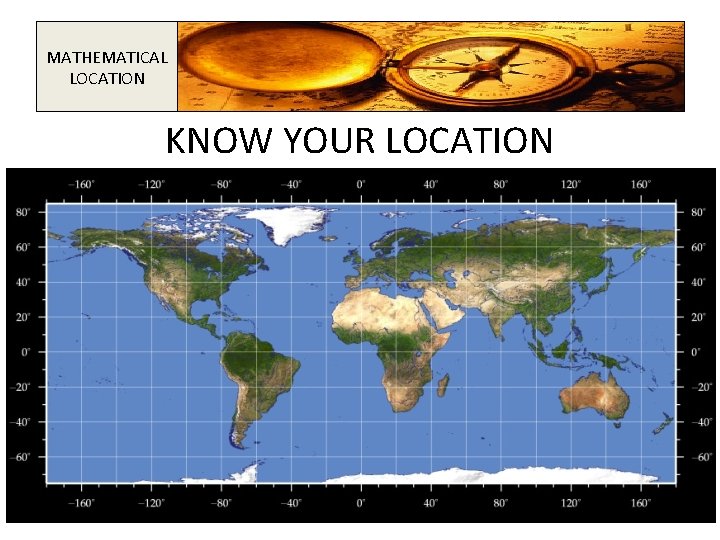
MATHEMATICAL LOCATION KNOW YOUR LOCATION
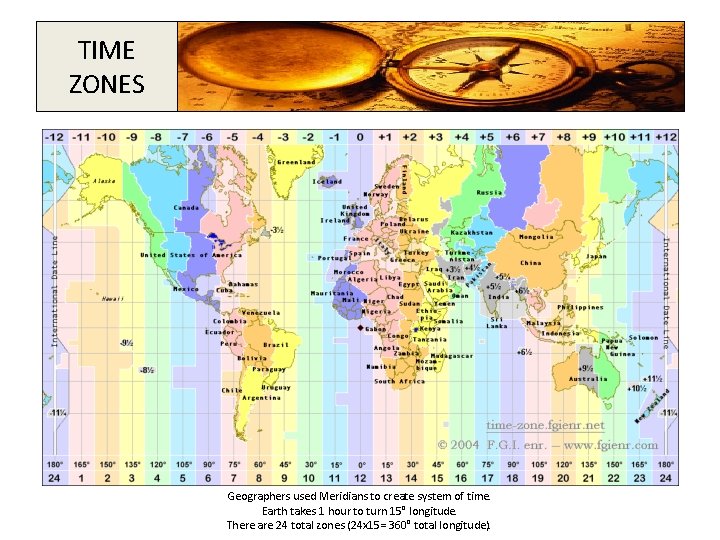
TIME ZONES Geographers used Meridians to create system of time. Earth takes 1 hour to turn 15° longitude. There are 24 total zones (24 x 15= 360° total longitude).
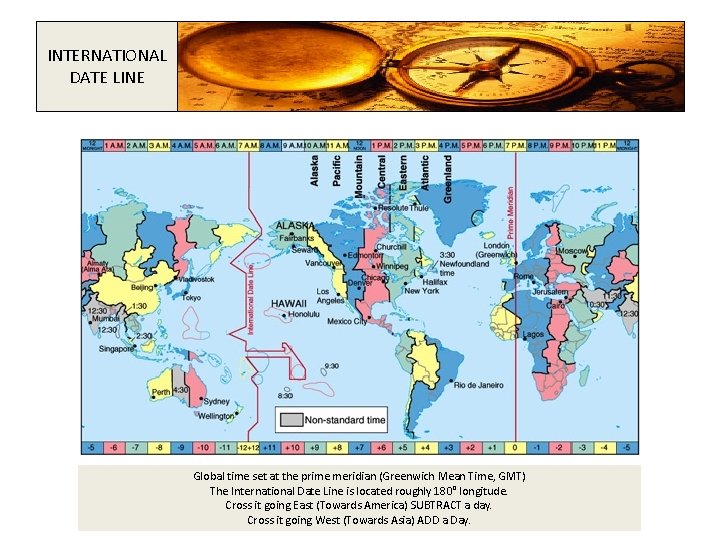
INTERNATIONAL DATE LINE Global time set at the prime meridian (Greenwich Mean Time, GMT) The International Date Line is located roughly 180° longitude. Cross it going East (Towards America) SUBTRACT a day. Cross it going West (Towards Asia) ADD a Day.
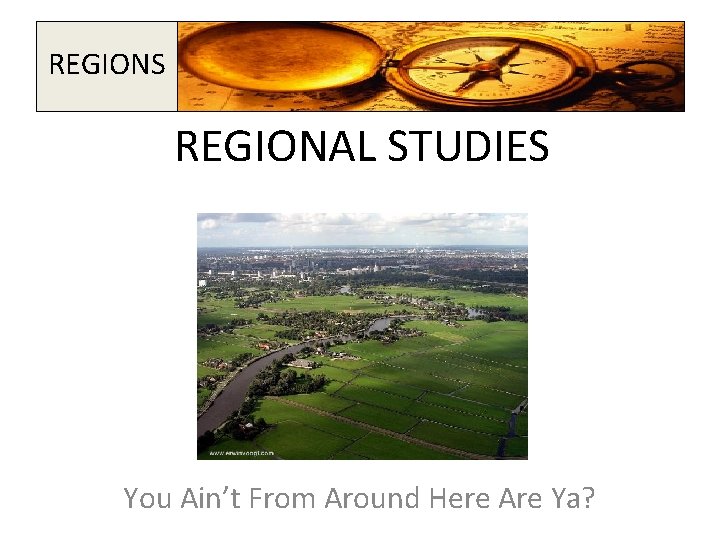
REGIONS REGIONAL STUDIES You Ain’t From Around Here Are Ya?
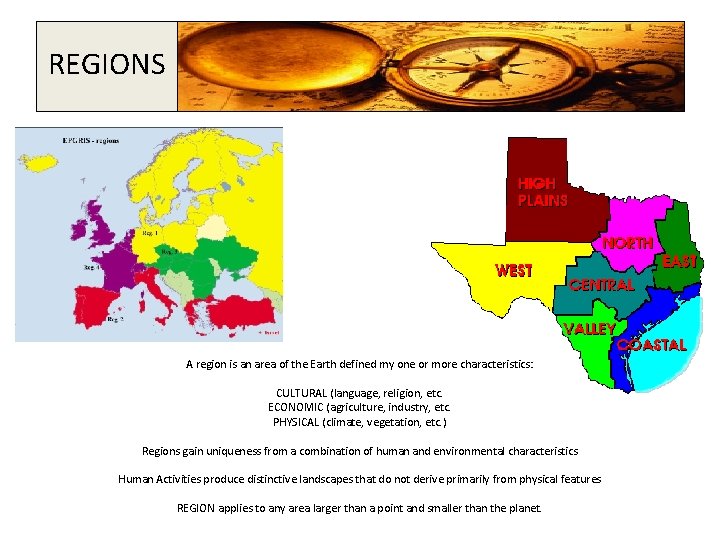
REGIONS A region is an area of the Earth defined my one or more characteristics: CULTURAL (language, religion, etc. ECONOMIC (agriculture, industry, etc. PHYSICAL (climate, vegetation, etc. ) Regions gain uniqueness from a combination of human and environmental characteristics Human Activities produce distinctive landscapes that do not derive primarily from physical features REGION applies to any area larger than a point and smaller than the planet.
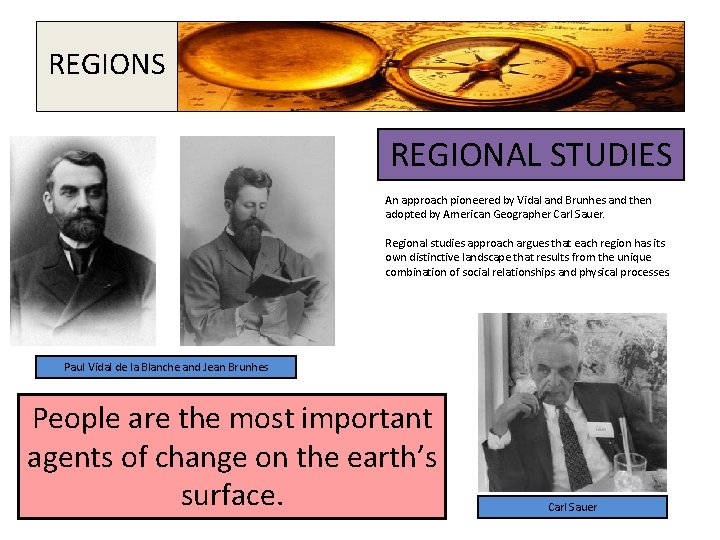
REGIONS REGIONAL STUDIES An approach pioneered by Vidal and Brunhes and then adopted by American Geographer Carl Sauer. Regional studies approach argues that each region has its own distinctive landscape that results from the unique combination of social relationships and physical processes. Paul Vidal de la Blanche and Jean Brunhes People are the most important agents of change on the earth’s surface. Carl Sauer
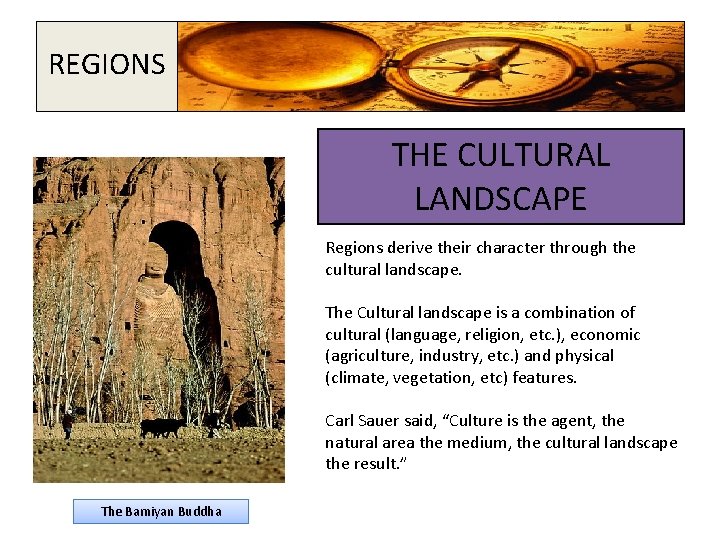
REGIONS THE CULTURAL LANDSCAPE Regions derive their character through the cultural landscape. The Cultural landscape is a combination of cultural (language, religion, etc. ), economic (agriculture, industry, etc. ) and physical (climate, vegetation, etc) features. Carl Sauer said, “Culture is the agent, the natural area the medium, the cultural landscape the result. ” The Bamiyan Buddha
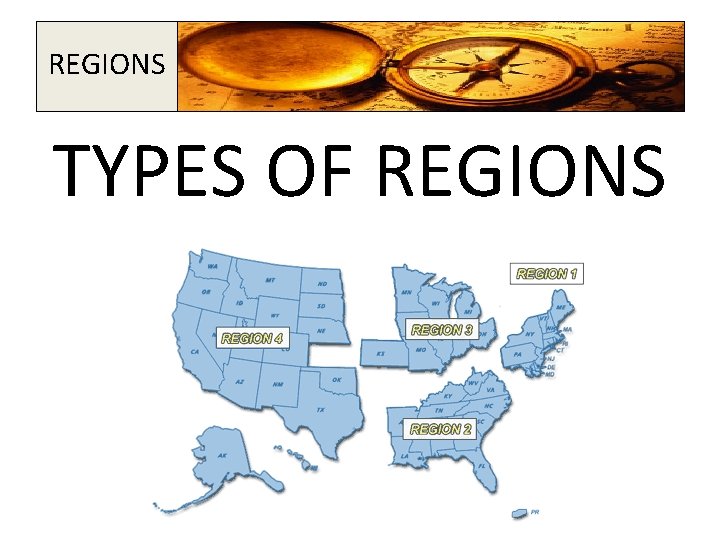
REGIONS TYPES OF REGIONS
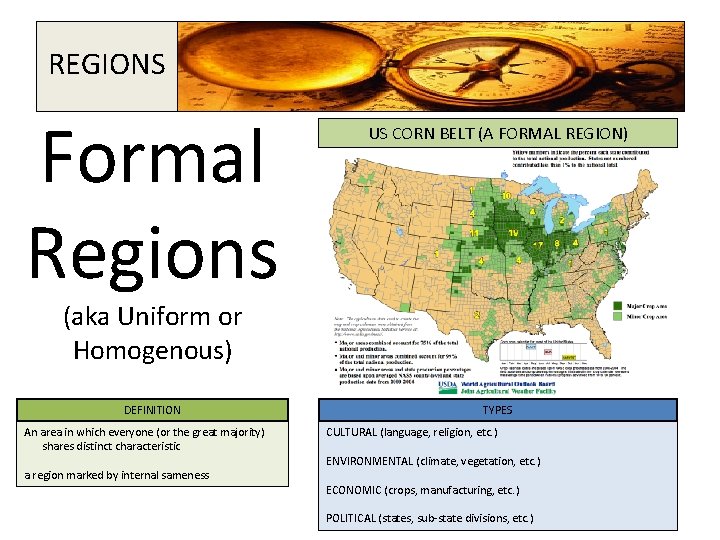
REGIONS Formal Regions US CORN BELT (A FORMAL REGION) (aka Uniform or Homogenous) DEFINITION An area in which everyone (or the great majority) shares distinct characteristic a region marked by internal sameness TYPES CULTURAL (language, religion, etc. ) ENVIRONMENTAL (climate, vegetation, etc. ) ECONOMIC (crops, manufacturing, etc. ) POLITICAL (states, sub-state divisions, etc. )
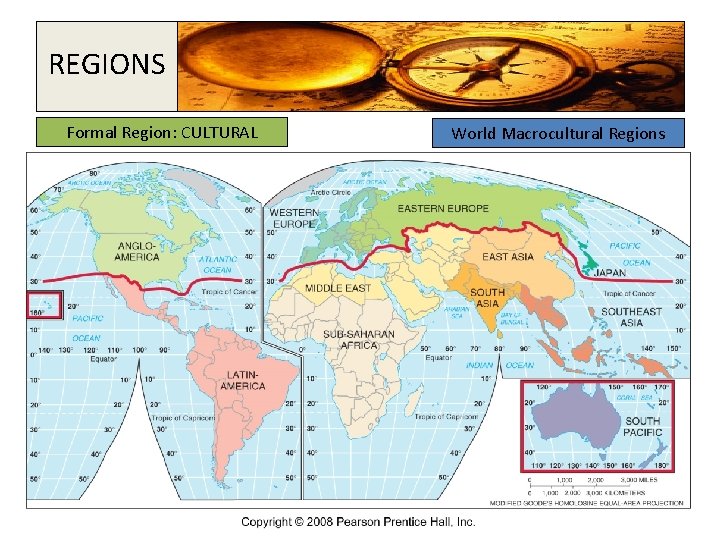
REGIONS Formal Region: CULTURAL World Macrocultural Regions
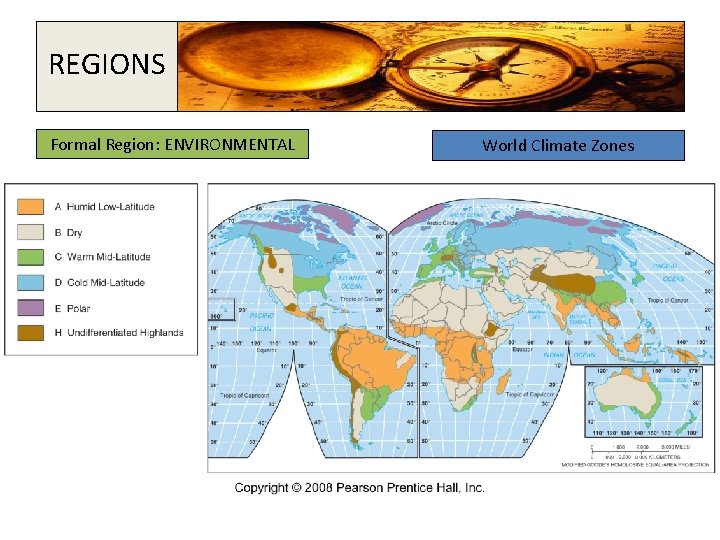
REGIONS Formal Region: ENVIRONMENTAL World Climate Zones
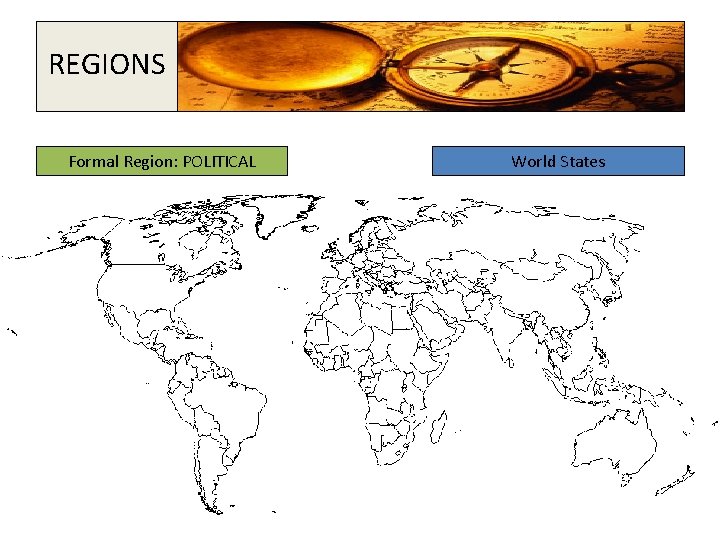
REGIONS Formal Region: POLITICAL World States
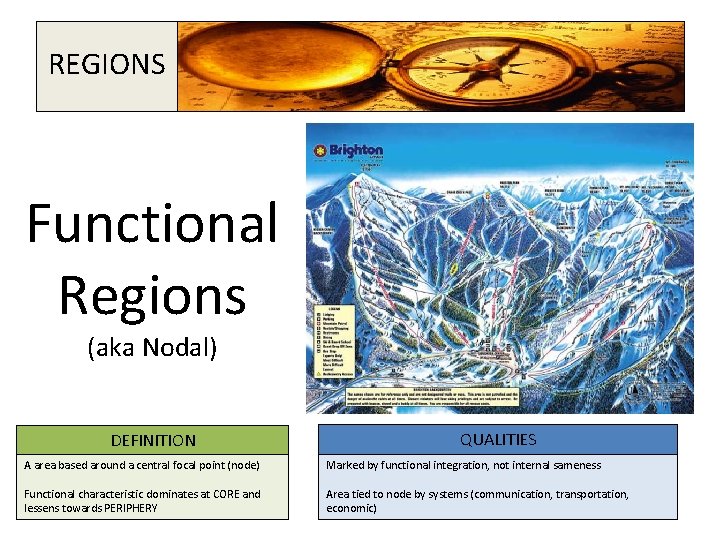
REGIONS Functional Regions (aka Nodal) DEFINITION QUALITIES A area based around a central focal point (node) Marked by functional integration, not internal sameness Functional characteristic dominates at CORE and lessens towards PERIPHERY Area tied to node by systems (communication, transportation, economic)
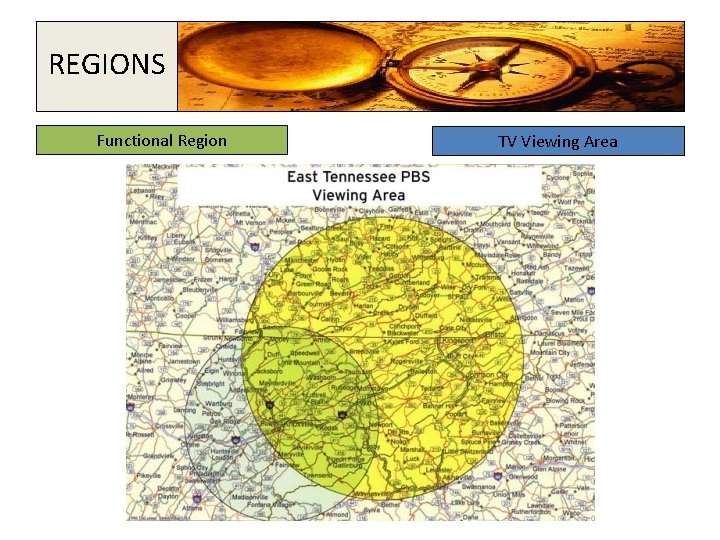
REGIONS Functional Region TV Viewing Area
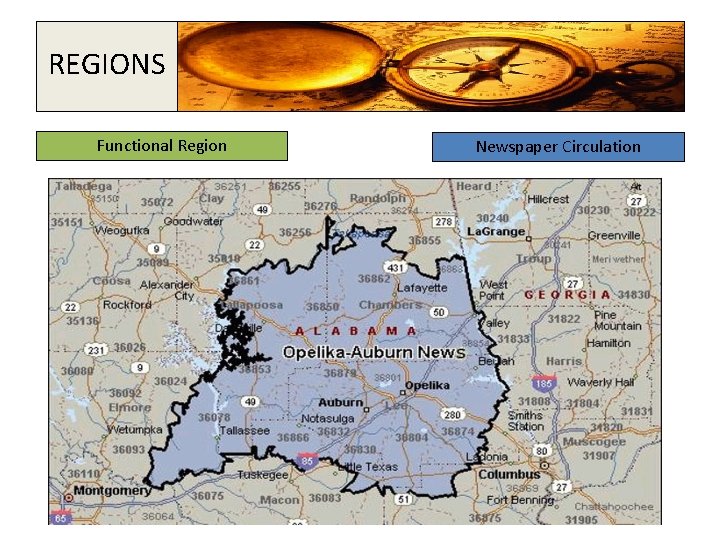
REGIONS Functional Region Newspaper Circulation
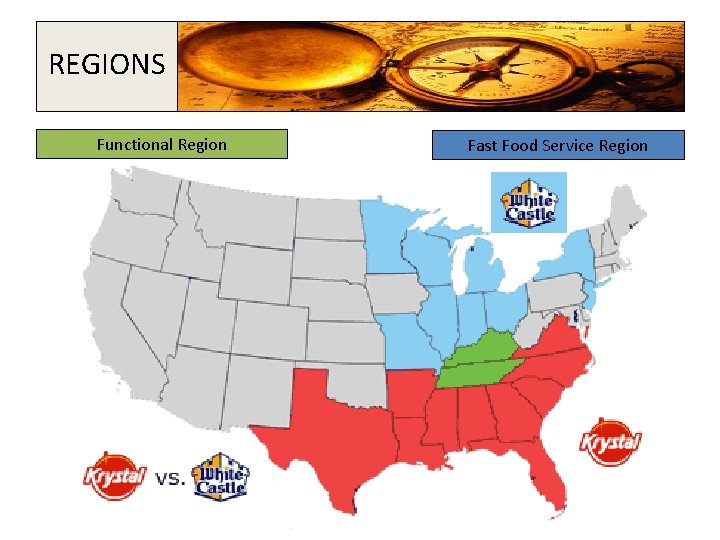
REGIONS Functional Region Fast Food Service Region
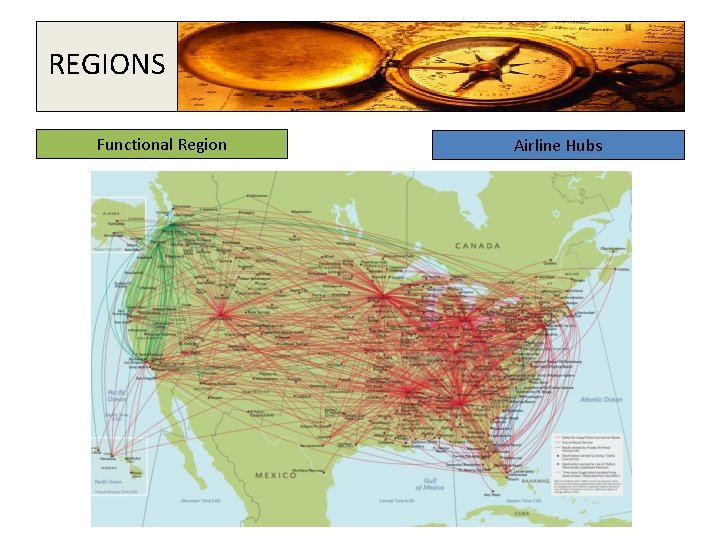
REGIONS Functional Region Airline Hubs
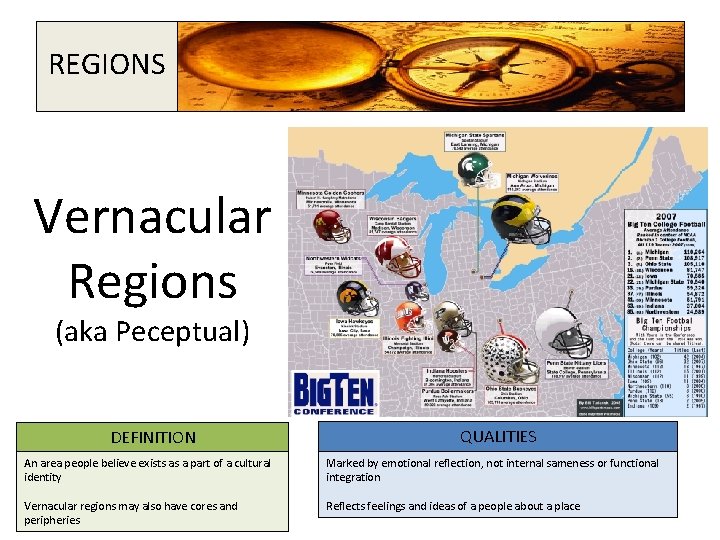
REGIONS Vernacular Regions (aka Peceptual) DEFINITION QUALITIES An area people believe exists as a part of a cultural identity Marked by emotional reflection, not internal sameness or functional integration Vernacular regions may also have cores and peripheries Reflects feelings and ideas of a people about a place
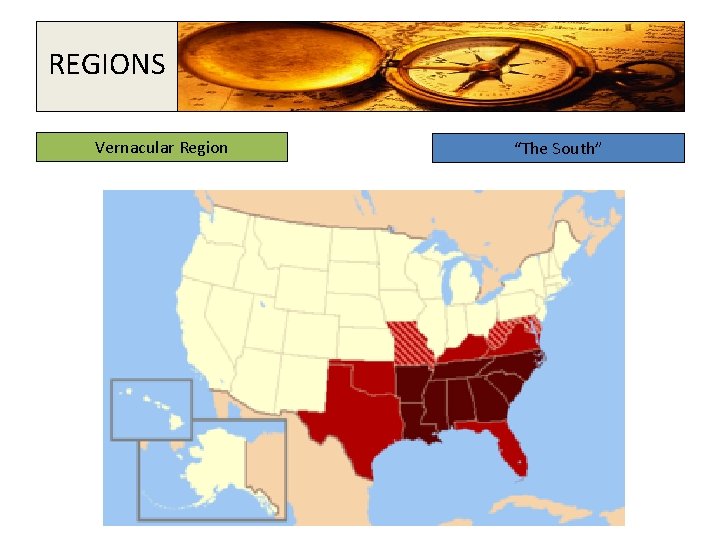
REGIONS Vernacular Region “The South”
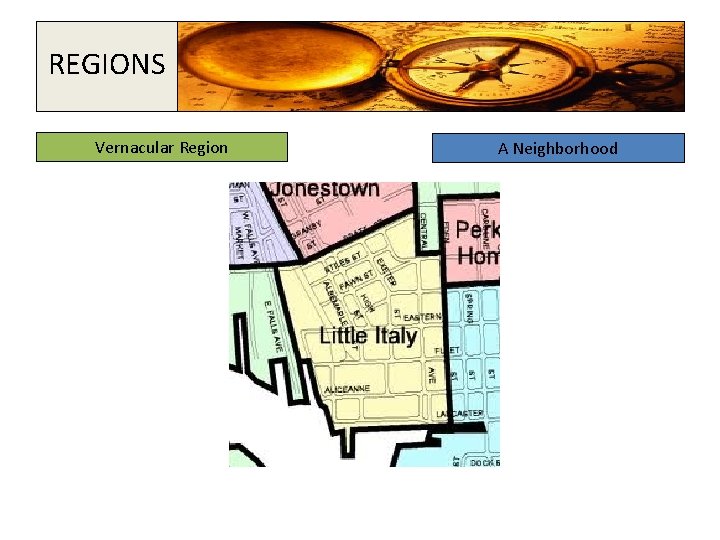
REGIONS Vernacular Region A Neighborhood
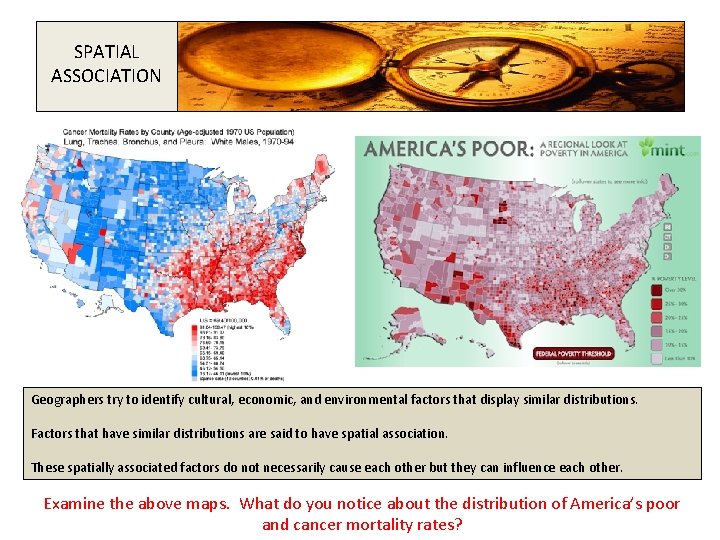
SPATIAL ASSOCIATION Geographers try to identify cultural, economic, and environmental factors that display similar distributions. Factors that have similar distributions are said to have spatial association. These spatially associated factors do not necessarily cause each other but they can influence each other. Examine the above maps. What do you notice about the distribution of America’s poor and cancer mortality rates?
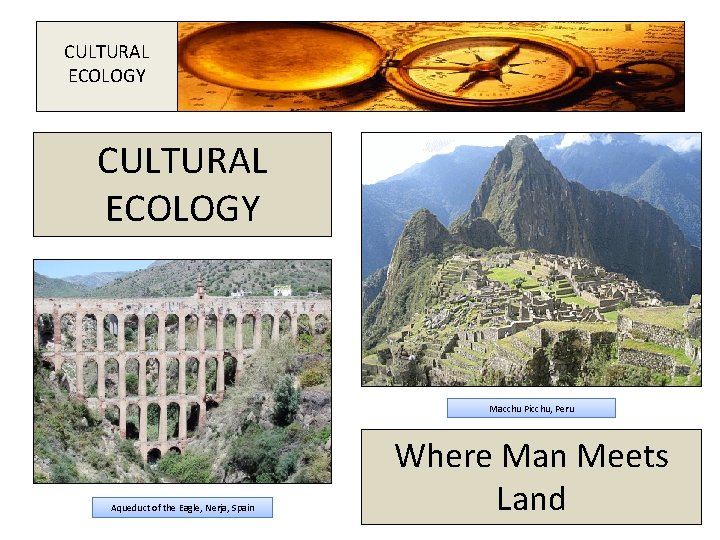
CULTURAL ECOLOGY Macchu Picchu, Peru Aqueduct of the Eagle, Nerja, Spain Where Man Meets Land
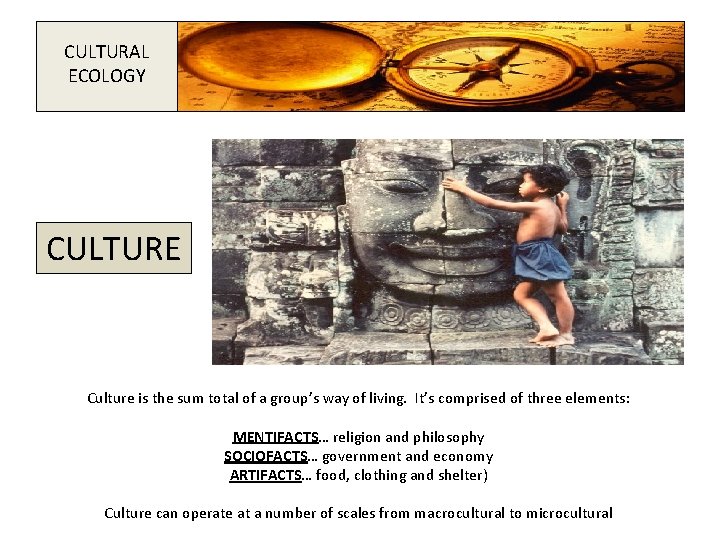
CULTURAL ECOLOGY CULTURE Culture is the sum total of a group’s way of living. It’s comprised of three elements: MENTIFACTS… religion and philosophy SOCIOFACTS… government and economy ARTIFACTS… food, clothing and shelter) Culture can operate at a number of scales from macrocultural to microcultural
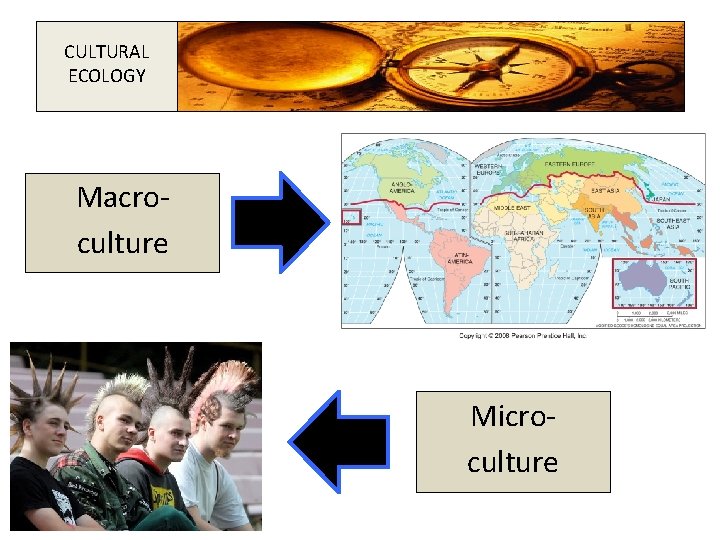
CULTURAL ECOLOGY Macroculture Microculture
CULTURAL ECOLOGY the study of the relations and interactions between an organism and its physical environment Different cultural groups interact with the natural environment in different ways The geographic study of human-environment relationships is called CULTURAL ECOLOGY. There have been two primary theories of cultural ecology: ENVIRONMENTAL DETERMINISM POSSIBILISM
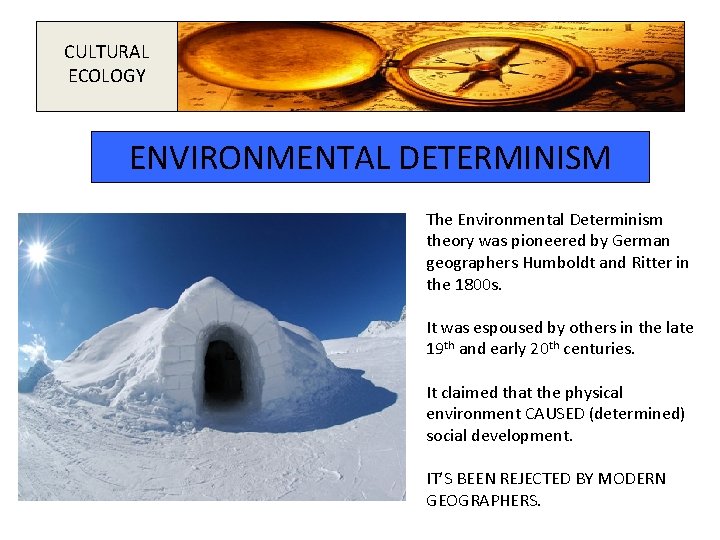
CULTURAL ECOLOGY ENVIRONMENTAL DETERMINISM The Environmental Determinism theory was pioneered by German geographers Humboldt and Ritter in the 1800 s. It was espoused by others in the late 19 th and early 20 th centuries. It claimed that the physical environment CAUSED (determined) social development. IT’S BEEN REJECTED BY MODERN GEOGRAPHERS.
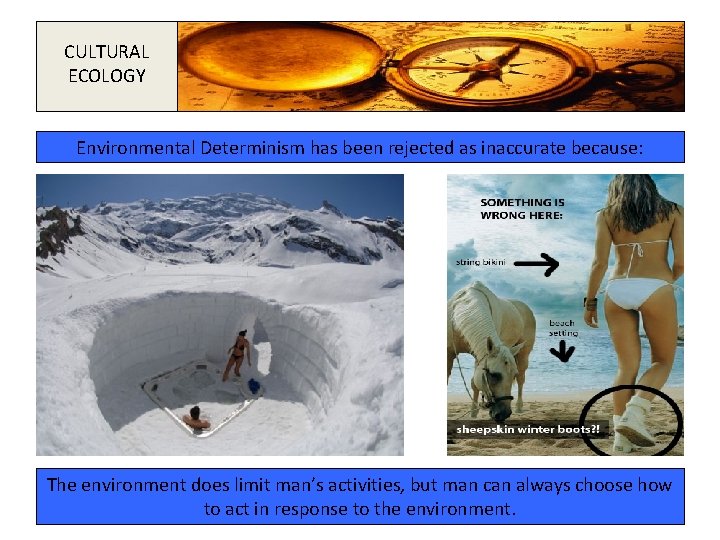
CULTURAL ECOLOGY Environmental Determinism has been rejected as inaccurate because: The environment does limit man’s activities, but man can always choose how to act in response to the environment.
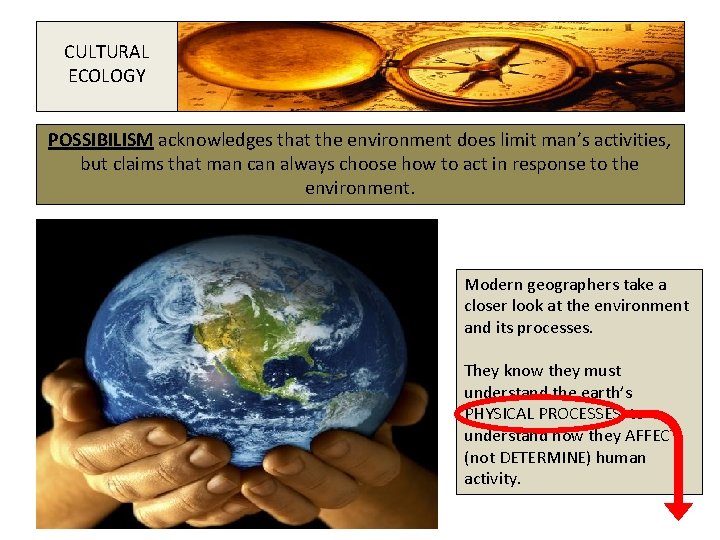
CULTURAL ECOLOGY POSSIBILISM acknowledges that the environment does limit man’s activities, but claims that man can always choose how to act in response to the environment. Modern geographers take a closer look at the environment and its processes. They know they must understand the earth’s PHYSICAL PROCESSES to understand how they AFFECT (not DETERMINE) human activity.
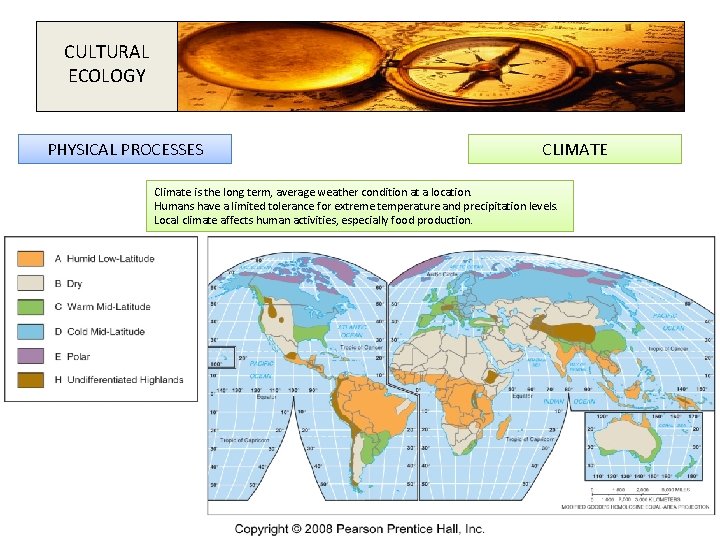
CULTURAL ECOLOGY PHYSICAL PROCESSES CLIMATE Climate is the long term, average weather condition at a location. Humans have a limited tolerance for extreme temperature and precipitation levels. Local climate affects human activities, especially food production.
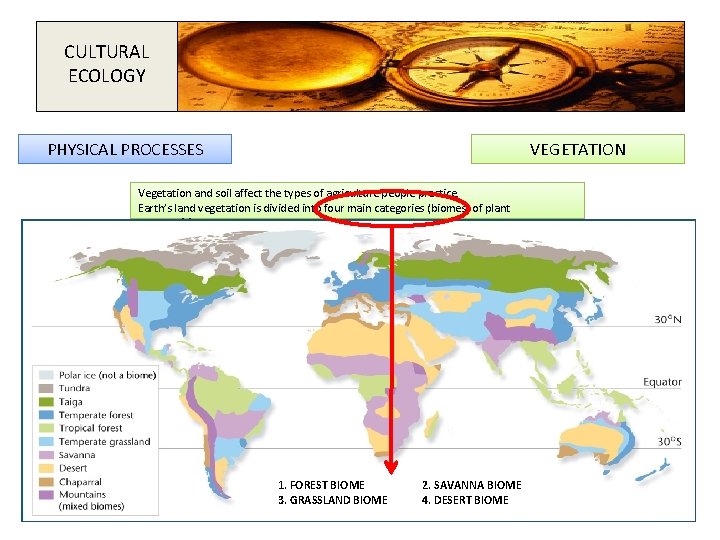
CULTURAL ECOLOGY PHYSICAL PROCESSES VEGETATION Vegetation and soil affect the types of agriculture people practice. Earth’s land vegetation is divided into four main categories (biomes) of plant communities: 1. FOREST BIOME 3. GRASSLAND BIOME 2. SAVANNA BIOME 4. DESERT BIOME
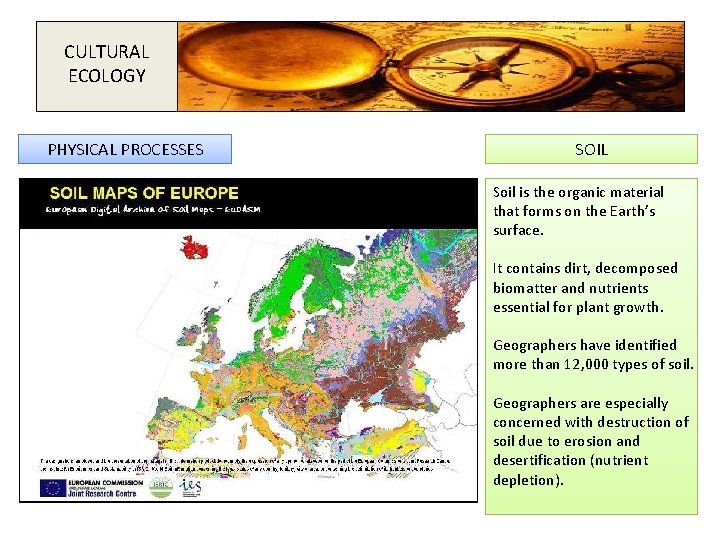
CULTURAL ECOLOGY PHYSICAL PROCESSES SOIL Soil is the organic material that forms on the Earth’s surface. It contains dirt, decomposed biomatter and nutrients essential for plant growth. Geographers have identified more than 12, 000 types of soil. Geographers are especially concerned with destruction of soil due to erosion and desertification (nutrient depletion).
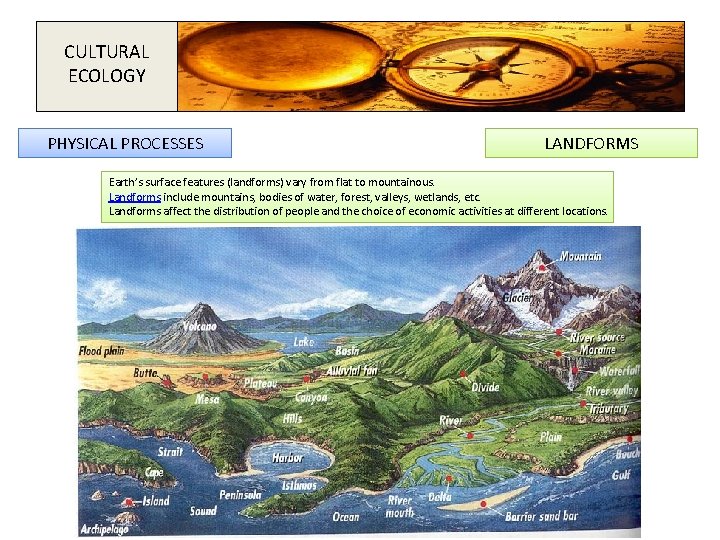
CULTURAL ECOLOGY PHYSICAL PROCESSES LANDFORMS Earth’s surface features (landforms) vary from flat to mountainous. Landforms include mountains, bodies of water, forest, valleys, wetlands, etc. Landforms affect the distribution of people and the choice of economic activities at different locations.
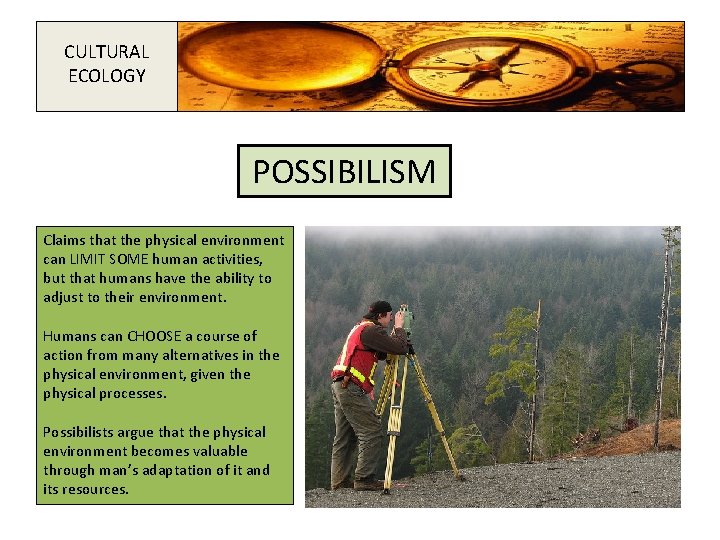
CULTURAL ECOLOGY POSSIBILISM Claims that the physical environment can LIMIT SOME human activities, but that humans have the ability to adjust to their environment. Humans can CHOOSE a course of action from many alternatives in the physical environment, given the physical processes. Possibilists argue that the physical environment becomes valuable through man’s adaptation of it and its resources.
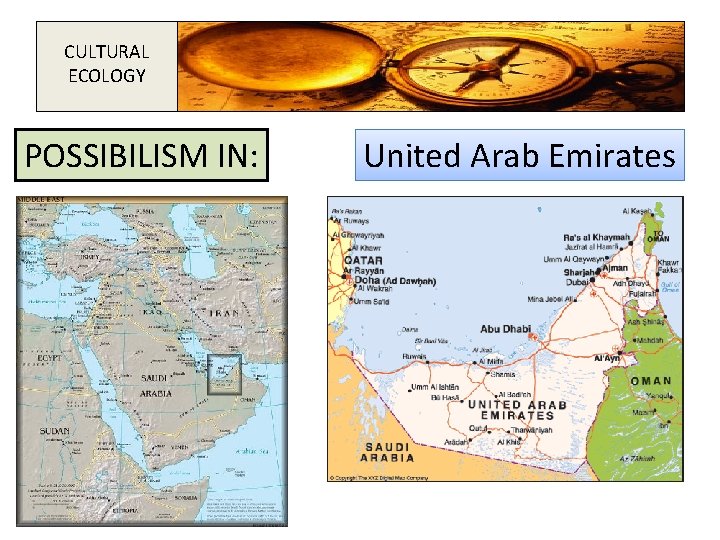
CULTURAL ECOLOGY POSSIBILISM IN: United Arab Emirates
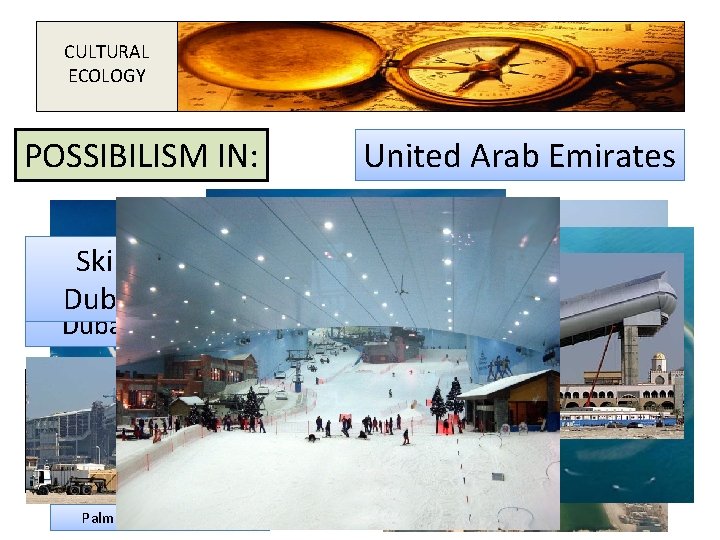
CULTURAL ECOLOGY POSSIBILISM IN: United Arab Emirates The Ski World Dubai Islands. UAE Dubai, UAE Palm Island: Dubai, UAE Burj al Arab Hotel, Dubai UAE
- Slides: 48